
9 California Coastal Towns With Working Harbors You Can Explore On Foot
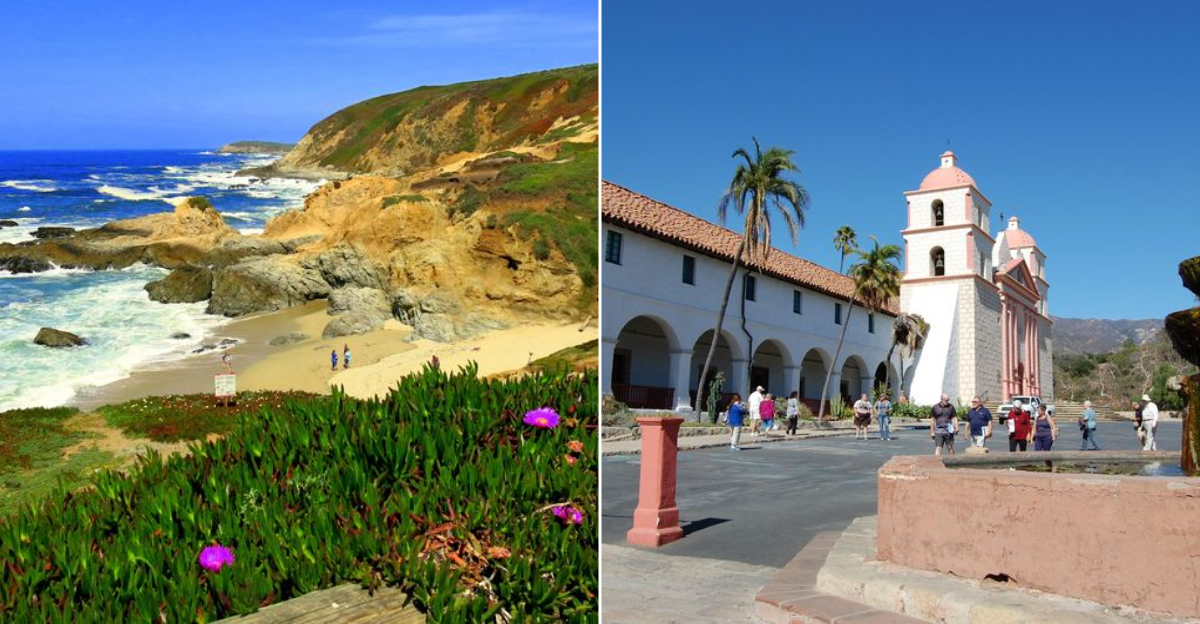
Forget the postcard version of the California coast for a minute. The real show is happening where the boats come in.
Follow the smell of salt, diesel, and whatever was caught that morning, and you’ll find working harbors where fishing boats still unload, crews mend gear, and locals buy seafood that didn’t spend three days getting here. The best part?
You don’t need a boat, or a giant vacation budget, to see it.
These harbor towns are built for wandering, with docks, fish markets, waterfront paths, and little businesses close enough to explore on foot.
One minute you’re admiring the Pacific, the next, you’re watching someone haul a crate of Dungeness crab like it weighs absolutely nothing. That’s a very different kind of California scenery.
These are places where the ocean isn’t just background decoration. It’s still part of the local economy and everyday routine.
1. Crescent City
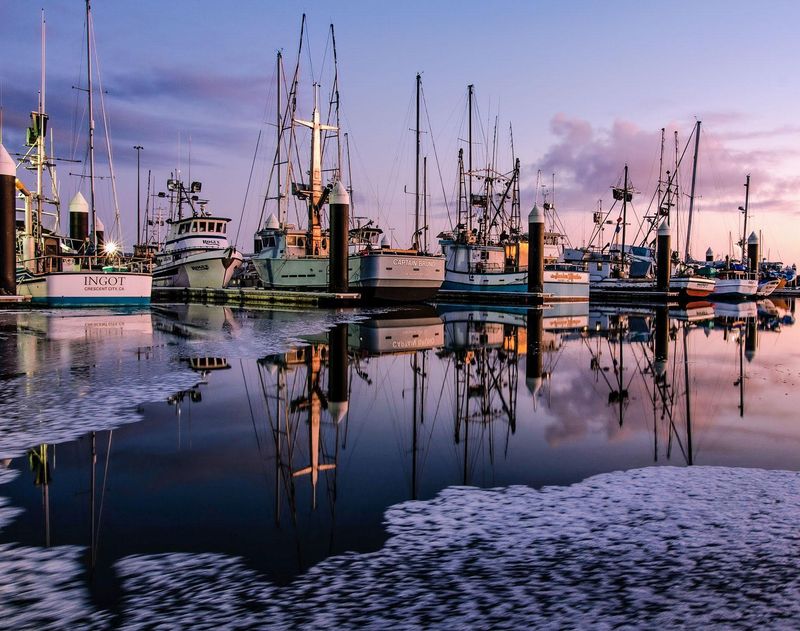
Salt air, sea lions, and the sound of boats creaking in their slips. That is your welcome to Crescent City, one of California’s most underrated harbor towns tucked into the far north corner of the state.
This place is not just scenic. It is genuinely working, with commercial fishing vessels heading out daily for Dungeness crab, rockfish, and salmon.
The Crescent City Harbor Trail is your best friend here. It stretches six miles along the coast, starting near South Beach and winding through gorgeous Del Norte County scenery.
You can stroll out onto the B Street Fishing Pier and watch boats navigate in and out of the harbor. It is oddly satisfying to watch the whole operation unfold in real time.
Whaler Island is a must-walk. This man-made jetty juts into the Pacific and puts you face to face with sea lions who lounge there like they own the place.
Honestly, they kind of do.
Crescent Seafood is a local gem that doubles as both a fish market and a restaurant, serving ultra-fresh catches straight from the docks.
You can also find freshly cooked Dungeness crab at the Crescent City Crab Shack, perfect for eating right by the water. This town turns every walk into a full sensory experience you will not forget.
2. Eureka
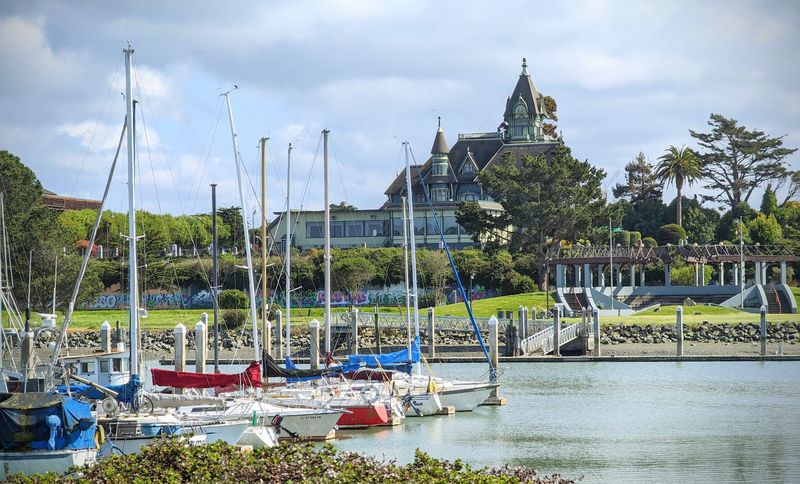
Eureka has a vibe that hits differently from the moment you step onto its waterfront. It is the kind of town where Victorian buildings line the streets just a few blocks from active fishing docks, and somehow that combination makes total sense.
Old Town Eureka is walkable, charming, and full of surprises around every corner.
The Eureka Public Marina sits right in the heart of it all. Commercial fishing vessels share the water with recreational boats, and you can watch the whole harbor hum with purpose from the boardwalk.
The Adorni Recreation Center waterfront path gives you a lovely flat walk with views of the bay and the boats rocking gently in the current.
Humboldt Bay is the largest bay in California north of San Francisco, and Eureka sits right on its edge. That geography gives the town a dramatic, wide-open feeling that is hard to describe until you are standing there.
The Blue Ox Millworks nearby is a fascinating stop where you can see Victorian gingerbread trim being crafted by hand. Grab a bite at one of the seafood spots along the waterfront and watch pelicans cruise overhead.
Eureka is the kind of place that rewards slow walkers who actually stop and look around rather than rushing to the next spot.
3. Fort Bragg
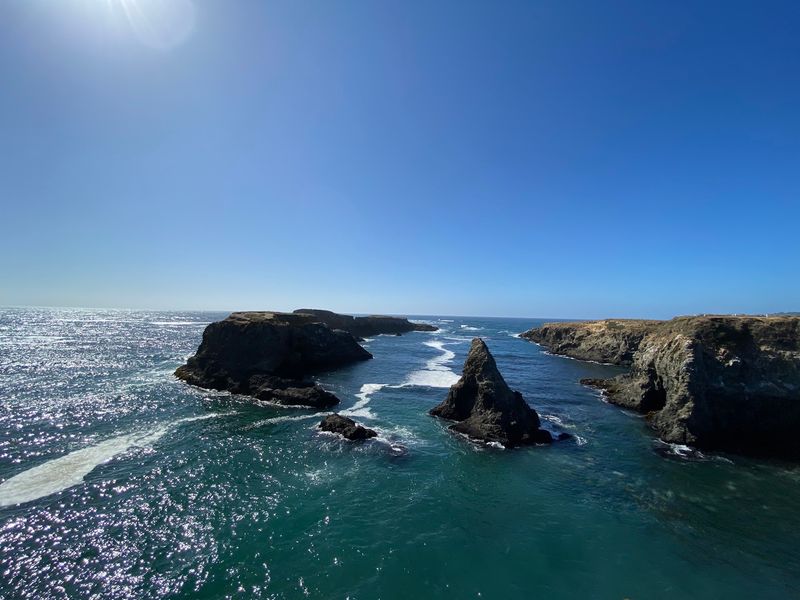
Fort Bragg is the kind of town that sneaks up on you. You think you are just passing through on Highway 1, and then Noyo Harbor appears below the bridge and suddenly you are pulling over because you absolutely have to walk down there.
Good instinct.
Noyo Harbor is a fully functioning commercial fishing harbor, and it is one of the most photogenic spots on the entire California coast.
The harbor sits at the mouth of the Noyo River, which gives it a sheltered, tucked-away feeling. Fishing boats in every shade of weathered paint bob in the water while pelicans patrol the docks like little inspectors.
The Noyo Harbor District has restaurants, fish markets, and boat rental outfits all within easy walking distance of each other.
Fort Bragg is also home to the famous Glass Beach, where decades of ocean-tumbled sea glass create a colorful shoreline unlike anything else in the state.
The Coastal Trail connects the harbor area to the beach, making your walk feel like a mini adventure with multiple payoffs. The Noyo Food Forest and local fishing co-ops reflect a community deeply invested in sustainable seafood.
Fort Bragg is proof that a small working harbor town can have enormous personality, and you really do need your walking shoes to do it justice.
4. Bodega Bay
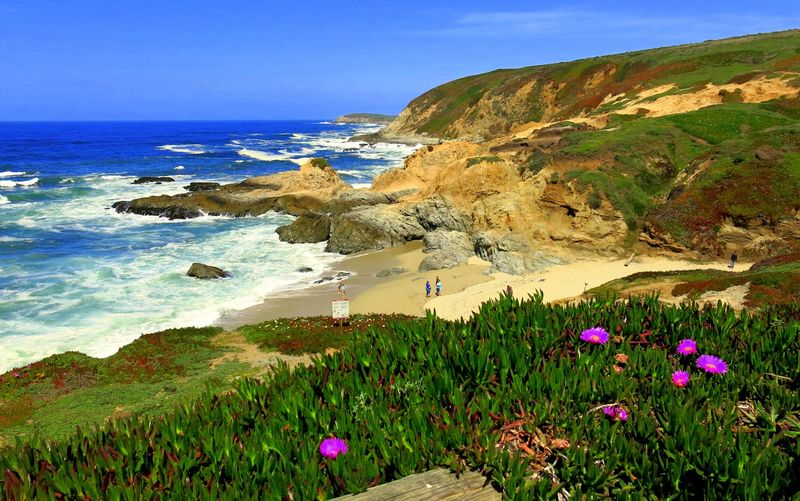
Alfred Hitchcock filmed The Birds in Bodega Bay back in 1963, and honestly the town has never needed to do much more marketing than that. But here is the thing.
Bodega Bay is far more than a film location. It is a working harbor town with serious fishing heritage and one of the most walkable waterfronts on the Sonoma Coast.
The Bodega Bay Harbor is compact and easy to explore on foot. Fishing vessels bring in Dungeness crab, salmon, and halibut depending on the season, and the activity around the docks is constant and fascinating.
The Bodega Head Trail nearby offers dramatic clifftop views of the Pacific and is an easy walk that rewards you with sweeping ocean panoramas.
Spud Point Crab Company is legendary in these parts. The clam chowder there has built a devoted following among road-trippers up and down Highway 1.
You can order a cup, find a picnic table overlooking the harbor, and spend a very happy half hour doing absolutely nothing except watching boats and eating chowder.
That is a good life choice.
The Sonoma Coast State Park beaches are also within walking reach, adding even more to what you can explore without a car. Bodega Bay is compact, cozy, and completely worth a full afternoon of wandering.
5. Half Moon Bay

Half Moon Bay might be most famous for the Mavericks surf competition, where some of the biggest waves in the world draw surfers from across the globe every winter.
But just around the corner from all that drama is Pillar Point Harbor, a calm and deeply satisfying place to spend a morning on foot. The contrast between the wild open ocean and the sheltered harbor is genuinely striking.
Pillar Point Harbor is San Mateo County’s only harbor, and it supports a thriving commercial fishing fleet. Dungeness crab, salmon, and rockfish are among the regular catches.
The harbor walkway lets you get close to the boats and watch the action without getting in anyone’s way. It has that perfect balance of real industry and visitor accessibility.
Barbara’s Fish Trap is a Half Moon Bay institution perched right at the harbor’s edge.
The fish and chips and clam chowder have been drawing crowds for decades, and the waterfront seating makes the whole experience feel like something you planned way in advance. The Coastal Trail also runs through this area, connecting the harbor to the broader coastline.
Half Moon Bay’s downtown is just a short walk inland, filled with independent shops and cafes. This town is proof that you do not need to go far to find something genuinely special on the California coast.
6. Monterey
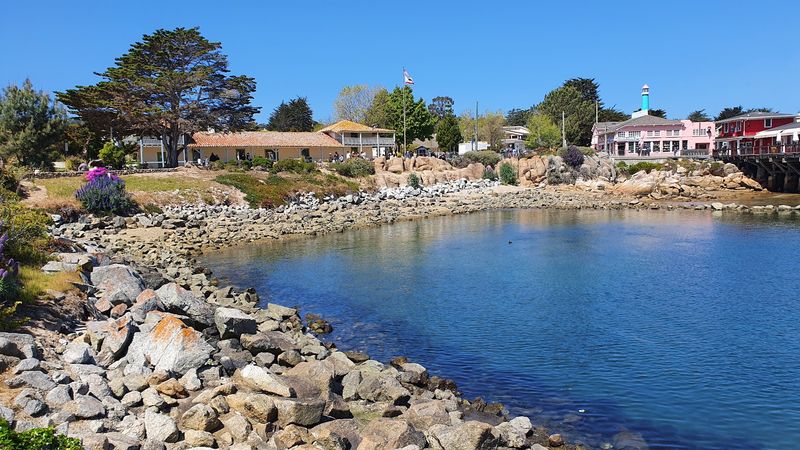
Monterey is the kind of coastal town that has been famous for so long it could easily coast on its reputation. But it earns its status every single day.
Cannery Row, once the sardine-packing capital of the Western Hemisphere, now buzzes with shops and restaurants. Yet the working harbor is still very much alive just steps away at Fisherman’s Wharf.
Old Fisherman’s Wharf extends right into Monterey Bay, giving you a walkable pier experience with fishing boats on one side and spectacular bay views on the other.
Sea otters float in the kelp beds nearby, wrapping themselves up like little burritos while you watch in total delight. The Monterey Bay Aquarium sits at the far end of Cannery Row and is one of the finest marine institutions in the world.
The Monterey Bay Coastal Recreation Trail is an absolute gem. It runs for about 18 miles along the waterfront, but even a short stretch near the harbor gives you an unforgettable walk.
Fresh seafood is everywhere here, from clam chowder served in sourdough bowls to whole grilled fish from the wharf vendors. Monterey has layers.
The more time you spend walking its waterfront, the more you realize how much history, ecology, and flavor this one town has packed into a very small area. It is genuinely hard to leave.
7. Morro Bay
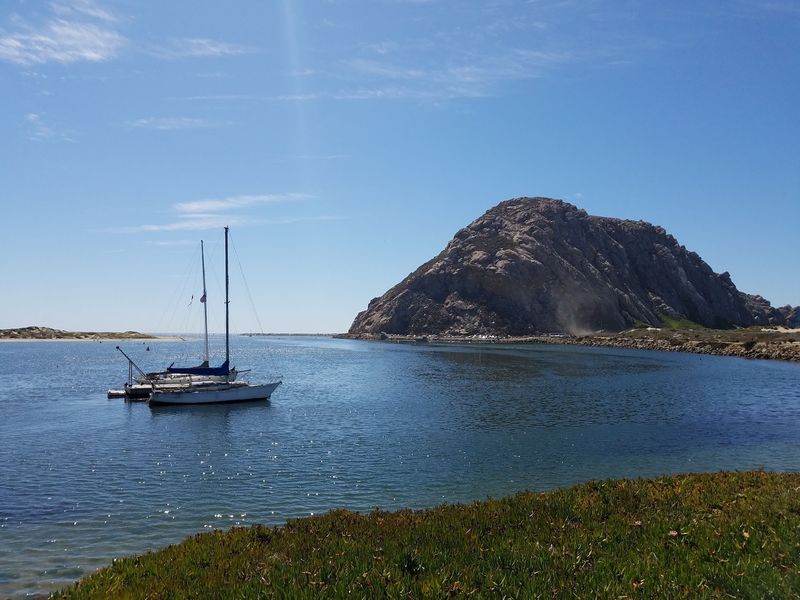
There is a giant volcanic rock sitting at the entrance to Morro Bay, and it is so dramatic and unexpected that it almost feels like someone placed it there on purpose just to make the view more cinematic.
Morro Rock rises 576 feet out of the water and has been a navigational landmark for sailors for centuries. Walking toward it from the Embarcadero is one of those experiences that stays with you.
The Embarcadero is the beating heart of Morro Bay, and it is entirely walkable.
Fishing boats, kayak rentals, seafood shacks, and bait shops line the waterfront in a wonderfully jumbled way that feels totally authentic. This is not a manufactured tourist strip.
It is a real working harbor that happens to also be delightful to explore on foot.
Sea otters are a constant presence in the bay, floating on their backs and cracking shellfish with little rocks like the adorable marine engineers they are.
The Morro Bay Estuary and Back Bay are accessible via flat walking paths that take you into one of the most pristine coastal wetland ecosystems in California. Giovanni’s Fish Market and Galley has been a local favorite for fresh fish and chowder for years.
Morro Bay is the kind of place where one hour turns into four without you ever noticing the time passing.
8. Santa Barbara
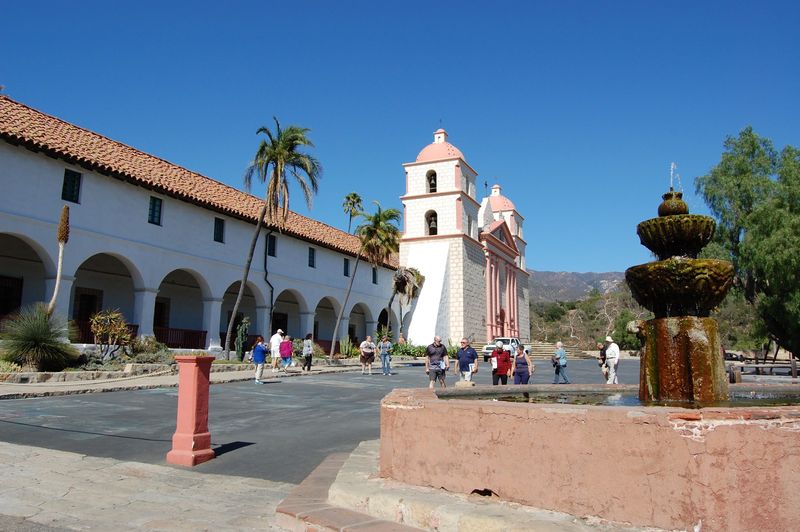
Santa Barbara is often called the American Riviera, and the moment you set foot on Stearns Wharf you completely understand why.
The harbor here is framed by the Santa Ynez Mountains on one side and the sparkling Pacific on the other. It is objectively gorgeous, and the working harbor adds a layer of authenticity that keeps it from feeling too polished.
Stearns Wharf is California’s oldest working wharf, built in 1872. You can walk its entire length, browse shops and seafood spots, and watch pelicans swoop dramatically over the water.
The Santa Barbara Harbor beyond the wharf supports a fleet of commercial and sport fishing vessels, and the whole area is easily explored on foot from the downtown core.
The Waterfront Promenade runs along Cabrillo Boulevard and connects the harbor to East Beach, giving you a long, flat, beautiful walking path with ocean on one side and palm trees on the other.
The Santa Barbara Maritime Museum sits right at the harbor and tells the story of the region’s deep connection to the sea.
Chase Palm Park borders the path and adds green space to the whole experience. Santa Barbara is the rare place where everything you want to do is somehow within walking distance of everything else, and the harbor ties it all together beautifully.
9. Ventura
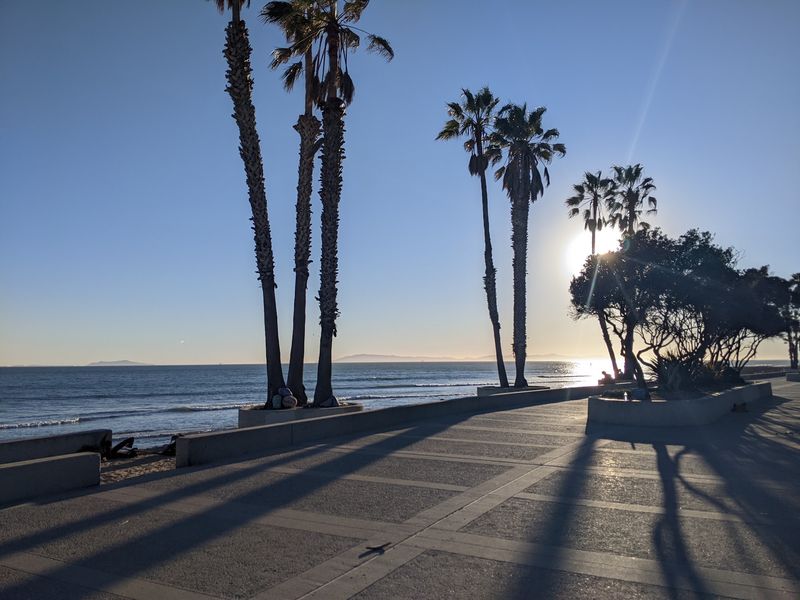
Ventura is the kind of place that flies under the radar while its flashier neighbors grab all the headlines. But anyone who has spent a morning walking the Ventura Harbor knows the secret.
This working harbor is one of the most genuinely enjoyable waterfront areas in Southern California, and it gets better the more you slow down and explore it on foot.
The Ventura Harbor Village is a walkable waterfront hub with shops, restaurants, and boat docks all clustered together in a relaxed, unhurried atmosphere.
From the harbor, you can see the Channel Islands sitting on the horizon like a mirage. Those islands are accessible via ferry from right here, but even if you never board a boat, the views from the dock are extraordinary.
The Ventura Promenade connects the harbor area to the downtown and the pier, giving you a long, connected walking route with ocean views the whole way.
Ventura Pier is one of the longest wooden piers on the West Coast and is a great place to stretch your legs while watching surfers below. The downtown itself is full of independent restaurants, vintage shops, and murals that give the city a creative, laid-back personality.
Ventura proves that a working harbor can be the anchor of a whole town’s identity.