
5 California Diners That Define The Golden State And 5 Pretenders
I’ve traveled the length of California more times than I can count, and one thing always stays true – nothing beats a classic Golden State diner.
The Golden State isn’t just about beaches and movie stars; it’s about those beloved eateries where counter culture meets culinary tradition.
Join me as we explore the authentic joints that capture California’s soul and the chain restaurants that just don’t make the cut.
1. Original Mel’s Drive-In (San Francisco)
Walking into Mel’s feels like stepping into a time machine! The neon glow immediately transported me to 1947 when this San Francisco icon first opened its doors. I still remember my first chocolate malt here after a foggy day exploring the city.
The vintage jukeboxes actually work – drop in a quarter and watch the magic happen. George Lucas immortalized this place in “American Graffiti,” but locals were singing its praises long before Hollywood came calling.
Their classic burgers arrive with that perfect sear that only decades-old griddles can provide. This isn’t just a diner; it’s a living museum of California’s golden era of automobiles, optimism, and really good french fries.
2. Apple Pan (Los Angeles)
Blink and you’ll miss this unassuming West LA treasure that’s been serving heavenly burgers since 1947! My grandmother first brought me here as a kid, and the U-shaped counter hasn’t changed a bit – neither have the paper-wrapped burgers that somehow taste better than anything with a fancy chef’s name attached.
Cash only, no reservations, and absolutely worth the wait. The white-aproned staff members move with balletic precision in the cramped space, some having worked here for decades.
Their legendary Hickory Burger arrives with smoke-infused sauce that haunts my dreams, while their apple pie justifies the name above the door. Hollywood celebrities quietly slip in seeking authenticity you simply can’t manufacture.
3. Ruby’s Diner (Newport Beach)
Perched at the end of Balboa Pier, Ruby’s crimson roof has been my lighthouse after countless beach days. The salty ocean breeze somehow makes their milkshakes taste even better! Founded in 1982, Ruby’s brilliantly captures 1940s nostalgia without feeling like a theme park.
The waitstaff in crisp white uniforms and red bow ties serve up California comfort with genuine smiles. I’ve watched winter storms roll in through their panoramic windows while clutching a steaming mug of coffee. Their Rubyburger remains deliciously consistent, but don’t sleep on their breakfast menu.
Something magical happens when you combine pancakes with crashing waves and squawking seagulls – a quintessential California experience that chains simply cannot replicate.
4. Rae’s Diner (Santa Monica)
Hidden on Pico Boulevard sits this tiny time capsule where I’ve had some of my most meaningful conversations over eggs and coffee. Rae’s hasn’t changed since the 1950s because perfection needs no updates! The worn vinyl booths tell stories of seven decades of Angelenos seeking comfort food and conversation.
Filmmakers adore this location, but locals know it’s the consistently perfect pancakes and no-nonsense service that deserve the real acclaim. My favorite waitress – who’s been there longer than she’ll admit – remembers every regular’s order and life story.
The prices seem frozen in time too, a beautiful anomaly in pricey Santa Monica. When friends visit from out of state, this is where I bring them for authentic California diner culture.
5. Norms (Southern California)
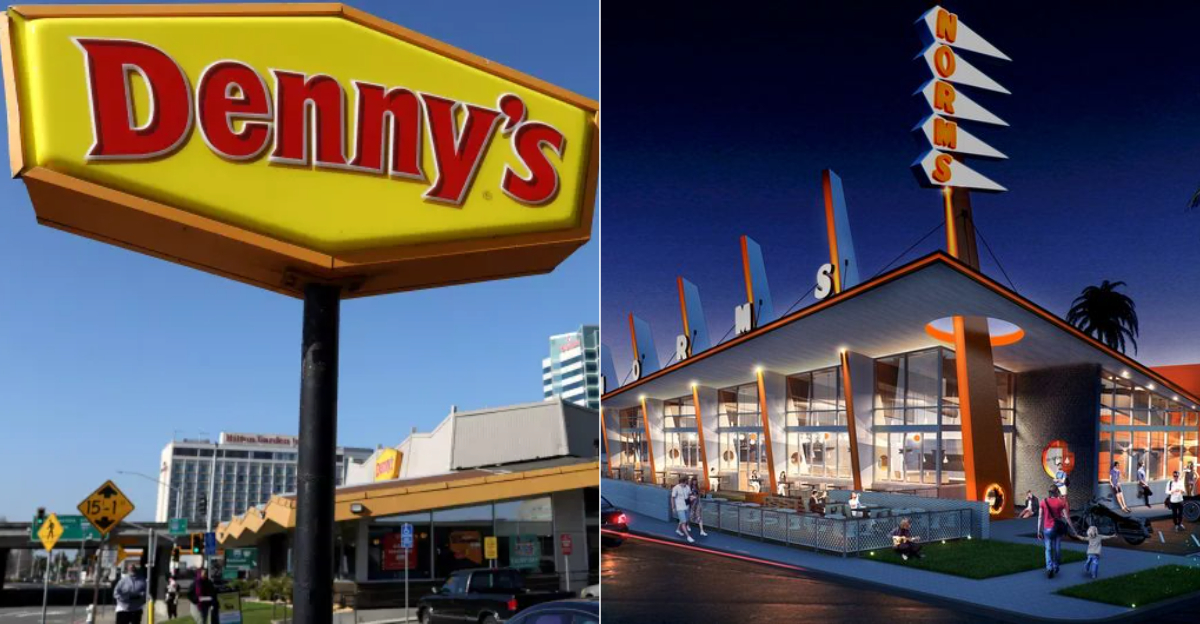
That orange and yellow Googie-style sign has been my midnight beacon more times than I can count! Founded in 1949, Norms represents Southern California architectural history as much as culinary tradition. The 24/7 operation means I’ve stumbled in before sunrise after long drives and late nights. Their “Bigger Better Breakfast” has saved me from countless hangovers.
The coffee keeps flowing without asking – a small but meaningful courtesy that chain restaurants rarely master. Each location maintains that mid-century modern charm with angular roofs and starburst designs.
Celebrities, truck drivers, and insomniacs all find common ground at these counters. While other diners try to capture nostalgic vibes, Norms never had to try – they simply never stopped being themselves.
6. Denny’s (The Nationwide Imposter)
I’ll never forget my disappointment when out-of-town relatives suggested Denny’s for “authentic California dining.” While technically born in California (Lakewood, 1953), Denny’s lost its soul somewhere between corporate acquisition and nationwide expansion. The yellow and red signage promises comfort but delivers mediocrity.
Their Grand Slam breakfast remains reliable but lacks the character that comes from a spatula that’s flipped thousands of eggs on the same grill for decades. The identical menus and interiors from Seattle to Miami erase any trace of California heritage.
When every location looks identical, you could be anywhere – which is precisely the problem. True California diners tell you exactly where you are through regional ingredients, local personalities, and community connections that Denny’s simply cannot manufacture.
7. IHOP (Pancake Pretender)
Blue roofs and sticky syrup dispensers do not a California diner make! My college roommate worked at IHOP, and even she admitted the “homemade” claims were stretching the truth thinner than their pancake batter. Founded in Toluca Lake in 1958, IHOP initially had California roots. But corporate expansion transformed it into an assembly-line breakfast factory.
The rotating seasonal pancake flavors show creative potential, but the execution lacks the love found in family-owned establishments. The bright lighting and laminated menus create an atmosphere that feels sanitized of personality.
True Golden State diners carry decades of community stories in their walls. When I want pancakes that taste like California, I seek places where the batter recipe hasn’t changed since the Eisenhower administration and where the cook might remember my name.
8. Black Bear Diner (The Forest Faker)
Wooden bears and forest kitsch can’t disguise the chain restaurant formula underneath! My first Black Bear experience left me feeling like I’d visited a diner-themed amusement park rather than an authentic eatery. Founded in Mount Shasta in 1995, Black Bear arrived late to California’s diner scene.
Their massive portions impress tourists, but quantity rarely equals quality. The woodland cabin aesthetic feels forced – real California diners reflect their specific neighborhoods, not a generic theme. Their pie does deserve honest praise, but the manufactured nostalgia falls flat.
Authentic diners earn their character through decades of service, not corporate design meetings. When a restaurant concept can be replicated identically across multiple states, it sacrifices the regional soul that makes Golden State diners special places where history and community intersect with comfort food.
9. Johnny Rockets (The Retro Replica)
Shiny chrome and forced employee dance routines don’t capture authentic diner magic! I remember watching the servers at Johnny Rockets perform their obligatory choreographed routines to jukebox hits, their smiles not quite reaching their eyes. Founded on Melrose Avenue in 1986, Johnny Rockets built a business model on manufactured 1950s nostalgia.
The tabletop jukeboxes and paper hats create a theme park version of diner culture. Their burgers satisfy basic cravings but lack the distinctive regional character of true California classics. The identical design in every mall location feels like eating inside a nostalgic movie set rather than a place with authentic history.
Real Golden State diners evolved organically over decades, their quirks and imperfections telling the story of their communities. Johnny Rockets offers diner cosplay – entertaining but ultimately hollow.
10. The Cheesecake Factory (The Overblown Outlier)
Calling this palatial establishment a “diner” is like calling a monster truck a family sedan! My jaw dropped the first time I entered The Cheesecake Factory’s Egyptian-Rococo-Art Deco fever dream of an interior. Born in Beverly Hills in 1978, this restaurant grew into something that defies categorization.
Their spiral-bound menu containing hundreds of options from different cuisines represents the opposite of focused diner expertise. The portion sizes border on performance art rather than thoughtful cooking. Their cheesecake remains legitimately excellent, but the restaurant experience has strayed miles from California’s diner tradition.
Authentic Golden State diners offer specialized menus reflecting regional tastes and decades of recipe refinement. When a restaurant tries to be everything to everyone, it loses the specialized character that makes diners cultural landmarks rather than just places to eat.