
11 California Dishes That Became Worldwide Trends Before Instagram Existed
Long before food photos flooded our social media feeds, California was quietly revolutionizing kitchens around the world.
From Hollywood salads to San Francisco sourdough, the Golden State created culinary masterpieces that spread globally through word-of-mouth, cookbooks, and restaurant chains.
Exactly these eleven iconic dishes prove that great food doesn’t need filters to become famous.
1. Cobb Salad – The Hollywood Legend Born from Late-Night Hunger
Picture this: it’s 1937, and Robert Cobb, owner of the famous Brown Derby restaurant in Hollywood, is rummaging through his kitchen at midnight. What started as a desperate attempt to satisfy his hunger became America’s most beloved chopped salad.
Cobb tossed together lettuce, chicken, bacon, avocado, hard-boiled egg, tomato, and blue cheese in neat rows. The presentation was as striking as the taste was satisfying.
Within years, this hearty creation had transformed restaurant menus nationwide, establishing the concept of substantial salads as complete meals rather than simple sides.
2. Ranch Dressing – From Mountain Ranch to Global Obsession
Steve Henson never imagined his homemade buttermilk concoction would become America’s favorite dressing when he started serving it at Hidden Valley Ranch in 1954.
Located in the mountains above Santa Barbara, his guest ranch became famous not just for horseback riding, but for that creamy, herb-packed sauce.
Guests begged for the recipe so frequently that Henson began selling seasoning packets by mail. The rest, as they say, is condiment history.
Ranch has reigned as America’s top-selling dressing since the early 1990s, appearing on everything from pizza to vegetables.
3. California Roll – The Gateway That Changed Sushi Forever
Raw fish intimidated American diners in the early 1970s, so creative chefs in Los Angeles had a brilliant idea. They flipped sushi inside-out, hiding the seaweed and showcasing familiar ingredients like avocado, cucumber, and cooked crab.
Chef Ichiro Mashita at Tokyo Kaikan is often credited with this stroke of genius, though Vancouver’s Hidekazu Tojo also claims the innovation. Regardless of its exact birthplace, the West Coast embraced this approachable roll enthusiastically.
This single creation opened sushi bars worldwide, making Japanese cuisine accessible to millions of previously hesitant diners across the globe.
4. California-Style Pizza – When Chefs Got Creative with Crusts
I remember my first bite of barbecue chicken pizza at California Pizza Kitchen in 1987, thinking someone had lost their mind. Barbecue sauce on pizza? It seemed like culinary chaos, yet somehow it worked perfectly.
Ed LaDou and Wolfgang Puck pioneered this revolution at Spago in 1982, topping wood-fired crusts with unconventional ingredients like goat cheese and smoked salmon; LaDou then helped create signature pies such as barbecue chicken and Thai chicken for California Pizza Kitchen.
California Pizza Kitchen then brought these bold combinations to shopping malls everywhere. Today, barbecue chicken pizza appears on menus from Tokyo to London, proving California’s pizza rebellion conquered the world.
5. Mission-Style Burrito – San Francisco’s Foil-Wrapped Giant
Forget those tiny burritos your grandmother might remember. San Francisco’s Mission District created something entirely different in the 1960s: a massive, foil-wrapped meal that required both hands and serious commitment.
Pioneers like El Faro and La Cumbre packed these giants with rice, beans, meat, sour cream, guacamole, and salsa. The foil wrapper wasn’t just practical; it became the burrito’s signature look.
This format spread through taquerias nationwide and inspired fast-casual chains like Chipotle. Now, Mission-style burritos satisfy hungry people from New York to Australia, proving size definitely matters.
6. French Dip Sandwich – Los Angeles’ Juicy Debate
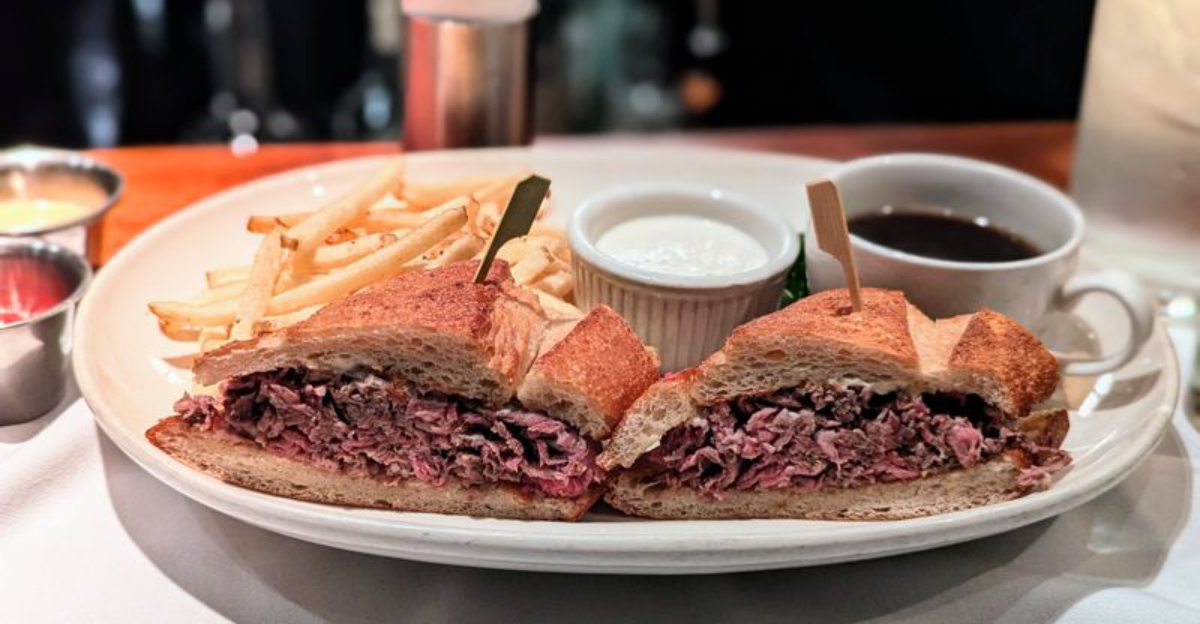
Two downtown Los Angeles establishments have waged a friendly war for over a century, each claiming they invented the French dip sandwich. Philippe the Original and Cole’s both serve sliced roast beef on French rolls with savory jus for dipping.
Whether it was Philippe Mathieu in 1918 or Henry Cole in 1908, someone in Los Angeles created sandwich perfection by accident, allegedly dropping the bread in meat drippings.
The concept of dipping sandwiches “au jus” spread nationwide, appearing in delis, diners, and chain restaurants from coast to coast, making every bite a messy, delicious adventure.
7. Crab Rangoon – Trader Vic’s Polynesian Fantasy
Nothing about crab rangoon is authentically Chinese or Polynesian, yet this crispy, creamy creation became a global phenomenon thanks to Trader Vic’s tiki empire in the 1950s.
The Oakland-born restaurant chain served these deep-fried wontons filled with cream cheese and crab as part of their “Polynesian” fantasy dining experience.
The combination sounds bizarre on paper: American cream cheese, crab, and Chinese wonton wrappers creating something entirely new and addictive.
Today, crab rangoon appears on Chinese restaurant menus worldwide, proving that fusion cuisine can create beloved classics even when it makes no cultural sense whatsoever.
8. Mochi Ice Cream – Little Tokyo’s Sweet Innovation
Frances Hashimoto of Mikawaya in Los Angeles’ Little Tokyo revolutionized dessert in the 1990s by wrapping ice cream in soft, chewy mochi rice cake. Her bite-sized creations perfectly balanced Japanese tradition with American indulgence.
The technique requires skill and speed: stretching the mochi thin enough to wrap around frozen ice cream without tearing or melting the contents. Each piece becomes a small, colorful jewel.
Supermarket freezer sections worldwide now stock these treats in flavors ranging from traditional green tea to American favorites like cookies and cream, proving good ideas transcend cultural boundaries beautifully.
9. San Francisco Sourdough – Gold Rush Bread That Never Left
Boudin Bakery’s “mother” starter is said to have been alive since 1849, surviving earthquakes, fires, and countless food trends. This living culture, fed daily for over 170 years, creates San Francisco’s distinctively tangy sourdough bread.
The city’s unique climate and baking traditions contribute to the bread’s characteristic flavor; while key sourdough microbes like Lactobacillus sanfranciscensis are found worldwide, San Francisco’s style remains distinctive.
Long before the recent sourdough craze, bakeries worldwide advertised “San Francisco-style” loaves. The Gold Rush may have ended, but this bread’s fame continues rising, proving some things improve with age and patience rather than technology.
10. Green Goddess Dressing – Palace Hotel’s Theatrical Creation
Chef Philip Roemer created this herb-packed dressing at San Francisco’s Palace Hotel in 1923 to honor actor George Arliss, who was starring in a play called “The Green Goddess.”
The creamy, emerald-colored sauce combined anchovies, tarragon, parsley, and chives in perfect harmony.
Unlike ranch’s widespread appeal, Green Goddess maintained an air of sophistication, appearing primarily in upscale establishments and hotel dining rooms across the country.
Recent years have seen a revival of this forgotten classic, with chefs rediscovering its complex, herbaceous flavor profile that makes simple salads taste like gourmet experiences.
11. Chinese Chicken Salad – Madame Wu’s Celebrity-Approved Creation
Madame Wu’s Garden in Santa Monica became a celebrity hotspot in the 1960s, partly thanks to their innovative Chinese chicken salad.
This fusion creation combined shredded chicken with crispy noodles, sesame dressing, and fresh vegetables in ways that pleased both Hollywood stars and regular diners.
The salad’s success came from its perfect balance: familiar ingredients presented with Asian flair, satisfying without being heavy, exotic yet approachable for American palates.
By the 1980s, this “California” salad appeared everywhere from airline lounges to hotel cafes worldwide, becoming shorthand for healthy, sophisticated dining long before anyone called it “fusion cuisine.”