
10 California Roadside Cafés That Became Institutions Without Trying
California’s highways don’t just connect places—they tell stories.
Mile after mile of sun-baked asphalt winds past ocean cliffs, golden valleys, and dusty desert towns, where tucked along the roadside you’ll find cafés that became legends without ever trying.
These aren’t flashy destinations chasing trends, but humble pit stops that turned into icons simply by serving honest food with heart.
Generations of travelers, locals, and dreamers have pulled over for a plate here, creating memories as lasting as the roads themselves.
1. Pea Soup Andersen’s (Buellton)
Ever since my family stopped here during a road trip when I was twelve, I’ve been obsessed with split pea soup. Pea Soup Andersen’s started in 1924 when Anton and Juliette Andersen opened their tiny café, serving Juliette’s family recipe to hungry travelers.
The windmill out front became a beacon for anyone driving Highway 101, promising warmth and comfort in a bowl. Generations have pulled off the freeway specifically for that thick, creamy soup that somehow tastes like childhood, even if you never had it as a kid.
They didn’t advertise fancy ingredients or hire celebrity chefs. Instead, they stuck to the recipe and kept the prices reasonable, which is probably why truckers, tourists, and locals all swear by the place. The gift shop sells soup by the can, but honestly, nothing beats eating it fresh while watching the highway roll by outside.
2. Apple Farm Restaurant (San Luis Obispo)
Picture a grandmother’s kitchen crossed with a country inn, and you’ve got Apple Farm Restaurant. This place opened in 1988 but feels like it’s been around forever, probably because everything about it screams timeless comfort. The Victorian-style building sits alongside a working watermill, giving the whole experience a storybook quality that tourists eat up—literally.
Their apple butter gets slathered on warm bread before every meal, and I’ve watched grown adults quietly pocket extra packets like contraband. The menu focuses on home-style cooking: pot roast, turkey dinners, and enough apple pie variations to make Johnny Appleseed weep with joy.
What makes this café special isn’t gimmicks or Instagram-worthy presentations. It’s the consistency, the warmth, and the fact that your server probably remembers your order from last year. People drive hours just for breakfast here, which tells you everything you need to know.
3. Emma Jean’s Holland Burger Café (Victorville)
Route 66 runs through Victorville, and Emma Jean’s has been feeding travelers since 1947, back when the Mother Road was the main artery across America. The original owner, Emma Jean, ran this joint with an iron spatula and a soft heart, serving burgers that could cure homesickness.
Walking inside feels like stepping into a time machine where the jukebox still works and the counter stools spin. The menu hasn’t changed much because why mess with perfection? Their Brian Burger—a massive creation with pastrami, chili, and cheese—has achieved cult status among burger enthusiasts and competitive eaters alike.
I once watched a biker gang and a family of tourists bond over their shared love of Emma Jean’s fries. That’s the magic here: everyone becomes a regular after one visit. The café survived Route 66’s decline and thrives today, proving good food and genuine hospitality never go out of style.
4. The Madonna Inn Copper Café (San Luis Obispo)
Walking into the Madonna Inn feels like Alice tumbling down the rabbit hole, except instead of Wonderland, you land in a pink explosion of copper, velvet, and pure California eccentricity. The Copper Café opened in 1958 alongside the hotel, serving breakfast and lunch to travelers who couldn’t quite believe their eyes.
Everything here gleams copper—the counters, the fixtures, even the ceiling tiles catch the light and throw it back in warm, rosy tones. The menu offers classic American comfort food, but honestly, people come for the spectacle as much as the sustenance. Their cakes, displayed under glass domes like crown jewels, are Instagram-famous before Instagram existed.
Phyllis and Alex Madonna built this place as a labor of love, never imagining it would become a pilgrimage site for kitsch enthusiasts worldwide. The café succeeds because it’s unapologetically itself, proof that authenticity—even wildly eccentric authenticity—always finds its audience.
5. Norm’s Restaurant (Los Angeles)
Norm Roybark opened his first restaurant in 1949, determined to serve quality food at prices working families could afford. That philosophy built an empire of coffee shops across Southern California, each sporting that distinctive Googie architecture that makes you want to order a milkshake and a burger immediately.
The original locations featured dramatic rooflines that swooped and angled like spaceship fins, capturing the optimistic, forward-looking spirit of postwar America. Inside, the menu delivered exactly what it promised: no-nonsense diner classics available twenty-four hours a day, because Los Angeles never sleeps and neither did Norm’s.
I’ve nursed many late-night coffees at Norm’s, watching the parade of humanity that only emerges after midnight. Club kids, insomniacs, truckers, and night-shift workers all find refuge here. Several locations still operate today, their neon signs glowing like beacons of consistency in an ever-changing city, reminding us that some things should never change.
6. Penny’s Diner (Barstow)
Barstow sits at the crossroads of nowhere and everywhere, where desert highways intersect and travelers desperately need fuel—both for their cars and themselves. Penny’s Diner has been that oasis since the 1950s, serving breakfast all day to sun-baked road warriors making the trek between Los Angeles and Las Vegas.
The building looks exactly like a diner should: chrome accents, vinyl booths, and a counter where solo travelers can eat without feeling lonely. Their chicken fried steak comes with gravy that could probably fix a broken transmission, and the pies rotate daily depending on what’s fresh and what the cook feels like making.
What I love about Penny’s is its complete lack of pretension. There’s no farm-to-table manifesto or artisanal anything—just honest food served by people who’ve worked there longer than you’ve been alive. In Barstow’s harsh desert landscape, that reliability feels almost sacred, like finding water in the wilderness.
7. The Original Mel’s Drive-In (San Francisco)
Mel Weiss and Harold Dobbs opened their first drive-in in 1947, creating a temple to American car culture and teenage freedom. The original location became famous when George Lucas featured it prominently in “American Graffiti,” immortalizing those neon signs and carhop service for generations who’d never experienced the 1950s firsthand.
Though that specific location closed, the brand lives on through several Bay Area restaurants that capture the same spirit. You’ll find classic burgers, thick shakes, and enough chrome to blind you on a sunny day. The jukebox still plays oldies, and the booths still host first dates, breakups, and late-night philosophy sessions fueled by french fries.
Mel’s succeeded by understanding something fundamental: people crave nostalgia, even for eras they never lived through. The diner represents simpler times, whether or not those times were actually simpler. Sometimes what matters isn’t historical accuracy but emotional truth served alongside a really good milkshake.
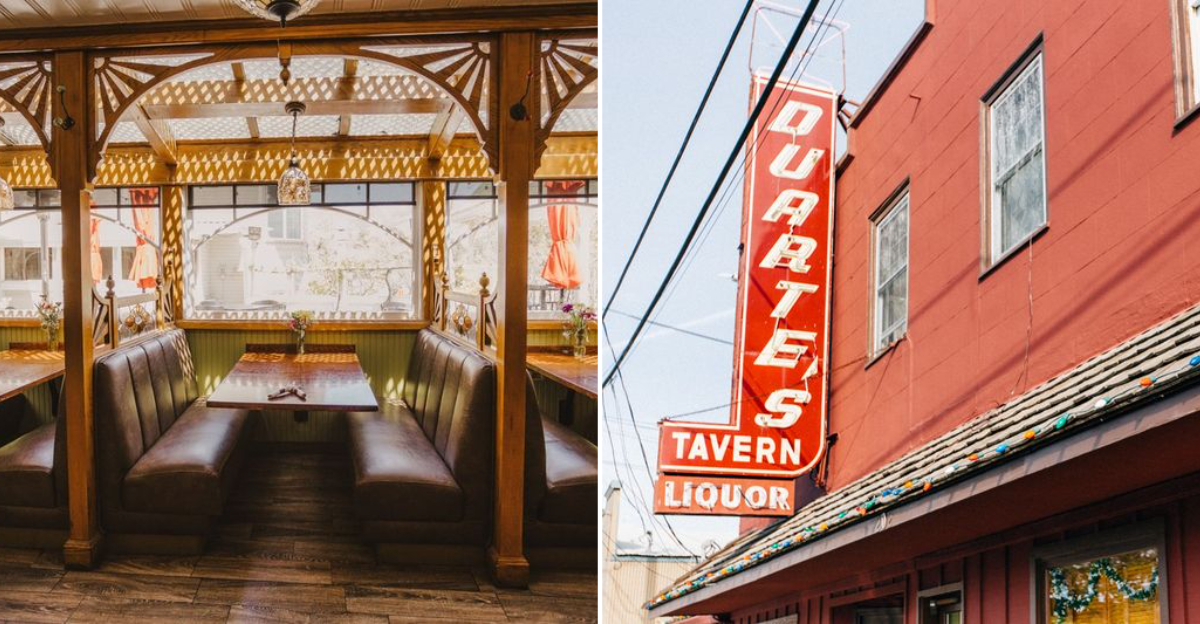
8. Duarte’s Tavern (Pescadero)
Frank Duarte opened this tavern in 1894, and his descendants still run it today, making Duarte’s one of California’s oldest continuously operating restaurants. The tiny coastal town of Pescadero barely appears on most maps, but food lovers know exactly where to find this legendary spot tucked along Highway 1.
Their artichoke soup and olallieberry pie have achieved mythical status among Bay Area residents who guard the secret jealously while simultaneously telling everyone they meet. The dining room feels like eating in someone’s farmhouse, which makes sense since the Duarte family has deep agricultural roots in the area.
I drove two hours once specifically for a bowl of that soup, and honestly, I’d do it again tomorrow. What makes Duarte’s special isn’t just the food—it’s the sense of continuity, of tradition passed down through five generations who’ve kept the recipes and the hospitality intact. In our disposable culture, that permanence feels almost radical.
9. Husky Boy Burgers (Laguna Beach)
Some restaurants evolve into institutions through longevity, but Husky Boy earned its status through pure burger excellence. This tiny stand opened in the 1960s, serving straightforward burgers to beachgoers who didn’t want to leave the sand for long. The name supposedly came from the owner’s dog, which is exactly the kind of low-key origin story that fits this place perfectly.
There’s no dining room, no fancy ambiance—just a walk-up window, a small menu board, and burgers that taste like summer vacation. The patties get grilled to order while you wait, and the smell alone could convert vegetarians. Their chili cheese fries have a cult following among locals who’ve been ordering them since childhood.
Laguna Beach has changed dramatically over the decades, becoming increasingly upscale and polished. Yet Husky Boy remains defiantly unpretentious, a reminder that sometimes the best things come wrapped in paper and eaten standing up.
10. The Palms Restaurant (Winters)
Winters sits in California’s agricultural heartland, where Highway 505 cuts through endless farmland. The Palms has anchored this small town since 1958, serving truck drivers, farmers, and travelers with the kind of hearty portions that fuel physical labor. Their chicken fried steak hangs off the plate, and the coffee flows endlessly without anyone asking if you want a refill.
The décor hasn’t changed much in sixty years: vinyl booths, formica tables, and walls covered in local memorabilia and faded photographs. It’s the kind of place where regulars have assigned seats and the waitresses know your order before you sit down. Breakfast served all day isn’t a trendy marketing move here—it’s just practical.
What strikes me about The Palms is its authenticity. There’s no attempt to capitalize on vintage aesthetics or manufactured nostalgia. It simply exists as it always has, serving good food to hungry people, which might be the purest definition of a successful restaurant.