
15 California Small Town Stops That Trade Crowds For Views And Quiet Streets
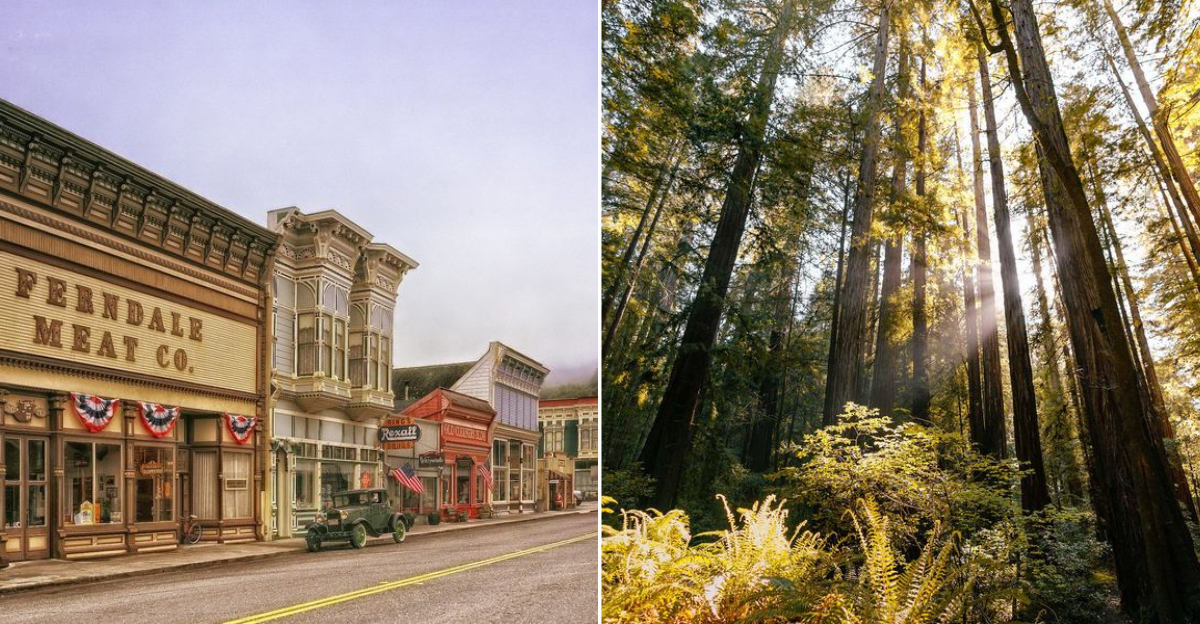
California’s small towns have a way of slowing you down before you realize you’ve agreed to it. I’ve pulled off the highway for a quick break and ended up walking streets where porch lights glow like they’re greeting an old friend.
Sunsets aren’t background color here, people actually stop to look, sometimes leaning against a railing, sometimes just standing in the middle of a quiet main street with a cup that’s already gone cold. Conversations stretch, traffic thins, and the air settles into something you can feel in your shoulders.
These places make the road feel like part of the trip rather than the thing you endure to get somewhere. The towns in this list welcomed me with calm corners, clear views, and the kind of quiet you don’t forget quickly.
1. Mendocino
Fog lifts off headlands like a slow curtain, and the Pacific hums against sculpted cliffs. The vibe in Mendocino is part salt-air gallery stroll, part neighborhood garden walk, with clapboard cottages and windswept cypress guiding you toward the bluffs. Side streets stay quiet even when Highway 1 feels busy.
Set on a peninsula in Mendocino County, the village has preserved Victorian-era buildings and a tidy grid that’s wonderfully walkable. Mendocino Headlands State Park wraps the town with easy trails and big ocean views. Coffee windows open reliably, and shops keep reasonable hours that match the pace.
Visitors tend to park once and wander the cliff path, then loop back through Main and Ukiah Streets for bakery runs. Sunrise and late afternoon bring the softest light, and tide pools reward slow steps.
2. Ferndale
Main Street greets you with a trim lineup of butter-yellow and emerald-green facades, all gingerbread and hand-painted signs. The vibe is farmhouse neat with a creative streak, and most everything is within a gentle block or three. Morning air smells like pasture and fresh pastry from the corner bakery.
Ferndale sits near the Eel River Valley in Humboldt County, known for its exceptionally preserved Victorian storefronts. The town center is compact, and the historic cemetery climbs a hill with sweeping views. Nearby, the Lost Coast Scenic Drive begins its wild, winding business.
Many visitors browse the general store, then detour to Fernbridge for photos before looping back for the art glass studio. Plan fuel and snacks ahead; evening hours can be modest outside peak seasons.
3. Guerneville
Sunlight filters through redwoods, turning the Russian River into a slow mirror. Guerneville feels like a river camp grown up, with a casual downtown, friendly shopkeepers, and a pace that lets you follow birdsong to the water’s edge. I ended up timing my stroll to the drift of inner tubes.
Located along Highway 116 in Sonoma County, the town sits beside Armstrong Redwoods State Natural Reserve, where flat trails wander among towering trees. The core is a few blocks of cafes, markets, and outfitters, and parking is straightforward on side streets. Summer brings more visitors, but mornings are unhurried.
Plan a loop: coffee, Armstrong’s grove, then a riverside sandwich. If flows look inviting, check current conditions at the local outfitters before committing to any downstream float.
4. Healdsburg
Plaza benches sit under plane trees, and the square’s fountain murmurs while cyclists coast in. The town’s rhythm is easy: tidy sidewalks, peek-a-boo views of vine-covered hills, and a market-to-picnic routine that fits a leisurely afternoon. Streets radiate from the plaza in an inviting grid.
Healdsburg anchors northern Sonoma County at the junction of Highways 101 and 128, with a compact center built around Healdsburg Plaza. Galleries and bakeries open early, and the museum off the square gives local context. Fitch Mountain rises to the east along the Russian River.
Visitors often park near the plaza and walk a simple loop, stopping for pastries and deli provisions for the riverbank. Mornings feel calmest; later, plan patience for crosswalks and take the shade when you find it.
5. Nevada City
Granite curbs, brick facades, and tall shade trees set a Sierra foothill scene that feels purpose-built for wandering. The vibe is artsy without rush, with creek sounds cutting under the hum of conversation. Sidewalks climb gently, revealing porches with ferns and well-loved rocking chairs.
Founded during the Gold Rush, Nevada City holds one of California’s best-preserved historic districts. Broad Street’s wooden balconies and narrow lanes lead to the Narrow Gauge Railroad Museum and Deer Creek Tribute Trail, both close to downtown. Access from Highway 49 is scenic, and parking is sprinkled among side streets.
Most travelers browse bookstores and gear shops, then catch shade along Deer Creek before a second lap. For cooler temps, arrive earlier in summer, and check the museum schedule for short, manageable visits.
6. Julian
A high-country breeze moves across oaks and weathered storefronts, carrying the smell of fresh pies and pine. The town feels like a tidy mountain stop where weekenders slow down and locals wave from porches. Lines can appear, but side streets stay unhurried.
Julian sits in the Cuyamaca Mountains east of San Diego, reached by Highways 78 or 79. Its late-1800s buildings host cafes, general stores, and a small historical society museum. Trails in nearby William Heise County Park and Cuyamaca Rancho State Park offer cooler forest loops.
Visitors usually park once off Main Street and make a simple circle for snacks, then drive ten minutes for a shady hike. Check road conditions during winter storms, and bring layers—elevation keeps evenings crisp even in shoulder seasons.
7. Ojai
Pink-tinged mountains tuck the valley like a stage backdrop, and citrus scent lingers near the arcade’s arches. The mood in Ojai is soft-spoken: easy bike bells, slow crosswalks, and a park that gathers families in the shade. I watched the light slide along Topatopa Bluff like a daily ceremony.
North of Ventura along Highway 33, Ojai centers on a Spanish-style arcade and Libbey Park, with paths that connect to the Ojai Valley Trail. Independent shops keep predictable hours and lend the town a steady rhythm. The valley’s edges hold quiet orchards and trailheads.
Grab a sandwich and settle into the park before an evening stroll on the bike path. Check trail sections for current closures or heat advisories, and carry water when afternoons spike.
8. Carpinteria
Low tide lays out a smooth ribbon of sand where pelicans trace the shoreline like quiet handwriting. Carpinteria feels neighborly and uncomplicated, with Linden Avenue guiding you straight from coffee to the beach. Palm shadows ripple over storefronts, and crosswalks come quickly.
Just southeast of Santa Barbara, the town is served by Highway 101 and an Amtrak stop within walking distance of the sand. Carpinteria State Beach offers gentle waves and tide pools at Tar Pits Park. The downtown core is a few compact blocks with dependable hours.
Many visitors walk Linden to the water, turn left for a tide pool check, then return for tacos. Morning marine layer clears by midday most days; if trains appeal, time your stroll to watch one ease through.
9. Cambria
Moonstone Beach boardwalk creaks softly under slow steps, and kelp rafts sway just offshore. The town’s pace is part coastal village, part pine-forest retreat, with two small commercial districts split by a calm stretch of Highway 1. Salt air meets resin from Monterey pines.
Cambria sits between San Simeon and Cayucos on the Central Coast. West Village and East Village hold galleries, bakeries, and a tiny historical museum, all walkable within their clusters. Fiscalini Ranch Preserve edges the neighborhoods with bluff and meadow trails.
Start with the boardwalk, loop into West Village for a snack, then finish with a sunset lap at Fiscalini. Check for seasonal roadwork on Highway 1 and bring a wind layer; breezes pick up most afternoons.
10. Morro Bay
Sea otters raft up near the harbor, and fog threads around the volcanic dome of Morro Rock. The mood is quietly nautical: gulls, clinking masts, and a seaside path where strollers move at tide speed. Cafes face the water with patient benches.
Morro Bay sits along Highway 1 north of San Luis Obispo, with an Embarcadero lined by small shops and outfitters. The rock and protected estuary define the landscape, and the Harborwalk makes the shoreline easy to navigate. Nearby Black Hill offers an accessible viewpoint.
Visitors often do a triangle: Harborwalk to the rock, back through the Embarcadero, then up to the state park museum overlook. Mornings bring calmer water and better wildlife spotting; pack a light layer for the marine breeze.
11. Pismo Beach
Waves fold in regular sets while the pier frames a simple horizon line. Pismo’s vibe is beach-classic but unhurried away from the central block, with side streets that feel more residential than resort. Shorebirds dance along the wet sand like they own the clock.
On the Central Coast off Highway 101, the town orbits the pier plaza and a tidy downtown grid. Monarch Butterfly Grove sits at the south end in season, and the Bluff Trail in Shell Beach offers quick cliffside views. Shops and cafes keep predictable daytime hours.
Park once, walk the pier, then head to Shell Beach pullouts for an easy coastal loop. Low tide opens broad wet sand for longer walks; check tide charts for the most seamless stroll.
12. Half Moon Bay
Fog curls over coastal farms, and fields run almost to the sea. The town center feels like a lived-in main street with nurseries, bakeries, and a pace that tolerates browsing without urgency. I found myself matching steps to the rhythm of distant surf.
Half Moon Bay sits south of San Francisco along Highway 1, with a historic downtown on Main Street and beaches spread along the coast. The Coastal Trail links several state beaches, and Pillar Point Harbor lies just north in Princeton-by-the-Sea. Weekend traffic can bunch up at the lights.
Start downtown for provisions, then walk a segment of the Coastal Trail from Francis Beach. If fog hangs thick, wait it out with a hot drink; clarity often arrives by early afternoon.
13. Pacific Grove
Lemon light slides across tide pools where anemones open like small galaxies. The vibe is porch-forward and neighborly, with quiet streets that lead naturally to the rocky shoreline. Houses wear painted shingles and tidy gardens.
Pacific Grove sits at the tip of the Monterey Peninsula, bordering Asilomar State Beach and the Monterey Bay Coastal Recreation Trail. The town center along Lighthouse Avenue hosts bookstores and cafes that favor morning hours. Monarch butterflies cluster seasonally in a small grove near downtown.
Many visitors park near Lovers Point, walk the coastal trail, then drift back for a lighthouse-window browse. If winds are up, Asilomar’s dunes offer more shelter. Bring shoes you don’t mind getting wet in the splash zones.
14. Avalon, Catalina Island
Morning light paints the harbor teal, and hills step up behind tile-roof cottages like stadium seating. Avalon feels compact and walkable, with a waterfront promenade and narrow lanes that prefer feet and small carts. The bay keeps its own leisurely clock.
Reached by ferry from Long Beach, San Pedro, or Dana Point, Avalon is the main town on Santa Catalina Island. Crescent Avenue curves along the water to the art deco Casino building, and the Avalon Canyon trailheads begin close to town. Stores open on island time but reliably midmorning.
Visitors often do a simple loop from the Green Pleasure Pier to Descanso Beach and back. Check ferry schedules closely and book ahead on peak weekends. Uphill streets warm quickly; start hikes early.
15. Mammoth Lakes
Alpenglow brushes the Sierra while lodgepole pines hold the cool. The town’s energy is outdoorsy but not frantic, with a small town center and clear trailheads on the map. Pathways connect parks, and the air smells like granite dust and sun-warmed needles.
On Highway 203 off US-395, Mammoth Lakes sits amid Inyo National Forest with access to lakes basins, Devils Postpile (seasonal shuttle), and the paved Town Loop. The Village is compact, and buses make car-light days realistic. Elevation keeps things crisp even when the sun is bold.
Typical visit: breakfast in town, shuttle or drive to the lakes, then an easy loop around Lake Mary before a slow evening walk. Check seasonal road openings and afternoon storm chances; carry layers year-round.