
16 Childhood Manners In New York That Time Has Nearly Forgotten
Growing up in New York came with its own set of unwritten rules and small courtesies that shaped childhoods.
From polite nods on crowded subways to sharing snacks in the schoolyard, these manners once felt essential and second nature.
Over time, many have faded, replaced by new customs and fast-paced city life.
Exploring these nearly forgotten childhood habits offers a nostalgic glimpse into a New York that taught kids respect, kindness, and a little bit of charm.
1. The Magic Words Before Every Request
Remember when ‘please’ wasn’t optional? Kids would stand at deli counters, practically on tiptoes, carefully reciting their sandwich orders followed by a polite ‘please.’
Parents would silently mouth the word from behind if forgotten. Neighborhood shopkeepers even kept track of which children remembered their manners.
The reward might be an extra piece of penny candy or a knowing wink of approval across the counter.
2. Gratitude After Every Meal
Finishing dinner without a ‘thank you’ to Mom? Unthinkable! New York kids automatically expressed gratitude whether they enjoyed the meatloaf or not.
This simple acknowledgment recognized the effort behind feeding a family in busy city apartments. Many families had children take turns thanking the cook specifically.
Even if dinner came from the corner takeout spot, appreciation was expected – especially since parents often worked multiple jobs to keep food on the table.
3. First-Name Greetings on the Stoop
Stoops weren’t just architectural features – they were social hubs where proper introductions mattered. Kids learned neighbors’ names and used them faithfully: ‘Good morning, Mrs. Rosenberg!’ or ‘Hi, Mr. Morelli!’
This personal touch built community safety nets. In the days before cell phones, knowing your neighbors meant having emergency contacts throughout the block.
Parents could tell if you’d been polite by how warmly neighbors greeted them later.
4. Subway Seat Surrender
Spotting gray hair on the subway once triggered an automatic response in New York kids: stand up and offer your seat. No parent prompting needed!
This unspoken rule applied to pregnant women, disabled people, and anyone struggling with heavy packages.
The A train might have been crowded and noisy, but this small gesture of respect transcended the chaos.
Children learned to recognize need without explicit instructions, developing situational awareness that served them throughout life.
5. Corner Store Door-Holding
Rushing into Woolworth’s or the local five-and-dime? Not without checking if someone needed the door held! New York children instinctively looked behind them before letting heavy shop doors swing closed.
Parents would quiz kids later: ‘Did you hold the door for the lady with packages?’ This small act acknowledged our shared humanity amid the city’s hustle.
The practice extended to apartment buildings, where doormen would notice and report back to parents about well-mannered children.
6. Handwritten Birthday Thank-Yous
Birthday celebrations weren’t complete until thank-you notes were written, stamped, and mailed.
Young New Yorkers learned to express specific gratitude: not just ‘Thanks for the gift’ but ‘I love the blue sweater you gave me.’
Family apartments often had dedicated stationery drawers filled with thank-you cards. Parents would check notes before mailing and return sloppy ones for rewriting.
The process taught both gratitude and proper communication – skills that impressed future employers decades later.
7. Respectful Titles for Adults
Calling adults by first names? Absolutely not! ‘Sir’ and ‘Ma’am’ flowed naturally from young New Yorkers’ lips when addressing teachers, parents’ friends, or shopkeepers.
These formal titles created clear boundaries between children and adults.
Cultural variations existed across neighborhoods – some Italian families preferred ‘Aunt’ and ‘Uncle’ for close friends, while in some communities, adults were addressed by their titles plus surnames: ‘Professor Williams’ or ‘Doctor Chen.’
The respect remained consistent, regardless of the specific form.
8. Patient Bodega Line Etiquette
Long before smartphones entertained waiting customers, New York kids learned the fine art of standing quietly in bodega lines.
No whining, no pushing, just patient waiting while Mr. Kim or Mrs. Gonzalez helped each customer in turn.
Children recognized the sacred morning coffee rush and knew better than to interrupt adults’ conversations.
Fidgeting was discouraged with a gentle hand on the shoulder. This patience training prepared kids for a lifetime of waiting for subways, theater tickets, and restaurant tables.
9. The Honor of the ‘Good Chair’
Every New York living room had that one special chair – more comfortable, better positioned, perhaps handed down from Grandma.
When visitors arrived, children automatically vacated this prime seating spot without being asked.
The ritual taught subtle hierarchy and hospitality simultaneously. Offering the best to others before yourself became second nature.
Even in cramped apartments where furniture was limited, this small sacrifice demonstrated care for guests above personal comfort – a lesson in priorities that shaped adult relationships.
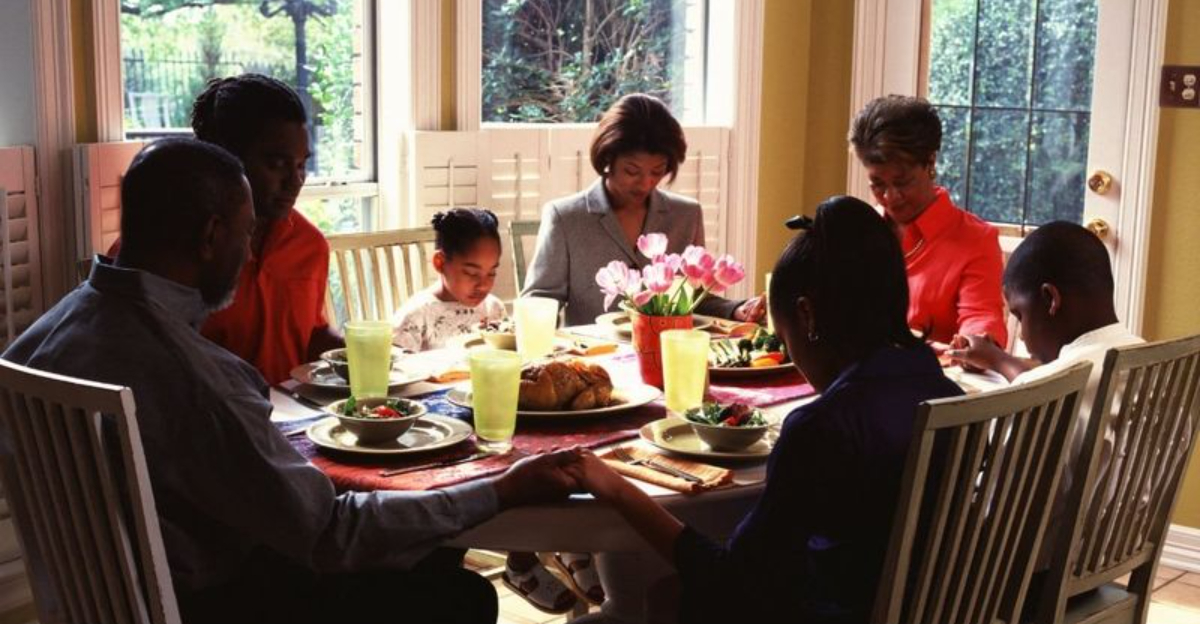
10. Pre-Dinner Blessing Rituals
Saying grace wasn’t just for Sunday – many New York families paused for a moment of gratitude before weekday dinners too.
Children sat with hands folded, whether reciting traditional prayers or simple ‘thank yous’ for the food before them. In diverse neighborhoods, these practices varied widely.
Jewish families said blessings in Hebrew, Catholic families made the sign of the cross, and secular households might simply hold hands in a moment of silence.
The common thread was teaching children to pause and acknowledge life’s necessities.
11. Hats Off When Inside
Baseball caps, winter beanies, or stylish fedoras – all headwear came off when crossing the threshold into someone’s home or a public building. This seemingly small gesture signaled respect for the space you were entering.
Teachers would remind forgetful students with a simple finger point to their head. Parents reinforced the rule at church, restaurants, and theaters.
The tradition connected to deeper cultural norms about showing proper respect in formal settings – something young New Yorkers absorbed through consistent modeling.
12. The Art of Not Interrupting
Adults conversing in New York apartments created invisible boundaries children knew not to cross.
Kids developed remarkable patience, waiting for natural pauses before speaking instead of blurting out thoughts mid-conversation.
If truly urgent, a child might stand quietly beside a parent until acknowledged with a nod. This restraint taught valuable listening skills and demonstrated that adults’ conversations had inherent value.
Many parents used the phrase ‘hold that thought’ – teaching children their ideas mattered but timing was important.
13. The Family Meal Starting Signal
Forks remained firmly on napkins until every family member was served and seated – a practice that fostered patience and community.
No matter how tempting the steaming plate of spaghetti, New York kids knew better than to dig in prematurely.
Many families added an additional signal – Mom or Dad taking the first bite or saying ‘Enjoy!’ This small delay built anticipation and reinforced family cohesion.
The practice acknowledged the effort behind meal preparation and ensured everyone began the shared experience together.
14. Sidewalk Navigation Courtesy
‘Excuse me’ was the essential passport for navigating crowded New York sidewalks. Children learned to voice this phrase clearly when passing slower walkers or squeezing through packed subway platforms.
Parents demonstrated proper volume – loud enough to be heard but not shouted. The phrase acknowledged shared public space in a city where personal bubbles constantly overlapped.
This verbal heads-up prevented collisions and reduced friction in a densely populated environment where strangers constantly negotiated tight spaces.
15. Schoolyard Snack Sharing
Lunch tables once operated on unspoken sharing principles. Opening a bag of chips meant offering some to friends without being prompted. Keeping treats to yourself earned disapproving glances from peers and monitoring teachers alike.
This culture of generosity extended beyond food to school supplies and toys. Many kids from less affluent families depended on this informal support network.
The practice taught resource distribution, empathy, and community building – lessons reinforced by parents who packed extra snacks specifically for sharing.
16. Grocery-Carrying Assistance
Spotting Mrs. Goldstein struggling with grocery bags up five flights? Young New Yorkers automatically rushed to help!
Walk-up apartments created natural opportunities for children to assist neighbors without expectation of reward.
Parents beamed with pride watching their children grab heavy bags without being asked. This neighborly assistance created community bonds that lasted generations.
Some buildings even had informal systems where older residents would call specific apartments when returning from shopping, knowing helpful young hands would appear.