
Chiricahua Just Became America’s Newest National Park, So Here’s What To See First
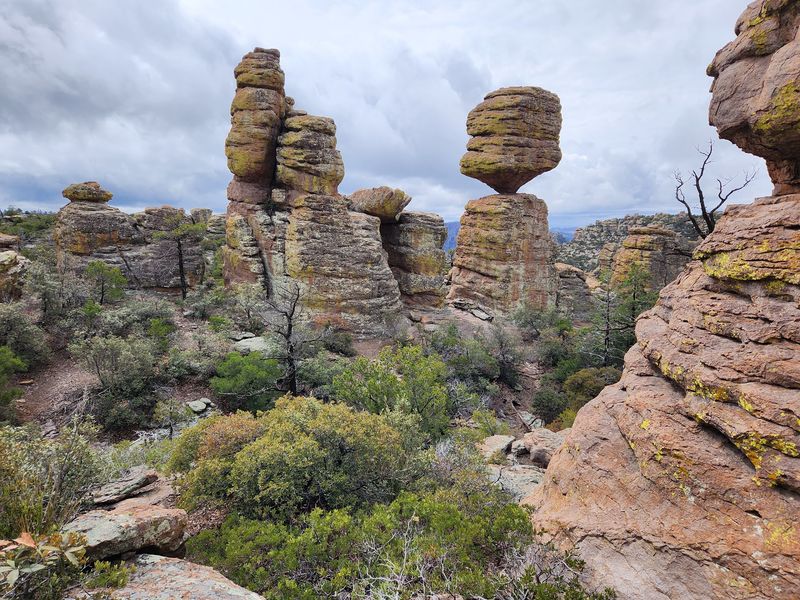
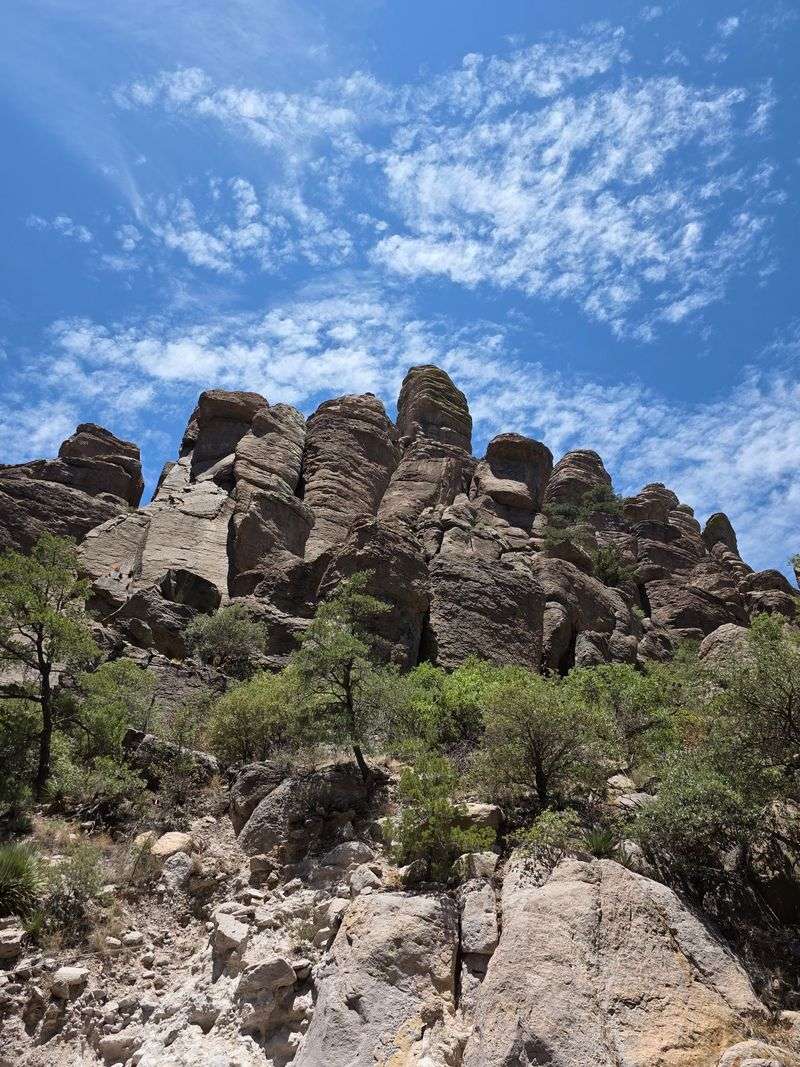
Rock spires stand by the thousands here, some balanced so oddly they look like a strong sneeze could topple them. They’ve held steady for ages, sculpted from volcanic ash that settled about 27 million years ago.
That ash came from one massive eruption. Wind and water spent the time since carving it into pinnacles, hoodoos, and narrow stone hallways.
Now this corner of southeastern Arizona has a shiny new title. I like how it earned national park status without losing its quiet, unhurried feel.
Even better, driving in costs nothing at all.
Coatis wander the trails. Night skies glow with stars.
A historic guest ranch still stands near the canyon floor. I can’t imagine a better time to visit than right now, while the paint on that new sign is still fresh.
So where should you start?
A Brand-New National Park With Free Admission Built In
Congratulations are in order for Chiricahua National Park, the newest name on America’s national park list. The former Chiricahua National Monument earned its upgrade on October 20, 2026, when the Chiricahua National Park Act became law.
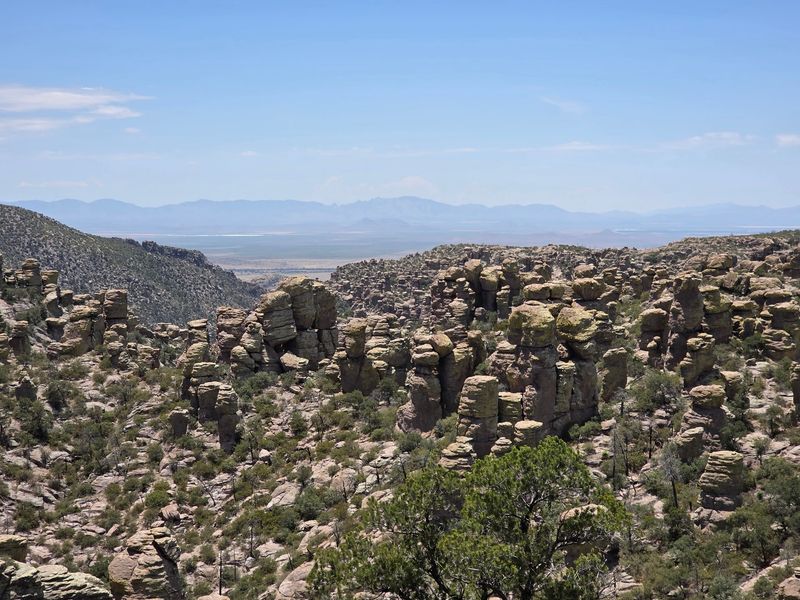
So what exactly did Arizona gain? Picture nearly 12,000 acres of towering rock spires, balanced boulders, and forested canyons in the Chiricahua Mountains.
The park sits in the far southeastern corner of the state, roughly 120 miles southeast of Tucson.
The redesignation recognizes the national significance of both its natural and cultural resources. That means the rocks, the wildlife, and the human stories all made the case together.
Here’s the part budget travelers will love. There’s no entrance fee and no parking fee to visit.
Donations are welcome at the visitor center, but your wallet can otherwise stay put.
That combination feels rare these days. A national park with world-class scenery and zero admission cost sounds almost too good to share.
The park also stays open around the clock, every day of the year. Roads and trails welcome sunrise hikers, sunset watchers, and stargazers alike, with gates closing only during emergencies.
Volcanic Ash Turned Into A Wonderland Of Rocks
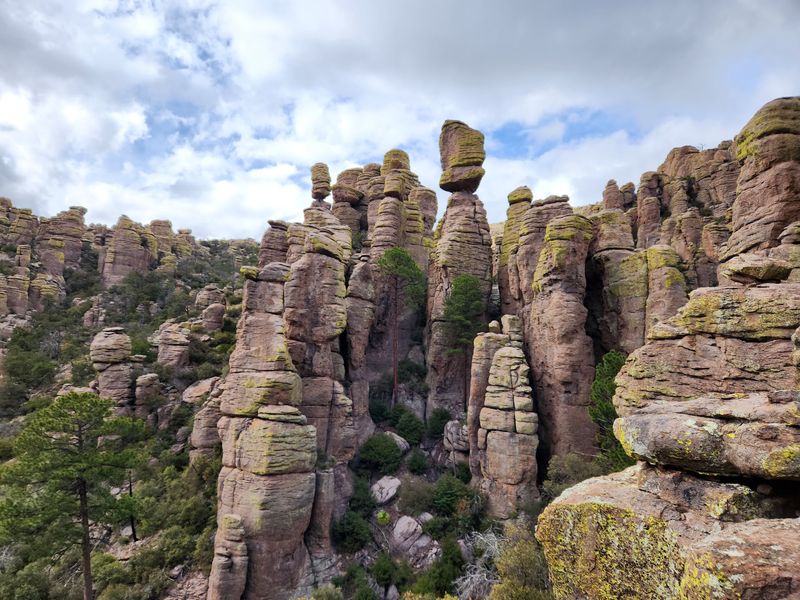
About 27 million years ago, the Turkey Creek Caldera blew its top in a massive eruption. Thick layers of ash rained down and hardened into a rock called rhyolitic tuff.
Erosion took over from there, and it had plenty of patience. Water, wind, and time carved that stone into the pinnacles and hoodoos you see today.
The result earned a fitting nickname: the Wonderland of Rocks. Spires crowd the hillsides like a stone audience waiting for the show to start.
Some formations balance huge boulders on surprisingly skinny bases.
Honestly, it looks like nature got bored and started stacking things. Yet every column follows the cracks and joints left in the cooled volcanic rock.
The scenery shifts as you climb, too. Lower canyons feel enclosed and shady, while higher viewpoints open up into sweeping fields of spires.
Photographers tend to love late afternoon here. Low sunlight paints the rhyolite in warm tones and throws long shadows between the columns.
Geology fans will find exhibits explaining all of this at the visitor center. Everyone else can simply stare and wonder how those boulders stay up.
Eight Winding Miles Up Bonita Canyon Drive To Massai Point
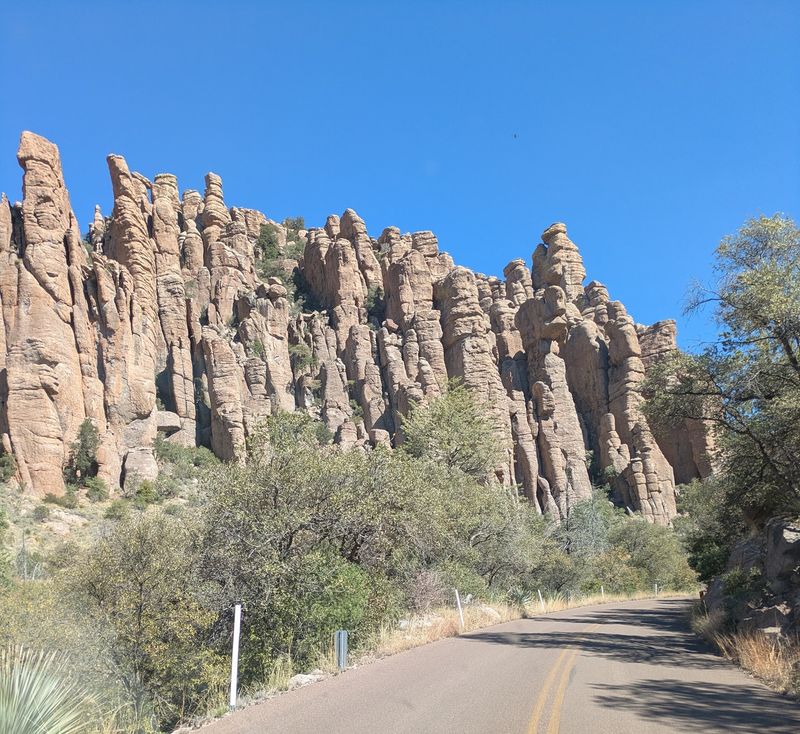
Not every great view requires sore calves. Bonita Canyon Drive climbs eight scenic miles from the valley floor into the mountains, ending at Massai Point.
That final overlook delivers a full 360-degree panorama. Rock-filled valleys spread below, and distant mountain ranges line the horizon.
The paved road includes several pullouts along the way. You can enjoy plenty of beauty without leaving your car, which makes this a fine choice for mixed-ability groups.
Massai Point also features an exhibit building near the parking area. Restrooms are available up top, and a shaded picnic spot sits near the end of the road.
A few practical notes help here. Vehicles longer than 29 feet aren’t allowed past the visitor center, so big RVs need a plan.
Parking lots along the drive are fairly small. On busy days, finding a spot at popular stops may take some patience.
Sunset drivers should watch for one sneaky challenge. The low sun can shine directly at eye level on the winding road, so slow and steady wins.
Wear layers, too. The climb brings cooler temperatures and breezes that can feel surprisingly brisk.
Squeeze Through Stone Hallways On The Echo Canyon Loop
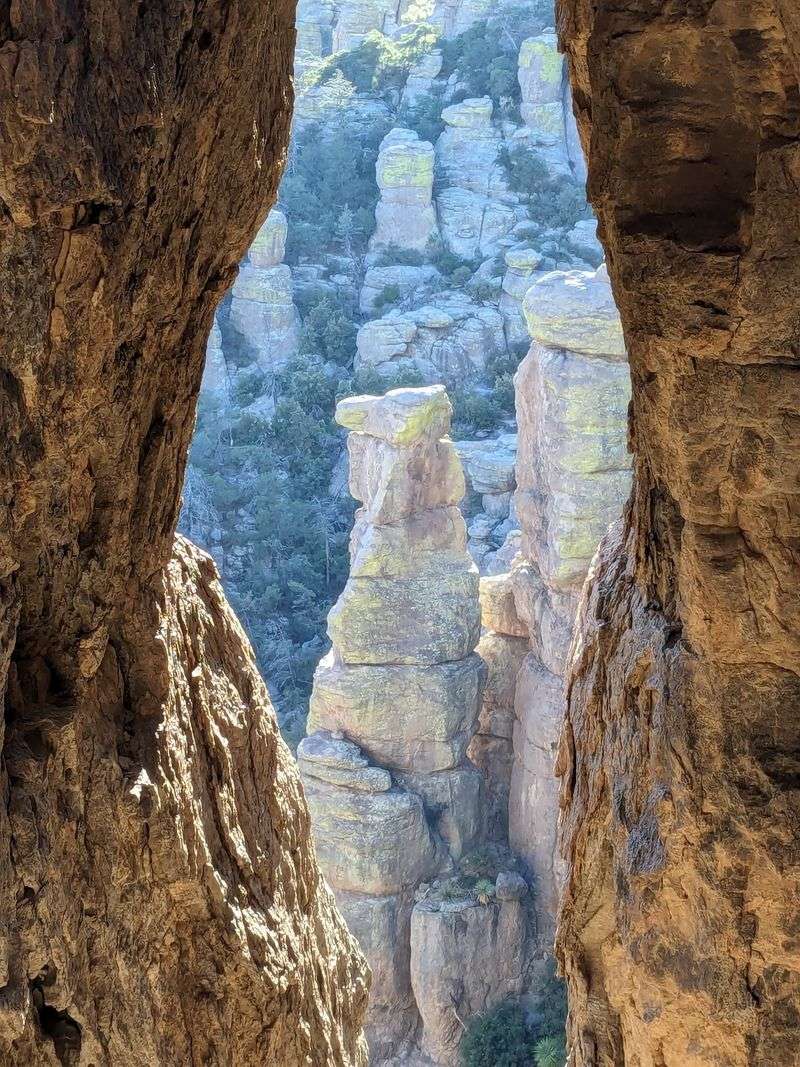
Narrow rock passages, cozy grottoes, and spires that tower overhead. That’s the Echo Canyon Loop in a nutshell, and it’s a favorite first hike for good reason.
The loop runs about 3.3 to 3.4 miles. It threads hikers right through the formations rather than just past them.
Short on time? The grottoes make a satisfying turnaround point.
They sit roughly 0.4 miles from the trailhead in each direction.
Those grottoes feel like natural stone rooms. Rocks lean together overhead, creating sheltered nooks perfect for a quick breather and plenty of photos.
Pictures rarely capture the scale, though. Standing between the columns gives you a real sense of how tall these spires actually are.
The trail offers shade in spots, especially earlier in the day. As afternoon arrives, exposed sections can feel warm, so bring a hat and plenty of water.
Trekking poles can help on steeper stretches. The terrain stays manageable, but uneven rock rewards careful footing.
Keep your eyes open for wildlife along the way. Coati families sometimes wander these trails, which feels like a bonus prize for showing up.
Mushroom Rock And Big Balanced Rock Await The Bold
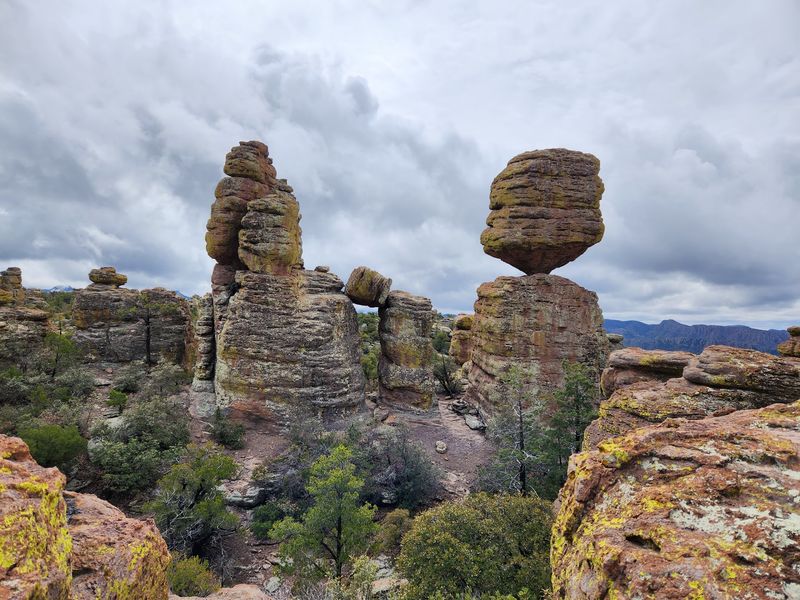
Big Balanced Rock looks like it ignored every rule of physics. This enormous boulder perches on a slender base, and it’s one highlight of the Heart of Rocks Loop.
Mushroom Rock joins the lineup, too. The name explains itself pretty well once you see the shape.
The Heart of Rocks Loop runs about seven miles roundtrip. It showcases some of the most unusual formations in Chiricahua National Park.
That distance makes it a solid half-day or longer adventure. Pack snacks, layers, and more water than you think you’ll need, since services are limited.
The effort pays off quickly once the formations appear. Odd shapes pop up around nearly every bend, and each one seems stranger than the last.
The park’s trail system covers more than 17 miles in total. Options range from easy strolls to strenuous all-day routes, so ambitious hikers can extend their outing.
A hiking shuttle has run from the visitor center in past seasons. It wasn’t operating as of fall 2025, so check with rangers before counting on it.
Bring sturdy shoes and steady patience. Balanced rocks deserve a long, admiring look.
Coatis, Turkeys, And Jays On A Mountain Island
Ever seen a coati? These raccoon cousins with long, striped tails roam Chiricahua, and spotting a family of them feels like winning the wildlife lottery.
The park sits in the Chiricahua Mountains, a sky island. Desert, grassland, and forest ecosystems meet here, creating remarkable biodiversity.
That mix supports a surprising cast of creatures. White-tailed deer, Mexican jays, and acorn woodpeckers all call the area home.
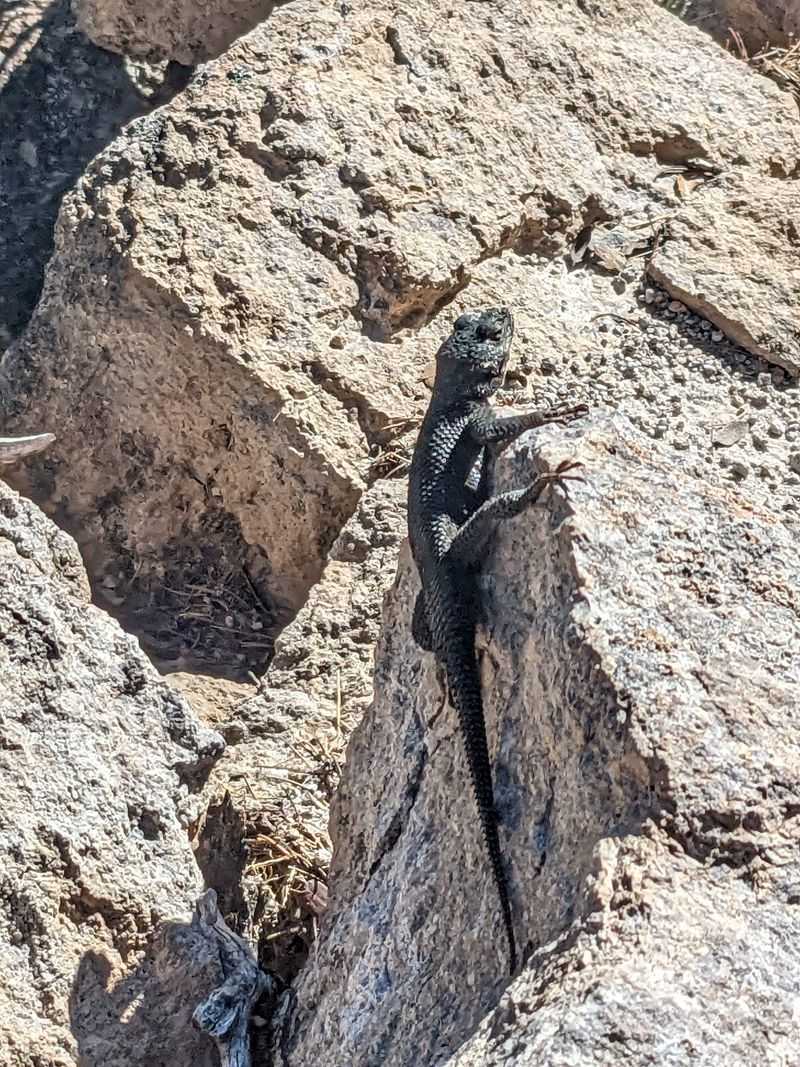
Wild turkeys show up often, and bright red and blue birds flash through the trees. Lizards sun themselves on warm rocks while squirrels dash everywhere.
Black bears and mountain lions live in these mountains as well. Sightings are uncommon, but proper food storage matters, especially for campers using bear boxes.
Birders consider this region a real treat. The sky island setting draws species you won’t easily find elsewhere in Arizona.
Nearby Willcox hosts an annual sandhill crane migration, too. Pair that seasonal spectacle with a park visit for a wildlife-packed weekend.
Early mornings and late afternoons tend to be good times for animal activity. Move quietly, keep your distance, and let the critters go about their business.
The Guest Ranch Story Behind Faraway Ranch
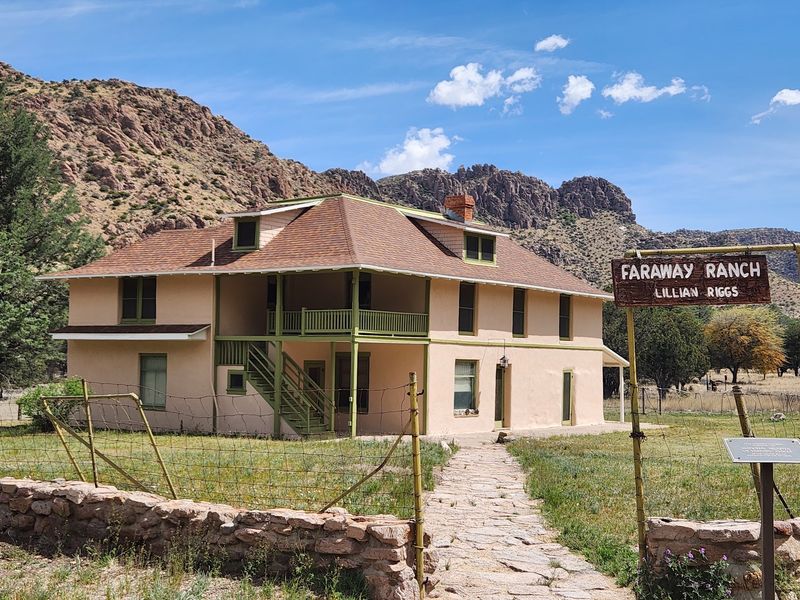
Swedish immigrants Neil and Emma Erickson built a homestead here long before national park talk began. Their place became known as Faraway Ranch.
Their daughter Lillian and her husband Ed Riggs later had bigger plans. They transformed the property into one of Arizona’s first guest ranches.
That guest ranch operated from 1917 until 1973. Visitors came to ride, explore, and soak up the rocky scenery the family loved.
Today you can explore the well-preserved family home, stables, and outbuildings. It’s a fascinating glimpse at ranch life in a remote mountain valley.
The story stretches much further back, though. This land served as the homeland of the Chiricahua Apache people for millennia.
The Civilian Conservation Corps added another chapter in the 1930s. Crews built roads, trails, and structures, including the visitor center.
Hikers can admire impressive CCC rock work on the Upper Sarah Deming Trail. The craftsmanship still holds up beautifully.
Horse lovers have a reason to visit, too. Designated horse trailer parking sits near Faraway Ranch, and several trails welcome riders, including Silver Spur Meadow Trail.
Stars So Bright You Might Forget To Blink
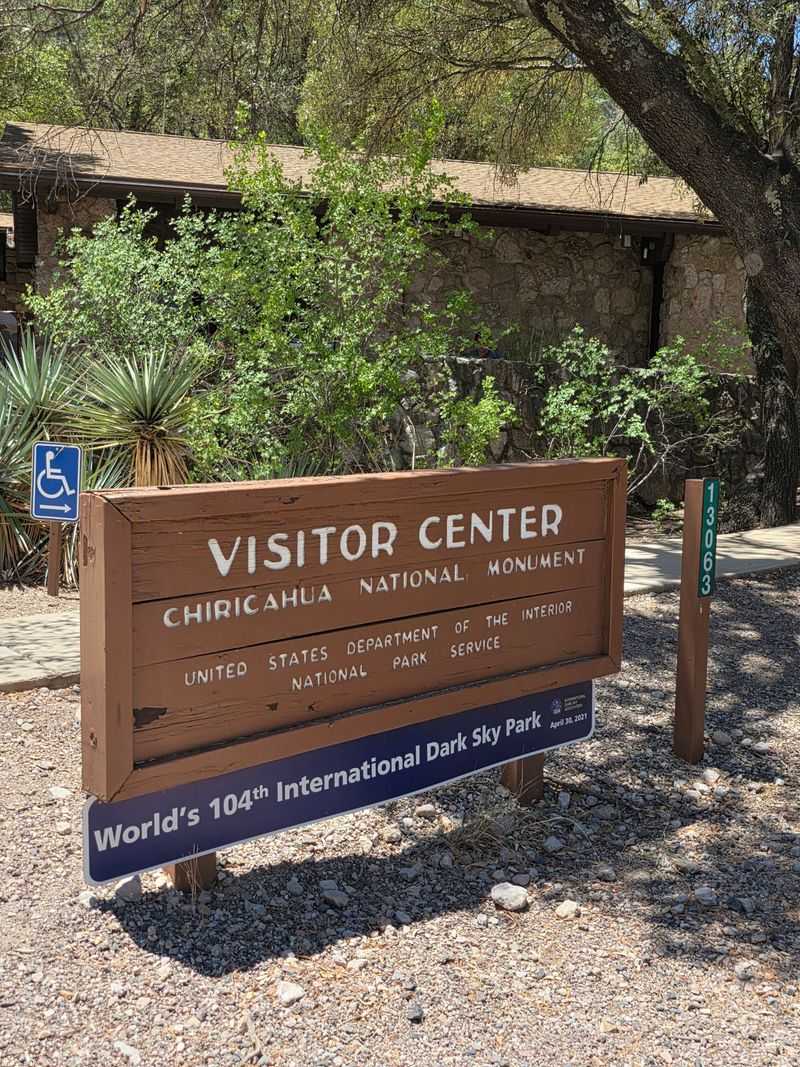
When the sun drops, the second show begins. Chiricahua holds International Dark Sky Park recognition, and the night sky here can feel almost overwhelming.
Remote southeastern Arizona keeps light pollution low. That gives stargazers a wide, inky canvas packed with stars.
Because the park stays open 24 hours, after-dark visits are welcome. Trails remain open for sunrise, sunset, and night sky viewing.
Massai Point makes a natural gathering spot for skywatching. Its open, elevated views offer a broad sweep of the heavens.
Silhouetted rock spires add drama to every night photo. Few backdrops look as striking against a star-filled sky.
Warm months make evenings especially appealing. Heading out after dark avoids the strongest afternoon sun while still delivering big rewards.
Bring a flashlight with a red setting to protect your night vision. A jacket helps too, since mountain temperatures drop after sunset.
Drive carefully on the winding road in darkness. Wildlife may cross unexpectedly, and slower speeds keep everyone safe.
Camping overnight gives you the best seat in the house. Stepping out of your tent beneath that sky sounds like a pretty great way to end a day.
Your Practical Game Plan For Visiting
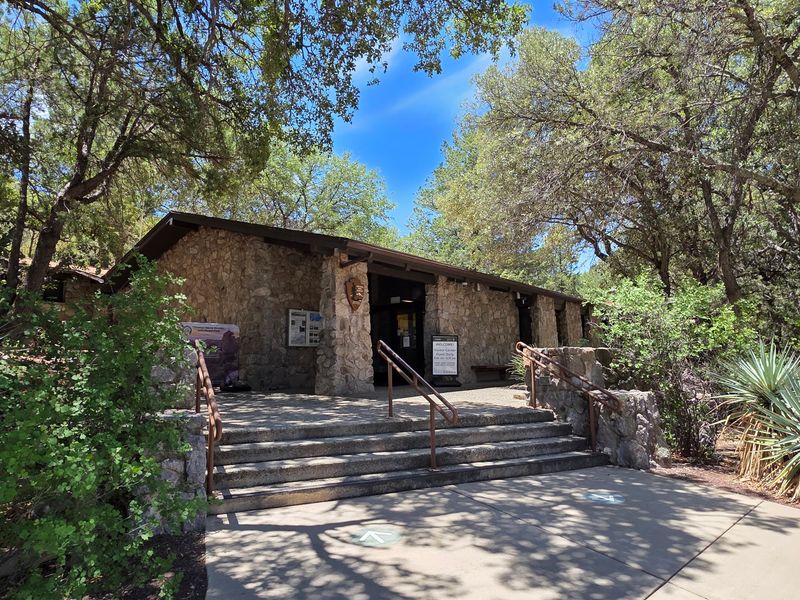
Start at the visitor center, about two miles past the entrance. Its doors open daily from 8:30 a.m. to 4:30 p.m.
Mountain Standard Time, closing only on Christmas.
Remember, most of Arizona skips Daylight Saving Time. Plan your arrival accordingly.
Inside you’ll find free maps, Junior Ranger booklets, and exhibits on geology and cultural history. A short film and a small bookstore round things out.
Restrooms and water bottle fillers are available there. Fill up before heading uphill, since water isn’t available at Massai Point.
Send directions to 12856 East Rhyolite Creek Road, Willcox, AZ 85643. Willcox is the nearest town, and the drive from Tucson runs roughly 120 miles.
Services around the park are limited. Pack snacks, lunch, sunscreen, and layers for changing temperatures.
Bonita Canyon Campground is the only campground in Chiricahua National Park. Reservations are recommended and can usually be booked months ahead through Recreation.gov, with a nightly fee.
Picnic areas offer a pleasant break between hikes. Plan for a full day if possible, since one visit rarely covers everything.
Why This Newcomer Deserves A Spot On Your Arizona List
Big titles can change a place, but Chiricahua still feels wonderfully unhurried. Its upgrade simply puts a spotlight on what was already special.
Families will find plenty to enjoy. Short trails like the half-mile Massai Point Nature Trail suit little legs, while Junior Ranger booklets keep kids engaged.
Serious hikers get their workout, too. Longer routes like the Heart of Rocks Loop offer a real day-long challenge.
Road trippers can soak up the scenery without much hiking at all. The drive and its pullouts deliver jaw-dropping views from the car.
History buffs have Faraway Ranch and CCC stonework. Wildlife watchers have coatis, turkeys, and a busy bird scene.
And then there’s the price. Free admission makes this one of the best values in Arizona outdoor travel.
Treat the park with care while you’re here. Pack out trash, store food properly, and stay on marked trails.
I believe the best time to see Chiricahua National Park is soon. Word about America’s newest national park is spreading fast.
Grab your hiking shoes, fill your water bottles, and see those balancing rocks for yourself.