
14 Classic Chocolate Brands That Were Your Grandparents’ Favorites
Remember those chocolate treats your grandparents always kept in fancy glass bowls or tucked away in kitchen drawers? Those classic brands weren’t just candy but part of growing up for an entire generation.
Many of these beloved chocolate treasures have stood the test of time, while others live on only in their memories. Let’s unwrap the delicious history of these timeless treats that made your grandparents’ sweet tooth sing!
1. Hershey’s Chocolate
Milton Hershey’s chocolate empire began in 1894, transforming American candy forever. The iconic silver-wrapped bars became a symbol of affordable luxury during the Great Depression when a nickel could buy a moment of chocolatey bliss.
My grandfather always kept Hershey’s Kisses in his shirt pocket. He’d pull one out with a wink whenever I scraped my knee or aced a spelling test.
Hershey’s chocolate has that distinctive tangy flavor that Europeans find peculiar but Americans adore as the taste of childhood.
2. Whitman’s Sampler
Nothing said “special occasion” quite like the yellow Whitman’s Sampler box with its cross-stitch design. Since 1842, this assortment has been America’s go-to gift chocolate, featuring that handy map inside the lid to avoid the dreaded cherry cordial surprise.
The company pioneered pre-packaged chocolates when most candies were sold by weight from glass cases. For many families, the empty boxes became treasure chests for buttons, recipes, or love letters.
The brand’s slogan “A woman never forgets the man who remembers” helped cement its romantic reputation.
3. Nestlé Crunch
The satisfying crackle of crisped rice in smooth milk chocolate made Nestlé Crunch an instant hit when it launched in 1938. The simple combination proved irresistible to Depression-era sweet tooths looking for something different.
Grandma kept these in her purse, mysteriously unwrinkled despite living alongside tissues, lipstick, and those peculiar hard candies no child would voluntarily eat. “It’s not just chocolate,” she’d say, “it’s excitement in every bite!”
The distinctive blue wrapper hasn’t changed much in nearly a century, making it instantly recognizable across generations.
4. Baby Ruth
Contrary to popular belief, Baby Ruth wasn’t named after baseball legend Babe Ruth. The Curtiss Candy Company claimed it honored President Grover Cleveland’s daughter Ruth, though many suspect that was just to avoid paying royalties.
The perfect blend of nougat, caramel, peanuts and chocolate has satisfied sweet cravings since 1921. Priced at just a nickel during the Great Depression, it offered substantial heft when every penny counted.
The candy starred in the 1980s movie “Caddyshack” in perhaps the most memorable – and disgusting – swimming pool scene in cinematic history.
5. Clark Bar
Born in Pittsburgh in 1917, the Clark Bar was America’s first combination candy bar. Its crunchy peanut butter center covered in milk chocolate became especially popular with soldiers during World War I who received them in care packages.
The distinctive red wrapper with bold yellow lettering stood out in candy displays. During its peak, the D.L. Clark Company produced nearly 100 million bars annually from their factory in Pittsburgh’s North Side.
After changing hands multiple times, the beloved bar nearly disappeared forever in 2018 before being rescued by the Boyer Candy Company.
6. Mounds and Almond Joy
“Sometimes you feel like a nut, sometimes you don’t!” The catchy jingle separated these coconut-filled siblings – Almond Joy with its almonds and milk chocolate, Mounds with its darker coating and nut-free interior.
I’ll never forget my grandmother’s face lighting up when she’d find these in her Christmas stocking. “The best gifts come in small packages,” she’d say while carefully unwrapping each piece like a precious jewel.
Peter Paul Candy Manufacturing introduced Mounds in 1920, while Almond Joy joined the family in 1946 as a response to the post-war nut surplus.
7. Fannie May Chocolates
Chicago’s sweetest export began in 1920 when H. Teller Archibald opened his first shop on LaSalle Street. The handcrafted chocolates quickly developed a cult following for their exceptional quality and distinctive recipes like the Pixie – a perfect blend of caramel and pecans.
During World War II, Fannie May refused to compromise their recipes despite sugar rationing. Instead, they simply made fewer chocolates and closed each day when they sold out.
Their signature blue boxes became status symbols, often making appearances at important family gatherings and holiday celebrations.
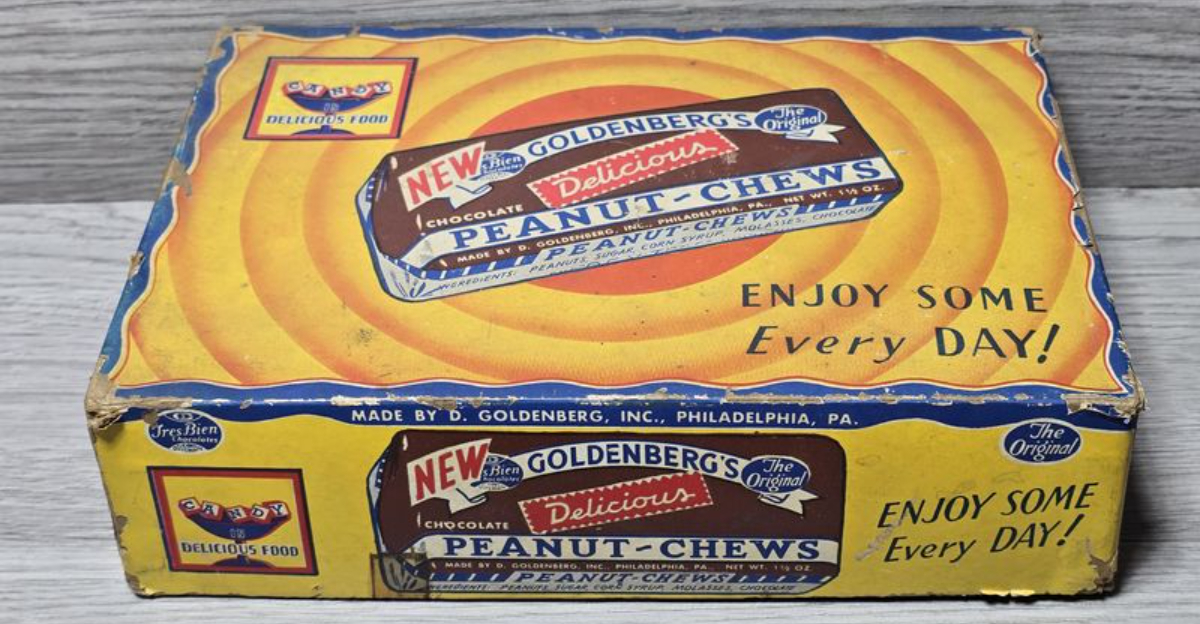
8. Goldenberg’s Peanut Chews
Originally created as a high-energy ration for troops during World War I, these chewy molasses treats coated in dark chocolate became civilian favorites after the war ended. The Philadelphia-made candy offered substantial satisfaction for just a penny during the Depression.
The Goldenberg family maintained ownership for over 85 years – a rarity in the candy business. Their stubborn commitment to the original recipe kept loyal fans coming back decade after decade.
Unlike many competitors, these robust chews actually contained real peanuts rather than artificial flavoring, making them a relatively nutritious treat.
9. Russell Stover
Clara and Russell Stover started their chocolate empire from their Denver home kitchen in 1923, selling “Mrs. Stover’s Bungalow Candies” door-to-door. Their heart-shaped boxes revolutionized Valentine’s Day gift-giving, creating a tradition that continues today.
During my childhood, Grandpa would mysteriously disappear every February 13th, returning with a red satin box for Grandma. She’d always act surprised, though this ritual had played out for over fifty years.
The company’s sugar-free line, introduced in 1995, helped older generations continue enjoying chocolate despite dietary restrictions.
10. Cadbury Dairy Milk
Though British in origin, Cadbury’s silky-smooth chocolate bars became American favorites after World War II when returning soldiers brought their newfound taste for European chocolate home. The distinctive purple wrapper signaled something special inside.
My grandmother hoarded these bars like precious gems. “American chocolate is fine,” she’d whisper conspiratorially, “but Cadbury understands what chocolate should be.” She’d break off tiny squares, insisting we let each piece melt slowly on our tongues.
The higher milk content gave Cadbury its signature creamy texture that distinguished it from grainier American competitors.
11. Good & Plenty
America’s oldest branded candy (1893) combined licorice with a candy coating long before Twizzlers or Red Vines dominated the market. The pink and white capsule-shaped pieces came in distinctive purple boxes that rattled satisfyingly when shaken.
Movie theaters sold mountains of these treats during cinema’s golden age. The candy’s longevity comes partly from its unique texture – neither chewy nor hard, but something delightfully in-between.
The mascot, a cartoon character named “Choo-Choo Charlie,” appeared in commercials where he used Good & Plenty as fuel for his train, creating the memorable jingle “Charlie says…”
12. Boyer Mallo Cups
These unique cups combined coconut-dusted marshmallow cream with milk chocolate to create a textural masterpiece unlike anything else on candy shelves. Each package contained play money cards that could be redeemed for prizes, adding collector appeal beyond the sweet treat itself.
The Boyer brothers started making these cups by hand in their Pennsylvania kitchen in 1936, expanding to a factory as demand grew. Despite remaining regional for decades, devoted fans created a cult following.
Unlike many competitors, Boyer remained family-owned until 1984, maintaining consistent quality that grandparents reminisce about today.
13. Cherry Mash
Since 1918, this distinctive candy has featured a cherry fondant center surrounded by chocolate and crushed peanuts. The bright red wrapper with its cherry illustration became a familiar sight throughout the Midwest where it maintained strongest distribution.
The Chase Candy Company in St. Joseph, Missouri, has produced Cherry Mash continuously for over a century. During its peak popularity in the 1950s, it claimed the title of third best-selling candy bar in America.
The unusual combination of cherry, chocolate and nuts created devoted fans who would stock up whenever they found them.
14. Chick-O-Stick
This crunchy honeycomb candy stick filled with peanut butter and rolled in toasted coconut became a staple in candy jars across America after its 1938 introduction. Despite the chicken-suggesting name, it contains no poultry – the original shape supposedly resembled fried chicken.
When I was seven, my grandmother introduced me to these odd orange sticks. “They look like dog treats,” I complained. “So did potato chips until you tried them,” she countered with grandmotherly wisdom. One bite and I was converted.
The distinctive orange wrapper has barely changed in over 80 years.