
10 Classic Massachusetts Desserts That Locals Say Taste Like New England Tradition
Growing up in Massachusetts meant Sundays at my grandmother’s kitchen table, where desserts weren’t just sweets but stories baked into every bite.
New England tradition lives on through recipes passed down for generations, each one carrying the flavor of history and home.
From colonial kitchens to modern bakeries, these treats remind us why Massachusetts remains America’s dessert destination.
Let me take you on a delicious journey through the classics that make locals smile with every forkful.
1. Boston Cream Pie
My aunt once told me that Boston Cream Pie isn’t actually pie, and I refused to believe her until I tasted my first slice at the Parker House Hotel. Layers of tender sponge cake sandwich creamy vanilla custard, all crowned with a shiny chocolate glaze that makes your taste buds dance. This Massachusetts state dessert was born in 1856 and has been causing sweet confusion ever since.
Locals know the secret lies in getting that custard just right, smooth but not runny, rich but not heavy. The cake needs to be soft enough to let your fork glide through without a fight.
Every bakery in Boston claims theirs is the authentic version, and honestly, trying them all sounds like the best research project ever. This dessert proves that sometimes the best traditions come with a little identity crisis.
2. Whoopie Pies
Picture two soft chocolate cakes giving a marshmallow cream filling the warmest hug imaginable, and you’ve got the magic of whoopie pies. I remember racing my brother to grab the last one from the cookie jar, and let me tell you, those were serious competitions. These handheld treats became lunch box legends across New England, though Maine and Pennsylvania also claim ownership.
The name supposedly came from farmers shouting whoopie when they found these in their lunch pails. Smart bakers keep their chocolate cakes moist and their filling sweet without being overwhelming.
Some folks add a touch of coffee to the batter for extra depth, while purists stick to the classic recipe. Whether you call them gobs, black moons, or whoopie pies, one thing’s certain: they disappear faster than snow in April.
3. Indian Pudding
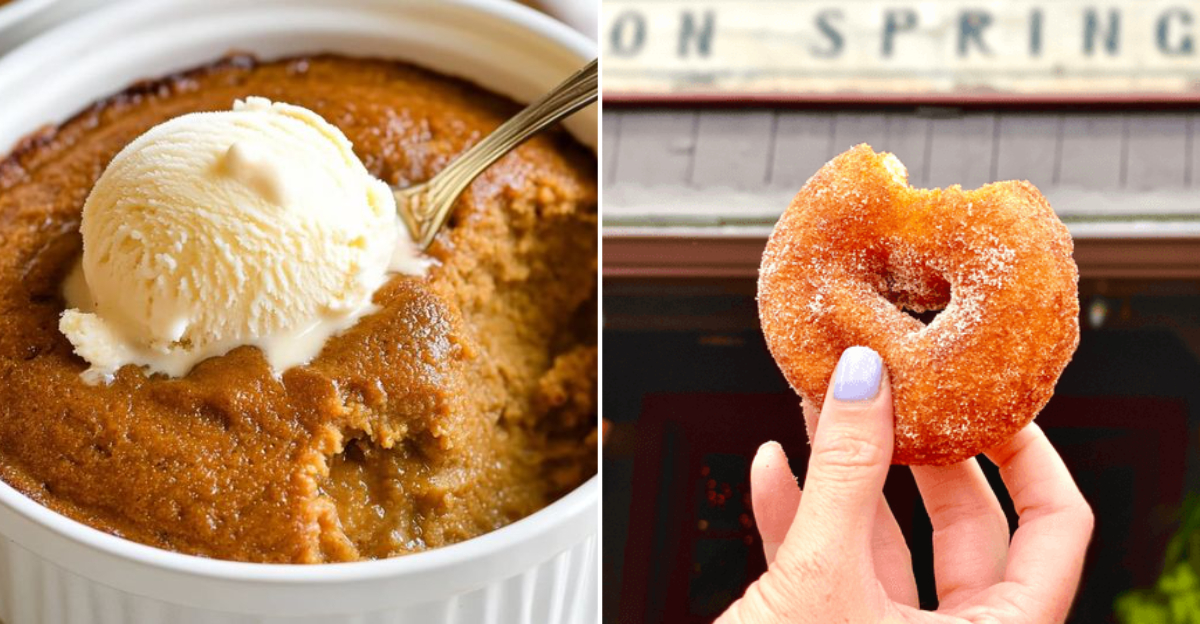
Nothing says colonial America quite like Indian Pudding, a dessert that’s been warming New England hearts since the Pilgrims figured out what to do with cornmeal. Molasses gives it that deep, almost mysterious sweetness, while spices like cinnamon and ginger add warmth that feels like a cozy blanket on a February night. I’ll admit, the first time I tried it, I wasn’t sure what to think, but by the third spoonful, I was hooked.
This slow baked pudding gets its name from the cornmeal, which colonists called Indian meal back in the day.
Smart cooks serve it piping hot with a scoop of vanilla ice cream creating that perfect hot and cold contrast. The texture sits somewhere between custard and porridge, comforting in a way that modern desserts rarely achieve.
4. Apple Cider Doughnuts
Fall in Massachusetts means apple picking, and apple picking means cider doughnuts so fresh they’re still warm when you bite into them. The reduced apple cider gives these treats an intense apple flavor that regular doughnuts can only dream about. That cinnamon sugar coating sticks to your fingers, and honestly, licking them clean is half the fun.
Every orchard claims their recipe is the best, and I’ve made it my personal mission to test that theory every autumn. The key is using real cider that’s been boiled down to concentrate all those apple flavors.
Some places make them cake style, others go for a lighter texture, but all of them disappear within minutes of coming out of the fryer. Pro tip: grab them early before the weekend crowds show up and clear out the bakery.
5. Maple Walnut Ice Cream
Real maple syrup transforms ordinary ice cream into something that tastes like New England captured in frozen form. Those crunchy walnut pieces add texture that keeps things interesting, and the combination reminds me of pancake breakfasts at my grandpa’s sugar shack. This flavor doesn’t mess around with artificial anything; it’s all about showcasing that pure maple goodness.
Local ice cream shops take pride in using Grade A maple syrup from nearby farms, supporting the community while creating something delicious.
The walnuts need to be toasted just right, bringing out their buttery flavor without any bitterness. Some people think maple is just for breakfast, but clearly those people haven’t experienced it in ice cream form. One scoop never feels like enough, but that’s probably the point.
6. Blueberry Pie
Wild blueberries from Maine might get all the glory, but Massachusetts knows how to turn them into pie perfection. That moment when you cut into a freshly baked blueberry pie and the filling oozes out just a little is pure summer magic. I learned to make pie crust from my mom, who learned from her mom, and the tradition continues with every lattice top I weave.
The secret is using a mix of fresh and frozen berries to control the juice level and prevent a soggy bottom crust.
A squeeze of lemon brightens the filling, while a sprinkle of sugar on top creates a sweet, crunchy crown. Serve it warm with vanilla ice cream, and you’ve got a dessert that makes grown adults close their eyes and sigh happily.
7. Cranberry Bog Pie
Massachusetts cranberry bogs produce more than decoration for Thanksgiving; they inspire pies that balance tart and sweet like a tightrope walker. Fresh cranberries pop in your mouth with a zing that wakes up your taste buds, while sugar and orange zest smooth out the edges. My first cranberry pie experience involved way too much tartness because I skipped reading the recipe properly, but I learned my lesson.
Smart bakers add a streusel topping instead of a second crust, letting those ruby red berries shine through.
The filling thickens as it cools, transforming from loose fruit into a sliceable masterpiece. Some recipes include apples or pears to add sweetness and bulk, creating layers of flavor that keep you guessing. This pie celebrates Massachusetts agriculture in the most delicious way possible.
8. Hermits Cookies
These spiced cookies have been around so long that nobody really knows why they’re called hermits, but theories range from their long shelf life to bakers hiding them away for themselves. Molasses gives them a deep, rich flavor, while cinnamon, nutmeg, and cloves create warmth that spreads from your tongue to your toes. Raisins dot the dough like little flavor bombs waiting to surprise you.
My grandmother kept hermits in a tin on her counter, and they somehow tasted better each day as the spices melded together.
The texture should be chewy but not tough, with crispy edges that provide contrast. Some bakers add chopped nuts or swap raisins for dried cranberries, making each batch unique. These cookies prove that simple ingredients and old fashioned techniques still create magic worth sharing.
9. Fluffernutter Dessert Bars
Marshmallow fluff was invented right here in Massachusetts, so naturally we found ways to turn it into more than just sandwich filling. These bars combine a chewy peanut butter cookie base with a cloud of sweet marshmallow topping that sticks to the roof of your mouth in the best way. Kids go absolutely bonkers for them, but let’s be honest, adults sneak just as many when nobody’s looking.
The trick is getting the fluff layer thick enough to taste but not so thick it becomes overwhelming.
Some creative bakers drizzle chocolate on top or press chocolate chips into the warm fluff for extra decadence. The bars cut cleanly when chilled but taste better at room temperature when everything’s soft and gooey. This dessert captures childhood nostalgia while proving that sometimes simple combinations create the most memorable treats.
10. Toll House Chocolate Chip Cookies
Ruth Wakefield invented the chocolate chip cookie at the Toll House Inn in Whitman, Massachusetts, and changed dessert history forever. She chopped up a Nestle chocolate bar expecting it to melt throughout the dough, but instead, the chips held their shape and created something entirely new. I’ve baked these cookies hundreds of times, tweaking the recipe here and there, but the original still reigns supreme.
The secret is using both white and brown sugar for complex sweetness and perfect texture.
Slightly underbaking them means the centers stay soft while the edges get golden and crispy. These cookies smell like home, taste like happiness, and disappear faster than you can say pass the milk. Every bite connects you to that moment in 1938 when Ruth accidentally created an American icon.