
9 Classic Michigan Snacks That Only Locals Still Talk About
Growing up in Michigan meant having access to some of the most mouthwatering snacks you couldn’t find anywhere else.
These iconic treats aren’t just food—they’re edible pieces of Michigan history that bring back waves of nostalgia for anyone who calls the Great Lakes State home.
From crunchy chips made in Detroit to sweet treats from Mackinac Island, these nine snacks represent the unique flavors that shaped my childhood and continue to make Michiganders’ taste buds dance with delight today.
1. Detroit-Style Coney Dogs: The Rivalry You Can Taste
My first bite of a proper Detroit Coney Dog happened when I was seven, standing between American and Lafayette Coney Islands, unaware I was about to enter Michigan’s most delicious debate. These aren’t your average hot dogs—they’re a masterpiece of beef heart chili sauce, yellow mustard, and diced onions piled onto a steamed bun.
The rivalry between American and Lafayette has divided families for generations. Both claim to be the original, and locals pledge fierce allegiance to their preferred spot. What makes them special isn’t just the snap of the natural-casing wiener, but that distinctive sauce—spiced differently than any chili you’ve had before.
You haven’t truly experienced Michigan until you’ve eaten a Coney at 1 AM after a night downtown, the perfect savory ending to any evening.
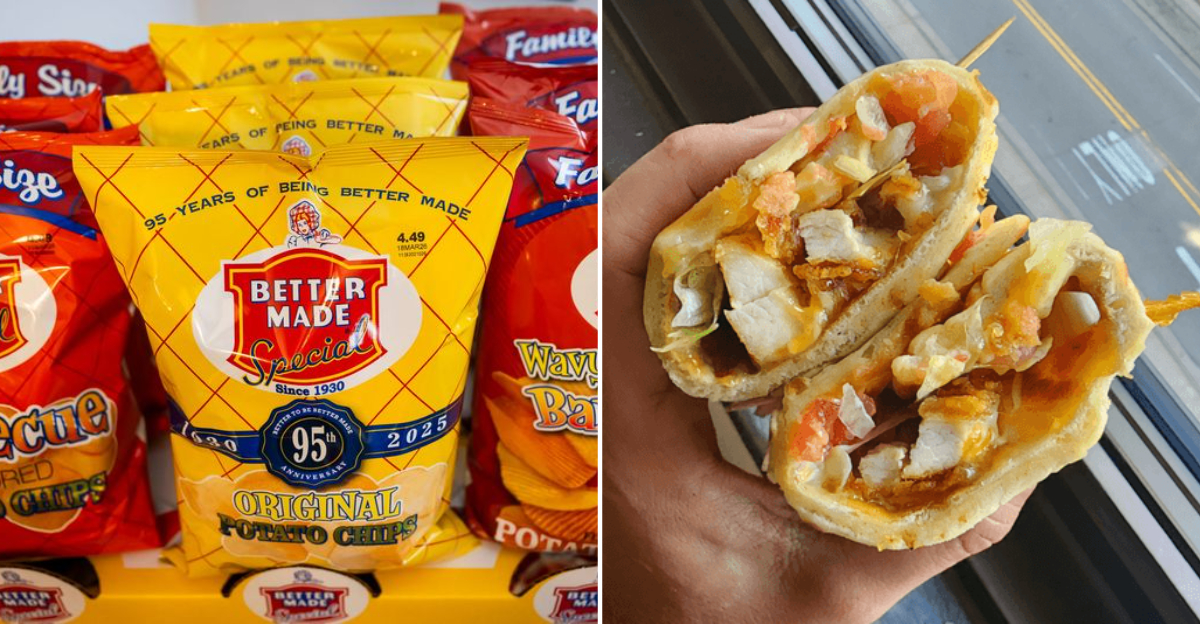
2. Better Made Potato Chips: Cross Mackenzie’s Crunchiest Legacy
The distinctive red bag caught my eye every time Grandpa brought groceries home—Better Made chips, the crunchiest treasure in his paper sack. Founded in 1930 during the Great Depression by Cross Mackenzie and Pete Cipriano, these Detroit-made chips have a special place in Michigan snacking history.
What makes them extraordinary isn’t just their perfect crunch (though that satisfying snap is legendary). It’s the distinctly Michigan potatoes and that perfect balance of salt that somehow tastes different than national brands. The Rainbow chips—those slightly darker, caramelized ones—were always worth fighting my cousins for.
The factory on Gratiot Avenue still produces these golden beauties, filling the east side with that unmistakable potato chip aroma that’s practically Detroit’s unofficial perfume.
3. Faygo & Vernors: Pop (Not Soda) That Fizzes With Michigan Pride
“Want a pop?” my dad would ask, never once calling it “soda” like those out-of-staters. Our fridge always housed the holy Michigan duo: Faygo Red Pop and Vernors ginger ale. Faygo, born in Detroit in 1907, gave us flavors like Rock & Rye that confused visitors but delighted locals with its vanilla-cream uniqueness.
Then there’s Vernors—America’s oldest surviving ginger ale and Michigan’s medicinal miracle. Allegedly aged four years in oak barrels before bottling, it packs a ginger punch that makes other ginger ales taste like sugary imposters. My mom swore it cured everything from upset stomachs to the common cold.
The ultimate Michigan move? Creating a Boston Cooler—not from Boston at all, but named after Detroit’s Boston Boulevard—by blending Vernors with vanilla ice cream into a frothy delight.
4. Pączki: Fat Tuesday’s Powdered Prize
My Polish grandmother would smack anyone who pronounced it “POON-ski.” It’s “POONCH-key,” and every February, Michiganders lose their minds over these heavenly Polish doughnuts. Unlike regular doughnuts, pączki are denser, richer, and filled with everything from traditional rose hip jam to modern custards and creams.
Hamtramck—Detroit’s historically Polish enclave—transforms into pączki paradise on Fat Tuesday. Lines wrap around bakeries like New Palace and New Martha Washington, where people wait hours in freezing temperatures for fresh batches. The tradition started as a way to use up lard and sugar before Lenten fasting.
My family’s annual pączki day competition involved seeing who could eat the most without surrendering. The powdered sugar mustache was a badge of honor, and the sugar rush kept us buzzing through afternoon classes.
5. Mackinac Island Fudge: The Tourist Treat Locals Actually Love
The sweet smell of chocolate hits you before the ferry even docks at Mackinac Island. As a teenager working summer jobs on the island, I watched tourists transform into “fudgies” (our affectionate nickname) as they crowded around shop windows to watch fudge-makers fold molten chocolate on marble slabs.
Unlike many tourist traps, this is one attraction locals genuinely treasure. The original fudge shops—Murdick’s, Ryba’s, and May’s—have been perfecting their craft since the late 1800s. The secret isn’t just quality ingredients but the cooling process on those marble slabs, creating that perfect texture that’s neither too soft nor too brittle.
Everyone has their loyalty—mine’s Murdick’s butter pecan—but the real Michigan power move is storing slabs in the freezer and breaking off icy chunks throughout winter as a reminder of summer.
6. Cudighi Sandwich: The Upper Peninsula’s Spicy Secret
“What the heck is a cudighi?” I asked on my first trip to Michigan’s Upper Peninsula. The locals just smiled knowingly. This U.P. specialty—an Italian-influenced spiced sausage patty served on a long roll with tomato sauce and melted mozzarella—remains virtually unknown below the Mackinac Bridge.
Brought to the iron-mining regions by Italian immigrants in the early 1900s, cudighi (pronounced “coo-dih-ghee”) combines sweet, spicy, and savory flavors with a distinctive hint of cinnamon and nutmeg. The original sandwich came from Ishpeming’s Copper Country, where miners needed hearty food for grueling shifts.
Every U.P. town claims their local joint makes the best version. Ralph’s Italian Deli in Ishpeming might be the most famous, but heated debates about proper cudighi preparation have nearly started family feuds at Yooper dinner tables.
7. Hani Sandwich: Metro Detroit’s Unsung Culinary Hero
The Hani wasn’t invented by someone named Hani—a fact that blew my teenage mind when I finally asked at my favorite Warren strip mall restaurant. This metro Detroit creation features marinated chicken breast, Swiss cheese, shredded lettuce, tomato, mayo, and that mysterious “Hani sauce” all stuffed into a sub roll.
Born at Byblos Cafe in the 1980s and named after a regular customer (not the creator), this sandwich spread across southeast Michigan faster than construction on I-75. Every Lebanese-owned family restaurant developed their own version, leading to passionate debates about authenticity.
What makes it distinctly Michigan is how it bridges cultures—Middle Eastern influences meeting American sandwich traditions. Out-of-state friends are always confused when I crave a Hani, only to discover it doesn’t exist beyond Michigan’s borders, making homecomings all the more delicious.
8. Sanders Hot Fudge Cream Puff: Detroit’s Sweetest Institution
My grandma’s ultimate bribe was, “Be good and we’ll stop at Sanders for cream puffs.” Nothing motivated good behavior faster. Founded in 1875, Sanders became Detroit’s premier confectionery and ice cream parlor, with its hot fudge cream puff standing as the crown jewel—a split pastry shell filled with vanilla ice cream and drenched in warm chocolate fudge sauce.
The original downtown Detroit location featured marble counters where ladies in white uniforms served desserts with ceremonial precision. Though most Sanders soda fountains closed by the 1980s, their hot fudge sauce survived—rich, dark, and slightly bitter to balance the sweetness.
Michigan childhoods were measured in Sanders bumpy cakes, buttercream chocolates, and those legendary cream puffs. Even today, spotting Sanders hot fudge in my mom’s refrigerator means I’m truly home.
9. Michigan Cherry Treats: From Pie To Salsa And Everything Between
July in Traverse City meant cherry-stained fingers and ambitious pit-spitting contests with my cousins. Michigan produces 75% of the nation’s tart cherries, and we’ve found ways to put them in absolutely everything—not just pies and jams, but salsas, barbecue sauces, and even beer.
The ultimate Michigan cherry experience is a still-warm slice of cherry pie from the Grand Traverse Pie Company, where the perfect balance of sweet and tart creates flavor that out-of-state cherries simply can’t match. But the innovation doesn’t stop there. Cherry Republic in Glen Arbor built an entire empire on cherry products, from chocolate-covered dried cherries to cherry salsa that somehow works brilliantly with tortilla chips.
Cherry Festival might attract tourists, but locals know the best cherry treats come from roadside farm stands where handwritten signs simply read “CHERRIES” and honor system payment boxes collect wrinkled dollar bills.