
10 Clearest Lakes In Montana That Look Almost Too Beautiful To Be Real
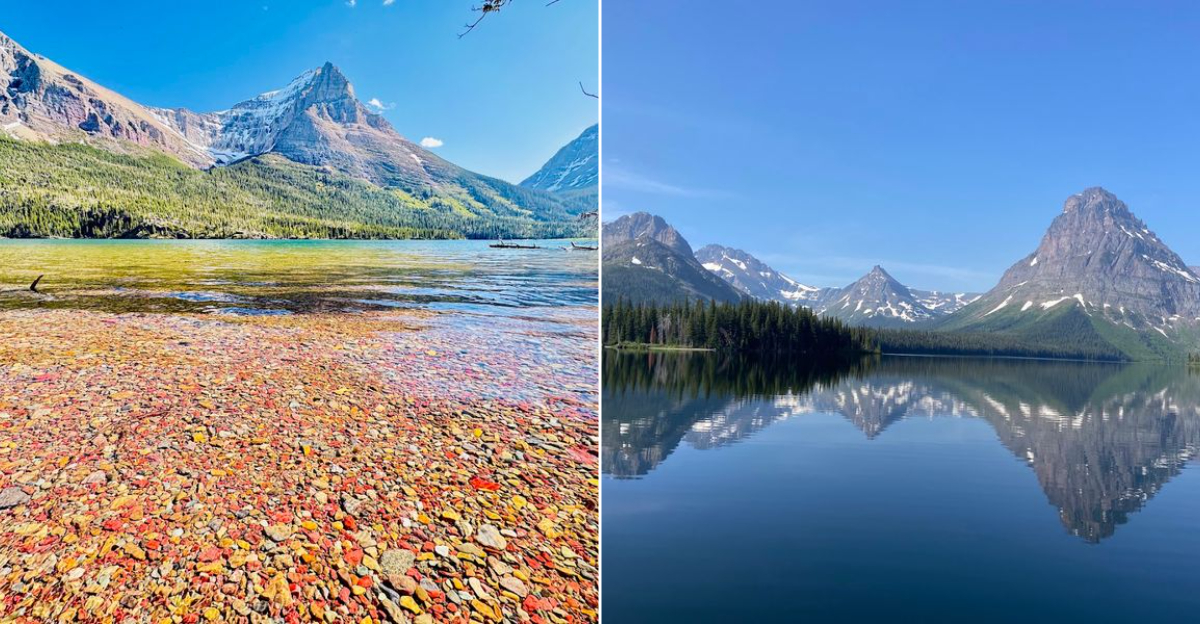
Some places make you question if your eyes are working correctly. A lake so clear you can count the stones beneath the surface.
Water so blue it looks like someone turned up the saturation. Montana has landscapes that feel less like reality and more like a scene from a movie that somehow exists outside the screen.
Hidden among mountains, forests, and wide-open wilderness are lakes where the reflection is almost as impressive as the view itself. These are the kinds of places that make you stop mid-hike, forget about your phone, and simply stare.
For travelers chasing untouched beauty, these Montana lakes are proof that nature doesn’t need filters to create something unforgettable.
1. Lake McDonald
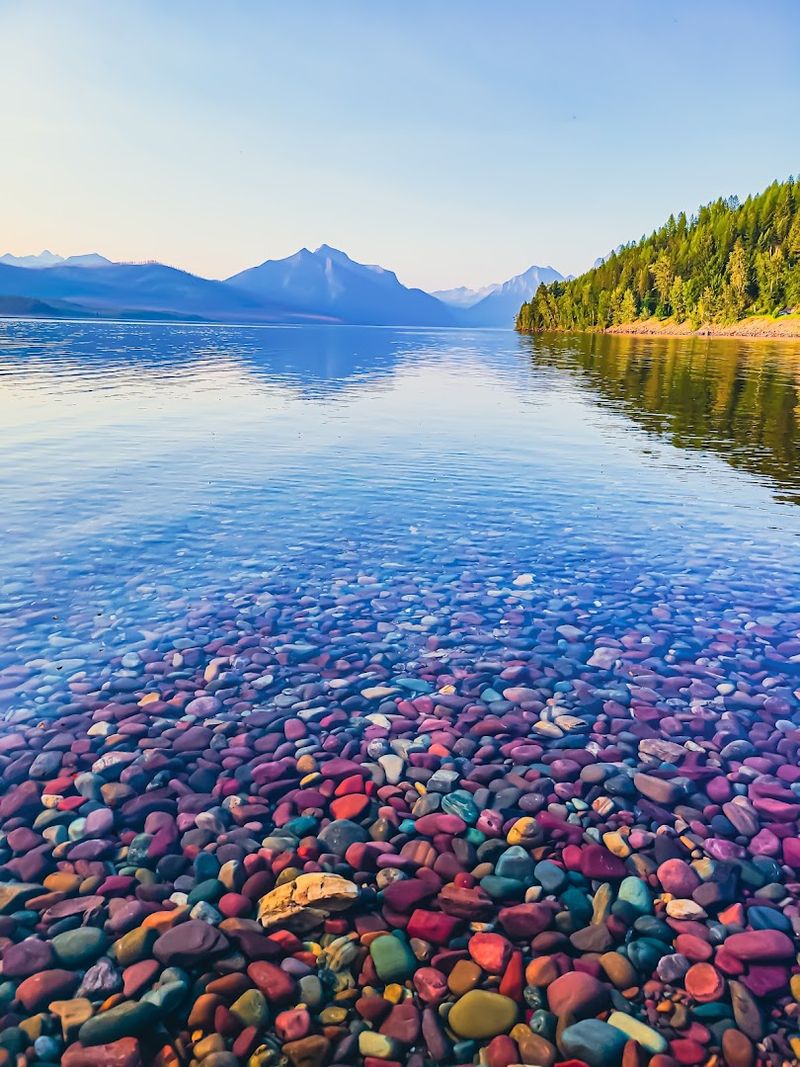
Picture a lake so clear and still that it looks like someone laid a giant mirror across the valley floor. Lake McDonald is exactly that kind of place, and it earns every bit of the hype surrounding it.
As the largest lake in Glacier National Park, it stretches over ten miles long and plunges nearly 500 feet deep.
What makes it genuinely unforgettable are the rainbow-colored rocks scattered along its shoreline.
Red, maroon, blue, and green pebbles glow beneath the surface, their colors determined by iron content and the ancient conditions in which they formed. It is basically nature showing off its geology skills.
The water stays bitterly cold year-round because it is fed by glacial sources high above.
That cold temperature is the secret weapon behind its stunning clarity, keeping plankton growth almost nonexistent. The lake reflects the surrounding peaks of the Rocky Mountains so perfectly that photographs look almost too composed to be candid.
Dense forests of cedar, pine, and hemlock wrap around its edges, adding a moody, ancient atmosphere to the whole scene.
Lake McDonald is the kind of place that makes even the most camera-shy person reach for their phone.
2. Bowman Lake
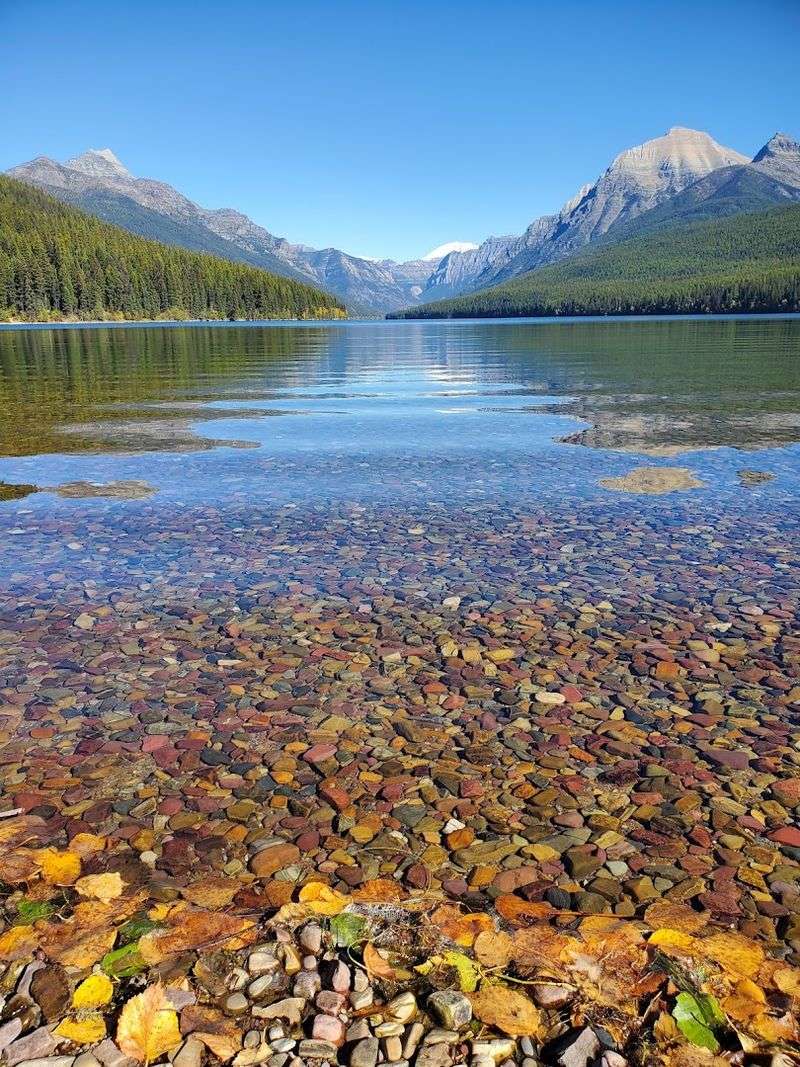
Getting to Bowman Lake requires commitment. About 25 miles of gravel road followed by another six miles of bumpy dirt road stand between you and this aquamarine masterpiece.
Most people turn back before they arrive, which honestly works out perfectly for the ones who push through.
The reward is a lake so clear that you can see the lakebed through 30 feet of water on a calm day. Colorful rocks in shades of red, orange, tan, and blue-gray scatter across the bottom like someone tossed a handful of gemstones in for decoration.
The water is entirely fed by snowmelt, keeping it perpetually icy and remarkably transparent.
Stretching about seven miles long and half a mile wide, Bowman Lake sits tucked between Numa Ridge and Cerulean Ridge in the remote North Fork region of the park.
Motorized boats are limited to 10 horsepower engines, which keeps the atmosphere wonderfully quiet. Canoes and kayaks glide across the glassy surface without disruption, and the surrounding wilderness feels genuinely untouched.
As the third largest lake in Glacier National Park, Bowman carries a sense of scale that feels both humbling and exhilarating. Solitude here is not just possible, it is practically guaranteed.
3. Kintla Lake
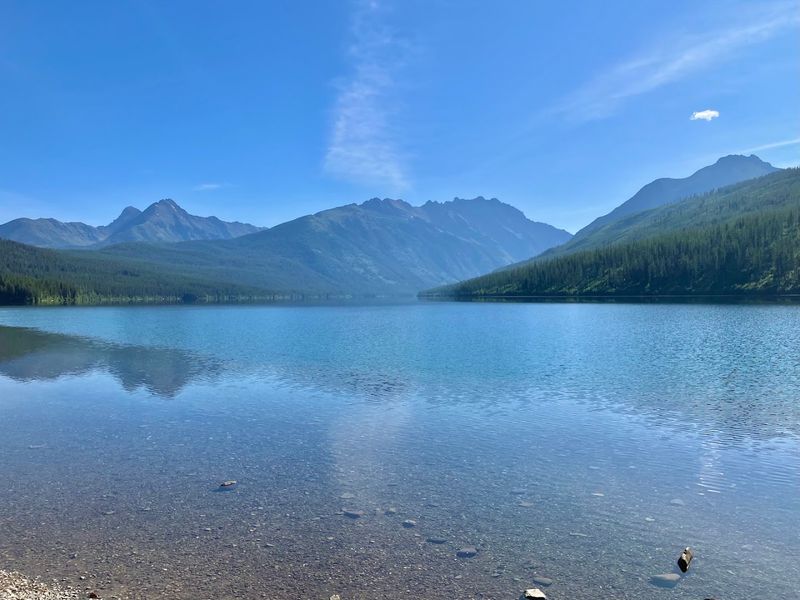
Kintla Lake sits just a few miles from the Canadian border, tucked so far into the northwestern corner of Glacier National Park that it feels like it belongs to a different world entirely. The road to get there is long, bumpy, and gloriously discouraging to casual visitors.
That inaccessibility is honestly Kintla’s greatest gift.
Once you arrive, the clarity of the water is immediately striking. Pebbles are distinctly visible through the surface, and the surrounding mountains create a dramatic frame that looks almost theatrical.
At over eight miles long and up to a mile wide in certain sections, it is the fourth largest lake in the park and carries a commanding presence.
Motorized vessels are completely prohibited on Kintla Lake, which means the only sounds you hear are wind, water, and the occasional call of a bird overhead.
Canoes and kayaks are the vessels of choice here, and paddling across this serene expanse feels like a privilege. The low visitor numbers preserve an atmosphere of genuine wilderness solitude that is increasingly rare to find.
Kintla Lake does not beg for your attention.
It simply exists in quiet magnificence, waiting for those willing to seek it out.
4. Flathead Lake
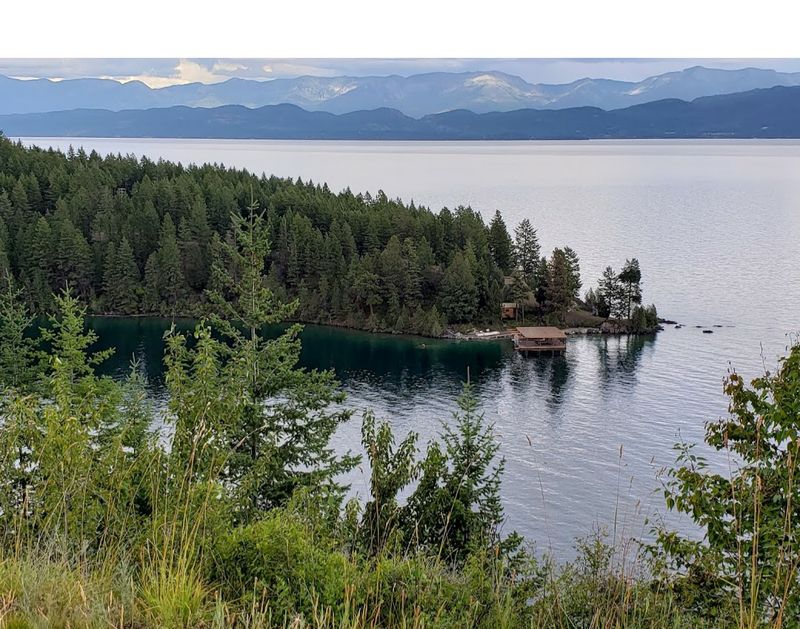
Flathead Lake is not just big, it is the largest natural freshwater lake in the western United States. That title alone commands respect.
But what truly sets it apart is the water clarity, which measures roughly three times the national average for freshwater lakes.
That is not a flex, that is just the standard here.
The lake sits at the heart of Montana, surrounded by mountain views and a shoreline dotted with charming cottages and wooded bluffs. It is the kind of place that looks equally stunning from a kayak, a boat, or simply a lakeside chair with nowhere particular to be.
Wild Horse Island floats in the middle of it all, adding a storybook element to the scenery.
Water clarity actually improves through the summer months as spring runoff sediments gradually settle out, making July an especially spectacular time to visit.
The lake supports boating, kayaking, fishing, and wildlife spotting across its vast expanse. Surrounding towns like Polson, Bigfork, and Lakeside each offer their own personality along the shoreline.
Flathead Lake is one of those rare places that genuinely lives up to every photograph you have ever seen of it, and then quietly exceeds your expectations anyway.
5. Ashley Lake
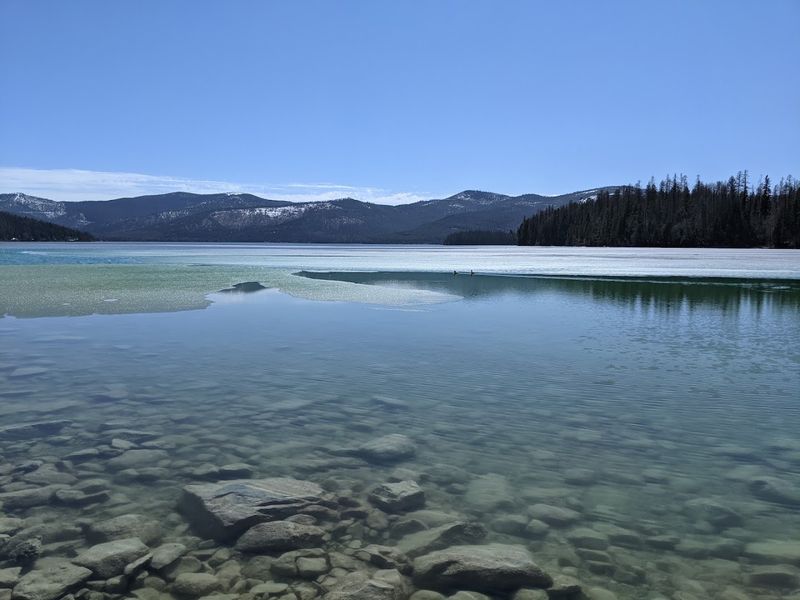
Ashley Lake holds the title of second cleanest lake in all of Montana, and that ranking is backed by measurable water quality data, not just good vibes.
The water here is so genuinely pure that some lakeside residents draw their household water directly from it without any treatment. Let that sink in for a moment.
When sunlight hits the surface, the lake transforms into a vivid turquoise blue that looks almost too saturated to be natural. A paddle blade lowered into the shallows remains clearly visible well beneath the surface.
The shimmer it creates on a bright day is the kind of thing that makes you stop mid-stroke just to stare.
Located about 17 miles from Kalispell via a bumpy gravel road, Ashley Lake sits at around 3,500 feet elevation within the Flathead National Forest.
That gravel road is a blessing in disguise because it keeps the crowds thin and the atmosphere peaceful. The lake was carved by the Cordilleran Ice Sheet roughly 12,000 to 14,000 years ago, and the glacial origins are evident in its depth and extraordinary clarity.
Low mountainous terrain frames the water on all sides, creating a setting that feels quietly spectacular without demanding your attention.
6. Holland Lake
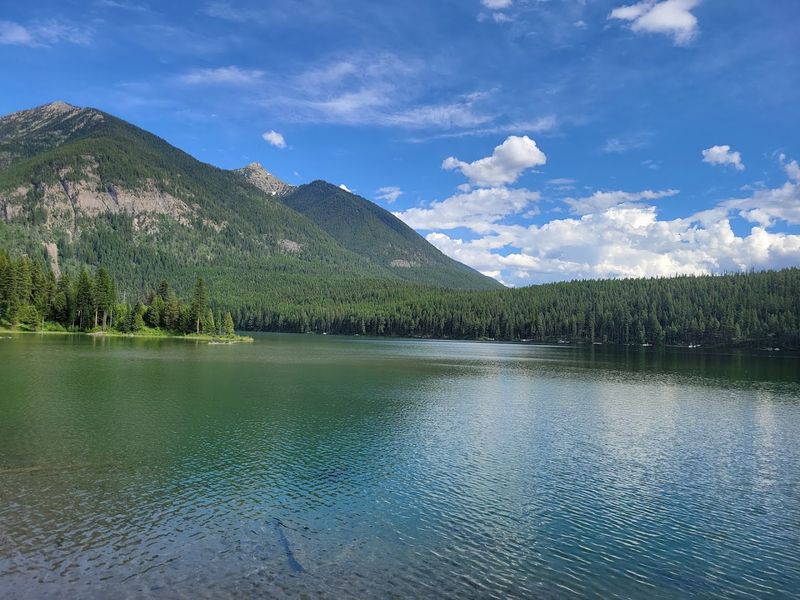
Holland Lake is the kind of place that earns a permanent spot on your favorites list after just one visit. Nestled at the base of the Swan Mountains within the Flathead National Forest, this 413-acre gem offers water so clear and inviting that jumping in feels less like a decision and more like a reflex.
The Mission Mountains and Swan Range create a spectacular backdrop that reflects beautifully off the calm surface.
Swimming, canoeing, waterskiing, and boating are all fair game here, and the lake accommodates all of it without feeling crowded or chaotic.
The Holland Lake Trail winds along the shoreline and climbs to a 50-foot waterfall that rewards hikers with continuous views of the shimmering water below.
The drive to Holland Lake along Highway 83 from Kalispell sets the tone perfectly. Tall, mature trees line the route, and the calm Swan River runs alongside, easing you into the peaceful rhythm of the valley.
The lake also serves as a key trailhead for the legendary Bob Marshall Wilderness Area, making it a launching point for serious backcountry adventures.
Holland Lake manages the rare trick of being both accessible and deeply immersive in the same breath, which is why it keeps drawing people back season after season.
7. Saint Mary Lake
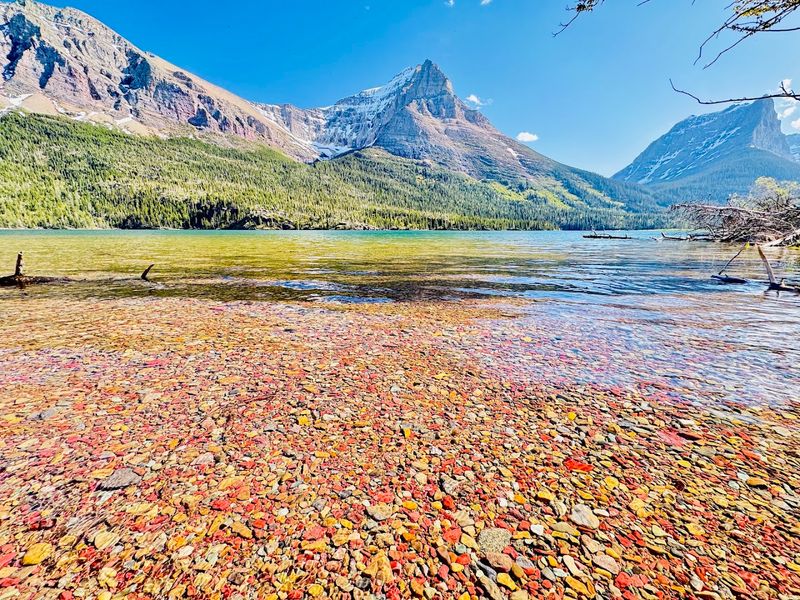
Saint Mary Lake wears its teal color like a badge of honor. That vivid, almost electric blue-green hue comes directly from glacial activity, and it is the kind of color that makes you double-check whether someone applied a filter to your photos.
Spoiler: no filter needed.
The lake earns that shade entirely on its own.
Stretching ten miles along the iconic Going-to-the-Sun Road on the east side of Glacier National Park, Saint Mary Lake is one of the most photographed bodies of water in the entire park. Wild Goose Island sits near the center of the lake, tiny and dramatic, and it has appeared in more scenic photographs than most professional models.
Boat tours circle the island and deliver 360-degree panoramas of towering peaks and Sexton Glacier above.
Wildlife sightings around Saint Mary Lake are genuinely common. Elk, mule deer, grizzly bears, and black bears frequent the surrounding area with impressive regularity.
In warmer months, Indian paintbrush and lupine splash color across the hillsides, while autumn brings brilliant oranges and yellows from the aspen trees.
Saint Mary Lake delivers a full sensory experience that shifts with every season, and every version of it is worth witnessing firsthand.
8. Two Medicine Lake
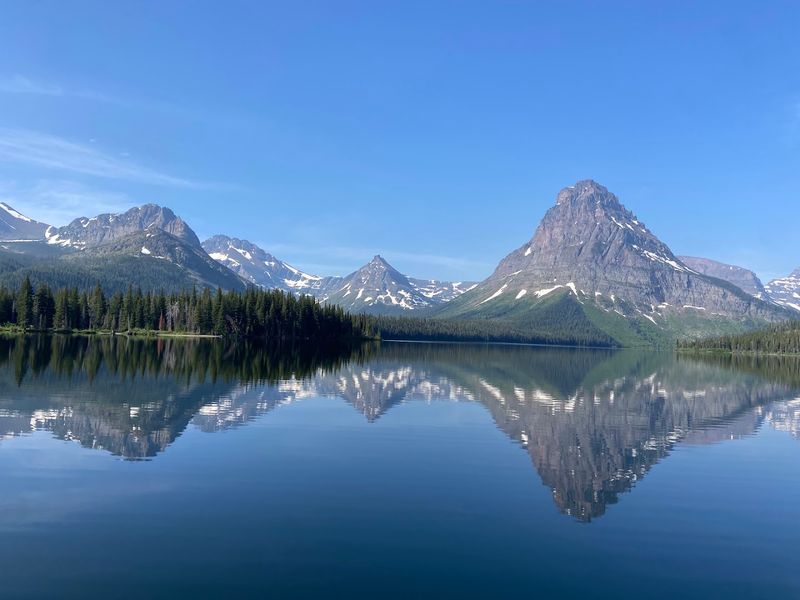
There is something sacred about Two Medicine Lake that goes far beyond its stunning appearance.
The Blackfeet people historically called this region the Backbone of the World, and standing at the edge of the turquoise water with jagged mountain spires rising on all sides, that name makes complete sense. This lake carries both natural beauty and deep cultural significance in equal measure.
Located in the southeastern corner of Glacier National Park, Two Medicine offers a noticeably quieter experience compared to more heavily trafficked areas of the park.
The trails here meander through wildflower meadows and lead to cascading waterfalls like Twin Falls, rewarding hikers with scenery that feels almost disproportionately beautiful for the effort involved.
The water itself is a rich turquoise that reflects the surrounding peaks with remarkable clarity.
Scenic boat tours cross the lake and provide access to trailheads that would otherwise require a longer hike from the main area.
Upper Two Medicine Lake waits at the end of one of those routes, sitting in a gorgeous basin below Mount Helen with even fewer visitors and even more dramatic scenery. Two Medicine Lake is proof that the quieter corners of Glacier are often the ones that leave the deepest impression.
9. Whitefish Lake
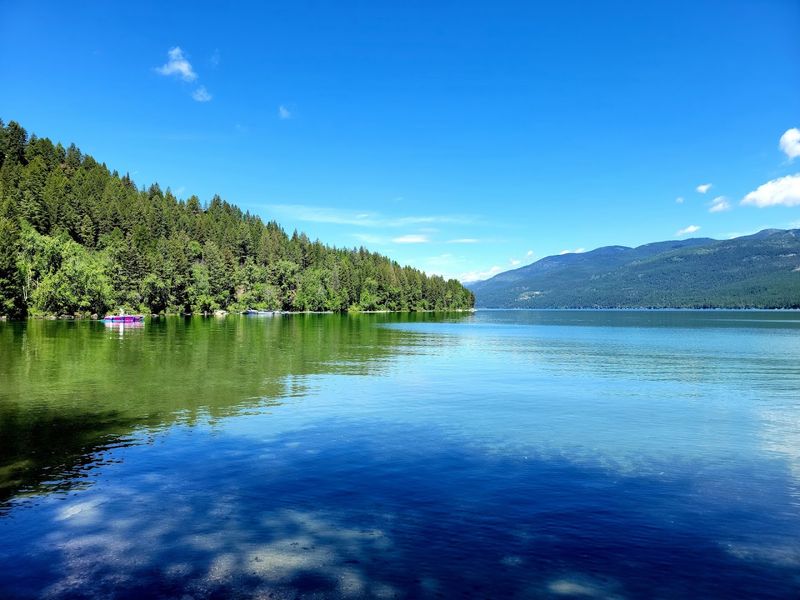
Whitefish Lake is the kind of place that makes living in a small Montana city feel like an extraordinary privilege.
Sitting just northwest of the city of Whitefish, this natural freshwater lake spans more than 3,200 acres and maintains water clarity that most lakes can only dream about. A long-term average Secchi depth of 23 feet tells you everything you need to know about how clean this water truly is.
The lake is classified as oligotrophic, meaning it has low nutrient levels and high oxygen content throughout its depths.
That scientific designation translates into water that is extraordinarily clear, cold, and visually stunning from every angle. The Whitefish Range mountains and Lion Mountain frame the lake on multiple sides, giving it a backdrop that photographs embarrassingly well.
Beyond its looks, Whitefish Lake actually serves as the primary surface water source for the City of Whitefish, which speaks volumes about its purity.
Public access points like Whitefish Lake State Park and City Beach offer sandy shores and designated swimming areas that fill up with grateful visitors throughout summer. Kayaking, boating, swimming, and fishing all thrive here.
Whitefish Lake is the rare combination of wild beauty and genuine community resource, doing double duty without breaking a sweat.
10. Lindbergh Lake
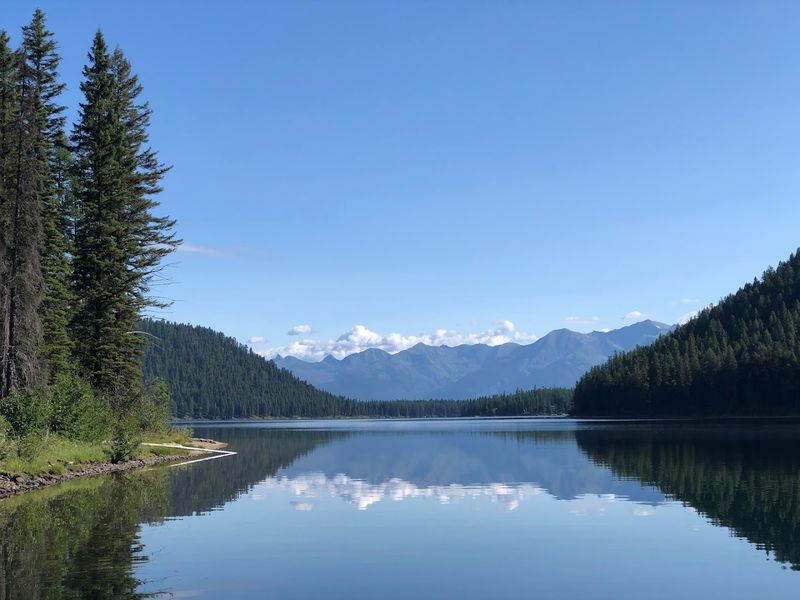
Lindbergh Lake earned its name in a remarkable way. When Charles Lindbergh flew over this slender, glacier-carved gem in Montana’s Swan Valley, he was so captivated by its beauty that he circled overhead multiple times before continuing on.
That is a pretty compelling endorsement from someone who had seen a great deal of the world from above.
The lake sits about 60 to 80 miles from both Missoula and Glacier National Park, nestled between the majestic Mission and Swan Mountain Ranges.
Its waters are famously cold, which is the hallmark of a glacially carved basin with minimal warming and exceptional purity. The surrounding valley is a rich mosaic of diverse trees laced with glacier-carved pools that give the entire landscape a layered, textured character.
Hiking, camping, and boating all draw visitors to Lindbergh Lake throughout the warmer months, and the area supports an impressive range of wildlife including grizzly bears and other species that depend on undisturbed habitat.
The lake serves as a critical ecological sanctuary, which adds a layer of meaning to every visit. Lindbergh Lake is not just visually stunning, it is genuinely important to the wild systems that make Montana’s wilderness so extraordinary.
That combination of beauty and ecological value is what makes it truly unforgettable.