
11 Colorado Campgrounds That Feel Like Private Worlds
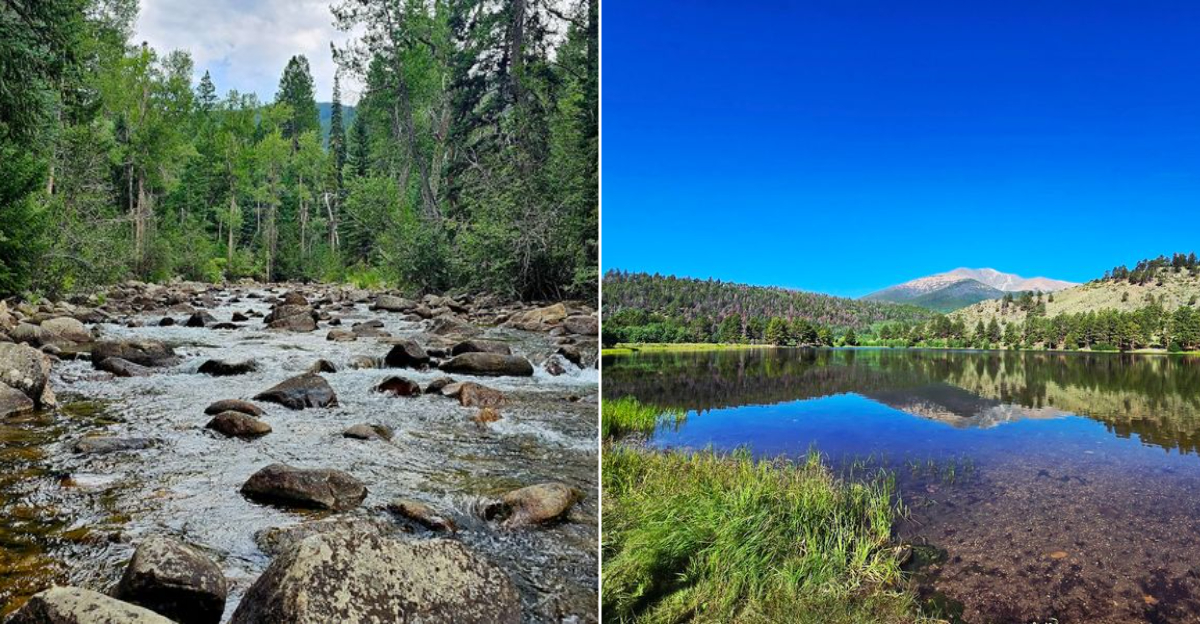
In Colorado, it often feels like the mountains were designed with you in mind. Wide valleys open toward jagged summits, pine forests filter the light into a soft glow, and crisp air carries the faint scent of campfire smoke.
Whether you are a weekend adventurer with a tent and a cooler or a family eager to unplug and breathe high altitude air, the range of campgrounds offers something unforgettable. Some feel unexpectedly cozy, with well spaced sites and easy trail access, while others sit so far off the beaten path that silence becomes the main attraction.
Colorado’s backcountry has a way of creating the illusion that you have discovered a secret known only to a lucky few. Wake to golden sunrises over distant peaks, spend the day exploring alpine lakes or quiet meadows, and fall asleep beneath a sky scattered with stars.
These eleven campgrounds deliver that rare sense of true solitude.
1. Aspenglen Campground – Rocky Mountain National Park, Estes Park
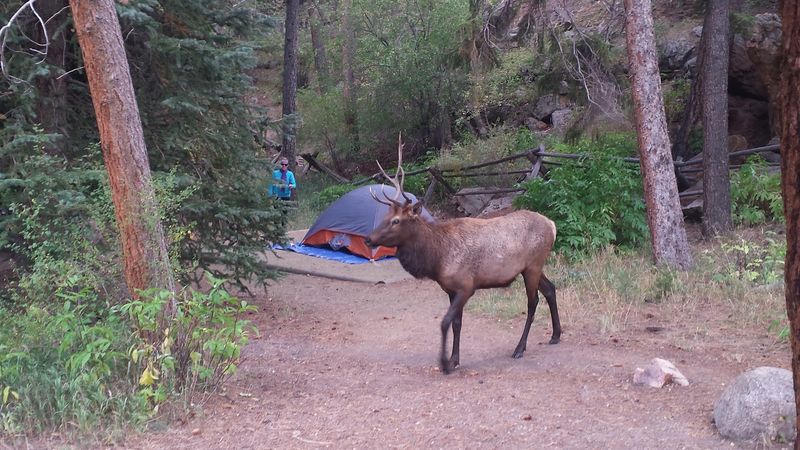
There’s a moment at Aspenglen when you wake up before everyone else, step outside your tent, and realize a bull elk is standing twenty feet away, completely unbothered by your existence. That’s the kind of morning this campground specializes in.
Tucked into the northwest corner of Rocky Mountain National Park, Aspenglen is the quieter, more introverted sibling of the park’s larger campgrounds — and that’s exactly what makes it special.
The sites sit among ponderosa pine and aspen trees, giving each one a soft natural buffer from neighbors. You’re not camping in a parking lot here.
The sound you fall asleep to is the Fall River moving nearby, which is a genuinely better alarm clock than anything on your phone. Trails branch out in multiple directions, including access toward Horseshoe Park, where wildlife sightings are practically guaranteed at dawn and dusk.
Families tend to love Aspenglen because the scale feels manageable. It’s not overwhelming, it’s not chaotic, and the ranger programming is actually worth attending.
Couples find it romantic in that understated way — campfire, stars, no cell service, nobody asking you to do anything. Reservations are required and they go fast, so plan several months ahead if you’re targeting a summer or fall visit.
The shoulder seasons, late May and September, offer the best combination of fewer crowds and still-pleasant temperatures. Bring layers regardless of when you go, because Rocky Mountain National Park operates on its own weather schedule, and it does not negotiate.
First-timers should know that the campground sits at around 8,230 feet, so take it easy the first day and drink more water than you think you need. The payoff for all that preparation is a campsite that feels genuinely earned and completely worth it.
2. Piñon Flats Campground – Great Sand Dunes National Park, Mosca
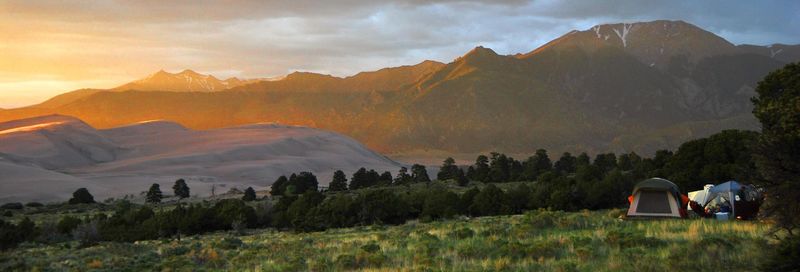
Camping at Piñon Flats is one of those experiences that requires you to stop and just stare for a while before you do anything else. The Great Sand Dunes rise up behind your campsite like something that wandered in from another planet and decided to stay.
No matter how many photos you’ve seen, standing at your tent door with a cup of coffee and that view in front of you hits differently every single time.
The campground itself sits among piñon pines and juniper trees, which offer more shade than you’d expect given the surrounding landscape. Sites feel semi-private, and the desert air at night gets genuinely cold — even in summer — so pack accordingly.
Medano Creek runs along the base of the dunes seasonally, and if you visit in late spring, kids can wade through it while the dunes loom overhead, which is an absurdly fun combination that you won’t find anywhere else in Colorado.
The sky at Piñon Flats earns its own paragraph. The San Luis Valley has some of the lowest light pollution in the state, and the Milky Way appears here with a clarity that makes amateur astronomers out of ordinary people.
Bring a red-light headlamp and give your eyes time to adjust — you’ll thank yourself. The dunes themselves are best climbed early in the morning before the sand surface heats up, and the hike to the top is more demanding than it looks from base.
Wear closed-toe shoes and carry extra water. Reservations fill quickly for summer, but fall visits are genuinely underrated — the crowds thin out, the light turns golden, and the dunes take on warm amber tones that make every photo look professionally edited.
It’s a spectacular setting that earns every mile of the drive.
3. Difficult Campground – Roaring Fork River Area, near Aspen

The name sounds like a warning, but Difficult Campground is actually one of the most pleasant surprises in the White River National Forest. Named after Difficult Creek, which flows nearby, this campground sits along the Roaring Fork River corridor about eight miles from Aspen — close enough to the famous town to feel cultured, far enough away to feel like you’ve escaped it entirely.
That’s a balance worth celebrating.
Shade is the first thing you notice. The sites are tucked beneath a thick canopy of aspen and conifer trees, and the creek noise is constant in the best possible way — the kind of ambient sound that makes afternoon naps feel medically necessary.
Sites offer reasonable spacing, and the forest absorbs sound well enough that you won’t feel like you’re sharing a campground with strangers. The Roaring Fork River runs close enough that you can hear it from your sleeping bag, which is either deeply soothing or keeps you up all night, depending on your personality.
Hikers and cyclists will find plenty to do. The campground serves as a solid base for exploring the Hunter-Fryingpan Wilderness and accessing trails that climb toward alpine terrain without requiring a four-wheel-drive vehicle to reach the trailhead.
Fishing access along the Roaring Fork is a genuine draw for anglers who want Gold Medal water within reasonable driving distance. Summer weekends fill up fast, so a reservation through Recreation.gov is strongly recommended.
The campground sits at roughly 8,000 feet, and afternoon thunderstorms are a near-daily occurrence in July and August — set up your tent with that in mind. Fall is arguably the best time to visit, when the aspens turn and the whole canyon glows yellow-orange in a way that makes you understand why people move to Colorado and never leave.
4. Sweetwater River Resort Campground – Cotopaxi, Colorado
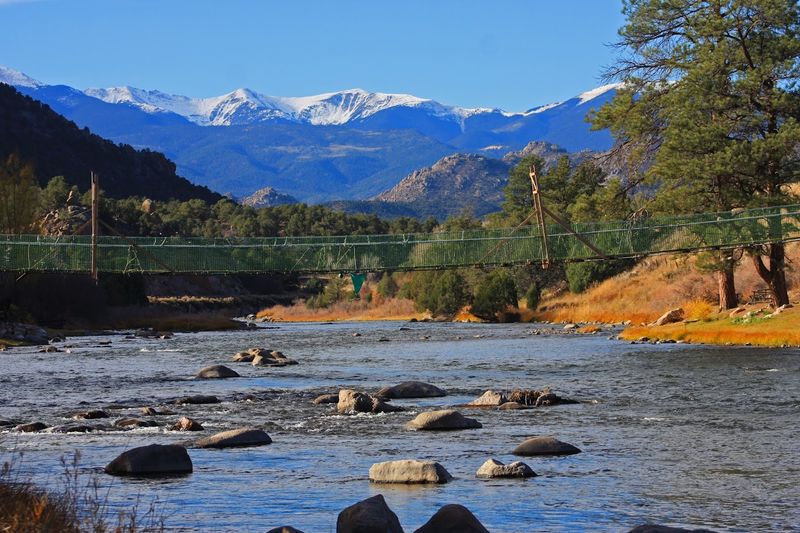
Cotopaxi is one of those Colorado towns that most people drive through without stopping, which is exactly why Sweetwater River Resort Campground has managed to stay so wonderfully uncrowded. Sitting along the Arkansas River in the dramatic Royal Gorge corridor, this campground offers the kind of wide-open riverside camping that front-range spots stopped offering the moment they got discovered.
The landscape here feels raw and honest — canyon walls, sage-scented air, and a river that means business.
Wildlife sightings are common and casual at Sweetwater. Deer wander through in the early morning without much concern for human schedules, and the birdlife along the river corridor is consistently interesting for anyone who keeps a life list.
The sky above the canyon is enormous — the kind of enormous that makes you feel appropriately small in the most comforting way possible. At night, stars appear in quantities that city dwellers find genuinely startling.
The Arkansas River here offers access to some of the best whitewater rafting in Colorado, and several outfitters operate nearby if you want to add a half-day float to your stay. Even if rafting isn’t your thing, walking along the river bank in the early morning with coffee is its own kind of perfect.
The campground’s relative obscurity means you can often find a site without the months-ahead reservation scramble that plagues more famous spots. That alone is worth the slightly longer drive from Denver.
Bring firewood or purchase it locally, as regulations in this region change seasonally. The elevation here sits lower than many Colorado campgrounds, making it a comfortable option for visitors who want to ease into high-altitude adventures.
It’s the kind of place that rewards people who bother to look just a little farther down the map.
5. Black Canyon Dispersed Camping – Black Canyon of the Gunnison, Montrose Area
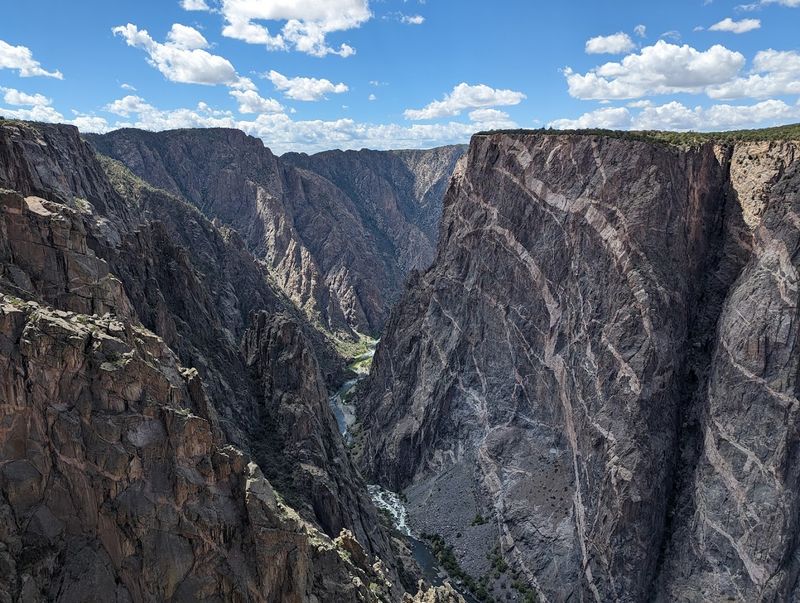
Black Canyon of the Gunnison is one of those geological spectacles that makes you question your entire sense of scale. The canyon walls drop nearly 2,700 feet in some places, and the rock is so dark and ancient-looking that geologists get visibly excited just talking about it.
The dispersed camping options outside the park boundary let you experience all of that drama without the structured campground experience — which, depending on your personality, is either liberating or mildly terrifying. For most people, it turns out to be liberating.
Primitive dispersed sites in the area around Montrose and the park’s perimeter mean you’re selecting your own spot on public land, which requires a bit more preparation than rolling into a designated campground. Bring everything you need — water, waste bags, a solid map — and leave the site exactly as you found it.
The payoff is solitude that feels almost theatrical given the scenery. You can sit at the edge of the world here, essentially, and that’s not hyperbole.
The South Rim Drive inside the park offers overlooks that are accessible by regular passenger vehicles, and pairing a day of rim exploration with a night of dispersed camping outside the boundary is a genuinely excellent Colorado itinerary. Wildlife in the area includes mule deer, golden eagles, and peregrine falcons — the canyon’s updrafts make it prime raptor territory.
Sunrise and sunset at the canyon rim produce colors that shift from pink to deep orange to purple in the span of twenty minutes, and if you’re camped nearby, you can watch the whole show without fighting for a parking spot. Cell service is limited to nonexistent, which most people discover is either a problem or the entire point, depending on what they came here to escape.
6. Hartman Rocks Recreation Area Primitive Sites – near Gunnison, Colorado
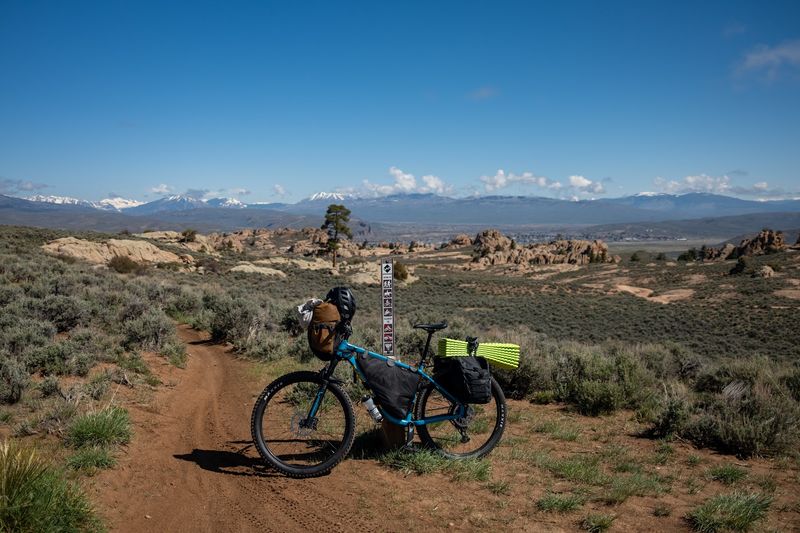
Gunnison doesn’t always get the attention it deserves, which is something locals seem quietly grateful for. Hartman Rocks Recreation Area sits just outside town and manages to pack an impressive variety of terrain into a relatively compact BLM parcel — granite outcroppings, sagebrush flats, creek drainages, and mountain bike trails that range from genuinely beginner-friendly to technically demanding.
The primitive camping here is free, first-come-first-served, and spread out enough that finding your own corner of the landscape is usually very doable.
Mountain bikers discovered Hartman Rocks years ago and made it something of an open secret in the cycling community. The trail network is extensive and well-maintained, and riding out from your campsite directly onto singletrack is the kind of logistical convenience that makes a camping trip feel effortlessly well-planned.
Hikers and trail runners find plenty to explore as well, and the open terrain means navigation is intuitive even without a detailed map. Dogs are welcome on leash, which elevates the whole operation considerably for people who travel with four-legged co-pilots.
The setting has a high-desert quality that feels distinct from the heavily forested campgrounds elsewhere in Colorado. The granite formations catch morning light beautifully, and the views toward the Elk Mountains and the Sangre de Cristo range give the horizon a dramatic quality that never quite gets old.
Gunnison itself is worth exploring — it’s a genuine Western Colorado town with good food, a university, and a welcoming attitude toward outdoor visitors. The elevation at Hartman Rocks sits around 7,700 feet, so acclimation applies here too.
Spring and fall are excellent seasons to visit, when temperatures are comfortable and the summer crowds have either not yet arrived or have already headed home. It’s an honest, unfussy campground for people who prefer their adventures self-directed.
7. Yankee Boy Basin Primitive Campgrounds – Ouray County, Colorado
Getting to Yankee Boy Basin requires a high-clearance four-wheel-drive vehicle and a certain willingness to trust your tires on a shelf road that was carved into the San Juan Mountains long before anyone was asking about guardrails. The drive up from Ouray is spectacular and slightly nerve-wracking, which is precisely the combination that filters out the casual visitors and rewards the committed ones with something genuinely extraordinary.
At the top, you find an alpine basin that looks like someone assembled it from a greatest-hits collection of Colorado scenery.
Wildflowers are the headline act in July and early August. The basin fills with columbine, Indian paintbrush, and dozens of other species in a display that turns the meadow into something resembling an impressionist painting.
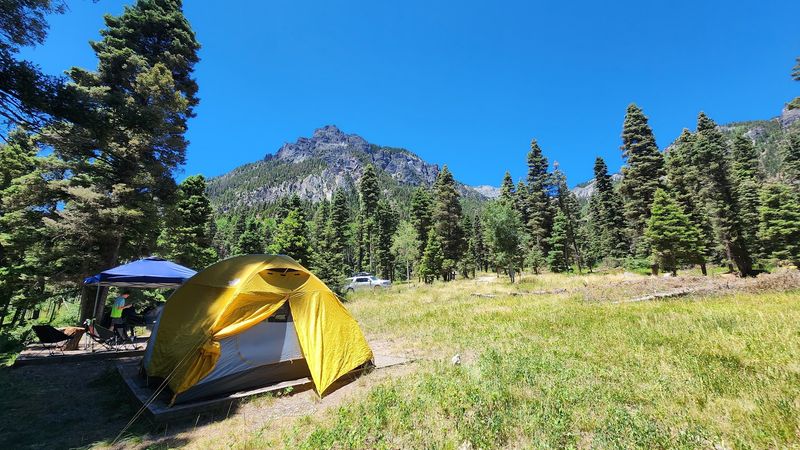
The primitive campsites are scattered throughout the basin, and because access requires real effort, you’ll rarely find yourself surrounded by crowds. The silence up here is the deep, total kind that reminds you how much ambient noise you’ve been absorbing without realizing it.
Mount Sneffels, one of Colorado’s iconic fourteeners, rises above the basin and draws serious climbers who use the area as a basecamp. You don’t need to be a mountaineer to appreciate the view from camp, though — the peaks are dramatic from any angle.
Camping here is primitive in the truest sense: no facilities, no designated sites, no services. Pack out everything, use a WAG bag for waste disposal, and bring all your own water or a solid filtration setup.
The basin sits above 11,000 feet, so altitude affects everyone differently — give yourself time to adjust before attempting any strenuous activity. Sunsets paint the peaks in colors that feel almost too vivid to be real, and the stars afterward are the kind that make you reconsider your entire relationship with city life.
8. O’Haver Lake Campground – San Isabel National Forest, Chaffee County
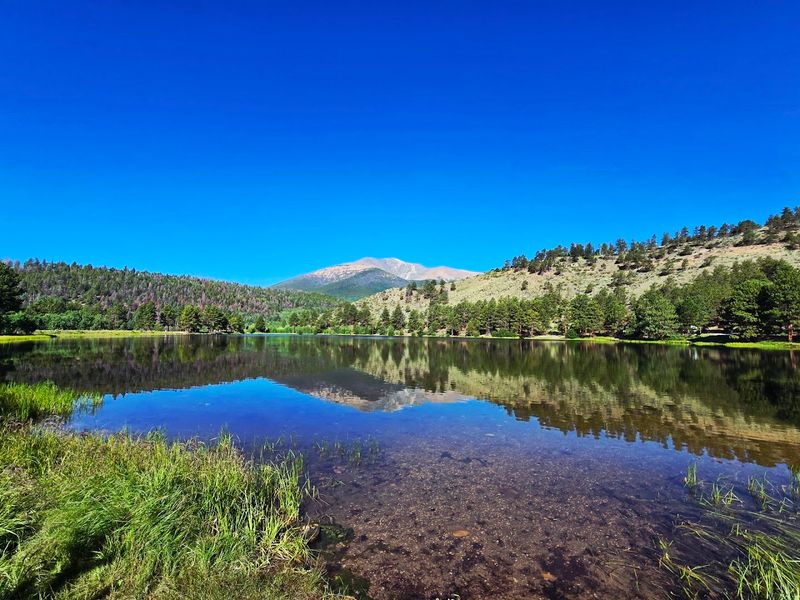
There’s a particular kind of stillness that settles over O’Haver Lake in the early morning, before the wind picks up and before the rest of the campground stirs. The lake surface goes completely flat, the surrounding pines reflect in the water with almost perfect fidelity, and the whole scene looks like something a landscape painter would attempt and then decide was too good to be believable.
This campground in the San Isabel National Forest earns its reputation for quiet in a very direct and consistent way.
The lake itself is small and entirely accessible on foot, which makes it ideal for families with younger kids who want to fish without a major expedition. Stocked with rainbow trout, O’Haver offers the kind of fishing experience where catching something is genuinely possible rather than aspirational.
Canoes and kayaks are welcome, and paddling the perimeter in the early morning is the sort of low-effort, high-reward activity that defines the best camping trips. The surrounding forest is dense enough to create a sense of enclosure that feels protective rather than claustrophobic.
Night skies at O’Haver are excellent. Chaffee County sits in a region with relatively low light pollution, and on clear nights the campground delivers a stargazing experience that requires nothing more than a blanket and a willingness to lie on your back for a while.
The nearby Monarch Pass area and the Arkansas River valley offer day-trip options for hikers and river enthusiasts. The campground sits at roughly 9,000 feet, which keeps summer temperatures pleasantly cool even during Colorado’s hottest months.
Reservations are available and recommended for summer weekends, though shoulder-season visits often allow walk-in access. It’s the kind of campground that people return to year after year without ever feeling the need to explain why.
9. Free Dispersed Camping on Forest Service and BLM Roads – Colorado Mountains

Colorado’s network of Forest Service and BLM roads contains one of the best-kept secrets in American outdoor recreation: enormous amounts of free, legal, dispersed camping on public land, available on a first-come-first-served basis to anyone prepared to self-support their stay. No reservations, no fees, no designated sites — just a dirt road, a flat spot, and the kind of freedom that feels almost radical compared to the reservation-required campground experience most people are used to.
The trick is knowing how to find it and being ready to handle whatever you find.
The rules are consistent across most public land: camp at least 200 feet from water sources, roads, and trails; pack out all waste; don’t stay more than 14 days in one spot; and leave the site in better condition than you found it. A high-clearance vehicle is often helpful, though not always required.
An app like onX Maps or Gaia GPS is enormously useful for identifying public land boundaries and locating roads with dispersed camping access before you leave home. Doing your homework ahead of time is the difference between a great experience and a frustrating one.
The beauty of dispersed camping is the variety it offers. One weekend you might be parked beside a mountain stream in the Arapaho National Forest; the next, you’re on a sage-covered mesa in the Uncompahgre with views that stretch for fifty miles.
Colorado’s public land map is genuinely staggering in scale, and the more you explore it, the more you realize how much of it exists beyond the well-known campgrounds. Fire restrictions apply and change seasonally — always check current conditions before building a campfire.
Bring extra water, a quality first-aid kit, and a paper map as backup. The reward for all that preparation is a camping experience that feels completely, genuinely yours.
10. Fall River Reservoir Dispersed Camping – near National Forest, Colorado
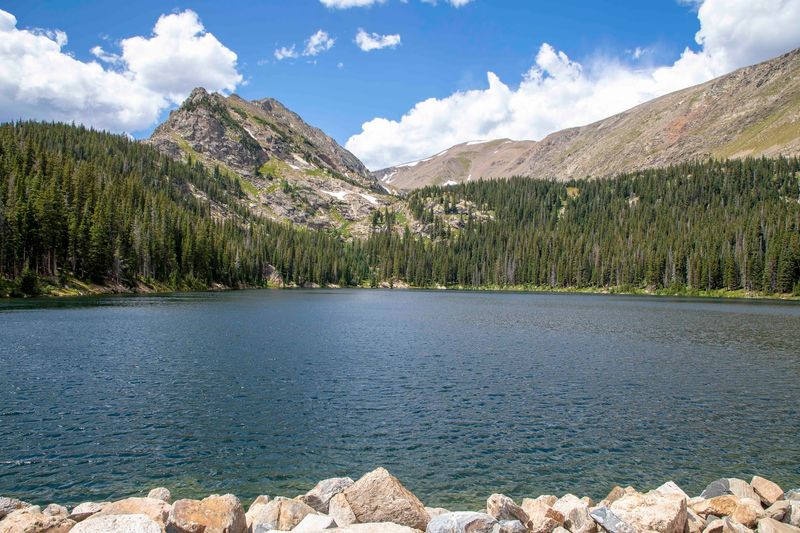
Word travels slowly about places like Fall River Reservoir, and the people who know about it tend to treat that knowledge like a minor inheritance — something to be shared carefully and only with people who will appreciate it properly. Reservation-free and relatively isolated, this dispersed camping area near mountain water offers the combination of scenery and solitude that most Colorado campers spend years chasing through increasingly competitive reservation systems.
Finding it requires a bit of research and a vehicle that can handle unpaved roads, but neither of those is a serious obstacle once you decide you actually want to go.
The reservoir setting provides natural visual drama without requiring any effort from you. Water reflects the surrounding forest and sky in a way that changes constantly depending on the time of day and the angle of the light.
Early mornings are particularly striking — the surface goes glassy, the air is cool and pine-scented, and the whole environment seems to hold its breath for a few minutes before the day properly starts. Fishing is a reasonable option depending on current regulations, and simply sitting near water with nothing to do has a restorative quality that’s hard to replicate anywhere else.
Because this is dispersed camping, the experience is entirely self-directed. There are no fire rings, no picnic tables, no restrooms — bring everything you need and plan to leave nothing behind.
Water treatment is essential; even mountain water sources carry risk without proper filtration. The surrounding national forest offers hiking opportunities, and the absence of crowds means you can explore at whatever pace suits you without managing around other people’s schedules.
Check fire restrictions before your trip, as the Front Range and mountain forests face seasonal burn bans that affect camping logistics significantly. The payoff for all this self-sufficiency is a campsite that genuinely feels like it belongs to you alone.
11. Dispersed Camping near Denver – Jones Pass and Continental Divide Area
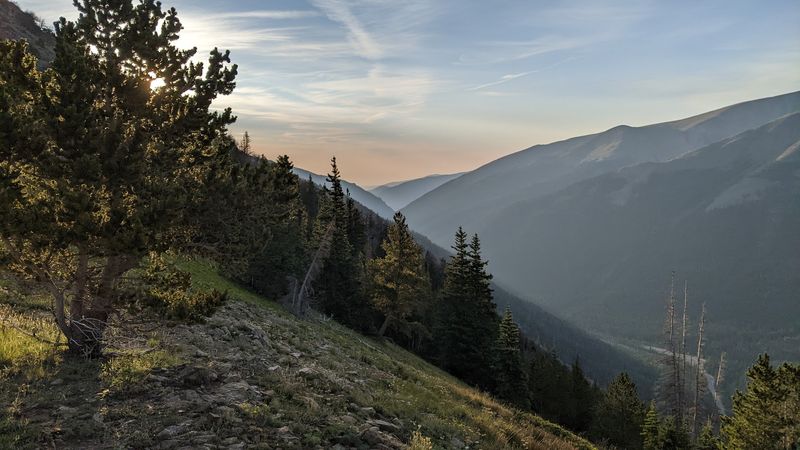
The fact that you can drive ninety minutes from downtown Denver, turn up a dirt road in the Continental Divide corridor, and find yourself completely alone in the mountains is one of Colorado’s most underappreciated logistical gifts. The Jones Pass area in Clear Creek County offers exactly that — accessible dispersed camping on public land that sits close enough to the city for a Friday-after-work departure but remote enough that you’ll wake up Saturday morning with no evidence that a major metropolitan area exists anywhere nearby.
That ratio of effort to reward is genuinely excellent.
The terrain up here is high and exposed, with treeline campsites that offer unobstructed views of surrounding peaks and ridgelines. Wind can be a factor, so a four-season tent or at least a well-staked three-season model is worth having.
The drive up the pass road is on unpaved surface that generally suits high-clearance two-wheel-drive vehicles in dry conditions, though four-wheel-drive adds confidence on steeper sections. Cell service disappears quickly, which is either a feature or a bug depending on your relationship with your inbox.
Hiking directly from camp is one of the main draws. The Continental Divide Trail passes through the area, and day hikes along the ridge deliver panoramic views that would anchor a dedicated mountain trip on their own.
Wildflowers peak in July; fall color arrives in late September when the aspens ignite and the whole landscape shifts into a completely different register. Winter access is limited and requires avalanche awareness and proper backcountry preparation.
For three-season campers, though, Jones Pass and the surrounding dispersed camping zone represent the kind of close-to-Denver escape that makes living on the Front Range feel like a genuinely good decision. Pack your layers, download an offline map, and go before everyone else figures it out.