
12 Colorado Dishes Outsiders Keep Misreading (Here’s How Locals Do It)
Colorado dining has a way of catching people off guard. You think you know what’s coming, and then a familiar dish shows up under a blanket of chile, or a burrito lands in front of you with a knife and fork already waiting.
Even dessert carries its own surprises, sometimes tasting like it was lifted straight from an orchard tucked high in the Rockies. What feels unusual to outsiders is second nature to locals. These foods are part of the landscape as much as the mountains themselves.
I’ve gathered twelve classics that often get misread at first bite, but here in Colorado, they’ve stood the test of time. They’re proud, playful, and rooted in place.
1. Colorado Green Chile
Walk into almost any café along the Front Range and you’ll catch the scent of roasted peppers drifting from the kitchen. The vibe is always cozy, bowls steaming at tables while people lean in to talk over the warmth. It feels like a shared ritual.
This chile isn’t about punishing heat. It’s built from Hatch or Pueblo peppers, often with chunks of slow-cooked pork or vegetarian versions thickened into a stew. Bright, smoky, and comforting all at once.
Locals tend to eat it any time of day, spoon in hand, not just as soup but poured generously over breakfast or even fries.
2. The Slopper
Picture a cheeseburger drowned in green chile until knife and fork become the only tools that make sense. That’s the Slopper, a Pueblo invention dating back decades. Born in taverns, it was a way to make burgers bolder and messier.
The structure is simple but glorious: bun, beef patty, cheese, then chile ladled until everything is covered. Outsiders often look confused, wondering how to start.
Best advice? Don’t fight it. Cut through the layers, scoop chile with each bite, and accept that napkins are part of the meal.
3. Pueblo Chile (Mosco)
The smell of roasting Pueblo chiles in late summer is unforgettable, smoky, grassy, with a sweet undertone that clings to the air downtown. Stalls line up with bushels tumbling into turning roasters, crackling as skins blister.
These Mosco peppers have a heritage tied deeply to the Arkansas Valley, prized for their thicker flesh and balanced heat. Farmers built the tradition, and the harvest festival keeps it alive.
I’ve stood in line for a fresh bag, and honestly, that aroma alone was worth it. The flavor at home later felt like Colorado captured in fire.
4. Denver Omelet
Morning in Colorado diners often hums with the clatter of skillets and the scent of peppers hitting hot pans. The Denver omelet feels like the state’s breakfast signature, bright and hearty.
History says it may have started as a sandwich filling for railroad workers, before eggs took over as the carrier. Ham, onions, and bell peppers make the standard trio, but every cook riffs slightly.
If you want the real taste, order it in a neighborhood diner. The less fancy the place, the truer the flavor.
5. Rocky Mountain Oysters
The name misleads plenty of visitors expecting seafood. What arrives instead is a plate of deep-fried bull calf testicles, golden and crisp, served with dipping sauce. The surprise is half the experience.
Bars and steak houses across the state still serve them as novelty and tradition, born from ranching culture and waste-not cooking. What was necessity became lore.
Best way to approach it: don’t overthink. Crunch through the breading, note the tender inside, and see why locals treat it with humor more than ceremony.
6. Colorado-Style Pizza (Mountain Pie)
The first bite isn’t about cheese or sauce, it’s about the crust: dense, slightly sweet, braided around the edge like a crown. That’s what sets this mountain pie apart from thinner coastal cousins.
The style grew out of Beau Jo’s in Idaho Springs in the 1970s, where hungry skiers wanted bulk and comfort. Honey served alongside became the finishing touch.
I have to admit, dipping that crust in honey after a long hike was a revelation. It made me rethink pizza entirely, in the best way.
7. Smothered Burrito
Order one in Colorado and you’ll quickly learn the plate arrives swimming in sauce. The burrito itself is hefty, stuffed with beans, meat, or both, but the main character is the green or red chile poured until nothing is left uncovered.
The smothered style became popular in Denver during the mid-20th century, a nod to both Mexican roots and local appetite for bigger portions.
Eat with a fork and knife, no shame. Locals embrace the mess because that’s where the flavor lives.
8. Green Chile Breakfast Burrito
The first impression is the steam curling up from a tortilla just pulled off the grill. Inside: scrambled eggs, potatoes, maybe bacon or chorizo, all wrapped snug. Then the kicker, green chile ladled until it drips down the side.
This burrito became a breakfast staple across Denver and Pueblo diners, a fast and filling start for workers and students alike. Its roots are practical: feed people quickly, keep them full.
Best time to order? Morning rush. That’s when the chile is hottest and the tortillas freshest.
9. Palisade Peach Pie
Summer on the Western Slope means crates of peaches stacked high, their skins glowing orange-pink in the late light. The smell is honeyed, almost floral. You can taste it in the air during harvest.
Those Palisade peaches end up in pies that feel like the definition of seasonal cooking. Families bake them fresh in August, county fairs showcase them proudly, and bakeries send slices out with melting ice cream.
I had one slice in Palisade itself, still warm, and it’s the pie that reset my idea of what peaches could be.
10. Olathe Sweet Corn On The Cob
The first bite snaps clean, kernels bursting with sugary juice that needs no butter at all. Olathe’s high-altitude sun and cool nights give the corn its signature sweetness, a flavor that surprises first-timers.
Harvest arrives in late summer, celebrated with the Olathe Sweet Corn Festival that brings farmers, music, and endless piles of roasted cobs. The history ties directly to western Colorado’s fields.
I once burned my fingers grabbing an ear too quickly from the grill, but it was worth every sting.
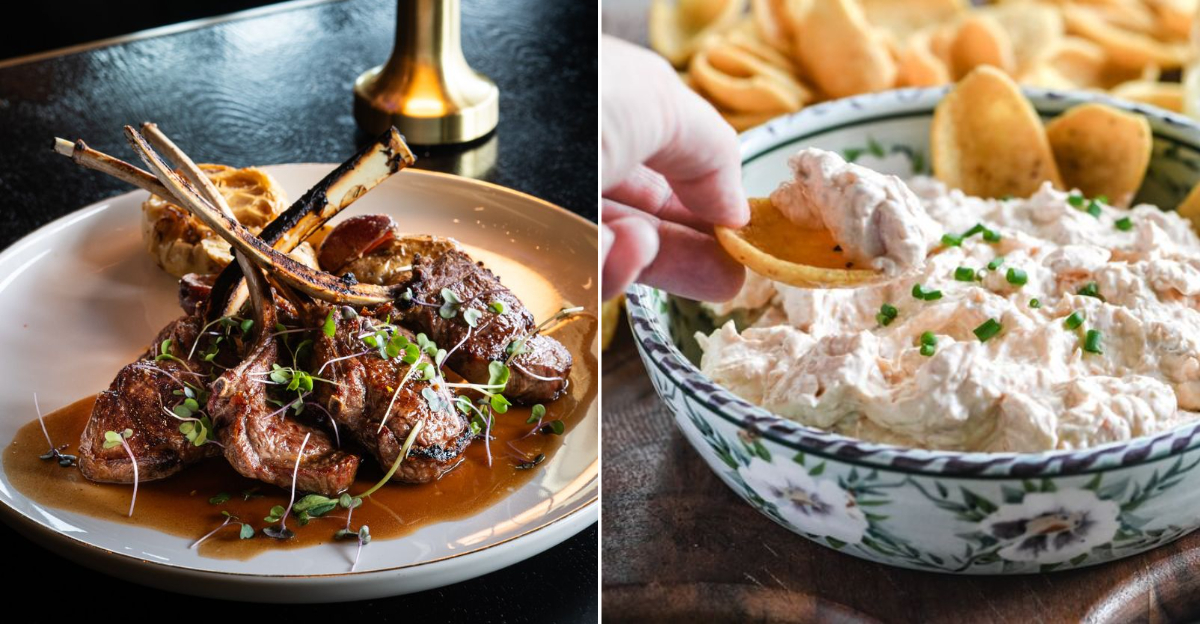
11. Colorado Lamb Chops
The herds grazing in high-country pastures have a diet of wild grasses and herbs, and you can taste that difference on the plate. The meat is tender, slightly earthy, with a flavor that feels cleaner than most lamb I’ve had elsewhere.
Colorado ranchers built a reputation over decades, supplying restaurants statewide with cuts that chefs prize for consistency and quality.
If you see them grilled with rosemary at a local bistro, don’t hesitate. It’s one of the purest expressions of the state’s ranching heritage.
12. Smoked Trout Dip
The aroma hits first; rich smoke clinging to flaky trout, blended with cream cheese, herbs, and a little lemon. It feels rustic yet refined, mountain food with a softer edge.
Smoked trout comes from Colorado’s lakes and streams, where cold waters make for firm, mild fish. Restaurants and breweries alike serve the dip with crackers or toasted bread, an easy communal starter.
I love how this dish draws people in. You see hands reaching across the table, everyone scooping, proof that food here is as social as it is flavorful.