
Colorado Hikes You Need To Do This February That Have A Wildly Good Payoff For The Shortest Miles
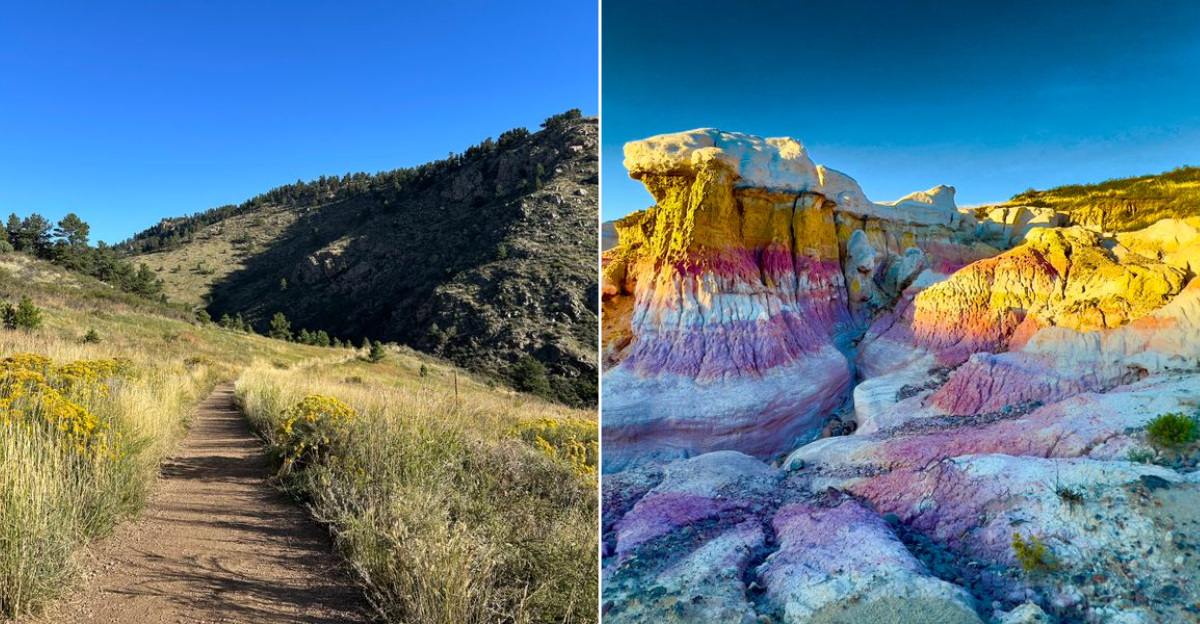
February flips the script in Colorado. This is when the crowds thin, the air sharpens, and the landscape feels more deliberate.
Snow softens the noise. Light stretches lower across canyons and ridgelines.
What looks like an off-season from a distance is actually prime time for anyone paying attention. Winter hiking doesn’t have to mean sufferfests or sunrise alarms.
Some of the most striking views arrive quickly this month, delivered in quiet miles that respect your time. Trails feel personal.
Footsteps slow. Every frozen edge and shadowed wall stands out more than it ever does in summer.
I’ve chased these short routes for years, favoring payoff over punishment. The kind of walks that fit between weather windows and still leave you breathless—for the right reasons.
Water freezes into sculpture. Red stone glows longer.
Lakes turn solid and reflective. Colorado shows a different personality here.
One that rewards curiosity, layers, and a willingness to step outside when most people stay in. February isn’t downtime.
It’s a secret season.
Horsetooth Rock Trail, Fort Collins
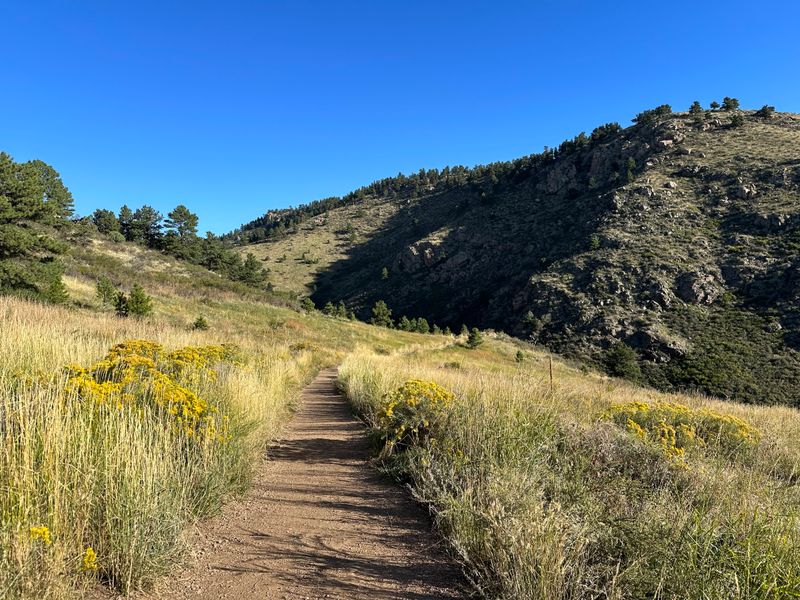
Climbing toward Horsetooth Rock on a February morning, I always feel that first burn in my legs within minutes, but the payoff starts almost immediately.
Horsetooth Mountain Open Space sits at 6550 W County Rd 38E, Fort Collins, CO 80526, where the trail wastes no time gaining elevation through switchbacks that feel steep but mercifully short.
Snow usually packs down hard here thanks to heavy traffic, creating a winter highway that crunches satisfyingly under boots equipped with microspikes.
The rock formation itself rises like a giant tooth against the sky, and once you reach it, the Front Range spreads out in a panorama that makes the quad workout feel like a bargain.
I’ve watched countless sunrises from this spot, and the way winter light catches the plains below never gets old, even when my fingers go numb fumbling with my camera.
This trail proves that 1,100 feet of gain in just over a mile can deliver views that rival much longer expeditions.
Emerald Lake Trail, Rocky Mountain National Park
Starting from Bear Lake feels almost too easy, like cheating your way into alpine grandeur without paying the usual mileage toll.
Bear Lake Trailhead sits off Bear Lake Rd, Estes Park, CO 80517, where the parking lot fills fast even in February because everyone knows this trail delivers frozen magic.
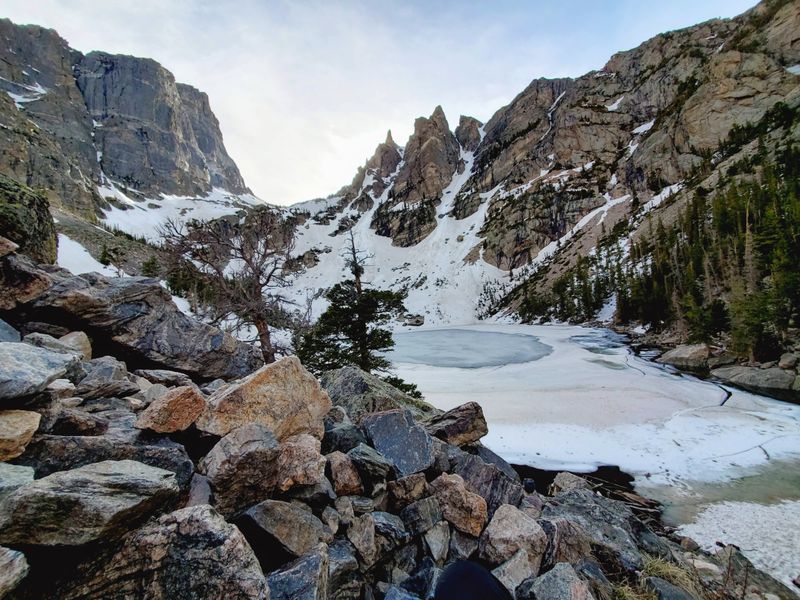
The route climbs gently past Nymph Lake and Dream Lake before reaching Emerald Lake, each one more dramatic than the last as the peaks close in around you.
I remember one February hike when Emerald Lake’s ice was so clear I could see bubbles suspended beneath the surface, while Hallett Peak loomed overhead draped in fresh snow.
Traction devices aren’t optional here, they’re survival gear on the packed snow and ice that turns the trail into a winter skating rink in spots.
At just 3.6 miles round trip, this hike punches so far above its weight class that I’ve done it dozens of times and still find new details to appreciate.
Chief Mountain Trail, Idaho Springs
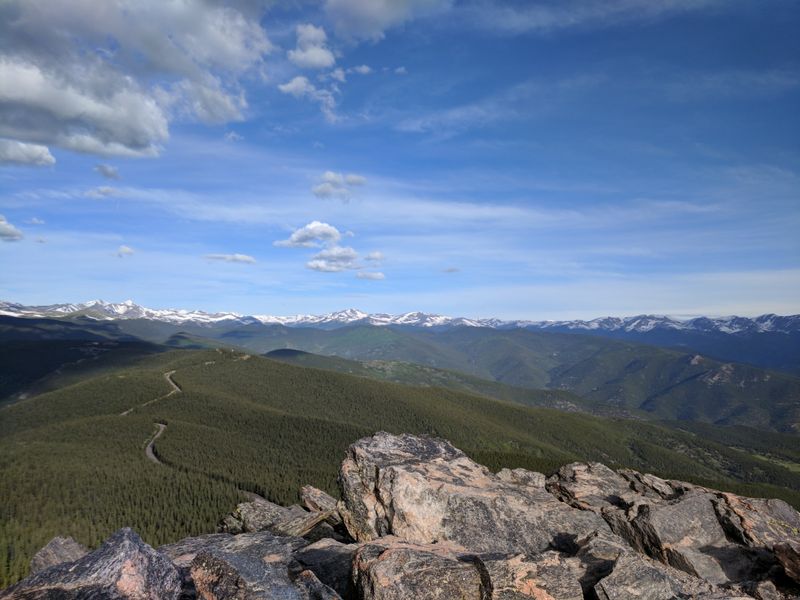
Few trails deliver such outsized summit views for so little mileage, and Chief Mountain makes you earn every foot of elevation with relentless uphill.
Chief Mountain Trailhead starts along Squaw Pass Rd, Idaho Springs, CO 80452, where the parking area sits just off the road and the trail immediately points skyward through pine forest.
The 1.5-mile climb gains about 1,400 feet, which translates to a workout that leaves most hikers breathing hard and questioning their breakfast choices.
But then you break above treeline and the entire Front Range unfolds in a 360-degree panorama that includes Mount Evans, Pikes Peak, and everything in between.
I’ve stood on that summit in February wind that threatened to knock me sideways, but I couldn’t tear myself away from the view that seemed to stretch halfway across Colorado.
Clear winter days are essential here since clouds or snow can turn this exposed peak dangerous quickly, but when conditions align, the payoff rivals peaks twice as tall.
Red Rocks Trading Post Trail, Morrison
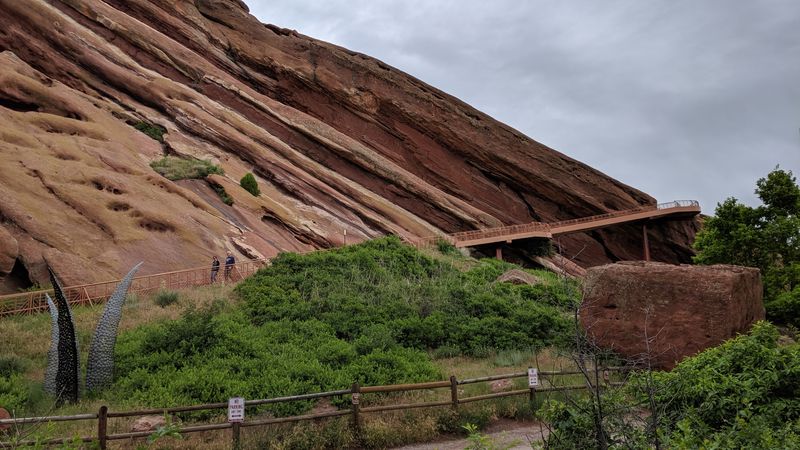
Walking among Red Rocks’ sandstone giants in February feels like having a world-famous concert venue entirely to yourself, minus the crowds and music.
Red Rocks Park & Amphitheatre sits at 18300 W Alameda Pkwy, Morrison, CO 80465, where the Trading Post Trail loops through formations that glow even brighter when dusted with fresh snow.
The trail covers just over a mile with minimal elevation change, making it perfect for days when your legs need a break but your eyes still crave drama.
I’ve photographed these rocks in every season, but winter light does something special, casting long shadows and turning the iron-oxide red into shades of burgundy and rust.
The formations tower overhead like frozen waves, and light snow clings to their ledges and crevices, highlighting textures that summer heat tends to flatten out.
This trail reminds me that sometimes the best hikes don’t require suffering, just showing up when conditions and light conspire to create something memorable.
Gem Lake Trail, Estes Park
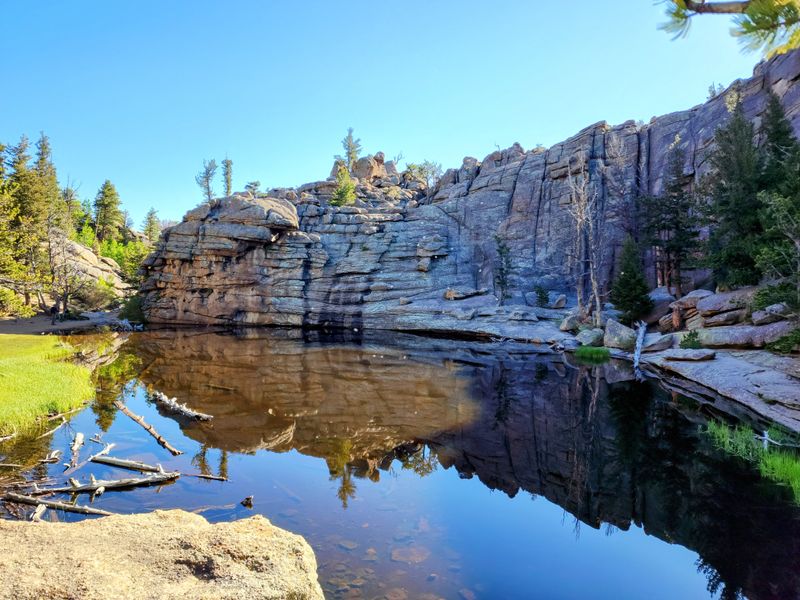
Lumpy Ridge earned its quirky name from the jumbled granite formations that make this trail feel more like scrambling through a sculpture garden than traditional hiking.
Lumpy Ridge Trailhead starts off MacGregor Ave, Estes Park, CO 80517, where the path immediately begins weaving between massive boulders and weathered rock faces.
The 1.8-mile climb to Gem Lake gains about 1,000 feet through terrain that stays interesting every step of the way, with rock formations appearing around each bend.
Gem Lake itself sits in a granite bowl, often frozen solid in February and surrounded by rocks that frame views across the valley toward Rocky Mountain National Park’s peaks.
I once spent an entire afternoon up here watching light move across the frozen surface while rock climbers worked routes on the surrounding walls, their calls echoing off stone.
The relatively low elevation means this trail often stays accessible when higher routes are buried, making it a reliable choice for February adventuring without the full alpine commitment.
Royal Arch Trail, Boulder
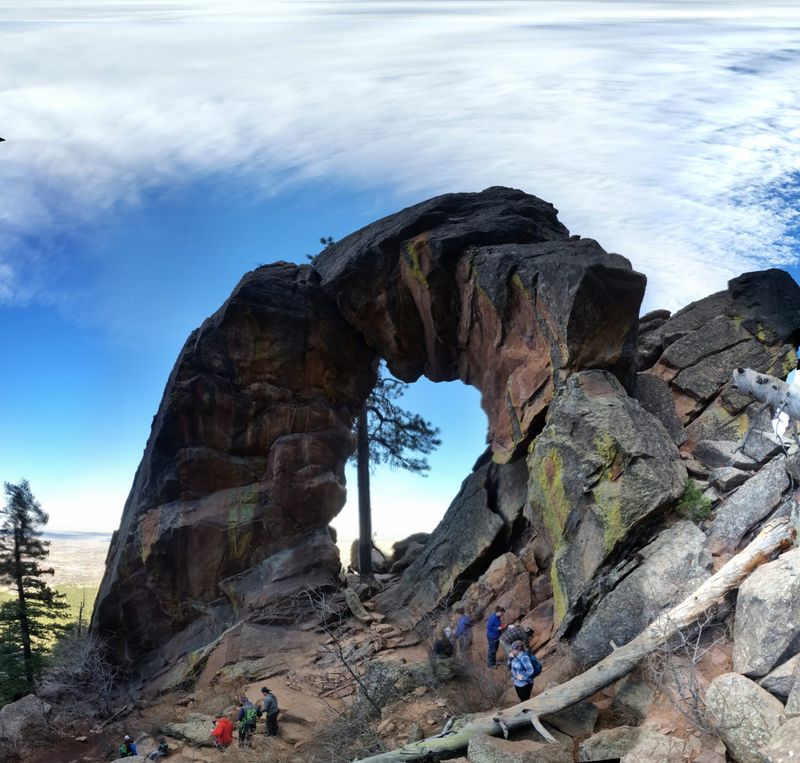
Boulder’s backyard trails are legendary, but Royal Arch manages to stand out even in that crowded field thanks to its namesake stone arch perched high above the city.
Chautauqua Trailhead sits off Baseline Rd, Boulder, CO 80302, where the historic park serves as launching point for countless adventures into the Flatirons.
The 3.4-mile round trip climbs about 1,300 feet through forest and rocky terrain that often turns icy, making microspikes or crampons essential gear rather than optional extras.
I’ve slipped more times on this trail in winter than I care to admit, but reaching the arch always makes the careful footwork worthwhile.
Standing beneath the stone arc with Boulder spread out below and the Front Range rising beyond creates one of those perfect Colorado moments that photographs never quite capture.
The arch frames the view like nature’s own picture window, and in February, when fewer people make the climb, you might have it entirely to yourself for contemplation or celebration.
Paint Mines Interpretive Park, Calhan
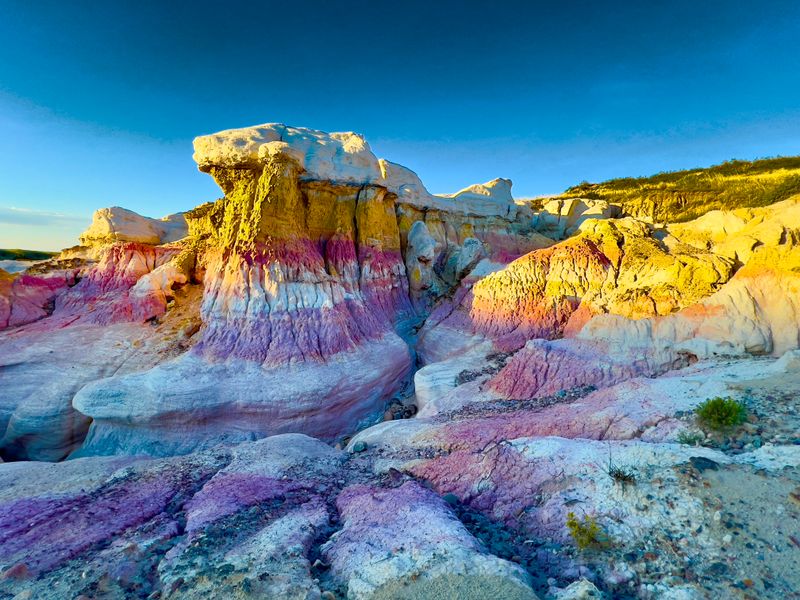
Eastern Colorado doesn’t get enough credit for weird beauty, but Paint Mines makes a compelling case for venturing beyond the mountains.
Paint Mines Parking Area sits at 29950 Paint Mine Rd, Calhan, CO 80808, where the landscape suddenly shifts from prairie grassland into something that belongs on Mars or maybe a fever dream.
The trails here are mostly flat and easy, winding between hoodoos and spires striped with layers of orange, purple, white, and yellow clay that Native Americans once used for ceremonial paint.
February light hits these formations at lower angles, intensifying the colors and creating shadows that emphasize every ridge and fold in the eroded clay.
I remember my first visit here, standing slack-jawed at how different this landscape felt from anywhere else in Colorado, like stumbling into a secret that nobody bothered to advertise.
The minimal elevation gain and wide trails make this perfect for days when you want visual drama without physical punishment.
St. Mary’s Glacier Trail, Idaho Springs
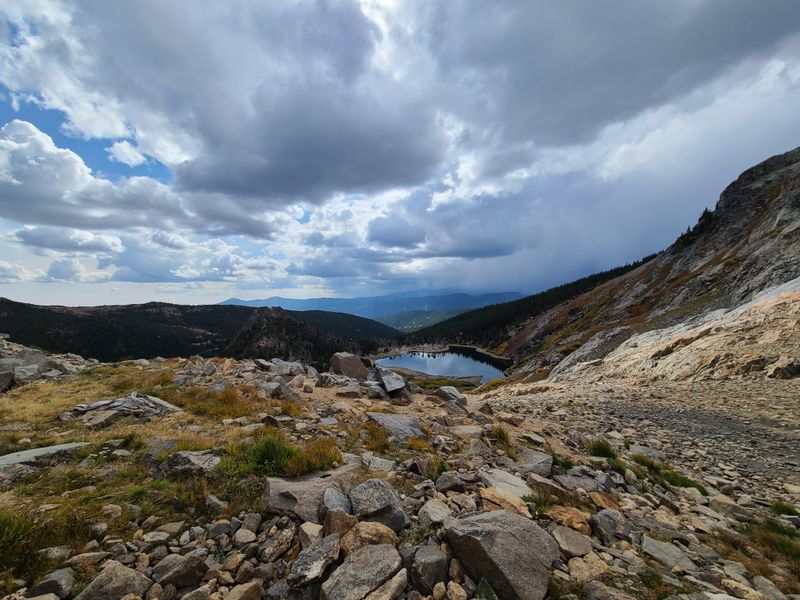
Calling this a glacier might be generous by geological standards, but the permanent snowfield and frozen lake create genuine alpine atmosphere just a short walk from the parking area.
St. Mary’s Glacier Parking sits off Fall River Rd, Idaho Springs, CO 80452, where the trailhead elevation already puts you well into the alpine zone before you take a single step.
The route covers less than a mile to reach the frozen lake, but the rocky, often icy terrain demands respect and proper traction gear.
I’ve watched people attempt this in sneakers during February and immediately regret their footwear choices as they slip-slide their way upward.
The lake sits in a dramatic cirque with the snowfield rising beyond it, and on clear days, the surrounding peaks create a amphitheater of stone and ice.
Despite the short distance, the high elevation and exposure mean weather can change fast, so I always pack extra layers even for this quick hike that technically qualifies as a walk.
Roxborough State Park Fountain Valley Trail, Littleton

Roxborough’s red rock fins rise like ancient ships frozen mid-sail, creating one of Colorado’s most photogenic landscapes with trails that stay accessible year-round.
Roxborough State Park sits at 4751 N Roxborough Park Rd, Littleton, CO 80125, where the Fountain Valley Trail loops 2.3 miles through scenery that rivals better-known parks without the summer crowds.
The relatively low elevation means snow melts faster here, and when it does stick around, it creates stunning contrast against the rust-colored sandstone.
I’ve hiked this loop dozens of times and still catch myself stopping to stare at how the formations tilt at impossible angles, geological drama frozen in stone.
The trail stays mostly level, making it perfect for February days when you want beauty without battling elevation or icy steeps.
Wildlife often appears more readily in winter too, and I’ve spotted deer, foxes, and various raptors along this route when the landscape feels quiet and exposed.
Garden of the Gods Perkins Central Trail, Colorado Springs
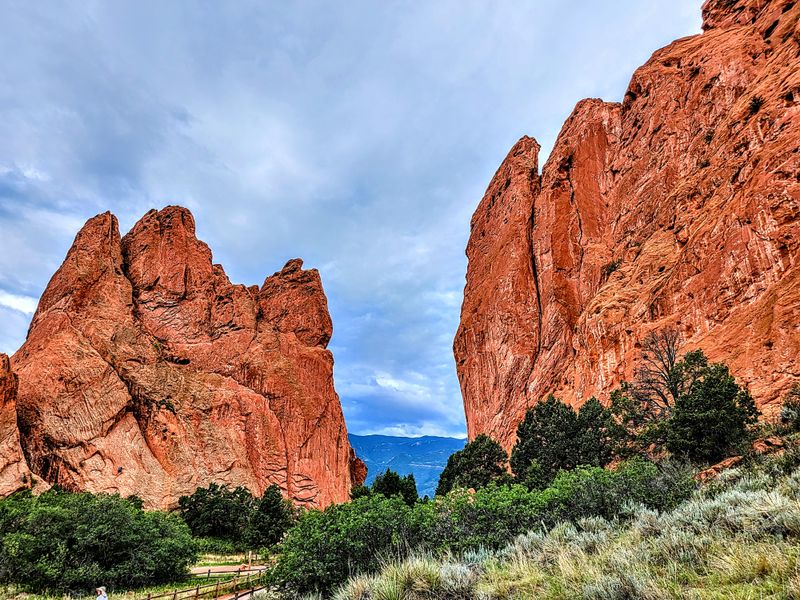
Garden of the Gods manages to feel both wildly dramatic and surprisingly accessible, with formations that look like they belong in a fantasy novel rising right next to paved paths.
Garden of the Gods Visitor & Nature Center sits at 1805 N 30th St, Colorado Springs, CO 80904, where the Perkins Central Trail loops through the park’s most iconic scenery.
The 1.5-mile paved loop stays snow-free most of the winter thanks to lower elevation and southern exposure, making it perfect for days when higher trails are impassable.
I’ve walked this route in running shoes during February while trails just an hour north were buried under feet of snow, marveling at how different Colorado’s microclimates can be.
The formations tower overhead in shades of red and orange, with Pikes Peak rising beyond them when clouds cooperate and reveal the summit.
This trail proves that accessibility doesn’t diminish impact, and sometimes the easiest hikes deliver views that stick with you just as strongly as the hard-earned ones.