
12 Colorado Photo Spots That Make Your Feed Look Expensive
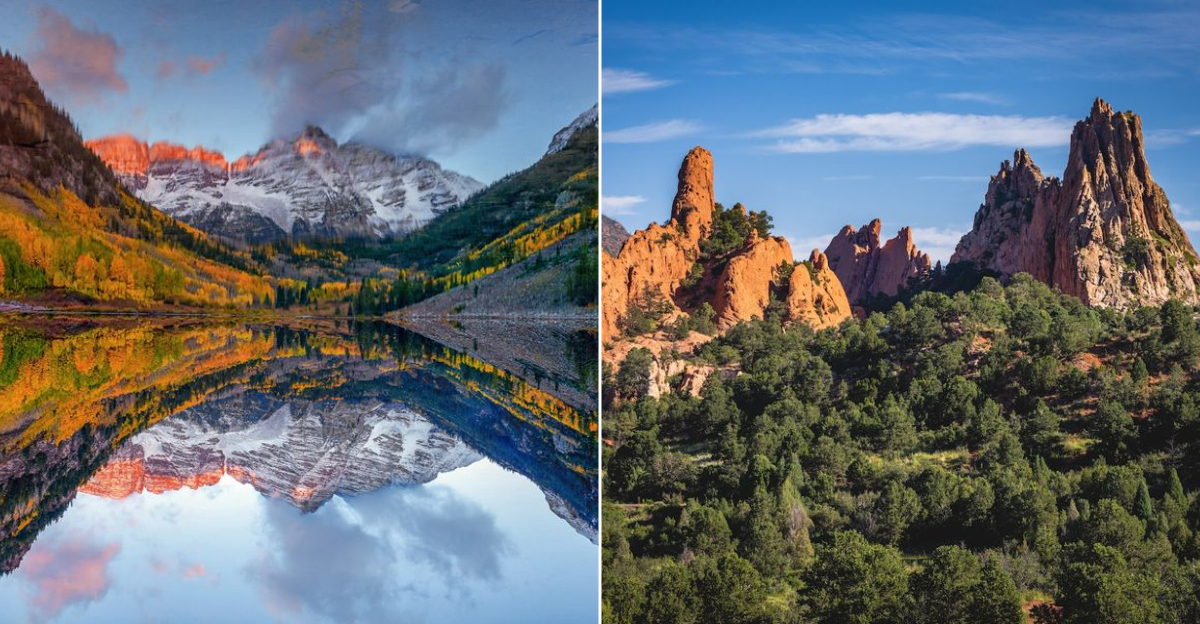
In Colorado, it is surprisingly easy to feel like a professional photographer even if you have never handled a DSLR. The light seems sharper, the skies stretch wider, and the scenery does most of the work for you.
From mirror still alpine lakes that reflect jagged peaks to towering red rock formations glowing at sunset, every direction feels like a ready made composition. Early mornings bring soft pastels across mountain horizons, while evenings ignite cliffs and canyons in deep amber tones.
Even a spontaneous roadside stop can turn into a gallery worthy moment. Colorado’s landscapes invite experimentation, whether you prefer sweeping panoramas or intimate close ups of wildflowers and weathered stone.
Planning a road trip or a quick weekend escape almost guarantees a memory card filled to the brim. Charge your battery, clear some storage space, and let Colorado transform ordinary snapshots into frame worthy keepsakes.
1. Maroon Bells
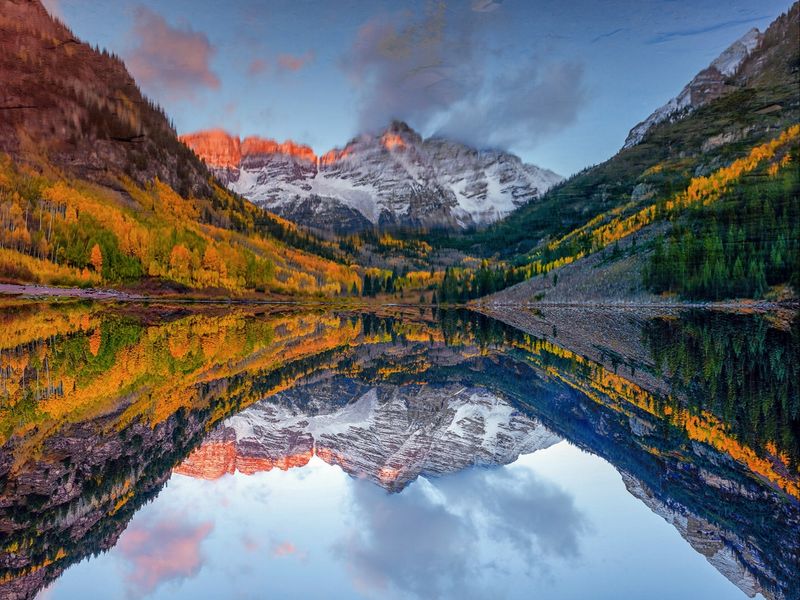
Some places earn their reputation honestly, and Maroon Bells is one of them. Located near Aspen, these twin peaks rising above Maroon Lake have appeared on more postcards, screensavers, and Instagram feeds than almost any other spot in the entire Rocky Mountain West.
The reflection alone is enough to make your phone camera weep with joy.
Getting there requires a bit of planning, especially during peak season when a shuttle system runs from Aspen Highlands to manage the crowds. The early morning light hits the water surface around sunrise, turning everything gold and still.
That is the window serious photographers live for, and honestly, even casual visitors tend to go quiet the moment they see it.
Autumn is widely considered the prime time to visit, when the surrounding aspen trees shift into blazing yellow and orange. The combination of colorful foliage, jagged peaks, and mirror-like water creates a layered composition that looks almost too good to be real.
You don’t need a filter when the landscape already applies its own.
Even midday visits carry a certain magic here. The peaks shift color throughout the day, moving from deep maroon to rose to rusty brown depending on the light and cloud cover.
That constant change means no two shots are ever quite the same.
If you’re traveling as a couple, arriving just before sunrise and watching the lake come alive together is the kind of moment that quietly becomes a favorite memory. Solo visitors often find a meditative stillness here that’s hard to replicate anywhere else.
Maroon Bells doesn’t try to impress you. It simply does, every single time, without breaking a sweat.
2. Hanging Lake
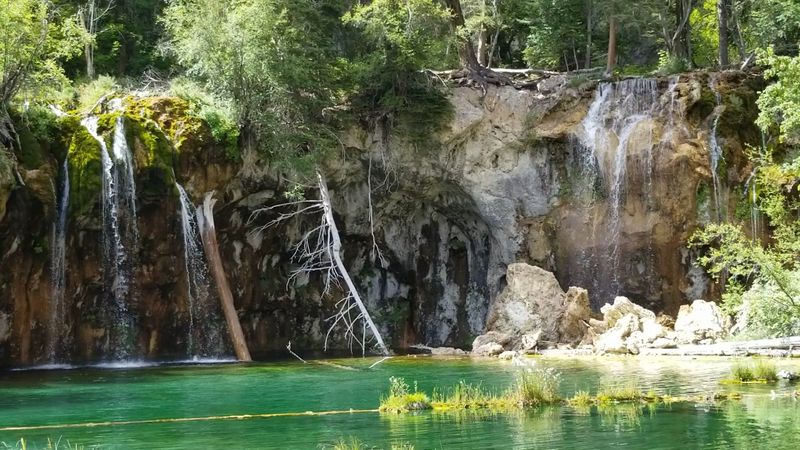
Hanging Lake near Glenwood Springs is the kind of place that makes you stop mid-sentence. The water is an almost unnatural shade of turquoise, clear enough to see every submerged log and stone below the surface.
It looks digitally enhanced even when you’re standing right in front of it, which makes the resulting photos genuinely stunning.
Reaching the lake requires a moderately strenuous 1.2-mile hike that gains about 1,000 feet in elevation. The trail follows Deadhorse Creek through a narrow canyon, and the surrounding rock walls create a moody, textured backdrop even before you reach the main attraction.
Photographers who stop along the trail often capture some of their most underrated shots there.
The lake itself sits in a hanging valley, which is a geological formation carved out by glaciers long ago. Waterfalls feed the lake from above, and the entire scene has an almost theatrical quality.
The mist, the moss-covered rocks, and the impossibly blue-green water combine to create an atmosphere that feels more like a fantasy film set than a real hiking destination.
Because the ecosystem is fragile, visitors are not allowed to swim or wade in the water. Boardwalks and designated viewing areas keep foot traffic organized.
That structure actually works in your favor photographically, because it forces you to find the most striking angles from fixed points.
A Tuesday morning visit in late spring tends to offer fewer crowds and softer light filtering through the canyon. Families often make this their anchor activity for a Glenwood Springs trip, pairing the hike with a soak at the nearby hot springs afterward.
Whatever your reason for going, the photos you leave with will speak entirely for themselves.
3. Great Sand Dunes National Park
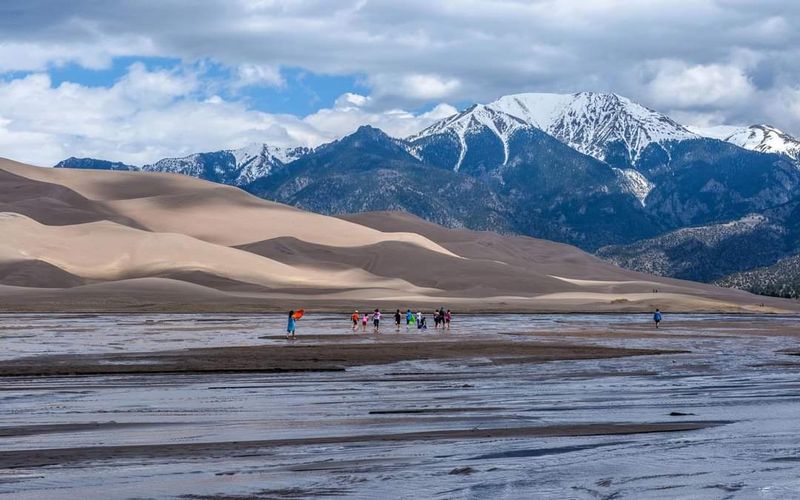
Great Sand Dunes National Park near Alamosa pulls off something that shouldn’t work on paper but absolutely does in person. Towering sand dunes, some reaching over 700 feet, sit directly against the base of the Sangre de Cristo Mountains.
The visual contrast between soft golden dunes and jagged snow-capped peaks is so dramatic that most first-time visitors spend a full minute just staring before reaching for their camera.
The light here changes fast and changes everything. Early morning casts long blue shadows across the dune ridgelines, creating a sculptural quality that makes even simple shots look highly composed.
Sunset turns the sand a deep amber-orange, and the mountains behind shift into shades of purple and pink simultaneously. Timing your visit around these windows is one of the easiest photography decisions you’ll ever make.
Medano Creek runs along the base of the dunes seasonally, usually from late spring into early summer. When it’s flowing, it adds a reflective element that gives the landscape an entirely different dimension.
Children love splashing through the shallow water, and those candid family moments against the dune backdrop tend to produce genuinely joyful, frame-worthy photos.
The scale of the dunes also works in your favor compositionally. A single person walking along a ridge creates an immediate sense of depth and size.
You don’t need a wide-angle lens to tell a compelling visual story here. The landscape does that work for you.
Star photography is another reason people return. The park has minimal light pollution, and on clear nights the Milky Way arches above the dunes in a way that feels almost theatrical.
For photographers willing to stay late, Great Sand Dunes rewards patience generously and without exception.
4. Garden of the Gods
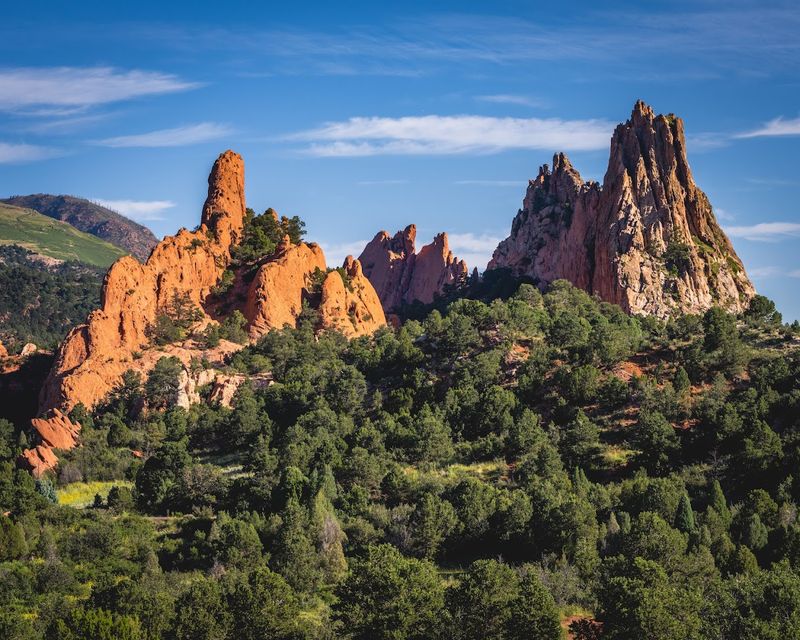
Garden of the Gods in Colorado Springs is the kind of place where color does all the heavy lifting. The red sandstone formations rise sharply against a blue Colorado sky, and the contrast is so vivid it almost looks like someone adjusted the saturation slider in post-processing.
Except they didn’t. That’s just what it looks like on an ordinary Tuesday afternoon.
The park is free to enter, which is the kind of detail that makes a good thing feel even better. Paved paths wind through the formations, giving photographers multiple angles and perspectives without requiring any technical hiking.
The Siamese Twins formation, where you can frame Pikes Peak perfectly through a natural rock window, is one of the most sought-after compositions in the entire state.
Morning light hits the red rocks with a warm glow that deepens their color significantly. The long shadows of early hours add dimension and texture to shots that would look flat under midday sun.
Photographers who know this tend to arrive before 8 a.m. and leave with their best work done before most visitors even finish breakfast.
Wildlife occasionally wanders through, including mule deer that seem entirely unbothered by human presence. An unexpected deer in the foreground of a red rock shot is the kind of happy accident that makes a photo feel genuinely alive rather than staged.
The park also works beautifully for portraits. The rock formations create a naturally dramatic backdrop that flatters almost any subject without requiring much setup.
Couples, families, and solo travelers all tend to look effortlessly good here, which is probably why Garden of the Gods shows up on so many feeds looking like professionally shot content. It’s not luck.
The place just has exceptional bones.
5. Emerald Lake
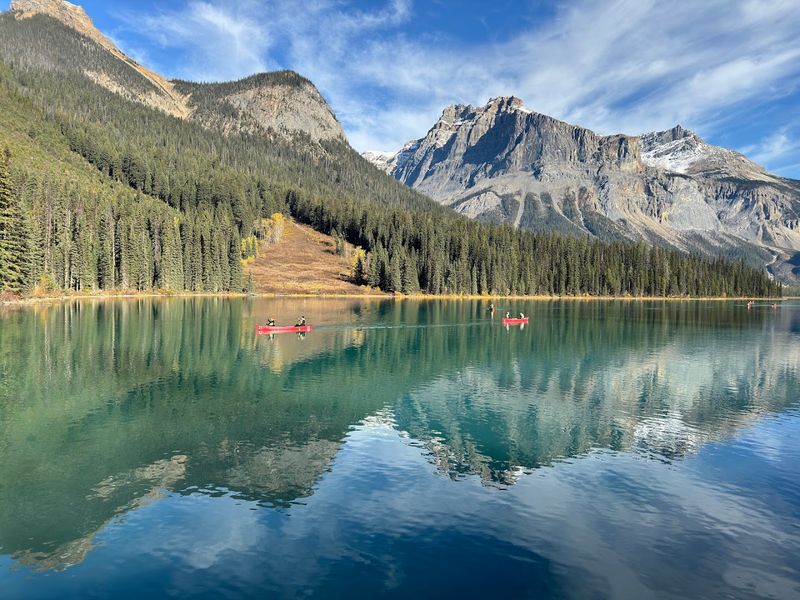
Emerald Lake sits at the end of a short but rewarding trail in Rocky Mountain National Park, and its name is not an exaggeration. The water carries a genuine green tint, fed by glacial minerals and framed by peaks that rise steeply on three sides.
The enclosed feeling of the basin gives every photo taken here a sense of depth and drama that wider, more open landscapes sometimes lack.
The hike to reach it is about 1.8 miles one way, passing two other lakes along the way: Nymph Lake and Dream Lake. Both are worth stopping at for their own photographic merits, but Emerald Lake is the finale that justifies the entire walk.
Many visitors treat the trail as a progression, capturing each lake in sequence and ending with the most dramatic composition of the three.
Calm mornings produce the best reflections. When the wind is low, the surrounding peaks mirror themselves almost perfectly in the lake’s surface, creating a symmetrical shot that looks precisely calibrated even when taken with a phone camera.
Midday wind tends to break up the reflection, so arriving early is the straightforward call here.
Winter visits transform the entire scene. Snow covers the surrounding peaks and the shoreline, and the lake itself may partially freeze.
That version of Emerald Lake has a quieter, more austere beauty that summer photos rarely capture. Fewer people make the trip in colder months, which means the solitude is part of the reward.
For families, the trail is manageable for older children and offers enough variety along the way to keep interest high. The payoff at the end, that first view of Emerald Lake framed by granite walls, tends to produce a collective gasp that no one quite prepares for.
It earns that reaction every time.
6. Union Station
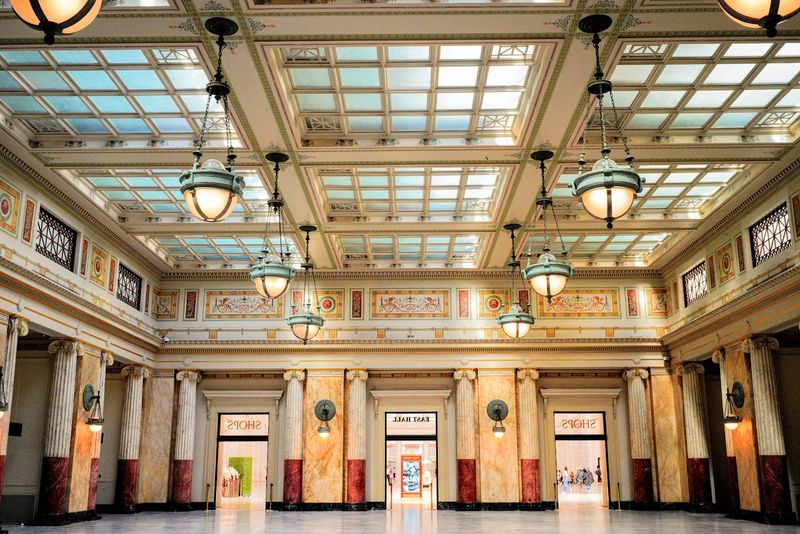
Union Station in downtown Denver is the rare historic building that manages to feel both grand and genuinely welcoming at the same time. The beaux-arts facade, with its wide arched windows and the iconic “Travel by Train” sign, photographs beautifully at almost any hour.
But it’s the transition from day to night that really elevates the images you can take here.
As the sun sets and the interior and exterior lights warm up, the station takes on a golden glow that contrasts beautifully against the deepening blue sky during the brief window photographers call blue hour. That fifteen-to-twenty minute stretch after sunset, before full darkness settles in, produces images that look like they were lit by a professional crew.
No additional equipment required.
The plaza in front of the station buzzes with activity on most evenings. Locals walking dogs, groups meeting up, and the occasional street performer create a lively urban energy that adds life to architectural shots.
A long exposure on a busy evening will blur the movement of passersby into soft streaks of motion, giving the image a dynamic, editorial quality.
Inside, the Great Hall offers its own visual rewards. The vaulted ceilings, warm lighting, and polished floors create a layered interior shot that rewards anyone who points a camera upward.
The combination of old-world architecture and a modern, active crowd gives the space a timeless quality that translates well in photographs.
Union Station is also a natural anchor for a Denver day trip. Its central location in the LoDo neighborhood means you can pair a visit with a walk along the 16th Street Mall or a stroll toward Confluence Park.
The station earns its place on any Denver itinerary, not just as a photo stop, but as a genuine experience worth savoring slowly.
7. Red Rocks Park and Amphitheatre
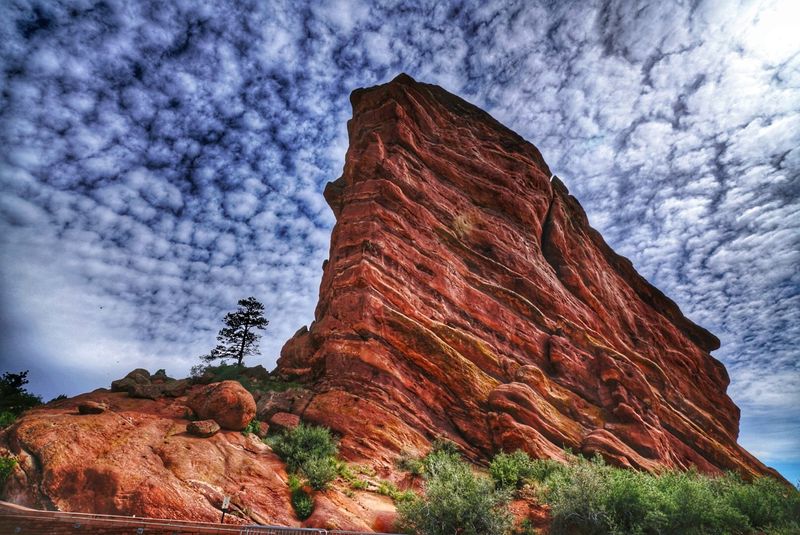
Red Rocks Park and Amphitheatre in Morrison is one of those places that photographers return to repeatedly because the light never behaves the same way twice. The massive sandstone formations, some reaching 400 feet tall, catch sunlight at angles that shift dramatically depending on the season and time of day.
Early morning is particularly striking, when long shadows carve deep lines across the rust-colored stone and the air is still cool and clear.
The amphitheatre itself is a natural wonder that also happens to be one of the most photographed concert venues in the world. Even when no show is scheduled, the seating area and stage create a compelling compositional framework.
The rows of seats leading the eye down toward the stage, framed by towering rock walls on either side, give the image a strong sense of scale and perspective.
Sunrise yoga sessions happen here regularly, and if you happen to arrive during one, the combination of human movement, warm light, and dramatic geology creates a genuinely cinematic scene. That layered quality, where culture and landscape intersect, is what separates Red Rocks photos from standard nature shots.
The surrounding park has miles of trails that wind through additional rock formations and offer elevated views of the Denver metro area below. On clear days, the city skyline visible through gaps in the rocks adds an unexpected urban element to what is otherwise a purely natural landscape.
That juxtaposition is a gift to anyone composing a wide shot.
Concert nights bring their own photographic energy, with stage lighting bouncing off the rock walls in ways that feel almost accidental but look completely intentional. Whether you visit for a morning hike or an evening show, Red Rocks consistently delivers images that are hard to replicate anywhere else on earth.
8. Millennium Bridge
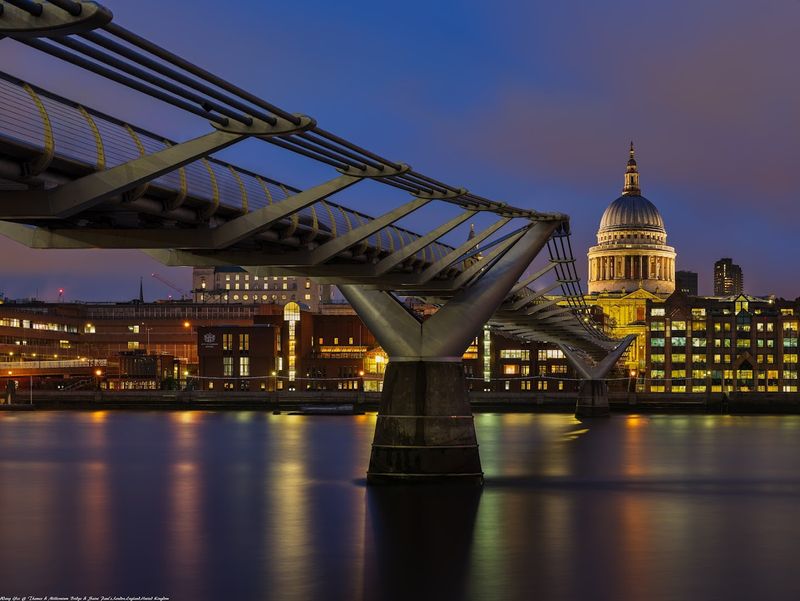
Millennium Bridge in downtown Denver is the kind of architectural subject that rewards photographers who appreciate clean lines and contemporary design. The cable-stayed pedestrian bridge stretches across the rail yards in the Commons Park area, and its single white mast with radiating cables creates a striking geometric composition against the open sky.
It photographs with a crispness that feels distinctly modern without being cold.
Morning light from the east catches the white structure and turns it almost luminous. The cables cast thin parallel shadows on the bridge deck, adding a precise, almost graphic quality to close-up shots.
From a distance, the full structure frames the downtown skyline behind it, giving you a clean foreground element that anchors the composition without overwhelming it.
The bridge connects the Central Platte Valley to the 16th Street Mall, which means foot traffic across it is steady and varied throughout the day. Candid shots of commuters and joggers crossing the bridge add a human scale that makes the architecture feel lived-in rather than purely decorative.
That balance between structure and life is what makes urban photography compelling.
Blue hour, the brief window after sunset when the sky turns a deep cobalt, is arguably the best time to photograph Millennium Bridge. The bridge lights up against the darkening sky, and the surrounding city adds a warm glow that contrasts beautifully with the cool tones overhead.
That color tension produces images with a sophisticated, editorial quality that looks far more planned than it actually is.
For travelers doing a Denver day loop, Millennium Bridge pairs naturally with a walk through Commons Park and a coffee stop in the nearby Platte Street corridor. It’s a stress-free addition to any itinerary that delivers a distinctly contemporary Denver image, one that stands apart from the mountains-and-nature shots dominating most Colorado feeds.
9. Big Blue Bear
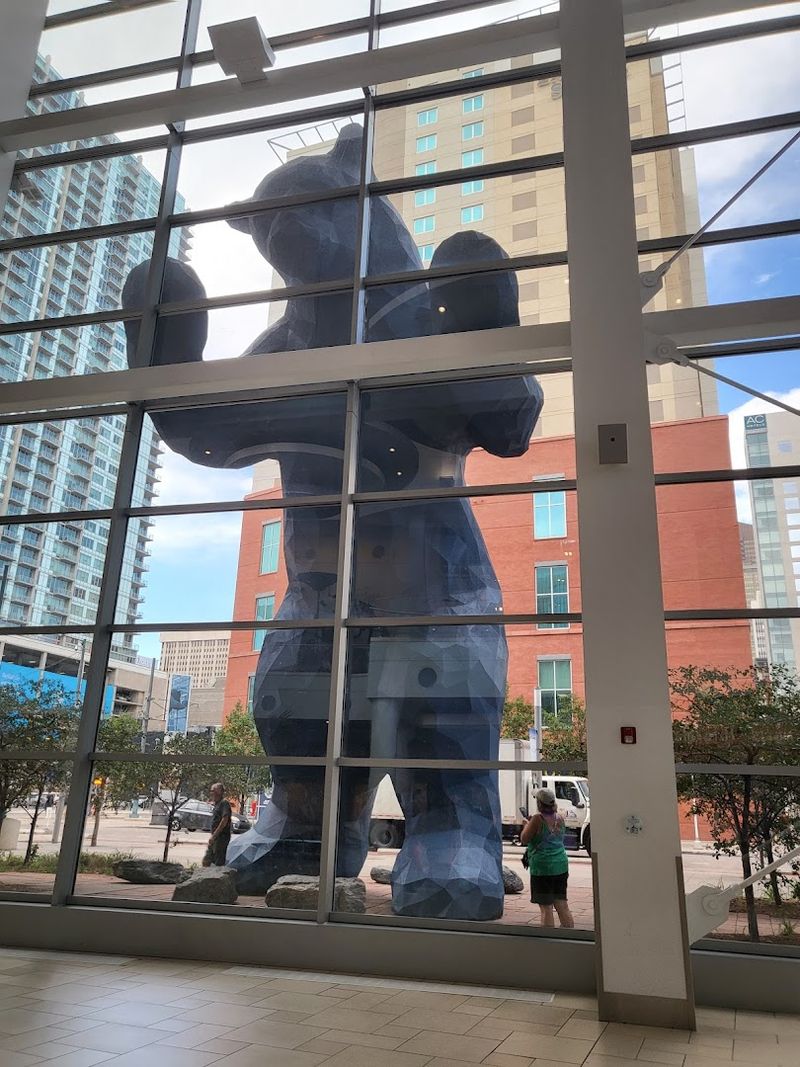
There is something deeply charming about a 40-foot blue bear pressing its nose against a glass building, and that is exactly what greets you outside the Colorado Convention Center in downtown Denver. Formally titled “I See What You Mean” and created by artist Lawrence Argent, the sculpture has become one of the most photographed public art pieces in the entire city.
Its playful scale and curious pose give it an immediate personality that translates effortlessly in photos.
The bear’s glossy blue surface reflects the surrounding environment, picking up the colors of the sky, nearby buildings, and passing clouds. That reflective quality means the sculpture looks different depending on the weather and time of day, which gives repeat visitors a reason to keep shooting.
A cloudy afternoon produces a moodier, more subdued image, while a clear sunny day turns the bear’s surface into a vivid, saturated blue that pops against almost any background.
The framing possibilities here are genuinely fun. Shooting from below and looking up emphasizes the bear’s enormous scale against the skyline.
Moving to the side reveals the reflection in the convention center glass, where you can capture both the sculpture and the city behind you simultaneously. That dual-image quality makes for a surprisingly sophisticated shot from a subject that is, at its core, a giant stuffed animal energy.
Families with children tend to gravitate toward the Big Blue Bear naturally, and the resulting photos often carry a joyful, spontaneous quality that more carefully staged shots lack. Kids posing in front of it, mimicking the bear’s curious lean, produce some of the most genuinely fun travel photos in Denver.
It sits right at 14th Street and California Street, making it an easy addition to any downtown Denver walk. Low effort, high reward, and reliably charming every single time.
10. Talk Denver To Me Mural
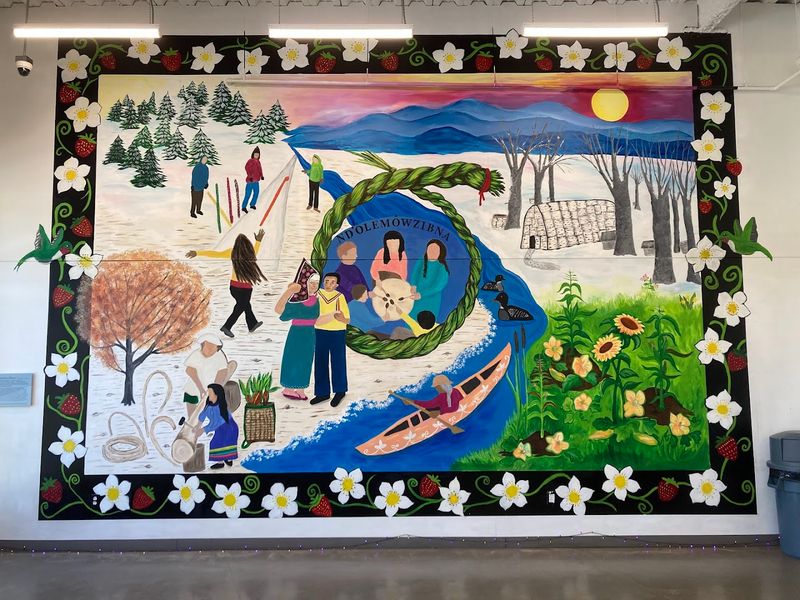
Street art has a way of turning an ordinary block into something worth walking out of your way for, and the Talk Denver To Me mural does exactly that. Bright, bold, and unapologetically local in character, it’s the kind of wall that stops people mid-stride and sends them reaching for their phones.
The colors pop regardless of the time of day, which is a quality that not every mural can claim.
Denver’s street art scene has grown significantly over the past decade, and murals like this one reflect the city’s investment in public creative expression. The Talk Denver To Me piece celebrates local identity in a way that feels genuine rather than manufactured for tourism.
That authenticity comes through in photographs, giving images taken here a grounded, real-world energy that stock photos simply cannot replicate.
Positioning yourself directly in front of the mural with the full design behind you produces a classic portrait setup that works for virtually any feed aesthetic. The colors are saturated enough to serve as a standalone background without any additional styling.
Wearing a neutral outfit lets the mural’s palette do the visual work, a trick that travel photographers use regularly to create cohesive, high-contrast images.
The surrounding neighborhood adds context worth exploring before or after your mural stop. Denver’s creative districts tend to cluster complementary businesses nearby, so a post-photo coffee or a browse through a local shop is usually just a short walk away.
That combination of art and neighborhood character makes the visit feel like more than just a quick photo opportunity.
For solo travelers looking for a straightforward, confidence-inspiring urban shot, this mural delivers without requiring any special equipment or technical skill. Point, frame, shoot.
The wall takes care of the rest, and your feed gets a Denver moment that actually feels like Denver.
11. Frisco Bay Marina
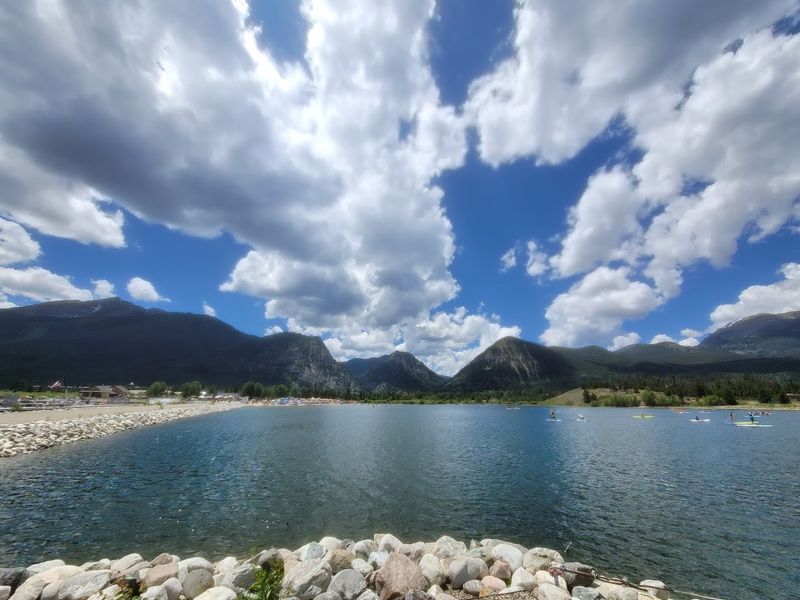
Dillon Reservoir near Frisco is the kind of place that makes you wonder why more people aren’t talking about it. The water stretches wide and calm, and on still mornings the surrounding Rocky Mountain peaks reflect in the surface with a clarity that makes the image look almost perfectly symmetrical.
Frisco Bay Marina sits along the reservoir’s edge and provides a foreground of colorful sailboats and docks that adds structure and visual interest to what would otherwise be a purely open landscape shot.
The marina’s boats come in a range of colors, and their masts create vertical lines that lead the eye upward toward the mountain ridgeline behind them. That layered composition, water, boats, peaks, sky, gives even a simple phone camera shot a depth and complexity that looks genuinely considered.
It’s one of those places where the scene itself does the compositional work for you.
Midweek mornings tend to offer the calmest water and the fewest boats moving around, which is ideal for clean reflection shots. Weekends bring more activity, which trades stillness for a livelier, more dynamic scene.
Both versions are worth capturing, depending on the mood you’re going for.
The town of Frisco is directly adjacent to the marina, making it easy to combine a photo stop with a walk along Main Street or a meal at one of the local spots in town. That practical convenience makes this a natural anchor for a Summit County day trip, especially for couples or families who want a mix of outdoor beauty and easy town access.
Sunset at Frisco Bay hits differently than most Colorado sunsets because the reservoir amplifies the colors, reflecting warm pinks and oranges across a wide, unobstructed surface. That doubled color payoff is the kind of thing that turns a casual visit into a memory worth keeping, and a photo worth sharing without hesitation.
12. Highway 550 Scenic Drive
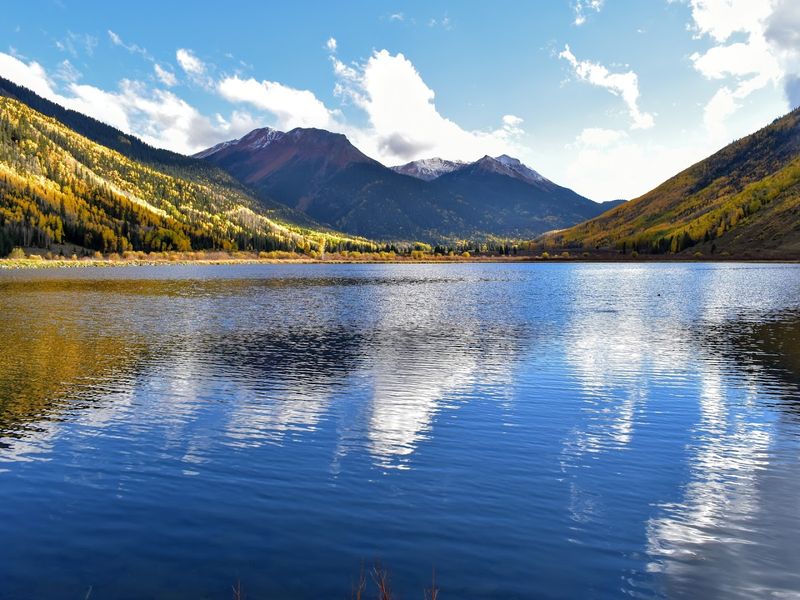
Highway 550 between Durango and Silverton is known as the Million Dollar Highway, a name that either refers to the cost of construction, the value of the ore-laden fill dirt used to build it, or simply the view, depending on who you ask. All three explanations feel plausible when you’re driving it.
The road cuts through steep canyon walls, climbs to mountain passes above 11,000 feet, and offers sweeping valley views that appear around corners without any warning.
For photographers, the challenge here isn’t finding a good shot. It’s deciding which of the continuous good shots is worth stopping for.
Pullouts along the route give you designated places to park and step out safely, and each one frames a slightly different version of the same dramatic landscape. Narrow switchbacks, sheer drop-offs, and towering peaks visible in multiple directions make this one of the most compositionally generous drives in the country.
Autumn is particularly spectacular along this corridor. The surrounding mountain slopes turn gold and red as the aspens change, layering color across the valley floors below.
A road-trip photo taken along 550 in early October, with fall color filling the valley and a dusting of snow on the peaks above, is the kind of image that generates genuine engagement.
Road-trip photography along this stretch rewards patience and flexibility. Stopping at unexpected moments, when a cloud shadow moves across a ridge or a shaft of light breaks through the canyon walls, produces images that feel found rather than planned.
That spontaneous quality gives them an authenticity that carefully staged landscape shots often lack.
Driving the full route from Durango to Silverton takes roughly an hour and a half without stops, but most photographers budget a full half-day to do it justice. The road earns every extra minute you give it.