
12 Colorado Small Towns With Historic Main Streets You Can Walk For Hours
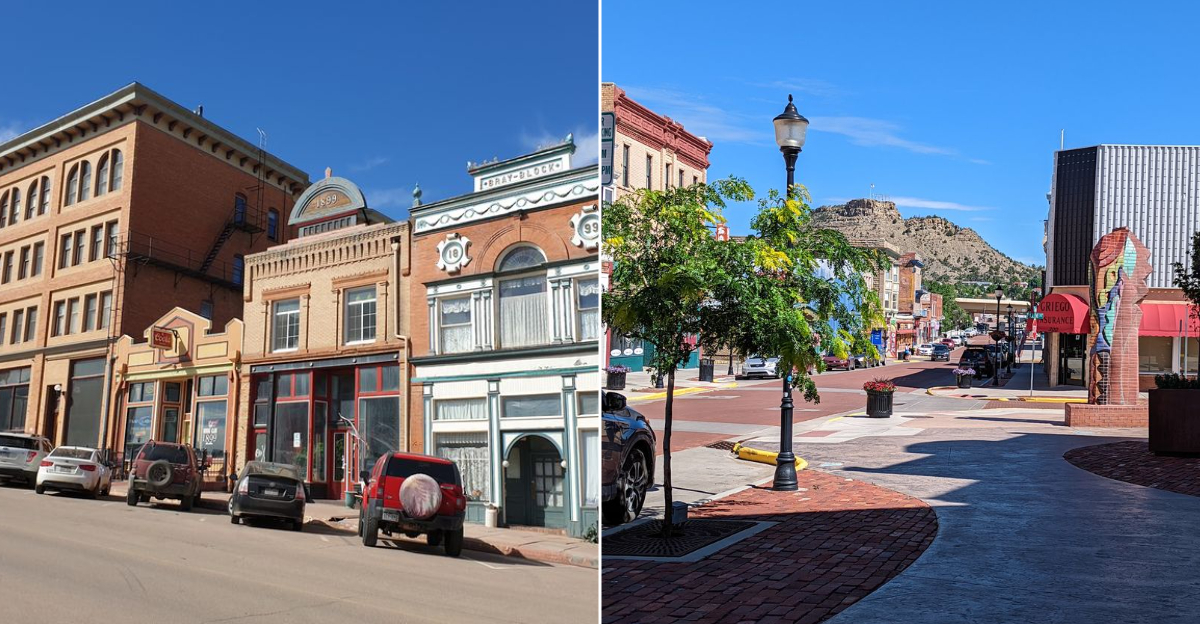
Some Colorado towns seem to have ignored the rush to modernize, and that is exactly what makes their main streets worth exploring.
Instead of towering developments and endless traffic, you can find blocks lined with Victorian storefronts, historic facades, and buildings that still reflect the character of earlier eras.
It is the kind of setting where a walk can turn into an afternoon of architectural discoveries, window shopping, and unexpected history lessons. What makes these streets especially appealing is their scale.
You do not need a packed itinerary or a car between every stop. Comfortable shoes and a little curiosity can carry you a long way.
Across Colorado, these communities offer a slower look at the past without turning the experience into a museum visit. Wander at an easy pace, look above the shop windows, and give yourself permission to linger.
Sometimes the most memorable detour is simply a walk.
1. Silverton, Colorado
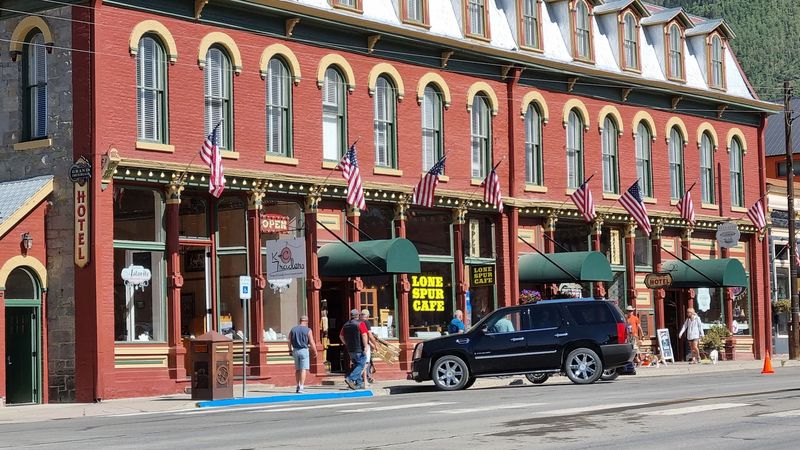
There is a moment on Greene Street in Silverton when you look up from a shop window and realize the mountains are right there, framing the entire block like a painting someone forgot to hang inside a museum. Silverton’s downtown sits inside a National Historic Landmark District, and the Victorian-era storefronts are remarkably intact for a town this remote and this old.
It does not feel curated or Disney-fied. It feels earned.
Restaurants, galleries, and local shops fill buildings that date back to Colorado’s silver-boom years, and the surrounding blocks reward anyone willing to wander off the main drag. My honest advice: give yourself at least three hours here, because the architecture alone will slow you down pleasantly.
The mountain views do the rest.
Silverton sits at an elevation of about 9,318 feet, so take your first hour gently while your lungs adjust. Late summer is particularly good, when the wildflowers on the surrounding peaks are still showing off.
Arriving on the Durango and Silverton Narrow Gauge Railroad adds a theatrical flourish that turns a great day trip into something genuinely unforgettable for families and couples alike.
2. Creede, Colorado
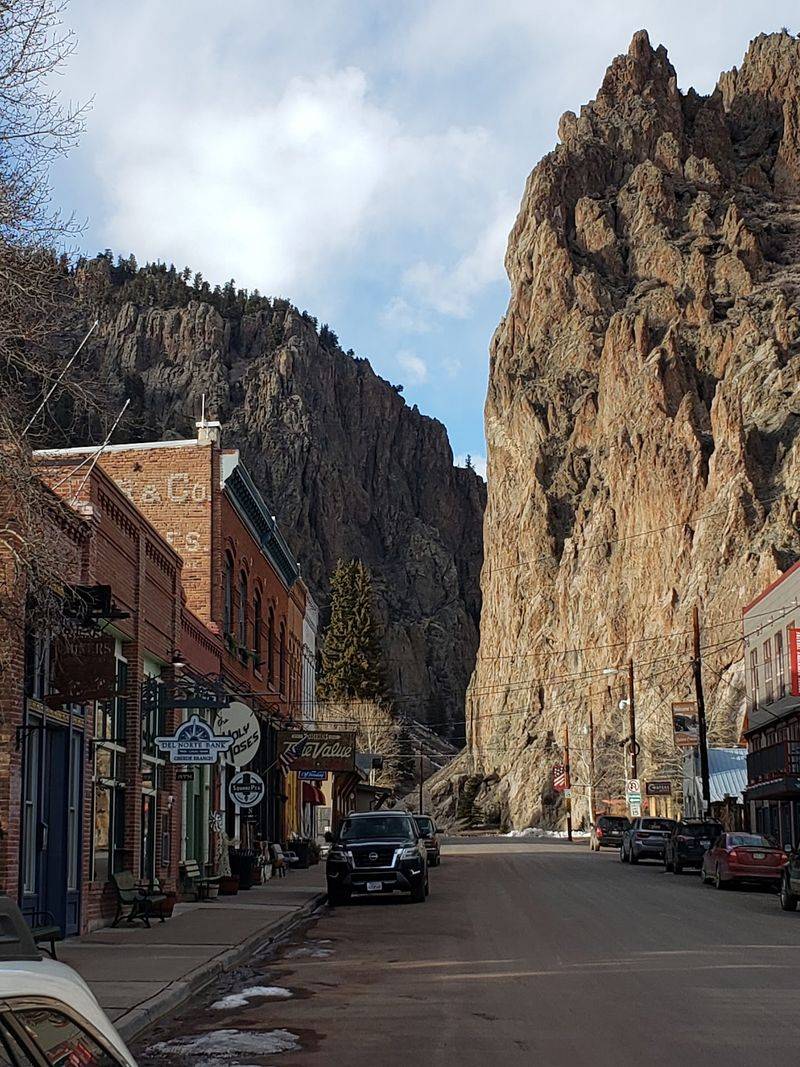
Creede is the kind of town that makes you feel slightly smug for knowing about it. Tucked into a narrow canyon carved by the Rio Grande headwaters, this little silver-mining settlement has kept its late-1800s bones in excellent shape.
The buildings along Main Street and La Garita Avenue now house shops, galleries, eateries, and the well-regarded Creede Repertory Theatre, which has been staging professional productions here since 1966.
What really sets Creede apart for the casual explorer is the self-guided historic downtown walking tour. The town has done the work of mapping out its own story for you, so you are not left guessing which building used to be a saloon and which one was a bank.
Spoiler: several were both at different points in history.
The canyon walls rise dramatically on either side of town, which gives the whole stroll a slightly theatrical backdrop that no urban historic district can match. Plan to visit on a weekday if possible, because the streets stay quieter and the experience feels more genuinely unhurried.
Creede rewards slow walkers and curious readers of historical plaques equally well. Bring a light jacket regardless of the season.
3. Salida, Colorado
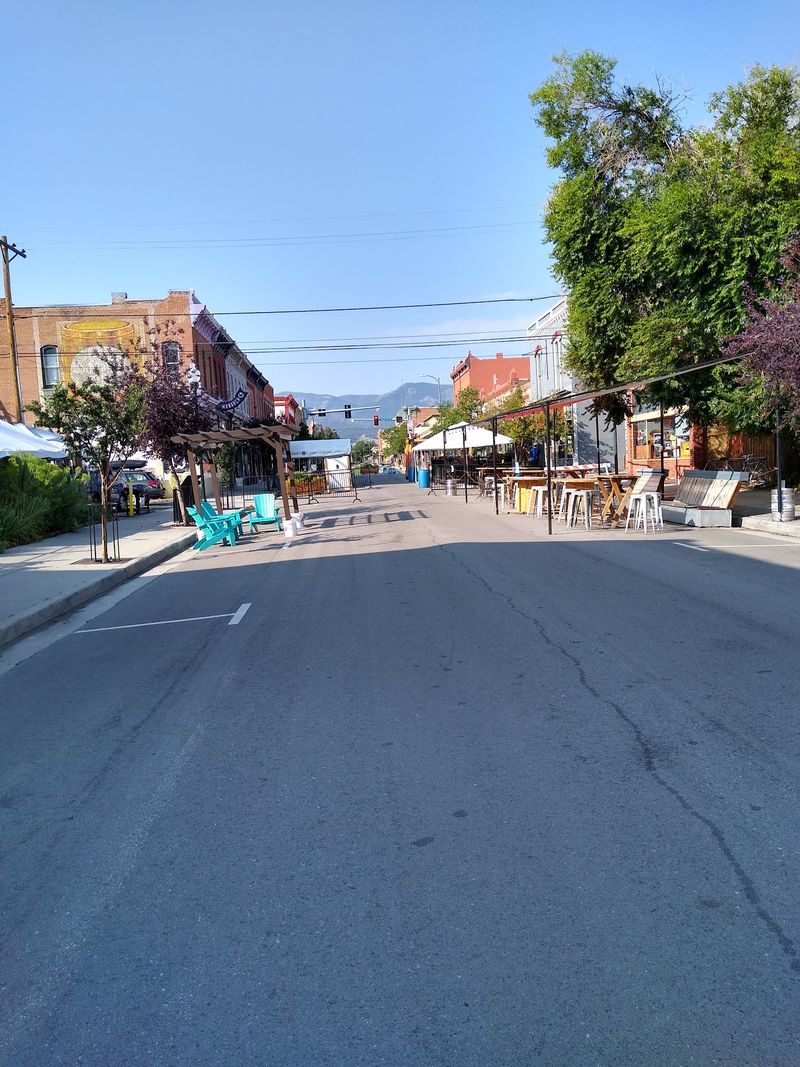
Salida holds a record worth knowing before you arrive: its downtown is the largest National Historic District in Colorado, covering 111 preserved turn-of-the-century brick buildings. That is not a small collection of pretty facades.
That is a genuinely extensive, walkable neighborhood where every block seems to offer another well-maintained building with a story attached to it.
F Street anchors the experience, but the surrounding blocks are equally worth your time. Galleries mix with independent shops, solid restaurants fill historic storefronts, and the whole place has a lively local energy that never tips into self-conscious tourist territory.
Salida has a thriving arts community, and that creative spirit shows up in window displays, murals, and the general confidence of the downtown.
The Arkansas River runs nearby, which means outdoor enthusiasts often use Salida as a base for rafting or hiking before wandering back into town for dinner and a browse through the shops. If you are planning a longer visit, the combination of natural scenery and walkable historic streets makes Salida one of the most satisfying small-town stops in the entire state.
A Saturday morning here, coffee in hand, is about as close to a perfect Colorado day as I can imagine.
4. Leadville, Colorado
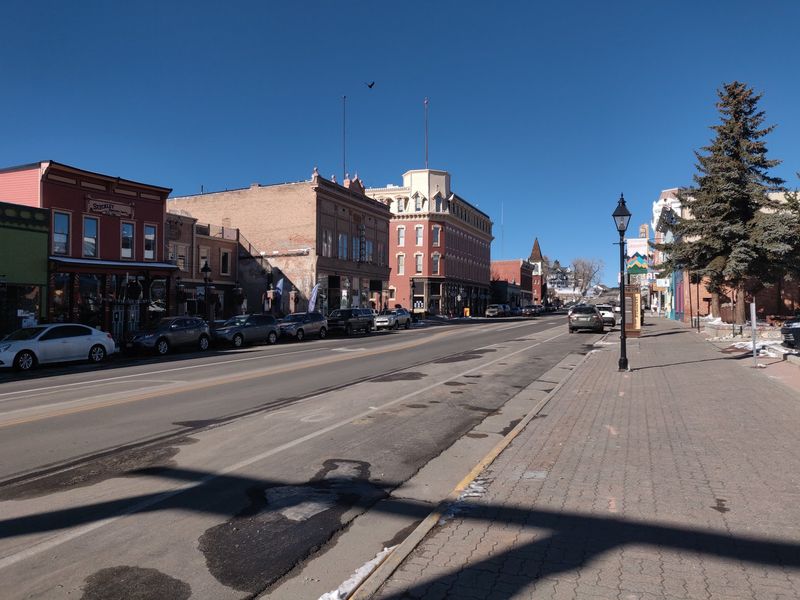
Leadville sits at 10,152 feet above sea level, making it the highest incorporated city in the United States, and that altitude gives everything here a slightly dramatic quality, including the historic district. Harrison Avenue runs through a National Historic Landmark area covering roughly 70 blocks and about 50 buildings that date to the 1870s.
Walking it feels like flipping through a very well-illustrated history book.
The self-guided downtown walking tour highlights 20 notable buildings, which means even a focused two-hour stroll only scratches the surface of what Leadville has preserved. Silver barons built some of these structures when this was one of the wealthiest cities in Colorado, and the architectural ambition from that era is still visible in the ornate facades and generous building heights.
Leadville’s story involves figures like Horace Tabor and Baby Doe, and knowing even a little of that backstory before you arrive makes the walk considerably richer. The thin air is real, so pace yourself on the first stretch of Harrison Avenue and stop often, which conveniently gives you more time to look up at the buildings.
Go in late spring or early fall when the crowds are lighter and the light on those old brick facades is absolutely lovely.
5. Trinidad, Colorado
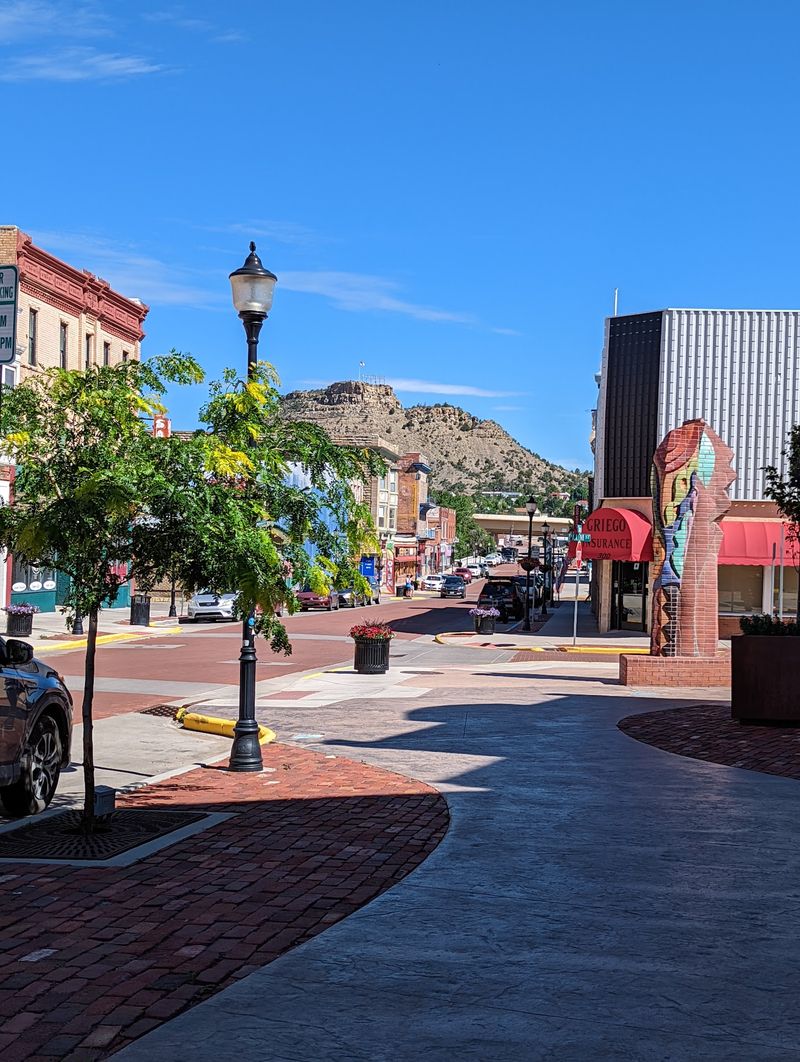
Trinidad grew up along the Santa Fe Trail, which means its history predates Colorado statehood by a considerable stretch and its downtown carries that layered, well-traveled quality. The El Corazon de Trinidad National Historic District covers North Commercial Street plus East and West Main Street, giving you a genuinely substantial walking route through buildings that have witnessed wagon trains, coal booms, and everything that came after.
The self-guided walking route is one of the better organized in the state, making it easy to connect the architectural dots without needing a tour guide. Historic buildings house shops and restaurants that feel local rather than gift-shop generic, and the mix of Spanish Colonial and Victorian influences in the architecture gives Trinidad a visual character that stands apart from other Colorado mountain towns.
Trinidad is often overlooked because it sits near the New Mexico border, far from the better-publicized ski towns. That distance is precisely its advantage.
The streets are quieter, the locals are genuinely welcoming to curious visitors, and the whole experience has an authenticity that more heavily visited places sometimes struggle to maintain. If you are driving I-25 and think you might skip Trinidad, reconsider.
Give it an afternoon and it will likely earn a longer return visit.
6. Victor, Colorado
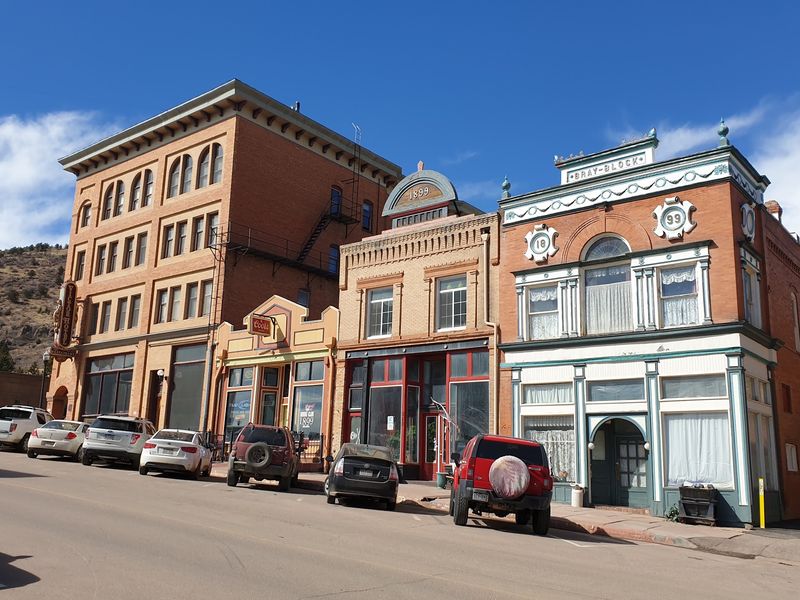
Victor is the kind of place that rewards people who do their homework before a road trip. Sitting in the shadow of Pikes Peak and neighboring the more famous Cripple Creek, Victor tends to get overlooked, which is genuinely the visitor’s gain.
The town is an officially designated Colorado Main Street community, meaning there is an active, organized effort to preserve and revitalize its historic downtown business district rather than just letting it fade quietly into nostalgia.
Victor Avenue carries the commercial heart of town, and the buildings along it reflect the ambition of a community that was once flush with gold-mining wealth. Walking here feels unhurried in the best possible way, with fewer crowds and more genuine breathing room than you will find in better-known Colorado destinations.
The architecture tells a story of boom-era confidence followed by decades of quiet resilience.
I find Victor particularly appealing for a morning visit, when the light hits the old storefronts at a low angle and the town is still waking up. Pair it with a short drive to nearby Cripple Creek if you want a fuller picture of the Pikes Peak gold rush era.
Victor, though, is the one I would linger in longest. It has an understated dignity that grows on you.
7. Ouray, Colorado
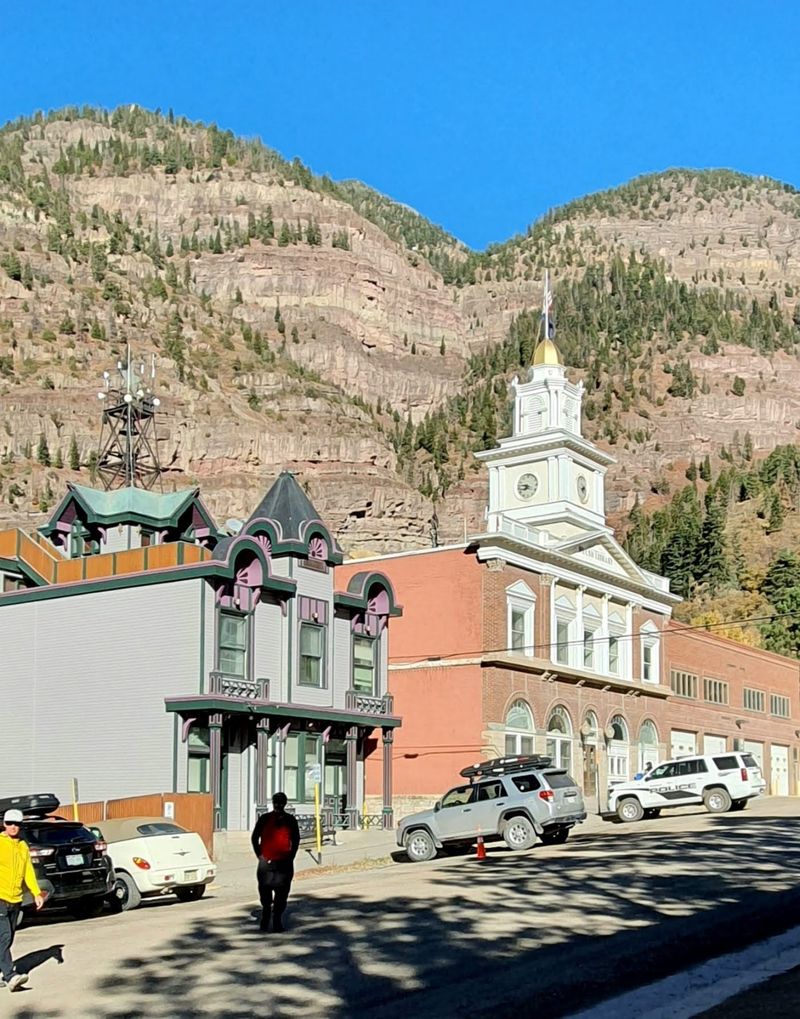
Ouray gets called the Switzerland of America often enough that the comparison has become a local joke, but stand on Main Street for ten minutes and you will understand why the comparison keeps getting made. The town sits in a box canyon surrounded by sheer cliffs that rise thousands of feet in every direction, and that setting makes even a simple stroll feel like something out of an adventure novel.
The historic architecture is compact and walkable, packed with independent shops, galleries, and restaurants that fill Victorian-era buildings with genuine character. Ouray’s downtown actively promotes walking its unique Main Street as part of the full town experience, and the scale of the place makes that easy.
You can cover the historic core thoroughly in a couple of hours, then loop back for lunch or a soak in the famous hot springs.
What I appreciate most about Ouray is that the drama of the landscape never lets the downtown feel ordinary. Every time you look up from a shop window, you are reminded that you are in one of the more spectacularly situated small towns in the American West.
Visiting in September, when the aspen trees on the surrounding peaks turn gold, turns a great trip into something you will describe to people for years afterward.
8. Georgetown, Colorado
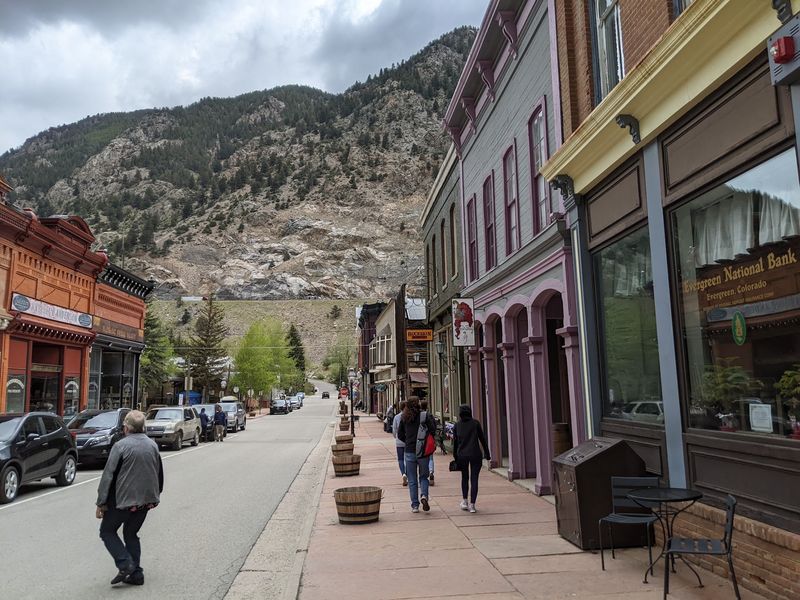
Georgetown sits only about an hour west of Denver on I-70, which makes it one of the most accessible historic small towns on this entire list. Do not let the easy drive fool you into thinking it is a watered-down experience.
Sixth Street and the surrounding blocks preserve the architecture of Georgetown’s silver-mining era with an integrity that genuinely earns the town’s place on the National Register of Historic Places.
The Victorian buildings here have an ornate quality that reflects the prosperity of the 1870s and 1880s, when Georgetown was one of Colorado’s most productive silver towns. Walking the central blocks feels more like exploring a historic neighborhood than navigating a conventional tourist strip, partly because the scale is human and partly because the residential and commercial buildings are charmingly intermixed.
Georgetown also benefits from the nearby Georgetown Loop Railroad, a narrow-gauge historic railway that adds a fun activity for families before or after the walking tour. The town itself is small enough that you can cover it thoroughly in an afternoon, which makes it an ideal add-on to a day trip from Denver or a stop on a longer mountain drive.
Fall weekends here are particularly charming, with leaf color in the surrounding canyon adding to an already appealing scene.
9. Saguache, Colorado
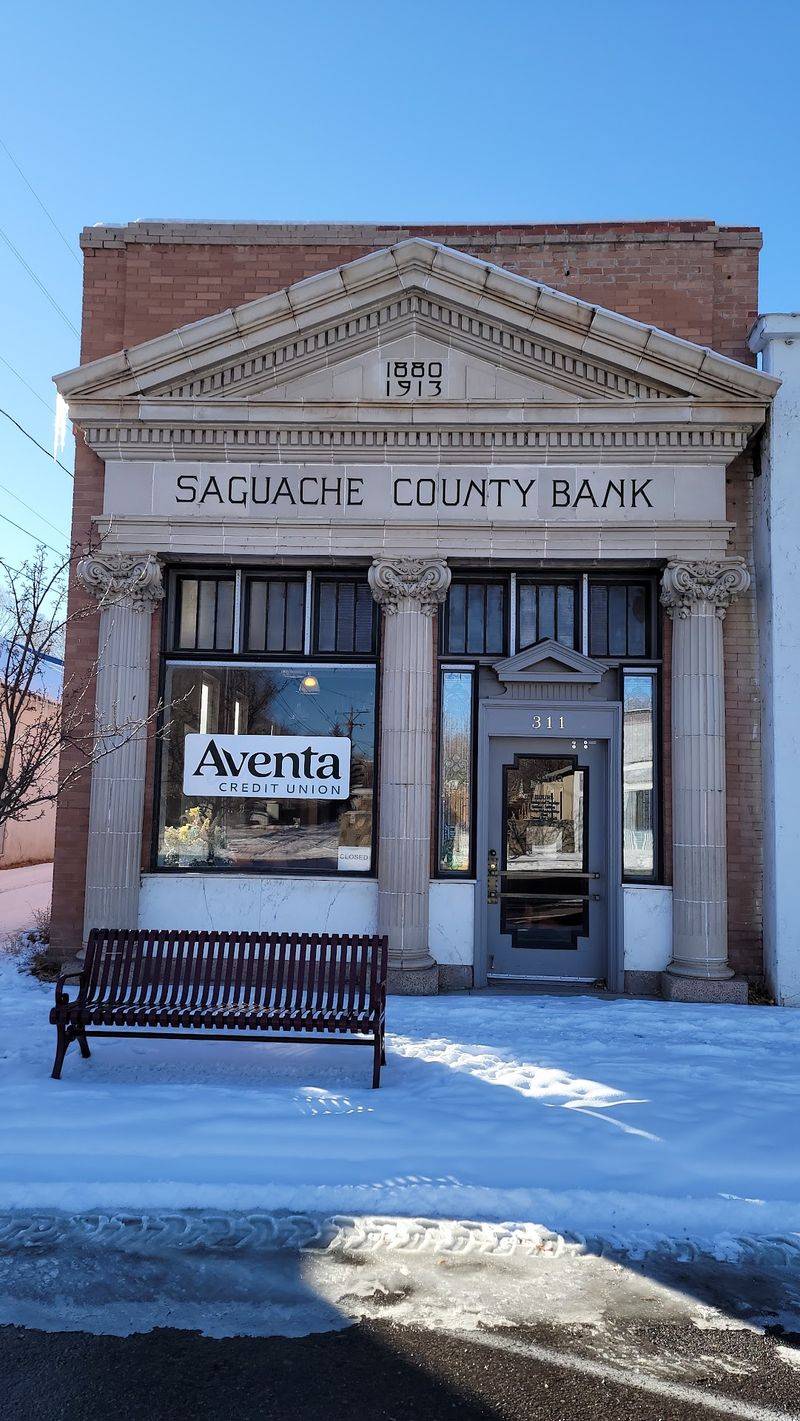
Saguache is not trying to impress you, and that honesty is precisely what makes it worth a visit. Sitting in the broad San Luis Valley with the Sangre de Cristo Mountains visible to the east, this small community offers a quieter version of the historic Colorado Main Street experience that the more popular mountain towns simply cannot replicate.
The Downtown Historic District preserves a collection of early commercial buildings that feel genuinely lived-in rather than preserved for show.
The compact center suits a slow, unhurried walk between old storefronts and local businesses, the kind of stroll where you might stop to read a historical marker and end up learning something surprising about San Luis Valley settlement history. Saguache has a long history tied to both Spanish colonial settlement and the Ute people, and that layered past gives the town a depth that rewards curious visitors.
Plan to visit Saguache as part of a broader San Luis Valley loop that might include Great Sand Dunes National Park nearby. The contrast between the towering dunes and the quiet, flat-fronted historic storefronts of 4th Street makes for a genuinely varied day.
Saguache is the kind of stop that does not make every Colorado travel list, which is exactly why it belongs on yours.
10. Telluride, Colorado
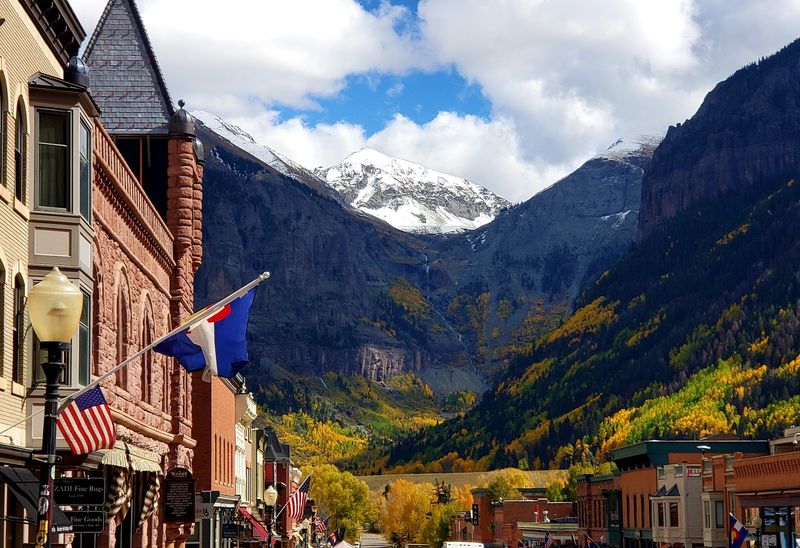
Telluride is the most famous town on this list, and it earns that reputation honestly. Colorado Avenue runs through a National Historic Landmark District that occupies a compact 12-by-8-block area, which sounds modest until you start actually walking it and realize how much Victorian architecture, mining-era character, and genuine mountain drama has been packed into those blocks.
The box canyon setting makes every view down a side street feel like a postcard.
What surprises first-time visitors is how walkable and human-scaled the historic core remains despite the town’s celebrity status. Victorian homes sit beside mining-era commercial structures, and independent shops and restaurants fill the street-level spaces with enough variety to keep any curious walker occupied for a long afternoon.
The free gondola connecting Telluride to Mountain Village adds an unexpected bonus for anyone wanting to extend the day.
My honest take: visit Telluride outside of festival season if you want the historic streets to yourself. A midweek visit in late spring or early October gives you the architecture, the mountain views, and the shops without the shoulder-to-shoulder crowds that July and August bring.
The town is beautiful in any season, but there is something particularly satisfying about wandering Colorado Avenue when you can actually hear your own footsteps on the old sidewalk.
11. Ridgway, Colorado
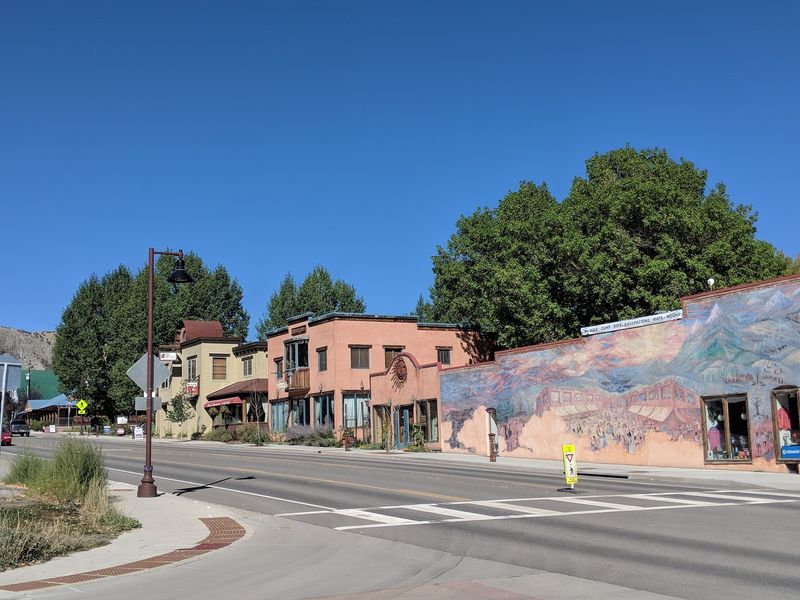
Ridgway sits at the northern gateway to the San Juan Mountains, which means it collects some of the most spectacular mountain scenery in Colorado as a kind of casual backdrop to its everyday life. Sherman Street carries the historic commercial area through a town that retains the feel of an old railroad community, with local shops, restaurants, and galleries giving the downtown a reason to explore beyond just admiring the architecture.
What Ridgway offers that its more famous neighbors sometimes cannot is a relaxed pace without the resort-town price tag or the festival-weekend crowds. The historic character here is genuine rather than performed, and the mix of working-local businesses with visitor-friendly stops creates a downtown that feels balanced and welcoming in equal measure.
Ridgway is also a natural stopping point on a San Juan Mountains loop that might include Ouray to the south and Telluride to the southwest, making it easy to incorporate into a longer mountain itinerary without any logistical strain. I would suggest arriving hungry, because the restaurant options punch above the town’s size.
Spend a slow hour on Sherman Street, then drive fifteen minutes in any direction and you will be in mountain scenery that makes the whole trip feel effortlessly worthwhile.
12. Del Norte, Colorado
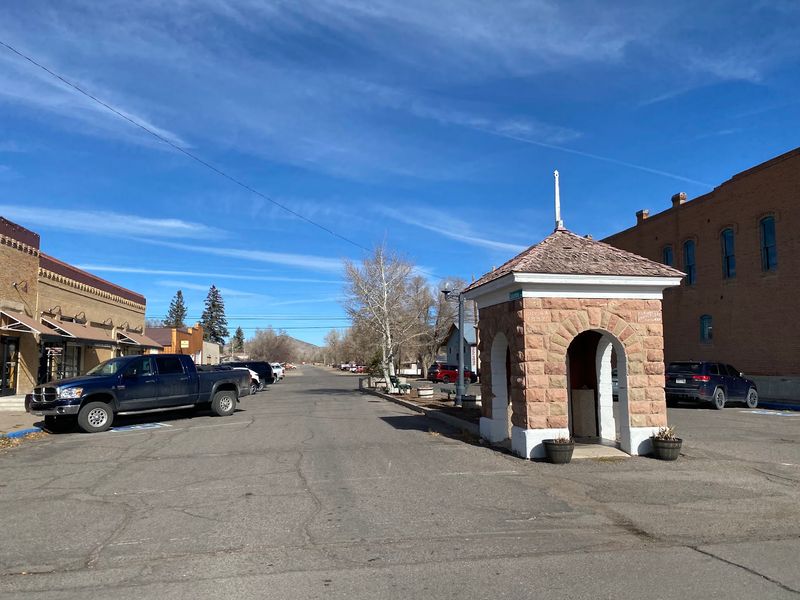
Del Norte is the antidote to over-touristed Colorado. Sitting in the San Luis Valley with the Rio Grande nearby and the San Juan Mountains visible to the west, this small town follows its historic downtown along Grand Avenue in a way that feels completely unpretentious and genuinely welcoming.
Historic buildings line the old commercial corridor alongside locally owned businesses that are clearly serving the community first and visitors second, which is a refreshing dynamic.
The mountain-town scenery surrounding Del Norte gives the walk along Grand Avenue a scenic context that larger, more developed towns often lose behind signage and chain storefronts. Here, you look up from a shop window and see peaks.
The historic buildings have the worn-in quality of places that have been used continuously rather than restored for aesthetic purposes, and that authenticity is harder to find than most travel lists acknowledge.
Del Norte works particularly well as a base for exploring the broader San Luis Valley, with Wolf Creek Ski Area to the west and Great Sand Dunes National Park to the northeast. Spending a morning walking Grand Avenue before heading out to one of those destinations gives the day a grounded, human-scaled beginning before the big landscape takes over.
Small, honest, and worth every mile of the drive to get there.