
12 Colorado Spring Places To Visit Before Everyone Else Finds Them
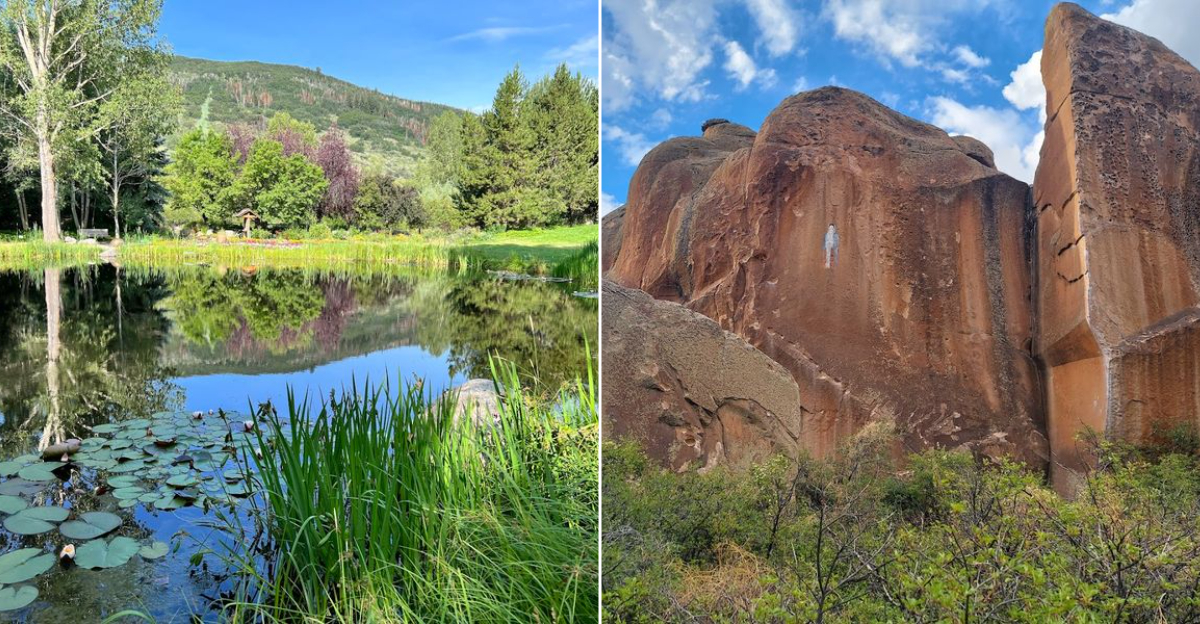
Colorado has a funny way of making its best surprises look almost too quiet to notice. One minute you are following a county road, wondering if you missed the turn, and the next you are staring at a glassy lake, a red-rock overlook, or a wildflower trail that feels like your own private discovery.
Spring is the magic window, before summer crowds arrive with packed parking lots and overstuffed coolers. The air feels fresher, the colors feel brighter, and even the slowest little detours start to feel like part of the adventure.
Instead of racing toward the famous stops, this is the season to wander a little, trust the odd roadside sign, and let curiosity pick the route. Colorado’s quieter corners have a way of rewarding people who show up early.
Find them now, while they still feel peaceful, personal, and wonderfully under the radar.
1. Paint Mines Interpretive Park
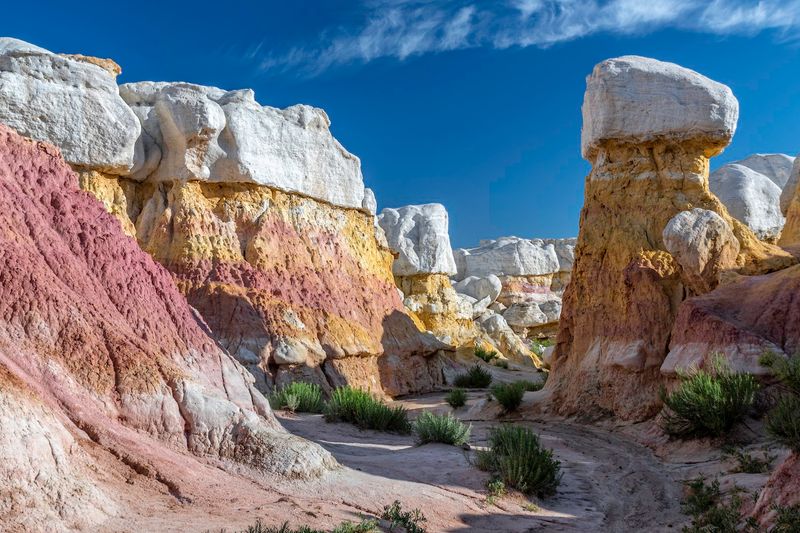
Nobody tells you about the Paint Mines, and that is exactly the point. Tucked off a quiet stretch of Paint Mines Road near Calhan, this free park looks like a pastel fever dream dropped onto the eastern Colorado plains.
Spires of pink, white, lavender, and rust-colored clay jut up from the ground like something a sculptor left unfinished, and the whole scene shifts color as the light moves across the sky.
Spring is the absolute best time to come. The crowds that find their way here in summer haven’t arrived yet, and the mild temperatures make the two-mile loop trail genuinely pleasant rather than punishing.
Bring a hat and water even in April, because the plains wind can fool you into thinking it’s cooler than it is.
I wandered out here on a Tuesday morning and had the place almost entirely to myself for a full hour. No entrance fee, no reservations, just open sky and formations that look like they belong on another planet.
Open year-round from dawn to dusk, it’s the kind of stop that earns you serious bragging rights with zero effort.
2. Pawnee Buttes Trailhead
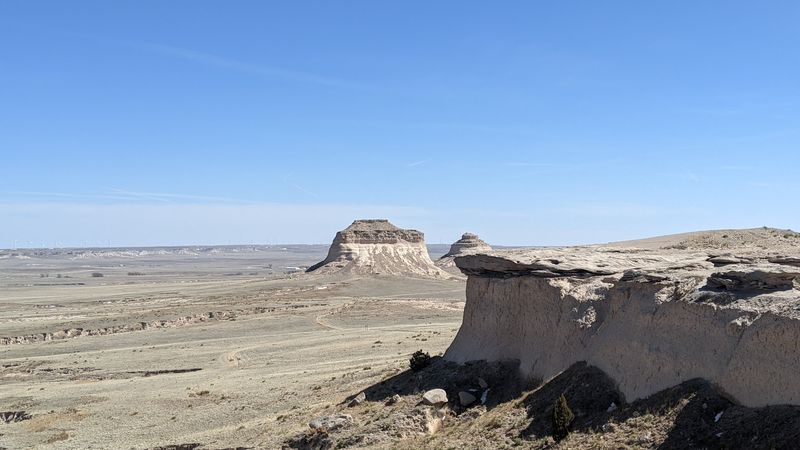
There is something almost cinematic about the Pawnee Buttes, the way they rise out of the flat shortgrass prairie like two enormous sentinels keeping watch over northeastern Colorado. The drive out from Grover on County Road 113 is long, straight, and honest, the kind of road that clears your head before you even arrive.
When the buttes finally appear on the horizon, the effect is genuinely dramatic.
Spring brings a catch worth knowing: raptor nesting closures apply from March 1 through June 30 on the upper trail sections. Hawks and falcons are actively nesting in those cliffs, and the BLM takes that seriously.
You can still hike the lower trail and enjoy the buttes from a respectful distance, which honestly still delivers a knockout view.
The payoff for coming in spring is the prairie itself. Wildflowers thread through the grasses, meadowlarks belt out their songs from fence posts, and the light has that particular golden quality that photographers spend entire careers chasing.
Pack a lunch, plan for a half-day minimum, and accept that the cell service will disappear well before the parking area does.
3. Jackson Lake State Park
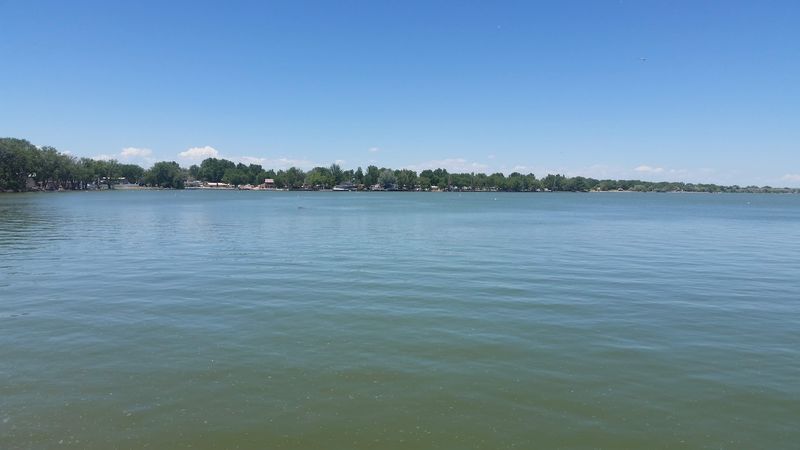
Colorado’s mountain lakes get all the magazine covers, but Jackson Lake sits quietly out on the northeastern plains near Orchard, doing its own thing without any fuss. At 26363 County Road 3, this underappreciated state park offers birding, fishing, and wide open water views without the altitude headaches or bumper-to-bumper traffic that follows the mountain crowd.
Spring is when birders make a quiet pilgrimage here. Waterfowl move through in numbers, and the park’s flat, open setting gives you unobstructed sightlines that mountain lakes simply can’t match.
Bring binoculars and arrive early, ideally right at the 5 a.m. opening, when the water is glassy and the birds are most active.
What I appreciate most about Jackson Lake is how genuinely unhurried it feels. No one is racing to claim a campsite or jostling for a trailhead parking spot.
You can set up a camp chair lakeside, pour coffee from a thermos, and watch the morning unfold at whatever pace you like. Open daily from 5 a.m. to 10 p.m., it’s a plains gem that rewards the curious traveler who’s willing to look past the mountain hype.
4. Yampa River Botanic Park
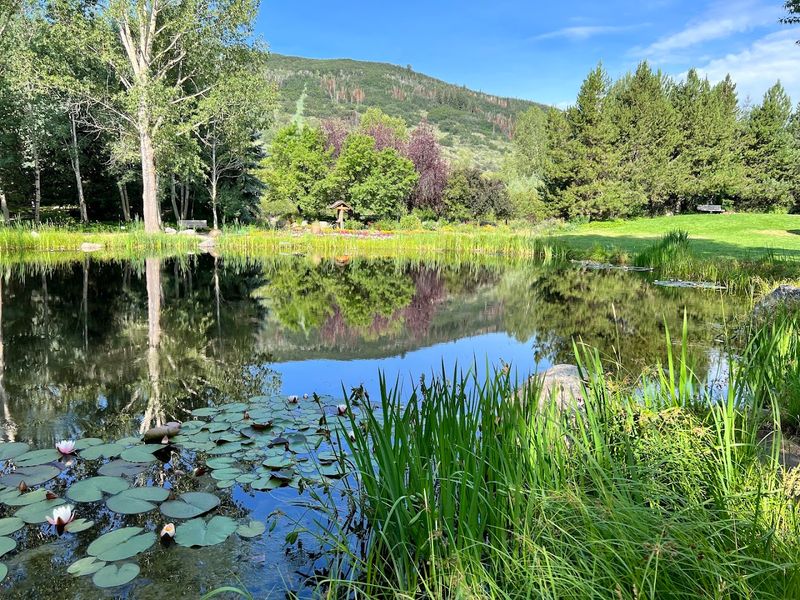
Steamboat Springs has a well-earned reputation as a ski town, but come spring, a quieter, greener version of the place emerges along Pamela Lane. The Yampa River Botanic Park sits at 1000 Pamela Lane, and it is one of those spots that feels like a local secret even though it’s right there on the map.
Free admission, open dawn to dusk during the season, and utterly serene.
The gardens are laid out in themed sections, and spring brings the early bloomers pushing through with real enthusiasm. Tulips, native wildflowers, and ornamental beds create a patchwork of color that feels almost European in its care and intention.
The sound of the Yampa River running alongside the park adds a background track that no playlist could improve on.
I found myself slowing down considerably here, which is not something I do easily. Families with strollers, older couples reading on benches, the occasional dog on a leash, everyone moving at the same unhurried pace.
After a winter of ski-boot clanking and lift-line shuffling, Steamboat deserves to be seen through this softer lens. Allow at least ninety minutes and resist the urge to check your phone.
5. Pearl Lake State Park
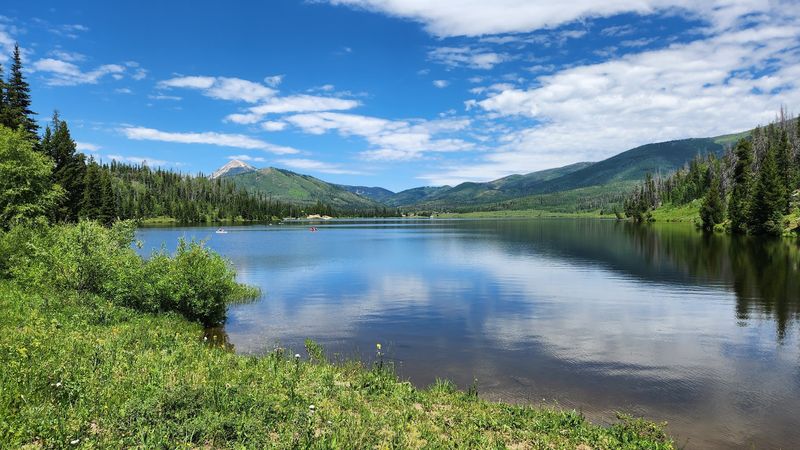
North of Steamboat Springs, up County Road 129 near the small community of Clark, Pearl Lake sits in a bowl of conifers and mountain quiet that feels genuinely removed from the modern world. This is not a park that advertises itself aggressively, and that restraint is its greatest selling point.
Open daily from 5 a.m. to 10 p.m., the park draws a low-key crowd of anglers, kayakers, and people who simply want to sit near water without background noise.
Spring here means the snowpack is often still visible on surrounding ridges while the lake itself is thawing into its clearest, most reflective state. That contrast, snow-capped trees mirrored on still water, is the kind of view that makes you stop mid-sentence and just stare.
The campground is small and fills up on weekends once summer momentum builds, so spring visits carry the bonus of actual availability. Fishing for cutthroat trout is a draw for those who come equipped, but even a non-angler will find the shoreline walk deeply satisfying.
Pearl Lake is the kind of place you tell one friend about and then quietly hope they don’t tell anyone else.
6. Rifle Falls State Park
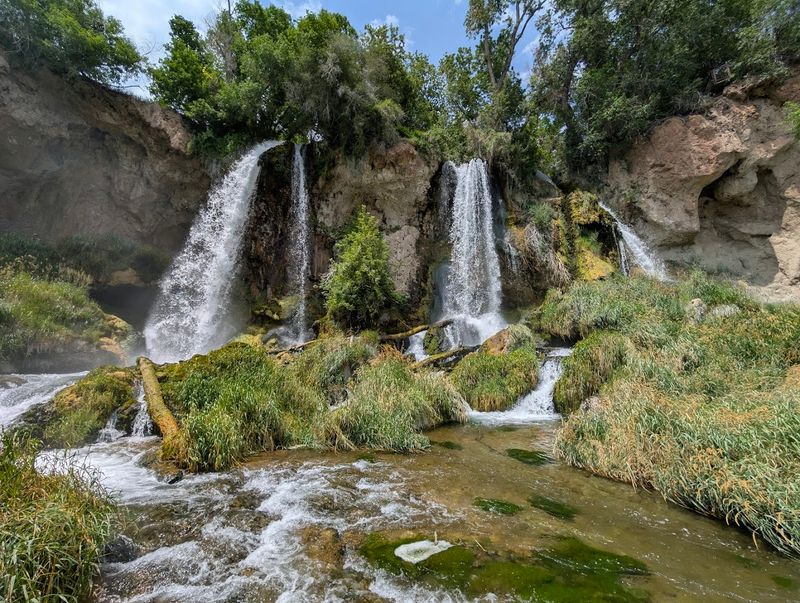
A triple waterfall in Colorado sounds like something invented for a tourism brochure, but Rifle Falls is entirely real and entirely worth the short drive up Highway 325 from Rifle. Three separate curtains of water drop simultaneously over a moss-covered limestone cliff, and the whole scene is so unexpectedly lush that first-time visitors tend to just stand there with their mouths open for a moment.
Small limestone caves dot the surrounding cliff face, and you can poke around their entrances without any special gear or guided tour. Spring is ideal because the snowmelt pushes the falls to their most powerful, and the surrounding vegetation goes an almost tropical shade of green that doesn’t match anyone’s mental image of western Colorado.
At 5775 Highway 325, the park is open for the 2026 season and remains one of the most photogenic spots in the state for the effort required to reach it. The main trail to the falls is short and accessible, making this an excellent choice for families or anyone who wants maximum payoff for minimal hiking.
Arrive before 10 a.m. on weekends to claim a parking spot without drama.
7. Sweitzer Lake State Park
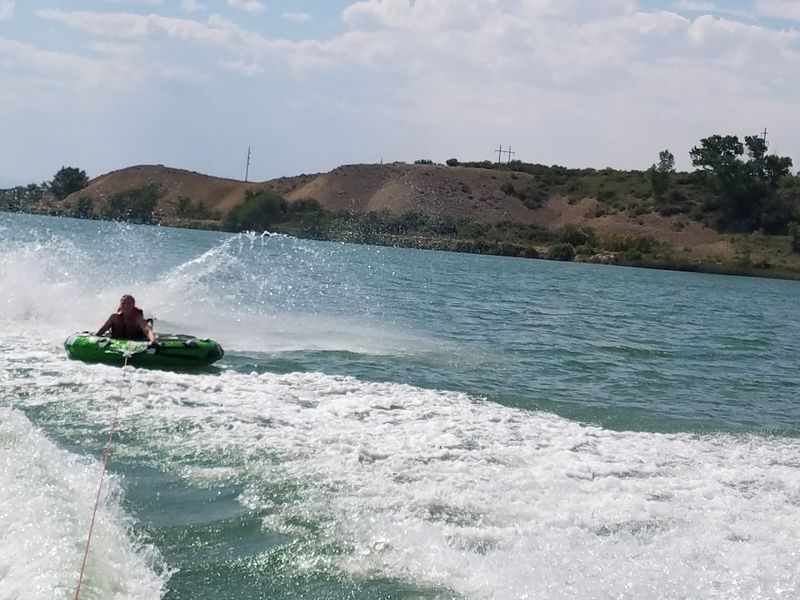
The Western Slope of Colorado is its own country, warmer and drier than the mountain corridor, and Sweitzer Lake near Delta fits that character perfectly. At 1735 E Road, this state park sits in a landscape of cottonwoods and high desert scrub that looks nothing like the postcard version of Colorado, and that is precisely its charm.
Open year-round from 8 a.m. to half an hour after sunset.
Spring arrives noticeably earlier here than it does at elevation, which means green is happening at Sweitzer while ski resorts are still posting powder updates. The lake draws waterfowl, and the cottonwoods along the shore leaf out in that particular electric green that only lasts a few weeks before settling into summer.
It’s the kind of fleeting beauty that rewards the visitor who shows up at the right moment.
Fishing, birdwatching, and picnicking are the main events, none of which require advance planning or expensive gear. Delta itself is an honest, unpretentious town worth a slow drive through before or after your park visit.
Sweitzer Lake won’t show up on anyone’s top-ten list this year, and I am genuinely fine keeping it that way for as long as possible.
8. Rabbit Valley Trail Through Time
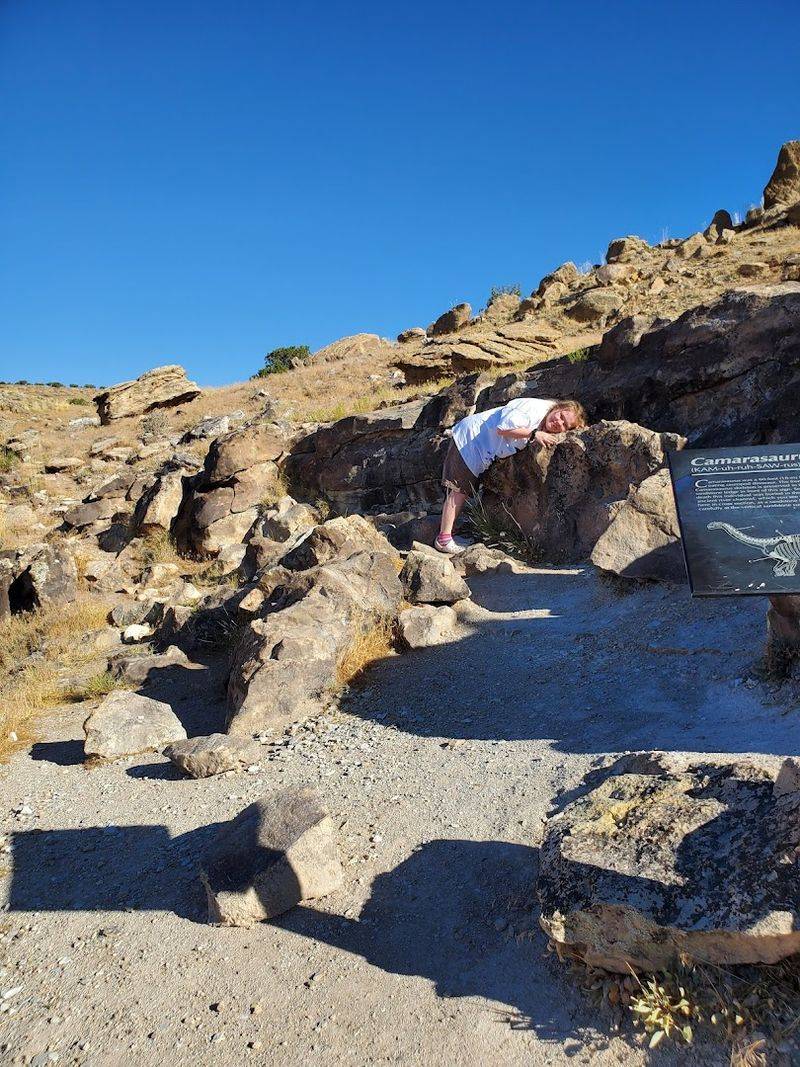
Just off Interstate 70 at Exit 2 near Mack, the Rabbit Valley Trail Through Time is the kind of BLM day-use area that gets overlooked precisely because it’s right next to a highway. No entrance fee, no crowds, and actual dinosaur fossils embedded in the rock along a self-guided interpretive trail.
That combination should have a waiting list, but somehow it doesn’t.
The trail winds through classic western Colorado desert, all red rock, sagebrush, and enormous sky, with informational signs explaining what you’re looking at in the fossil record. Spring is comfortable here before the desert heat sets in, and the morning light on the sandstone formations is the kind of thing that makes amateur photographers feel like professionals for a few minutes.
Utah is essentially right next door, and the landscape has that borderland quality of belonging to both states and neither. A loop through Rabbit Valley pairs naturally with a stop in Grand Junction for lunch, making it an easy half-day addition to any western Colorado itinerary.
I’ve driven past this exit a dozen times without stopping, and I’m still annoyed at my former self for all those missed mornings.
9. Penitente Canyon Recreation Area
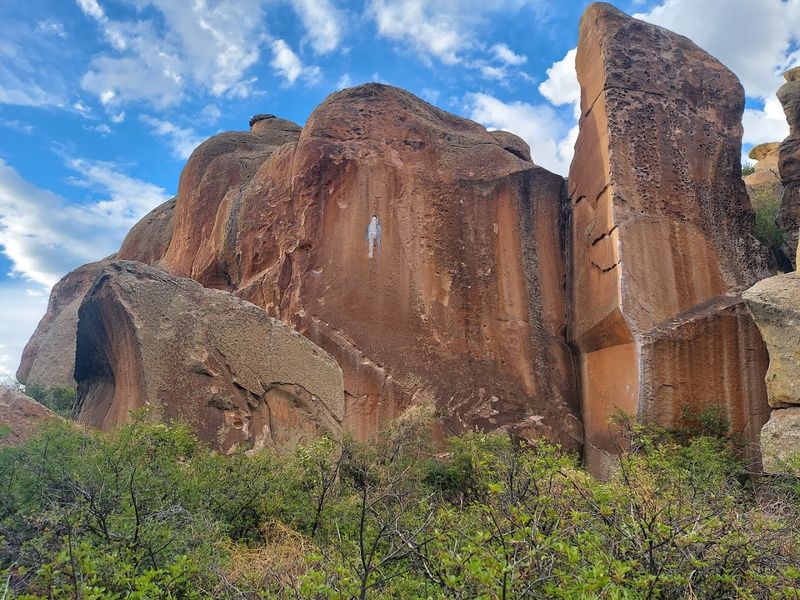
The San Luis Valley is one of Colorado’s most otherworldly landscapes, a vast flat basin ringed by mountains and full of places that feel like they belong in a different era. Penitente Canyon off County Road 38A near Del Norte is one of the valley’s most compelling corners.
BLM land, free access, and a setting of volcanic rock formations and hoodoos that climbers discovered decades ago and kept mostly to themselves.
Rock climbing is a legitimate draw here, with routes ranging from beginner-friendly to technical, but you don’t need a chalk bag to appreciate the place. Hiking through the canyon reveals walls of dark stone pocked with holes and carved by weather into shapes that inspire extended staring.
Spring brings mild temperatures and the possibility of wildflowers threading through the scrub at the canyon’s base.
The surrounding San Luis Valley views from higher points in the canyon are genuinely breathtaking in the most literal sense of the phrase. The valley floor stretches away in every direction, flat and enormous, with the Sangre de Cristo range rising sharply on the eastern edge.
Bring lunch, wear sturdy shoes, and plan for at least two hours of unhurried exploration.
10. Zapata Falls Recreation Area
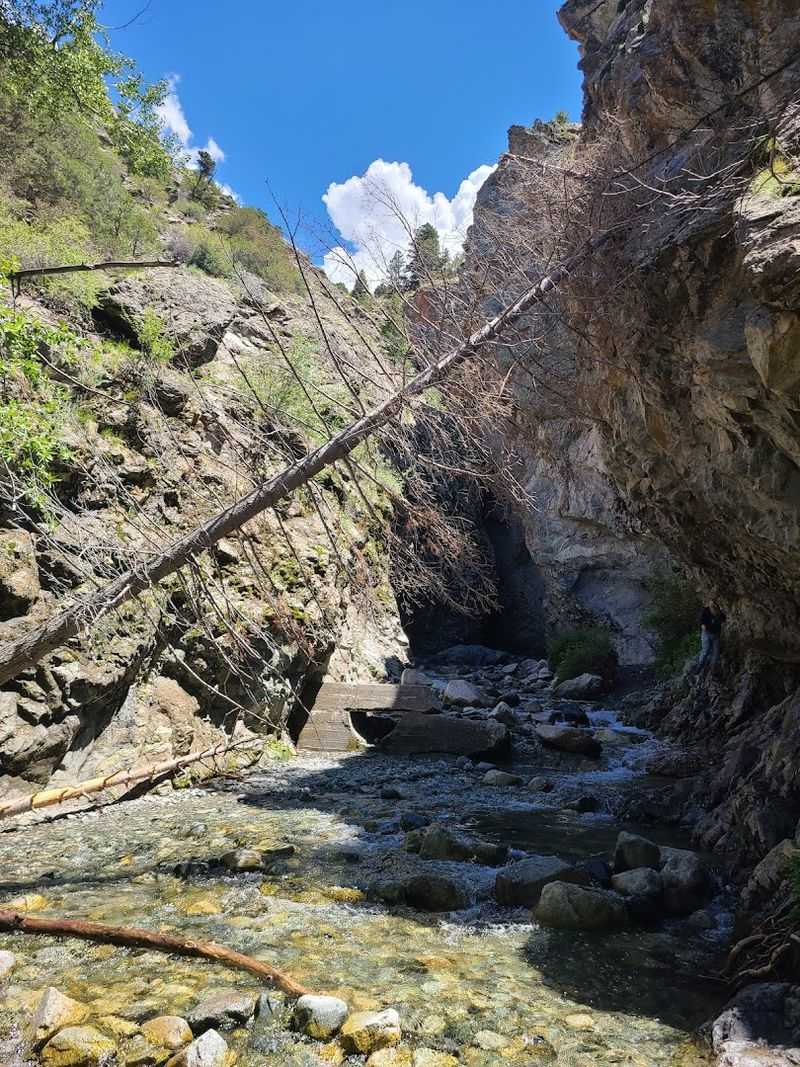
About 3.5 miles east of Colorado Highway 150 near Mosca, a short uphill hike leads to one of the most surprising waterfalls in the state. Zapata Falls hides inside a narrow crack in the rock, and to actually see it, you wade through a shallow, ice-cold stream squeezed between two canyon walls.
The waterfall announces itself with sound before you round the final corner and find it waiting in the dark.
Spring snowmelt pushes the flow to its most dramatic levels, and the cold water wading portion of the approach is bracing in a way that wakes you up more effectively than any coffee. Waterproof sandals or shoes you don’t mind soaking are strongly recommended.
The hike to the trailhead is under a mile and manageable for most fitness levels, though the final scramble requires some attention.
Great Sand Dunes National Park is nearby, and pairing both in a single day is an easy win. The dunes draw the crowds; Zapata Falls draws the curious.
I prefer being in the curious category. The falls themselves feel like a reward the landscape is handing you for making the effort to look past the obvious attraction just down the road.
11. Colorado Gators Reptile Park
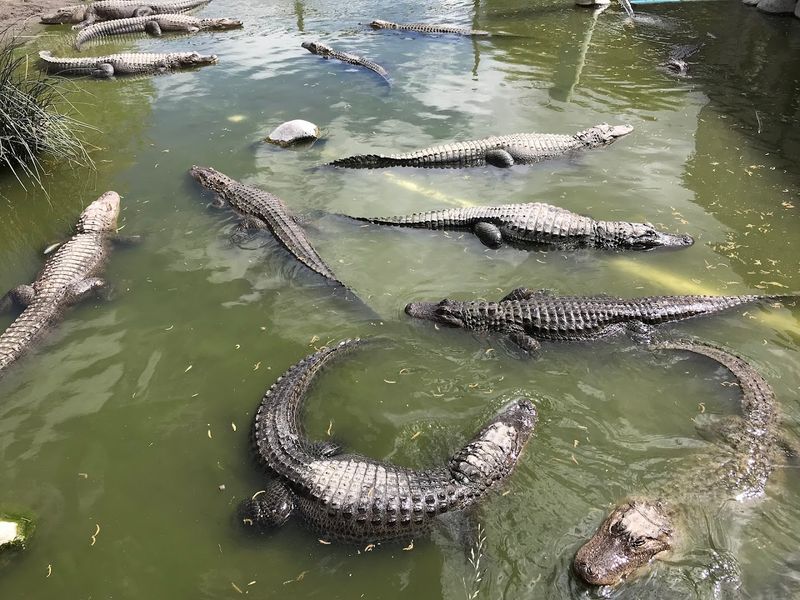
There are alligators in Colorado. That sentence takes a moment to land properly, but it is completely true.
Colorado Gators Reptile Park at 9162 Lane 9 N near Mosca has been operating since the 1980s, when a tilapia farm discovered that the geothermally heated water on site was warm enough to support alligators year-round. One thing led to another, as it often does in the San Luis Valley, and now there are hundreds of gators.
Open daily with 2026 spring and summer hours running 9 a.m. to 5 p.m., the park is unabashedly quirky and completely sincere about what it is. Beyond gators, the facility houses snakes, lizards, turtles, and various rescued reptiles that arrived from all over the country.
The staff know their animals with genuine expertise, and the educational component is stronger than the roadside-attraction exterior might suggest.
Kids react to this place with the kind of full-body enthusiasm that parents spend entire road trips trying to generate. Adults react with a mixture of disbelief and delight that is equally satisfying to witness.
It costs money to enter, it smells like a reptile park, and it is absolutely, unambiguously worth it. Budget two hours and bring your camera.
12. Lathrop State Park
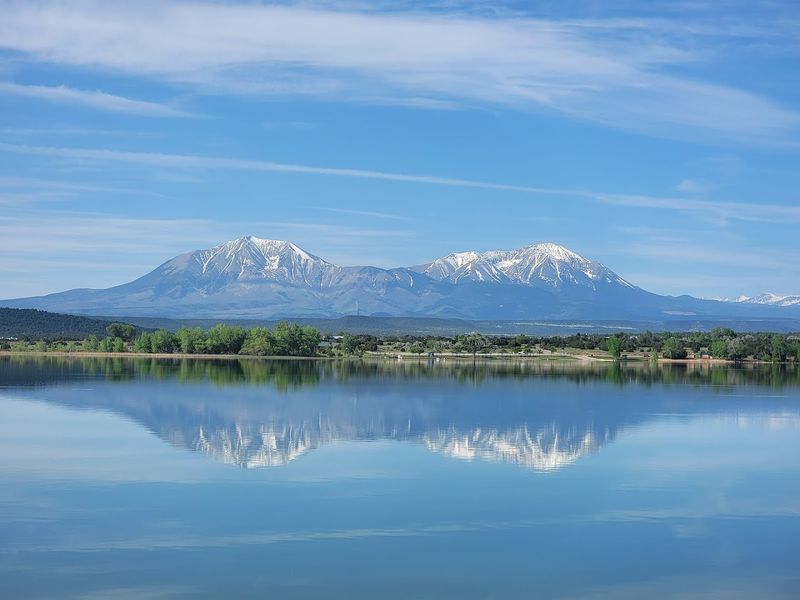
Southern Colorado rarely gets its due in travel conversations, which is a situation Lathrop State Park seems perfectly content to exploit. At 70 County Road 502 near Walsenburg, Colorado’s oldest state park sits between two lakes with the Spanish Peaks looming behind them like a painting someone hung on the horizon for dramatic effect.
Open daily from 5 a.m. to 10 p.m., the park runs quietly and efficiently without any of the attitude that comes with more famous destinations.
Spring here means the Spanish Peaks still carry snow on their upper slopes while the lake shores are already warm enough for a slow walk in a light jacket. The bird life picks up noticeably in April and May, and the fishing is solid for those who arrive with a rod and a plan.
There’s also a golf course on site, which remains one of the more unexpected amenities in the Colorado state park system.
Walsenburg is a small city with a real history and a handful of good stops for food and fuel before or after your park visit. Lathrop has the relaxed energy of a place that knows exactly what it is and makes no apologies for it.
Sometimes that’s the most comfortable kind of park to spend a spring afternoon in.