
15 Connecticut Dinner Table Traditions From The 1960s That Would Make Today’s Kids Wonder Why
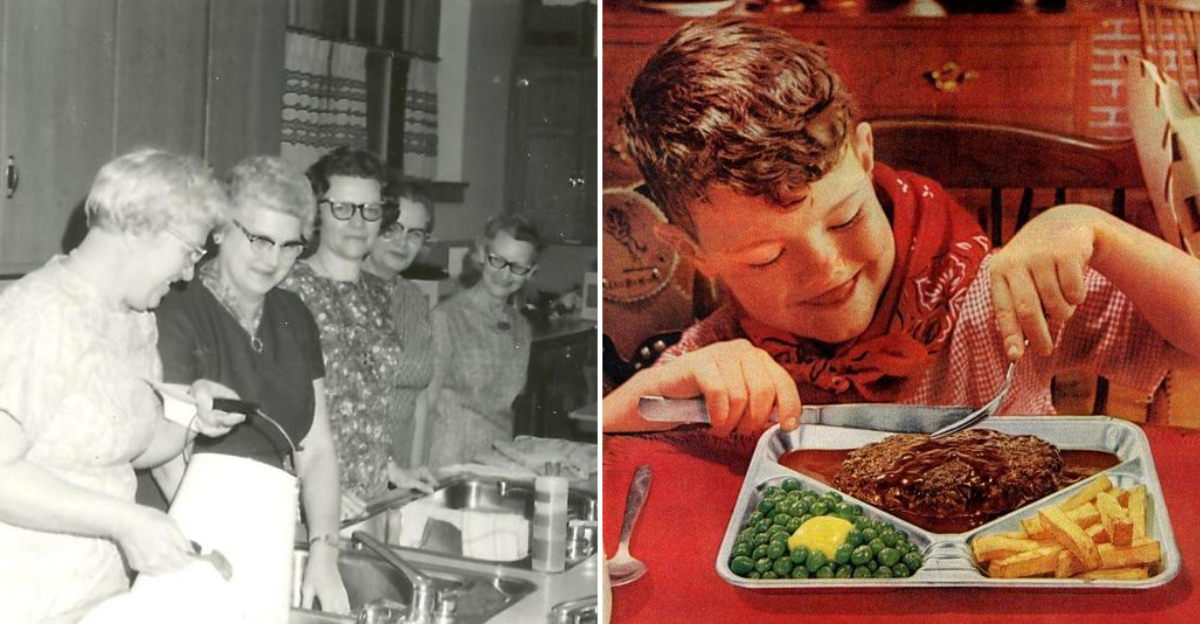
My grandmother’s Connecticut kitchen in the 1960s operated under rules that would baffle any modern kid scrolling through food delivery apps.
Dinner arrived at precisely six o’clock, Jell-O counted as a legitimate side dish, and nobody questioned why brown bread came from a can.
Those decades brought their own peculiar logic to the table – shaped by blue laws, church calendars, and the glorious dawn of convenience foods.
What made sense then feels wonderfully weird now, yet these traditions built the backbone of family life across the Nutmeg State.
Let’s revisit the quirks that filled Connecticut plates when transistor radios ruled and casseroles reigned supreme.
1. Apizza Night with Foxon Park Soda
New Haven’s coal-blistered apizza became the go-to Friday solution for families who wanted a break from cooking.
Pronounced ah-BEETZ, this thin-crust marvel arrived blistered and bubbling, often paired with East Haven’s Foxon Park sodas in flavors like white birch.
I remember my dad driving us to Wooster Street, where the smell of charred dough floated three blocks away. The combination of crispy edges and locally bottled soda felt uniquely ours, a regional ritual that set Connecticut apart.
Today’s kids might grab chain pizza, but nothing matches that coal-fired snap and hometown fizz.
2. Spring Shad Suppers Celebrated the River Run
When May arrived, Connecticut River towns threw shad suppers to honor the annual fish migration, turning dinner into a communal celebration.
Volunteers boned the notoriously tricky shad, serving it planked or fried alongside coleslaw and potatoes.
These gatherings stitched neighbors together, blending season, table, and local pride into one event. I once watched my uncle tackle a whole shad at home, muttering about the bones for twenty minutes straight.
Modern kids barely know shad exists, but those suppers reminded everyone that food could mark time and place in ways a grocery store never would.
3. Shoreline Clambakes and Creamy Chowder Days
Summer weekends called for clambakes – littlenecks, corn, and potatoes steamed in seaweed or a big pot, finished with creamy New England chowder.
Connecticut’s coastline made this ritual easy and affordable, a broader New England tradition with deep local roots.
Families hauled folding tables to the beach or backyard, cracking shells and slurping chowder until sunset. The mess was half the fun, and nobody minded sandy napkins or butter-slicked fingers.
4. Warm Buttered Lobster Rolls Connecticut Style
Connecticut’s version of the lobster roll skipped mayo entirely, piling warm, butter-bathed lobster meat onto a toasted bun.
Traced back to Milford’s Perry’s in the 1920s, the style hit peak popularity by the 1960s, becoming summer’s crown jewel.
Shoreline shacks and home kitchens both served it, and the simplicity let sweet lobster shine without distraction.
I still remember my first bite at a roadside stand – pure, buttery decadence that made me understand why people argued over lobster-roll loyalty.
Modern mayo fans can keep their cold versions, but warm and buttery remains unbeatable.
5. Jell-O Molds Glittered on Every Sideboard
Savory and sweet gelatin salads dominated 1960s sideboards, shimmering in flavors like celery, mixed vegetables, and even tomato. These wiggly creations counted as legitimate salads, often studded with shredded carrots or canned fruit.
Hostesses competed over mold shapes – rings, bundt forms, and layered towers turned dinner into a wobbly art show. My grandmother made a lime-cottage-cheese number that tasted better than it looked, though that bar was low.
Kids today would laugh at tomato Jell-O, but back then, gelatin equaled sophistication and modern convenience rolled into one translucent package.
6. Green Bean Casserole Season Never Ended
Campbell’s mid-century classic—cream-of-mushroom soup, green beans, and crispy fried onions – became the dependable side dish for holidays and weeknight dinners alike. Introduced in 1955, it rode straight through the 1960s as a kitchen staple.
The recipe required zero culinary skill, making it perfect for busy families and potluck contributions. I’ve watched three generations of my family serve the exact same version, unchanged since Kennedy was president.
Modern food trends come and go, but that creamy, crunchy casserole still shows up every Thanksgiving, proving some traditions refuse to quit.
7. TV Trays and Frozen Dinners Made Treat Nights Special
Every so often, dinner migrated to the living room – Swanson trays, folding TV tables, and a favorite show turned mealtime into an event.
Frozen dinners arrived compartmentalized and tidy, each section holding its mystery meat, vegetables, and dessert.
Kids loved the novelty, and parents appreciated the break from cooking and cleanup. I remember the thrill of peeling back that foil and balancing a tray on my lap, eyes glued to the screen.
Modern streaming makes every night a potential TV night, but back then, the combo of convenience food and screen time felt like a genuine treat.
8. Blue Cornflower CorningWare Carried Everything
Introduced in 1958, CorningWare’s Blue Cornflower pattern rode straight into the 1960s, carrying lasagnas, scalloped potatoes, and pot roasts from oven to table. Those white dishes with delicate blue flowers became the decade’s kitchen icon.
Durable enough to survive drops and temperature swings, they outlasted most marriages and still show up at estate sales today.
My family’s set passed through two generations before a moving truck finally claimed one piece.
9. Grinders Solved the No Cook Night Dilemma
In Connecticut, long Italian rolls stacked with cold cuts, lettuce, tomato, and oil earned the name grinder – a regional term many families still use today.
When nobody wanted to cook, grinders saved the evening with minimal effort and maximum satisfaction.
The name’s origin remains debated, but locals never questioned it, just ordered grinders at delis and made them at home for easy dinners.
I grew up calling them grinders until college friends looked at me like I’d invented a new language.
10. The Clean Plate Club Had Serious Membership
Echoes of World War II conservation lingered into the 1960s, and plenty of kids heard the mantra finish what’s on your plate at every meal. Wasting food felt almost unpatriotic, a cultural carryover that shaped mealtime expectations.
Parents who’d lived through rationing passed those values down, turning dinner into a lesson in gratitude and resourcefulness.
I once sat at the table for an hour staring at cold Brussels sprouts, learning that membership in the Clean Plate Club was not optional.
Modern portion-control advice sounds reasonable, but back then, leaving food behind meant disrespecting the cook and the era that came before.
11. Church and Firehouse Potluck Culture Thrived
New England church-supper traditions fed entire communities, with families contributing casseroles, sheet-pan desserts, and their best recipes to shared tables.
Firehouses hosted similar gatherings, turning potlucks into social glue that held neighborhoods together.
Recipe boxes overflowed with index cards marked church supper or firehouse favorite, documenting dishes that earned repeat requests.
I still use my grandmother’s church-supper mac and cheese recipe, which has fed more people than I can count.
Today’s catered events feel polished but impersonal, lacking the homemade chaos and pride that made those potlucks memorable.
12. Canned Vegetables Ruled the Side Dish Rotation
Fresh vegetables took a backseat to canned in many 1960s kitchens, where shelves lined with Green Giant and Del Monte promised convenience and year-round availability.
Peas, corn, green beans, and carrots arrived pre-cooked, needing only a quick warm-up.
Frozen vegetables existed but cost more, so canned options dominated weeknight rotations. I remember the metallic taste of canned spinach, which my mom served with butter and zero apology.
The modern farm-to-table movement would shudder, but those cans fed families reliably and cheaply, making vegetables accessible even when fresh produce was out of season or budget.
13. Deviled Ham and Potted Meat Sandwiches
Underwood’s deviled ham and other potted meat spreads made regular sandwich appearances, offering protein in a can that required zero refrigeration until opened.
The texture was smooth, salty, and vaguely mysterious, but kids ate it without question.
Spread on white bread with a little mustard, it became a quick lunch or light supper option that stretched the grocery budget.
My mom packed deviled ham sandwiches in my lunchbox more times than I can count, and I traded them exactly never – nobody wanted them.
14. Tang and Instant Breakfast Drinks at Dinner
Tang, the powdered orange drink famously linked to astronauts, appeared at dinner tables alongside or instead of juice, lending a space-age sheen to ordinary meals.
Instant breakfast drinks like Carnation also made appearances, promising nutrition in a glass.
Parents appreciated the vitamin fortification, and kids loved the novelty of mixing powder into water and watching it transform. I drank gallons of Tang, convinced it made me closer to the moon landing.
Today’s fresh-squeezed juice culture would scoff, but those powdered drinks represented modern science improving everyday life, one neon-orange glass at a time.
15. Liver and Onions for Weeknight Iron
Liver and onions showed up on weeknight menus as a budget-friendly source of iron, though kids rarely appreciated the nutritional logic.
Cooked in a skillet with onions and sometimes bacon, it divided households into lovers and haters with no middle ground.
Parents insisted on its health benefits, and many kids choked it down under duress, becoming lifelong liver avoiders. I spent one memorable dinner pushing liver around my plate, hoping it would disappear through sheer willpower.
Modern menus rarely feature organ meats, but in the 1960s, liver represented practical nutrition that didn’t require enthusiasm, just obedience.