
Cruise Past Ancient Cypress Trees And Alligators On This Florida River Tour
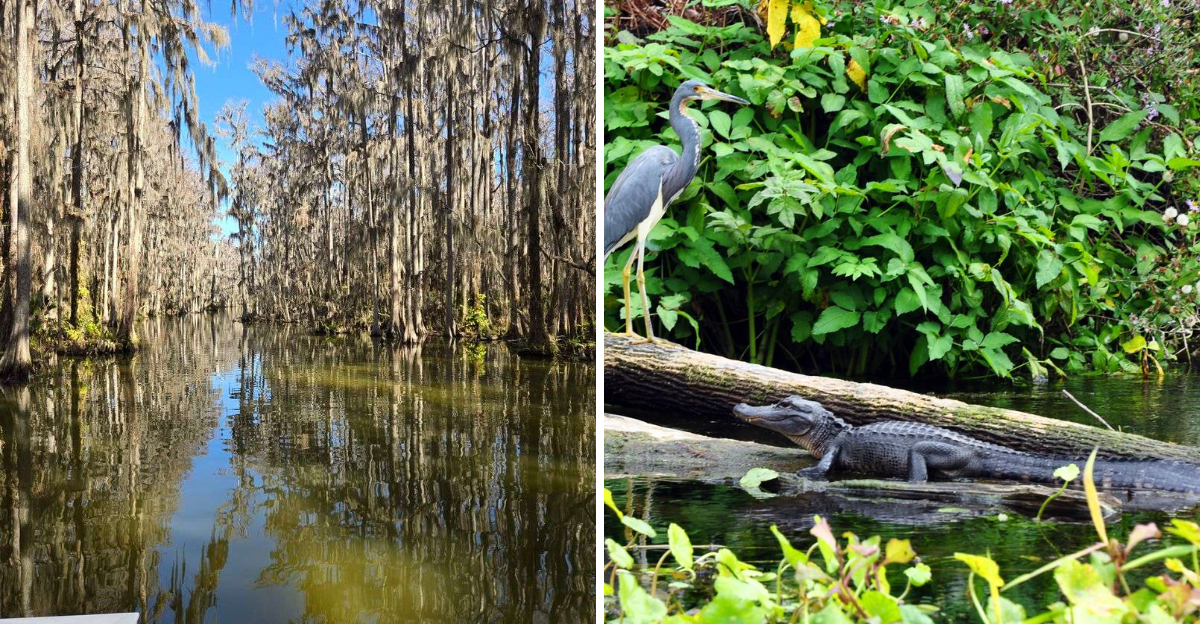
Ever get the feeling you’re about to step into a version of Florida most people never see? The kind that exists beyond highways, crowds, and schedules, where the water moves slowly and the trees seem older than time itself.
The moment you approach the dock, the mood shifts. The air cools.
The sounds soften. You can already imagine what waits ahead.
Have you ever noticed how certain experiences feel exciting before they even begin? This is one of those.
You know you’re about to glide somewhere quieter, greener, and far less ordinary than the usual Florida outing.
Out on the water, the landscape closes in gently. Moss hangs low.
Branches arch overhead. The shoreline watches back.
It feels calm, but never dull. That quiet mix of beauty and anticipation is what makes it memorable.
Florida is famous for spectacle, but sometimes its most unforgettable adventures start softly, with a boat, a slow current, and the feeling that you’re about to see something real.
Setting Sail From A Lakeside Outpost
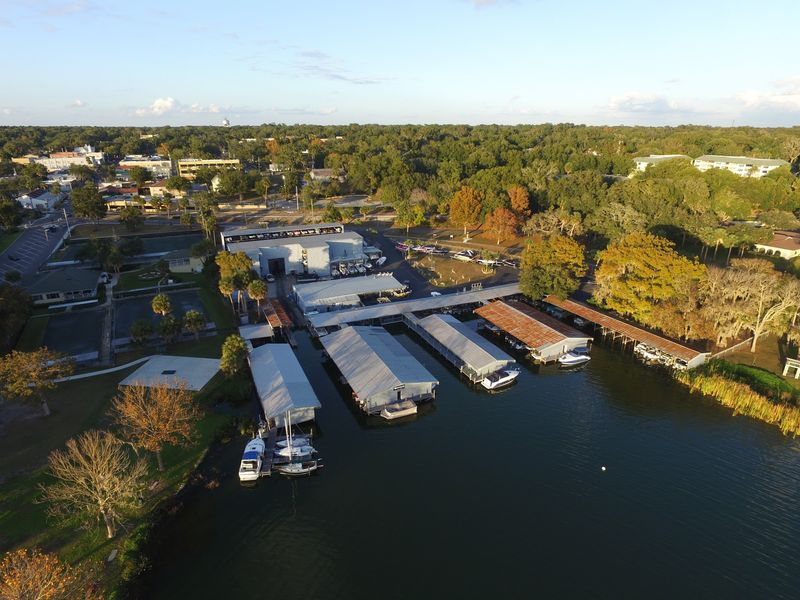
Rusty Anchor Mount Dora operates out of a spot that feels pleasantly removed from the usual tourist hustle, even though downtown Mount Dora sits just a short walk away.
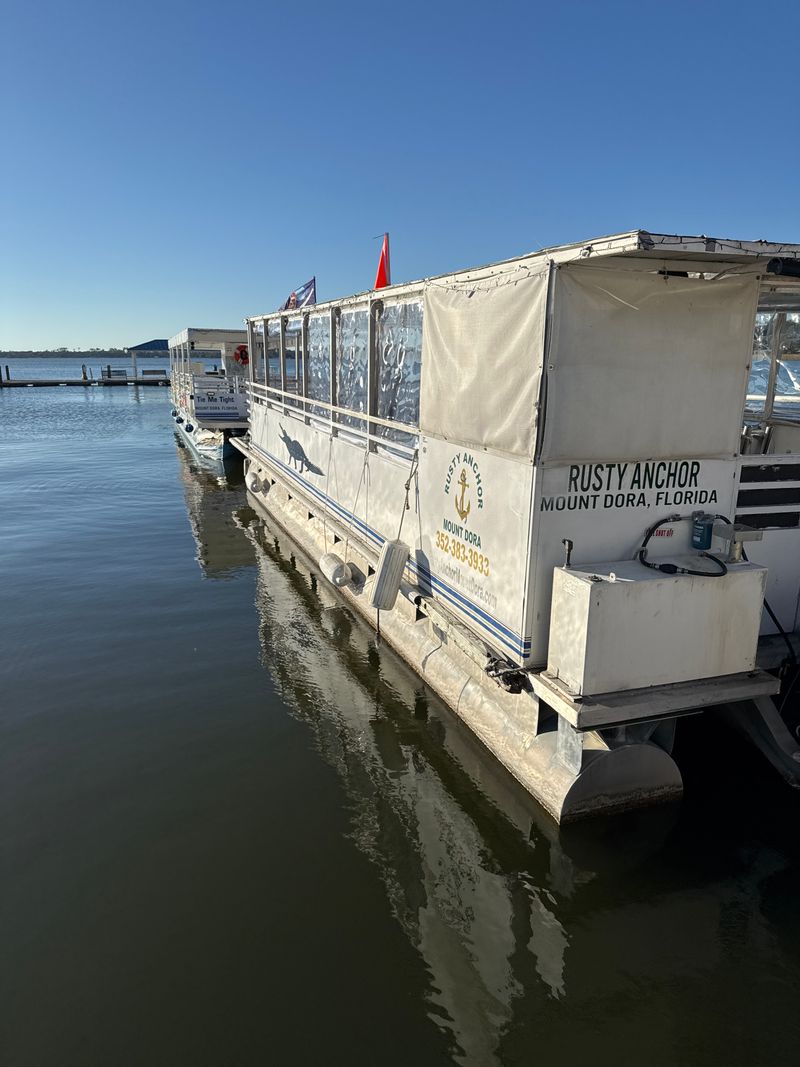
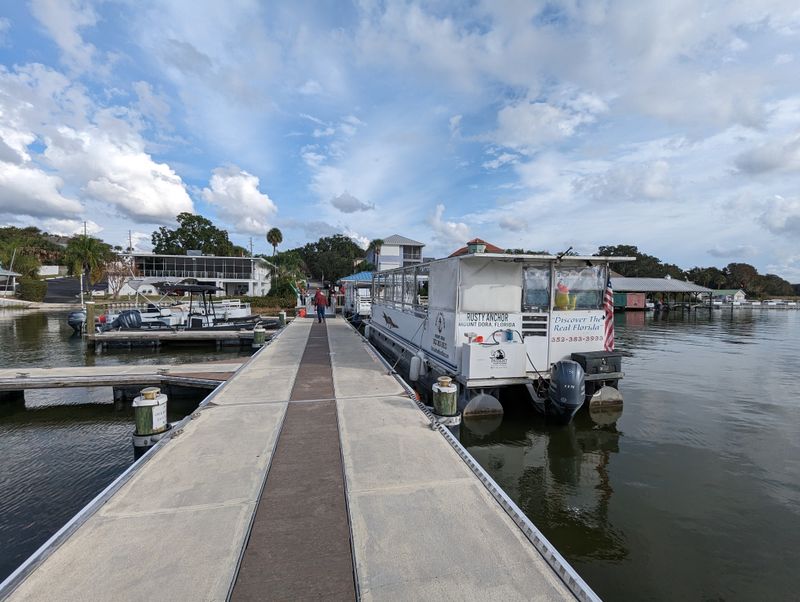
The boats wait at 400 W 4th Ave, Mount Dora, FL 32757, where the Lake Dora shoreline meets a quiet marina atmosphere that sets the tone before you even step aboard. I noticed right away that the staff moved with an easygoing confidence, answering questions about wildlife and water routes while prepping vessels for departure.
Operating hours run from 9:30 AM to 5:30 PM every single day of the week, which means you can plan a morning cruise or an afternoon escape without worrying about dark closures mid-week. The 4.8-star rating across nearly a thousand reviews tells you that most visitors leave smiling, and I understood why the moment I settled into my seat and felt the boat ease away from the dock.
Mount Dora itself brings a charming small-town vibe, with antique shops and cafes lining the streets, but the real magic happens once you leave the pavement behind. The transition from town to wilderness takes only minutes, and suddenly you are surrounded by water, sky, and the kind of Florida landscape that postcards try to capture but never quite nail.
I have launched from plenty of marinas, but this one struck me as particularly welcoming, with none of the chaotic energy that sometimes accompanies popular tour operators.
Gliding Through The Dora Canal
Once the boat enters the Dora Canal, the world changes in a way that feels almost cinematic.
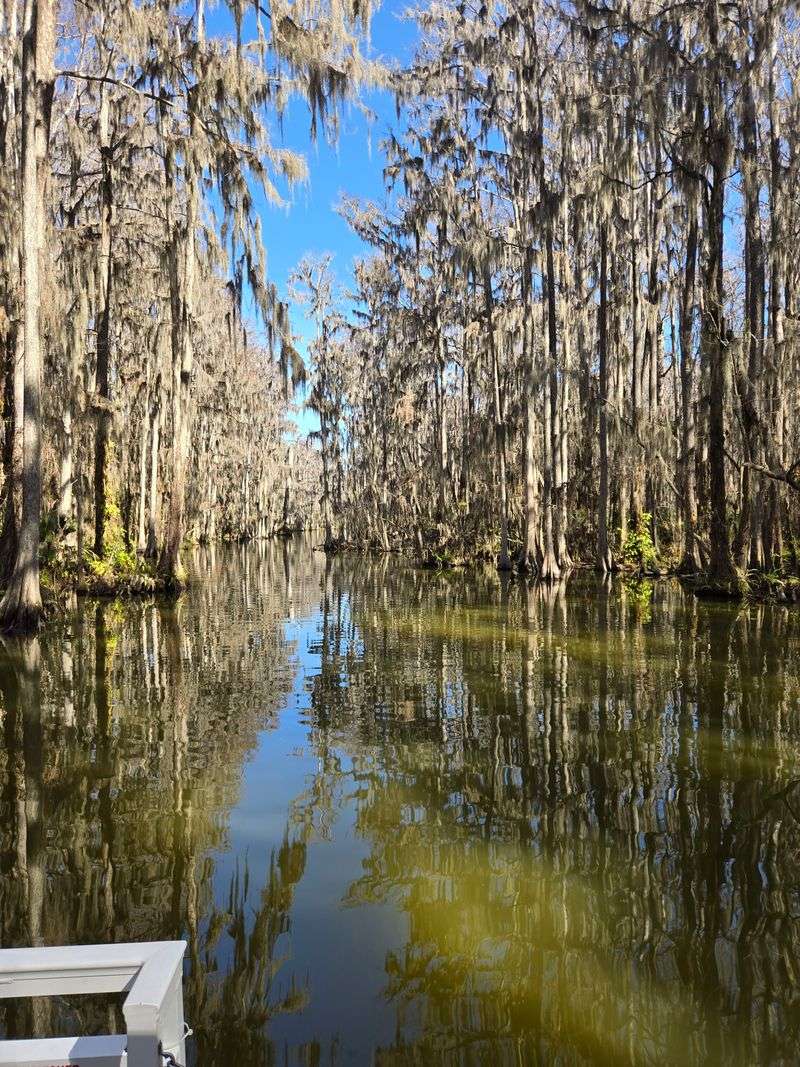
Towering bald cypress trees rise on both sides, their trunks swelling at the base and their branches draped in curtains of Spanish moss that sway with the slightest breeze. The canal itself stretches narrow and winding, creating a tunnel effect that blocks out much of the sky and wraps you in cool, dappled shade.
I remember looking up and realizing that some of these trees have stood here for centuries, long before Florida became a vacation destination or even a state. The water beneath the boat runs dark and tannin-stained, reflecting the greenery above in a way that makes it hard to tell where the surface ends and the reflection begins.
Your guide will point out the knobby cypress knees poking up from the waterline, strange wooden formations that help the trees breathe in the swampy soil. Birds flit between branches, and if you stay quiet, you might catch the soft rustle of something moving through the underbrush along the bank.
The Dora Canal connects Lake Dora to Lake Eustis, and the entire stretch feels like a secret passageway through untouched wilderness. I have floated through plenty of Florida waterways, but this one stands out for the sheer density of ancient trees and the sense that you have slipped back in time.
Spotting Alligators In Their Natural Habitat
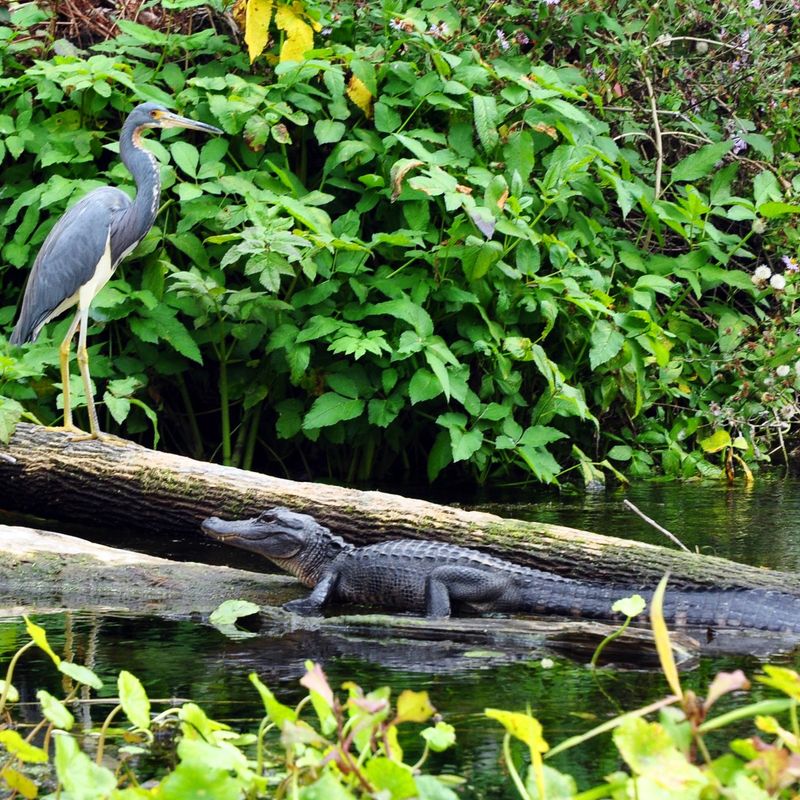
Alligators rule these waters, and you will see them lounging on muddy banks, half-submerged in the shallows, or drifting along with just their eyes and nostrils breaking the surface.
I have learned that the best time to spot gators is during warmer months when they come out to bask in the sun, though Florida’s climate means you have a decent chance year-round. Your guide knows the favorite sunning spots and will slow the boat so everyone can grab a good look without disturbing the animals.
These reptiles can grow impressively large, and seeing one up close reminds you that Florida still has plenty of wild left in it. The first time I locked eyes with a gator from the boat, I felt a mix of awe and respect, the kind you reserve for creatures that have survived millions of years of evolution.
Most of the alligators you encounter will be perfectly content to ignore you, treating the boat as just another floating log drifting past their territory. Young gators sometimes dart into the water when they hear the engine, while the big adults barely twitch, confident in their dominance.
The guides at Rusty Anchor know their gators by name and habit, sharing stories about individual animals and their quirks. I appreciated the balance they strike between thrilling wildlife encounters and responsible distance, ensuring that both guests and gators stay safe and comfortable.
Watching Birds And Other Wildlife
Beyond the gators, the waterways around Mount Dora teem with birdlife that turns every cruise into an impromptu nature documentary.
Great blue herons stalk the shallows with patient precision, while snowy egrets flash white against the dark water and green foliage. I have spotted anhingas drying their wings on low branches, looking like feathered scarecrows with their necks stretched skyward, and ospreys circling overhead in search of fish.
The guides carry a wealth of knowledge about the local ecosystem, pointing out species and explaining behaviors in a way that feels more like a conversation than a lecture. I remember one guide describing how certain birds time their feeding with the tides and boat traffic, adapting to the rhythm of human activity without losing their wild edge.
Turtles sunbathe on half-submerged logs, sometimes stacked two or three high in a precarious reptilian tower that always makes me smile. If you are lucky, you might catch sight of a river otter slipping through the water or a family of wild hogs rooting along the bank.
The diversity of wildlife here reflects the health of the habitat, and Rusty Anchor takes care to minimize disturbance, keeping engines low and maintaining respectful distances. I have found that the quieter you stay, the more you see, and this tour rewards patience with glimpses of creatures going about their daily routines as if you were not even there.
Learning About The Ancient Cypress Ecosystem
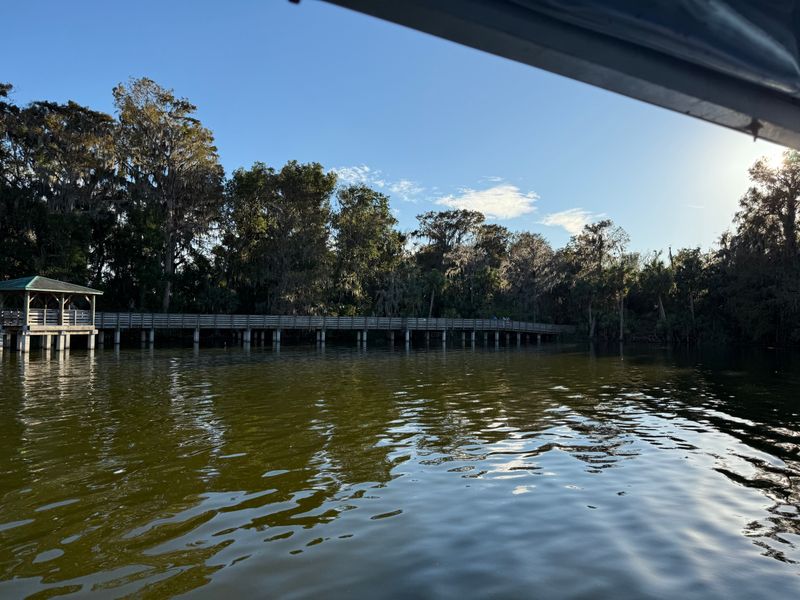
Bald cypress trees dominate the landscape here, and spending time among them feels like attending a living history lesson.
These trees can live for a thousand years or more, their wood naturally resistant to rot and pests, which is why early settlers prized them for building everything from boats to homes. I have run my hand along the rough bark of a cypress trunk and marveled at the thought of how many storms, droughts, and seasons it has weathered.
The swollen bases of the trees, called buttresses, help them stay upright in the soft, waterlogged soil, while the knobby knees that poke up from the water serve a purpose scientists still debate. Some believe the knees help with gas exchange, while others think they provide structural support, but either way, they add to the otherworldly appearance of the swamp.
Spanish moss drapes from the branches like nature’s own curtains, though it is not actually a moss at all but an air plant that takes nutrients from rain and dust. Your guide will explain how the entire ecosystem depends on the cypress trees, providing shelter for birds, shade for fish, and stability for the banks.
I have visited plenty of forests, but cypress swamps carry a unique atmosphere, quiet and cool and faintly mysterious. The guides at Rusty Anchor clearly love these trees and share that passion in every story they tell about the forest around you.
Understanding The History Of The Waterways
Long before tour boats and marinas, the Dora Canal served as a vital transportation route for Native American tribes and later for settlers moving goods between lakes.
The canal was hand-dug in the 1880s, connecting Lake Dora to Lake Eustis and opening up new possibilities for trade and travel in a region where roads barely existed. I have always found it fascinating that people carved this waterway with shovels and determination, creating a passage that still functions today.
Your guide will share stories about the steamboats that once plied these waters, carrying passengers and cargo through the cypress tunnels at a pace that now seems impossibly slow. Mount Dora itself grew up around the lake, and the town’s prosperity depended on access to these water routes.
The area also played a role in Florida’s citrus boom, with groves lining the shores and fruit shipped out by boat before railroads arrived. I remember one guide describing how the canal used to be wider and busier, filled with vessels of all kinds, but time and nature have softened the banks and narrowed the passage.
Today, the canal serves recreation rather than commerce, but that history lingers in the names of landings and the occasional remnant of an old dock. Understanding this past adds depth to the scenery, transforming a pretty boat ride into a journey through layers of human and natural history intertwined.
Planning Your Visit And What To Bring
Booking a tour with Rusty Anchor Mount Dora requires just a phone call to +1 352-383-3933 or a visit to their website at rustyanchormountdora.com, where you can check availability and choose your preferred time.
I recommend arriving a few minutes early to handle any paperwork and grab a good seat, though honestly, every spot on the boat offers solid views. The tours run daily from 9:30 AM to 5:30 PM, giving you flexibility to fit the cruise into your schedule whether you are an early riser or prefer a midday adventure.
Dress for the weather, which in Florida usually means light, breathable clothing and a hat to shield your face from the sun. I have learned the hard way that sunscreen is non-negotiable, even on overcast days, because the reflection off the water amplifies UV exposure.
Bring a camera or smartphone with a decent zoom, since wildlife sightings often happen at a distance and you will want to capture those moments. Binoculars also come in handy for birdwatching, and a small bag for your belongings keeps everything secure when the boat picks up speed.
Water bottles are smart to pack, especially in summer, though the shaded stretches of the canal provide relief from the heat. I have taken this tour multiple times, and each trip reveals something new, whether it is a gator I had not seen before or a bird species I finally managed to identify, proving that Florida’s wild waterways never stop surprising you.