
Discover 10 Pennsylvania Caves and Mines Worth Exploring
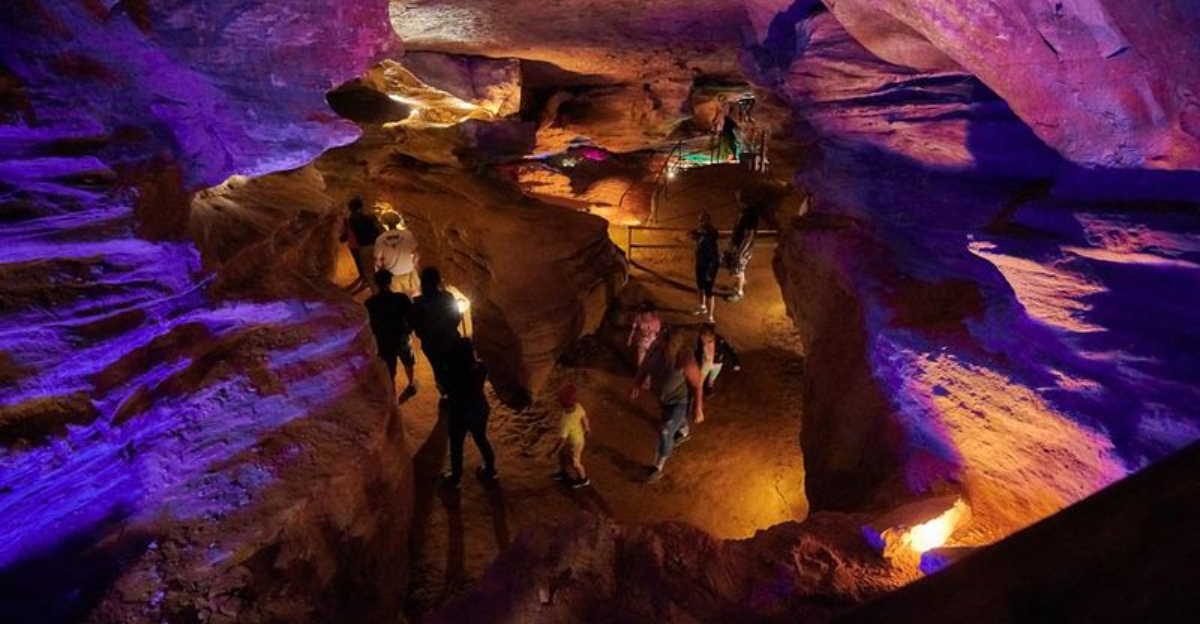
Adventure feels different when it leads underground. The sunlight fades, the air turns cooler, and suddenly every step comes with a little extra mystery. That is the thrill of exploring caves and old mines.
They offer a world of echoing chambers, rugged rock walls, hidden passageways, and the kind of natural drama that makes an ordinary outing feel like a real expedition.
These places bring together history, wonder, and just enough suspense to keep the experience exciting from start to finish, all in Pennsylvania.
There is something irresistible about destinations that make you feel like an explorer for a day.
One moment you are admiring ancient formations or traces of the past, and the next you are imagining all the stories buried beneath the surface.
It is part science, part adventure, and part jaw-dropping scenery, with a little flashlight-flicker magic thrown in for good measure.
For anyone who loves unusual attractions, cool temperatures, and the fun of seeing a side of the state that most people pass right over, this kind of trip delivers.
I always love places like this because the second I step underground, I start feeling curious, wide-eyed, and completely ready to see what is waiting around the next bend.
1. Penn’s Cave & Wildlife Park, Centre Hall
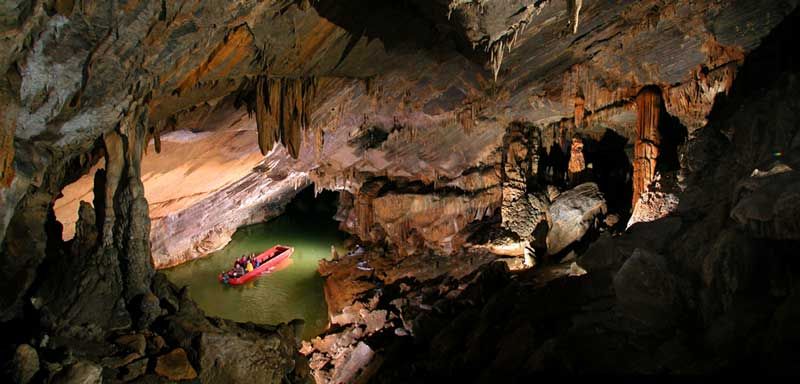
The only all-water cavern tour in the United States, Penn’s Cave in Centre Hall, Pennsylvania, is the kind of place that makes you feel like you’re floating through a living painting.
Guests board flat-bottomed boats and glide through a series of underground chambers carved by a slow-moving stream, with stalactites hanging overhead like stone chandeliers.
The formations have names like “Statue of Liberty” and “Niagara Falls,” and the guides are genuinely fun at pointing them out.
Beyond the cave itself, Penn’s Cave also operates a wildlife park on the surface, where bison, elk, and mountain lions roam across open fields.
It’s a rare combo that makes the trip worthwhile for families with kids of all ages. The cave stays a cool 52 degrees year-round, so that light jacket is non-negotiable.
Penn’s Cave has been welcoming visitors since 1885, making it one of the oldest tourist caves in the entire country.
2. Lincoln Caverns & Whisper Rocks, Huntingdon
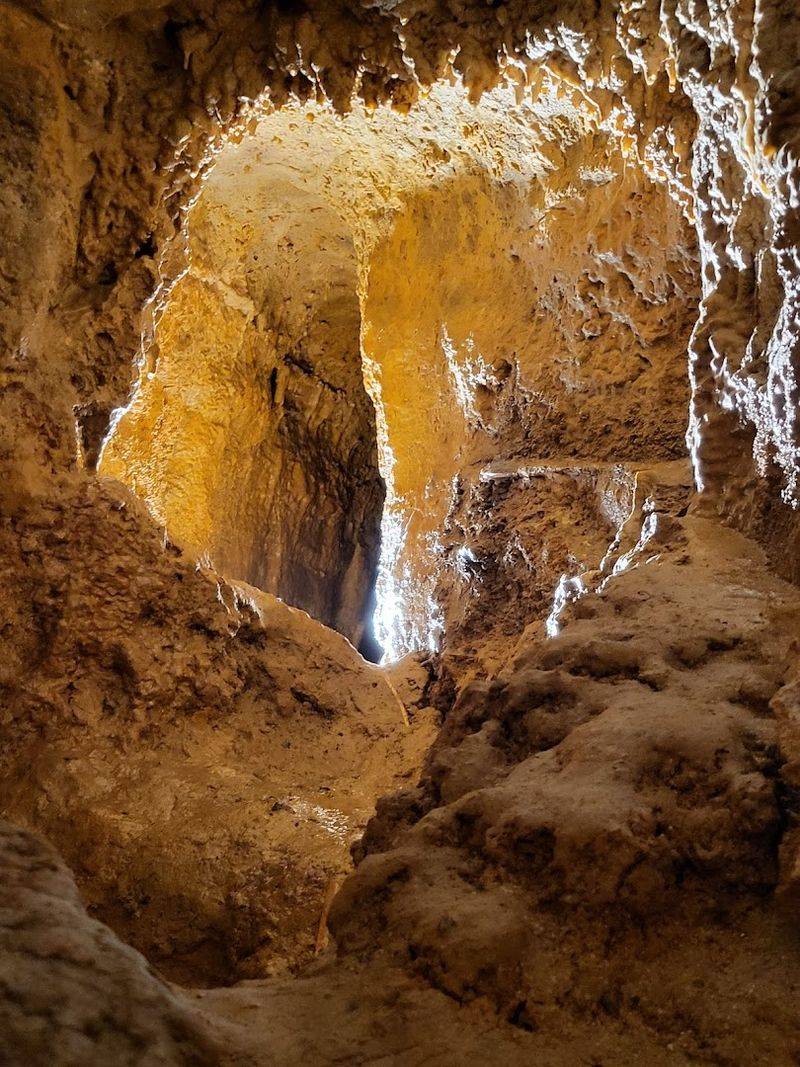
Crystal formations that seem to glow from within greet visitors the moment they step into Lincoln Caverns near Huntingdon, Pennsylvania, and the effect is genuinely breathtaking.
This spot is actually two caves in one. The original Lincoln Caverns section features classic limestone formations, while the adjoining Whisper Rocks cavern is packed with a denser collection of crystals and flowstone that look almost artificial in their perfection.
The guided tours run year-round and cover both sections, giving you a solid underground experience without feeling rushed.
Lincoln Caverns also offers a seasonal “Gloworm” flashlight tour for families, where kids navigate the passages using only handheld lights, which turns the whole thing into an adventure rather than just a walk-through.
Discovered in 1930 during road construction, Lincoln Caverns has grown into one of central Pennsylvania’s most beloved natural attractions.
The gift shop at Lincoln Caverns is stocked with geodes, fossils, and mineral specimens that make for excellent souvenirs.
3. Indian Echo Caverns, Hummelstown
Just a short drive from Hershey, Indian Echo Caverns in Hummelstown, Pennsylvania, has been entertaining curious visitors since the 1920s, and the place still delivers the goods.
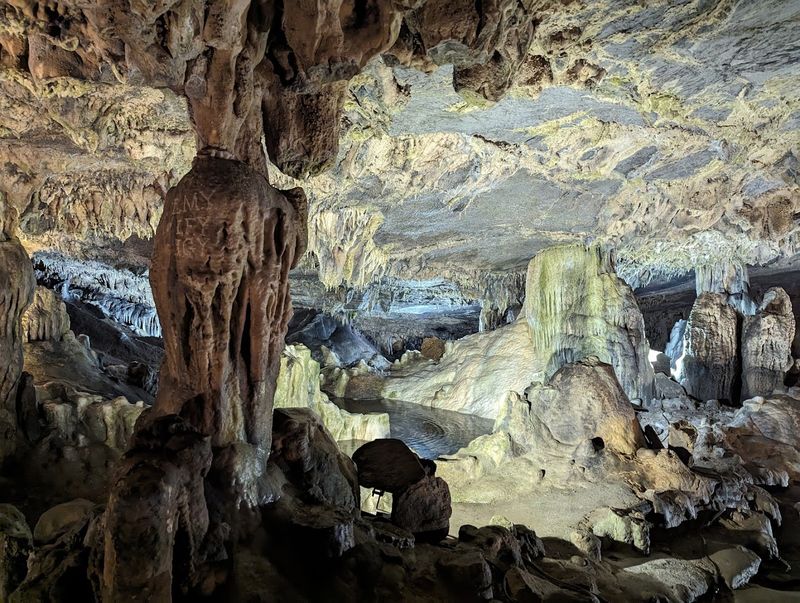
The caverns sit beneath a quiet hillside and stretch through a series of rooms filled with stalactites, stalagmites, and columns that took thousands of years to form.
One of the most talked-about features inside Indian Echo Caverns is a small underground lake that reflects the cave formations like a mirror, creating an almost surreal visual.
The guided tours last about 45 minutes and move at a comfortable pace, making this a solid choice for visitors who aren’t used to long underground walks.
Above ground, the property includes a gem mining sluice and a small petting zoo, which keeps younger travelers happily occupied before and after the cave tour.
Indian Echo Caverns is open most of the year, though hours shift seasonally, so checking ahead before making the drive is always a smart move.
4. Woodward Cave, Woodward
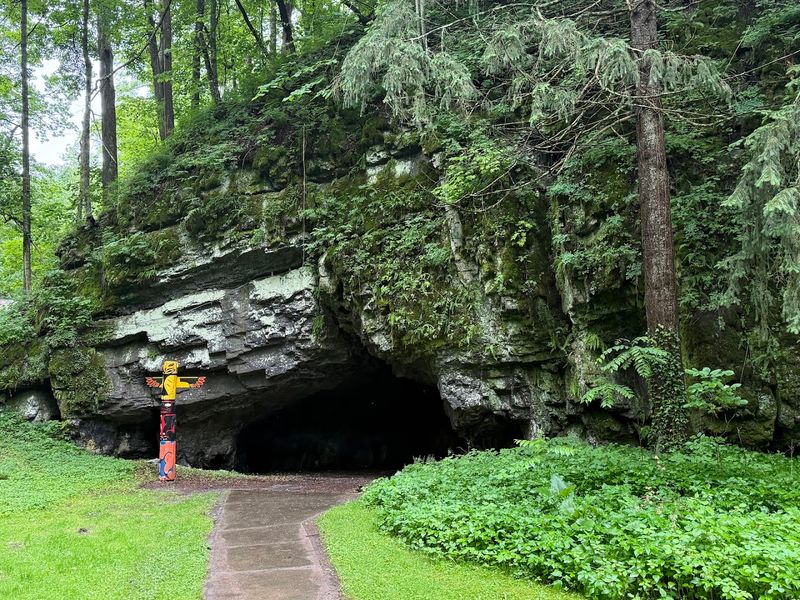
Billed as one of the largest caves in Pennsylvania, Woodward Cave in the small town of Woodward sits in the heart of the state and rewards visitors with some of the most impressive room-sized chambers you’ll find underground anywhere in the region.
The cave features five distinct rooms, each with its own personality and formation highlights. The largest chamber, known as the “Ball Room,” is big enough to swallow a small house whole.
Woodward Cave has a long history of public tours stretching back to the 1920s, giving it a charmingly old-fashioned atmosphere that feels refreshingly different from more commercialized cave attractions.
The formations here include a remarkable collection of stalactites, some of which are several feet long and hang in dramatic clusters from the ceiling.
Woodward Cave is typically open from spring through fall, so planning around the warmer months is the way to go.
The surrounding area offers camping and outdoor recreation, making it easy to build a full weekend around the visit.
5. Laurel Caverns, Farmington
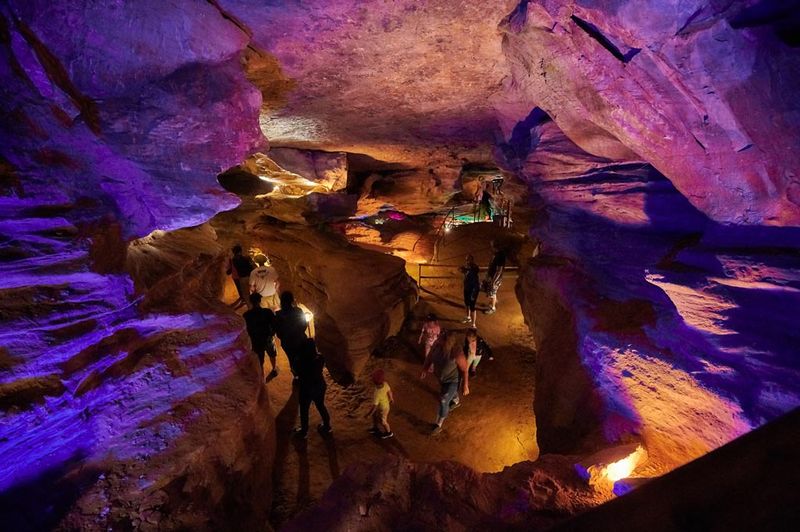
At roughly 435 feet below the surface, Laurel Caverns near Farmington in southwestern Pennsylvania holds the title of the state’s largest cave open to the public, and the scale of the place is something you feel the moment you step inside.
Unlike the dripping, formation-heavy caves found in other parts of the state, Laurel Caverns is notable for its wide, sandstone-floored passages that stretch in multiple directions, giving it an almost maze-like quality.
The standard guided tour covers the main passages and gives a solid introduction to the geology of the area, but Laurel Caverns also offers spelunking adventures for those who want to crawl through tighter, less-developed sections of the cave system.
That adventurous option sets Laurel Caverns apart from most Pennsylvania cave experiences, attracting thrill-seekers alongside casual tourists.
The cave sits within Laurel Highlands, a region already packed with outdoor attractions including Fallingwater and Ohiopyle State Park, making it a natural addition to any southwestern Pennsylvania road trip. Temperatures inside hover around 52 degrees, so layering up before the tour pays off.
6. Crystal Cave, Kutztown
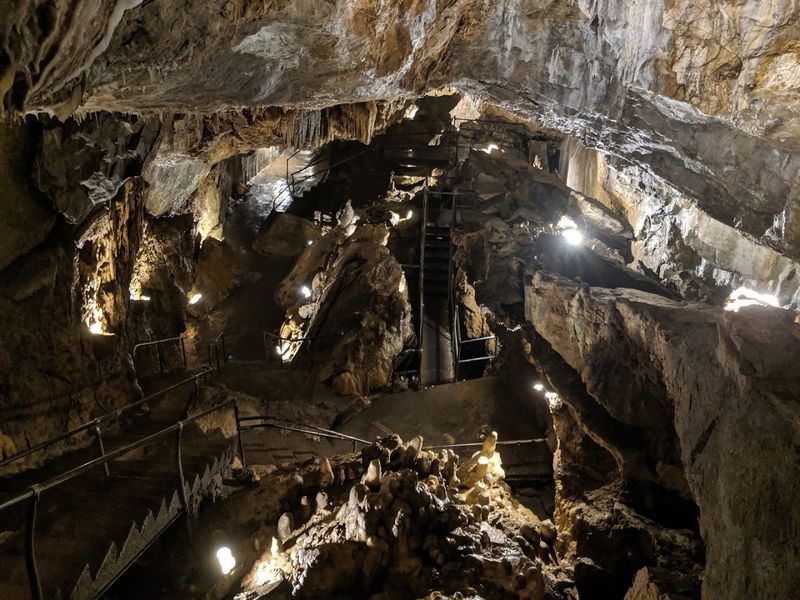
Discovered in 1871 by a farmer digging a well, Crystal Cave near Kutztown in Berks County, Pennsylvania, has one of the best origin stories in the state’s long list of underground attractions.
The cave earned its name from the sparkling calcite crystals that line many of its passages, catching the light in ways that make the walls look almost alive.
Guided tours of Crystal Cave run about 45 minutes and cover a well-developed path through the main chambers, pointing out formations with names like “Frozen Waterfall” and “The Pipe Organ.”
Crystal Cave is one of the most accessible caves in eastern Pennsylvania, located just off a main road with ample parking and a visitor center that adds helpful geological context to the experience.
The property above ground includes a mini-golf course, a gem sluice, and picnic areas, turning the whole outing into a half-day event.
Crystal Cave operates from March through November, and the fall foliage surrounding the entrance adds an extra layer of beauty to the visit.
7. Lost River Caverns, Hellertown
There is something genuinely mysterious about a river that vanishes underground, and Lost River Caverns in Hellertown, Pennsylvania, is built entirely around that idea.
The cave takes its name from a stream that disappears into the earth and resurfaces somewhere downstream, and the underground passages follow the path of that hidden waterway through a series of glittering chambers.
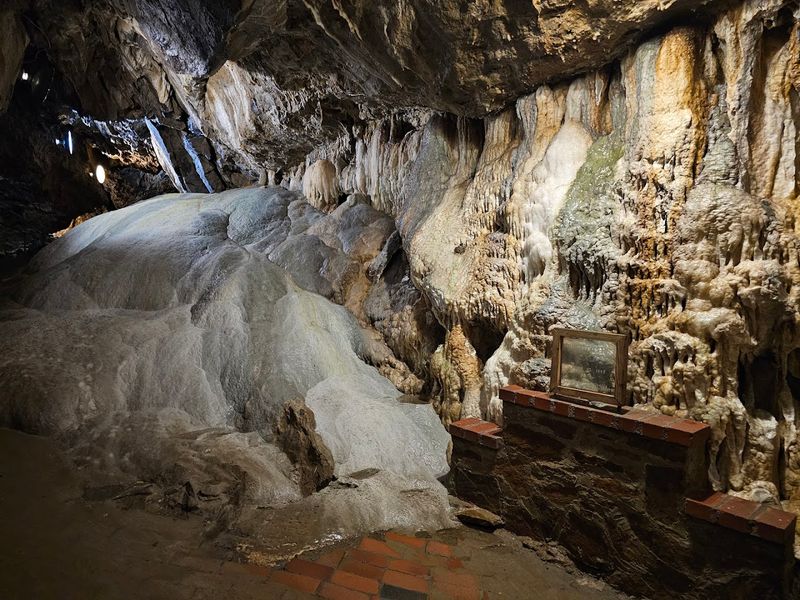
The formations inside Lost River Caverns are exceptionally varied, ranging from delicate cave flowers and helictites to massive flowstone curtains that cascade down the walls in frozen waves.
Located in the Lehigh Valley, Lost River Caverns is one of the more convenient Pennsylvania cave stops for visitors coming from Philadelphia or New Jersey, sitting just off Route 412 in Northampton County.
The guided tours run year-round and last about 30 minutes, making this one of the quicker cave experiences in the state without feeling like anything important got skipped.
Lost River Caverns also houses a lapidary and gem shop on-site that is worth a browse on the way out.
8. No. 9 Coal Mine & Museum, Lansford
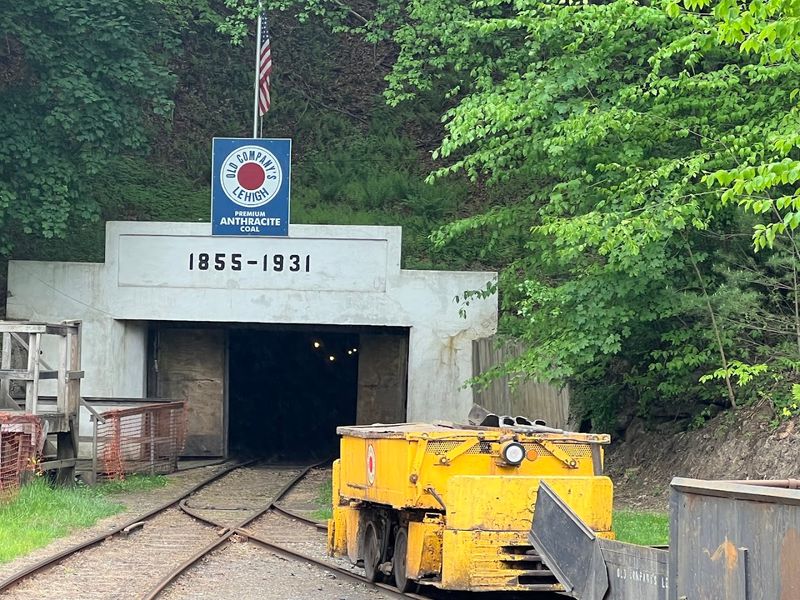
Coal mining built entire communities across northeastern Pennsylvania, and No. 9 Coal Mine and Museum in Lansford offers one of the most personal and historically rich ways to understand what that industry actually looked like from the inside.
The mine opened in 1855 and operated for over a century, making it one of the oldest and deepest anthracite coal mines in the world at the time of its closure.
Visitors at No. 9 Coal Mine board a mine car and ride into the mountain along original tracks, entering passages that miners used for generations.
The guides at this site are often descendants of the miners themselves, and that personal connection brings a depth to the storytelling that no exhibit panel could replicate.
No. 9 Coal Mine is located in Carbon County, a region where the legacy of the coal industry is visible in the architecture and culture of every surrounding town.
The adjacent museum displays tools, photographs, and personal artifacts that paint a vivid picture of daily life in a mining community.
9. Lackawanna Coal Mine Tour, Scranton
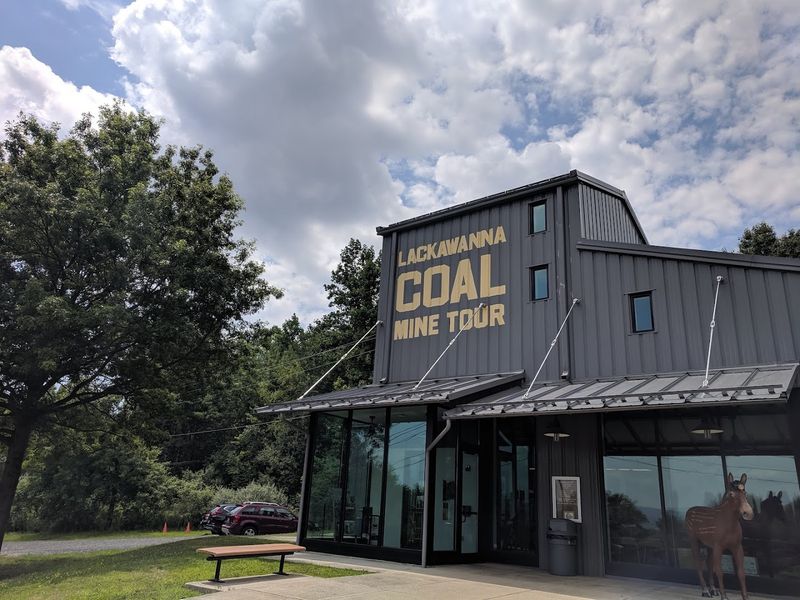
Few underground experiences in Pennsylvania carry the historical weight of the Lackawanna Coal Mine Tour in Scranton, a city whose identity is almost inseparable from the coal industry that shaped it.
The tour takes visitors 300 feet below the surface in a mine car, descending into a working-era anthracite mine that has been carefully preserved to reflect conditions from the early twentieth century.
Once underground, the guided experience walks through the methods miners used to extract coal, the dangerous conditions they faced daily, and the engineering systems that kept the operation running.
Lackawanna Coal Mine is part of the larger McDade Park complex, which also includes the Anthracite Heritage Museum, making it easy to combine both stops into one educational afternoon.
Scranton itself is worth exploring after the tour, with a walkable downtown and several other industrial-era landmarks nearby.
The Lackawanna Coal Mine Tour operates seasonally, generally from spring through fall, and advance reservations are recommended during peak summer months when crowds tend to build up quickly.
10. Pioneer Tunnel Coal Mine & Steam Train, Ashland
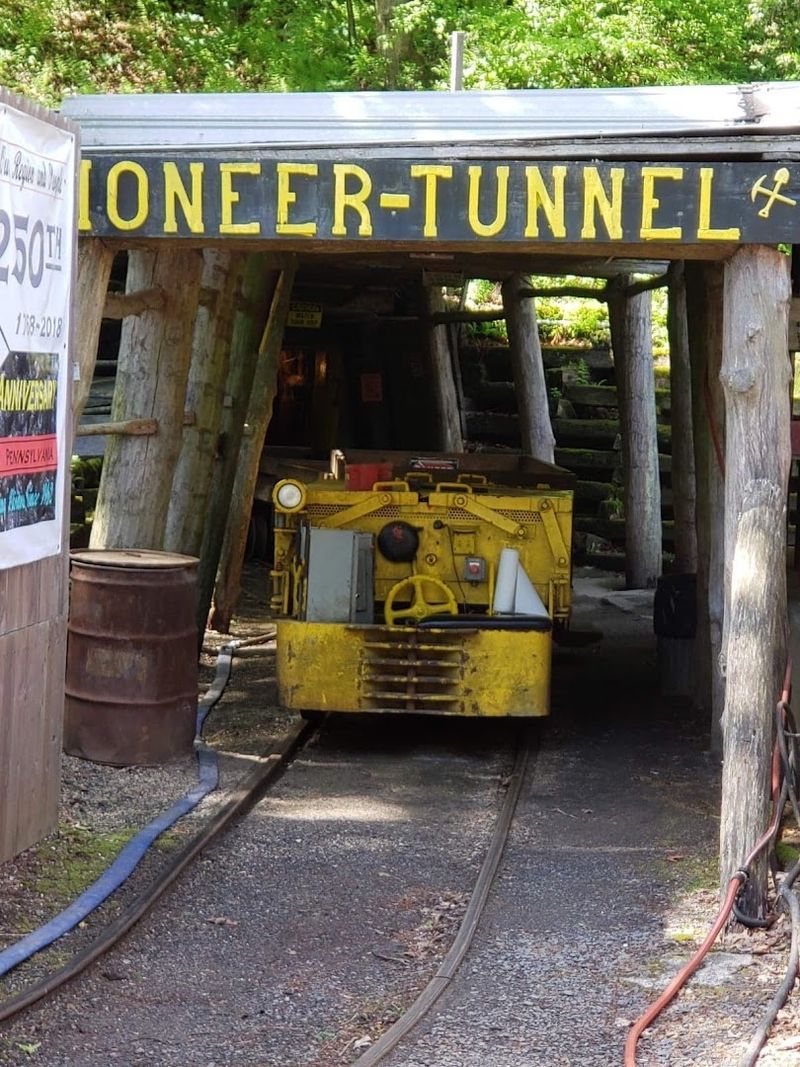
Getting to ride a genuine steam-powered narrow-gauge train around a Pennsylvania mountain before heading underground into a real coal mine is the kind of double-feature that makes Pioneer Tunnel Coal Mine and Steam Train in Ashland genuinely hard to top.
The steam train portion circles Mahanoy Mountain and offers sweeping views of the surrounding Schuylkill County landscape, with the guide narrating the history of the region along the way.
After the train ride, the mine tour takes visitors into a horizontal drift mine, meaning the entry is level rather than a steep descent, which makes it accessible to a wider range of guests.
Inside Pioneer Tunnel, the guides demonstrate how miners drilled, blasted, and loaded coal using period-accurate methods, and the cramped, low-ceilinged passages give a visceral sense of the physical demands of the job.
Pioneer Tunnel is open from May through October, and the combination of the train and mine tour typically runs about two hours total.
Ashland is a small town with a big mining heritage, and Pioneer Tunnel sits at the center of that story.