
Don’t Leave This Arizona Desert Town Before Watching Molten Bronze Turn Into Wind Bells
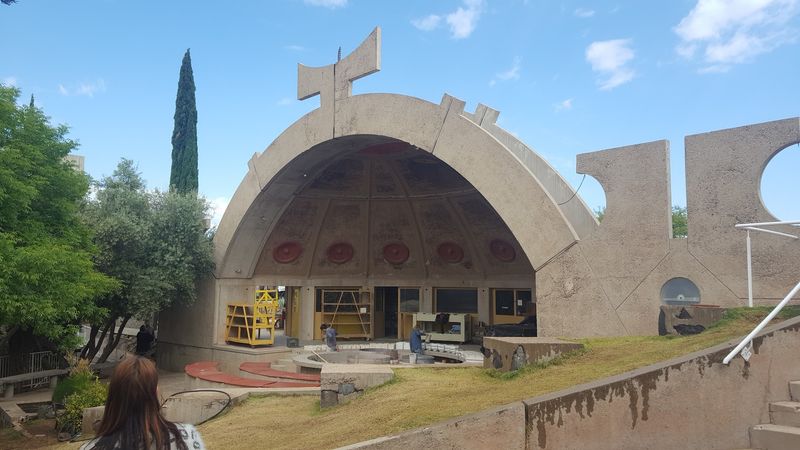
Molten bronze gets poured into sand molds here, and the result ends up singing in the wind. Most people only ever meet the finished bell in a gift shop.
The molds carry one of 32 original bell patterns. Then foundry artists carve their own shapes and motifs into the sand before each pour, so no two bells match.
I like how something so delicate starts with fire and grit. The whole thing happens in the high desert of Arizona, inside a building shaped like a quarter of a sphere.
The bells are only part of the story, too. The place around them is an experimental town that has been under construction for decades.
So why do so many visitors drive away without seeing where the music begins?
An Experimental Town Rising From The High Desert
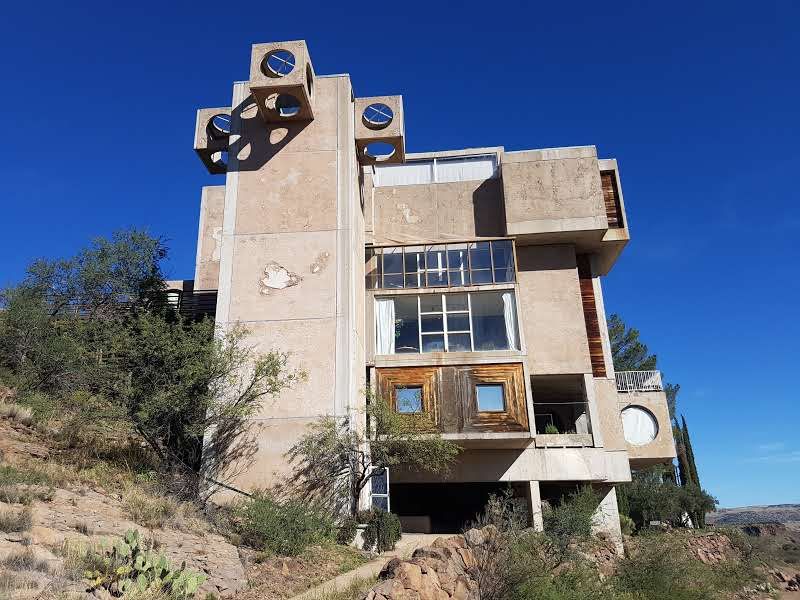
Arcosanti sits in Yavapai County, about 70 miles north of Phoenix, at an elevation of 3,732 feet. It’s an experimental town built around a big idea about how people could live.
That idea is called arcology, a blend of architecture and ecology. The goal is compact, people-focused communities that use less land and fewer resources than sprawling cities do.
From a distance, the town reads like a cluster of curved concrete shapes perched above a canyon. Up close, it becomes a working place with residents, artists, and a busy bronze foundry.
The foundry is the part most travelers miss. Arcosanti is famous for its cast bronze wind bells, and those bells are made right here on site.
Many visitors stop in, admire the finished bells, and head back to the highway. That’s a shame, because the process behind each bell is a big part of the magic.
The town works well as a stop between Phoenix and Flagstaff along Interstate 17. It’s close enough for a day trip, yet it feels wonderfully far from ordinary Arizona suburbs.
Think of it as an architecture lesson, art studio, and desert outing rolled into one visit. Not bad for a single exit off the interstate.
Fire, Sand, And A Quarter-Sphere Called The Foundry Apse
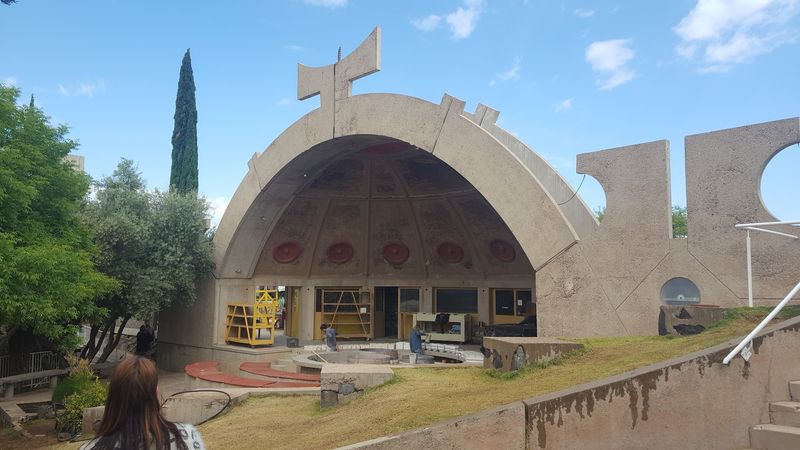
Bronze glows when it gets hot enough to pour. At Arcosanti, that fiery moment happens inside the Foundry Apse, a quarter-sphere structure where bells are made year-round.
Artisans pour the molten metal into sand molds. Each mold carries one of Paolo Soleri’s 32 original bell patterns, which gives the collection its family resemblance.
Before the pour, foundry artists etch their own geometric shapes and organic motifs into the sand. So every bell comes out slightly different from its neighbor.
The work doesn’t stop once the bronze hardens. Surfaces get cleaned, then either burnished or chemically treated to speed up weathering and oxidation.
Finally, each bell receives a clapper, a chain, and bronze fins. Those fins catch the breeze and turn a heavy piece of metal into a wind instrument.
The apse itself deserves a long look. It was built with Soleri’s cast-in-place silt-casting method, and its shape offers passive solar heating and cooling through the seasons.
In other words, the building that shelters the furnace also helps manage the desert heat. That’s a clever trick for a workshop full of molten metal.
Seeing the space adds real meaning to the bell you might carry home later.
The Architect Who Gave Ecology A New Name
Paolo Soleri was an Italian architect who studied under Frank Lloyd Wright. He coined the word arcology and laid it out in his 1969 book, Arcology: The City in the Image of Man.
His vision called for dense, walkable cities that leave a lighter mark on the land. He wanted to show that sprawl wasn’t the only option.
In 1970, Soleri began building Arcosanti with help from thousands of volunteers. That’s a lot of hands mixing concrete in the Arizona sun.
The project is supported by the nonprofit Cosanti Foundation. Soleri founded it in Scottsdale back in 1956, long before the first walls rose here.
The foundation still manages his work today. It carries forward his goal of a built world that lives in balance with the environment.
Soleri passed in 2013 at age 94. His ideas, though, keep shaping the town, its classes, and its ongoing experiments in city living.
Knowing this backstory changes how the structures look. They stop seeming like quirky sculptures and start reading like chapters in one long, ambitious argument.
And yes, the bells connect to that story too. Their sales have long helped fund the dream.
Concrete Curves That Know How To Handle Desert Weather
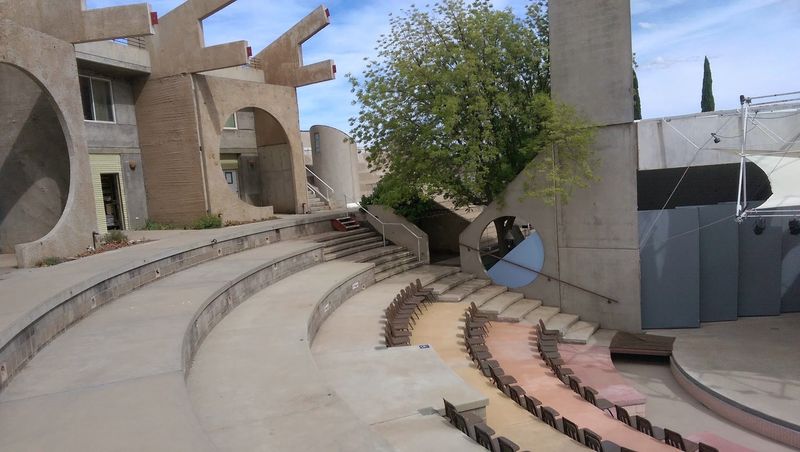
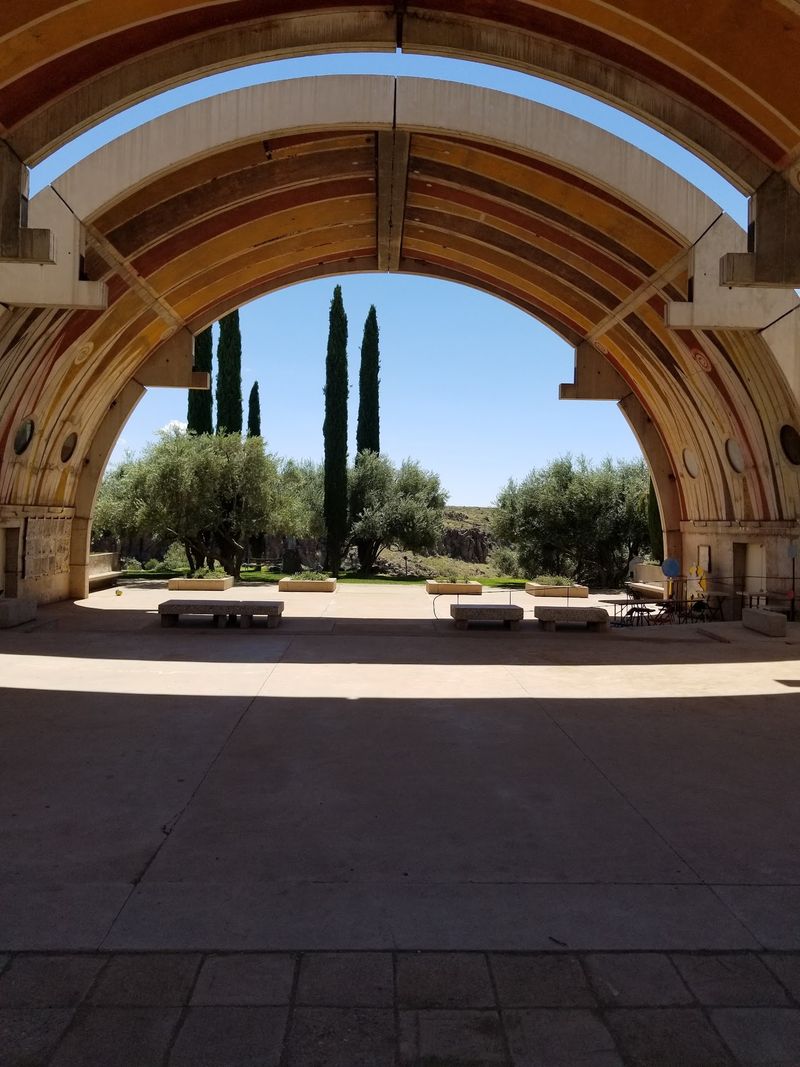
Silt-cast and form-cast concrete give Arcosanti its signature look. The shapes create both indoor and outdoor spaces that respond to the desert climate.
Some of the standouts include the Vaults, the Colly Garden, and an amphitheater. The amphitheater hosts events, while the Vaults form a dramatic arched gathering space.
None of it is just for show. Many structures use passive heating and cooling to temper the weather without leaning hard on machines.
The designs also aim for efficient use of energy and raw materials. That idea runs through almost every curve and opening on the site.
For photographers, the payoff is huge. Rounded forms, sharp shadows, and big desert sky make a pretty irresistible mix.
For curious minds, the payoff is different. You start noticing how sun angles, shade, and openings all seem planned with purpose.
Arcosanti isn’t a museum frozen in time, either. It’s an urban laboratory, so the architecture serves real daily life for people who live and work here.
That makes the buildings feel lived in rather than roped off. It’s architecture with a job to do, and it shows.
Bring comfortable shoes, since exploring means plenty of walking between levels.
Neighbors Who Live Inside The Experiment
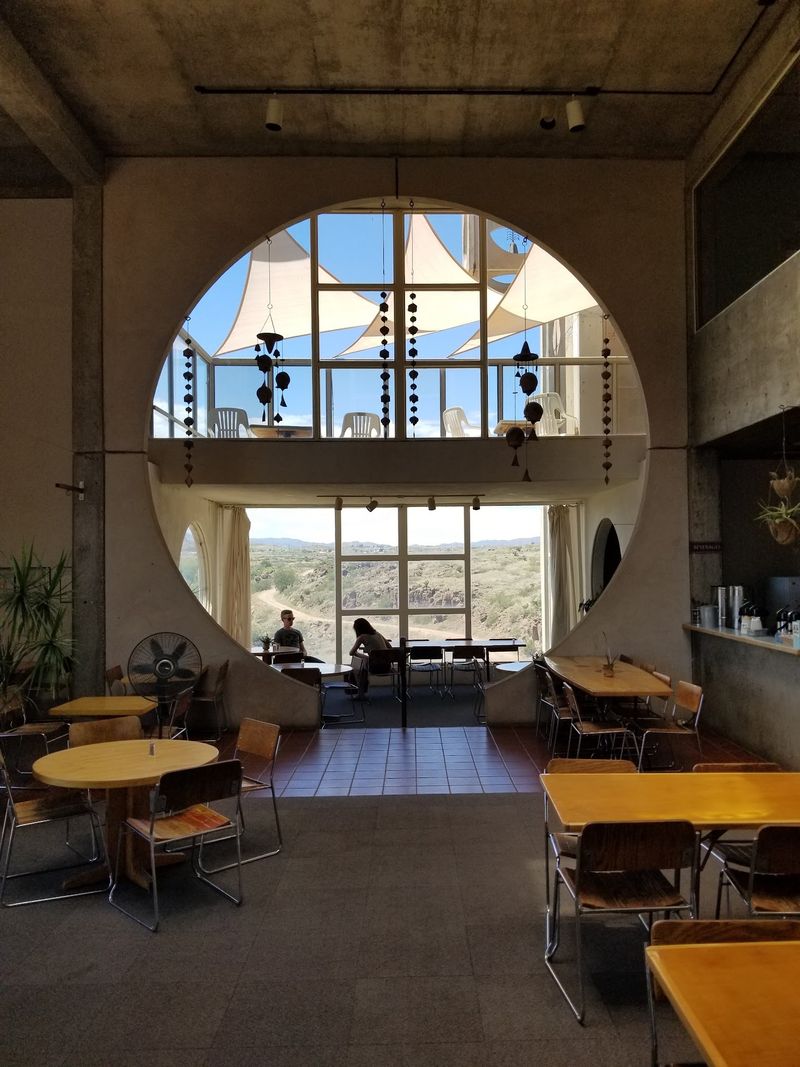
People actually call Arcosanti home. A diverse group lives here year-round, including families.
Residents contribute to the urban laboratory by volunteering or by working for Cosanti Originals or the Cosanti Foundation. Cosanti Originals is the name behind those famous bells.
So the person who etched a bell mold might also be your neighbor at a community meal. That’s arcology in practice, with living and working woven together.
The town also offers multi-week workshops for deeper learning. Participants get hands-on education in arcology through activities ranging from construction to farm-to-table sessions.
For anyone who loves learning by doing, that’s a rare opportunity. Few places let you study a city concept while helping build a piece of it.
The community aspect gives Arcosanti a warmth that photos can’t fully capture. It’s not a ghost town of grand plans.
It’s a working experiment with real people testing ideas daily. That spirit is easy to sense in the gardens, studios, and shared spaces.
Curious about whether arcology works? Watching a functioning community is probably the best answer you’ll get.
Just remember residents live here, so courteous curiosity goes a long way during any visit.
Overnight Rooms With A Canyon For A Neighbor
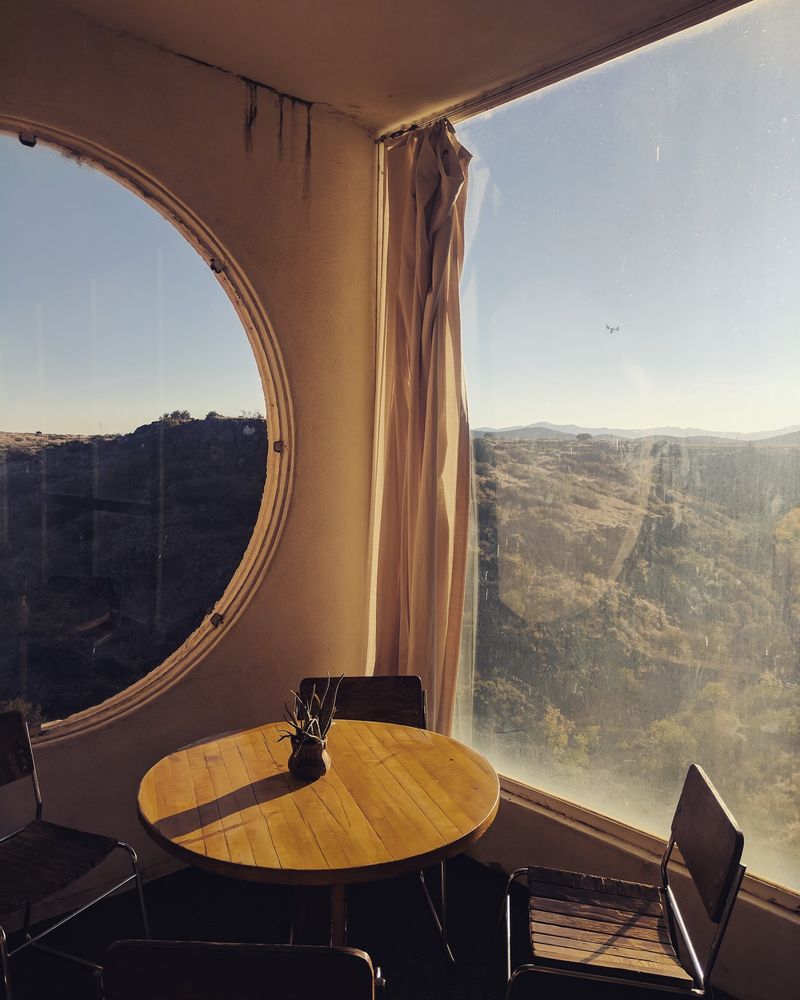
Day trips cover the highlights, but overnight guests get the town after the crowds leave. That alone makes a stay tempting.
Lodging options include Greenhouse Guest Rooms, the Sky Suite, and the Sun Suite. Each offers simple amenities and canyon views.
Expectations matter here. Standard guest rooms may not include televisions or refrigerators, though some suites come with kitchenettes.
A shared kitchenette is also available in the guest house complex. That’s handy, since you’ll want to plan your meals ahead.
Staying over also unlocks more ground. Overnight visitors can explore beyond the Visitor’s Trail, including the Valletta Loop, Mind’s Garden, and Tomiaki Trails.
There’s a cliffside swimming pool too, weather permitting. A dip with a canyon view sounds like a fine reward after a dusty hike.
Guests can also use the Sky Theater for stargazing. More on that soon, because the night sky here deserves its own spotlight.
The rooms aren’t fancy, and that fits the place. Arcosanti is about thoughtful living, not hotel-style excess.
For budget-minded Arizona travelers, a simple room with a view can be a pretty satisfying trade.
Pack A Picnic, Because The Cafe Is On Pause
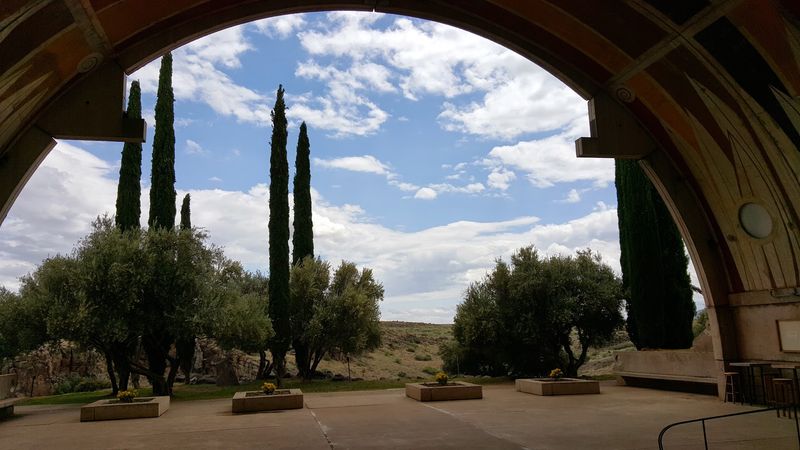
Hungry travelers, take note. The on-site cafe at Arcosanti is currently closed to the public.
Historically, it served vegetarian-focused lunches, often featuring locally grown items. For now, the space hosts private events and gatherings of up to 100 guests.
The good news is that change may be coming. The community is seeking partnerships with local chefs and culinary teams.
Their aim is to make Arcosanti a dining destination again between Phoenix and Flagstaff. That would be a welcome addition along that stretch of interstate.
Until then, bring your own food and snacks. Overnight guests are specifically encouraged to pack provisions.
Honestly, a picnic here isn’t a bad consolation prize. Eating a sandwich surrounded by curved concrete and open desert beats most rest stops by a mile.
Water belongs high on your packing list, too. The high desert can feel dry, even when temperatures seem mild.
Planning ahead keeps the day relaxed. Nobody wants a growling stomach cutting a foundry visit short.
Check the official status before you go, since dining plans may shift as new partnerships develop.
Two Miles Of River And 200 Kinds Of Birds
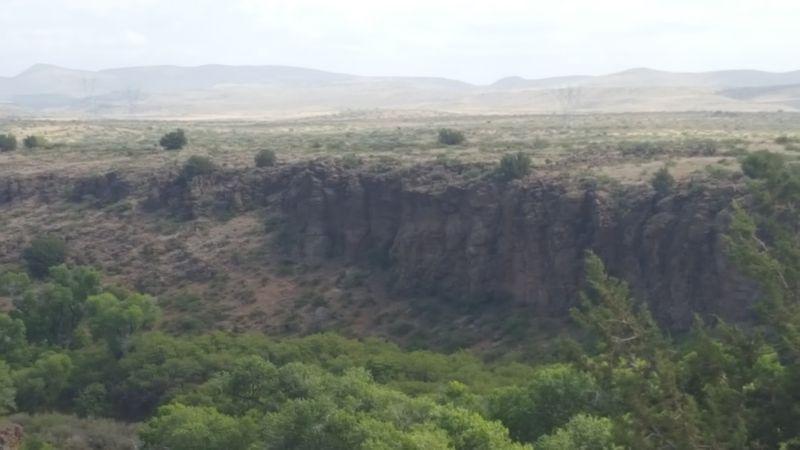
The Sonoran Desert meets the Colorado Plateau right around here. That transition zone gives the 860-acre property a surprising mix of plants and animals.
About two miles of the Agua Fria River flow through the land. Its riparian habitat adds green to a landscape many expect to be all rock and scrub.
Hiking trails here have mild to moderate inclines. They’re manageable for many visitors without feeling like a stroll around the parking lot.
Wildlife includes mule deer, javelina, and bobcats. Bird lovers get even more to celebrate, with over 200 species recorded.
Bring binoculars if you own a pair. A quiet morning on the trails could turn into an impromptu birding session.
The natural setting is part of the arcology philosophy itself. Compact building leaves more open land for everything else that lives here.
So the structures and the scenery aren’t competing. They’re meant to support each other.
In cooler months, this is prime central Arizona hiking weather. Summer visitors will want early starts, plenty of water, and sensible shade breaks.
Either way, the river corridor offers a refreshing counterpoint to all that concrete.
A Night Sky That Puts On Its Own Show
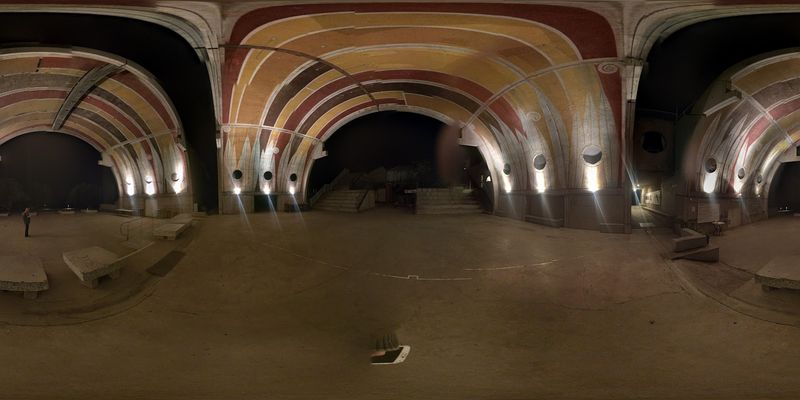
Moonless nights here reveal the Milky Way with the naked eye. With little light pollution around, the stars get top billing.
The Sky Theater becomes an excellent stargazing spot after dark. It’s one of the perks reserved for overnight guests.
Arizona already has a strong reputation for dark skies. Arcosanti adds a twist, framing that view with sculptural architecture.
Bring a warm layer, even in milder seasons. Desert evenings at elevation can cool off quickly once the sun drops.
A red flashlight helps keep your night vision sharp. Your eyes need time to adjust, so give them a little patience.
Clear weather and a new moon offer the best conditions. Check a moon calendar before booking if stargazing tops your list.
During hot months, this after-dark window can be the most comfortable part of the trip. The daytime heat fades, and the sky takes over.
It’s a lovely bookend to a day spent around glowing bronze. Fire in the foundry, then fire across the sky.
Few souvenirs compete with that memory, though a wind bell still gives it a run for its money.
Concerts, Classes, And A Festival With No Overlapping Sets
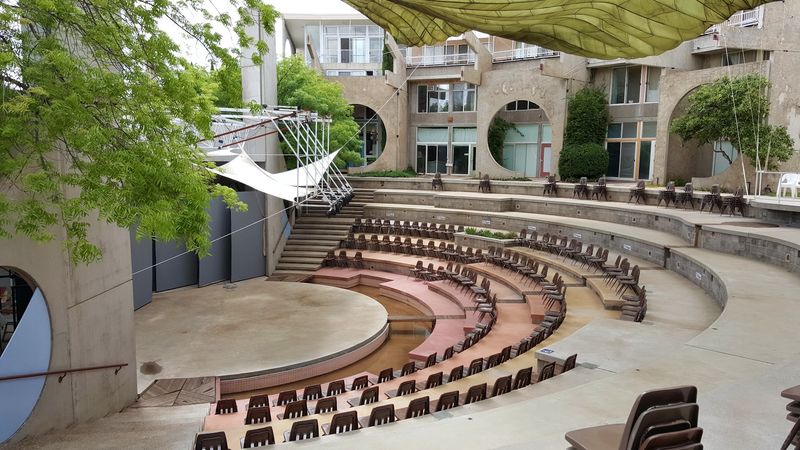
Music sounds different bouncing off curved concrete. Arcosanti has a long track record as a stage for culture and creativity.
The site hosts outdoor theater, concerts, dance performances, and culinary events. Its architecture and desert backdrop do much of the set design for free.
One standout is FORM Arcosanti, an intimate, immersive festival. It skips overlapping sets, so nobody has to choose between two favorite performers.
That festival leans hard into community. It’s a fresh take on the usual crowded music weekend.
Smaller events fill the calendar too. Look for hands-on workshops, classes, lectures, and art-making experiences.
Residents often lead these sessions. Topics range from site history and architecture to sustainability.
That resident-led approach means you learn from people living the experiment. It’s a different feeling from listening to a recorded audio tour.
Event schedules change, so check the calendar before planning around one. A well-timed visit can turn a quick stop into a full evening.
For creative types, these programs might be the best way to experience Arcosanti beyond the bells. Curiosity is the main requirement.
Your Bell Is Worth The Detour Before Heading Home
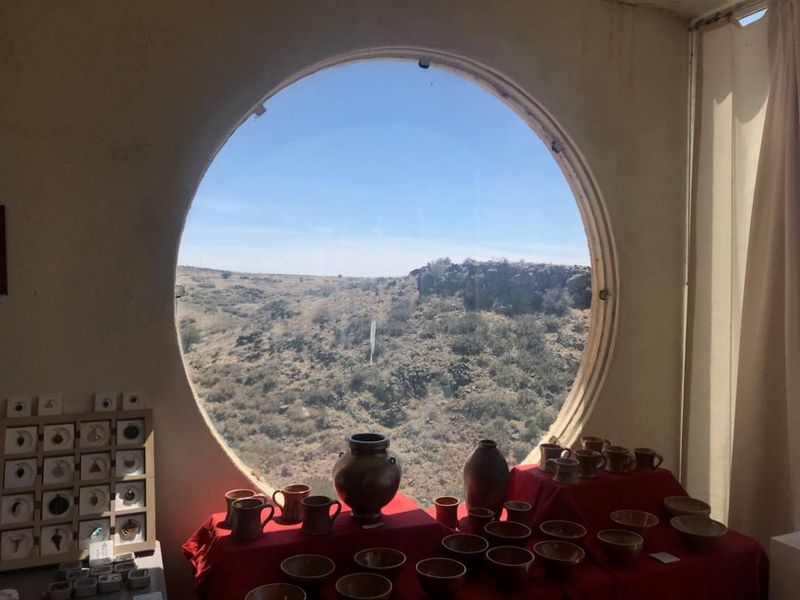
Most trips end at the Gallery and Gift Shop, which also serves as the Visitor’s Center. It’s the main spot to buy Cosanti Originals bronze and ceramic wind bells.
Each bell carries the mark of its artisan. After seeing the foundry, that detail suddenly means a lot more.
Purchases support the Cosanti Foundation and its mission. Your souvenir literally helps keep the urban laboratory running.
Practical note: the location is listed simply as Arcosanti, Arizona 86333, roughly 70 miles north of Phoenix. Confirm current hours, tours, and access before you drive.
Who will love this place most? Architecture buffs, artists, hikers, stargazers, and anyone who enjoys an offbeat Arizona day trip.
Families with curious kids may enjoy the foundry story too. Molten metal tends to impress almost every age.
My verdict is simple. Don’t treat the gift shop as the whole show.
Find the Foundry Apse, walk the curves, and look up after dark if you can stay. Then pick out a bell that sounds right to you.
Every breeze back home will carry a little Arcosanti story along with it.