
Don’t Skip The Narrated Shuttle Up This Arizona Canyon Where Cars Haven’t Gone Since 1978
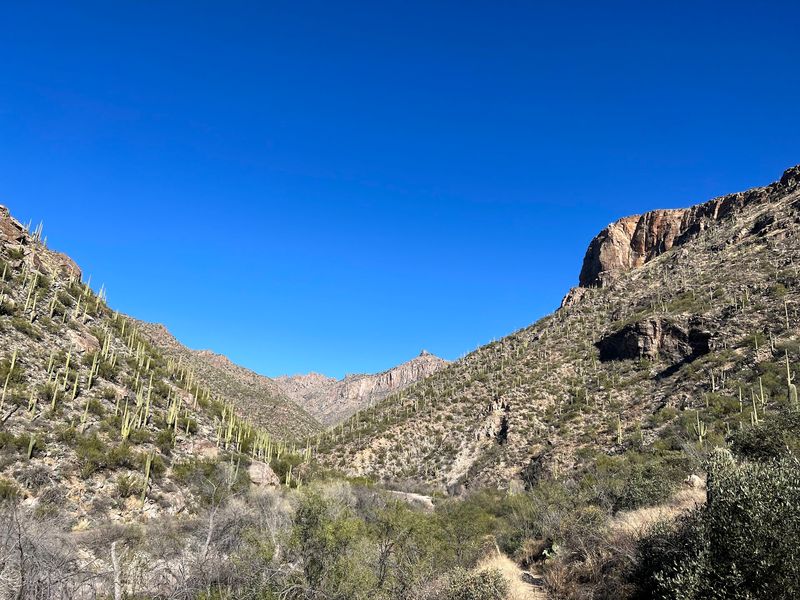
Private cars haven’t been allowed up this desert canyon road since 1978. That means the only wheels rolling deep into the mountains belong to quiet electric shuttles, bikes, and wheelchairs.
The ride climbs 3.7 miles past saguaros, stone bridges, and a creek that runs for much of the year. A voice in your earbuds explains the rocks, the plants, and the people who came long before you.
It speaks English or Spanish, whichever you prefer.
I like how simple the whole idea is. You sit down, you listen, and Arizona does the showing off.
Nobody has to sweat up a single switchback unless they want to.
So why do so many visitors hike the first mile, snap a photo, and head home? I believe they’re skipping the best seat in the canyon.
Let’s fix that.
A Mountain Canyon Sitting Right On Tucson’s Doorstep
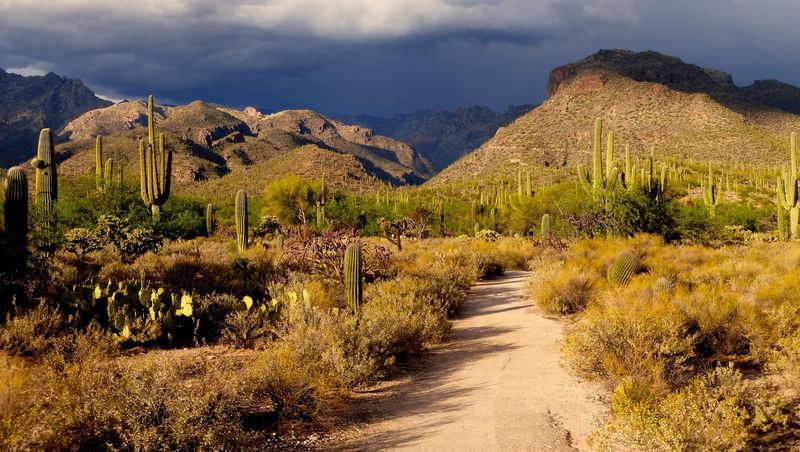
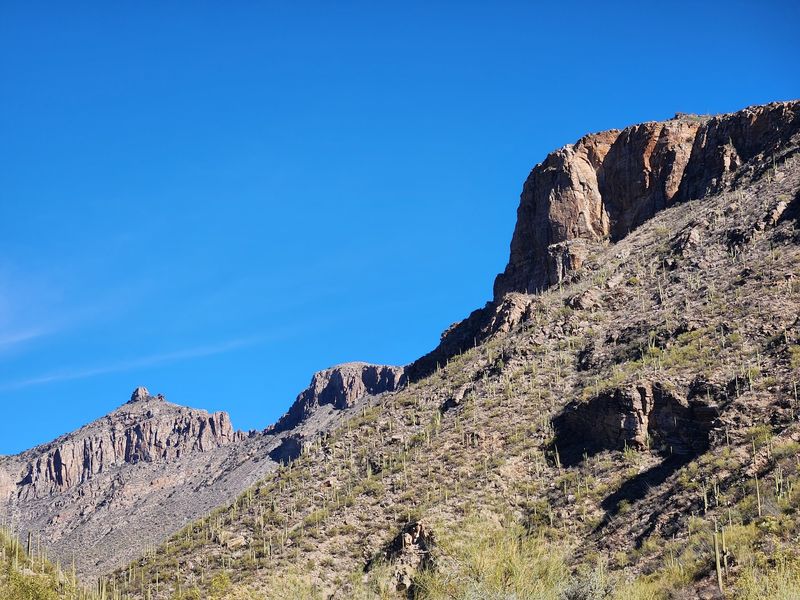
Sabino Canyon Recreation Area sits at the base of the Santa Catalina Mountains, just north of Tucson. It belongs to the Coronado National Forest, so the scenery comes with serious protection.
Getting there feels almost too easy for a place this wild. One minute you’re on city streets, and the next you’re staring at rugged peaks and towering saguaros.
The area stays open 24 hours a day, seven days a week. That flexibility is great for early risers trying to beat the Arizona sun.
Over 30 miles of trails wind through the area, from paved paths to rocky routes. Hikers, runners, birders, and bikers all find their own corners here.
The star attraction, though, is a paved road climbing deep into Sabino Canyon. It runs 3.7 miles one way, crossing the creek on old stone bridges.
Walking the entire road is possible, but it’s a long haul in desert heat. That’s where the Sabino Canyon Crawler earns its reputation.
Think of the Crawler as the canyon’s front-row seat. It carries you up and back while a narrator fills in the story.
Skipping it means missing the upper canyon for many visitors. And honestly, the upper canyon is where the drama lives.
Twelve Million Years Of Rock Before The First Ticket
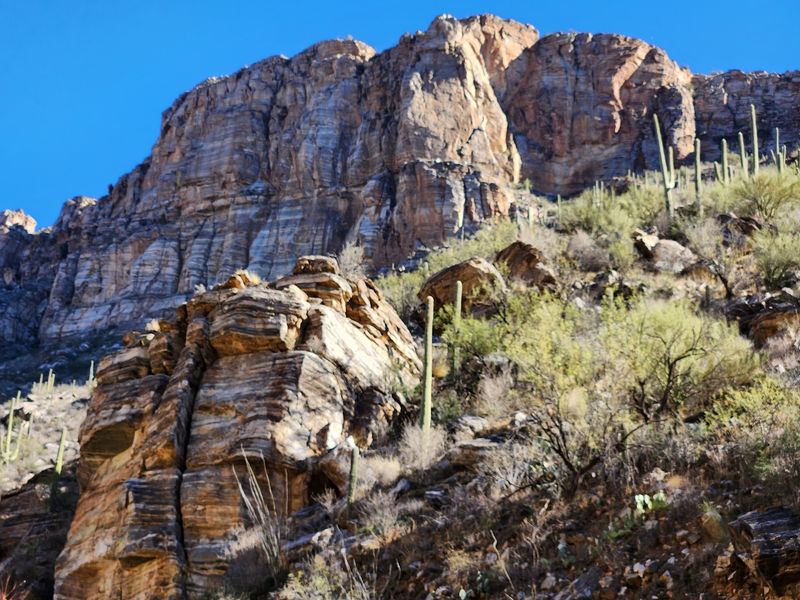
The Santa Catalina Mountains began forming more than 12 million years ago. That’s a long warm-up act before anyone printed a shuttle ticket.
People arrived much later, but still impressively early. Evidence of the Clovis culture here dates back 12,000 to 15,000 years.
The Hohokam people lived in the area from roughly 300 to about 1400 AD. Their presence adds a deep human layer to the canyon’s story.
Even the name carries history. Sabino likely comes from a local Spanish word for juniper or cypress trees, once more common in the lower canyon.
Modern management started in 1905, when the U.S. Forest Service took over.
The canyon has been public land ever since.
Those are exactly the kinds of facts the Crawler’s narration weaves into the ride. Geology, culture, and seasonal changes all get airtime as you climb.
Reading a sign at the trailhead is fine. Hearing the story while the cliffs actually rise beside you hits differently.
That’s the quiet magic of a narrated route. The rocks stop being background and start feeling like characters in a very old Arizona tale.
Old Stone Bridges Built During The 1930s
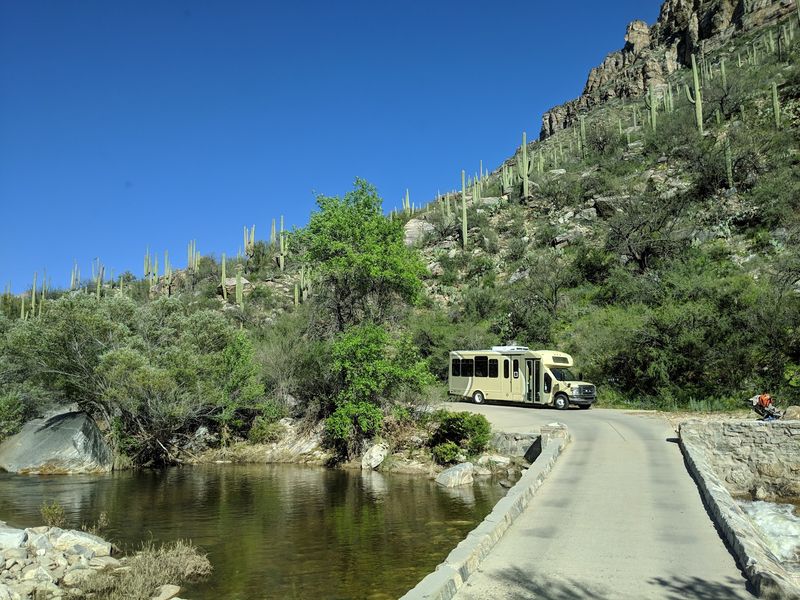
Construction on the canyon road began in 1933. Crews from the Works Progress Administration and the Emergency Relief Administration did the heavy lifting.
They built nine bridges over Sabino Creek during that decade. They also built Sabino Dam, which still draws walkers today.
Riding over those bridges is a small thrill. You’re rolling across Depression-era handiwork while water may be rushing underneath.
Then came a big change in 1978. Private vehicles were banned from the canyon, and shuttle service began that same year.
That decision shaped everything you see now. With no cars crowding the road, the canyon feels calmer and wildlife has more room.
The shuttles themselves evolved too. In 2019, emission-free electric trams replaced the older propane models.
Tucson Electric Power contributed $2.5 million toward the new trams and the infrastructure they needed. That’s a hefty investment in keeping the canyon quiet.
So the road itself is a kind of museum piece. The Crawler just happens to be the most comfortable way to tour the exhibits, one bridge at a time.
You Can Ride Into The Mountains Without Burning A Drop Of Gas
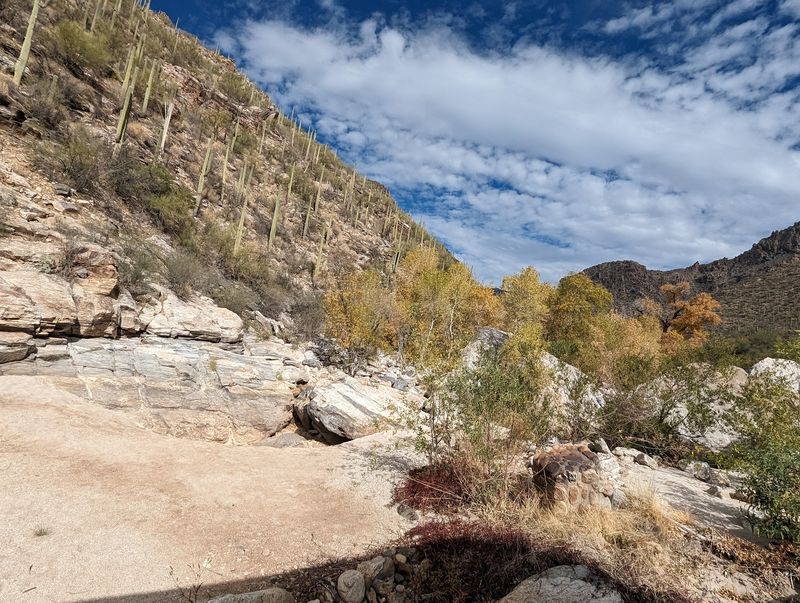
Silence is the first surprise. The Sabino Canyon Crawler runs on electricity, so there’s no engine roar competing with birdsong.
Each open-air shuttle seats up to 48 passengers. Standing isn’t allowed, so everyone gets a real seat for the ride.
Open-air means nothing blocks your view. Cliffs, saguaros, and creek bends slide past without a window frame cutting them off.
The main Sabino Canyon route covers a 7.4-mile round trip. Plan on about an hour if you ride straight up and back.
Some riders describe it as a giant golf-cart adventure. That’s a fair comparison, just with much better scenery and a more patient driver.
The pace is slow by design. It gives you time to spot wildlife, snap photos, and actually absorb where you are.
Families like it because little ones can ride without a long hike. Older travelers appreciate it for the very same reason.
And the emission-free part matters in a place this delicate. You get to enjoy the canyon while leaving the air as fresh as you found it.
A Tour Guide Living Right Inside Your Earbuds
Earbuds come with the ride, which is a nice touch. The narration system is automated and individualized, so you hear it clearly over the breeze.
You can choose English or Spanish. That makes the tour friendlier for a wider mix of Arizona families and visitors.
The narration covers how the canyon formed. It also explains the local plants, animals, seasonal changes, and cultural history.
Adaptive headphones have also been available for riders with hearing aids. That kind of thoughtfulness makes the experience easier for more people.
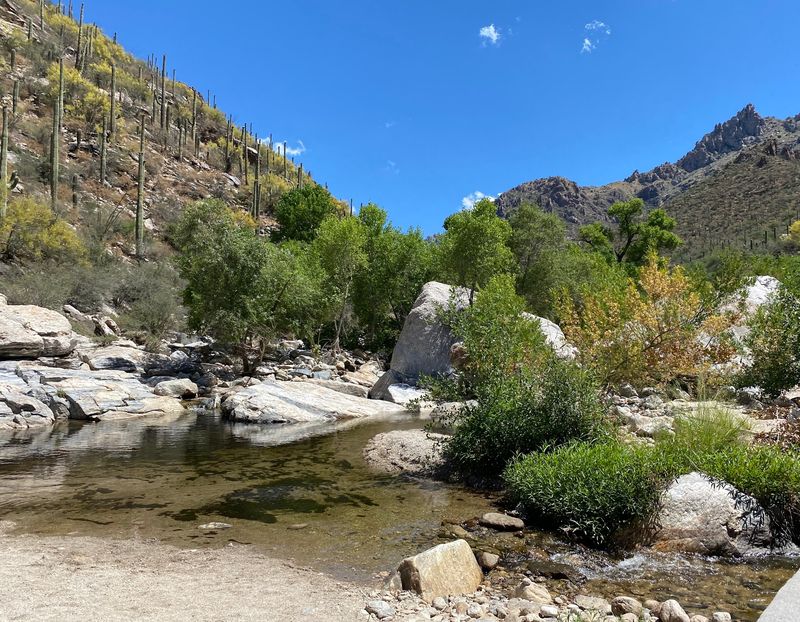
Why does narration matter so much? Because a saguaro is just a cactus until someone tells you what it’s doing out there.
Suddenly the cottonwoods by the creek make sense. The rock layers tell a story, and the seasonal waterfalls feel earned.
Without the audio, you’d still have a pretty ride. With it, you leave knowing why this canyon looks the way it does.
Consider it a free education with a moving classroom. The only homework is looking up from your phone long enough to enjoy it.
Nine Stops That Turn A Ride Into A Choose-Your-Own Adventure
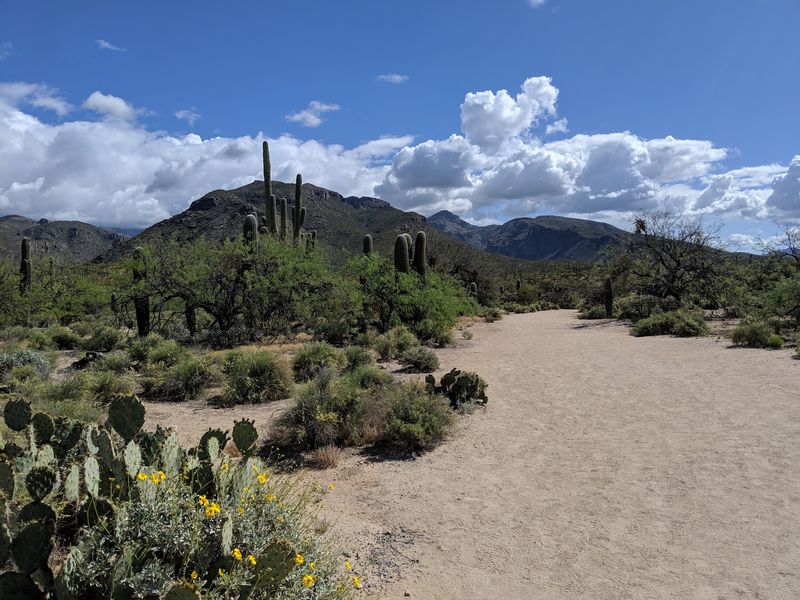
Here’s the clever part. The route has nine stops, and you can hop off to explore.
Once you’re done wandering, catch a later shuttle back with available seats. Your original ticket covers the return trip.
One detail trips people up. Pickups and drop-offs happen only on the return trip toward the visitor center.
That means you ride to the top first, then choose where to get off on the way down. It’s a smart way to hike downhill instead of up.
Hikers love using the Crawler for one-way adventures. Some walk up a trail like Phoneline and ride back to the parking lot.
Others pick a midway stop and stroll down the paved road. Benches and creek views make the walk pleasantly lazy.
Families can hop off for a short splash near the water. Photographers can linger for better light without missing their ride home.
It all turns one hour into a flexible day. You get to decide how much canyon you want and how tired your legs should feel by dinner.
Creek Water And Waterfalls In The Middle Of The Desert
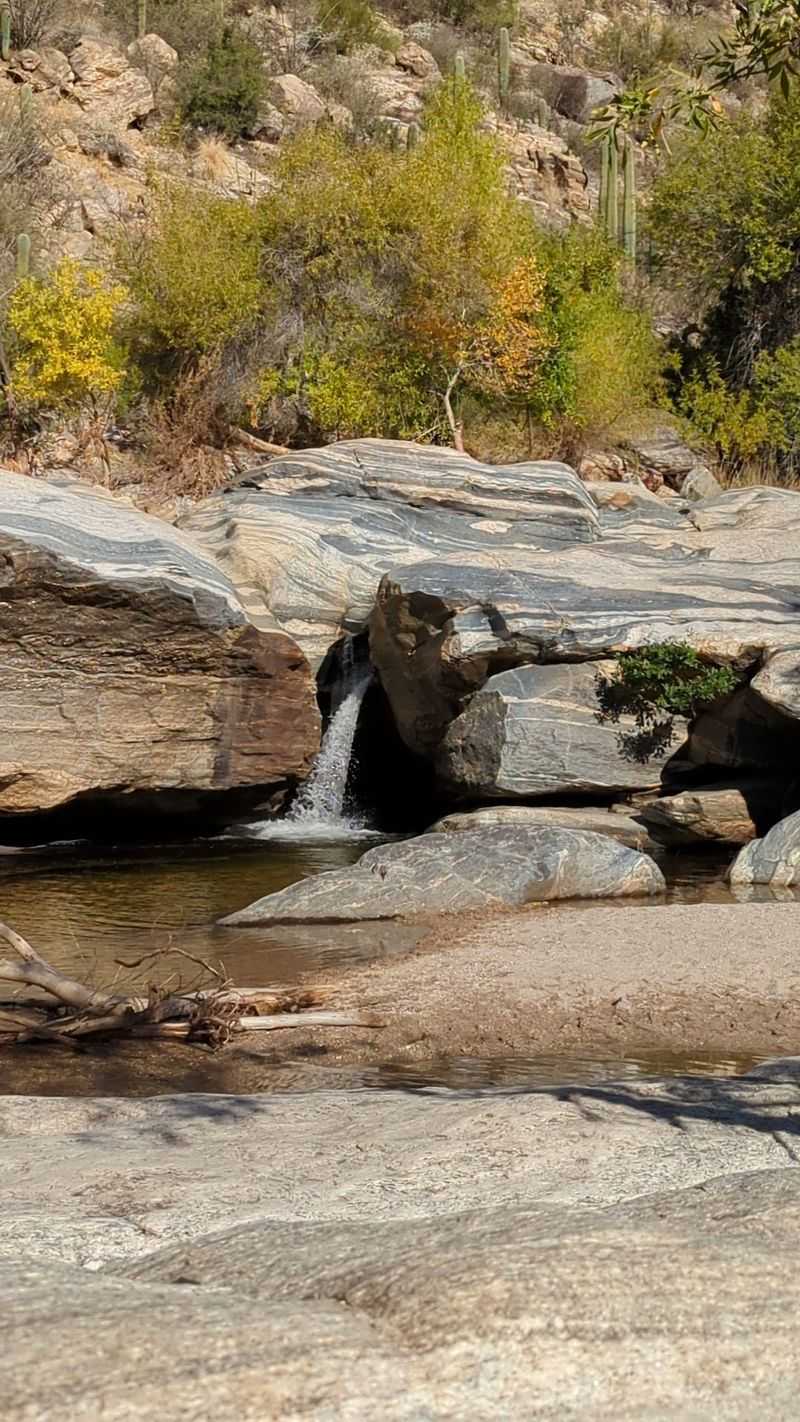
Running water in the Sonoran Desert feels almost like a magic trick. Sabino Creek flows nearly year-round, fed by winter snowmelt and summer monsoons.
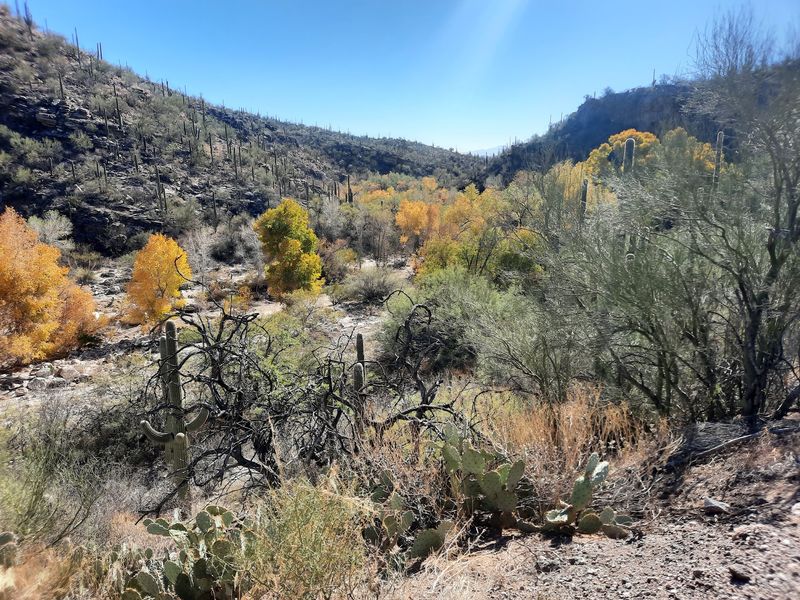
That water creates lush riparian corridors. Cottonwoods grow along the banks, offering green contrast to the cactus-covered slopes.
Seasonal waterfalls appear when the creek runs strong. Seven Falls and Hutches Pool are two well-known water spots in the area.
Sabino Dam and Lake sit closer to the visitor center. The walk there is fairly short, and it’s one of Tucson’s rare places for running water and fall colors.
Of course, the creek has moods. Some months it’s flowing beautifully, and other times it may be dry.
When water runs high, plans can shift. A special Highwater Tour then runs to Stop 2, Sabino Overlook, and Sabino Dam.
That flexibility keeps visitors safe while still showing off the canyon. Mother Nature gets the final vote on the schedule.
Either way, seeing water carve through desert rock is unforgettable. It explains why this canyon feels like an oasis tucked beside a big Arizona city.
Keep Your Eyes Peeled For Coatis, Deer, And Gila Monsters
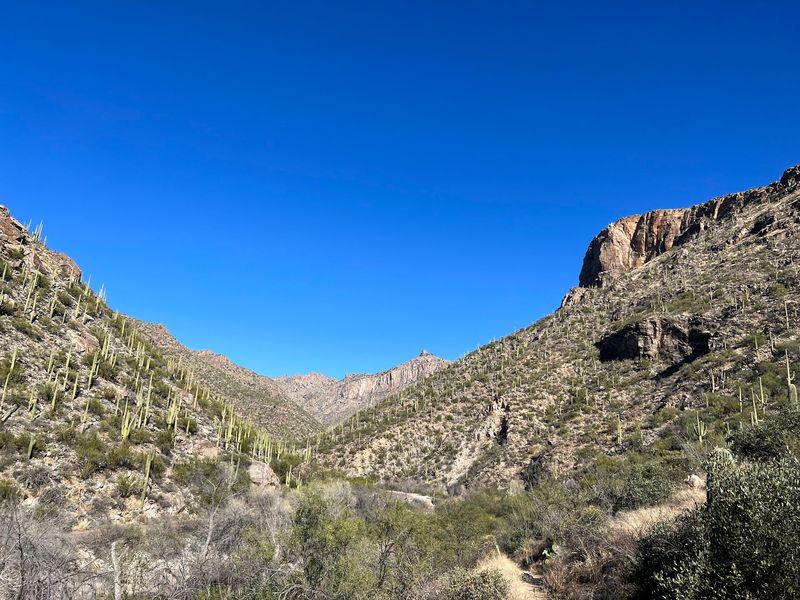
Wildlife spotting turns the ride into a game. The canyon supports gray foxes, white-tailed deer, coyotes, bobcats, and javelina.
Black-tailed jackrabbits and squirrels are part of the cast too. Mountain lions live in the region, though sightings are another story.
Birders can watch for vermilion flycatchers and gray hawks. Ravens, Gila woodpeckers, and northern cardinals add more color and chatter.
Reptiles are well represented. Zebra-tailed lizards, desert spiny lizards, desert tortoises, and Gila monsters all call the canyon home.
Rattlesnakes live here as well, so stay on trails and watch your step. Respect goes a long way in their neighborhood.
The quiet electric shuttles help with spotting animals. Less noise means a better chance something interesting stays put.
Coatimundis have been seen strolling along rock walls by tram riders. That’s the kind of moment that makes kids forget all about snacks.
Bring curiosity and maybe binoculars. Nothing is guaranteed, but every bend in the road offers another chance to meet a wild Arizona local.
Saturday Night Rides Under Arizona Stars
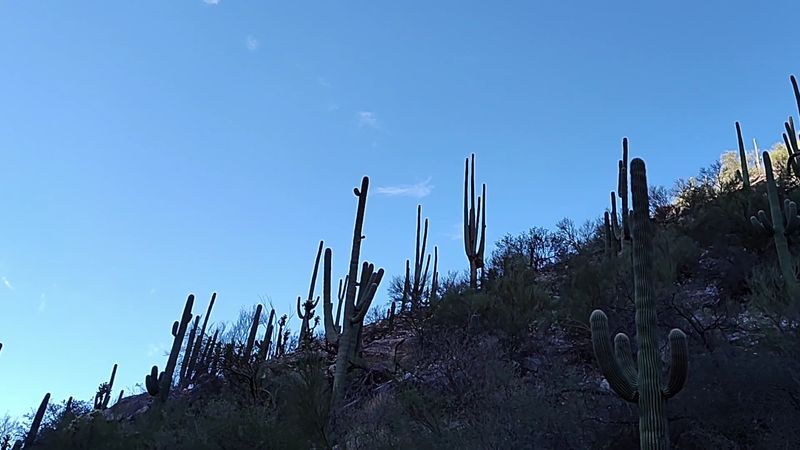
After dark, the canyon takes on a completely different personality. Seasonal night tours run on Saturday evenings and last about 90 minutes.
These rides go straight to the end of Sabino Canyon Road without stopping. Then you get a 10-minute break at the upper overlook before heading down.
Departure times change by month. In June and July, for example, the night tour leaves at 7:30 PM.
Night tours resume around July 4th each year. They continue through October 31st.
Summer evenings in Tucson are far kinder than summer afternoons. Riding through the canyon as temperatures drop is a smart way to enjoy the season.
Look up during that overlook break. The sky above the Santa Catalinas can feel enormous once the city glow fades behind the ridges.
Desert plants and animals have their own night shift too. The night-blooming cereus is one canyon plant famous for its after-dark timing.
Plenty of visitors never know these tours exist. If you love stargazing or glowing desert evenings, this might become your favorite version of the ride.
Bear Canyon Offers A Quicker Shortcut To Seven Falls
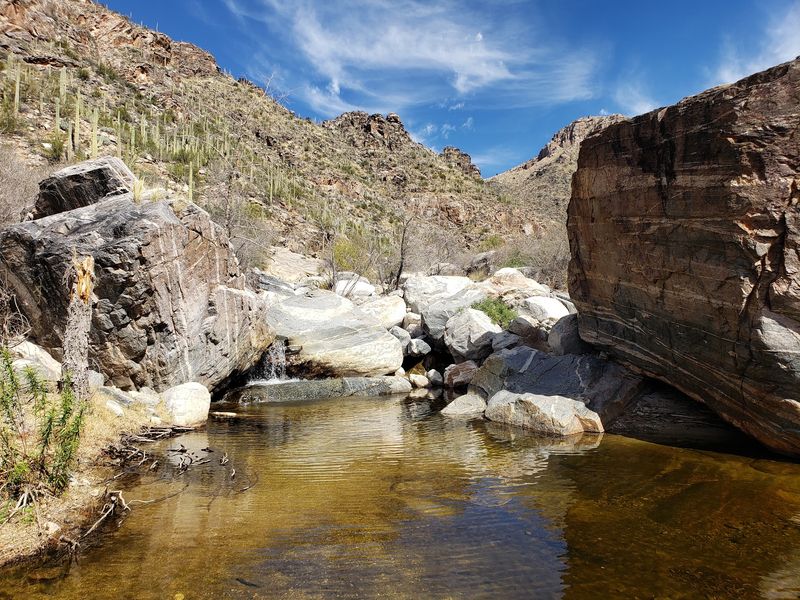
Sabino has a sibling route worth knowing about. The Bear Canyon shuttle also uses electric vehicles, but it’s shorter and simpler.
It runs a 30-minute round trip covering 1.9 miles one way. There are three stops along the route.
The big draw is access to the Seven Falls Trailhead. That trail leads toward one of the area’s most loved waterfall destinations.
Unlike the Sabino Canyon Crawler, the Bear Canyon route isn’t narrated. Think of it as a ride, not a tour.
Departures generally run hourly from 9:15 AM to 4:15 PM. That staggers nicely with the main Sabino schedule.
Hikers often use it to shave miles off the Seven Falls trek. Walking from the visitor center adds a couple of extra miles round trip.
Pack plenty of water and sunscreen for that hike. The trail is exposed in spots, and Arizona sunshine doesn’t take breaks.
So which shuttle should you pick? Choose Sabino for stories and views, and Bear Canyon when waterfalls are the mission.
Exhibits, Maps, And Coffee Before You Board
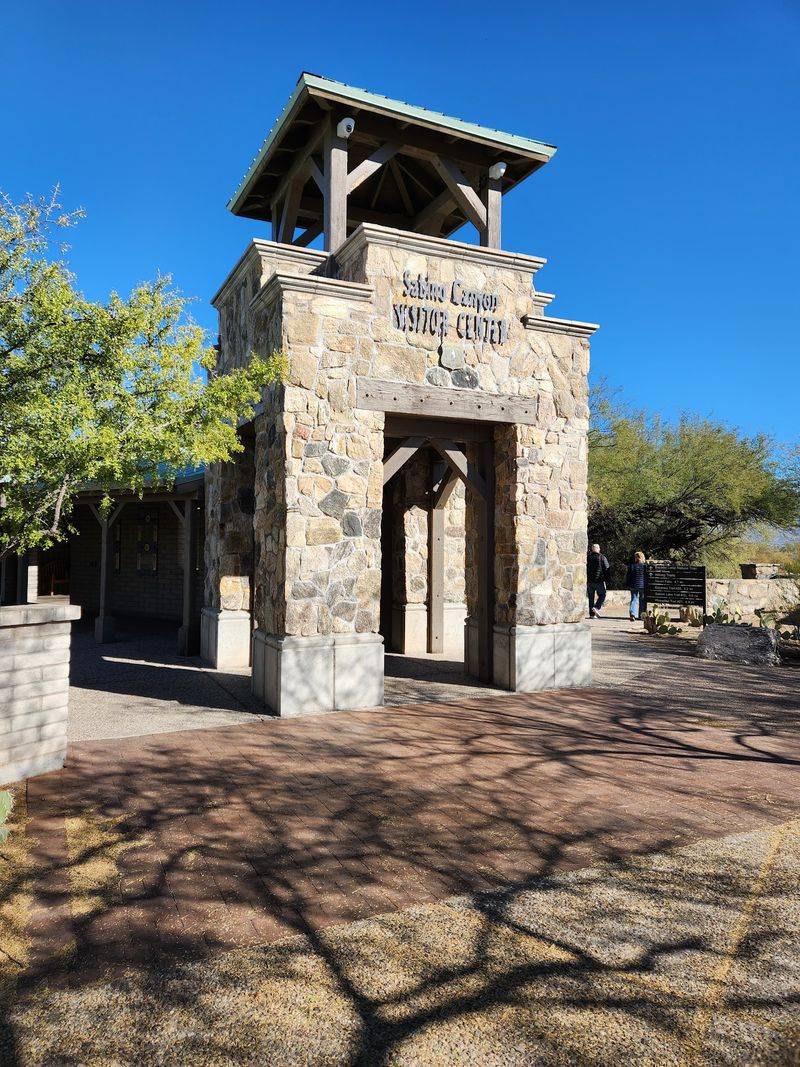
Start at the Visitor Center, located just north of the main parking lot. It’s open daily from 8:00 AM to 4:30 PM, except Thanksgiving and Christmas.
Inside, interactive exhibits and videos explain the canyon’s geology, plants, and animals. Free brochures and handouts help you plan the day.
A bookstore run by the Public Lands Interpretive Association sells maps, books, clothing, and keepsakes. Cold drinks are available there too.
The building is fully wheelchair accessible. Staff can help you match hikes to your energy level.
Coffee lovers get a treat near the Crawler boarding area. An Old Pueblo Coffee cart serves coffee and pastries Wednesday through Sunday, starting at 8:30 AM.
Vending machines near the Visitor Center cover quick refreshments. Restrooms are available as well.
Want a real meal afterward? Nico’s Sabino Canyon, a family-owned Mexican restaurant nearby on Sabino Canyon Road, is open daily.
The Sabino Canyon Volunteer Naturalists also lead guided walks and children’s programs. It’s a lot of value packed around one parking lot.
Book Early Because Seats Can Disappear Fast
Tickets can sell out, sometimes for days during busy season. Booking ahead saves a lot of disappointment at the boarding area.
You’ll find the recreation area at 5700 N Sabino Canyon Rd, Tucson, AZ 85750. Parking sits right next to the Visitor Center.
The main lot can fill early, especially on weekend mornings. Overflow parking is available nearby when things get crowded.
A daily amenity fee applies per vehicle, and a weekly pass is also offered. Crawler tickets are separate from that fee.
Children under 3 ride free, and kids ages 3 to 12 get a reduced fare. A National Park pass can cover parking, so display it in your car.
Sabino departures run hourly from 9:00 AM to 4:00 PM. From December 15 to April 30, they increase to every half hour.
The Crawler operates 359 days a year. It closes Thanksgiving, Christmas, New Year’s Day, and three maintenance days.
Biking the road is allowed before 9:00 AM and after 5:00 PM on most days. It’s not permitted on Wednesdays or Saturdays.
Why The Tram Deserves A Spot On Your Arizona List
Some outings demand hiking boots and grit. The Sabino Canyon Crawler simply asks you to sit down and look around.
That makes it one of the most welcoming adventures in Tucson. It works for toddlers, grandparents, and anyone with limited mobility.
Each shuttle has room for up to two wheelchairs. Accessibility is built into the experience, not tacked on.
Hikers still win too. The hop-off system lets them explore trails and ride back when their legs vote no.
Timing matters in Arizona. Cooler months bring half-hourly rides, while summer evenings bring the Saturday night tours.
Midday summer heat can be tough on anyone. Mornings and evenings are kinder for both riding and hiking.
Sabino Canyon Recreation Area offers saguaros, flowing creek water, historic bridges, and real mountain scenery. The tram simply strings it all together with a good story.
So next time you’re near Tucson, don’t stop at the parking lot photo. Grab a ticket, pop in those earbuds, and let the canyon introduce itself properly.