
Drive Through This Oklahoma Prairie And You’ll Share The Road With Bison And Elk
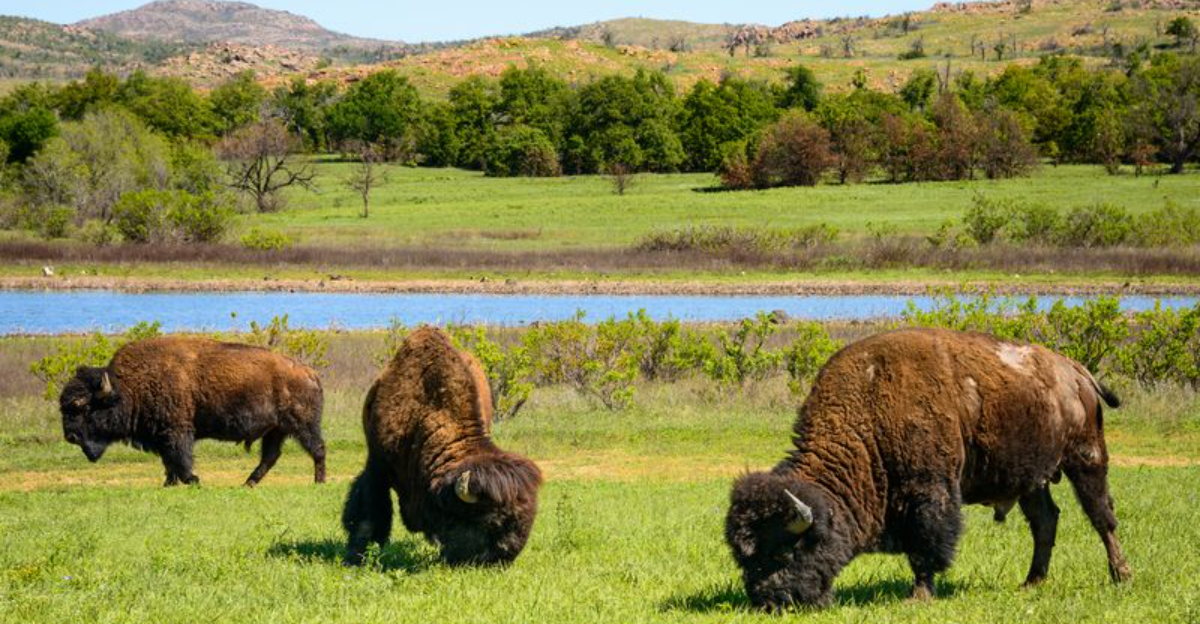
Imagine rolling down a quiet road through an endless Oklahoma prairie, windows open, when a massive bison suddenly crosses just a few feet in front of your car as if you are the one in its way.
There are no fences, no safari gates, no crowds.
Just raw, wide-open wilderness where the rules of nature still lead the way.
This is where the American West feels alive in the most unforgettable way, a landscape of sweeping grasslands, ancient granite peaks, sparkling lakes, and winding trails that seem to go on forever.
Here, elk move like shadows across the horizon, bison roam with thunderous calm, and even longhorn cattle add to the wild, cinematic scenery.
Every mile feels unpredictable, like nature is quietly setting the pace. It is part road trip, part wildlife documentary, and completely immersive from start to finish. Buckle up, this prairie drive is nothing short of extraordinary.
Free-Roaming American Bison Herds
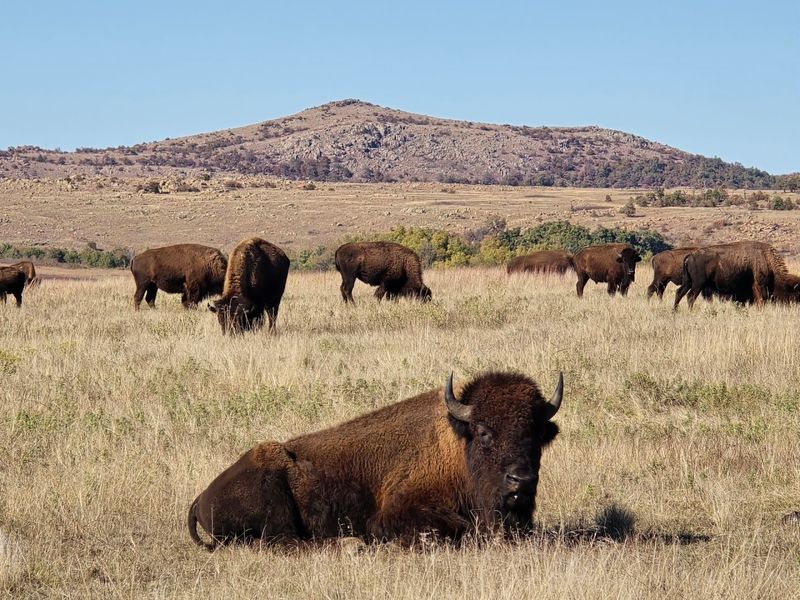
Nothing prepares you for the moment a thousand-pound bison decides your car lane is its personal walkway.
The Wichita Mountains Wildlife Refuge is home to one of the most iconic free-roaming bison herds in the United States.
These animals were reintroduced here in 1907 as part of a landmark conservation effort, and today the herd thrives across the refuge’s sweeping mixed-grass prairie.
Driving slowly through the refuge roads gives you a front-row seat to these incredible creatures grazing, wandering, and occasionally blocking traffic without a single apology.
Early morning is the golden hour for bison sightings. They tend to be most active when the air is cool and the light is soft, which also makes for absolutely stunning photos.
Keep your windows up and your distance respectful. These animals are wild and powerful, and getting too close is never a good idea.
The best strategy is to simply slow down, pull over safely, and soak in the moment. Watching a bison herd move across the Oklahoma prairie is the kind of experience that quietly rewires your brain and reminds you how vast and beautiful this world truly is.
The Scenic Auto Tour Drive
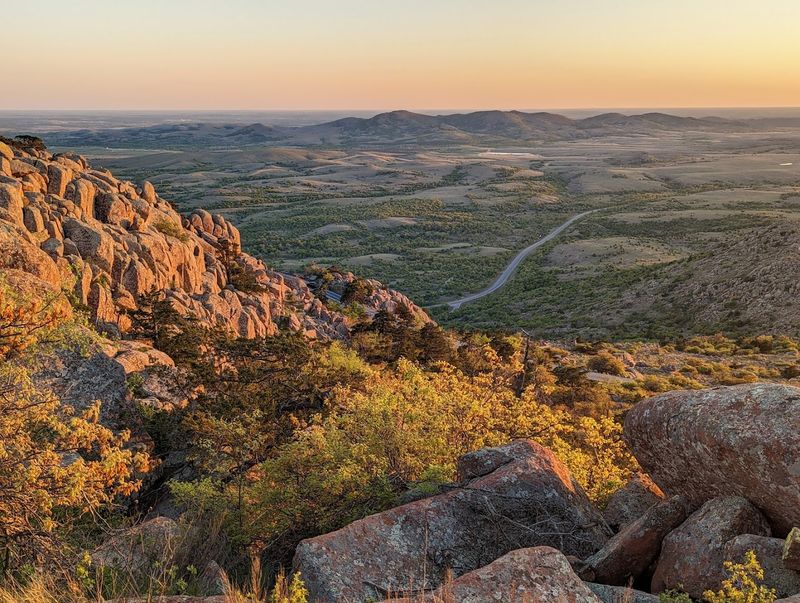
Picture this: you roll up to 32 Refuge Headquarters Road, Indiahoma, OK 73552, and instead of a parking lot, the whole refuge opens up before you like a living, breathing nature documentary.
The auto tour experience at Wichita Mountains is genuinely one of the best ways to explore the refuge, especially if hiking is not your main vibe that day.
The refuge road system winds through diverse landscapes including open prairie, rocky granite outcroppings, and peaceful lake shorelines. You might spot bison grazing on one side of the road and a herd of elk crossing on the other.
It happens more often than you would think. The Wichita Mountains Scenic Byway is the crown jewel of this drive, offering sweeping views and consistent wildlife activity throughout the route.
Go slow. Seriously, this is not the time to rush.
The slower you drive, the more you see, and the more the refuge reveals its quiet magic.
Bring snacks, charge your camera, and plan for at least two to three hours on the road. This scenic drive is one of those rare experiences where the journey is absolutely the destination.
Rocky Mountain Elk Sightings

Spotting elk in the wild feels like unlocking a secret level of nature appreciation. Rocky Mountain elk were reintroduced to the Wichita Mountains Wildlife Refuge in 1908, just one year after the bison arrived, and they have been thriving here ever since.
Seeing one in person, especially a bull with a full rack of antlers, is a genuinely breathtaking moment.
Elk tend to be most active during the early morning hours and right before sunset. If you time your drive through the refuge during these windows, your chances of a close encounter go way up.
The open meadows and wooded edges near the lakes are prime elk territory, so keep your eyes scanning the tree lines as you cruise along.
Unlike bison, elk can move surprisingly fast when startled, so slow, quiet observation from your vehicle is the smartest approach.
They are elegant, powerful animals that carry themselves with a kind of effortless grace that makes you forget everything else for a moment.
Wichita Mountains is one of the few places in Oklahoma where elk roam freely across such a wide landscape, making every sighting feel genuinely earned and completely unforgettable.
Texas Longhorn Cattle On The Prairie
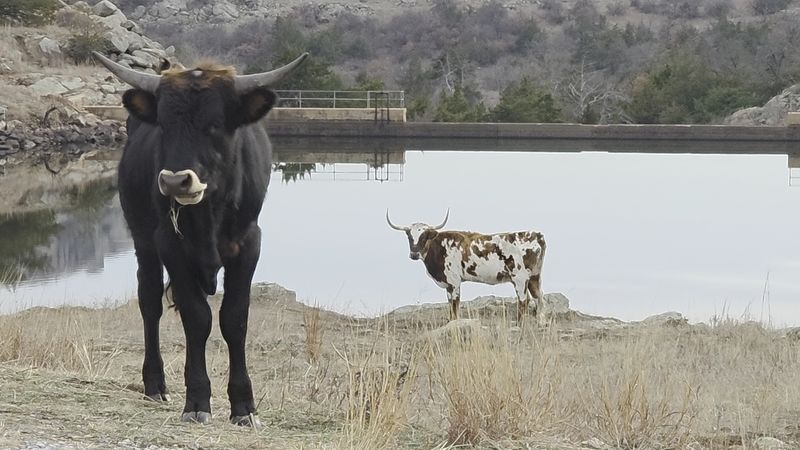
You have seen longhorns on bumper stickers and barbecue restaurant walls, but nothing compares to seeing the real thing casually grazing across an Oklahoma prairie. Texas longhorn cattle are a living piece of American frontier history, and the Wichita Mountains Wildlife Refuge maintains a herd as part of its broader conservation mission.
These animals are remarkable to observe up close. Their horn spans can stretch to genuinely absurd widths, and yet they carry them with total ease, like they were born knowing exactly how cool they look.
Which, honestly, they were.
The longhorns roam freely across the refuge alongside the bison and elk, creating a multi-species prairie scene that feels pulled straight from a Western film.
Longhorns have a calm, unhurried energy about them that makes watching them feel almost meditative. They graze, they wander, they occasionally stare you down with zero concern.
As with all the refuge’s free-roaming animals, keeping a safe distance is essential.
But observing them from your vehicle as they move across the open grasslands is an experience that puts the wild, rugged spirit of the American Southwest right in front of your eyes.
Mount Scott Road And Summit Views
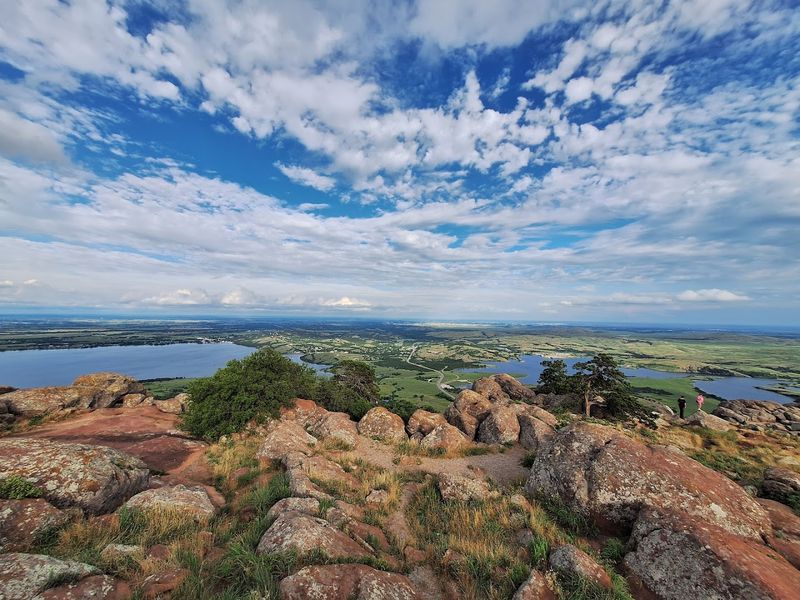
Mount Scott is the kind of place that makes you pull over, step out of your car, and just stand there with your mouth slightly open.
Rising to about 2,464 feet, it is the highest peak in the Wichita Mountains, and the paved road leading to its summit is one of the most celebrated drives in all of Oklahoma.
The views from the top stretch for miles in every direction. You can see the rolling mixed-grass prairie, the glittering refuge lakes, and the rounded granite peaks that give this landscape its ancient, otherworldly character.
At sunset, the whole scene turns into shades of amber, rose, and deep purple that no filter can fully replicate.
Mount Scott Road is accessible by vehicle, which means you do not need to be an experienced hiker to reach the top and enjoy those sweeping panoramas.
That said, the road does have specific opening hours, so checking ahead before you visit is a smart move. Whether you catch it at sunrise or linger until the last light fades, a trip to Mount Scott is the kind of reward that makes the whole drive to southwest Oklahoma feel completely worth it.
Prairie Dog Towns Along The Road

Prairie dogs are the ultimate overachievers of the grassland ecosystem.
These tiny, charismatic rodents build elaborate underground communities called towns, and the Wichita Mountains Wildlife Refuge has some excellent active colonies that visitors can observe right from the road or nearby pullouts.
Watching a prairie dog town in action is genuinely entertaining. They pop up from their burrows, bark alarm calls at each other, groom themselves in the sun, and occasionally sprint across the open ground in a way that can only be described as deeply committed to the bit.
It is impossible to watch them without smiling. Bring binoculars for the best experience, because these little characters are full of personality at close range.
Beyond the entertainment factor, prairie dogs play a critical role in the refuge’s ecosystem. Their burrows provide shelter for other animals, and their grazing patterns help shape the prairie vegetation.
They are considered a keystone species, meaning the whole community benefits from their presence. Spotting a prairie dog town on your refuge drive is one of those small, delightful surprises that turns a good road trip into a genuinely memorable one.
Lakes, Streams, And Waterside Wildlife
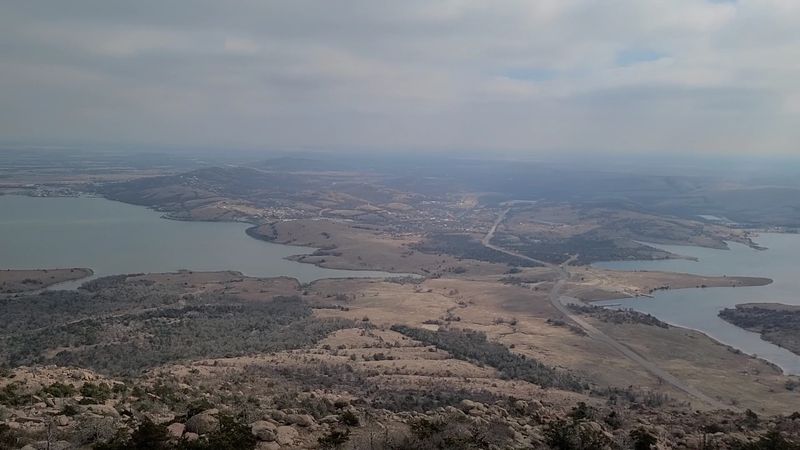
Water has a way of concentrating life, and the lakes and streams scattered throughout Wichita Mountains Wildlife Refuge are no exception.
The refuge contains several beautiful lakes, including Lake Lawtonka and Lake Elmer Thomas nearby, and the shorelines are consistently alive with wildlife activity throughout the day.
Deer graze along the water’s edge at dawn. Wild turkey strut through the grasses near the tree lines.
Waterfowl glide across the still surfaces in the early morning, and the reflections of the surrounding granite peaks on calm water create scenes that look almost too beautiful to be real.
Fishing is also permitted in designated areas, making the lakes a popular spot for those who want to combine wildlife watching with a relaxing afternoon on the water.
The streams that wind through the refuge add another layer of natural beauty to the landscape. Hiking trails often follow these waterways, and the sound of moving water paired with birdsong creates an atmosphere that genuinely slows your heart rate.
After the open prairie drives and mountain views, finding a quiet lakeside spot to sit and simply observe is the perfect way to close out a day at the refuge.
The Visitor Center And Refuge History
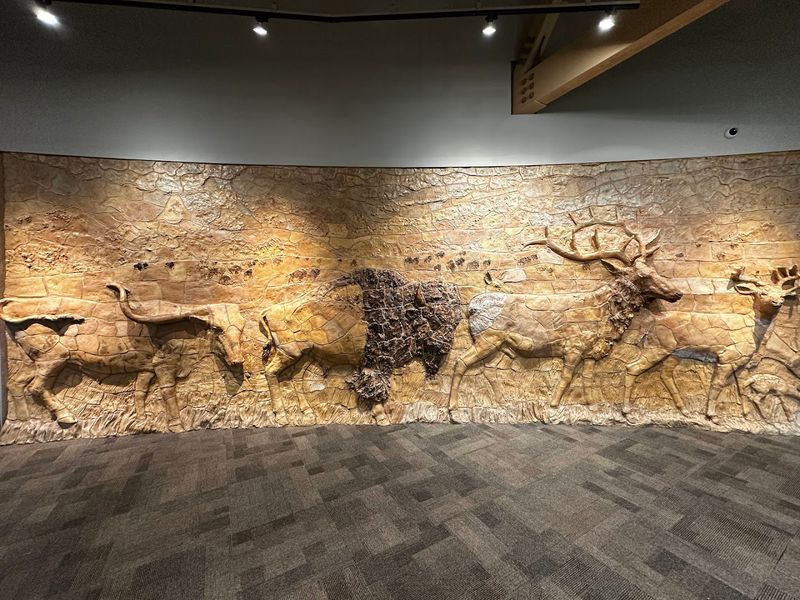
Before you hit the road and start scanning the prairie for bison, the Visitor Center at Wichita Mountains Wildlife Refuge is worth a stop.
It sets the stage for everything you are about to see, and the context it provides genuinely deepens the experience of the entire refuge visit.
The center features exhibits covering the refuge’s remarkable history, including its establishment in 1901 and its pioneering role in American wildlife conservation.
Learning that this is the oldest managed wildlife facility in the U.S. Fish and Wildlife Service system gives the whole place a different kind of weight.
This is not just a pretty drive. It is a place where conservation history was actually made.
Maps, trail guides, and wildlife information are available here, which is especially useful since cell service inside the refuge can be unreliable. The gift shop carries some fun keepsakes if you want a tangible reminder of your visit.
The Visitor Center is open Monday through Sunday from 9 AM to 5 PM, so timing your arrival to swing through before exploring the rest of the refuge is a genuinely smart move that pays off all day long.
Hiking Trails Through Ancient Granite Mountains
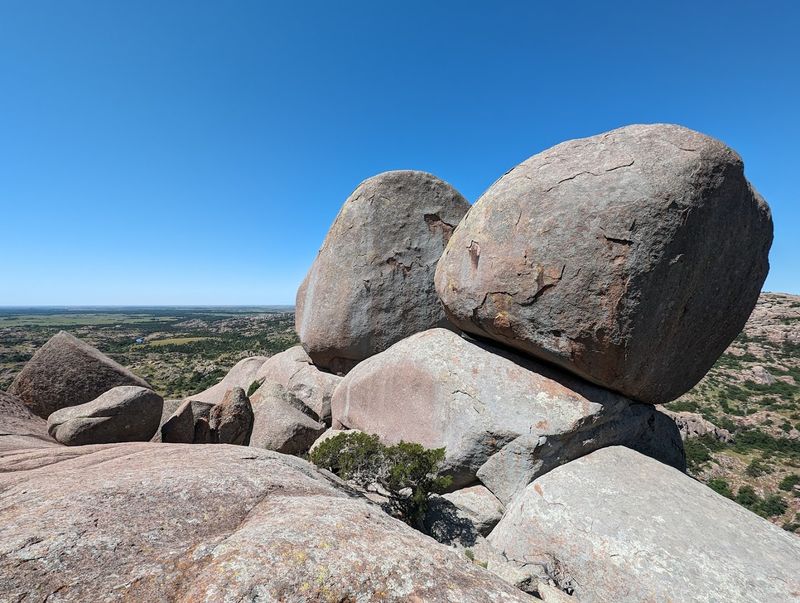
The Wichita Mountains are some of the oldest exposed granite formations in North America, and hiking through them feels like walking across a landscape that time forgot.
The refuge offers a wide variety of trails ranging from gentle, easy walks along the prairie to more adventurous scrambles across boulder-strewn ridgelines with genuinely stunning payoffs at the top.
The Narrows Trail and Elk Mountain are among the favorites for those who want a bit of a challenge with serious scenic rewards.
Trails here often involve rock stepping and some light scrambling, which adds an element of adventure that flat-terrain hikers rarely get to experience.
The views from the higher points are expansive, showing off the full sweep of the refuge’s diverse landscape in one breathtaking glance.
A few practical notes worth knowing: cell service is limited throughout the refuge, so downloading trail maps ahead of time or grabbing a paper map from the Visitor Center is a smart move. Bring plenty of water, especially during warmer months.
The combination of ancient geology, open sky, and wildlife that might wander across your path at any moment makes hiking here one of Oklahoma’s most underrated outdoor adventures. Are you ready to lace up?