
Drivers Say This Texas Bridge Is One Of The Most Stressful In The State
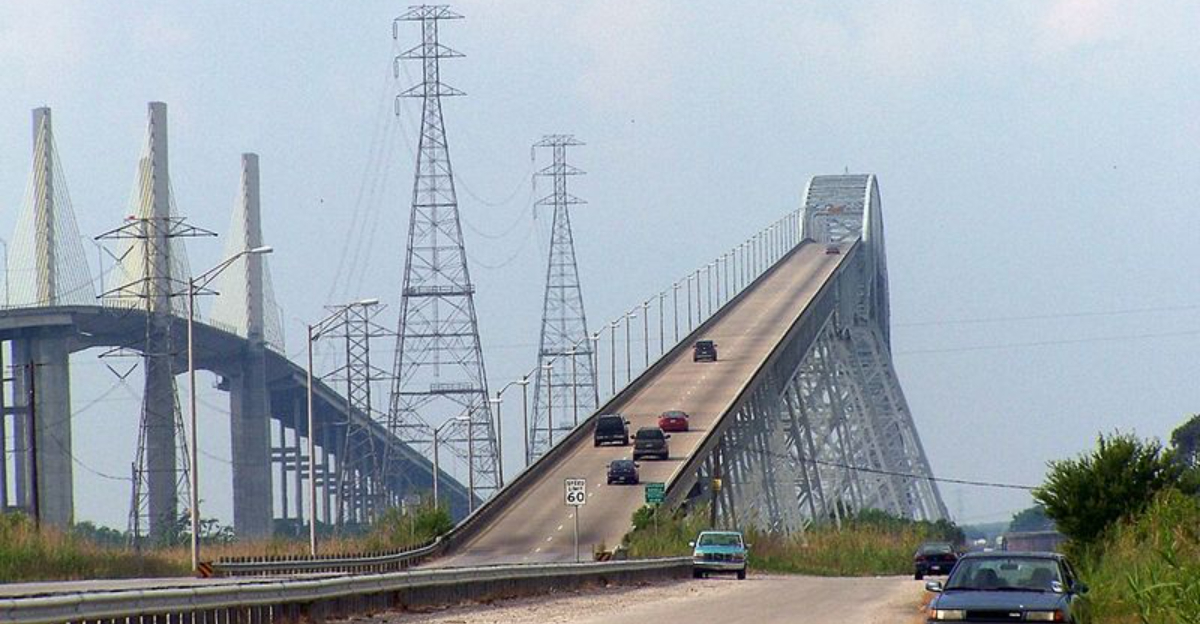
There are bridges you cross… and then there are bridges that feel like they’re crossing you. Somewhere along State Highway 87 in Southeast Texas, drivers suddenly find themselves looking up at something that doesn’t feel entirely designed for comfort.
This bridge rises so sharply above the Neches River that your brain has a brief moment of negotiation: “Are we sure this is a road and not a dare?”
At 177 feet high, it’s the tallest bridge in Texas, and it doesn’t ease you into that fact. It just goes straight up and expects you to deal with it.
The 5% incline turns the drive into something closer to a slow climb into the sky, where clouds occasionally swallow the arch like the road is disappearing mid-sentence. Some drivers treat it like any other crossing.
Others suddenly discover every muscle in their hands. It connects Port Arthur and Orange, but emotionally it connects “I’ve got this” and “why is my life like this” in under a minute.
And that’s exactly why it stays in people’s heads long after the tires hit flat ground again.
The Sky-High Stats That Make Your Jaw Drop
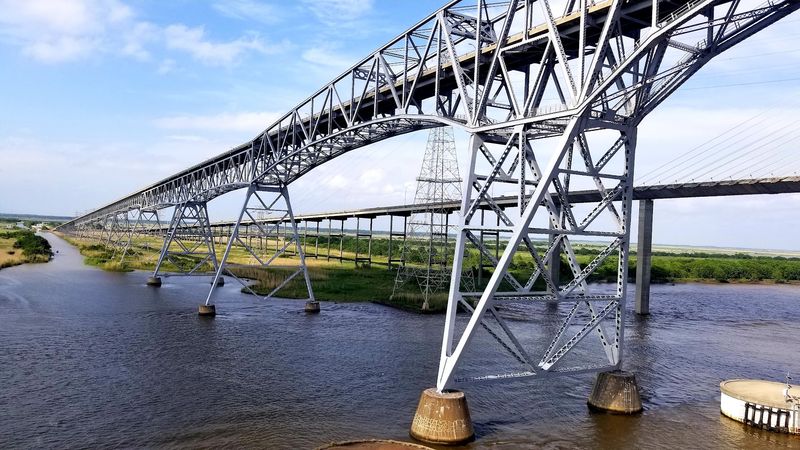
Numbers do not lie, and the Rainbow Bridge’s numbers are genuinely jaw-dropping. Standing at 177 feet above the Neches River, this bridge holds the title of the tallest bridge in all of Texas.
That is roughly equivalent to stacking about 17 average-sized adults on top of each other. The total length of the bridge stretches to 1,380 feet, giving drivers plenty of time to appreciate, or nervously endure, the experience.
Completed in 1938, the bridge was an engineering marvel for its time. Back then, building something this tall over a river in Southeast Texas was no small feat.
Engineers designed it to accommodate large ship traffic passing beneath, which is why the clearance height is so dramatic. The Neches River sees significant industrial waterway activity, so that height is not just for show.
The bridge carries a 5% grade incline, which sounds small on paper but feels enormous when you are driving up it. Your car climbs steeply, the horizon shifts, and suddenly you realize you are very, very high up.
The descent on the other side is equally dramatic.
These stats are not just trivia. They explain exactly why drivers talk about this bridge with such wide eyes and animated hand gestures every single time.
Where Exactly This Bridge Sits On The Texas Map
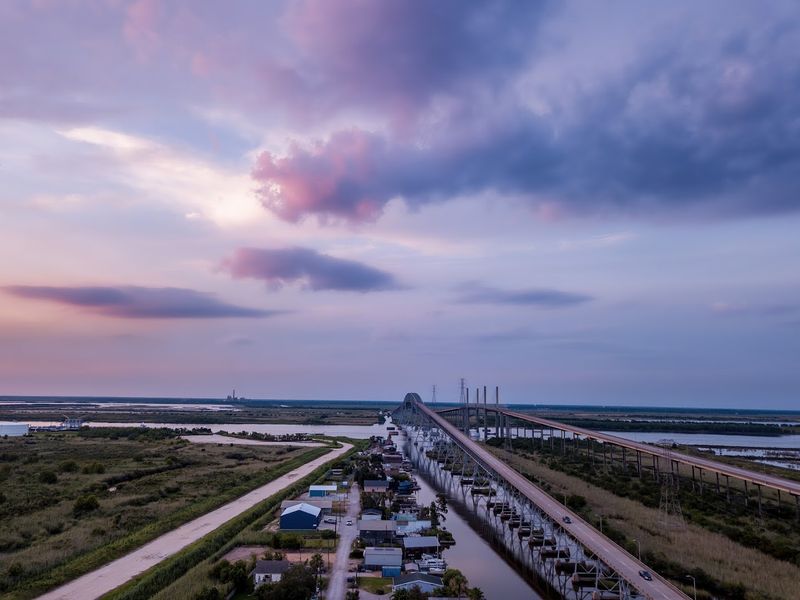
Geography matters a lot when you are talking about a bridge this dramatic. The Rainbow Bridge spans the Neches River along State Highway 87, connecting the cities of Port Arthur and Orange in Southeast Texas.
The address corridor runs through Port Arthur, TX 77642, placing it right in the heart of the Golden Triangle region. This area sits close to the Louisiana border, surrounded by industrial waterways and coastal flatlands.
The flat terrain around the bridge actually makes the structure look even more imposing. When everything around you is low and level, a 177-foot arch rising into the sky feels absolutely enormous.
There is no gradual buildup of hills to ease you into it. You are just driving along a flat highway and then suddenly, there it is, towering ahead like a giant steel rainbow.
State Highway 87 is a major route in this part of Texas, connecting several Gulf Coast communities. The bridge is not some remote curiosity you have to hunt down.
It sits right on a well-traveled road that thousands of commuters and truckers use regularly. Port Arthur itself is a city rich in Gulf Coast history, petrochemical industry, and blues music heritage.
The bridge is woven into the daily fabric of life here, and yet it never quite loses its ability to make even familiar drivers do a double-take on the way up.
That Terrifying 5% Grade And Why It Feels Steeper
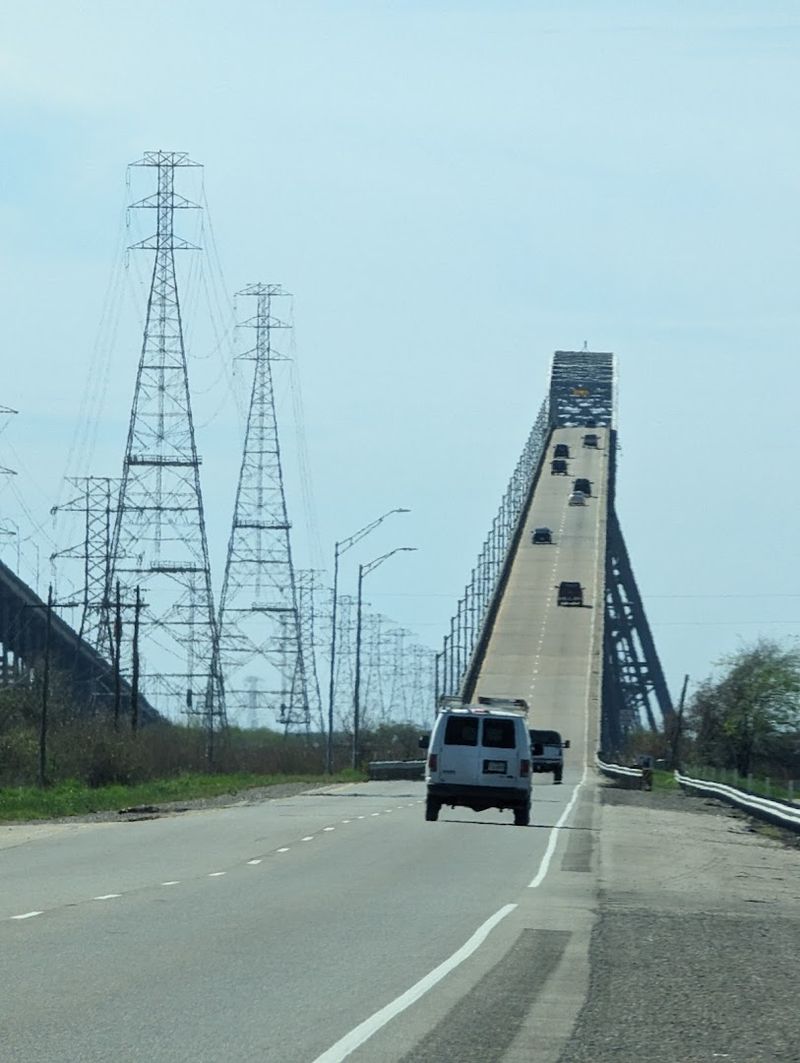
Five percent does not sound scary until you are living it at highway speed. The Rainbow Bridge’s 5% grade means that for every 100 feet you travel horizontally, you rise 5 feet vertically.
Over the full length of this bridge, that adds up to a climb that feels genuinely intense. Your engine works harder, your perspective shifts dramatically, and the road ahead seems to tilt toward the clouds.
What makes this grade feel even steeper is the visual effect of the open sky around you. There are no tall buildings or trees to give you a sense of scale.
It is just you, the road, and a whole lot of air on either side. The arch of the bridge frames the sky above, and the drop below becomes increasingly visible the higher you climb.
For drivers with any sensitivity to heights, this is where the breathing gets a little shallower.
Truckers and oversized load drivers have an especially memorable time navigating this incline. The combination of weight, momentum, and the steep grade makes for a very focused driving experience.
Wind is also a factor up top, since there is nothing blocking the Gulf Coast breeze at that elevation.
Experienced drivers know to keep a steady hand and a calm foot on the pedal. First-timers often describe the summit moment as both terrifying and oddly thrilling at the same time.
One-Way Traffic And The Bridge Next Door
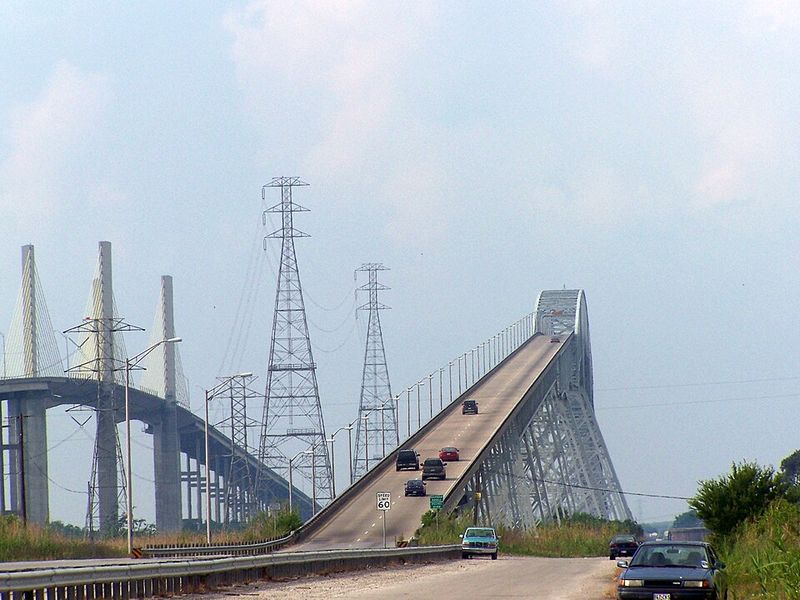
Here is something that surprises a lot of first-time visitors: the Rainbow Bridge only carries one-way traffic. Southbound drivers get the full Rainbow Bridge experience, climbing that steep arch and descending toward Port Arthur.
Northbound drivers heading toward Orange use the Veterans Memorial Bridge, which runs right alongside it. The two bridges together form a pair that handles the full flow of traffic on this corridor.
The Veterans Memorial Bridge is shorter and less dramatic than its famous neighbor. It does not have the same towering arch or the same reputation for making hearts race.
But it serves its purpose reliably, keeping traffic moving in both directions without bottlenecks. Together, the two bridges are a practical solution to a logistical challenge that the original two-way Rainbow Bridge eventually outgrew.
Originally, the Rainbow Bridge handled traffic in both directions. As vehicle sizes and traffic volumes grew over the decades, the one-way configuration became the smarter and safer choice.
The decision to shift to one-way southbound flow gave each lane more breathing room and reduced the stress of meeting oncoming traffic at the summit.
Knowing you do not have to worry about a truck coming the other way at the top of that arch is a small but meaningful comfort. Still, even with one-way flow, the Rainbow Bridge demands your complete attention from the moment you start climbing to the moment your tires finally touch flat ground again.
Why Drivers Get Anxious And What The Research Says
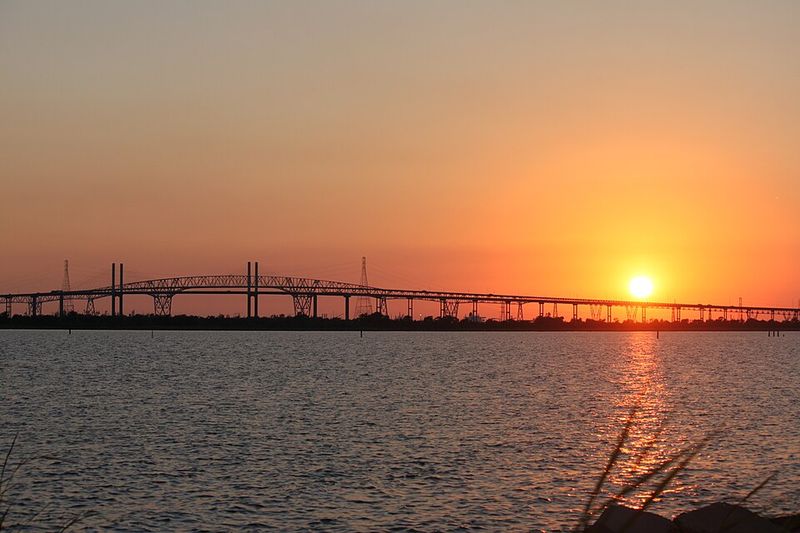
Fear of bridges is more common than most people admit out loud. Gephyrophobia, the technical term for bridge anxiety, affects a surprising number of drivers across the country.
The Rainbow Bridge checks nearly every box that triggers this kind of unease.
It is tall, it is steep, the sides feel open, and you are very aware of the drop below you. That combination is a recipe for elevated heart rates and tight grips on steering wheels.
Drivers who have crossed this bridge frequently describe the feeling as a mix of awe and anxiety. The ascent builds tension gradually, and the summit offers a view that is simultaneously breathtaking and unsettling.
Weather adds another layer of complexity.
On foggy days, the top of the arch can vanish into the clouds, making the bridge feel even more surreal. During high winds off the Gulf, vehicles can feel a noticeable sway in the exposed upper section.
Texas Standard and other regional outlets have covered the Rainbow Bridge’s reputation as one of the most stressful drives in the state.
Drivers report that the anxiety does not always fade with repeated crossings. Some people who cross it daily still feel a familiar flutter of nerves at the base of the climb.
The bridge has a personality, and that personality is bold, unapologetic, and absolutely not interested in making you feel comfortable. Respect it, stay focused, and you will get across just fine.
The Industrial History That Made This Bridge Necessary
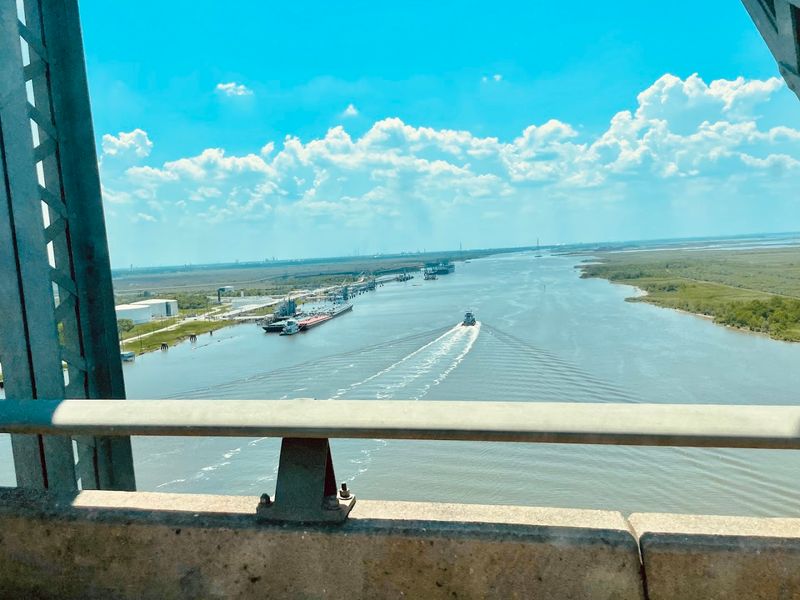
The Rainbow Bridge did not appear out of nowhere. It was built to solve a very real problem in one of Texas’s most industrially active regions.
The Neches River near Port Arthur and Orange carries significant ship traffic, including large vessels moving petroleum products and industrial cargo. Before the bridge existed, crossing the river meant relying on ferries, which were slow and limited in capacity.
A tall, fixed bridge was the only practical solution.
Completed in 1938, the bridge was designed with a clearance height of 177 feet specifically to accommodate the large ships passing beneath it.
The Golden Triangle region, which includes Port Arthur, Beaumont, and Orange, was already a booming petrochemical hub by that time. The bridge became a critical link in the regional transportation network almost immediately after opening.
Its construction was a significant engineering achievement for Depression-era Texas.
The industrial character of this region is still very much present today. Refineries, chemical plants, and shipping terminals dot the landscape around the bridge.
The Neches River continues to carry commercial vessel traffic below the arch. Understanding this industrial context makes the bridge’s dramatic height make perfect sense.
It was not built to be thrilling, it was built to be functional.
The fact that it also happens to be one of the most nerve-wracking drives in Texas is just a very memorable bonus that nobody planned for but everyone talks about.
Tips For Crossing Without Losing Your Cool
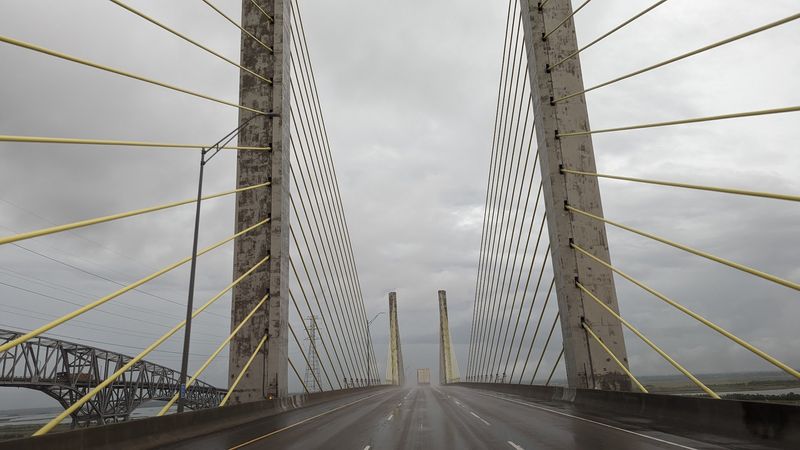
Crossing the Rainbow Bridge for the first time does not have to be a white-knuckle ordeal. A little preparation goes a long way toward making the experience manageable and even enjoyable.
The most important thing is to maintain a steady, consistent speed.
Sudden braking or acceleration on a steep incline can feel destabilizing, especially for nervous drivers. Keep pace with the flow of traffic and stay in your lane without overthinking it.
Avoid looking straight down over the edge while driving. This sounds obvious, but curiosity is a powerful thing.
Keep your eyes focused on the road ahead, which is exactly where they should be anyway. If you are a passenger, feel free to enjoy the view.
If you are the driver, save the sightseeing for after you have safely crossed.
The bridge does offer a genuinely impressive panorama of the Neches River and the surrounding industrial landscape.
Check the weather before you cross if possible. High winds and heavy fog can make the experience significantly more challenging.
The Texas Department of Transportation monitors conditions on the bridge, and closures do happen during severe weather events.
If you are prone to bridge anxiety, try crossing during daylight hours on a calm day for your first time. The Rainbow Bridge is a piece of Texas history worth experiencing.
Go at your own pace, breathe steadily, and remember that millions of drivers have made it across just fine. Are you ready to join them?