
Experience The Beauty Of The Nevada Desert In This Hidden Town
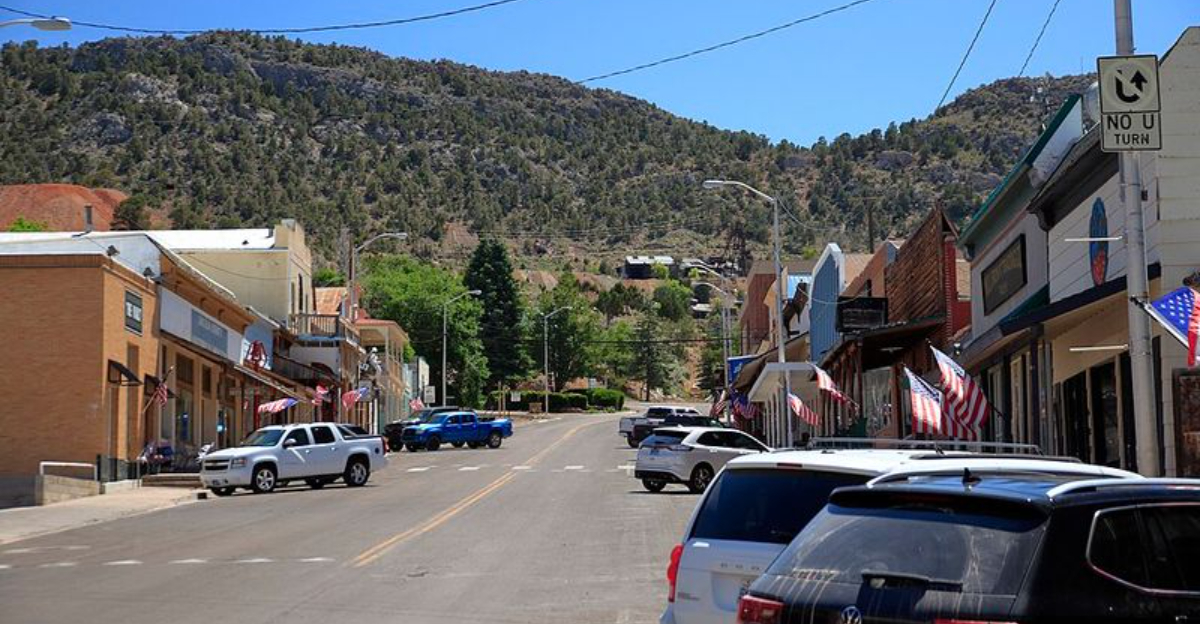
Ever wandered into the Nevada desert and felt like the landscape was quietly judging your life choices? That’s exactly how it hit me.
One minute it’s endless dust and sun‑bleached horizons, the next, weathered buildings and creaking wooden facades made me feel like I’d stepped straight into a Wild West movie set.
Every corner seemed to whisper stories of fortunes made, legends born, and secrets that only the desert could keep. The rugged hills and open skies had me stopping every few minutes just to stare. And yes, probably taking way too many photos.
By the end of the day, I was utterly charmed, convinced that this hidden desert slice of Nevada had a personality all its own.
A Monument To Wild Ambition
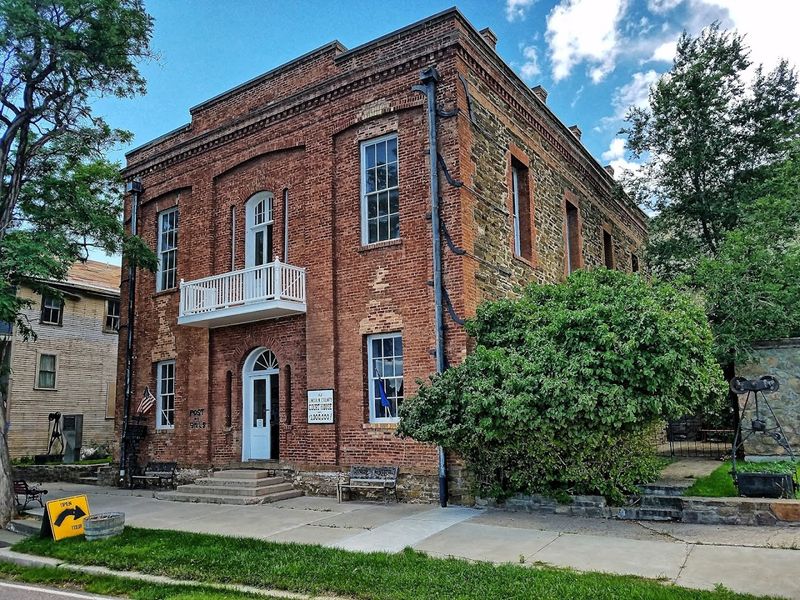
Nothing prepared me for the sheer audacity of the Million Dollar Courthouse. Built in 1872, this Lincoln County landmark got its nickname not from grandeur but from financial disaster.
The original construction cost ballooned from an estimated $26,000 to over $1 million by the time interest and mismanagement were factored in, and the building was actually condemned before it was ever fully paid off. That kind of story just does not happen anywhere else.
When I walked up to it, I felt like I was stepping onto a movie set. The restored brick exterior stands tall against the Nevada sky, surrounded by scrubby desert brush and that impossibly clean mountain air.
Inside, the restored courtroom still has that old-school gravitas, with wooden benches and period-accurate details that make history feel touchable rather than distant.
The courthouse sits at the center of Pioche’s historic district, which makes it a natural starting point for any exploration of the town.
I spent a good hour just wandering the grounds, reading the interpretive signs and imagining the chaos of 1870s boomtown life. The building has been carefully restored and is listed on the National Register of Historic Places, which means future generations will get to experience this same jaw-dropping story.
If you only have time for one stop in Pioche, make it this one, because the courthouse tells the whole wild story of the town in a single glance.
Where The Wild West Never Really Left
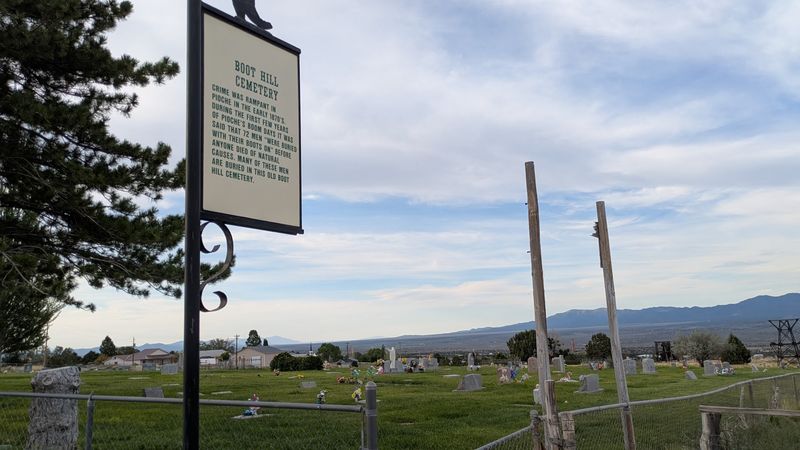
There is something genuinely moving about standing in a cemetery where most of the residents died before their time. Boot Hill in Pioche is exactly that kind of place, and visiting it felt less like a morbid detour and more like paying respect to a chapter of American history that rarely gets told honestly.
The grave markers here tell stories of miners, gamblers, and gunfighters who lived fast and left early.
I hiked up the hillside on a breezy afternoon, and the views alone were worth the walk. From the top, you can see the entire town spread out below you, framed by the Ely mountain range on one side and open desert stretching endlessly on the other.
It is the kind of panorama that makes you stop mid-step and just breathe for a moment.
The cemetery dates back to the 1870s and is one of the most authentic Boot Hill burial grounds still intact in the American West. Some markers are original, others are reconstructed, but the atmosphere is undeniably real.
A quiet reverence settles over you up there, even when the wind is picking up and tumbleweeds are doing their thing across the hillside. Pioche’s Boot Hill reminded me that history is not just found in museums or textbooks, sometimes it is written in weathered wood and desert stone, asking you to simply slow down and listen.
Nature’s Greatest Sculpture Garden
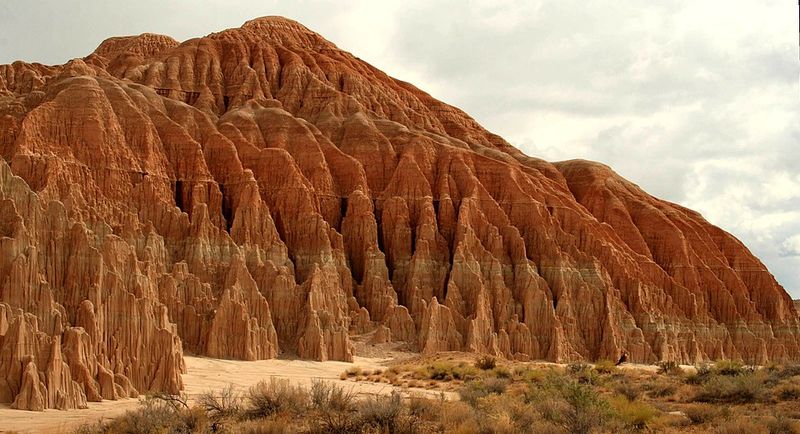
About 14 miles south of Pioche, Cathedral Gorge State Park feels like another planet entirely, and honestly, that is part of the magic.
I had seen photos before going, but nothing really captures what it feels like to stand inside those towering clay formations and look straight up at a strip of blue Nevada sky framed by cathedral-like spires. The scale of it is genuinely humbling.
The park was formed over millions of years as an ancient lake bed dried up and erosion carved bentonite clay into these impossibly intricate columns and canyons.
There are hiking trails that wind through narrow slot-like passages, and I spent a whole morning weaving in and out of the formations, feeling simultaneously tiny and completely alive. The light shifts dramatically throughout the day, so morning golden hour and late afternoon both offer completely different visual experiences.
Camping is available right inside the park, and I would highly recommend spending a night there if you can. The silence after sunset is the kind that city people forget exists, punctuated only by wind moving through the clay formations with an almost musical quality.
Cathedral Gorge is a Nevada State Park that consistently gets overlooked in favor of flashier destinations, and that oversight is everyone else’s loss and your gain.
The formations shift color from pale gold to deep rust as the sun moves, and every angle reveals something new worth photographing.
A Living Time Capsule

Walking down Main Street in Pioche felt like flipping through a history book, except the pages were made of brick and timber and had actual bullet holes in them.
The street has retained much of its original 19th-century character, with old storefronts, stone buildings, and wooden facades that have been standing since the silver mining days. It is remarkably well-preserved for a town this size.
I grabbed a coffee and just wandered slowly, reading plaques and peering into windows. The Thompson’s Opera House, built in 1873, still stands as a reminder of the cultural ambitions this town had even at its rowdiest.
There is a grittiness to the street that feels earned rather than performed, which is a rare thing in heritage tourism spots that sometimes feel a little too polished for their own good.
What struck me most was how the town feels genuinely lived-in rather than staged for visitors. Real people live here, and the history exists alongside everyday life in a way that feels organic and unforced.
The buildings themselves have incredible architectural character, mixing Victorian-era construction with the raw practicality of a frontier mining camp. If you are into photography, every doorway and weathered wall on Main Street is practically begging to be captured.
Pioche’s Main Street is proof that the best history is not always behind glass in a museum, sometimes it is just standing there in the sun, waiting for you to notice it.
Desert Hiking At Its Finest
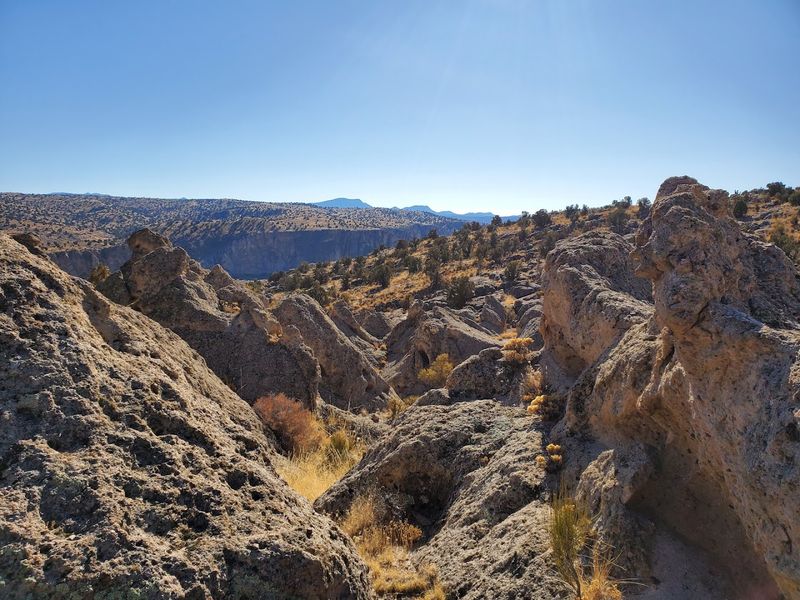
About 12 miles east of Pioche, Echo Canyon State Park is the kind of place that rewards anyone willing to venture a little off the beaten path. I almost skipped it, thinking one desert park per trip was enough, and I would have deeply regretted that decision.
Echo Canyon has a completely different personality from Cathedral Gorge, with rugged red rock formations, a reservoir, and trails that offer real solitude even on weekends.
The reservoir in the park is a surprising feature in this high desert landscape, and it adds a reflective, almost meditative quality to the scenery.
I hiked the canyon trail in the late morning, when the light was still relatively soft and the temperature was comfortable. The rock walls rise sharply on both sides, creating a natural corridor that amplifies sound in a way that explains the park’s name perfectly.
Wildlife sightings here are genuinely common. I spotted a mule deer just off the trail about twenty minutes into my hike, completely unbothered by my presence.
Raptors circled overhead, riding thermals above the canyon rim, and the whole scene felt like something from a nature documentary. Echo Canyon is a Nevada State Park that does not get nearly the attention it deserves, partly because it sits in the shadow of its more famous neighbors.
But that quiet anonymity is exactly what makes spending a full afternoon here feel like a personal discovery rather than a tourist checkbox.
Mining History Way Up High
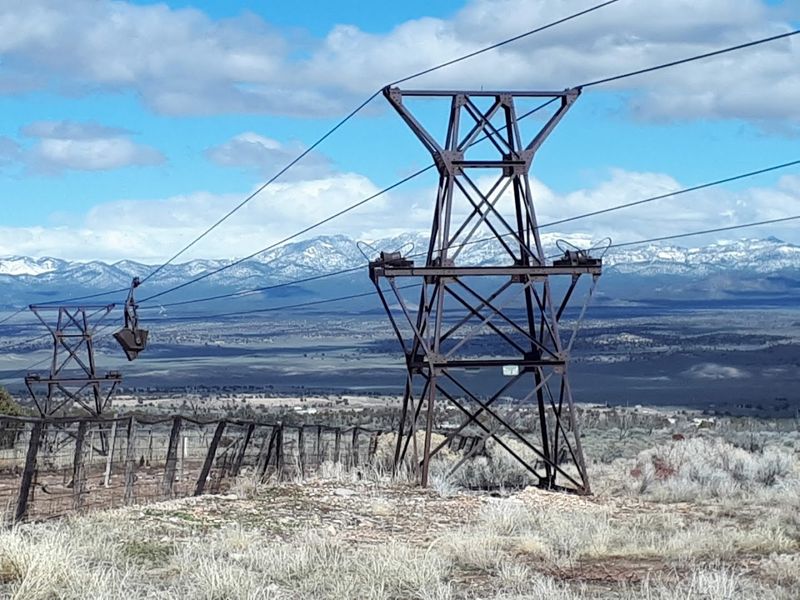
One of the most visually striking pieces of industrial history in Pioche is the old aerial tramway system that once transported ore from the mines high above town down to the mills below.
The remnants of the tram towers still stand on the hillside, and they create this incredible silhouette against the Nevada sky that feels equal parts haunting and magnificent. I kept stopping to photograph them from different angles because the geometry of it was just fascinating.
The tramway was built in the early 1900s to solve the logistical challenge of moving heavy ore through steep, rough terrain without roads capable of handling the load.
At its peak, Pioche’s mines were producing enormous quantities of silver and lead, and the tramway was the mechanical lifeline that made that operation possible. Standing beneath one of the surviving towers, you get a real sense of the engineering ambition that defined this era.
The towers are visible from many points around town, which means they function almost like a landmark that keeps orienting you as you explore.
There is something poetic about industrial ruins in a natural landscape, the way rust and steel eventually start to look like they belong among the sage and rock. Pioche’s tramway is not a formal attraction with a gift shop and an entrance fee, it is just there, part of the landscape, waiting to be noticed by people curious enough to look up.
That kind of unscripted discovery is exactly what makes Pioche feel so genuinely special.
The Night Sky As You Have Never Seen It
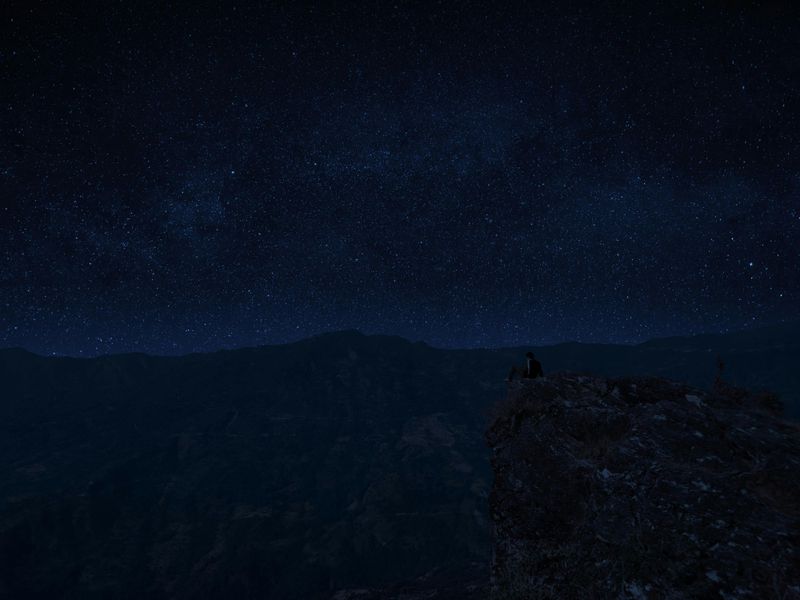
Nobody warned me about the stars. I stepped outside after dinner on my first night in Pioche, looked up, and genuinely stopped breathing for a second.
The Milky Way was not just visible, it was vivid, stretching across the entire sky in a dense, luminous band that looked almost too dramatic to be real.
Light pollution out here is essentially nonexistent, and the elevation of nearly 6,000 feet means the atmosphere above you is unusually clear.
Lincoln County, where Pioche sits, is one of the least densely populated counties in the entire United States.
That translates directly into some of the darkest skies in the American West, which makes this area a legitimate destination for astrophotography and casual stargazing alike. I set up my camera on a tripod about a mile outside of town and spent two hours just shooting long exposures of the sky.
The experience of stargazing in a place like this recalibrates something in you.
In cities, we forget that the sky has depth, that it is not just a flat dark ceiling but an infinite expanse filled with structure and light and stories. Pioche gives that back to you in a single clear night.
If you visit in summer, the Milky Way core is visible from roughly April through October, peaking in July and August.
Honestly, the night sky alone is enough reason to make the drive out here, and everything else Pioche offers is just a spectacular bonus.