
Explore 3,000 Years Of Mexican Art At This Free Museum In Illinois
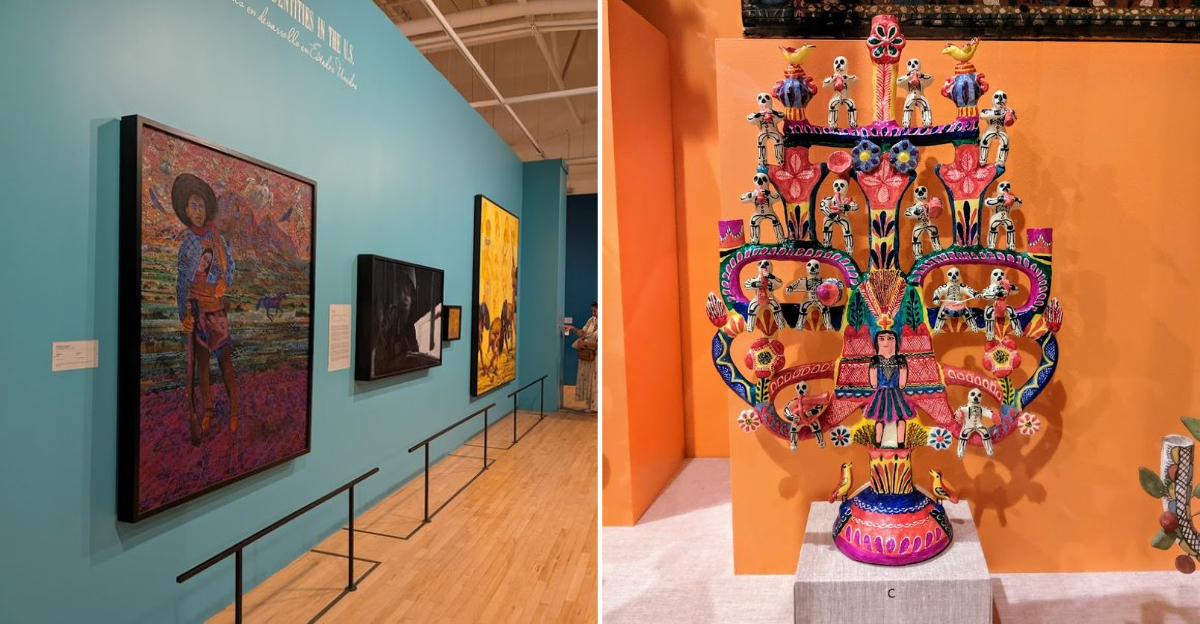
I have wandered through museums across the United States, but very few have made me pause mid-gallery and simply stand still. This one did.
In Chicago’s Pilsen neighborhood, on the Lower West Side of Illinois, there is a museum that feels less like an institution and more like a living archive of memory.
Inside, more than 3,600 years of Mexican and Mexican-American art unfold in a way that feels immediate and personal rather than distant or academic.
Ancient objects share space with bold contemporary work, and the dialogue between them is impossible to ignore. Even more striking, admission costs nothing.
That detail changes the atmosphere entirely; there is no barrier at the door, no calculation about whether the visit is worth the price.
Admission Is Completely Free
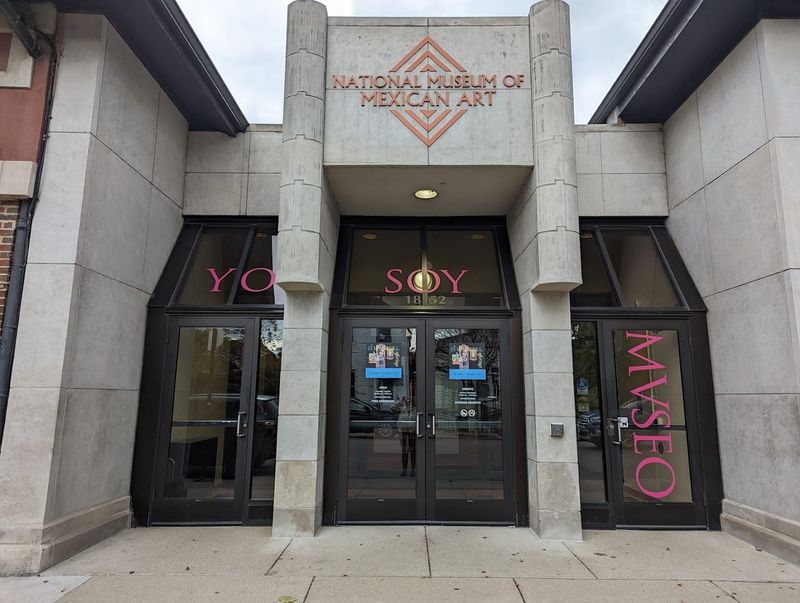
Here is something that still surprises people who hear it for the first time: you can walk into one of the most culturally rich museums in the entire United States without spending a single dollar.
The amazing museum in Chicago has maintained a completely free admission policy since it opened, believing that access to culture and art should never be limited by a person’s budget.
This commitment is not just a marketing move. The museum relies on donations and community support to keep its doors open to everyone, from school groups to solo travelers passing through Pilsen.
It is a genuinely radical act of generosity in a city where museum tickets can easily cost twenty to thirty dollars per person.
Visitors are welcomed at the entrance and can begin exploring the galleries at their own pace after checking in according to current museum procedures.
Visitors can typically explore without the need for advance reservations, allowing for a relaxed and self-guided experience. Just art, history, and culture waiting to be discovered.
If you feel moved by what you see, the donation box near the exit is a meaningful way to give back to a place that gives so much freely.
Over 18,000 Works In The Permanent Collection
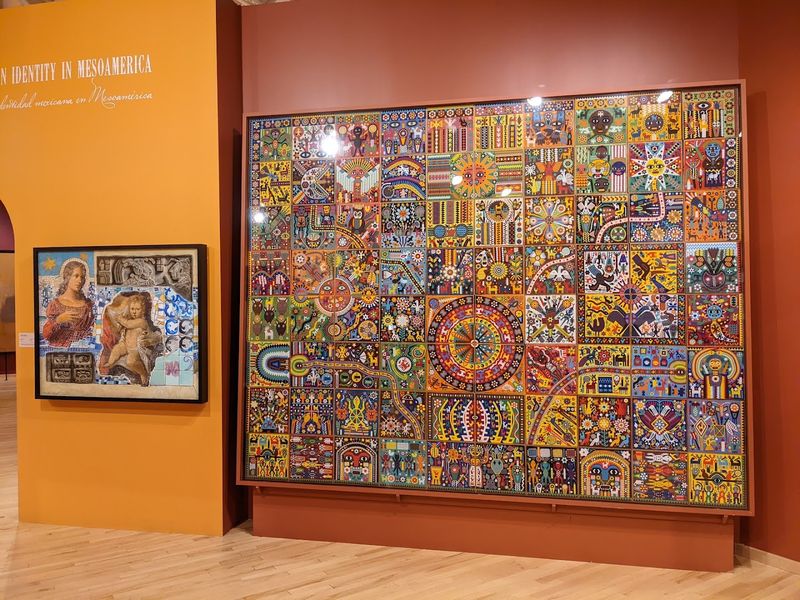
Few people expect a neighborhood museum to hold more than 20,000 works of art, but that is exactly what you will find at the National Museum of Mexican Art.
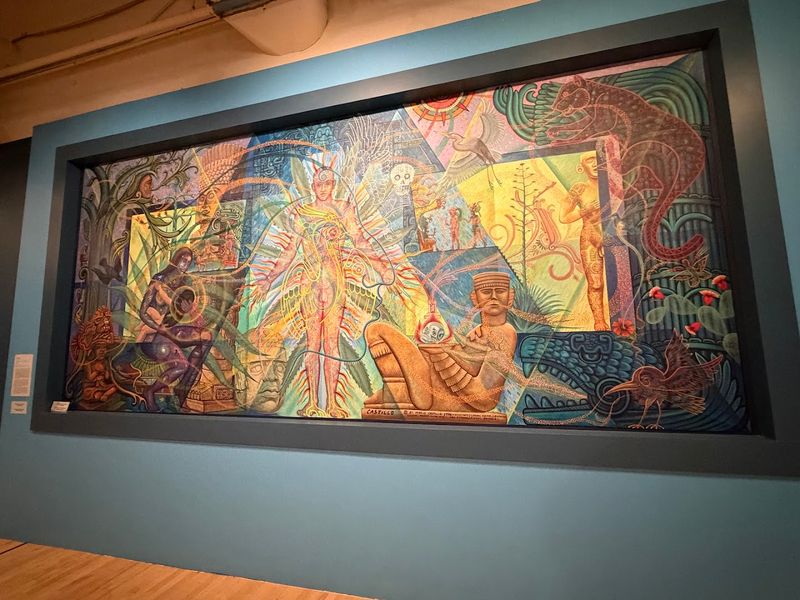
The permanent collection covers an astonishing range of styles, periods, and media, including paintings, photographs, sculptures, prints, textiles, and objects that stretch back across 3,000 years of Mexican civilization.
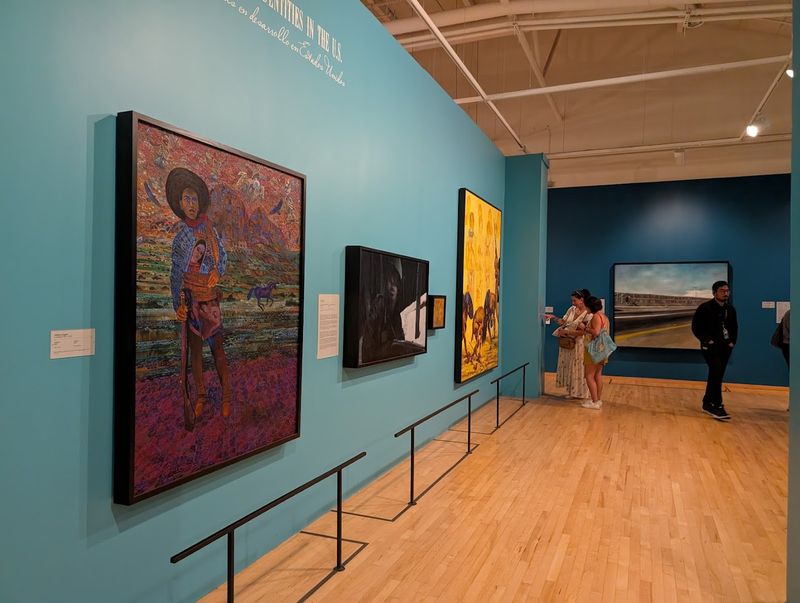
Walking through the galleries feels like moving through time itself. You might stand in front of a pre-Columbian artifact one moment and then turn to face a bold contemporary painting by a Mexican-American artist the next.
The collection does not treat history as something separate from the present. Instead, it weaves ancient traditions and modern creativity into a single, continuous story.
What makes this collection especially powerful is the range of voices it includes. Artists from Mexico and the Mexican-American diaspora are both represented with equal care and intention.
Many pieces are paired with thoughtful written descriptions that make the context easy to understand, even if you are visiting a fine art museum for the first time. The breadth of the collection means that no two visits ever feel quite the same.
Located In The Pilsen Neighborhood
The museum’s location is no accident. Pilsen, the neighborhood on Chicago’s Lower West Side where the museum sits, has been a hub of Mexican and Mexican-American culture for decades.
Walking through the streets surrounding the museum feels like an extension of the experience inside, with large-scale murals painted on building walls, independent restaurants serving regional Mexican cuisine, and small art galleries tucked between homes and shops.
The area has a proud, community-driven energy that you can feel the moment you step off the train. The museum is easily accessible via the Pink Line, with the Damen station being the closest stop and 18th Street also within walking distance.
Once you arrive, the neighborhood practically invites you to linger longer than you planned.
Several visitors mention that the street art alone is worth a dedicated walk before or after touring the museum. Coffee shops and taco spots are scattered nearby, giving you a natural excuse to extend your afternoon into the early evening.
Pilsen rewards curiosity, and the National Museum of Mexican Art sits at the center of it all like a cultural anchor for a neighborhood that has always known how to celebrate its roots with boldness and pride.
The Dia De Los Muertos Exhibits Are Legendary
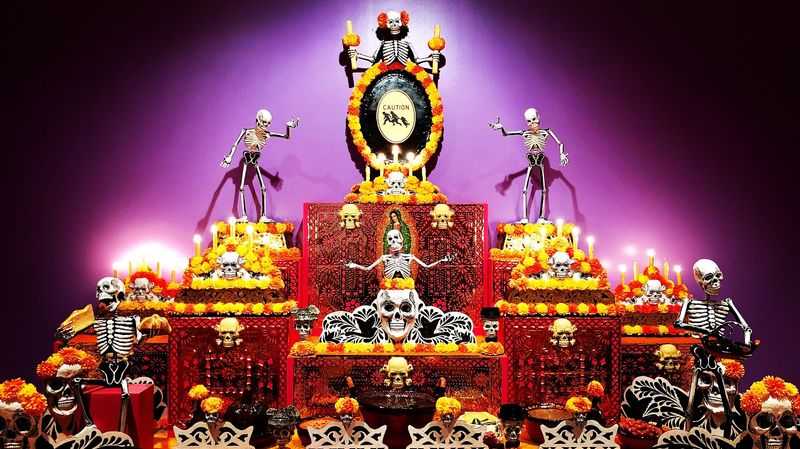
Every October and November, the National Museum of Mexican Art transforms into something that visitors describe as genuinely breathtaking.
The Dia de los Muertos, or Day of the Dead, exhibits draw crowds from across Chicago and beyond, offering an immersive look at one of Mexico’s most meaningful and visually stunning traditions.
The centerpiece of these seasonal displays is typically a large ofrenda, a ceremonial altar stacked with marigolds, candles, photographs, food offerings, and handcrafted objects.
Each element carries symbolic weight, and the museum does a careful job of explaining the tradition’s roots so that visitors from all backgrounds can appreciate its depth without it feeling like a spectacle.
One past exhibit included a stunning ofrenda dedicated to victims of the 2023 earthquakes in Turkey and Syria, showing how the tradition can expand to honor suffering and solidarity far beyond its geographic origins.
That kind of thoughtful, emotionally generous curation is what sets this museum apart from more conventional institutions.
Whether you are visiting because you grew up celebrating Dia de los Muertos or because you are encountering it for the first time, the exhibits here will leave a mark that stays with you long after you walk back outside.
Founded By Carlos Tortolero In 1987
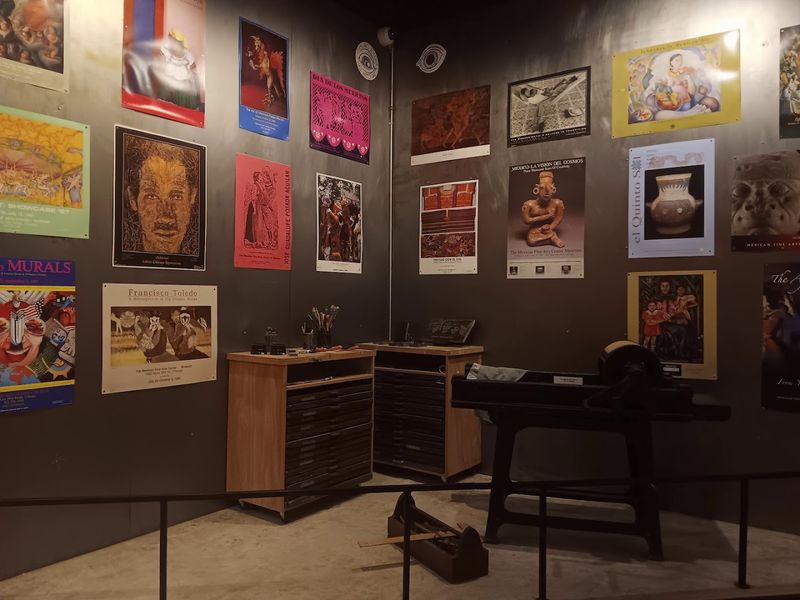
Behind every great institution is a person with an extraordinary vision.
The National Museum of Mexican Art was founded in 1982 by Carlos Tortolero, a Chicago educator who believed that Mexican and Mexican-American communities deserved a dedicated space to see their culture honored, preserved, and shared with the world, and it officially opened its doors in 1987.
What began as a small exhibition in a park building grew into the nationally recognized institution it is today.
Tortolero’s background as a teacher shaped the museum’s educational mission from the very beginning.
He wanted the museum to serve not just art lovers but also students, families, and anyone who had never thought of themselves as a museum-goer.
That inclusive spirit is still woven into everything the museum does, from its free admission policy to the way its exhibit labels are written for clarity and accessibility.
One reviewer shared a touching story about returning to the museum after forty years to visit Tortolero, who had been their high school teacher.
That kind of personal history, the connection between a founder and the community he served, says everything about what this museum means to Chicago. It was never just about hanging art on walls.
It was always about people seeing themselves reflected with dignity and pride.
Thousands Of Good Reviews
The museum has built a reputation that clearly resonates with visitors. That kind of consistent praise reflects years of thoughtful curation, attentive staff, and a genuine commitment to making every visitor feel welcome.
The National Museum of Mexican Art has built that reputation one experience at a time, and the reviews reflect it in deeply personal terms.
People write about being moved to tears by individual paintings. They describe bringing partners, children, and out-of-town friends and watching them light up with recognition or curiosity.
International visitors have called it one of the best museums they have ever entered, which is a remarkable thing to say about a small neighborhood institution in a city already packed with world-class cultural spaces.
The staff members earn special mention in review after review for their warmth and knowledge. Groups from art schools, community organizations, and family reunions all seem to leave with the same feeling: that they were genuinely cared for during their visit.
A museum’s rating tells you something, but reading the actual words people use to describe their experience here tells you everything. This place clearly does something right, and it does it consistently.
The Tzintzuntzan Gift Shop Is A Must-Visit
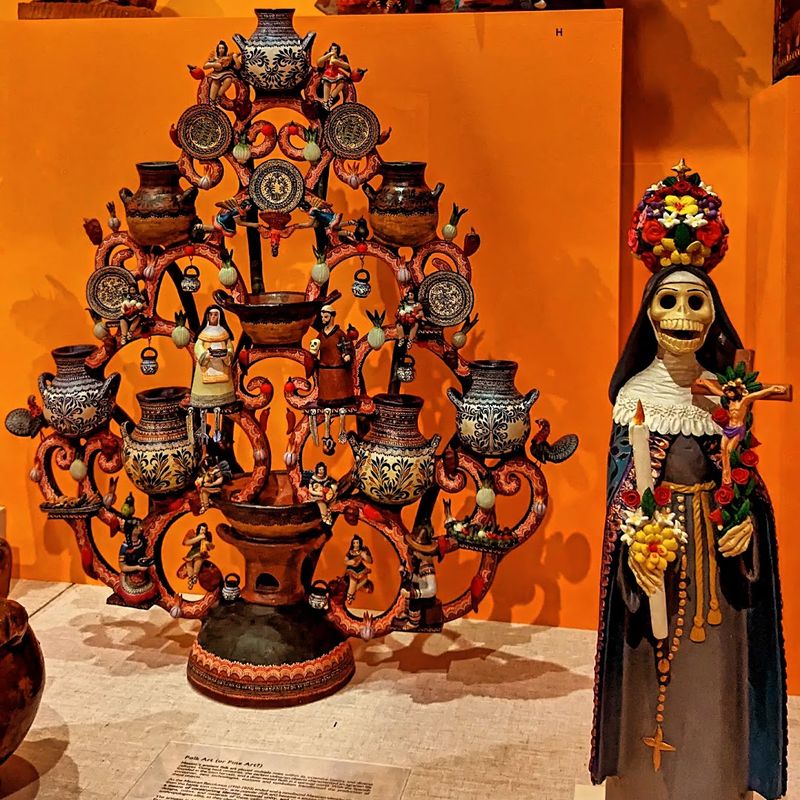
Nicknamed the Tzintzuntzan gift shop, the museum’s retail space has developed its own loyal following among Chicago shoppers, and that is saying something in a city with no shortage of excellent places to browse.
Visitors consistently describe it as one of the best places to shop in all of Chicago, which feels like a bold claim until you actually walk inside and start picking things up.
The shop carries handcrafted artisanal goods sourced from Mexican and Mexican-American makers, alongside prints and works by contemporary artists.
You will find textiles, ceramics, jewelry, books, and objects that you genuinely cannot find anywhere else. Everything feels intentional and culturally grounded rather than mass-produced or generic.
Multiple reviewers mention that they had to physically restrain themselves from buying everything in sight, which is a relatable problem once you spend ten minutes browsing the shelves. The shop also functions as a way to support working artists and craftspeople directly, so any purchase you make carries a little extra meaning.
Even if you come in telling yourself you are just looking, plan to leave with at least one thing tucked under your arm. The Tzintzuntzan gift shop has a way of making that very easy to do.
Exhibits Span 3,600 Years Of History
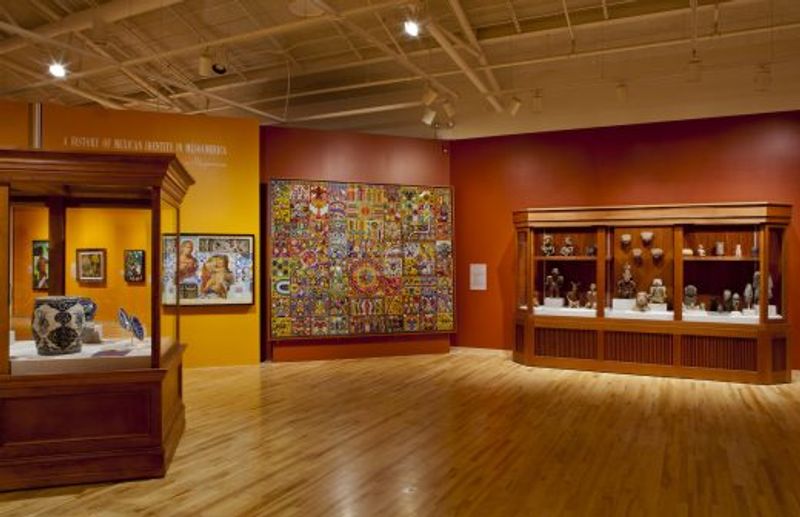
More than 3,600 years is a long time. To put it in perspective, that means the collection at the National Museum of Mexican Art reaches back to civilizations that were thriving long before the Roman Empire rose to power.
Walking through the galleries here is not just a tour of art history. It is a tour of human history as told through one of the world’s most enduring and expressive cultures.
The collection moves through pre-Columbian objects, colonial-era works, folk art traditions, revolutionary imagery, and contemporary installations without ever feeling disjointed or rushed.
Each era connects to the next in a way that feels organic rather than forced, and the museum’s curators deserve real credit for making that narrative flow feel natural across so many centuries.
For visitors who grew up learning about art history primarily through a European lens, this museum offers a genuinely eye-opening counterpoint.
Several reviewers mention being struck by how different Mexican art feels from the Western European traditions most people study in school, noting the bold use of color, the layered symbolism, and the emotional directness that runs through work from nearly every period.
It is the kind of place that quietly shifts your understanding of what art can be and who gets to make it.
Rotating Temporary Exhibitions Keep Every Visit Fresh
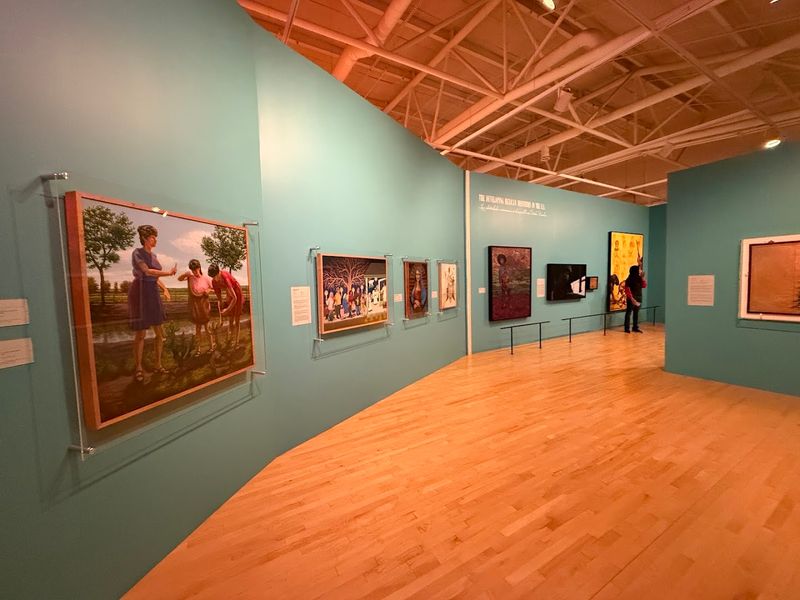
One visit to the National Museum of Mexican Art is genuinely not enough, and the museum seems to know that. Alongside its extensive permanent collection, the museum regularly mounts rotating temporary exhibitions that bring new artists, themes, and conversations into the space throughout the year.
Return visitors consistently note that there is always something new to discover, even if they have been coming for years.
Past temporary exhibitions have tackled subjects ranging from immigration and identity to railroad history and the Mexican-American labor movement. The museum is not afraid to engage with difficult or politically charged subjects when they are relevant to the communities it represents.
That willingness to take meaningful creative risks keeps the programming feeling alive and urgent rather than static and decorative.
For families, school groups, and solo visitors alike, the combination of a deep permanent collection and ever-changing temporary shows makes the museum an easy recommendation for repeat visits.
One reviewer put it perfectly by describing the museum as a place that is always changing, meaning that each trip offers a fresh reason to return.
If you visit once and love it, consider putting it on your annual Chicago itinerary. The museum will almost certainly have something new and worth your time waiting for you.
Open Tuesday Through Sunday
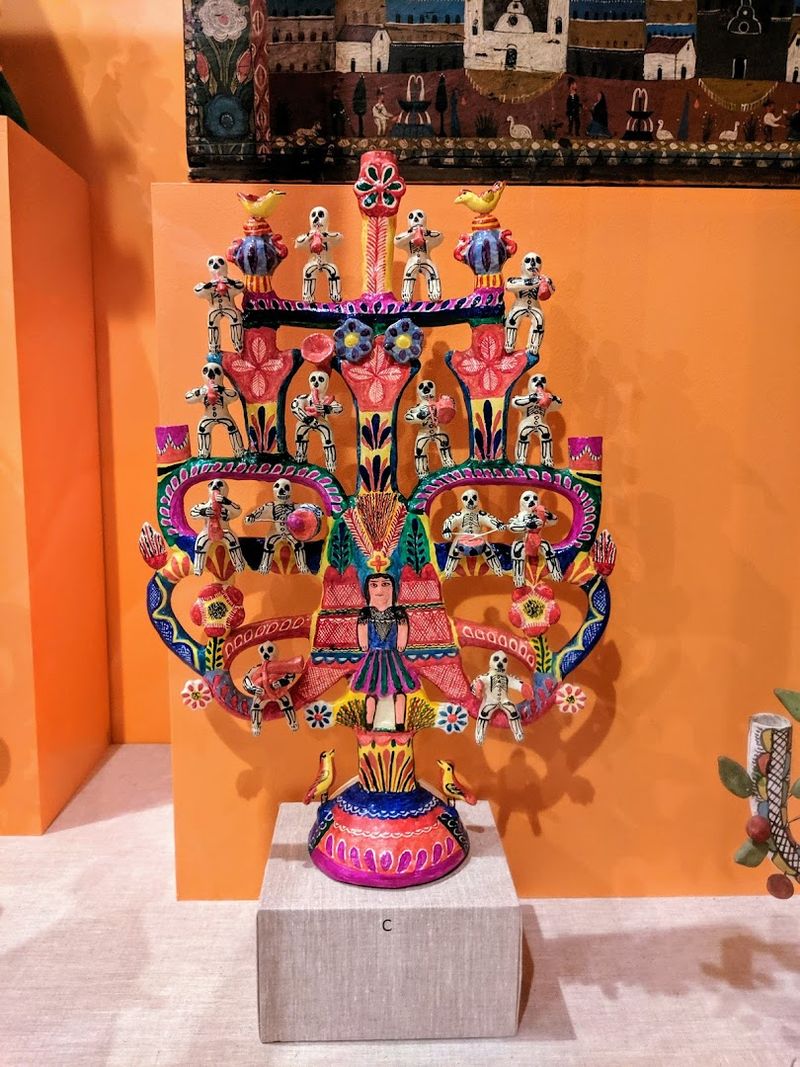
Planning your visit to the National Museum of Mexican Art is refreshingly straightforward. The museum is open Tuesday through Sunday from 10 AM to 5 PM, with closures on Mondays and major holidays, giving you a solid seven-hour window on most days to explore at your own pace.
Mondays are the only day the museum is closed, so keep that in mind when you are building your Chicago itinerary.
Most visitors report spending between one and two hours inside, though art enthusiasts and those who linger over the written descriptions often stretch their visits to three hours or more.
Given that admission is free, there is no pressure to rush through anything. You can take your time with whatever catches your eye and come back to pieces that pull you in twice.
The museum is located at 1852 W 19th St, Chicago, IL 60608, and is easily accessible via the Pink Line train, with the 18th Street station just a short walk away. Street parking is also available in the surrounding neighborhood.
If you want to reach the museum directly before your visit, you can call them at 312-738-1503. Arriving on a weekday morning tends to mean smaller crowds and a more relaxed, personal experience throughout the galleries.