
Explore This Quirky Ghost Town In Arizona Famous For Its Charming Wild Donkeys
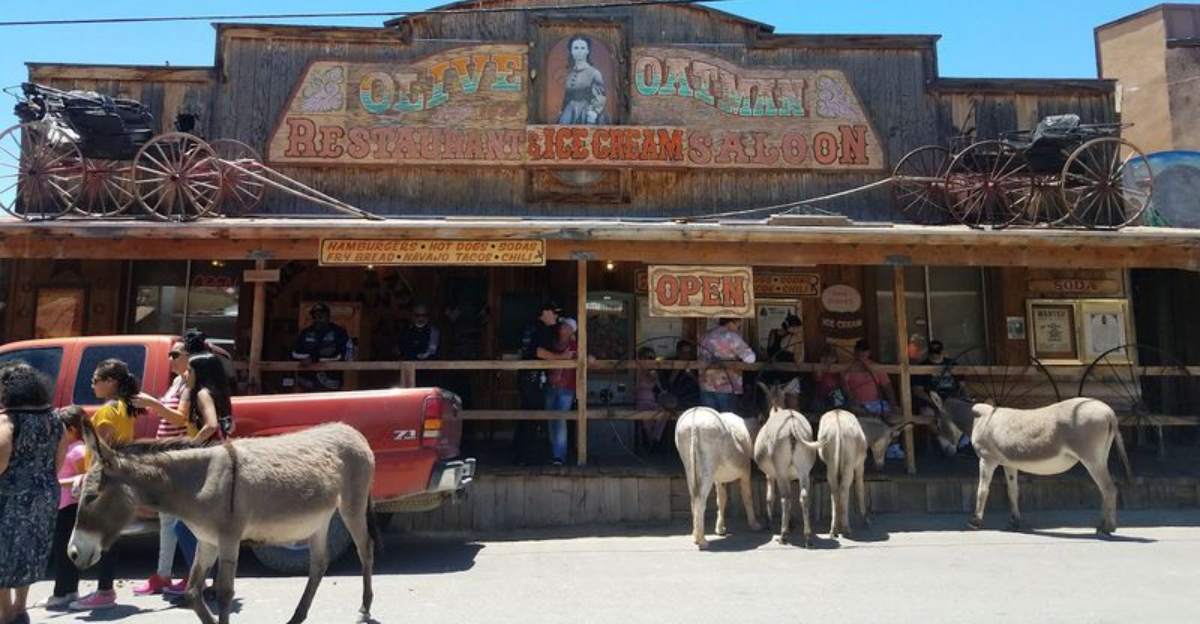
I’m convinced that time actually stopped in this tiny corner of Arizona, and honestly, the local donkeys are the ones holding the clock.
Stepping onto these creaky boardwalks feels like a total fever dream where you’re suddenly a background extra in a cowboy shootout, except the main characters are adorable, stubborn, and very much in charge of the streets.
I thought I was prepared for the quirks, but nothing captures the soul of the Arizona desert quite like a wild burro sticking its head into your car window to say hello. It’s dramatic, it’s dusty, and it’s the kind of place where you’ll laugh until your sides ache.
Just remember to pack some extra treats, because these fuzzy residents are the real bosses of the mountain.
The Wild Burros That Rule The Streets
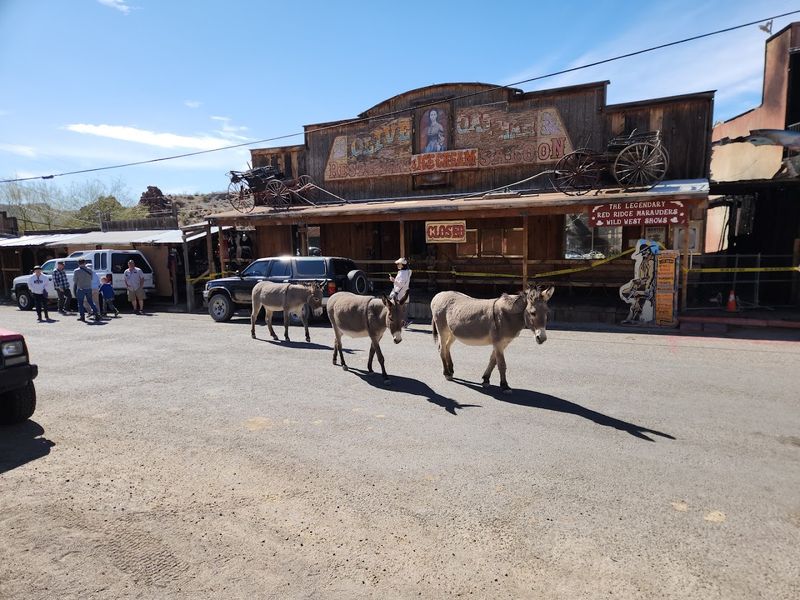
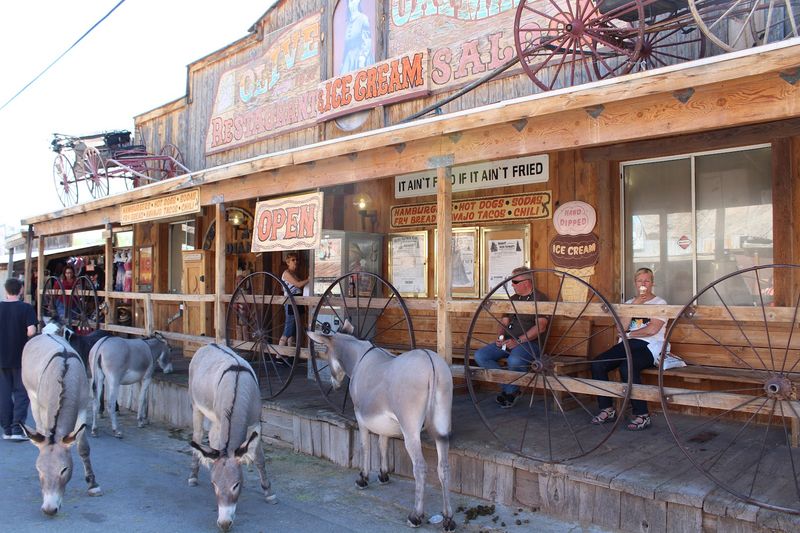
Nobody told the burros they were supposed to stay out of the road, and honestly, that is the whole point. These shaggy, sure-footed animals are the undisputed celebrities and they know it.
Descendants of pack animals released by miners in the late 1800s when gold operations shut down, they have called this town home for well over a century.
Watching them mosey between tourists and parked cars is one of those experiences that feels almost unreal. They are accustomed to people and will walk right up to you with curious brown eyes and twitching ears, fully expecting your attention.
Feeding them is strongly discouraged, since processed human food can seriously harm their digestive systems and disrupt their natural foraging habits.
The burros roam freely between the town and the surrounding desert, living on their own terms. Rangers and local volunteers keep a watchful eye on the herd’s health and population.
Spending even ten minutes with these animals is enough to understand why visitors return to Oatman, Arizona, again and again.
A Gold Rush Origin Story Worth Knowing
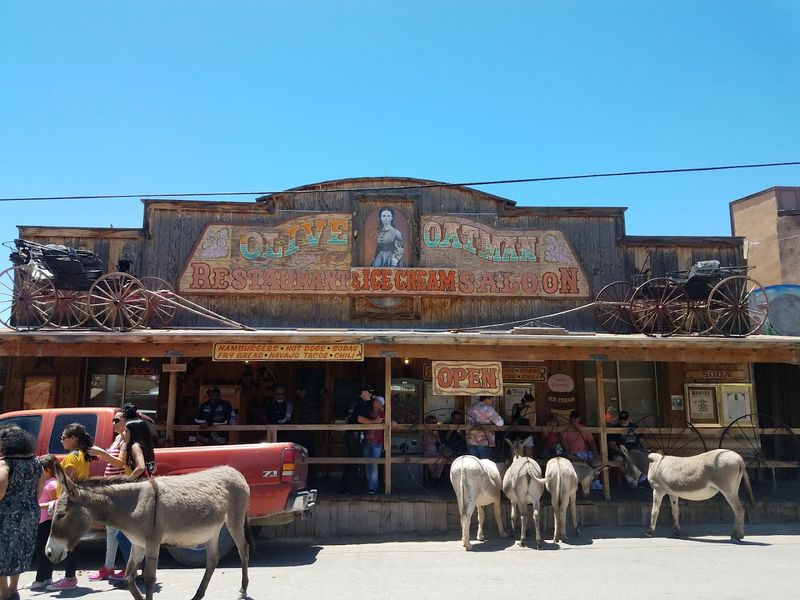
In 1915, two prospectors struck roughly ten million dollars in gold near what would become Oatman, and that single discovery sparked one of the most dramatic population explosions the Arizona desert had ever seen.
By the 1920s, the town had swelled to more than 10,000 residents, complete with hotels, saloons, and all the chaos that comes with a booming frontier settlement.
The town actually takes its name from Olive Oatman, a young woman captured by a Native American tribe in 1851 and later released, whose story became widely known across the American West. That layer of history gives the place a depth that goes beyond just gold and ghost town aesthetics.
When the U.S. government declared gold mining non-essential during World War II, the rush ended almost overnight. People packed up and left, leaving behind buildings, memories, and apparently a whole lot of burros.
Walking through Oatman today, you can almost feel the echo of that sudden silence still hanging in the warm desert air. Today, those wandering burros and weathered wooden storefronts make Oatman feel like a place where Arizona’s wild past never fully disappeared.
Route 66 Nostalgia At Its Finest
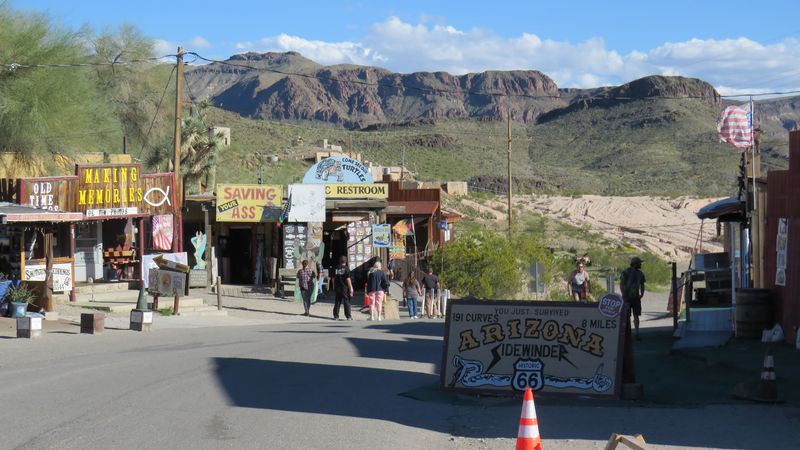
Oatman sits along one of the most legendary stretches of historic Route 66, and driving into town on that narrow, winding mountain road is an experience that earns its own chapter in any road trip story. The curves are tight, the cliffs are steep, and the views of the Black Mountains are genuinely jaw-dropping at every turn.
Route 66 was rerouted in 1952, bypassing Oatman entirely and sending the town into a long, quiet slumber. That same isolation, however, is precisely what preserved its original character.
The storefronts, the layout, and the general vibe feel authentically frozen in mid-century America rather than reconstructed for tourism.
Today, road trippers specifically seek out this stretch of old Route 66 because it offers something the modern interstate cannot replicate. Pulling into Oatman after navigating those mountain switchbacks feels like arriving somewhere genuinely earned.
Pack snacks, check your fuel before heading up, and take the drive slowly so you can actually soak it all in. And once the burros appear in the middle of the road and the old wooden buildings come into view, the whole approach feels less like a detour and more like stepping straight into an Arizona time capsule.
The Oatman Hotel And Its Hollywood Connection
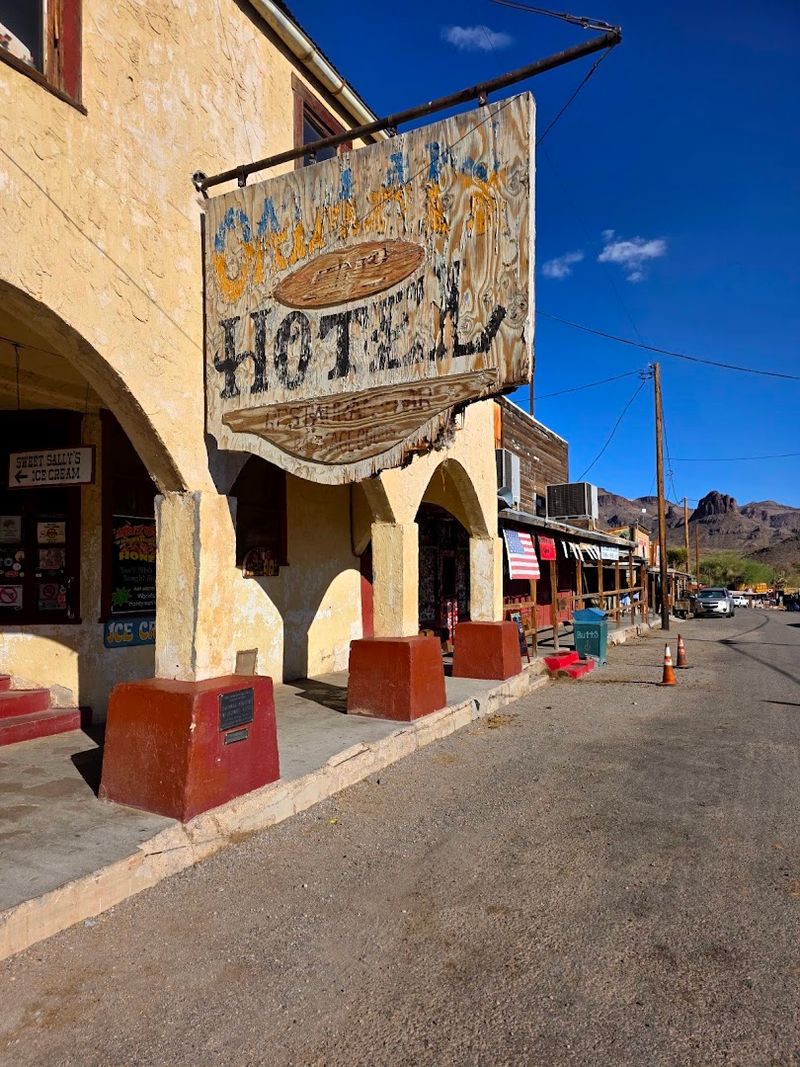
Built in 1902, the Oatman Hotel holds the title of the oldest two-story adobe structure in all of Mohave County, and its walls have absorbed more than a century of remarkable stories. The building survived the gold rush, the decline, and the long quiet years in between, standing firm while everything else around it shifted and changed.
The most famous chapter in the hotel’s history involves Hollywood royalty. Clark Gable and Carole Lombard reportedly spent their honeymoon here in 1939 after getting married in Kingman, Arizona.
Their room has been preserved, and photographs of the couple decorate the walls, giving the place a warm, nostalgic atmosphere that feels genuinely personal rather than staged.
The hotel no longer operates as a place to sleep overnight, but the ground floor functions as a restaurant and gathering spot that draws visitors from across the country. Sitting inside and looking around at the dollar bills pinned to the ceiling by generations of travelers is one of those small, perfect travel moments that stays with you long after you leave.
Even if you do not stop for a full meal, stepping inside the Oatman Hotel is one of the easiest ways to feel the town’s history settle in around you.
Wild West Gunfight Shows On Main Street
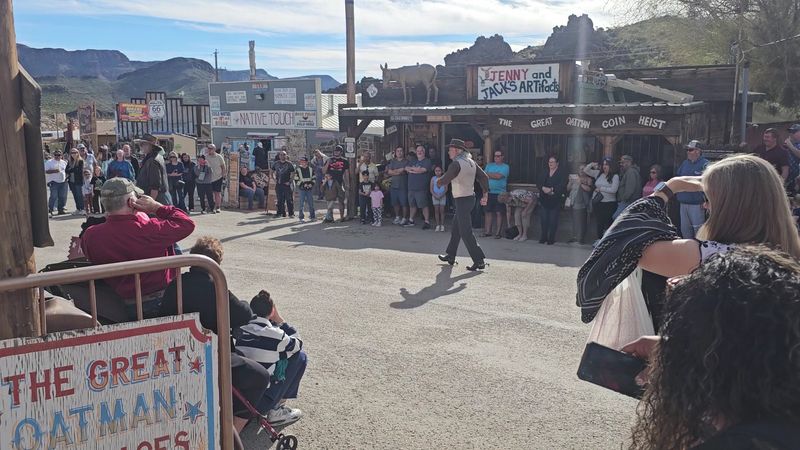
Few things prepare you for the moment a full-scale gunfight breaks out right in front of you on a quiet desert street. The Oatman Ghost Rider Gunfighters are Arizona’s oldest active gunfighter performance group, and their daily staged shootouts are theatrical, energetic, and genuinely entertaining for visitors of all ages.
Performers dress in period-accurate costumes and act out dramatic confrontations that nod directly to the town’s rough-and-tumble gold rush past. The shows happen on the main street itself, with the surrounding mountains and weathered buildings serving as a backdrop that no stage designer could improve upon.
Kids absolutely love it, and adults tend to find themselves cheering just as loudly.
The performances are free to watch, which makes them one of the best no-cost entertainment experiences anywhere on the Route 66 corridor. Check local schedules when you arrive, since show times can vary by season and day.
Arriving a few minutes early means you get a front-row spot on the wooden boardwalk for the full dramatic effect. It is the kind of wonderfully old-school spectacle that makes Oatman feel less like a preserved town and more like a place still happily performing its own legend.
Quirky Festivals That Put Oatman On The Map
Oatman does not just celebrate its history; it celebrates itself with a level of creative enthusiasm that is hard to match. The annual Great Oatman Bed Race in January sends teams racing down the main street on decorated beds with wheels, a spectacle that sounds ridiculous until you witness the genuine competitive spirit on display.
It draws crowds from across the Southwest every year.
Then there is the Sidewalk Egg Frying Contest held every Fourth of July, where participants attempt to cook eggs using only the heat radiating from the pavement. Temperatures in the area regularly exceed 100 degrees Fahrenheit in summer, making this less of a gimmick and more of a surprisingly legitimate cooking challenge.
The contest has become a beloved tradition that perfectly captures Oatman’s sense of humor about its own desert setting. That playful streak is part of what makes Oatman memorable, because the town does not just preserve the past but keeps finding lively new ways to make visitors feel part of it.
These festivals are the kind of events that remind you why small towns matter. They create community, they attract curious travelers, and they give people a reason to return year after year to a place that clearly refuses to take itself too seriously.
Shopping, Souvenirs, And Desert Charm
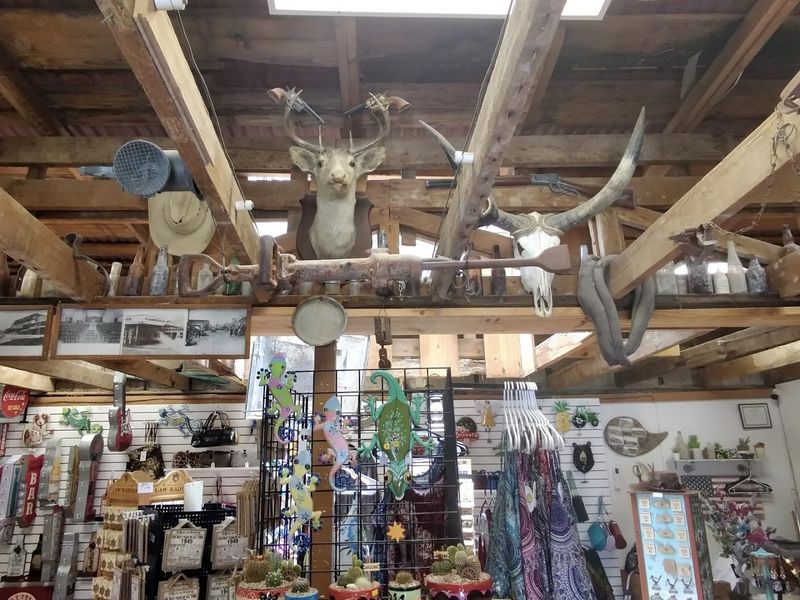
The shops lining Oatman’s main street operate on a philosophy of cheerful unpredictability. You might walk into one store and find hand-tooled leather goods, step next door and discover vintage mining equipment, then stumble into a third packed floor-to-ceiling with donkey-themed everything.
Mugs, magnets, plush toys, postcards, and hand-painted signs all celebrate the town’s most famous four-legged residents.
Southwestern art is well represented here too, with local artists selling pottery, jewelry, and paintings that reflect the colors and textures of the surrounding desert landscape. Prices vary widely, but there are genuinely affordable finds mixed in among the higher-end pieces, so browsing without a budget is a perfectly reasonable strategy.
For anyone who appreciates biker culture, several shops stock gear, patches, and accessories catering to the motorcycle crowd that regularly passes through on Route 66 road trips.
The overall shopping experience in Oatman feels organic rather than manufactured, like the stores grew up naturally alongside the community rather than being installed for tourist convenience. Take your time wandering, because the best finds are usually the unexpected ones.