
Fall Bird Migration Fills This Arizona Wetland With The Calls Of Thousands Of Sandhill Cranes
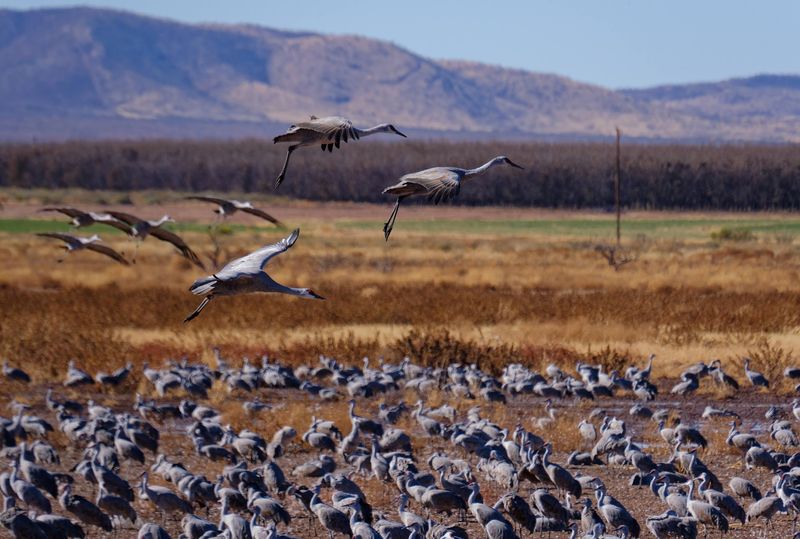
Every autumn, an ancient sound rolls across a quiet corner of southeastern Arizona, growing louder as tens of thousands of Sandhill Cranes drop from the sky. You can hear them from a mile away before you ever spot their gray wings and bright red crowns.
It happens at a shallow wetland that fills with life from late September through mid-March, drawing birders, campers, and curious families alike. Best of all, watching this spectacle costs nothing but the drive.
A Wetland Wonderland in the Sulphur Springs Valley
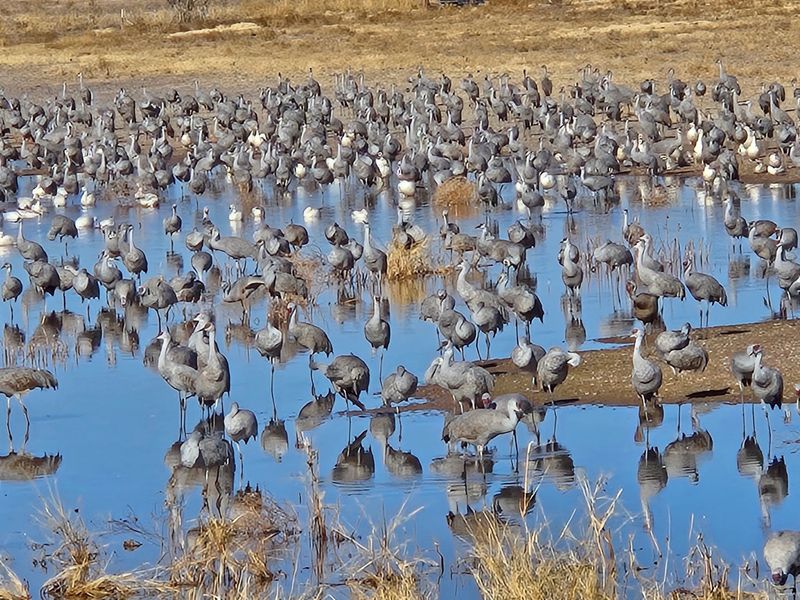
Roughly an hour southeast of Tombstone, past wide-open ranch country, a shallow marsh spreads across the floor of the Sulphur Springs Valley. Whitewater Draw Wildlife Area sits at 8469 N Coffman Rd in McNeal, a speck of a place that most maps barely acknowledge.
Managed by Arizona Game and Fish, the refuge exists mainly for the birds. The shallow water and open ground give roosting cranes a clear line of sight against anything that might sneak up on them, while nearby farm fields packed with corn, alfalfa, and milo keep bellies full through winter.
What makes the spot so special is scale. Estimates for southeast Arizona run from over 20,000 to nearly 40,000 Sandhill Cranes, with a hefty share of them settling right here.
Visitors regularly describe watching the population double in just a couple of hours as waves keep pouring in.
It is remote and unpolished, with sparse amenities and long horizons. Yet folks who make the trek almost universally say it delivers something rare: a genuine wildlife spectacle you feel in your chest.
Prehistoric Bugles That Carry for Miles
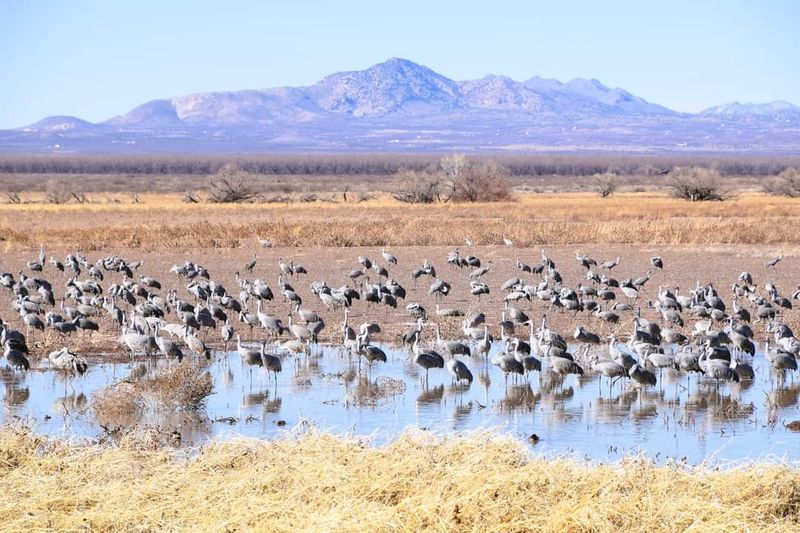
Close your eyes near the water at dawn and the noise alone will stop you in your tracks. Regulars describe it as a thrilling, almost prehistoric bugle, a rolling cacophony that reaches your ears long before a single bird comes into view.
One visitor recalled hearing the cranes from a mile away, their happy, rattling calls filling the whole valley. Another camped overnight and noted the birds never fully quiet down, keeping up a low murmur through the dark hours.
The sound swells as flock after flock arrives, each new group answering the thousands already settled in the shallows. People often point out that even on days when photography felt tricky, simply standing still and listening was the highlight of the whole outing.
There is something ancient about it, and no surprise there. Sandhill Cranes are among the oldest bird species on Earth, and their voices seem to echo from a much older world.
Bring the kids, bring out-of-town guests, and let them experience a soundtrack no recording quite captures. It is the kind of thing you talk about for years.
The Great Dawn Departure and Midday Return
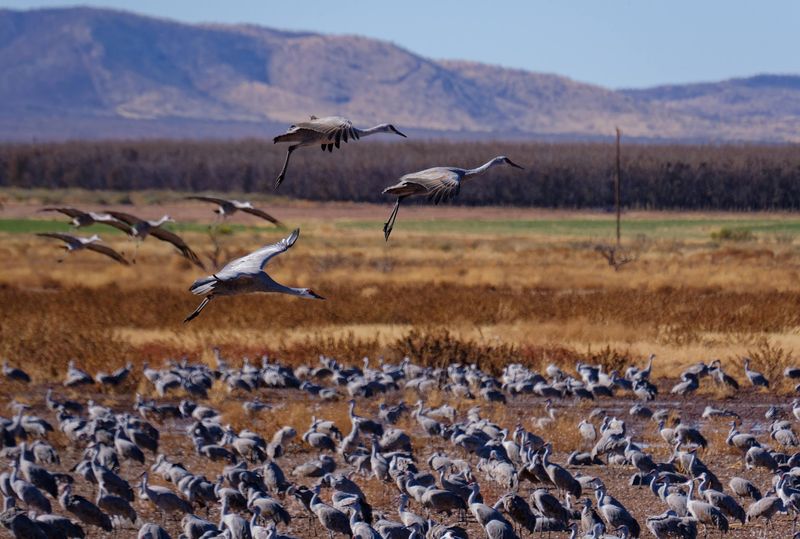
Timing turns a good visit into an unforgettable one. Show up about 30 minutes before sunrise and you may catch the enormous roost lifting off en masse, a rush of wings sometimes nicknamed a “crane-nado” by the folks who chase it every year.
The birds head out to feed in surrounding farm fields, then filter back through the morning and again in late afternoon. Several visitors learned this the fun way: arriving pre-dawn to find only a handful of cranes, then returning around 10am to watch tons of them stream back from breakfast.
Patience pays off in dramatic fashion. One group described just four or five birds in the marsh at 10:15, then wave after wave flying in until hundreds crowded the same spot by lunchtime.
Even midday can surprise you, with V formations crossing the sky and circling down to land. Sunset offers another swell as the cranes come home to roost.
Whatever hour you choose, plan to linger. The numbers shift by the minute, and the best moment often arrives when you least expect it.
Spirited Dances and Family Bonds
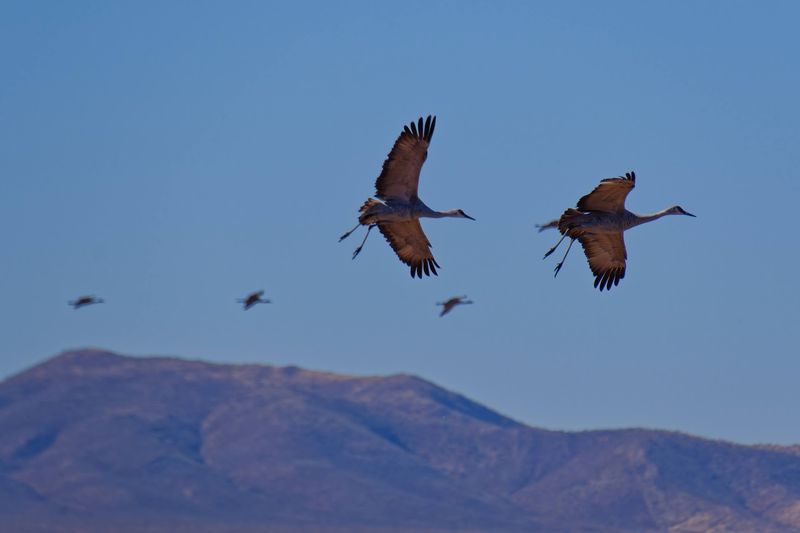
Watch long enough and the cranes start showing off. These long-legged birds are famous for their spirited dancing, a display of wing stretches, deep head bows, and sudden vertical leaps that looks part ballet and part celebration.
Beyond the theatrics, there is a tender side that catches many visitors off guard. Cranes move in little family units, mostly pairs, sometimes with a lanky yearling tagging along for the season.
People are often surprised to learn these birds pair-bond, sticking with the same partner year after year. Spotting a devoted twosome standing wing to wing among thousands makes the crowd feel a lot more personal.
Their antics reward a slow, attentive eye. Regulars mention settling onto a bench and simply enjoying the birds’ behavior, from squabbles to synchronized hops, unfolding across the shallow water.
With gray plumage, elegant proportions, and that unmistakable scarlet crown, they are striking even at rest. Add a little dancing and a nearby chick, and you have a scene that rivals anything on a nature documentary, right here in the Arizona valley.
More Than Cranes: A Cast of Winged Neighbors
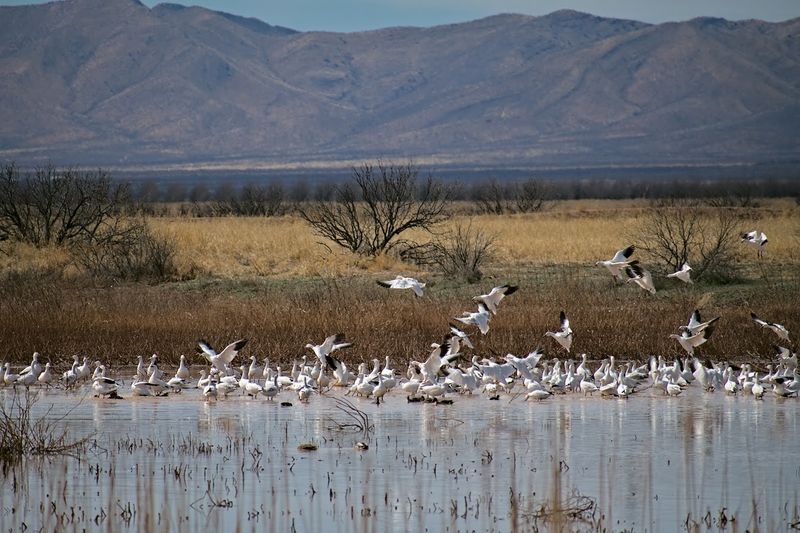
Cranes headline the show, but they share the stage with plenty of supporting talent. Snow geese are a favorite find, standing out bright and white among the sea of gray, and observant visitors have spotted Ross’s Geese mixed in too.
Duck lovers do well here. People have logged pintails, green-winged teal, and northern shovelers paddling near the shoreline, adding color and motion to the quieter edges of the marsh.
Smaller birds hide in the brush for those who look closely. Sightings include a ruby-crowned kinglet flitting through a shrub, a likely Cooper’s hawk, and flashes of red from vermillion flycatchers.
Some guests even caught starling murmurations rolling overhead, half a dozen swirling clouds putting on their own aerial performance. The variety means a good pair of binoculars stays busy all morning.
Because the wildlife area protects wetland habitat year-round, there is nearly always something to see. One longtime visitor has come for thirty years across every season, calling it a lovely place to walk, sit, and enjoy nature well beyond the crane spectacle.
Boardwalks, Benches, and Easy Access
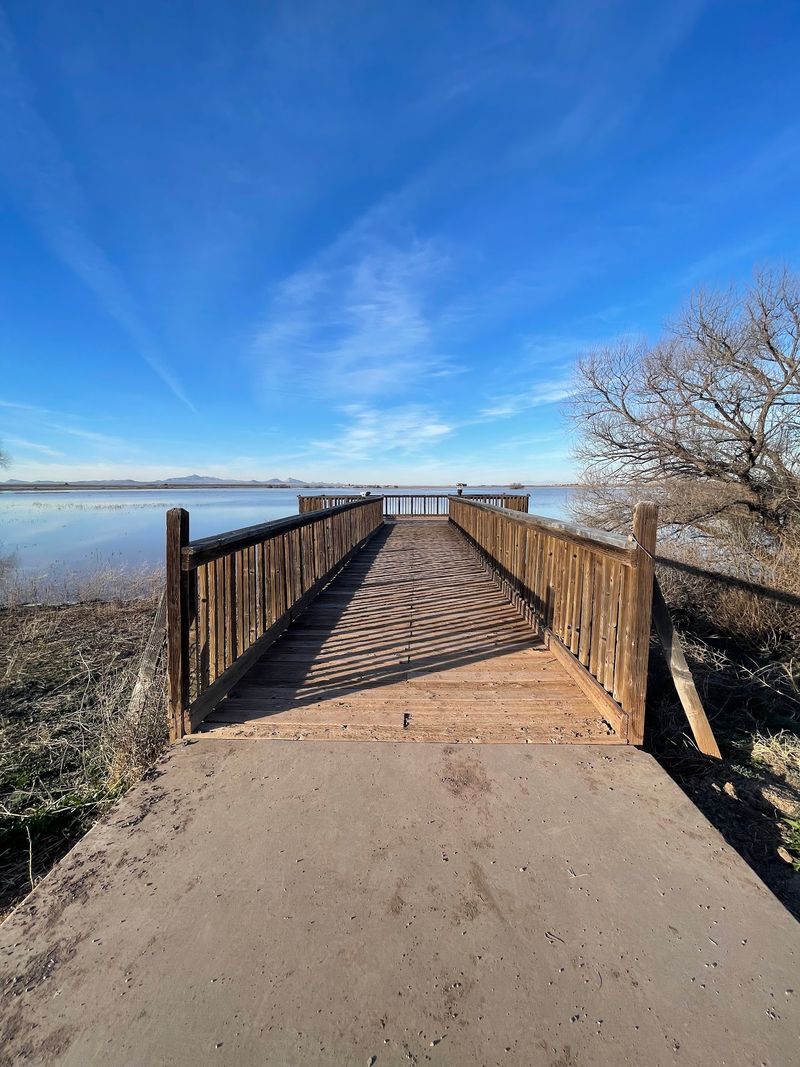
Getting close to the action is easier than the remote setting might suggest. A large parking lot leads to a short loop walk out into the draw, dotted with multiple benches and a few viewing platforms where you can settle in and watch.
Accessibility gets real attention here. Some platforms offer wheelchair access, and small spotting scopes are set up at chair level so seated visitors can zero in on distant birds without straining.
Do keep in mind that reaching the shoreline involves a bit of a hike from the parking area. Plenty of rest spots along the way make it manageable, and many families note that everyone, kids included, handles the walk fine.
A word of caution about the older boardwalks: some boards have worn thin, with a few board-wide gaps, so watch your step. Bringing a telephoto lens or binoculars is the single best tip repeat visitors offer for getting the most out of a trip.
The paths open up sweeping scenes around the lake, giving photographers and casual walkers alike endless angles to enjoy.
Planning Your Visit: Hours, Cost, and Getting There
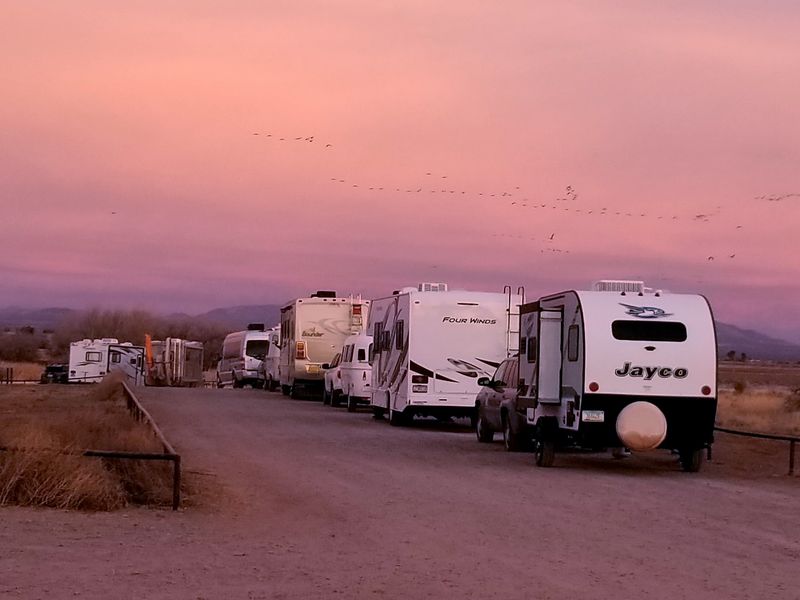
Here is the part budget-minded explorers love: the wildlife area is open 24 hours a day, every day of the week, and there is no gate keeping you out. That around-the-clock access is why some folks camp overnight to wake up beside thousands of cranes.
A handful of official sites come with picnic tables, plus more open space to simply park if you do not need one. Expect pit toilets, trash service, and often extra portable restrooms during peak season, with overflow parking added in recent years.
Reaching it means driving in on a dirt road, and this matters: if the road is wet, do not attempt it without a 4WD vehicle. Deep mud has stranded plenty of cars, and a tow out here is no fun.
Mornings can be genuinely cold, and the metal benches by the water make it worse, so pack your own chair and warm layers. The refuge sits about an hour from Tucson, south past Tombstone, and pairs nicely with a swing through nearby Bisbee.
Peak crane numbers tend to arrive in late January and early February.
Why the Drive Pays Off
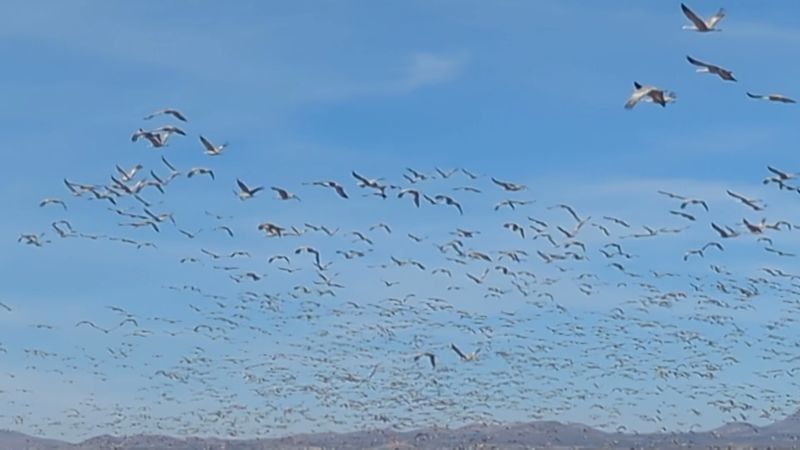
Ask anyone who has stood at the water’s edge as the sky fills with cranes, and you will hear the same verdict: it is worth every mile of that dusty road. People call it a once-in-a-lifetime sight, the kind of thing you drag your out-of-town guests to see.
The crowd it draws is part of the charm. Birders here tend to be friendly and welcoming, happy to share what they are seeing, and volunteers sometimes turn up handing out dog cookies to leashed pups.
Families, photographers, retirees, and solo wanderers all find their groove. Dogs on leashes are welcome, kids stay entertained, and the free access makes it an easy yes for a spontaneous day trip.
Come for the great departure at dawn or the golden return at dusk, then let the sound wash over you until dark. Watching V formations break apart and circle down into the shallows is the sort of memory that sticks.
Bring binoculars, a warm jacket, and a chair, and give yourself time to just be still. Arizona rarely offers a bigger payoff for so little cost.