
Families Can See Lorado Taft’s Towering Eternal Indian Statue Above The Rock River In Oregon, Illinois
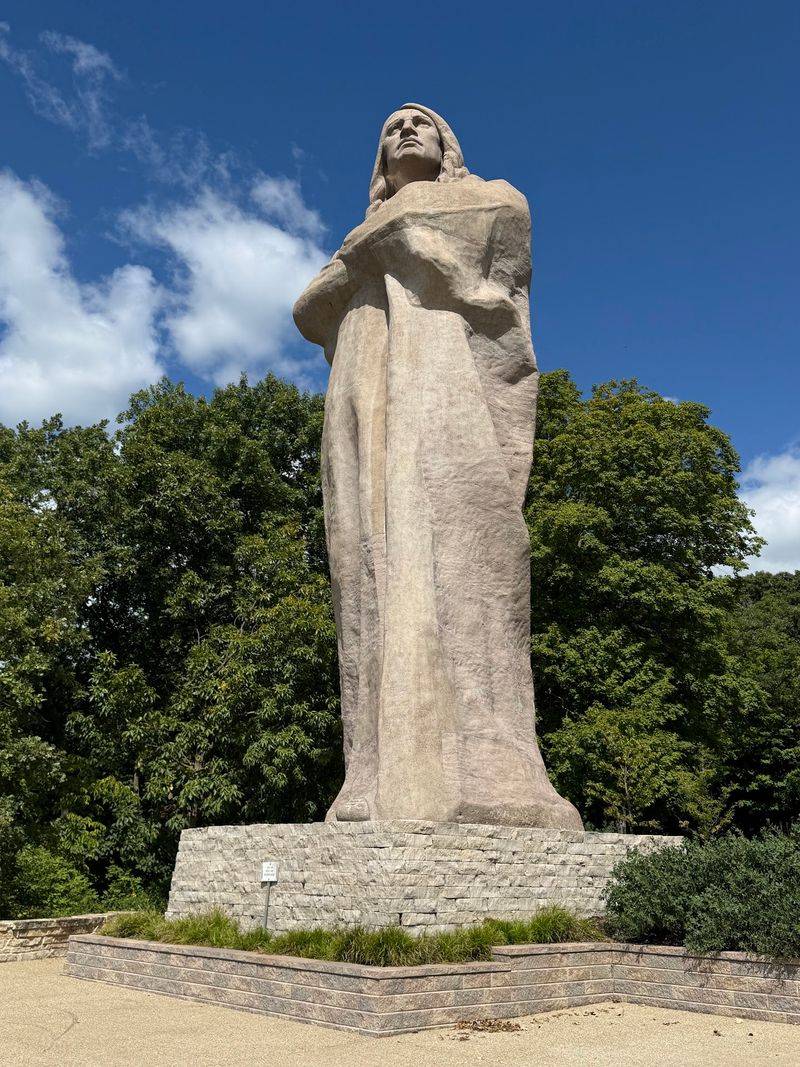
Forty-eight feet of concrete and pink granite chips has been standing guard over a northern Illinois river since 1911. Kids usually gasp the moment they step out of the car and look up.
Better yet, the whole outing costs nothing more than gas and maybe a packed lunch. It is one of those old Illinois treasures that grandparents remember and grandkids will brag about at school.
A Concrete Giant On A Bluff In Ogle County
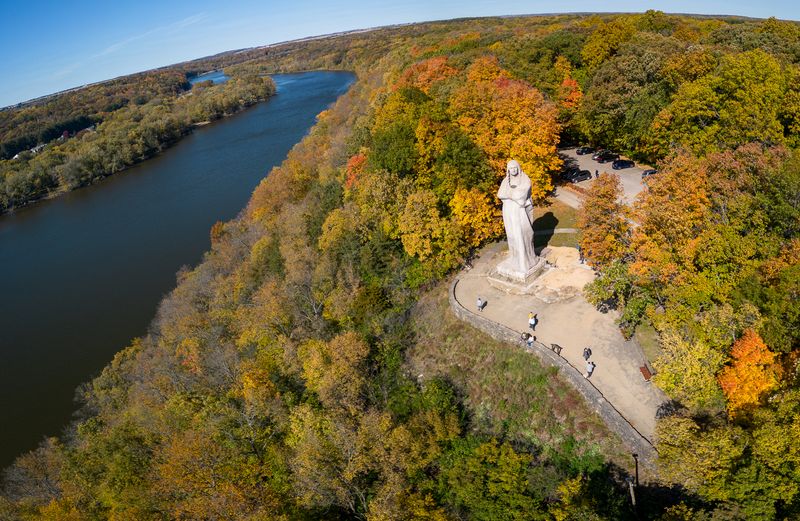
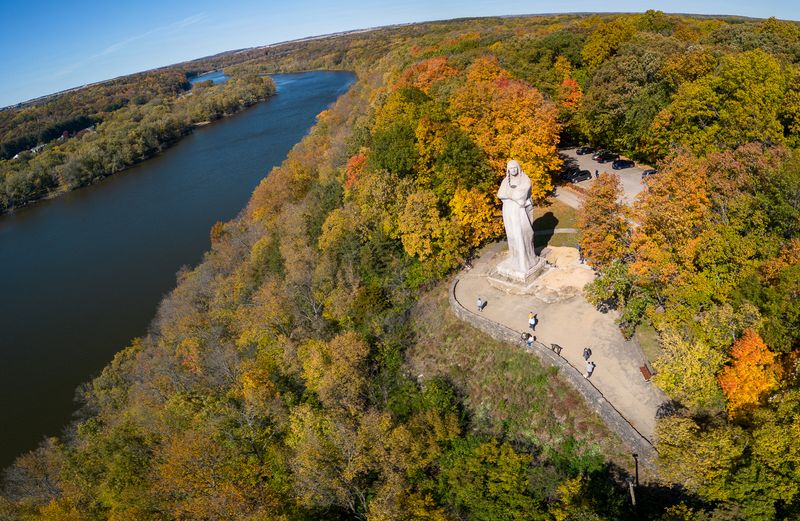
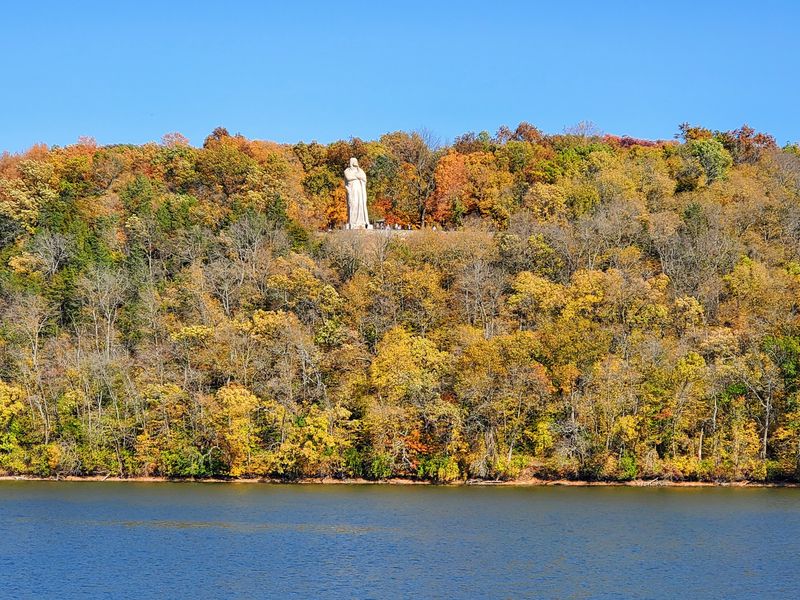
High on a wooded bluff at 1411 N River Road, a figure with folded arms gazes out across the Rock River. Locals call it the Black Hawk Statue, while its official name is The Eternal Indian.
Either way, it ranks as one of the most striking sights in all of Ogle County.
The statue sits inside Lowden State Park, just outside the small town of Oregon, Illinois. From the parking area, the figure rises 48 feet tall and stands roughly 125 feet above the water below.
Count the bluff and sculpture together, and some accounts place the whole view about 200 feet over the valley.
Families from Rockford, the Quad Cities, and the Chicago suburbs can reach it in an easy drive. Once there, the parking lot sits close to the base, so even little legs and grandparents can get up close without a long walk.
Many first-timers admit the statue is far bigger than they expected. Photos online simply do not prepare you for standing beneath it.
That moment of craning your neck and squinting up at the face is half the fun, and it happens within minutes of arriving.
Lorado Taft’s Dream From 1908
Back in 1908, sculptor Lorado Taft looked at this riverside bluff and imagined something enormous. Three years later, in 1911, his vision was officially dedicated.
More than a century on, it still draws crowds on summer weekends.
Taft was already a celebrated artist in Illinois. Longtime visitors often point out that he also created the famous Fountain of Time and other well-known works in Chicago.
To pull off a project this massive, he teamed up with John G. Prasuhn, a sculptor who also understood engineering.
Here is a detail kids love: the statue is not really a portrait of Chief Black Hawk of the Sauk tribe. Taft designed it as a tribute to the unconquerable spirit of Native Americans and their deep respect for nature.
The Black Hawk nickname simply stuck over the decades.
The site earned national recognition in 2009, when it was added to the National Register of Historic Places. Interpretive signs near the statue share plenty of history about the region and the Native peoples who lived along this river long before 1832.
Reading them together makes a quick, painless history lesson for school-age kids.
Granite Chips, Hollow Walls, And 268 Tons
Ask a curious ten-year-old to guess the weight, and the real answer will blow them away. The Eternal Indian tips the scales at roughly 536,770 pounds, or more than 268 tons.
That makes it the second largest concrete monolithic statue in the world.
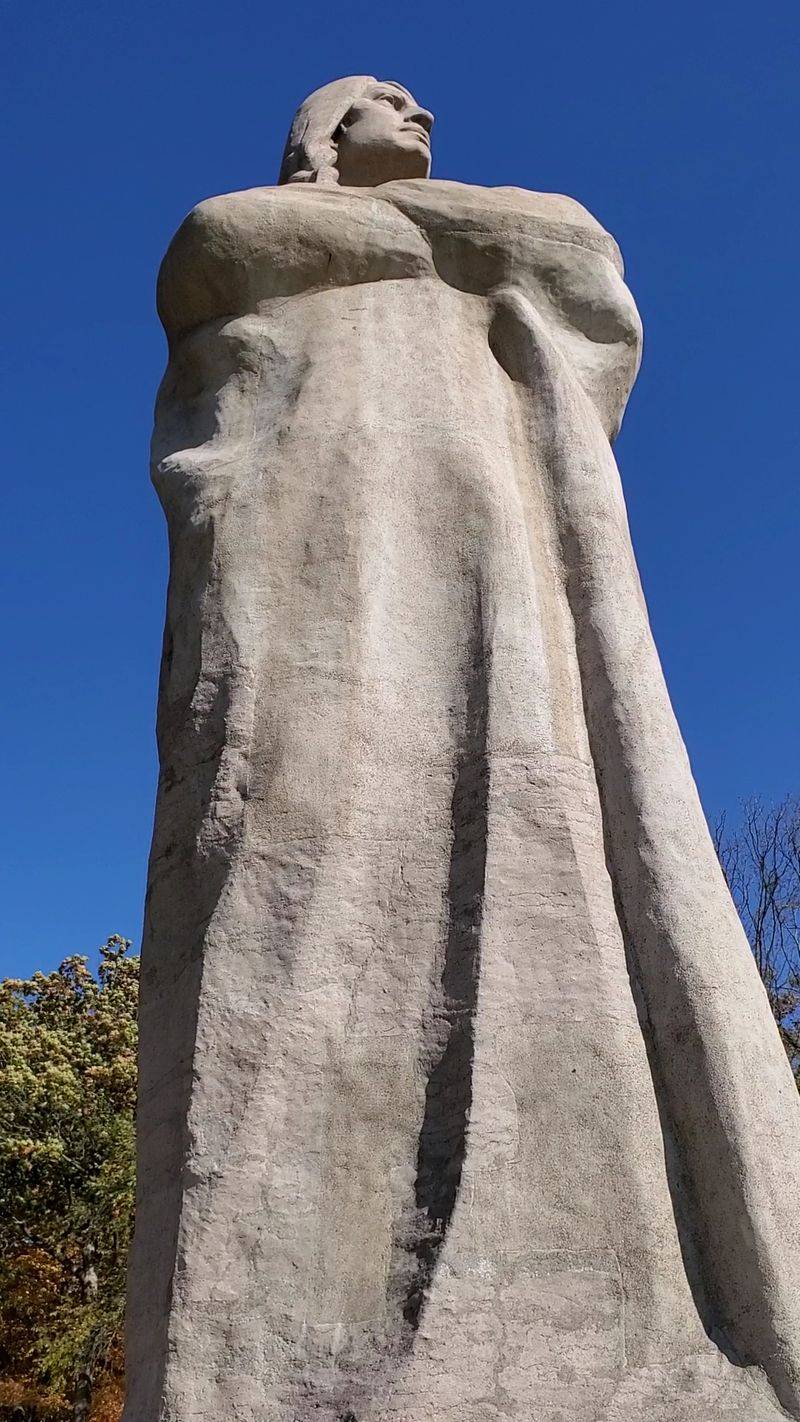
Look closely at the surface and you may spot tiny sparkles. Taft and Prasuhn mixed cement with pink granite chips, then built it all around reinforced supports.
The result has a warm, speckled texture that changes color as the sun moves across the sky.
Surprisingly, the giant is hollow inside. Its walls range from about eight inches thick in some spots to a full three feet in others.
Pouring and shaping that much concrete on a remote bluff in the early 1900s was an engineering puzzle few artists would attempt.
Recent restoration work has the statue looking sharp again, and returning visitors notice the improvements right away. The surrounding grounds have been landscaped and refreshed too.
Standing at the base, you get a true sense of the hands and hours that went into crafting something meant to last for generations.
Overlook Views Of The Rock River Valley
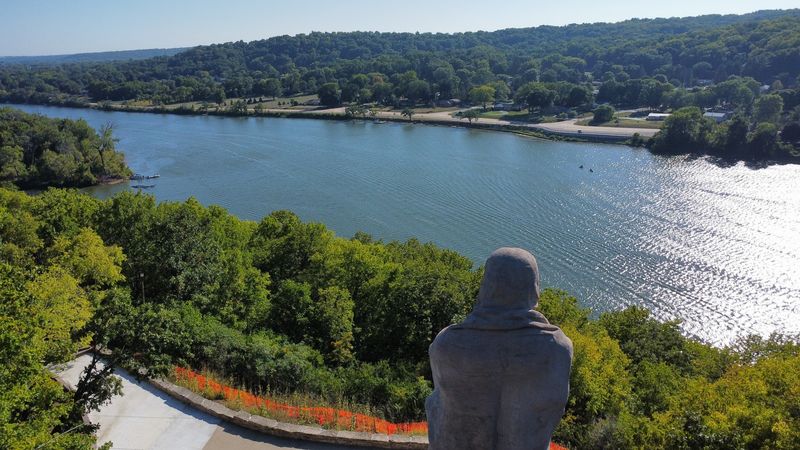
Mountains in Illinois? Not quite, but the overlook beside the statue sure feels that way.
The river stretches out far below, curving through green farmland and wooded banks.
Visitors often describe the panorama as majestic, and it is easy to see why. Birds of prey frequently ride the air currents over the valley, so bring sharp eyes or a pair of binoculars.
Little ones get a thrill spotting wings gliding past at eye level.
Timing matters for the clearest view. In full summer, leafy trees can partly block sightlines toward the water.
Come autumn, the foliage thins and turns brilliant, opening up the river and painting the bluffs in gold and red.
Sunset is another magic hour. The fading light glows against the statue and the water at the same time, giving families a postcard moment for the photo album.
A handful of benches and open grassy spots make it simple to sit, snack, and soak it all in.
Even on busy holidays like the Fourth of July, the overlook rarely feels packed. Weekdays can be wonderfully quiet, leaving the scenery almost entirely to you.
The 204 Steps Down To The Water
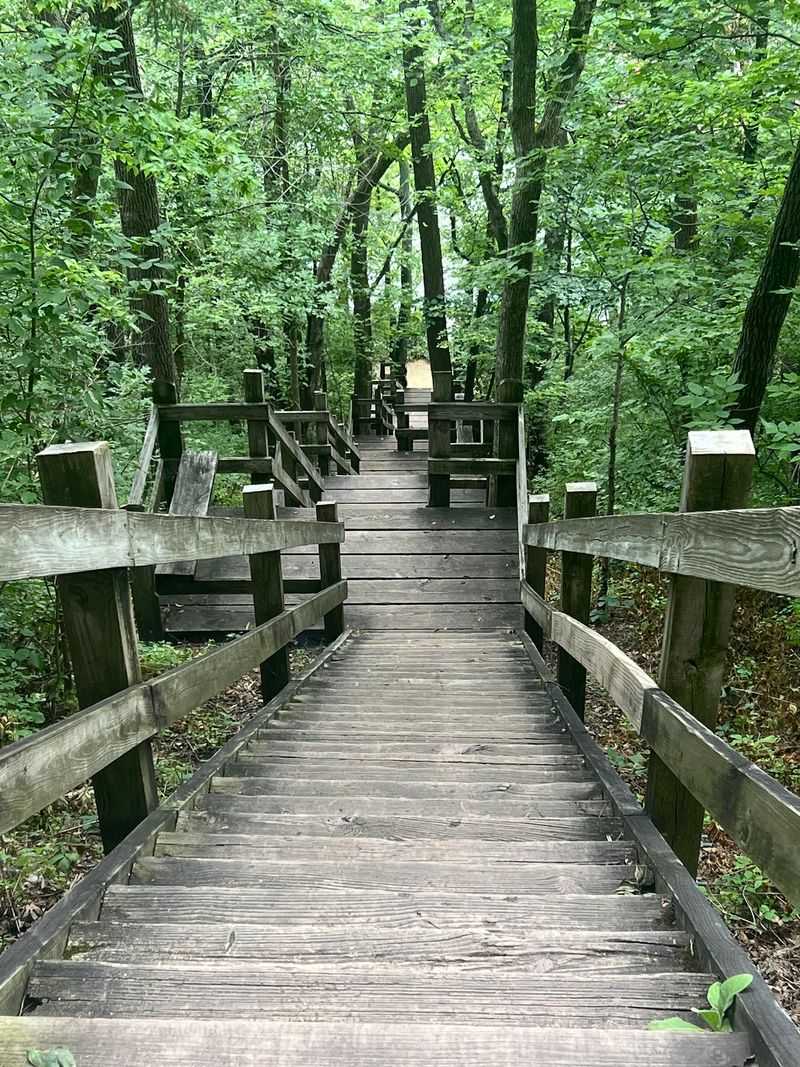
Two hundred and four. That is the number your kids will be counting out loud on the long wooden staircase that drops from the statue to the riverbank.
Going down is a breeze, while climbing back up is a leg-burning adventure everyone will remember.
At the bottom, the reward is a flat, easy path right along the water’s edge. Heading north, the trail eventually ends at private property, so most folks turn back and wander south.
Following that route leads toward Ganymede stream and a lush, green stretch beside the river.
Some people fish from the bank down here, and others simply watch boats drift by. Dogs on leashes seem to enjoy the trip as much as their humans do.
A few practical tips help. After rain, mud can collect near the base of the steps and limit how far you roam.
Sturdy shoes are smart, and so is a water bottle for the trip back up.
Pace yourselves on the return climb and make a game of it. Stopping at landings to catch your breath turns a tough workout into a family story worth retelling.
Trails, Picnic Tables, And Room To Roam
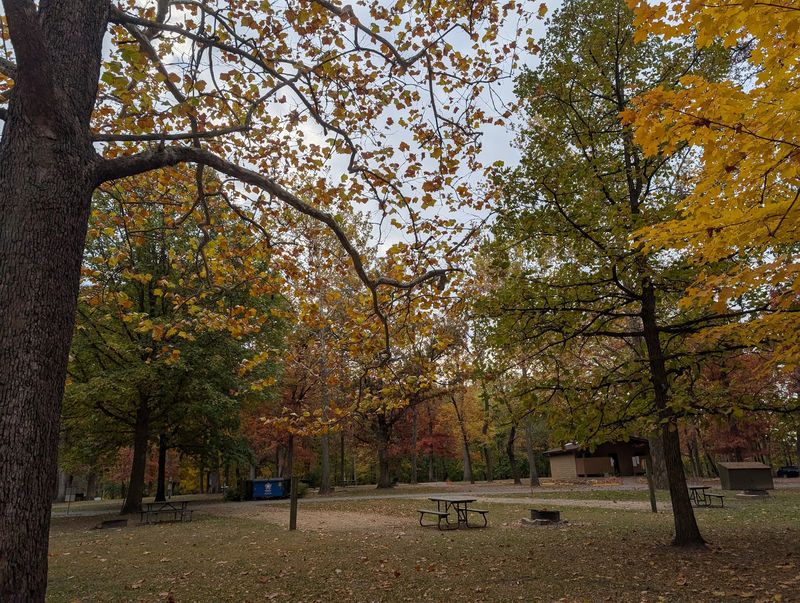
Pack the cooler, because the statue is only the beginning. Lowden State Park spreads out with hiking trails, wide open lawns, and plenty of picnic tables near the parking lot.
Trails are the most talked-about feature after the statue itself. Some paths wind gently through the woods, while upper routes leading toward the river get steep and rough.
Families with younger kids usually prefer the stairs, saving the rugged trails for older hikers. Trail markers help keep everyone on track at intersections.
Back up top, longtime visitors mention play areas and restrooms, which make a full afternoon far easier with children. There is also a campground in the park for families who want to stretch the outing into an overnight.
Waking up near the river makes the trip feel like a real getaway without a big price tag.
Some corners of the park show their age, but it stays well loved and generally well kept. Many Illinois families have returned year after year for decades.
That kind of loyalty says plenty about a place where sandwiches taste better with a river breeze and a giant statue keeping watch nearby.
Planning A Budget-Friendly Visit
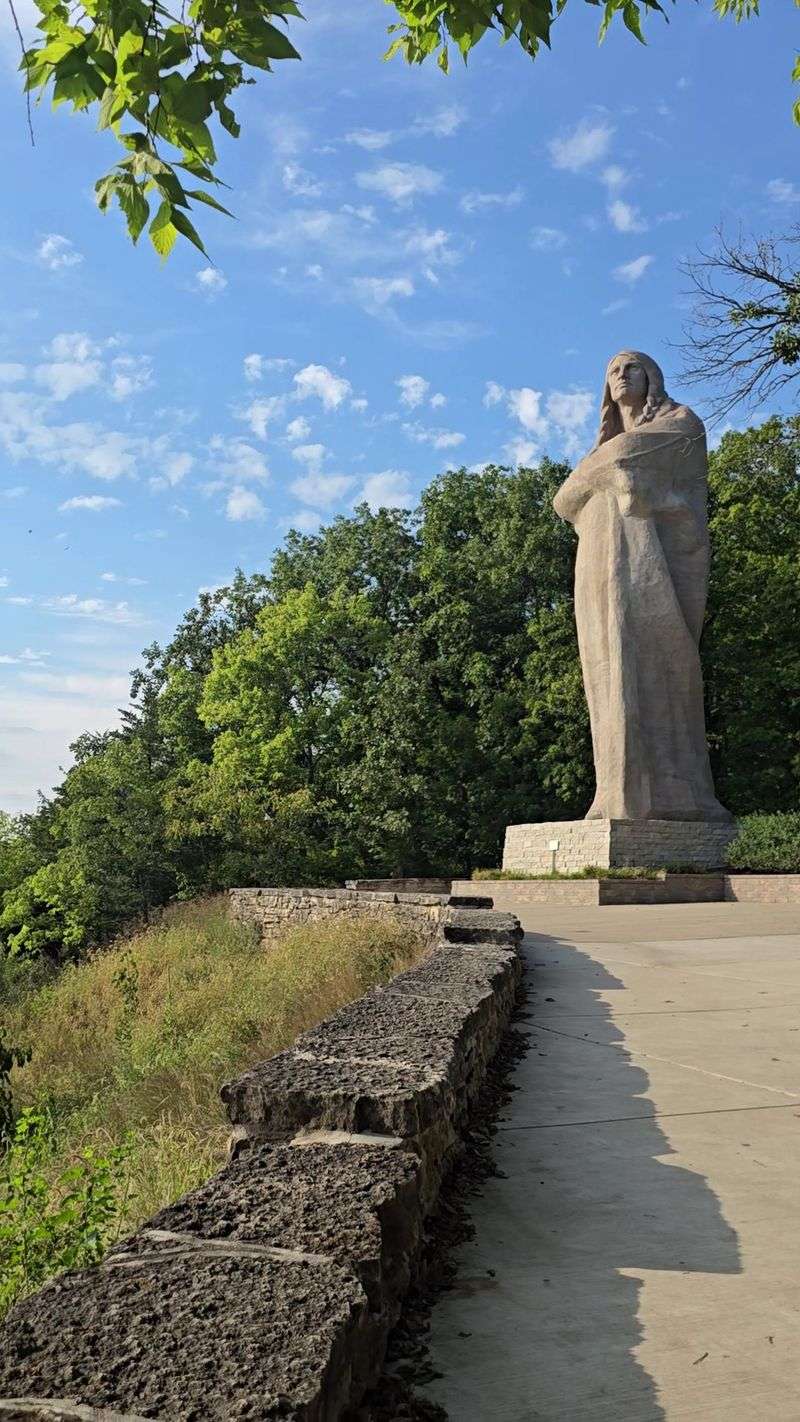
Good news for the wallet: there is no fee to enter the park. A day here can easily cost less than a single movie ticket, especially if you bring your own lunch.
Getting there is simple. Set your GPS for 1411 N River Road in Oregon, Illinois, and enjoy a pleasant country drive through Ogle County.
Fair warning, parts of the road leading in can be a bit bumpy, so take it slow.
The parking lot is spacious and sits close to the statue. That short distance, plus the refreshed landscaping, makes the main viewing area accessible for visitors with physical challenges, strollers, or tired grandparents.
The steep stairs and rugged trails, of course, are a different story.
Restrooms are available near the main area. Late mornings on weekdays tend to be the quietest, while fall weekends bring more color and a few more visitors.
A quick checklist helps:
Comfortable walking shoes, water, snacks, and a camera. Binoculars for bird watching.
A leash if the family dog is tagging along. With those basics covered, the only thing left is deciding who gets the first photo beneath those folded concrete arms.
Why The Drive To Oregon Pays Off
Quiet moments stick with kids longer than we expect. Sitting beneath a century-old giant while hawks circle the river is exactly that kind of memory.
The Eternal Indian blends art, history, nature, and exercise into one free outing. Few Illinois day trips offer that much variety without a single ticket booth.
Many visitors find the setting peaceful, almost reflective, and a good place to pause and breathe.
Families who have come for twenty years or more keep returning for a reason. Every season paints the bluff differently, and every age finds something new to love.
Toddlers marvel at the size, teens tackle the stairs, and grandparents appreciate the history and the benches.
Respecting the land matters here too. Carrying out your trash and staying on marked paths helps keep this treasured spot beautiful for the next generation.
Is it flashy? Not at all, and that is part of its charm.
It is a humble, enduring piece of Illinois heritage that rewards anyone willing to take a short drive. Plan a fall afternoon or a summer picnic, and chances are your crew will be asking when they can come back.