
12 Family-Friendly Hikes In Phoenix, Arizona Where The Trails Are Short And The Payoffs Are Big
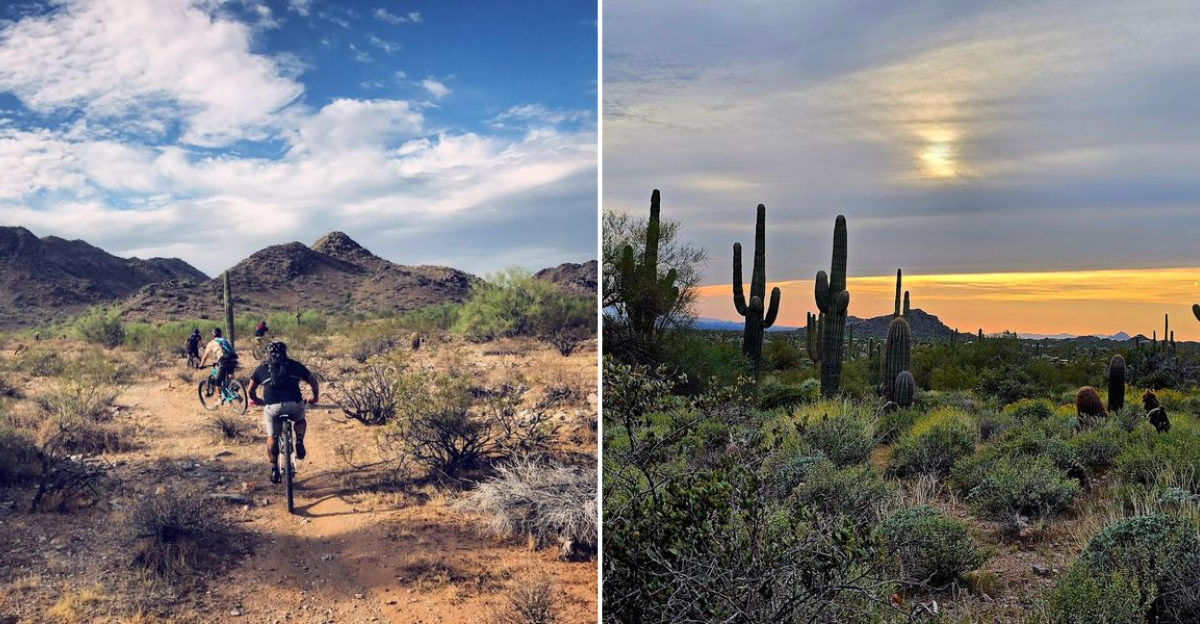
Who says a trail has to leave everyone dusty, cranky, and negotiating snack terms by mile three? Some of my favorite Phoenix, Arizona hikes have been the short ones, the kind where the reward shows up before anyone has time to stage a dramatic backpack protest.
I learned that on a warm morning when my “quick little walk” turned into a family debate over lizards, shade, and whether a granola bar counts as breakfast.
By the time we reached the overlook, the complaints had disappeared into the desert air, replaced by that quiet little wow only a wide Arizona view can pull out of people.
That is the magic of family-friendly trails around Phoenix. They do not ask for mountaineering dreams or all-day stamina.
They just offer cactus-lined paths, easy distances, rocky surprises, city views, and enough payoff to make everyone feel like they actually went somewhere.
1. Hole-In-The-Rock Trail, Papago Park, Phoenix
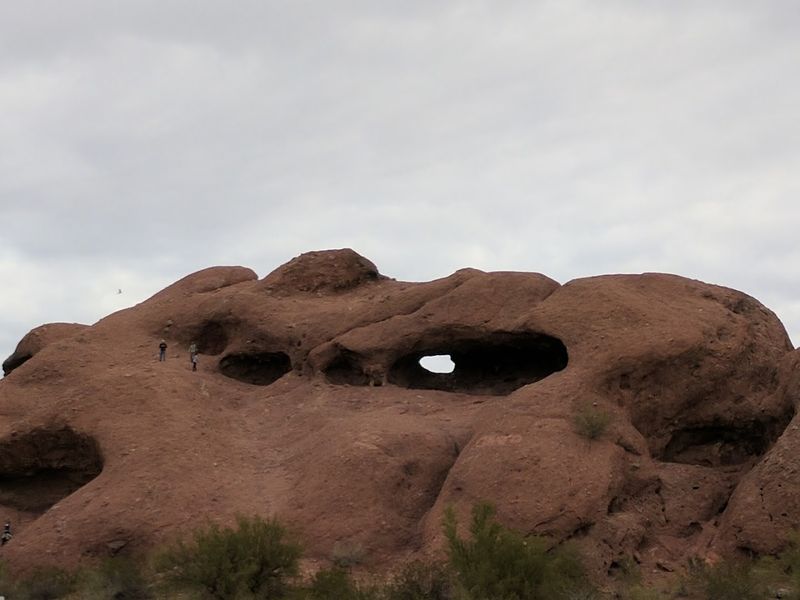
Few trails in the entire Phoenix metro deliver a payoff this fast. You walk less than a third of a mile, scramble up smooth red sandstone, and suddenly you are peering through a natural oval window carved by centuries of wind and water erosion, with the Phoenix skyline framed perfectly behind you.
Kids absolutely love it, and the family photos are genuinely impressive. Papago Park sits just minutes from downtown Phoenix and is easy to reach from most parts of the Valley.
The trailhead has parking, restrooms, and a nearby fishing pond, so you can easily turn this into a half-day outing. Plan to arrive early on weekends because the small parking area fills up quickly.
Bring a camera with a wide lens if you have one, because the window shot rewards good framing. Sunset light hits the sandstone in a warm amber glow that makes every photo look professionally composed.
2. Nature Trail, Papago Park, Phoenix
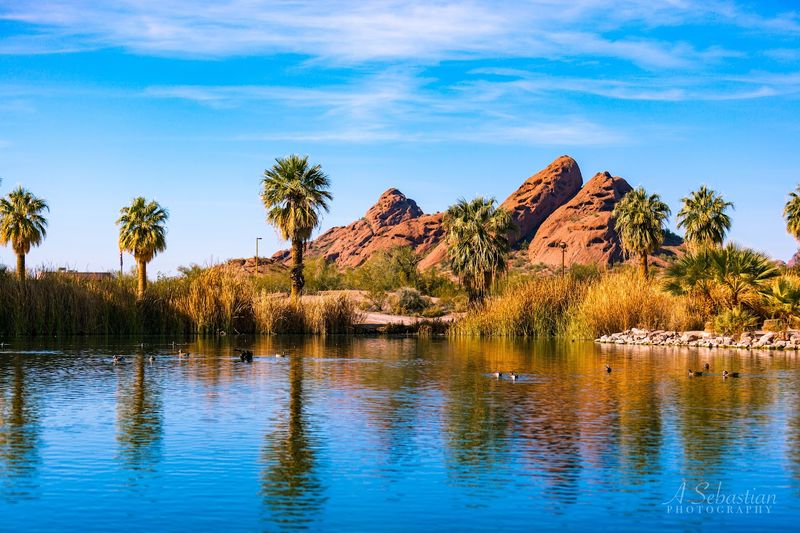
If Hole-in-the-Rock feels too crowded for your taste, the Nature Trail running through the same park offers a calmer and equally pretty alternative.
At roughly 0.5 miles, this compact loop winds through classic Sonoran Desert scenery, past saguaro cacti, palo verde trees, and chunky red rock outcroppings that kids find endlessly interesting to examine up close.
The trail surface is manageable for older toddlers walking on their own, and the flat terrain keeps the pace relaxed.
Papago Park is home to the Phoenix Zoo and the Desert Botanical Garden, so combining the Nature Trail with a visit to either attraction makes for a full and satisfying family day without anyone covering too many miles on foot.
Morning visits are especially pleasant here, when the desert smells fresh and the light is soft. Quail families often scurry across the path in single file, which never fails to delight younger hikers.
3. Judith Tunnell Accessible Trail, South Mountain Park, Phoenix
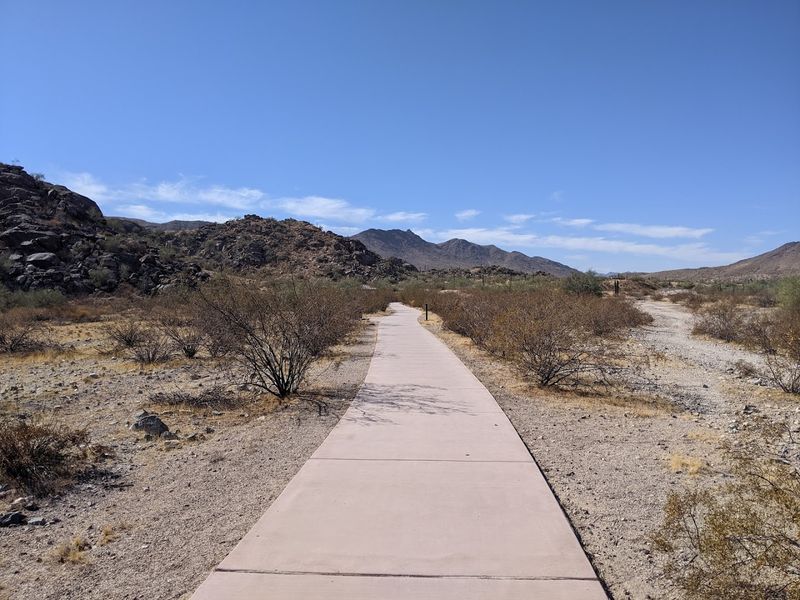
South Mountain Park is one of the largest municipal parks in the entire United States, and the Judith Tunnell Accessible Trail makes its stunning desert scenery available to every member of the family regardless of age or mobility.
The trail features two hard-surface half-mile loops, so you can choose how much ground to cover based on how your group is feeling that day.
Benches and ramadas are spaced along the route, giving everyone a chance to rest and look out over the rolling desert without feeling rushed. Drinking fountains are available nearby, which is a genuine luxury on a warm Arizona morning.
The elevation change is minimal, keeping the experience genuinely relaxing rather than exhausting.
Interpretive signs along the path identify native plants and explain the ecology of the Sonoran Desert in language that kids can actually understand. Starting at the nature center adds even more educational value to an already excellent family outing.
4. Warpaint Loop Trail, South Mountain Park, Phoenix
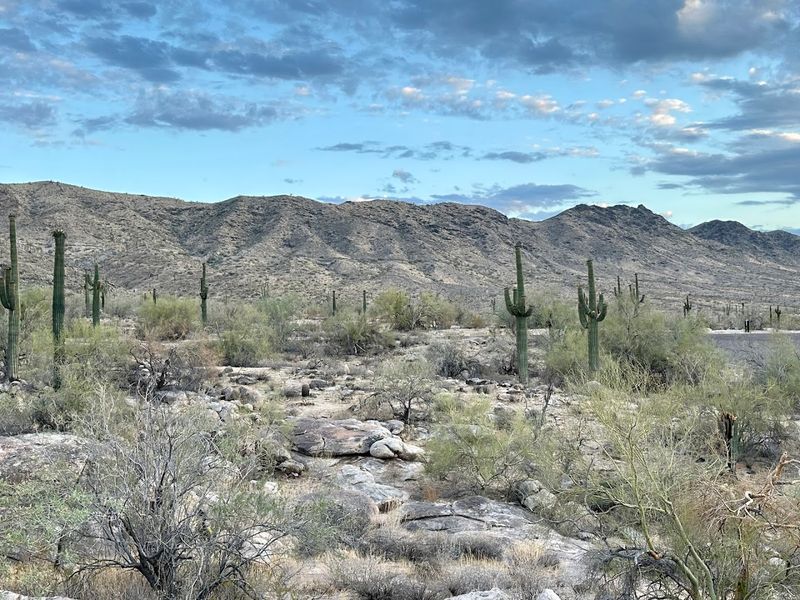
South Mountain offers dozens of trails, but the Warpaint Loop stands out as a smart choice for families who want genuine desert scenery without committing to a long or strenuous route.
Clocking in at about 0.8 miles, it keeps the mileage friendly while still delivering the rugged, rocky character that makes South Mountain such a beloved destination for Phoenix hikers.
The terrain has a bit more texture than the fully paved Judith Tunnell trail nearby, making it a natural next step for kids who are ready to move beyond smooth surfaces and try something with a little more crunch underfoot.
Saguaros line the route, and the views toward the surrounding mountain ridgelines are genuinely satisfying.
Go in the cooler months between October and April for the most comfortable experience. The trailhead at South Mountain is well-marked and the parking area is spacious, making logistics simple even when you are wrangling multiple children and a loaded day pack.
5. Penny Howe Barrier Free Trail, North Mountain Park, Phoenix
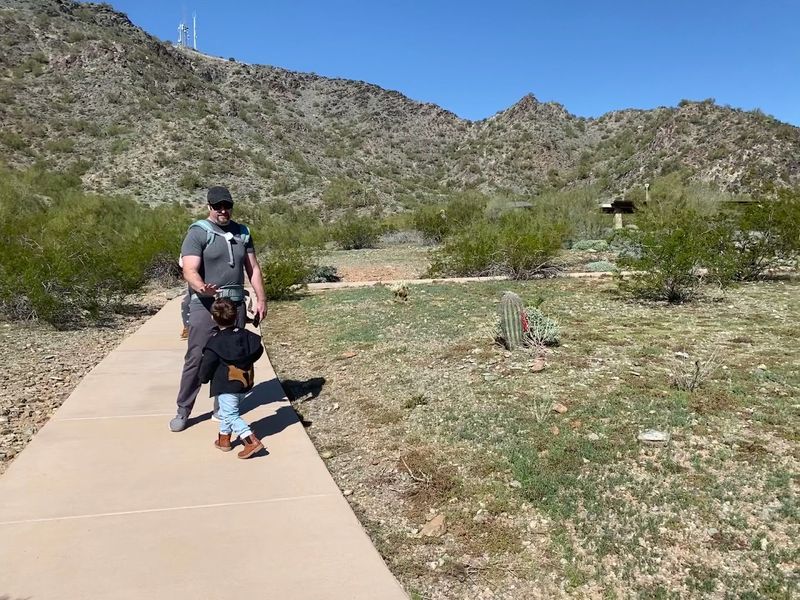
North Mountain Park is a quieter corner of the Phoenix Mountains Preserve, and the Penny Howe Barrier Free Trail is one of the sweetest starter hikes in the entire city.
Two small loops cover just 0.3 miles total, with only about 40 feet of elevation change, making this genuinely manageable for toddlers who insist on walking every step themselves.
Interpretive signs identify the native plants along the route, turning the walk into an informal outdoor classroom.
Kids who enjoy collecting facts about the natural world will find plenty of material here, from the towering saguaro to the spiky cholla and the small but determined brittlebush that blooms yellow in late winter and spring.
The trail is paved and smooth, which means strollers and wagons work well here. North Mountain Park also has a recreation center and picnic facilities nearby, so you can extend the outing with a shaded lunch after the hike wraps up.
6. Lookout Mountain Circumference Trail, Phoenix Mountains Preserve
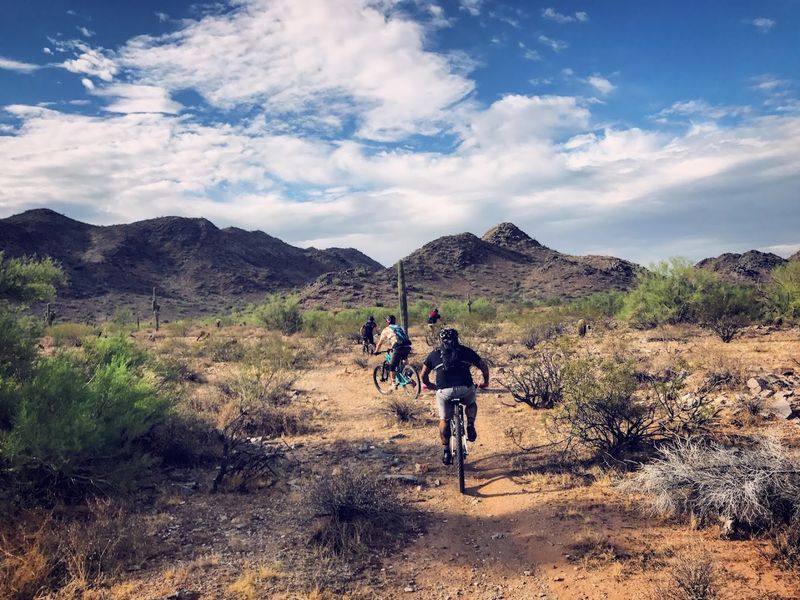
At 2.6 miles, the Lookout Mountain Circumference Trail is the longest hike on this list, but it earns its spot because the route circles the entire mountain without requiring a summit push, keeping the grade manageable for families with older kids who are ready for a slightly bigger adventure.
The views are legitimately spectacular in every direction. Looking north you can see into Scottsdale, and the sight lines toward Shadow Mountain, North Mountain, and Shaw Butte give the walk a sense of scale that younger hikers often find awe-inspiring.
Sunrise and late-afternoon visits offer the best light and the coolest temperatures, which matters a great deal in a desert environment.
This trail works best for families whose youngest members are at least six or seven years old and comfortable covering a few miles. Bring at least two liters of water per person, wear sun-protective clothing, and start early to beat both the heat and the crowds that gather on weekend mornings.
7. Piestewa Peak Nature Trail, Phoenix Mountains Preserve
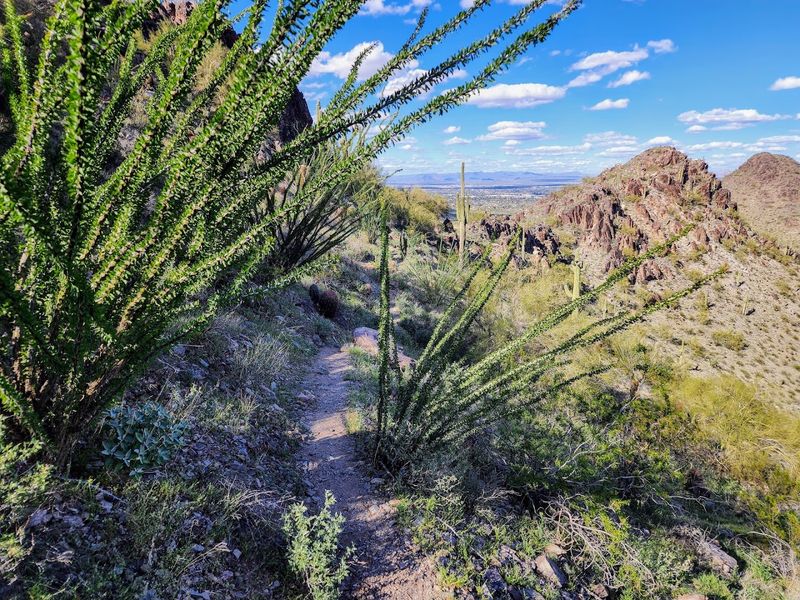
Piestewa Peak is famous for its challenging summit trail, but this article is focused on the Nature Trail, and for good reason.
Running about 1.4 miles with only 180 feet of elevation change, it offers a peaceful desert walk that families with younger children can complete comfortably without the intensity of a summit climb. The scenery is genuinely beautiful throughout.
One important note: trails in this area can be restricted between 8 a.m. and 5 p.m. during National Weather Service Extreme Heat Warnings, so always check conditions before heading out, especially between June and September. Phoenix takes heat safety seriously, and so should you.
The Nature Trail passes through classic Sonoran Desert habitat with a good variety of plant and bird species.
Early morning visits in spring are particularly rewarding, when wildflowers add splashes of color to the sandy trail edges and the temperatures are cool enough to enjoy a leisurely pace without counting down to the finish.
8. Bajada Nature Trail, McDowell Sonoran Preserve, Scottsdale
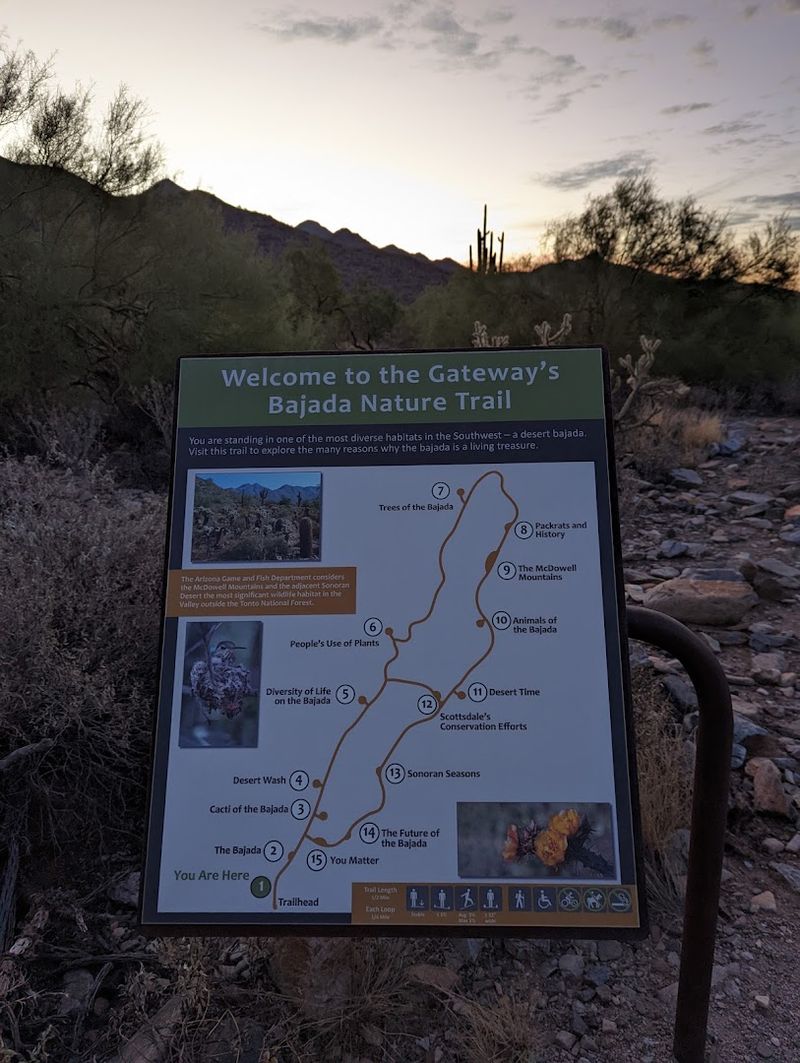
Scottsdale sits just east of Phoenix and the McDowell Sonoran Preserve is one of the largest urban preserves in the country, protecting thousands of acres of pristine Sonoran Desert.
The Bajada Nature Trail is the preserve’s most welcoming entry point for families, running about 0.7 miles through interpretive desert scenery on a surface that accommodates strollers and wheelchairs comfortably.
Experience Scottsdale describes it as an ADA-accessible easy stroll, and that description is accurate. The path meanders through a bajada, which is the gently sloping terrain that fans out from a mountain base, and the plant diversity along the route is impressive even for a short walk.
Interpretive markers explain the ecology in clear, engaging language. Parking at the Gateway Trailhead is well-organized, and the visitor center nearby provides maps, restrooms, and helpful ranger staff.
Spring mornings here are genuinely lovely, with cactus wrens calling from the saguaros and the air carrying that distinctive clean desert scent that longtime Phoenix residents treasure.
9. Kovach Family Nature Trail, Lost Dog Wash Trailhead, Scottsdale
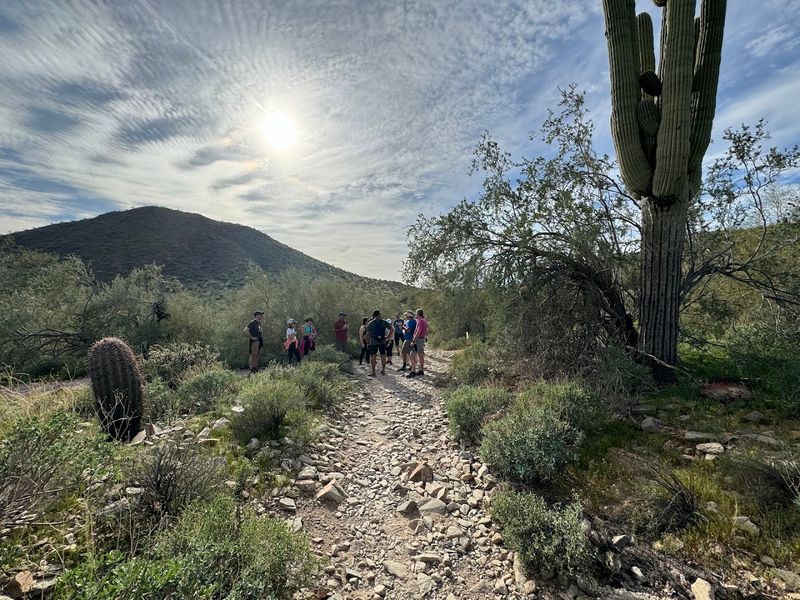
The name alone tells you this trail was built with families in mind.
The Kovach Family Nature Trail at Lost Dog Wash Trailhead in Scottsdale stretches just 0.5 miles on a barrier-free, easy surface with interpretive stops that encourage kids to slow down, observe, and ask questions about the desert environment surrounding them.
It is short enough that even reluctant walkers stay engaged from start to finish.
Lost Dog Wash Trailhead is a popular launching point for longer hikes into the McDowell Sonoran Preserve, but the Kovach trail keeps things accessible and low-pressure for families who just want a meaningful outdoor experience without covering significant mileage.
The trailhead has good parking and restroom facilities. Interpretive markers along the route introduce native plants, desert geology, and local wildlife in a way that sparks genuine curiosity.
Visiting in the cooler months between November and March gives you the best chance of spotting wildlife, including jackrabbits, Gambel’s quail, and the occasional roadrunner moving quickly through the brush.
10. Merkle Trail, Usery Mountain Regional Park, Mesa
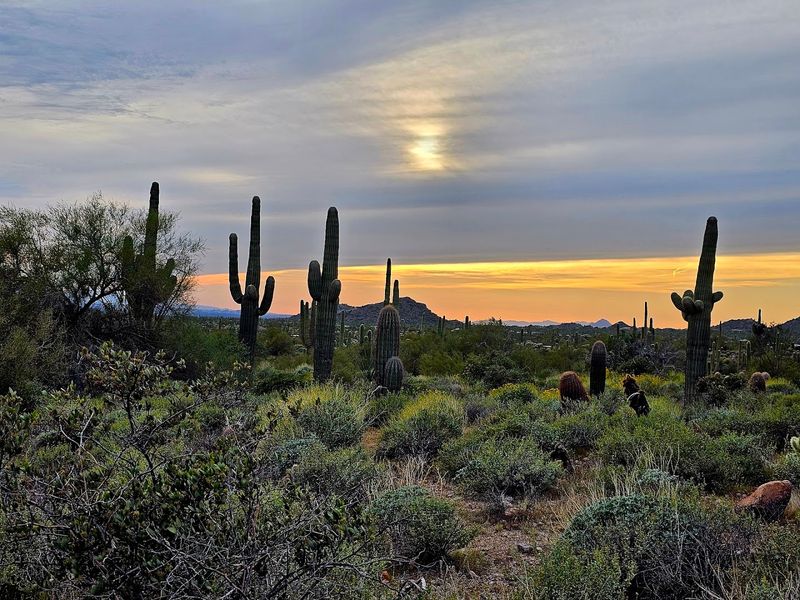
Maricopa County’s Usery Mountain Regional Park is a well-run, well-maintained facility east of Mesa, and the Merkle Trail is its standout option for families with very young children.
Described by Maricopa County as a one-mile, barrier-free interpretive trail suitable for strollers and wheelchairs, it checks every practical box for parents who want a real outdoor experience without logistical headaches.
The trail winds through typical Lower Sonoran Desert vegetation, with saguaros, prickly pear, and ocotillo providing that unmistakably Arizona backdrop.
Interpretive panels explain what you are seeing in accessible language, and the flat surface means you can push a stroller while still looking around and enjoying the scenery instead of watching your footing.
A vehicle entry fee of seven dollars applies to the park, and it is worth every cent. Usery Mountain also has a campground, an archery range, and a nature center, making it easy to build a full family day around what starts as a simple one-mile walk through the desert.
11. Waterfall Trail, White Tank Mountain Regional Park, Waddell
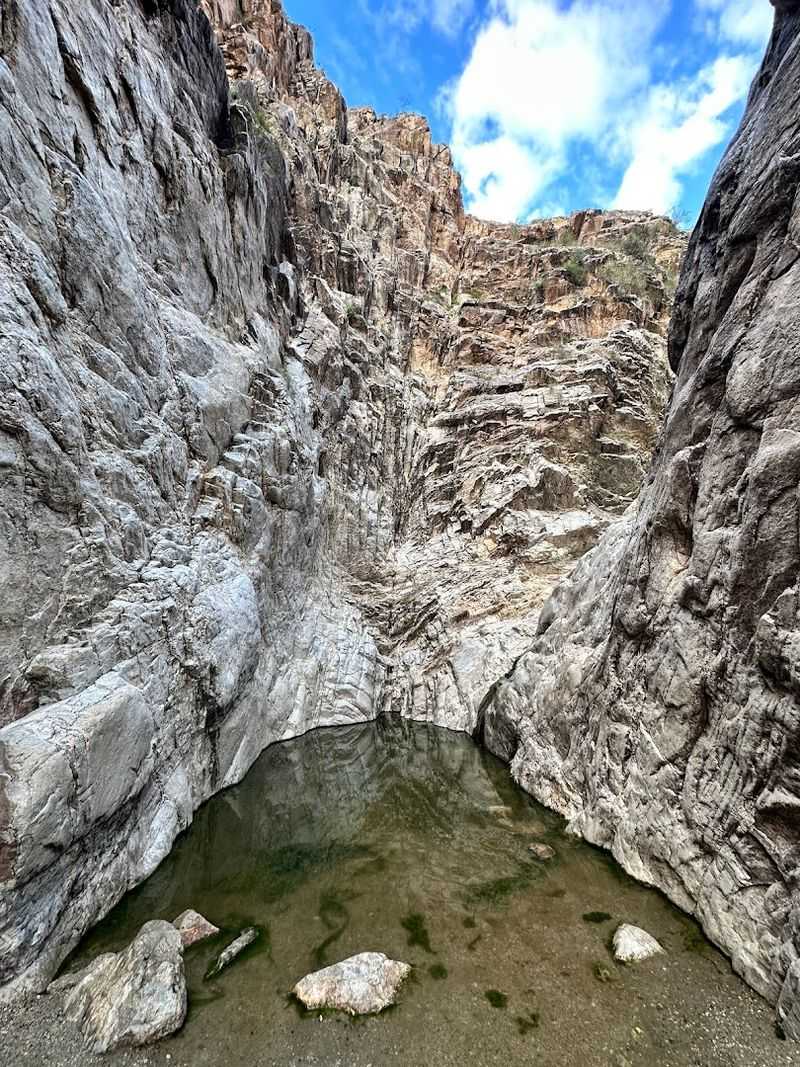
This one earns the big-payoff title most literally. The Waterfall Canyon Trail in White Tank Mountain Regional Park near Waddell runs about two miles round trip and leads to a scenic box canyon where a seasonal waterfall drops after significant rainfall.
Even when the falls are dry, the canyon walls and surrounding terrain are striking enough to make the walk completely worthwhile.
Ancient petroglyphs appear along the route, carved into the rock by the Hohokam people who lived in this region over a thousand years ago. Pointing them out to kids and explaining their age turns a pleasant hike into a genuinely memorable history lesson.
The trail is mostly paved, making it accessible for a wide range of ages and abilities.
White Tank Mountain Regional Park charges a seven-dollar vehicle entry fee, and the facilities include a nature center, picnic areas, and a playground. Visiting after a good rain in late summer or early fall gives you the best chance of seeing actual water flowing over those canyon walls.
12. Jacob’s Crosscut Trail, Lost Dutchman State Park, Apache Junction
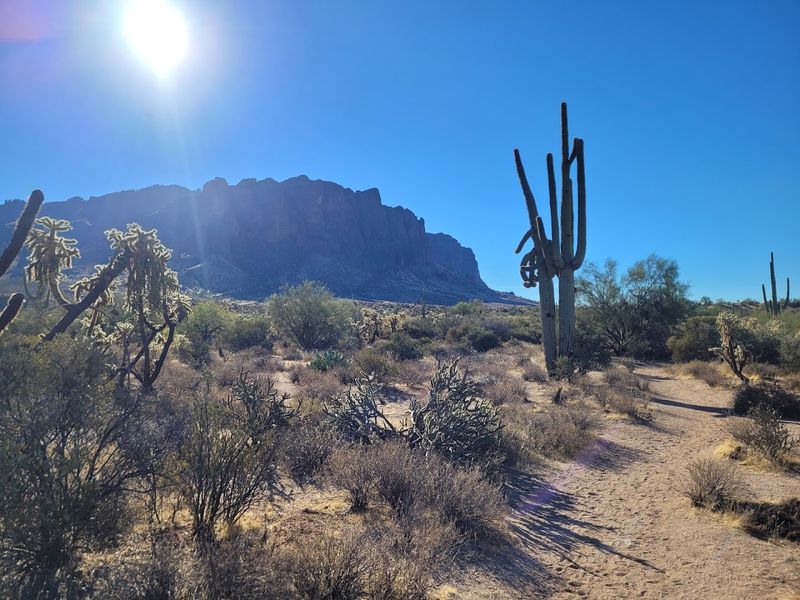
Ending this list at the base of the Superstition Mountains feels exactly right. Jacob’s Crosscut Trail at Lost Dutchman State Park in Apache Junction runs just 0.8 miles and is rated easy by Arizona State Parks, hugging the lower slopes of the mountains without sending your group into serious climbing territory.
The scenery, however, is anything but ordinary. The jagged volcanic peaks of the Superstitions rise dramatically above the trail, and the saguaro-studded desert floor stretches out in every direction.
Kids who have seen the Superstitions from the highway will feel a real sense of arrival when they are actually standing at the mountain’s base, looking up at those iconic ridgelines. It is a powerful spot that photographs beautifully at any time of day.
Arizona State Parks charges an entry fee, and the park has excellent facilities including a campground, picnic areas, and a visitor center.
Spring wildflower season, typically February through April, transforms the surrounding desert into something genuinely spectacular and adds an extra layer of reward to an already outstanding short hike.