
8 Famous Ghost Towns In Nevada With Wild Hollywood Connections
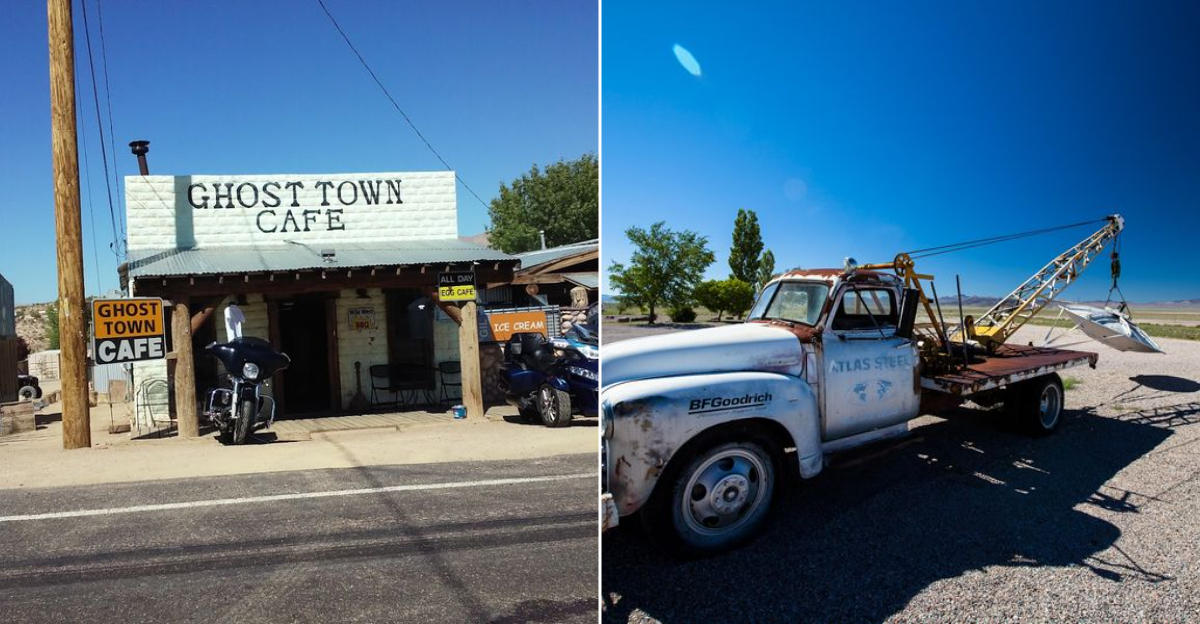
Nevada’s ghost towns are more than abandoned buildings and dusty streets. They are frozen chapters of the American West.
Once filled with miners, fortune seekers, and booming businesses, these forgotten places now stand as haunting reminders of dreams that rose fast and disappeared even faster.
But their stories didn’t end when the last residents left. Over the years, many of these ghost towns found a second life on the big screen.
Their weathered saloons, empty roads, and rugged landscapes have provided the perfect backdrop for classic Westerns, action films, and even modern blockbusters, proving that some places never lose their cinematic appeal.
Whether you’re fascinated by Wild West history, Hollywood trivia, or off-the-beaten-path adventures, these Nevada ghost towns offer the best of all three. Here are famous ghost towns where real history and movie magic come together in unforgettable ways.
1. Nelson Ghost Town
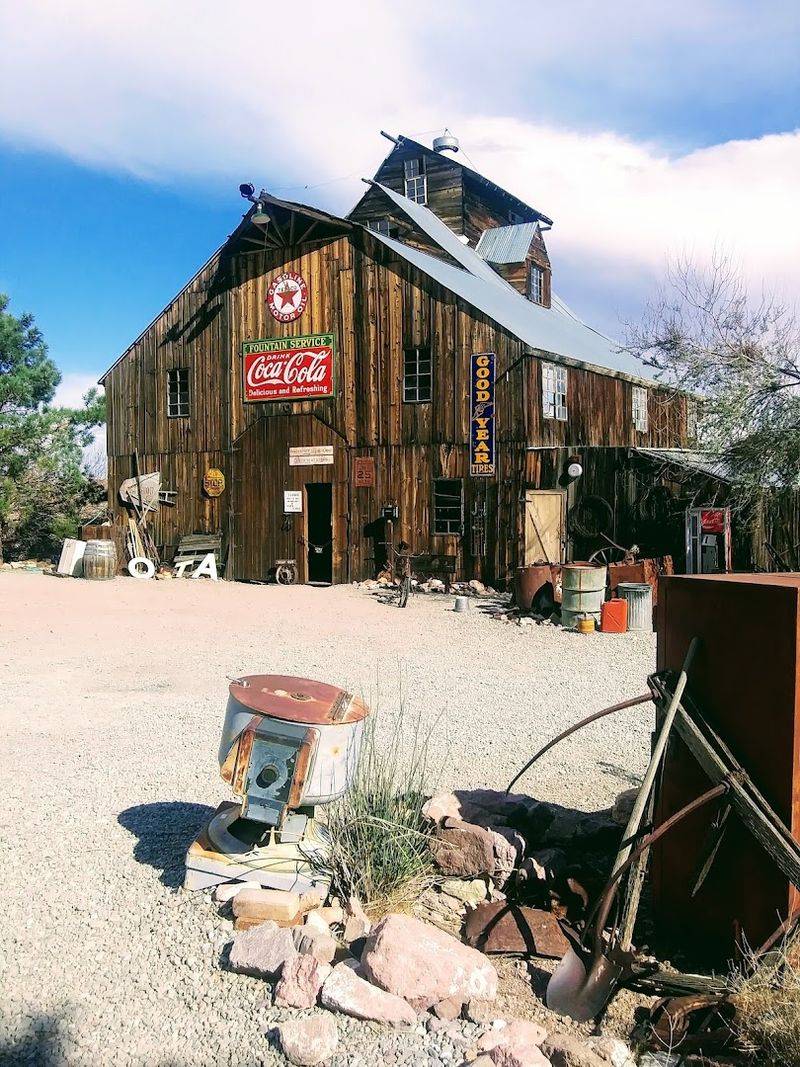
Pull up to Nelson Ghost Town and you immediately feel like you’ve stumbled onto an active film set, because honestly, you kind of have.
Sitting about 45 minutes south of the Las Vegas Strip in the stunning Eldorado Canyon, this place is cinematic gold in the most literal sense. The address is 16880 NV-165, Nelson, NV 89046, tucked into a dramatic desert landscape that practically frames itself.
Nelson is home to the Techatticup Mine, the oldest and richest gold mine in Southern Nevada. The property is loaded with wonderfully weathered buildings, rusted vintage vehicles, and antique mining equipment that look straight out of a Hollywood prop warehouse.
Except none of it is staged. Every piece of rusted machinery, every crumbling wall tells a real story from a wild and lawless era when Civil War deserters and prospectors called this canyon home.
Hollywood noticed early and never really stopped coming back. The 2001 film “3000 Miles to Graceland” was filmed here, and a fabricated plane wreck prop from that production still sits on the property today.
The 1997 thriller “Breakdown” also captured its moody desert atmosphere beautifully. Fans of gaming culture will recognize Nelson as a major inspiration for the iconic video game “Fallout: New Vegas,” which borrowed heavily from its post-apocalyptic aesthetic.
Nelson is not just a ghost town. It’s a living, breathing movie legend.
2. Rhyolite Ghost Town
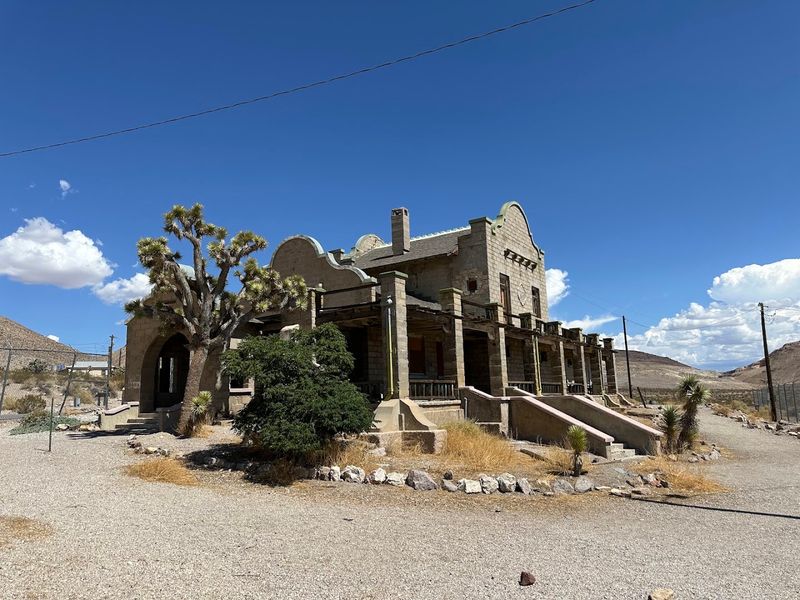
Rhyolite is the kind of place that makes you stop mid-sentence and just stare. Located along Rhyolite Road, Beatty, NV 89003, this former boomtown once had electric lights, water mains, telephones, an opera house, and a stock exchange.
At its peak around 1907, between 3,500 and 5,000 people called it home. Today, its grand ruins stand as one of the most photographed ghost towns in the American West.
The Cook Bank Building ruins are absolutely jaw-dropping, with massive crumbling walls that look like ancient Roman architecture transplanted into the Mojave.
Then there’s the Bottle House, famously constructed from around 50,000 glass bottles, which is exactly as wonderfully bizarre as it sounds. Nearby, the Goldwell Open Air Museum adds a surreal artistic layer with striking sculptures scattered across the desert floor.
Paramount Pictures actually restored the Bottle House back in 1925 for the silent film “The Air Mail,” making Rhyolite one of Hollywood’s earliest Nevada locations.
The Cook Bank ruins appeared in “The Reward” in 1964 and later in the 2005 sci-fi thriller “The Island,” starring Scarlett Johansson and Ewan McGregor. The cult indie film “Six-String Samurai” from 1998 also used Rhyolite’s otherworldly landscape as a backdrop.
Rhyolite proves that sometimes ruins are more glamorous than the original buildings ever were.
3. Goldfield Historic District
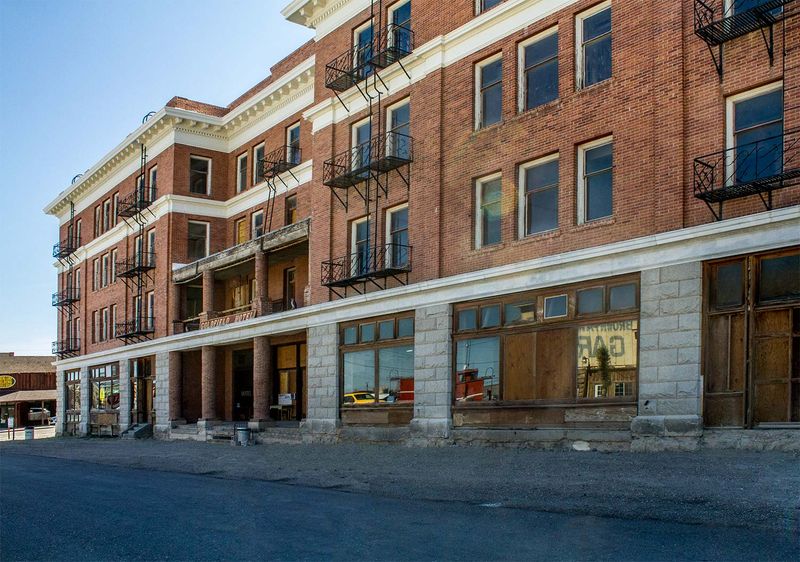
Goldfield once ruled Nevada like royalty. At its roaring peak in the early 1900s, it was the largest city in the entire state, with a population estimated between 18,000 and 30,000 people.
Located at 301 Crook Avenue, Goldfield, NV 89013 in Esmeralda County, this former boomtown produced over 86 million dollars in gold between 1903 and 1940. That is an almost incomprehensible amount of wealth flowing out of the desert floor.
A major fire in 1923 reshaped much of the town, but iconic structures like the Goldfield Hotel and the historic schoolhouse still stand with remarkable presence.
Walking through Goldfield feels like flipping through a very dusty, very dramatic history textbook. The architecture alone is worth the trip, with buildings that carry the weight of boom-and-bust stories in every brick.
Hollywood found Goldfield irresistible too. The cult classic car chase film “Vanishing Point” from 1971 was partly filmed here, including scenes featuring the fictional radio station KOW.
The 1998 film “Desert Blue” used Goldfield as the stand-in for a fictional California town.
The 1988 sci-fi film “Cherry 2000” transformed it into the fictional settlement called Glory Hole. Even the syndicated TV series “State Trooper,” which ran from 1956 to 1959, featured Goldfield episodes.
For a town that many people have never heard of, Goldfield has quietly racked up an impressive Hollywood filmography that demands serious respect.
4. Empire Ghost Town
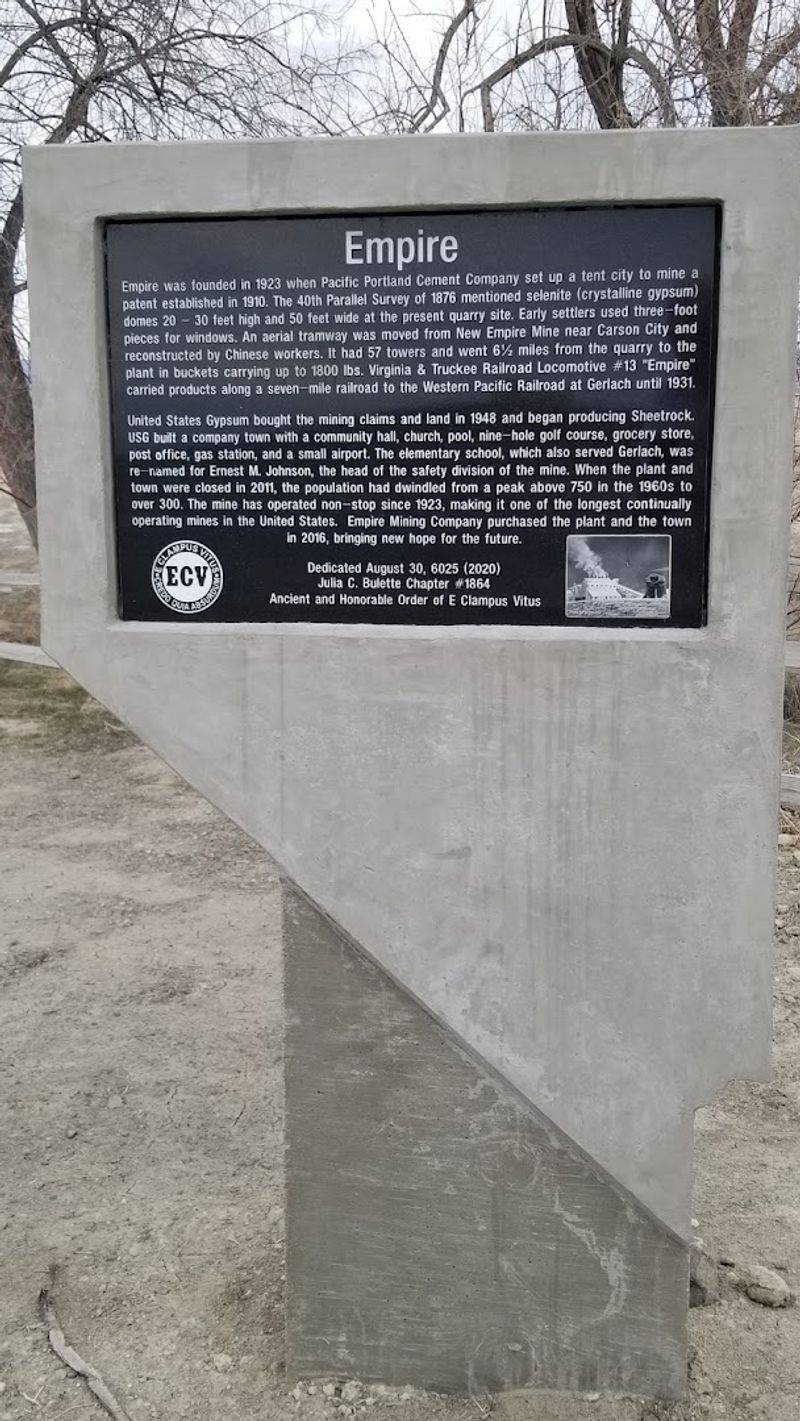
Empire is not your typical ghost town. There are no crumbling mine shafts or weathered saloon signs here.
Instead, Empire is something stranger and more quietly haunting: a perfectly intact company town that simply stopped one day.
Located along Empire Road, Empire, NV 89405, about 100 miles north of Reno in Washoe County, this community was purpose-built by the US Gypsum Corporation starting in 1948 to house workers manufacturing gypsum-based construction sheetrock.
At its peak, Empire housed over 750 residents in neat rows of company-owned homes. There was a school, a swimming pool, a store, and all the trappings of a self-contained small-town life.
When the plant permanently closed in 2011, those residents packed up and left, leaving behind a surreal tableau of domestic normalcy frozen in time.
Empty homes, a shuttered facility, and vast desert silence replaced the hum of industry almost overnight.
That eerie, suspended-in-time quality caught the eye of director Chlo Zhao, who chose Empire as a key filming location for “Nomadland” in 2020.
The Oscar-winning film starring Frances McDormand used Empire’s unique atmosphere to ground its story of modern nomadic life in something deeply real.
Zhao filmed actual locations from the source material, and Empire’s quiet vistas along State Route 447 became instantly recognizable to film fans worldwide.
Empire is proof that sometimes the most powerful ghost towns are the ones that haunt you with familiarity rather than mystery.
5. Goodsprings Historic District
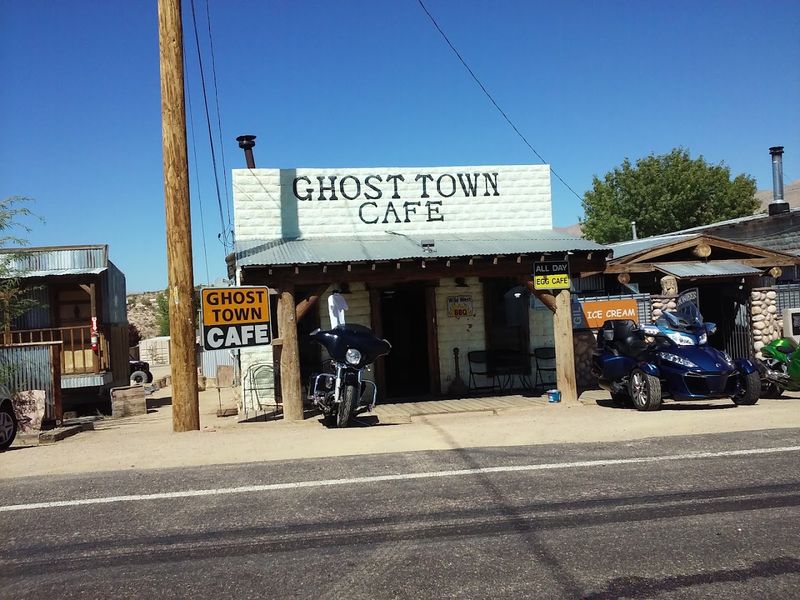
Goodsprings has one of those reputations that precedes it by several miles. Nestled in Clark County at 310 NV-161, Goodsprings, NV 89019, just a short drive from Las Vegas, this historic mining town originated in the 1860s extracting lead, silver, and zinc from the surrounding hills.
But what really put Goodsprings on the map is its Pioneer Saloon, a building that has been standing and serving since 1913 with its original stamped tin walls still very much intact.
The Pioneer Saloon carries a deeply human story connected to Hollywood legend Clark Gable, who famously waited there for news about his wife Carole Lombard following a tragic 1942 plane crash.
That moment of raw, real-life drama gives Goodsprings a weight that most tourist destinations simply cannot manufacture. You feel it the moment you walk through the door.
The Pioneer Saloon has appeared in a genuinely impressive lineup of productions, including “Fear and Loathing in Las Vegas,” “Miss Congeniality 2: Armed and Fabulous,” and “The Mexican.”
Television shows like “The Twilight Zone” and “The Misfits” have also featured the space, along with the reality series “Ghost Adventures.”
Perhaps most remarkably, Goodsprings served as the literal starting point for the beloved video game “Fallout: New Vegas,” which recreates the saloon and town layout with striking accuracy.
Goodsprings is where history, Hollywood, and gaming culture all shake hands over a glass of something cold.
6. Virginia City Historic District
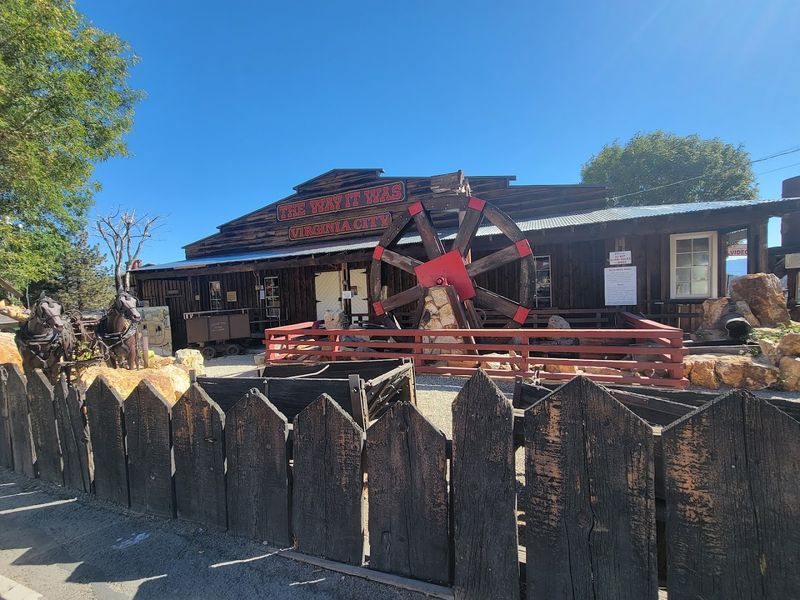
Virginia City does not whisper its history. It announces it with full Victorian fanfare.
As Nevada’s largest National Historic Landmark, this mountain town at 86 South C Street, Virginia City, NV 89440, positioned between Reno and Carson City, sparked the state’s first silver rush following the legendary 1859 discovery of the Comstock Lode.
By the 1870s, it had grown into a thriving industrial hub with a population of 25,000 and more than 100 establishments lining its busy streets.
Today, over 400 preserved 19th-century buildings give Virginia City the most authentic Old West atmosphere of any town in America.
The historic Piper’s Opera House still stands. The Fourth Ward School now operates as a fascinating museum.
Walking the wooden boardwalks here genuinely feels like stepping through a time portal, which is exactly why filmmakers and storytellers have always been drawn to it.
The iconic Western television program “Bonanza,” which aired from 1959 to 1973, featured Virginia City as its central fictional setting and turned it into a household name across America.
While the show filmed primarily at the Ponderosa Ranch near Lake Tahoe, its vivid portrayal of Virginia City life embedded the town permanently into the cultural imagination of an entire generation.
Millions of viewers grew up feeling like they already knew these streets before ever visiting.
That kind of cultural imprint is rare, powerful, and something Virginia City wears with quiet, well-earned pride.
7. Gold Point Ghost Town
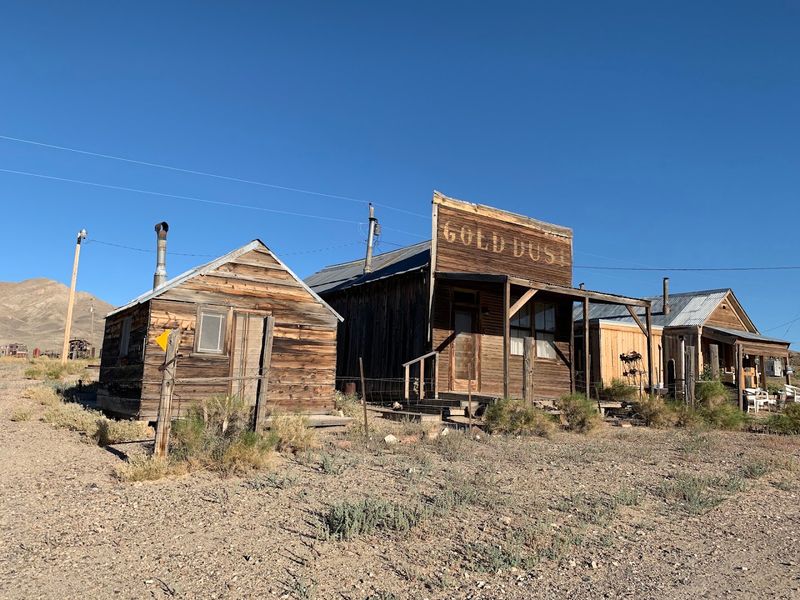
Gold Point is the ghost town that time forgot to mess with.
While other Nevada ghost towns crumbled or were swallowed by the desert, Gold Point stayed remarkably preserved, looking every bit the part of an 1800s frontier film set without a single Hollywood art director lifting a finger.
Located along State Route 774, Gold Point, NV 89013, southwest of Goldfield near the Nevada and California border, this place has a personality that is entirely its own.
The town started life as Lime Point, a silver mining camp in the 1860s, then reinvented itself as Hornsilver, and finally became Gold Point after gold discoveries in 1927.
At its height, around 1,000 residents filled over 225 buildings including hotels, cafes, and lively gathering spots. Thanks to passionate preservation efforts, the classic main street, authentic saloon, historic post office, and original miner cabins are still standing.
You can even book an overnight stay in one of those cabins, which is exactly as adventurous as it sounds.
The saloon at Gold Point has been described as an “unstaged movie set,” ready for its close-up at any moment.
Documentary crews from Coveredge filmed a program specifically about Nevada ghost towns here, conducting interviews and capturing the authentic historical atmosphere for television audiences.
Gold Point may not have a blockbuster credit to its name, but its cinematic soul is undeniable. Sometimes the most compelling stories are the ones still waiting to be told on screen.
8. Rachel
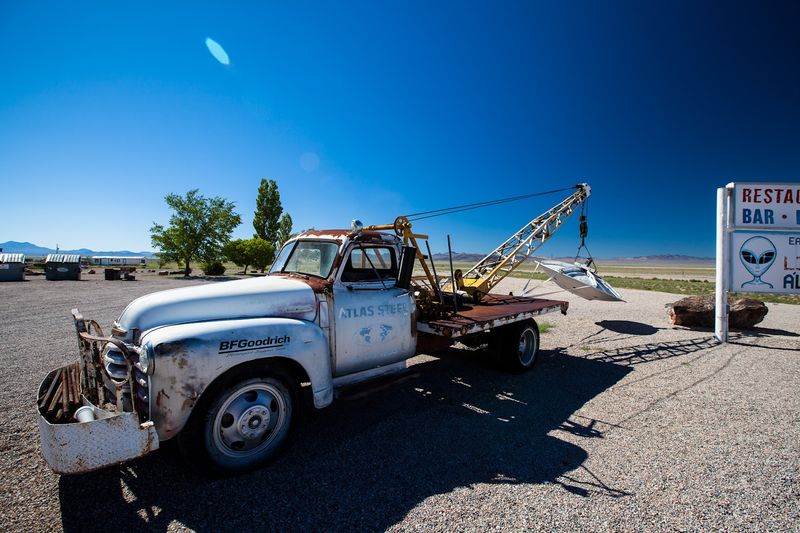
Rachel, Nevada operates on a frequency that most towns simply cannot tune into.
Sitting along the famously designated Extraterrestrial Highway at 9631 Old Mill Street, Rachel, NV 89001, this tiny community of around 50 residents has somehow become internationally recognized as the UFO Capital of the World.
Its proximity to the mysterious Area 51 is the main reason, and Rachel has leaned into that identity with absolute commitment and zero apology.
Originally a mining town founded in 1973 and renamed in 1978, Rachel’s real claim to fame is the Little A’Le’Inn, an alien-themed restaurant, motel, and gift shop that serves as the unofficial headquarters for UFO enthusiasts from around the globe.
The Extraterrestrial Highway itself received its official state designation in 1996, partly energized by the buzz surrounding a certain massive Hollywood blockbuster that was filming nearby at the time.
That film was “Independence Day” from 1996, and Rachel was right in the middle of the action. Scenes featuring Russell Casse and his family in a mobile home park were shot directly in Rachel.
The production team installed an ID4 Monument time capsule outside the Little A’Le’Inn, scheduled to be opened in 2050. Other sci-fi projects including “Project 12” from 2012 and “Area 51” from 2015 have also used Rachel as a backdrop.
Even the video game “Grand Theft Auto: San Andreas” paid homage with its fictional Lil Probe Inn location. Rachel reminds us that sometimes the most extraordinary stories happen in the smallest, most unexpected places.
Have you booked your road trip yet?