
12 Fascinating Missouri Caves You Can Actually Visit
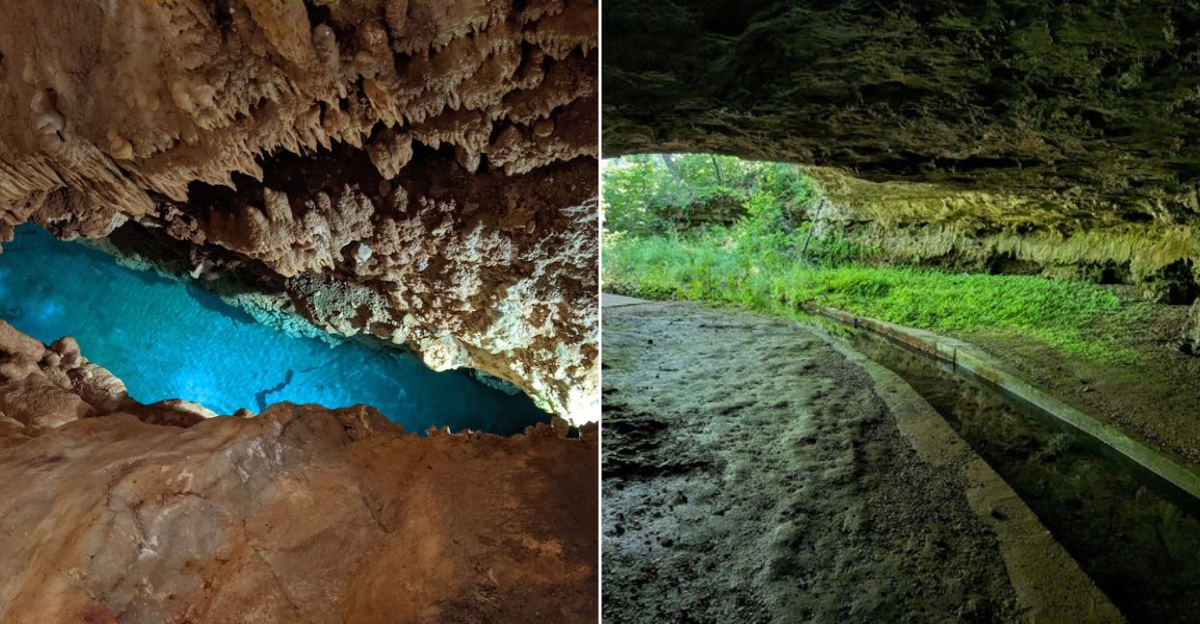
Think Missouri is all about barbecue, baseball, and the Gateway Arch? Think again. What if the state’s greatest attractions aren’t reaching toward the sky, but hiding far beneath your feet?
Sounds like the start of a mystery movie, right? Luckily, no Indiana Jones skills are required.
Missouri is home to hundreds of incredible caves, from glowing underground rivers to enormous chambers that feel straight out of a fantasy adventure.
Some are packed with fascinating history, others with jaw-dropping rock formations, and all of them offer a chance to escape the ordinary. So, why stay on the surface when an entirely different world is waiting below?
Grab a light jacket, channel your inner explorer, and get ready to discover Missouri caves you can actually visit. No treasure map necessary.
1. Meramec Caverns
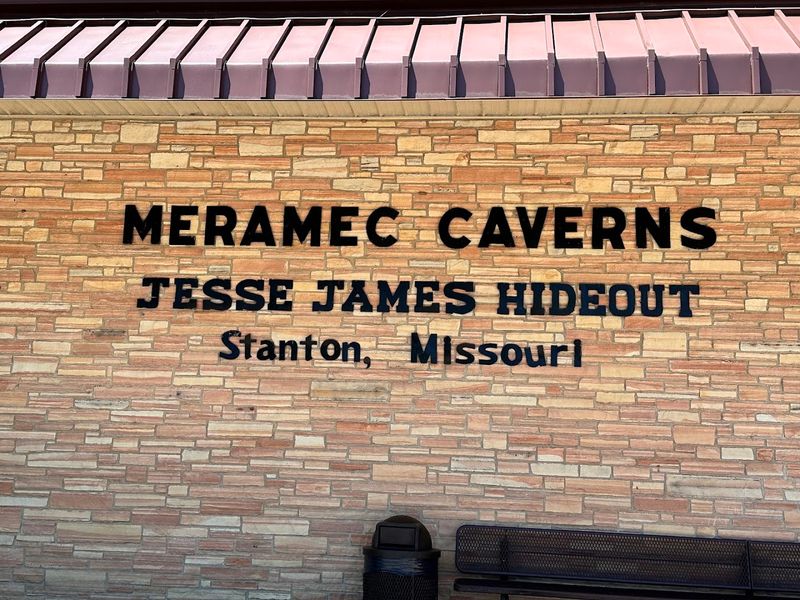
Meramec Caverns is the kind of place that makes you stop mid-sentence and just stare. Located at 1135 Highway W, Sullivan, MO 63080, this sprawling 4.6-mile cave system is one of the largest commercial caves in the entire country.
The formations here are genuinely sculptural, including glistening stalactites, towering stalagmites, and a jaw-dropping seven-story structure nicknamed “the Mansion.”
Long before tourists arrived with cameras, Native American communities used these caverns for shelter. During the Civil War era, the cave was mined for saltpeter, a key ingredient in gunpowder production.
Farmers later discovered the largest chamber made a surprisingly excellent dance hall, and that tradition of hosting events continues today with Easter services and arts and crafts shows.
The cave is famously linked to Jesse James, who reportedly used it as a hideout and once escaped through an underground river exit.
As a bonus piece of pop culture trivia, the classic television show “Lassie” filmed an episode right here inside these caverns. Meramec Caverns is not just a cave, it is a living chapter of American history.
2. Fantastic Caverns
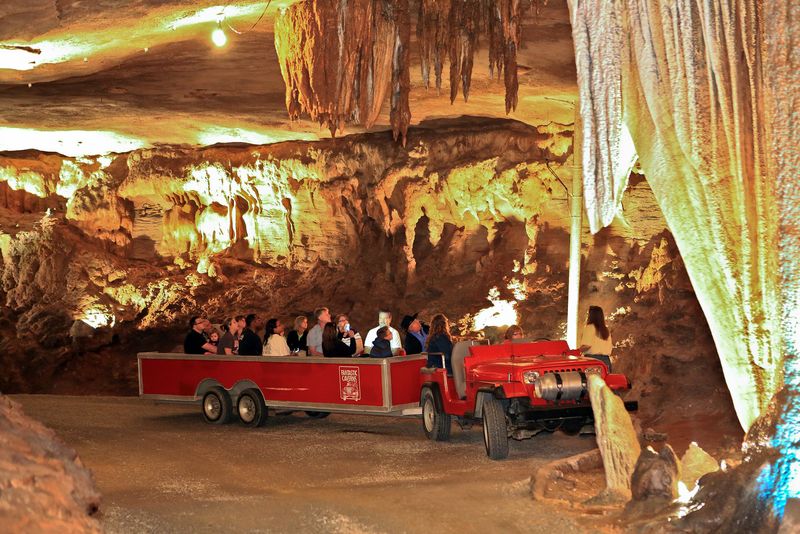
Fantastic Caverns holds a title no other cave in North America can claim: it is the only cave where the entire tour is done by riding through on a Jeep-drawn tram.Sitting at 4872 N Farm Road 125, Springfield, MO 65803, this place is the definition of effortless adventure. The 55-minute ride glides through passages carved by an ancient underground river, so you get all the wonder without the walking.
The cave was first discovered in 1862 by farmer John Knox and his hunting dog. Knox kept quiet about it until 1867, and the first documented explorers were twelve women from the Springfield Women’s Athletic Club.
Their names are still inscribed on the cave wall today, which is honestly one of the coolest historical details of any cave in Missouri.
Inside, you will encounter towering formations in a section called “The Hall of Giants,” which lives up to every bit of its dramatic name. In the 1950s, Fantastic Caverns became a popular Route 66 stop and even hosted country music concerts and a nationally broadcast radio show.
Few caves pack this much history into one underground ride.
3. Stark Caverns
Stark Caverns is a geological time capsule hiding in plain sight near the Bagnell Dam Strip. Located at 125 Cave Drive, Eldon, MO 65026, this cave formed during the Ordovician Period and its walls are packed with beautifully preserved fossils, including stromatolites that are considered among the largest and finest examples in all of North America.
That alone is worth the trip.
Archaeological artifacts found here date back to the Early Archaic period, meaning humans have been drawn to this cave for thousands of years.
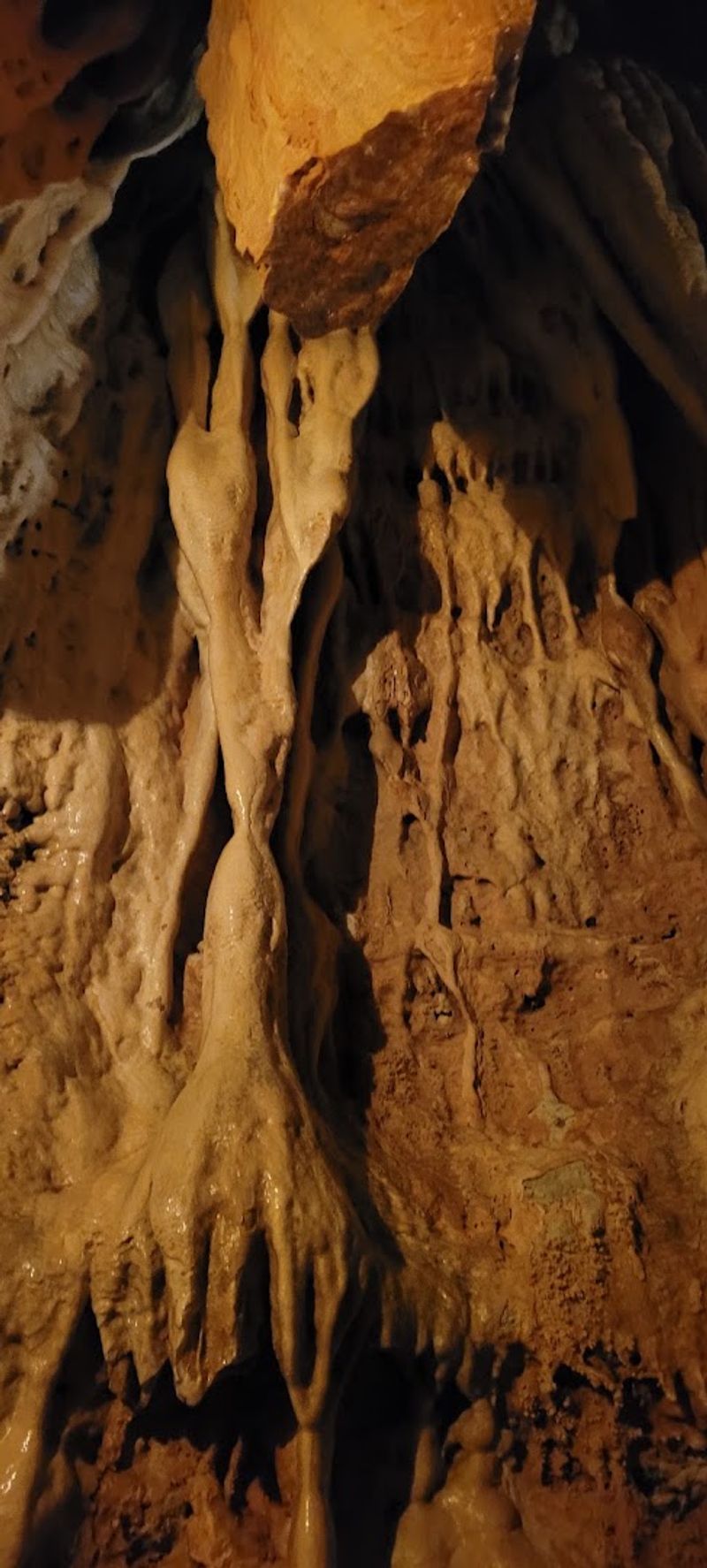
Early settlers used it for sheltering cattle and storing apples and potatoes, and community gatherings like fiddler dances and sermons were held inside its chambers. A standout formation called the “Twisted Column” is a uniquely intertwined stalactite and stalagmite that looks like nature decided to get creative.
Stark Caverns maintains a constant 57-degree temperature year-round and is 90 percent accessible for those with mobility considerations.
For those wanting extra excitement, the caverns offer Black Light tours and an exclusive in-cave escape room adventure.
With endangered bat species, cave salamanders, and millions of years of geological storytelling, Stark Caverns earns its place on any Missouri bucket list.
4. Mark Twain Cave
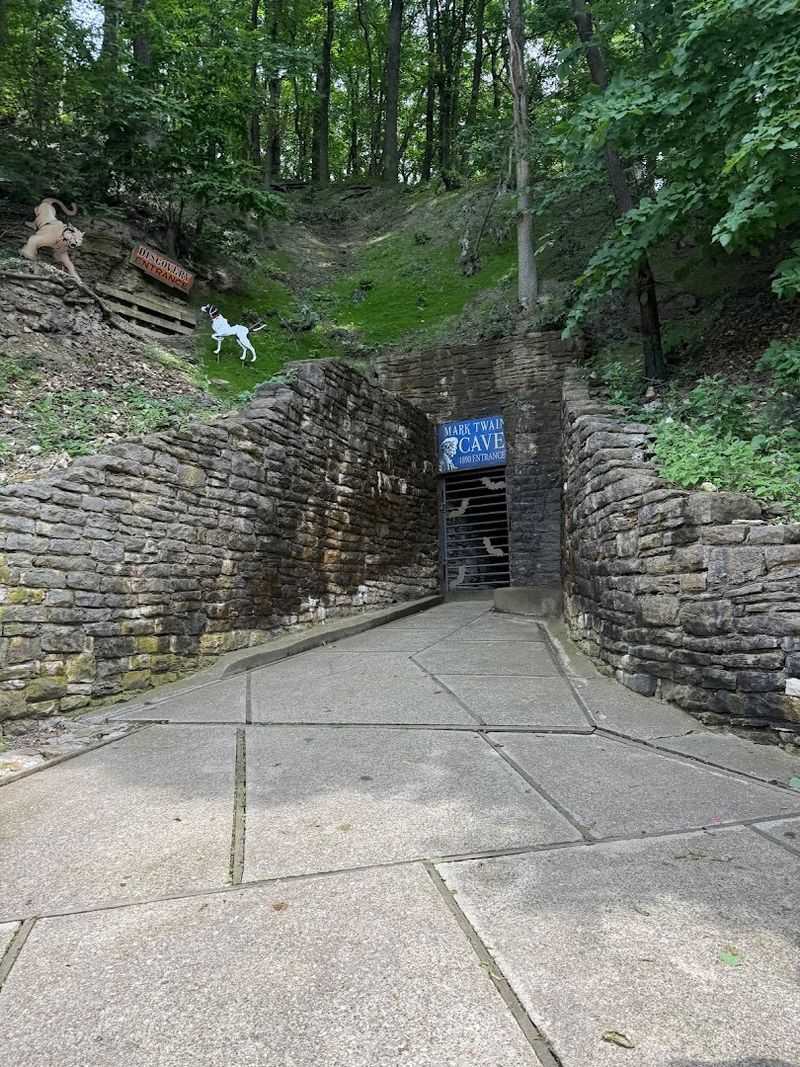
Walking through Mark Twain Cave feels like stepping directly into the pages of a beloved American novel. Found at 300 Cave Hollow Road, Hannibal, MO 63401, this is the oldest operating show cave in Missouri, offering continuous guided tours since 1886.
Samuel Clemens, better known as Mark Twain, explored this very labyrinth as a boy, and it directly inspired the fictional MacDougal’s Cave in “The Adventures of Tom Sawyer.”
Unlike most caves loaded with dramatic formations, Mark Twain Cave is a maze of narrow, winding passages with very few stalactites or stalagmites. What it lacks in formations, it more than makes up for in atmosphere.
The limestone walls are covered in signatures from generations of visitors, some dating back over a century, turning the cave into a living guestbook of American history.
The cave formed in a rare Louisiana Lithographic Limestone found only within a 35-mile radius of Hannibal. Spanning roughly 3 miles and 260 passages, it maintains a steady 52 degrees Fahrenheit year-round.
Designated a National Natural Landmark in 1972, this cave even holds Mark Twain’s authenticated signature inside.
History does not get more personal than this.
5. Bridal Cave
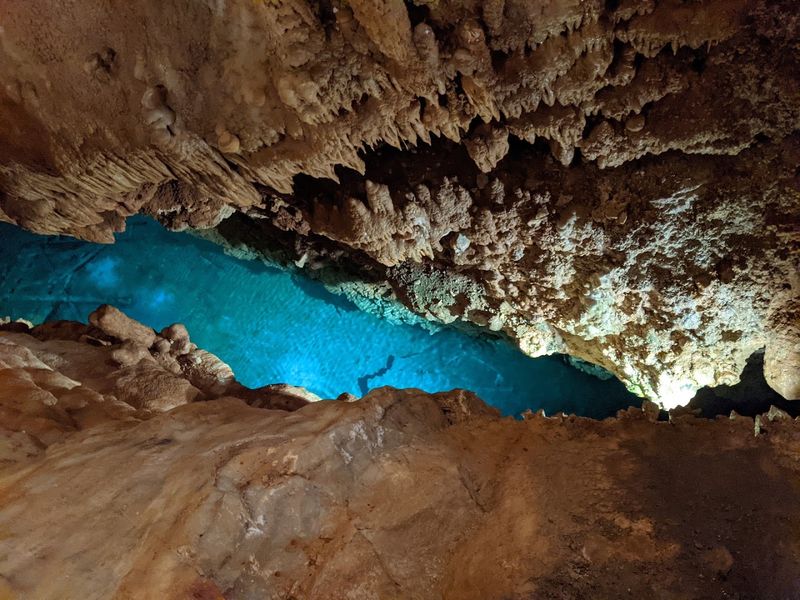
Bridal Cave is where geology and romance have been holding hands since 1949. Tucked beneath Thunder Mountain at 526 Bridal Cave Road, Camdenton, MO 65020, this cave sits in the heart of the Lake of the Ozarks region and is one of America’s most scenic underground destinations.
Over 4,300 couples have exchanged vows in its Bridal Chapel, making it one of the most unusual wedding venues on the planet.
The cave gets its enchanting name from an old Native American legend about a wedding ceremony held within its chambers. Native Americans used the cave for shelter as early as 8,000 BC, and the first organized exploration took place in 1856.
The formations inside are breathtaking, with stalactites, stalagmites, delicate soda straws, and sweeping draperies creating a scene that feels almost too beautiful to be real.
A standout feature called “Mystery Lake” is an 18-foot-deep underground pool so crystal clear that it mirrors the cave ceiling perfectly.
Old wooden structures of unknown origin have been found submerged within it, adding a layer of intrigue. Bridal Cave also boasts more onyx formations than any other known cave, and at a constant 60 degrees Fahrenheit, every visit feels refreshingly perfect.
6. Bluff Dwellers Cave
Bluff Dwellers Cave has a discovery story that reads like a classic Ozark adventure. First found in 1925 by C.
Arthur Browning while checking traps on his family’s land near 163 Cave Road, Noel, MO 64854, this cave opened to the public just two years later and remains family-owned and operated today. That personal history gives it a warmth that larger commercial caves sometimes lack.
Long before Browning arrived, ancient Archaic-aged Native Americans used this cave for shelter thousands of years ago.
A landslide roughly 2,000 to 3,000 years ago sealed the original entrances, and archaeological excavations uncovered grinding stones and arrowheads preserved in the debris.
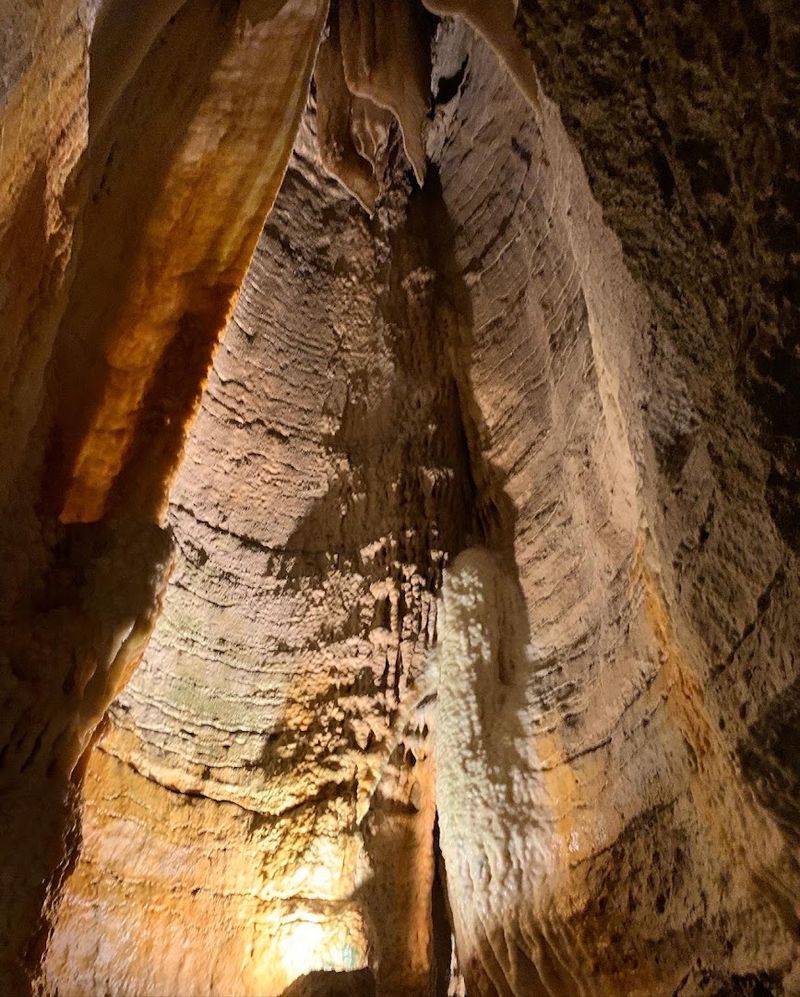
The cave formed in Mississippian age fossiliferous limestone and is decorated with stalactites, stalagmites, cave coral, flowstone, and draperies.
A stunning crystal lake created by a rimstone dam is considered one of the largest of its kind in Missouri. Arthur Browning’s preserved footprints from his original exploration are still visible inside, which is an unexpectedly moving detail.
A rubber duck rests near a small underground pool, placed decades ago by a tour guide after visitors compared the water to a duck pond. Admission also includes access to the Browning Museum.
7. Jacob’s Cave
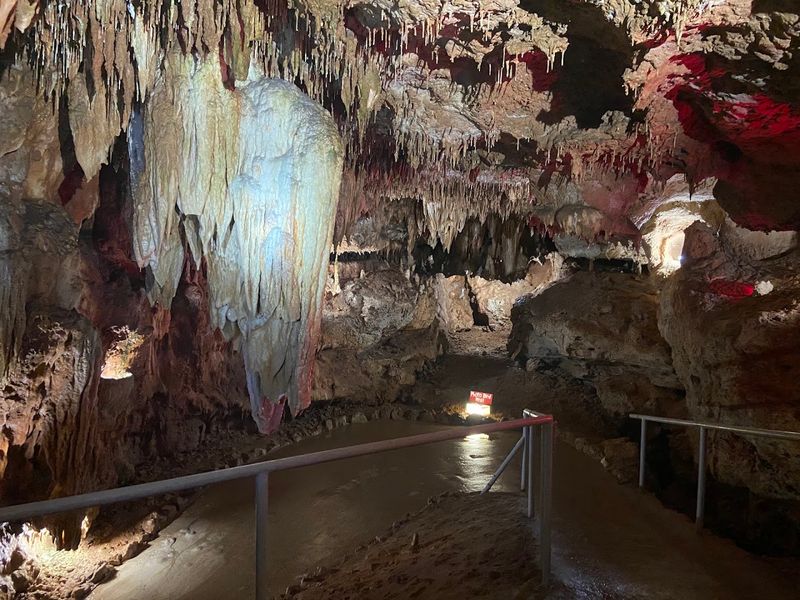
Jacob’s Cave is proof that accessibility and wonder are not mutually exclusive.
Located at 23114 Highway TT, Versailles, MO 65084, between Versailles and Gravois Mills, this is the only show cave in Missouri that is completely wheelchair accessible, with level concrete sidewalks and full electric lighting throughout. Opened in 1932, it was also the first commercialized cave in the Lake of the Ozarks area.
The cave was discovered in 1875 by lead and tiff miner Jacob Craycraft, whose original signature from that year is still visible inside.
Prehistoric bones of mastodon, bear, and peccary were uncovered during the cave’s development and are now on display along the tour route. One richly decorated chamber is affectionately called the “world’s largest geode,” and the description, while not strictly geological, is hard to argue with once you see it.
On the mile-long tour, you will encounter millions of delicate soda straws, twisted helictites, majestic stalactites, and towering columns.
The cave also holds geological evidence of six ice ages and three significant earthquakes within its rock layers.
At a constant 53 degrees Fahrenheit, this cave is a refreshing retreat that proves great adventures do not require a difficult path to get there.
8. Smallin Civil War Cave
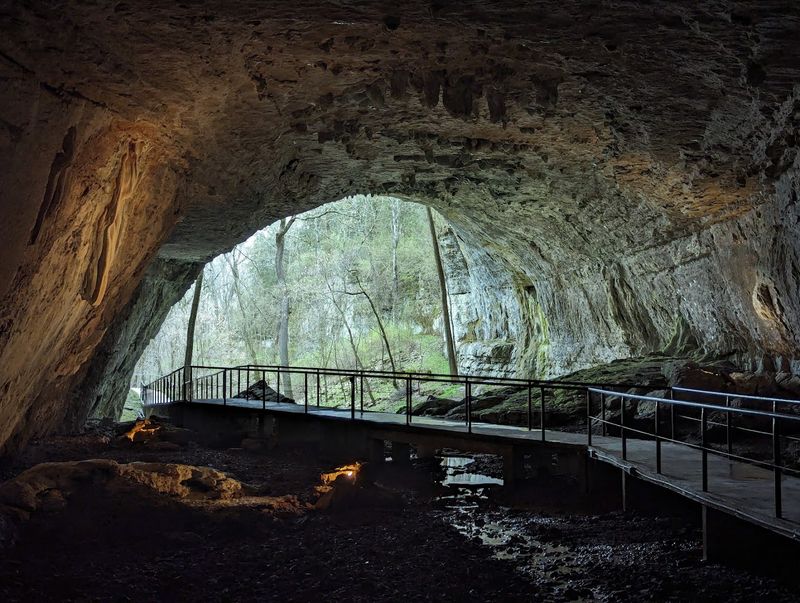
Smallin Civil War Cave carries more layers of history than almost any other cave in Missouri. Sitting at 3575 N Smallin Road, Ozark, MO 65721, this site holds the distinction of being the first documented cave in the Ozarks, described in detail by explorer Henry Rowe Schoolcraft in his 1818 journal.
Archaeological evidence suggests humans have called this place home for at least 8,500 years.
Both Osage and Cherokee tribes used the cave, calling it “Winoca,” meaning Underground Spirit.
The massive entrance, roughly 55 feet high and 100 feet wide, made it a natural community gathering place for pioneer families who used it for picnics, food storage, and harvesting red clay.
Civil War folklore adds another layer, with stories of Union soldiers, ammunition storage, and spies all tied to these chambers.
Inside, the Burlington limestone walls reveal fossils from an ancient coral reef, including rare starfish fossils not commonly found in U.S. caves. Ancient petroglyphs and 1800s graffiti mark a flowstone formation called the “Indian Ladder.”
Blind cave salamanders and bristly cave crayfish, studied since 1898, still live here today. Both guided tours and adventurous Wild Tours are available on accessible paved pathways.
9. Talking Rocks Cavern
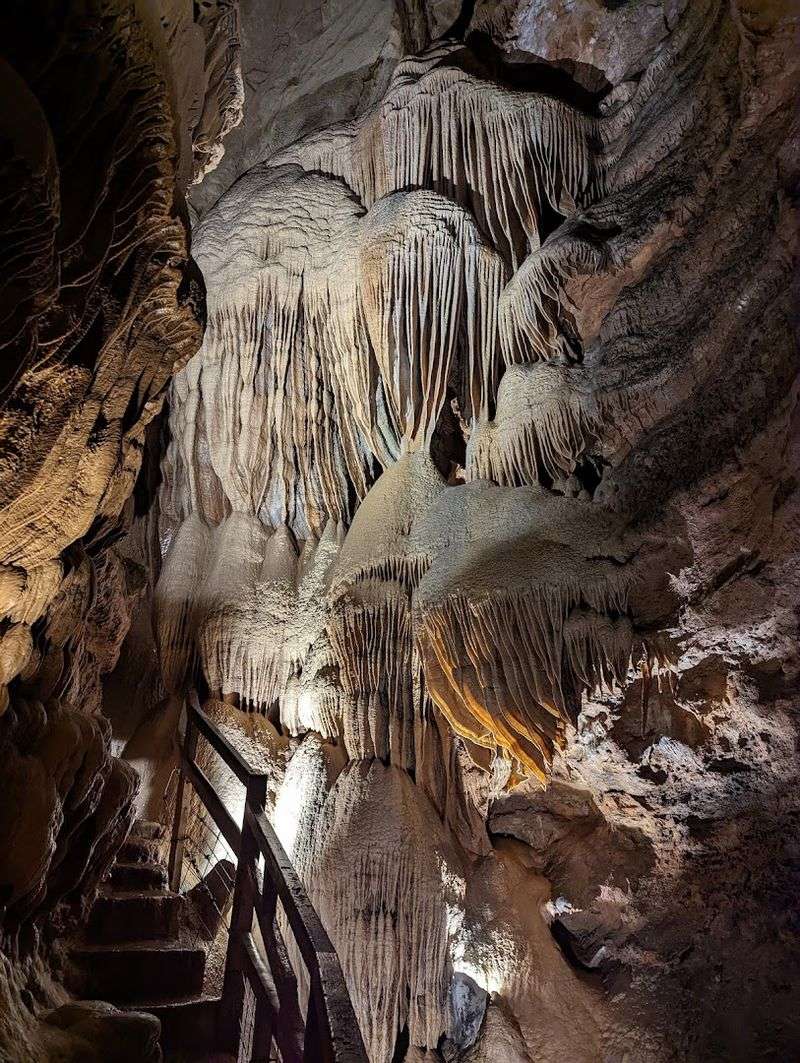
Talking Rocks Cavern has one of the best origin stories of any cave in Missouri. First discovered in 1883 by two boys hunting rabbits, it was originally called Fairy Cave by explorer Truman Powell, who described it as a subterranean fairy land.
Located at 423 Fairy Cave Lane, Branson West, MO 65737 in Stone County, it was later renamed when Silver Dollar City acquired it in 1969, inspired by the idea that the water-carved rocks seem to tell their own stories.
This is a living cave, meaning its formations are still actively growing thanks to the continuous presence of water.
The most breathtaking feature is “The Cathedral,” a 90-foot-tall, 50-foot-wide flowstone and drapery deposit that commands attention the moment you see it. Another formation is said to resemble an angel with a bowed head and outspread wings, known as Powell’s Monument.
Because visitors enter directly through the gift shop with no outside access, this cave has no bats. Instead, cave salamanders serve as the unofficial mascot.
At a constant 63 degrees Fahrenheit, the temperature is about as comfortable as underground gets. Beyond the cave, the site offers mini-golf, gemstone sluicing, nature trails, and a lookout tower with sweeping Ozark views.
10. Onondaga Cave
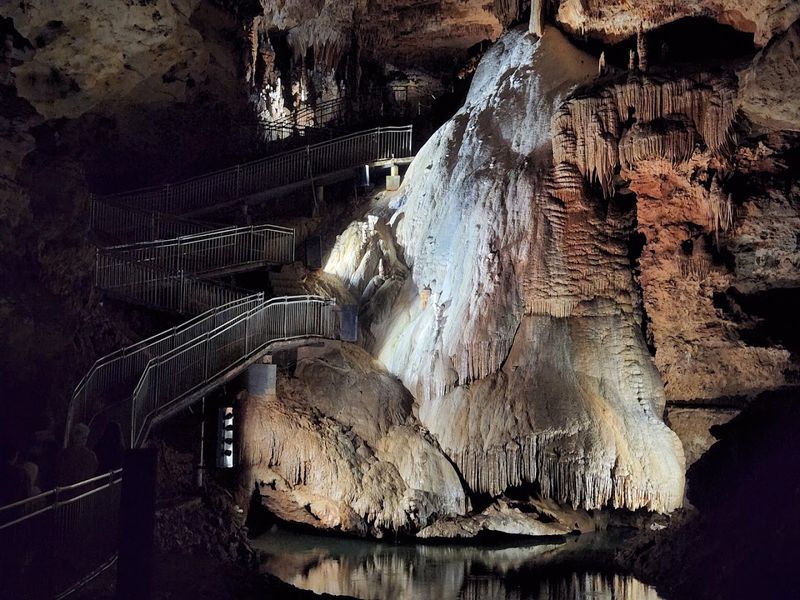
Onondaga Cave is the kind of underground space that makes even experienced cave visitors go completely quiet.
Located at 7556 Highway H, Leasburg, MO 65535, within Onondaga Cave State Park along the scenic Meramec River, this cave is a designated National Natural Landmark. The sheer abundance and quality of its formations set it apart from nearly every other cave in the country.
Inside, you will find magnificent stalactites, towering stalagmites, intricate rimstone dams, delicate soda straws, cave coral, and sweeping flowstones.
The showpiece formation called “The King’s Canopy” resembles frozen waterfalls cascading from the ceiling. Two impressive stalagmites known as “The Twins” rise dramatically from the cave floor, and crystal-clear underground pools reflect the illuminated ceiling like perfectly polished mirrors.
The cave formed within Gasconade dolomite over millions of years and was first explored around 1886 by two adventurers navigating a boat into the spring. Its popularity grew quickly, even drawing visitors during the 1904 St. Louis World’s Fair.
The Osage Nation considers Onondaga Cave a sacred site, honoring the powerful spiritual connection between water and cave. At a steady 58 degrees Fahrenheit, this underground cathedral never loses its sense of wonder.
11. Ozark Caverns
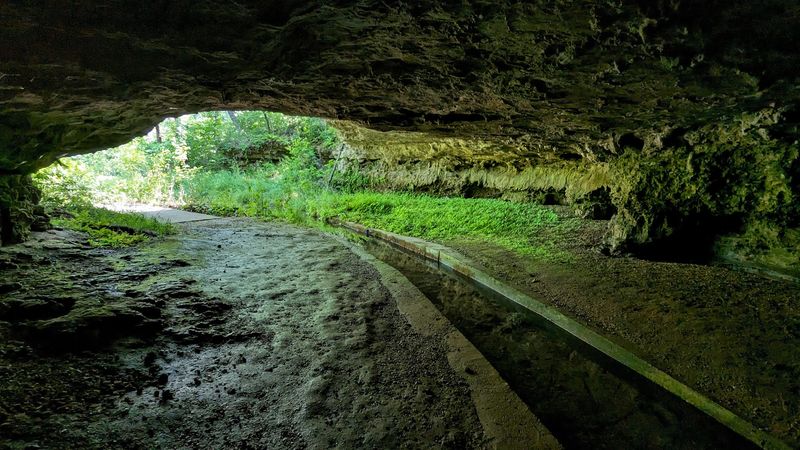
Ozark Caverns offers something that almost no other cave in the world can match.
Tucked inside Lake of the Ozarks State Park at 403 Highway 134, Kaiser, MO 65047, this cave is home to the extraordinary “Angel Showers” formation, where streams of water appear to emerge directly from solid ceiling rock and collect in stunning calcite tub formations below. Only fourteen of these formations are known to exist worldwide.
The cave also features delicate soda straws, twisted helictites, impressive stalagmites, and a small stream that gently winds through much of the cavern before exiting at its mouth.
Preserved claw marks on certain walls serve as quiet reminders of animals that sought shelter here long before humans arrived. Four species of salamanders, four species of bats, and sixteen species of invertebrates, including the elusive blind grotto salamander, all call this cave home.
First explored in the late 1880s, Ozark Caverns was developed commercially in the 1930s before the state park system took over in 1979 and removed the electric lighting to preserve its natural character.
Today, visitors explore by handheld lantern, which transforms the experience into something genuinely immersive.
Open seasonally, this cave rewards those willing to seek it out with an atmosphere unlike anything above ground.
12. Marvel Cave
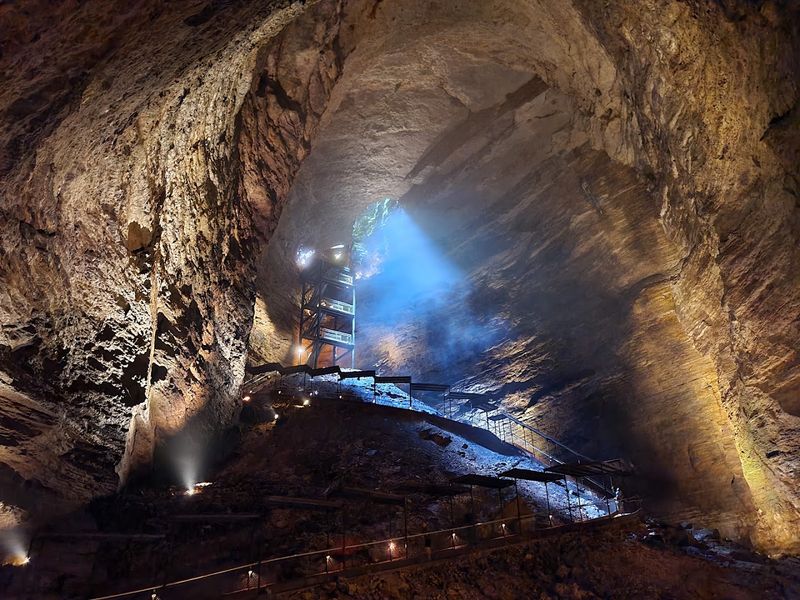
Marvel Cave earns its name in the most literal way possible. Located within Silver Dollar City at 399 Silver Dollar City Parkway, Branson, MO 65616, atop Roark Mountain, this cave features the Cathedral Room, one of the largest cave entry rooms in all of North America.
Measuring 204 feet high, 225 feet wide, and 411 feet long, it is so enormous that hot air balloons have actually been flown inside it.
The adventure starts with a descent into a 94-foot-deep sinkhole, dropping visitors down to an underground mountain of debris 124 feet tall at the bottom.
A cable train installed in 1957 carries you back up the 1,070-foot climb to the surface, which is a genuinely unforgettable way to end any underground tour. Osage Indians knew of this cave as early as the 1500s, and legends suggest Spanish explorers entered it in 1541 searching for the Fountain of Youth.
Originally called Marble Cave after explorers mistakenly identified the rock in 1882, the cave has been open to visitors since 1894.
By 1960, the Herschend family had built Silver Dollar City around its entrance, essentially constructing an entire 1880s Ozark village above a living cave. Missouri caves are spectacular individually, but Marvel Cave wraps history, geology, and pure spectacle into one unforgettable package.