
Florida BBQ Terms That Outsiders Always Confuse (But Locals Instantly Recognize)
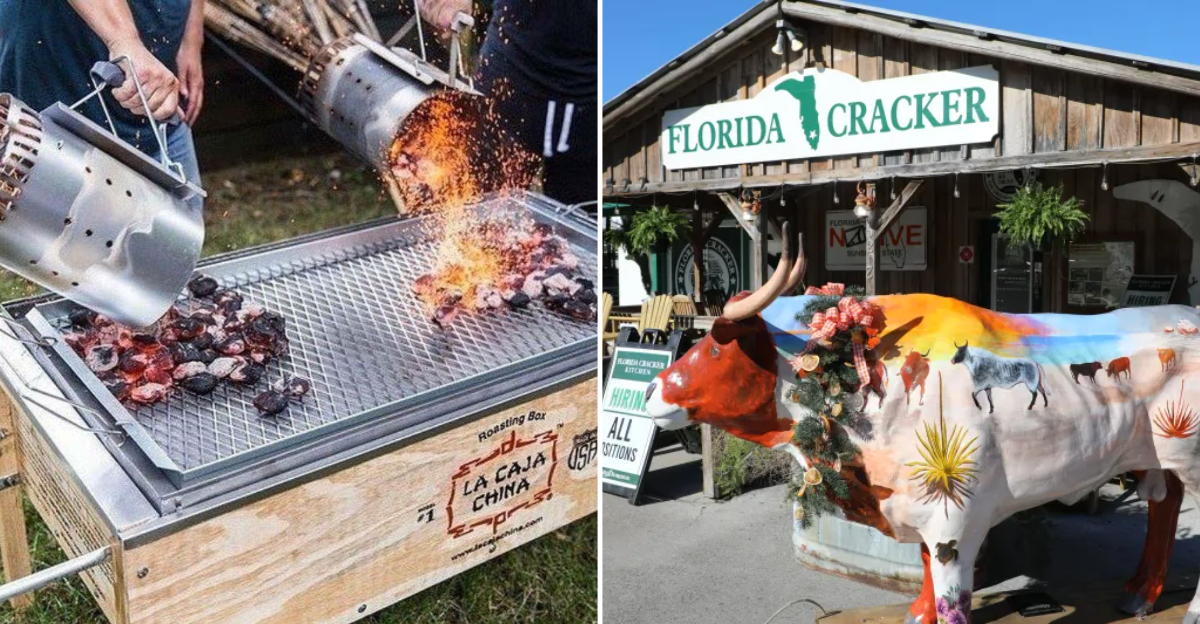
Walk up to a smoke-scented shack near the water and lingo starts flying: caja china, mojo, datil, swamp cabbage. First-time visitors nod, then panic at the menu. Locals just smile, because in Florida, barbecue doesn’t stop at pork shoulders and rib racks.
Cuban marinades meet cattle-country cookouts, Gulf fish hit the smoker, red-hot St. Augustine peppers sneak into sauces, and boiled peanuts roll in like summer storms. Order right and lunch tastes like sea breeze and citrus.
Order wrong and, well, lessons get learned fast. Use this cheat sheet, breathe in the oak smoke, and talk like you were born here.
1. Caja China
Not a Chinese gadget, not a metal smoker, but a Cuban roasting box with coals on top that turns whole hog into party food in a few hours.
Miami families pull it out for Noche Buena and big gatherings, and the box is practically shorthand for holiday pork across South Florida.
Visitors see the setup and assume it’s some sort of industrial grill. Locals know the magic happens when heat rains down from above instead of rising from below.
The result is crispy skin and tender meat that feeds a crowd fast.
2. Mojo Criollo
Say MO-ho. Think marinade first, sauce second: sour orange, garlic, oregano, a little oil. Pork shoulders bathe in it before roasting, then more mojo gets spooned over the chopped meat.
Citrus brightness is the move, not sticky-sweet. I once watched a Tampa cook pour an entire bottle over a shoulder and let it sit overnight.
The next day, every bite tasted like sunshine with a garlicky punch. Outsiders expect tomato-based sauce and get confused when the pork arrives glistening with tangy, golden liquid instead.
3. Naranja Agria
That tang in Florida pork isn’t plain OJ. Bottled sour orange stands in for the short winter season, and it’s the backbone of real mojo.
Outsiders call it just orange juice, locals know it’s a different fruit with a sharper bite. The acidity tenderizes meat and adds a punch that sweet oranges can’t match.
You’ll find bottles tucked into the Latin aisle at every grocery store south of Orlando. Once you taste the difference, regular oranges feel flat and one-dimensional.
4. Datil Pepper
St. Augustine’s pride, tiny and habanero-hot with a fruity edge. Shows up in hot sauces, relishes, and mustardy BBQ condiments that light up pulled pork.
Folks trace its local fame to Minorcan settlers, and the city celebrates it every year. I grabbed a bottle of datil mustard at a roadside stand and nearly cried happy tears when it hit my sandwich.
The heat sneaks up, then the sweetness follows. Tourists mistake it for regular hot sauce and learn real fast that Florida peppers play by different rules.
5. Smoked Mullet
Florida doesn’t leave the smoke to ribs alone. Mullet gets brined and kissed with hardwood, then flaked into legendary smoked-fish dips along the Forgotten Coast.
Order with crackers and hot sauce, taste pure shoreline. The first time I tried it in Apalachicola, I expected something fishy and overpowering.
Instead, the smoke was mellow and the fish fell apart like butter. Newcomers wrinkle their noses at the idea of smoked fish, but locals treat it like barbecue royalty and pile it high at every beach gathering.
6. Red-Oak Smoke
Ask a pit hand near the Gulf and you’ll hear oak long before mesquite. Old-school fish smokers and roadside stands lean on local hardwoods, especially red oak, for deep, steady heat and friendly smoke.
The flavor is milder than hickory and doesn’t overpower delicate proteins like fish or chicken. Visitors expect the sharp bite of mesquite or the sweetness of applewood.
Locals know red oak delivers a clean, balanced smoke that lets the meat speak for itself without shouting over it with heavy wood notes.
7. Florida Cracker
A ranching and frontier culture, not a slur in this context. You’ll see the term tied to cattle-country cookouts, frontier recipes, and community gatherings.
Think working whips, cowhunters, camp pots, and simple, smoky plates. Use with care and context. I attended a Cracker-style barbecue in Kissimmee and watched folks cook over open flames just like their ancestors did generations ago.
The food was plain but honest, with smoke doing most of the talking. Outsiders hear the word and get uncomfortable; locals understand the history and pride behind it.
8. Swamp Cabbage
Hearts of Florida’s sabal palm cooked down with aromatics and usually a smoky pork boost. Shows up beside fried fish or barbecue at places that keep Cracker cuisine alive, and even has a festival.
Not actually cabbage, definitely Florida. The texture is tender and slightly tangy, and the pork adds depth that makes it feel like comfort food.
Tourists order it expecting coleslaw and end up with something completely different. Locals know it’s a taste of old Florida that you can’t find anywhere else in the country.
9. Smoked-Fish Dip
Bar counter staple that confuses newcomers expecting queso. Think minced smoked mullet or mackerel bound just enough to spread, piled with crackers, pickles, and a splash of hot sauce.
Backyard smokers and beach shacks keep the tradition rolling. I ordered it once, thinking it would be mild and boring.
Instead, every bite packed smoky richness and a little heat that made me reach for more crackers. Visitors mistake it for cream cheese, locals know it’s the ultimate coastal appetizer that pairs perfectly with cold drinks.
10. Gator Tail
Menu sightings are real. Gator gets fried, grilled, or sauced at Florida joints, and you’ll even spot racks billed as gator ribs next to chicken and pork.
Novelty to some, nostalgia to locals. The meat is lean, mild, and takes on smoke and seasoning beautifully.
I tried gator ribs at a Kissimmee spot and they tasted like tender pork with a slightly firmer bite. Tourists snap photos and giggle, locals order it without blinking and know exactly how to sauce it for maximum flavor.
11. Churrasco
South Florida menus mix in Latin grill language. Churrasco here usually means skirt steak, often mojo-marinated and served with chimichurri.
Parrillada reads like a mixed-grill feast for the table. BBQ in Florida speaks Spanish too.
The steak arrives charred on the outside, juicy inside, and draped in bright green sauce. Visitors expect American-style ribeye, locals know churrasco is the star of any Latin grill spread.
The citrus and garlic notes tie it right back to Florida’s Cuban and South American influences that shape the barbecue landscape.
12. Noche Buena Pork
Christmas Eve across Miami smells like mojo, sazón, and pork roasting in cajas chinas. Ask a neighbor and you’ll hear stories of all-night gatherings where the pig roast matters as much as the present-opening.
Families start prepping the day before, marinating the pork and setting up the box in the backyard. I crashed a friend’s Noche Buena party once and watched three generations hover around the caja, poking and basting.
Outsiders think barbecue is a summer thing, locals know the real magic happens on December twenty-fourth.
13. Lechón Asado
Whole roasted pig, Cuban-style, marinated in mojo and slow-cooked until the skin crackles like glass. The term shows up on party invitations and restaurant specials across South Florida.
Locals know lechón means the centerpiece of any serious celebration. The meat is fork-tender, the skin shatters, and every bite tastes like garlic and citrus.
I watched a cook carve one at a Hialeah gathering and the crowd cheered like a goal just got scored. Tourists see the whole pig and hesitate, locals line up with plates ready and forks in hand.
14. Plantain on the Grill
Ripe plantains hit the grill at Florida cookouts and come off sticky-sweet with char marks that add a smoky edge. They’re not a side dish, they’re part of the main event.
Slice them thick, brush with a little oil, and let the heat do the work. I grilled plantains at a backyard barbecue in Fort Lauderdale and they disappeared faster than the ribs.
The natural sugars caramelize and the smokiness balances the sweetness perfectly. Outsiders expect corn or potatoes, locals know plantains belong on every Florida grill right next to the meat.
15. Chicharrón de Cerdo
Fried pork belly chunks with crackling skin that shatters when you bite down. Shows up at Latin barbecue spots and family gatherings, often served alongside rice or as a snack with hot sauce.
The meat is rich, the skin is crunchy, and the flavor is pure pork heaven. I grabbed a handful at a Little Havana cookout and couldn’t stop reaching for more.
Visitors confuse it with pork rinds from a bag, locals know chicharrón is fresh, fatty, and meant to be eaten hot off the fryer or grill with lime squeezed on top.