
12 Florida Cuban Sandwich Phrases That Trip Up Newcomers (This Is The Local Lingo)
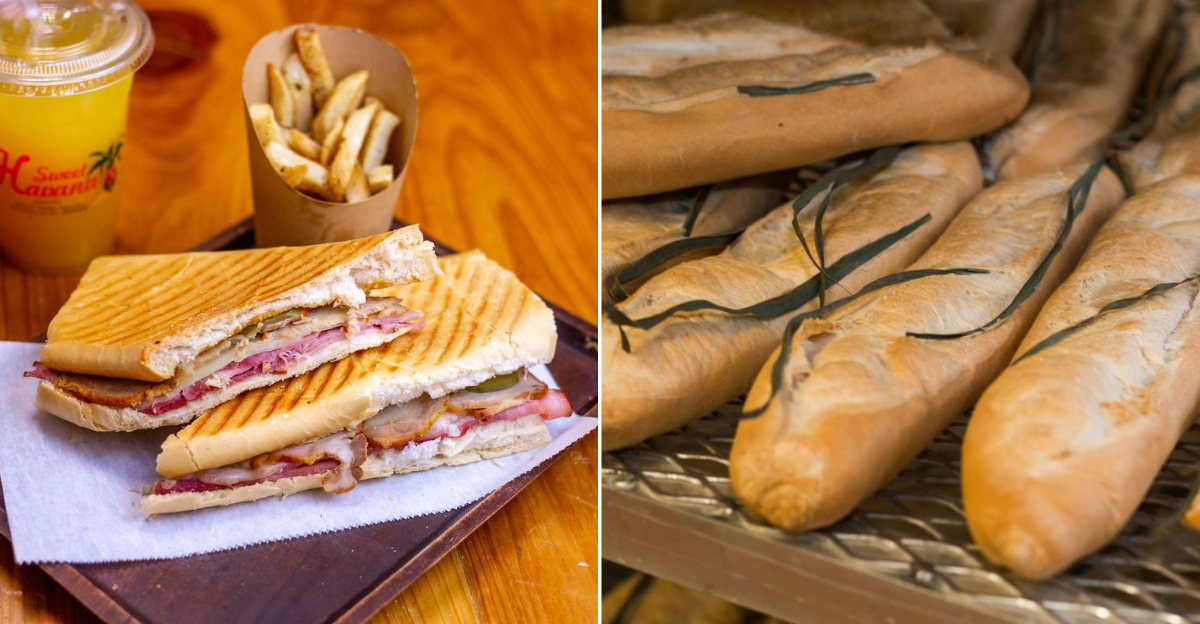
Florida’s Cuban sandwich scene has its own rhythm, a mix of sizzling grills, pressed loaves, and quick Spanish phrases traded across the counter. Locals order without hesitation, slipping in words like pan Cubano, lechón asado, and media noche as naturally as breathing.
Each term tells part of the story, of neighborhoods shaped by migration, mornings that start with espresso, and lunches built on perfectly balanced flavor. If you’ve ever wondered what those words mean or how to say them, this guide is your map.
Here are twelve expressions that bring you closer to the heart of the Cubano tradition, one golden, mustard-lined bite at a time.
1. Cuban Bread
The hum of a Cuban bakery hits you before you see the ovens: that toasty-sweet smell, the soft chatter of bakers slapping dough onto wooden paddles. The mood feels half ritual, half rush hour.
This bread traces its roots to Tampa’s Ybor City, baked with a single palmetto frond laid across the top before the oven. It’s thin-crusted, tender, and baked daily.
If the loaf cracks with a whisper when you tear it, you’ve found the real deal. Anything chewy or stale? Keep walking, the locals would.
2. Plancha
The sound of the plancha is hypnotic: a low hiss, a faint pop, the smell of butter crisping on hot metal. It’s the heartbeat of any Cuban café, no matter the zip code.
This flat grill is where the Cubano transforms, bread compresses, cheese melts, ham and pork warm into harmony. Every sandwich owes its structure to that sizzle.
Tip from experience: never ask to “skip the press.” That’s like asking for a coffee without caffeine. The plancha is non-negotiable.
3. Pressed
You can always tell a pressed sandwich by its attitude, edges sealed tight, layers unified, confidence in every cut. Watching one come off the grill is like seeing art come into focus.
The technique uses steady heat and pressure to fuse ingredients, giving the bread a shatter-crisp texture and that perfect interior melt. It’s both engineering and appetite at work.
I once bit into one so perfectly balanced that it silenced a noisy lunch crowd. For ten seconds, everyone just nodded, collectively impressed by physics done right.
4. Medianoche
The first thing you’ll notice is the glow, it’s the sandwich you order after dark, when cafés hum quieter and the air smells of sugar and smoke. Medianoche literally means “midnight,” and it earns that name.
Built on soft, egg-rich bread instead of crusty Cuban loaf, it’s the night-owl cousin of the classic Cubano: roast pork, ham, Swiss, mustard, and pickles, all pressed just enough to merge.
I had my first in Little Havana at 11:45 p.m., surrounded by laughter and neon. It tasted like the city refusing to go to sleep.
5. Mixto
Ask an old-school Tampa pitmaster what a mixto is, and he’ll smile, it’s the original Cuban before it had a fancy name. The word means “mixed,” describing the blend of meats layered inside.
This version dates back to early 1900s Ybor City, where cigar-factory workers shared lunches of ham, roasted pork, Swiss cheese, mustard, and pickles. It’s pressed on Cuban bread, never sliced thick.
If you see “mixto” on a menu, order it. It’s the purest form of the tradition, humble, balanced, and still unbeatable.
6. Mojo Pork
Garlic hits the air first, sharp, citrusy, alive. Then comes the slow perfume of pork marinating in sour orange, oregano, and cumin. The whole vibe shifts from hunger to reverence.
Mojo pork is the backbone of a proper Cuban sandwich, roasted low until tender and slightly caramelized. It’s a flavor built on migration and adaptation, found everywhere from Calle Ocho to Tampa’s bodegas.
I’ve never met a version I didn’t like, but the ones dripping just enough juice to stain the napkin? Those live rent-free in my memory.
7. Lechón Asado
If you ever drive through Miami during the holidays, you’ll smell it before you see it, whole pigs roasting in cajas chinas, skin blistering, citrus and garlic floating on the air. It’s part feast, part family ritual.
Lechón asado means “roast pork,” marinated in mojo and slow-cooked until the meat falls away at the touch of a fork. It’s the heart of countless Cuban gatherings.
My rule? If you see a restaurant advertising lechón by the pound, stop immediately. That’s not marketing, it’s a public service announcement.
8. Tampa Style
Order a Cuban sandwich in Tampa and you’ll get a debate with your lunch. Tampa-style Cubans include salami alongside ham, roast pork, Swiss, pickles, and mustard, a nod to the city’s Italian immigrants.
The combination started in Ybor City’s multiethnic cafés in the early 1900s, when cigar factory workers shared ingredients across cultures. It stuck, and locals defend it with passion.
Tip: don’t argue “authenticity.” Just taste it. The salami adds subtle spice and chew, and suddenly the argument seems deliciously irrelevant.
9. Miami Style
Miami’s version takes the same foundation, ham, roast pork, Swiss, mustard, and pickles, but skips the salami entirely. It’s sleeker, sharper, more minimalist, like the city itself.
Here, the bread is often lighter, the press a touch crisper, and the fillings layered with almost architectural precision. You’ll find the best in Little Havana and Coral Gables cafés that have been around for decades.
I prefer Miami’s balance, it feels clean, focused, and confident. Every bite says sunshine, not nostalgia. But don’t say that in Tampa.
10. Salami, Yes Or No
This is where friendships get tested. In Tampa, the answer is a resounding yes; in Miami, it’s an unshakable no. The debate has stretched for decades, like a culinary custody battle with no hope of reconciliation.
Historically, the addition came from Ybor City’s Italian workers, who slipped Genoa salami into the standard Cuban for extra spice and depth. Purists still argue it muddles tradition.
If you’re new, try both versions before taking sides. I’ve done the research, and honestly? There’s no wrong answer, just differing definitions of joy.
11. Mustard And Pickles
Bright yellow streaks and the crunch of sliced dills, these two condiments bring balance to the Cuban’s richness. The mustard cuts the fat; the pickles deliver relief. It’s an elegant bit of chemistry.
Most Florida shops use standard yellow mustard, not Dijon, because the sharper bite holds its own against pork and Swiss. The pickles must be thin, crisp, and tart, never sweet.
If your sandwich lacks either, send it back. That’s like a melody missing half its notes, it just won’t sing.
12. Croqueta Preparada
You hear it before you see it, the metallic clatter of the plancha and the soft pop of bread flattening under weight. Inside: ham croquetas stacked with roast pork, Swiss, pickles, and mustard.
The croqueta preparada is Miami’s indulgent remix of the Cubano, a textural playground where creamy meets crunchy. It’s messy, rich, and deeply local, found in ventanitas all over the city.
I ordered one at a Calle Ocho window once and had to lean against the wall mid-bite. Some sandwiches demand your full emotional presence.