
Florida Has The Only Living Barrier Reef In America Where You Can Swim With Tropical Fish
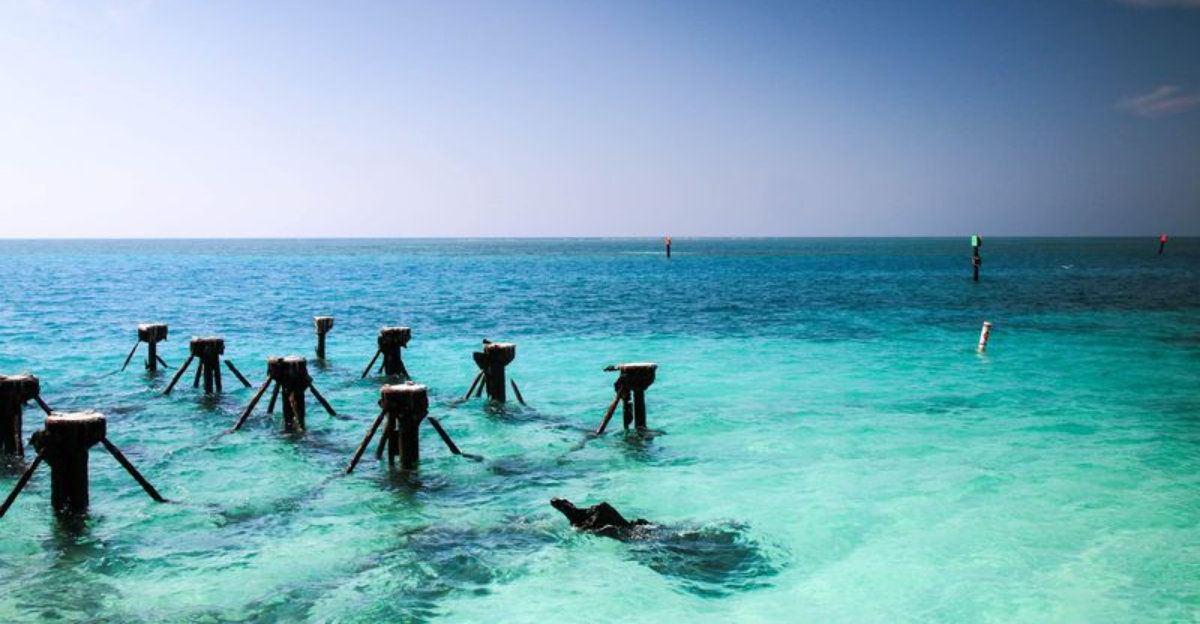
Florida is famous for beautiful beaches, but here is a question most travelers never think to ask. What if one of the most spectacular underwater worlds in the country is hiding far beyond the mainland?
Out in the open Gulf, where the water shifts from turquoise to deep blue, lies a place that feels almost unreal. Coral formations rise from the seafloor like miniature cities, each one buzzing with life.
Schools of tropical fish flash through the water while sea turtles drift slowly past, completely at home in their ocean sanctuary.
Slip beneath the surface and the entire scene changes. Sunlight dances across the reef.
Parrotfish nibble at coral. Barracuda glide through the clear water with effortless confidence.
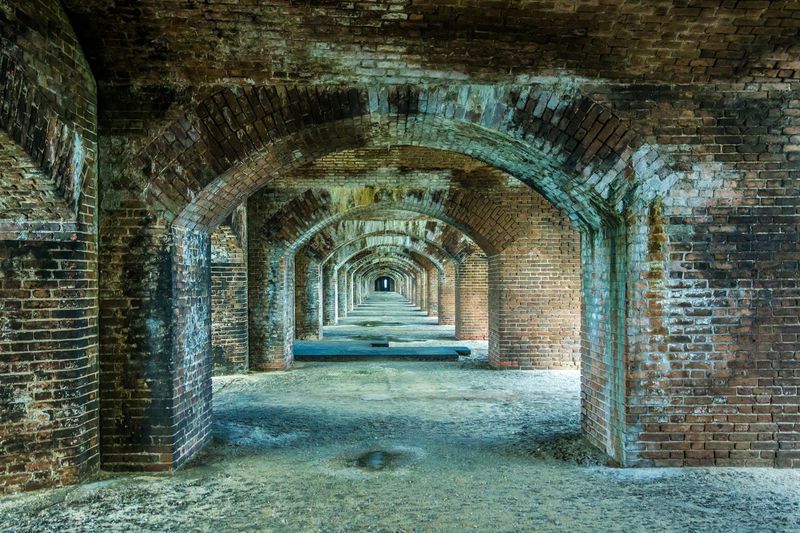
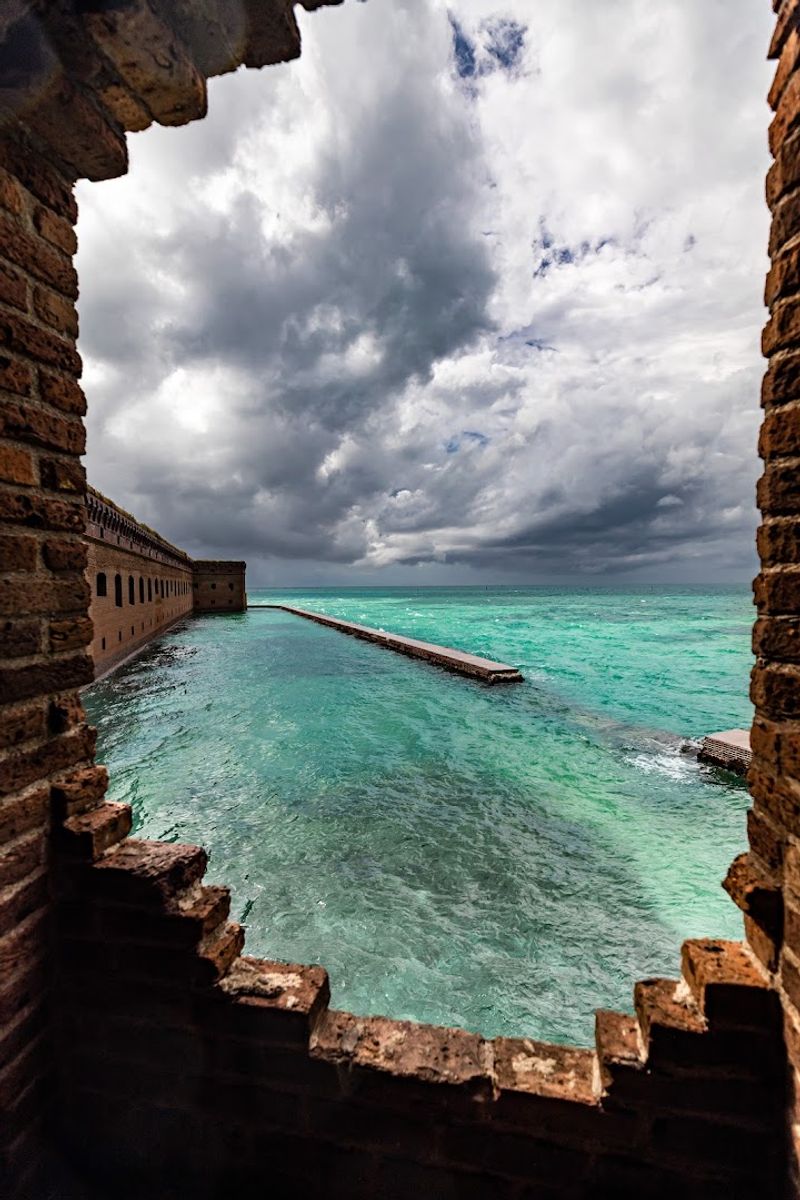
Above the waves, historic brick walls stand watch over the surrounding sea, adding a dramatic backdrop to an ecosystem that feels untouched and wild.
It is the kind of place where snorkeling stops feeling like a beach activity and starts feeling like entering another world.
Crystal Waters That Redefine Clarity
Standing on the beach at Garden Key, I watched my toes disappear into water so transparent it barely seemed real. The Gulf of Mexico here doesn’t play games with murky sediment or algae blooms.
Visibility regularly stretches beyond one hundred feet, meaning you can spot a nurse shark lounging on the sandy bottom from the fort walls above. This exceptional clarity comes from the park’s remote location, far from mainland runoff and development that clouds most coastal waters.
The moment I dipped my mask underwater, I understood why divers consider this spot legendary. Sunlight filters through the water column in shafts that illuminate every ripple in the sand, every sway of sea grass, every flick of a damselfish tail.
You don’t need expensive equipment or advanced certification to appreciate what lies beneath. Even wading knee-deep near the moat wall, I could watch sergeant majors darting between coral heads with perfect definition.
The park service provides complimentary snorkel gear on the ferry, removing any barrier between you and this liquid window into marine life. Water temperature hovers around eighty degrees most of the year, warm enough that you can stay submerged for hours without that bone-chilling cold that cuts other snorkeling trips short.
Every visit reminds me that water this clear exists not by accident but by protection.
The Barrier Reef’s Architectural Wonders
Coral reefs get called rainforests of the sea, but that comparison never quite captured what I saw swimming along the southern edge of the fort. These aren’t just pretty rocks with fish around them.
Brain coral formations the size of washing machines sit next to delicate branching staghorn structures that sway with current like skeletal fingers reaching upward. Elkhorn coral spreads in flat plates that create shelter for dozens of species simultaneously.
The reef here represents the northern extent of the Florida Reef Tract, the third-largest barrier reef system on the planet. What makes it genuinely special is its status as the only living barrier reef in the continental United States, a biological treasure that exists nowhere else within our borders.
I spent one afternoon just hovering over a single coral head, watching the ecosystem function in real time. Parrotfish scraped algae with their beak-like mouths, creating that distinctive crunching sound that carries underwater.
Tiny cleaner shrimp waved their antennae from coral crevices, advertising their services to passing fish. The reef isn’t a static sculpture but a living apartment complex where thousands of organisms interact every second.
Climate change and warming waters threaten coral worldwide, making every chance to witness healthy reef systems feel increasingly precious.
Tropical Fish Diversity Beyond Counting
My first snorkel at the moat wall turned into an impromptu fish identification marathon. Within ten minutes, I counted at least fifteen different species, and I’m absolutely certain I missed twice that many.
Bright yellow tangs moved in coordinated groups like underwater taxi cabs. Blue tangs (yes, like Dory) picked at the reef surface with surprising aggression for such friendly-looking fish.
Stoplight parrotfish displayed their namesake colors: green bodies with yellow patches and pink accents that would make a sunset jealous. Queen angelfish drifted past wearing blue and yellow crowns that justified their royal title.
The sergeant majors earned their name honestly, sporting bold black stripes on silver bodies while they patrolled their territories with military precision. Hogfish nosed through the sand, their elongated snouts perfect for rooting out hidden crustaceans.
Scientists have documented over 250 fish species within park waters, creating biodiversity that rivals tropical destinations much farther south. Some visitors arrive hoping to spot a particular species, but I found more joy in the constant surprises.
Every time I thought I’d seen the color palette exhausted, a Spanish hogfish would appear with its purple and yellow gradient, or a rock beauty would flash its black and gold pattern.
The sheer abundance means you’re never swimming through empty water.
Protected Waters That Welcome Swimmers
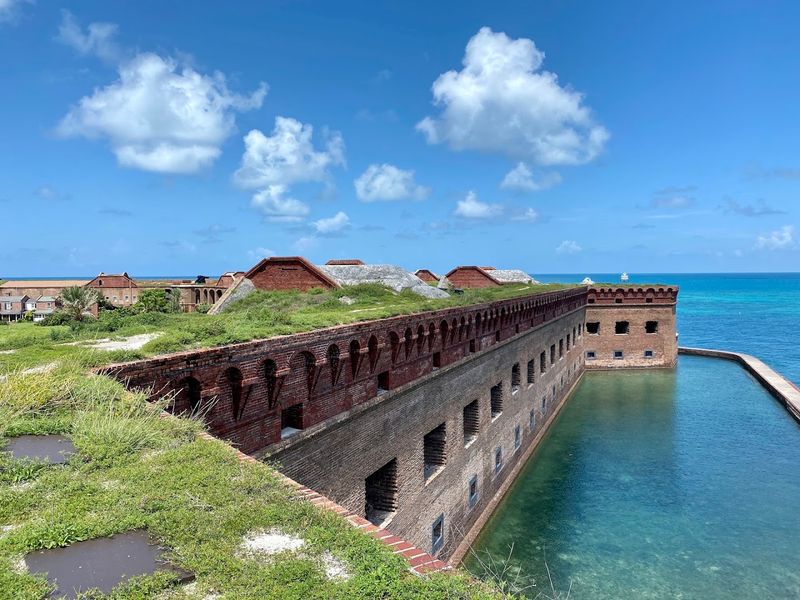
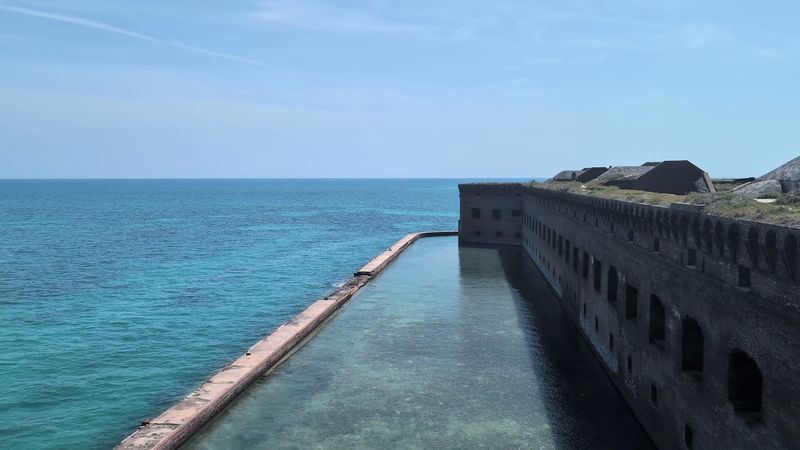
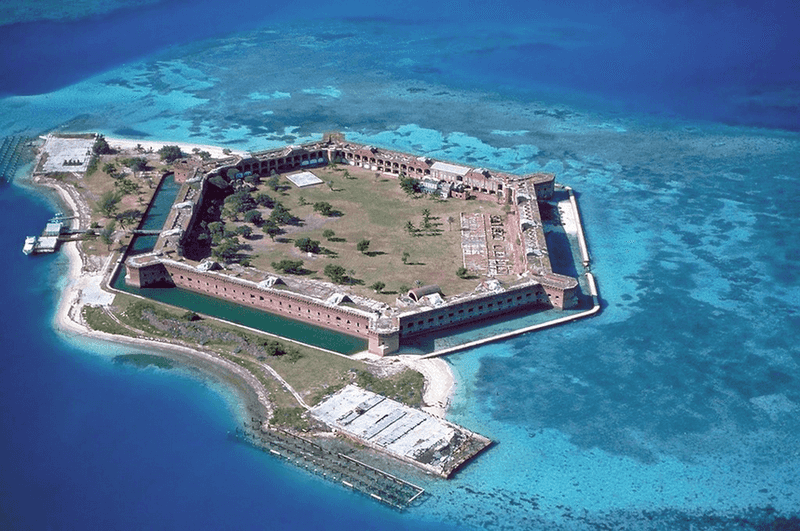
Fort Jefferson’s massive hexagonal design created an unexpected benefit: the moat wall forms a natural breakwater that keeps the swimming area relatively calm even when Gulf winds pick up outside. I watched waves crash against the seawall while the water inside barely rippled.
The designated snorkel area extends from the beach around the fort’s southern and eastern walls, marked clearly so boaters know to stay clear. Current here moves gently enough that even nervous swimmers can explore without fighting exhaustion.
Park rangers maintain a visible presence, and the ferry crew provides thorough safety briefings before anyone enters the water. Life jackets are available for anyone who wants extra security, no questions asked about swimming ability.
Unlike many ocean snorkel spots where you battle surf to reach the good viewing areas, here you simply wade in from the beach and immediately find yourself among fish and coral. The shallow depth near shore (often just four to six feet) means you can stand up whenever you need a break.
I appreciated this accessibility because it opened the reef experience to my friend who’d never snorkeled before. She spent her first twenty minutes just getting comfortable with the mask, standing in chest-deep water while fish swam around her legs.
Protected doesn’t mean boring, though. The marine life thrives specifically because these waters receive federal protection from fishing and collection.
Year-Round Warm Water Temperatures
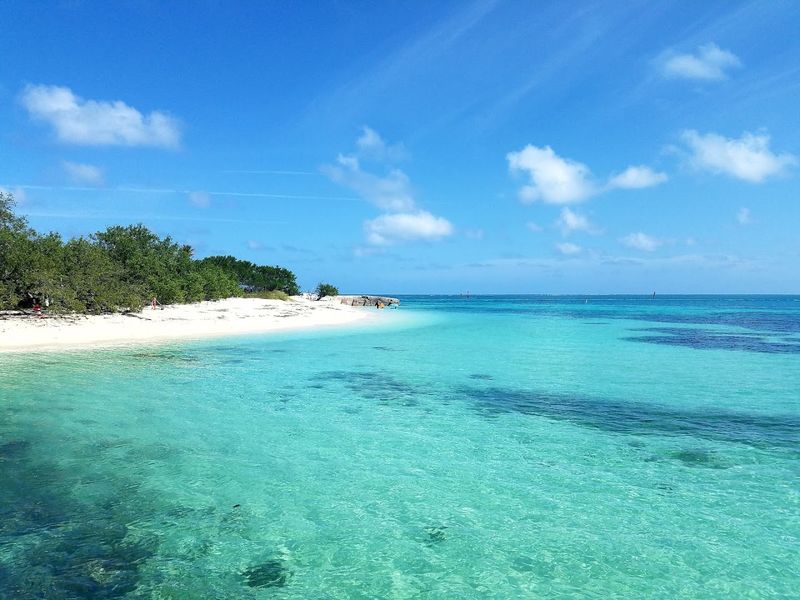
January in most of America means ice scrapers and layers, but at Dry Tortugas it means seventy-degree water and comfortable snorkeling conditions. The Gulf Stream’s influence keeps temperatures remarkably stable throughout the year.
Summer months see water warming into the low eighties, creating that bathwater sensation where you can stay submerged indefinitely without even noticing the temperature. Winter dips into the low seventies, cool enough to feel refreshing but warm enough that most people skip the wetsuit entirely.
I visited in February and spent nearly three hours in the water across multiple sessions, never once feeling that teeth-chattering cold that ruins snorkeling trips in California or the Pacific Northwest. The consistent warmth also supports the coral and tropical fish populations that simply couldn’t survive in colder waters.
This thermal stability means you can plan a trip any month without worrying whether conditions will cooperate. Hurricane season (June through November) brings weather concerns, but water temperature remains inviting even during those months.
The ferry provides changing rooms, but on warm days I watched visitors simply air-dry on the beach between snorkel sessions. That luxury of not needing to immediately peel off a wetsuit and rush to hot showers makes the whole experience feel more relaxed and vacation-like.
Warm water also means longer viewing time to spot the shyer species that only emerge once they get used to your presence.
Barracuda Encounters That Quicken Pulses
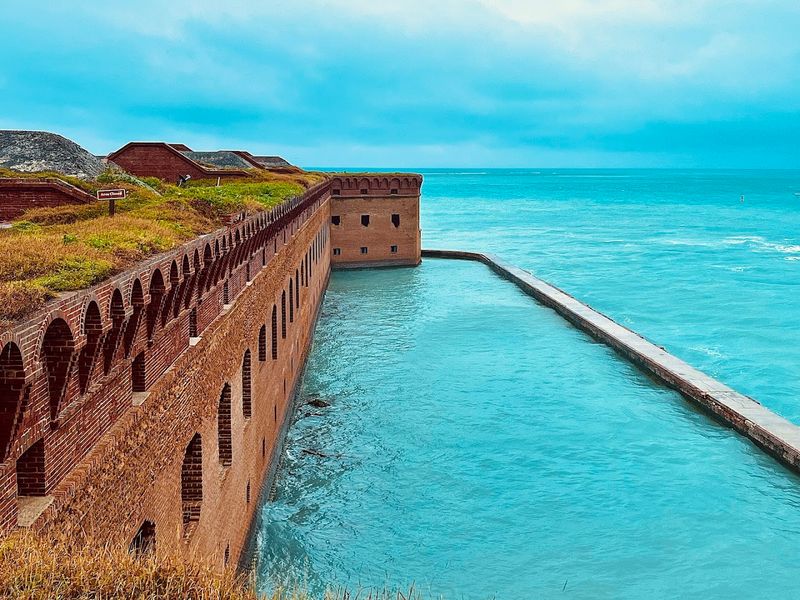
Nothing quite prepares you for the moment when a four-foot barracuda decides to investigate your presence. Their reputation as fierce predators makes the encounter feel dangerous, but these fish show more curiosity than aggression toward snorkelers.
I was photographing a parrotfish when I noticed the water darken slightly to my left. Turning slowly, I found myself maybe ten feet from a solitary barracuda hanging motionless in the water column, its lower jaw slightly protruding to reveal those famous teeth.
We regarded each other for perhaps thirty seconds before it lost interest and glided away with barely a tail movement. My heart hammered, but I never felt truly threatened.
The park sometimes sees small schools of barracuda patrolling the deeper water beyond the fort walls, their silvery bodies flashing in formation like an aquatic fighter squadron. Rangers explain that barracuda attacks on humans are extraordinarily rare and usually involve cases of mistaken identity in murky water.
Here, where visibility extends for dozens of feet, the fish can clearly see you’re not their preferred prey. Still, that primal response to being near a predator adds an element of wildness to the experience.
You’re not watching nature from behind glass at an aquarium. You’re in their territory, following their rules, accepted as a temporary visitor to their hunting grounds.
Sea Turtle Sightings In Natural Habitat
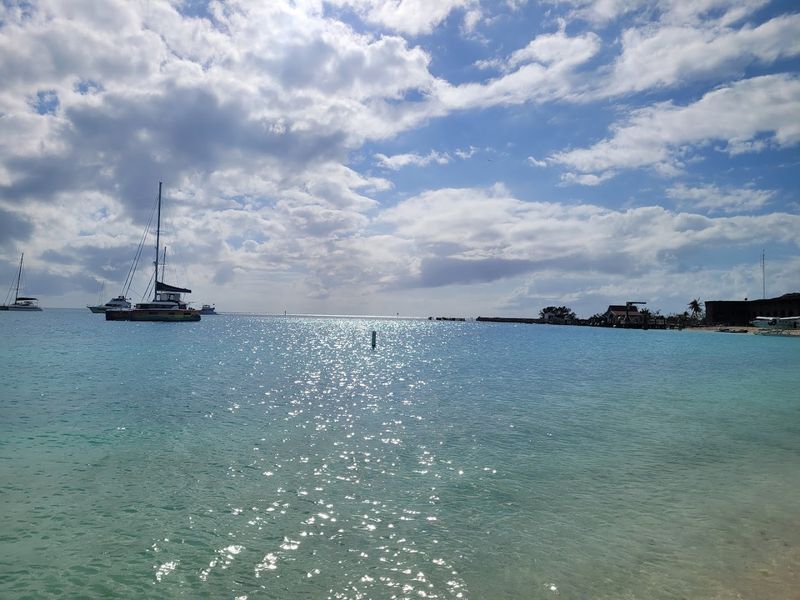
The name Tortugas comes from Spanish for turtles, and these islands have hosted sea turtles for centuries before Fort Jefferson’s first brick was laid. Three species frequent park waters: loggerheads, greens, and hawksbills, all protected under federal law.
My most memorable moment came while floating near the seawall when a green turtle roughly three feet long surfaced just beyond my fins, took a breath with that distinctively ancient-looking face, then dove back down to continue grazing on seagrass. I followed at a respectful distance, watching it methodically work across the sandy bottom.
Park regulations require maintaining distance from turtles (the official guideline suggests at least ten feet), but the turtles themselves sometimes approach closer out of their own curiosity or simply because they’re focused on feeding and don’t perceive snorkelers as threats. The key is never chasing or attempting to touch them.
Turtle sightings aren’t guaranteed on every visit, but the odds improve if you spend extended time in the water and cover more area. Early morning seems particularly productive, perhaps because fewer people are in the water and the turtles feel more comfortable moving into the shallows.
Watching a creature that might live a hundred years going about its daily routine puts your own timeline into perspective. These turtles were here before you arrived and will remain long after you leave.
Fort Jefferson’s Underwater Foundation Views
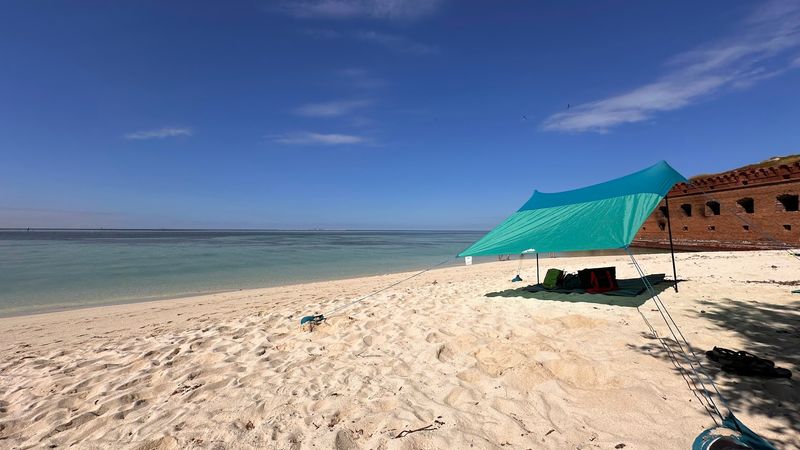
Most visitors photograph Fort Jefferson from the beach or the upper ramparts, but the truly unique perspective comes from putting your face in the water and looking at the fort from below. The massive brick walls continue downward beneath the surface, creating an artificial reef that marine life has colonized over the past 160 years.
Swimming along the moat wall, I could see where individual bricks have shifted or fallen, creating crevices that now shelter lobsters and octopuses. Algae and small coral polyps have attached to the mortar, slowly transforming this military structure into part of the natural ecosystem.
The contrast between the geometric precision of human construction and the organic chaos of reef growth creates visual interest you won’t find at natural-only sites. Small fish use the wall’s shadow as protection from predators cruising the open water.
Larger fish patrol the wall’s edge where it meets sandy bottom, hunting for creatures hiding in the architectural cracks. The fort’s designers never imagined their creation would serve as habitat, but nature adapts to whatever substrate it finds.
I spent considerable time just hanging weightless in front of different wall sections, studying how marine organisms choose their attachment points. This dual identity as both historical landmark and artificial reef makes Fort Jefferson ecologically significant beyond its military history.
You’re simultaneously exploring American history and witnessing ecological succession in action.
Remote Location Preserves Pristine Conditions
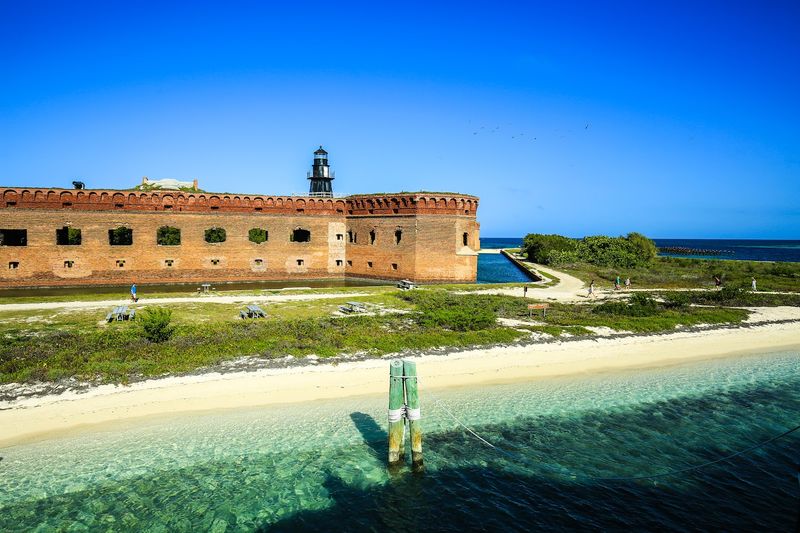
The seventy-mile distance from Key West isn’t just a logistical detail on your travel itinerary. That remoteness functions as the reef’s primary protection mechanism, creating a buffer that filters out casual visitors who might damage coral or disturb wildlife.
Getting here requires either a two-and-a-half-hour ferry ride or a seaplane flight, both of which cost enough to ensure visitors arrive with intention rather than impulse. The limited daily visitor capacity prevents the overcrowding that plagues more accessible snorkel sites.
I’ve snorkeled in the Caribbean where you literally bump into other tourists every few minutes, but at Dry Tortugas I often found myself alone on entire sections of reef. The isolation also means no coastal development, no fertilizer runoff, no jet skis tearing through the shallows.
Water quality here reflects what Florida’s coast looked like before population explosion transformed the peninsula. The park service maintains this pristine character through strict regulations: no fishing, no collecting shells or coral, no feeding fish, no anchoring on reef.
Rangers actually enforce these rules, unlike some parks where regulations exist only on paper. The remoteness that makes visiting difficult is precisely what makes the experience worthwhile.
You’re seeing an ecosystem that functions according to its own logic rather than human convenience, a increasingly rare privilege in our developed world.
Complimentary Gear Removes Barriers To Entry
The Yankee Freedom ferry service includes full snorkel gear in your ticket price, a detail that significantly lowers the barrier between you and the reef. I watched families who clearly hadn’t planned to snorkel suddenly decide to try it because the equipment was simply there, available, requiring no additional expense or advance preparation.
The gear gets sanitized between trips and comes in various sizes to fit children through adults. Masks, snorkels, and fins all sit in organized bins where crew members help you select appropriate sizes and demonstrate proper fit.
For travelers flying to Key West, this inclusion eliminates the hassle of packing bulky snorkel equipment or paying rental fees that sometimes approach the cost of buying your own gear. The quality exceeds what you’d expect from complimentary equipment, with masks that actually seal properly and fins that don’t cause immediate blisters.
I overheard a ranger mention that this policy was intentional, designed to encourage maximum reef appreciation among visitors who might otherwise skip the underwater experience. By removing financial and logistical obstacles, more people engage with the ecosystem and hopefully develop the connection that creates future conservation advocates.
The ferry also provides flotation devices and swim noodles for anyone nervous about deep water, plus staff members who offer basic snorkeling instruction before you enter the water.
This comprehensive support system means even complete beginners can safely enjoy what lies beneath the surface.