
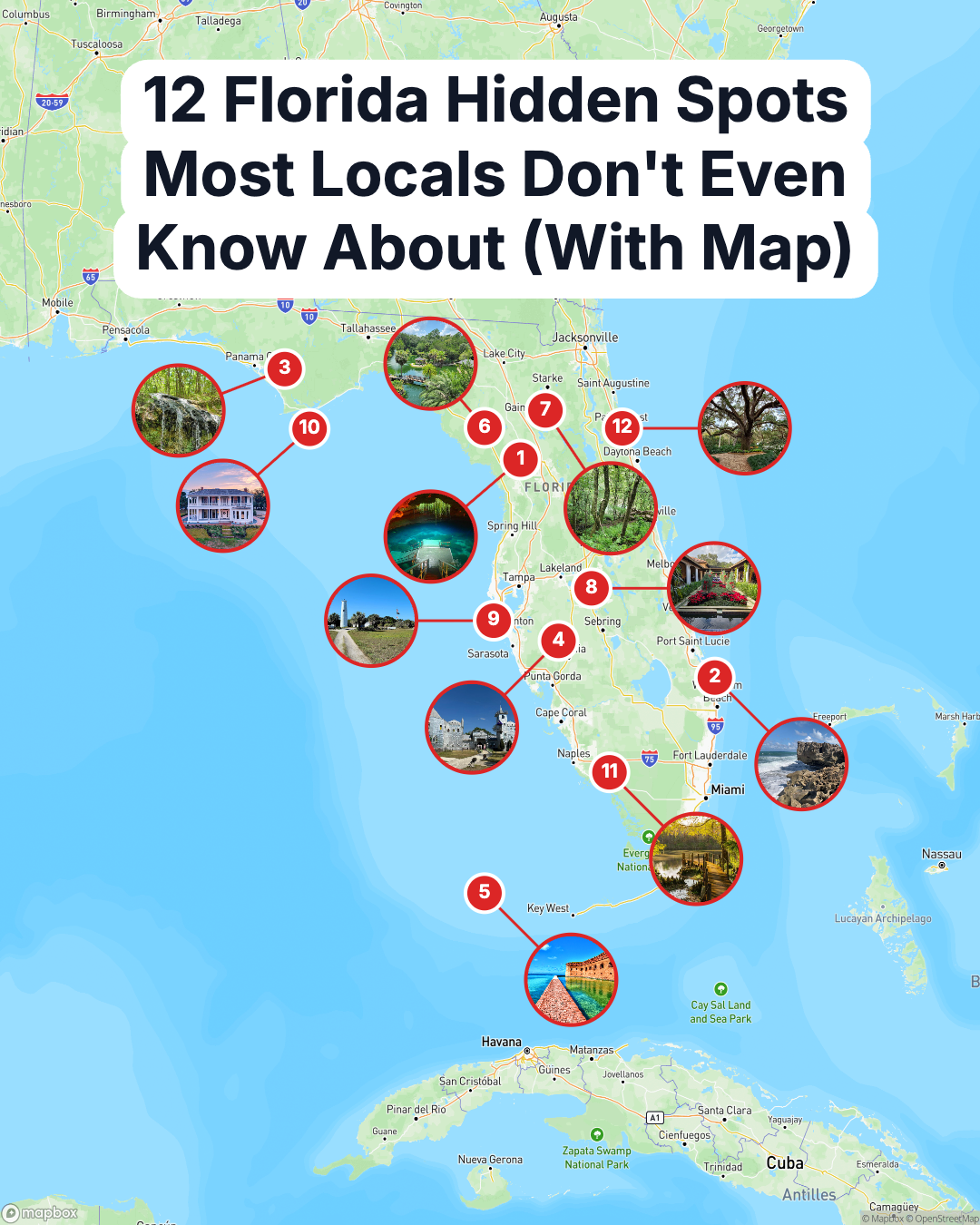
12 Florida Hidden Spots Most Locals Don’t Even Know About (With Map)
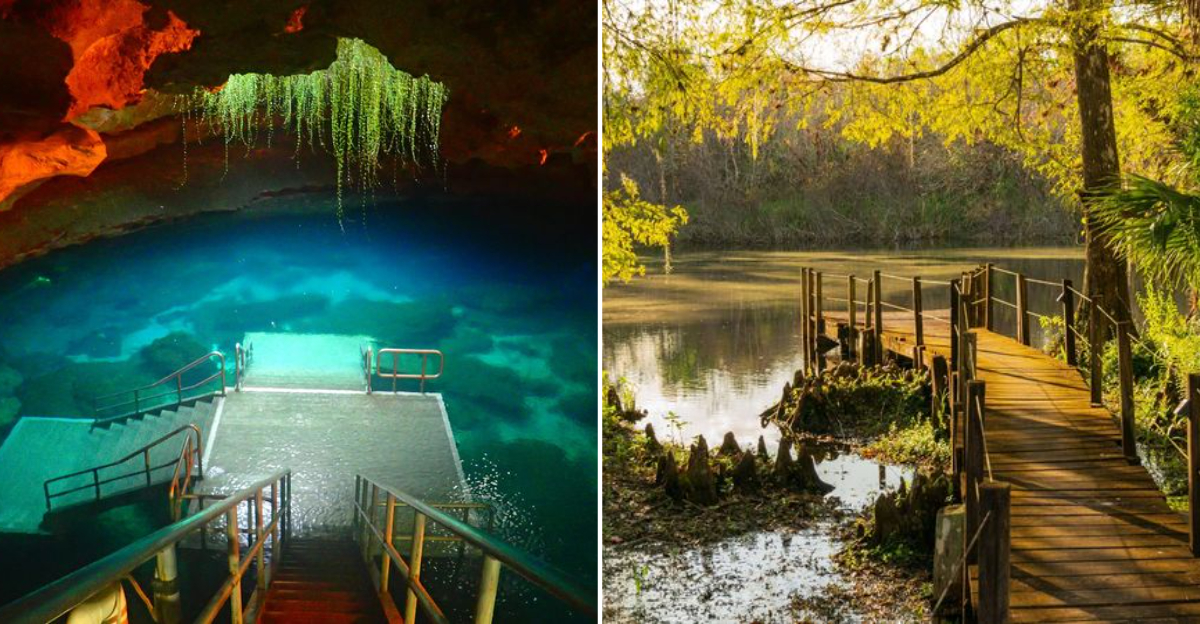
Florida is famous for theme parks, beach traffic, and flip flops in February, but what if the best places in the state are the ones nobody puts on postcards?
Picture this. You take one wrong turn and end up somewhere unreal.
Water so clear it looks like glass. Paths that feel like they were made for a movie scene.
Tiny islands where the loudest sound is your own footsteps. No crowds.
No chaos. Just that rare feeling you have discovered something special before the rest of the world catches on.
Sounds like a travel fantasy, right?
So why do locals get quiet when you ask about their favorite spots? What are they hoping you will not find?
And how many breathtaking places have you driven past without even knowing?
Here is the truth. Florida’s real magic is hidden, unexpected, and unforgettable once you see it.
Ready to unlock it? Today.
1. Devil’s Den Spring
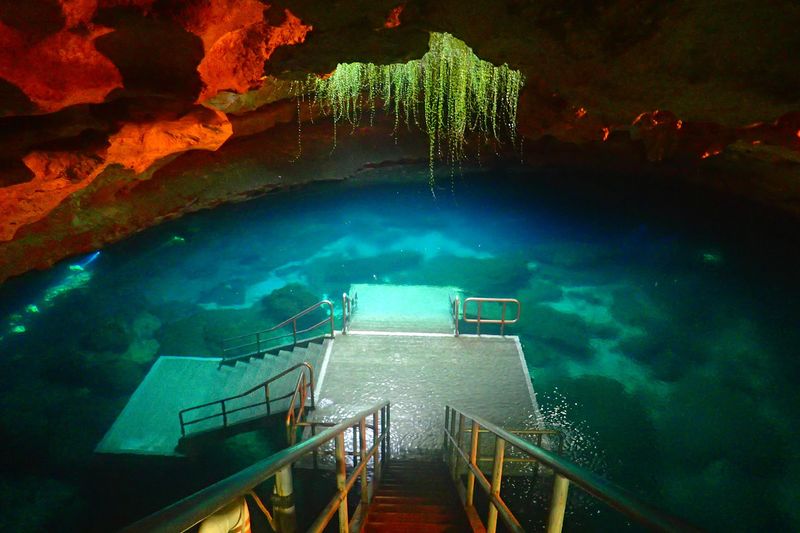
Imagine swimming inside a prehistoric cave where sunlight pours through a hole in the ceiling like nature’s own spotlight. Hidden beneath the ground at 5390 NE 180th Ave in Williston, Devil’s Den Spring is one of the most fascinating hidden places in Florida and feels like stepping into a secret world that time forgot.
The water stays a perfect 72 degrees year round, making it ideal for snorkeling and scuba diving no matter when you visit. This is not your typical Florida spring.
It is a genuine geological wonder formed thousands of years ago when the cavern’s roof collapsed and revealed the underground pool below.
Stalactites hang from the ceiling like rocky icicles, and the crystal clear water lets you see straight to the bottom where ancient fossils rest. The spring earned its mysterious name from early settlers who noticed steam rising from the opening on cold mornings and thought it looked like smoke drifting from the devil’s den.
You can snorkel, scuba dive, or simply float and soak in the surreal atmosphere, with equipment rentals and guided tours available so even beginners can safely experience this underground paradise.
2. Blowing Rocks Preserve
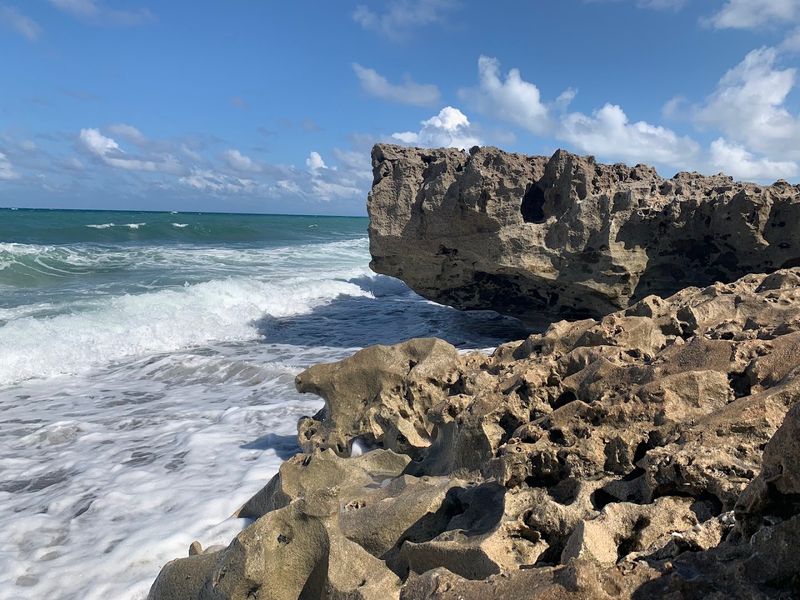
When waves crash against the jagged limestone shore at 574 S Beach Rd in Hobe Sound, water rockets skyward through cracks and holes like natural geysers reaching heights of up to fifty feet. Blowing Rocks Preserve stretches for a mile along this rare Anastasia limestone coastline and creates one of Florida’s most dramatic natural shows, especially during high tide and rough seas.
Protected by The Nature Conservancy, this remarkable site preserves not only the striking rock formations but also fragile dune habitat and mangrove wetlands. Unlike Florida’s typical sandy beaches, these ancient rocks form a rugged landscape that feels almost otherworldly, more like coastal New England than the Sunshine State.
Visit during incoming tides or after storms to witness the most powerful sprays as Atlantic swells slam into the porous stone. Nature trails wind through native vegetation where gopher tortoises, butterflies, and migratory birds often appear.
During sea turtle nesting season, loggerheads and green turtles arrive on these quiet shores, and thanks to limited parking and no commercial development, you may find yourself exploring this spectacular place in peaceful solitude.
3. Falling Waters State Park
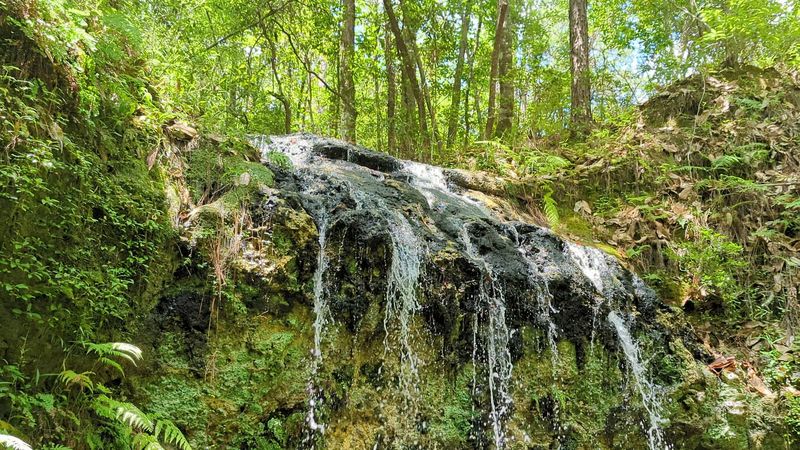
Florida’s tallest waterfall plunges seventy three feet down into a cylindrical sinkhole that seems to swallow the water into the earth itself. Tucked away at 1130 State Park Rd in Chipley, Falling Waters State Park reveals a geological surprise that feels worlds away from Florida’s usual image of flat landscapes and calm springs.
The waterfall flows year round, but after heavy rain it transforms into a roaring curtain of white water that echoes through the forest. In drier stretches it softens into a delicate ribbon that vanishes into the mysterious depths below, leaving visitors wondering where it goes.
Scientists still debate what happens after the water disappears into the hundred foot deep sinkhole. Some believe it feeds underground aquifers while others suspect it resurfaces somewhere else entirely.
Boardwalks and viewing platforms offer incredible vantage points, while hiking trails, a butterfly garden, and camping areas invite you to linger longer in this hidden corner of Florida known as the Doughnut Hole, a curious patch of forest surrounded by wilderness like a missing puzzle piece.
4. Solomon’s Castle
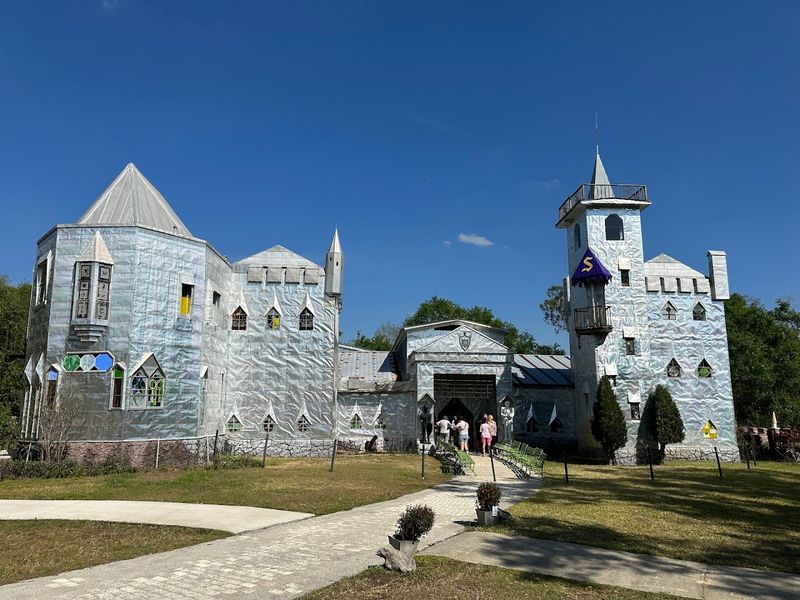
A shimmering castle made entirely from aluminum printing plates rises unexpectedly from the cow pastures at 4533 Solomon Rd in Ona, looking like a dream someone accidentally built in real life. This three story masterpiece is the life’s work of artist Howard Solomon, who spent decades crafting it by hand and covering every exterior wall with recycled metal that glints like dragon scales under the Florida sun.
Inside, the castle doubles as a whimsical museum filled with Solomon’s imaginative sculptures made from scrap and found objects. Every room reveals something new, from stained glass windows fashioned out of bottles to playful pieces that mix clever humor with real artistic skill.
His personality is everywhere, including the famously dry moat that exists purely for the joke. Just outside, the Boat in the Moat restaurant invites visitors to eat lunch inside a full size Spanish galleon replica built right on the grounds.
Guided tours share the stories behind the creations and the artist’s philosophy of turning discarded materials into wonder, proving Florida’s magic is not just natural but wildly creative too.
5. Dry Tortugas National Park
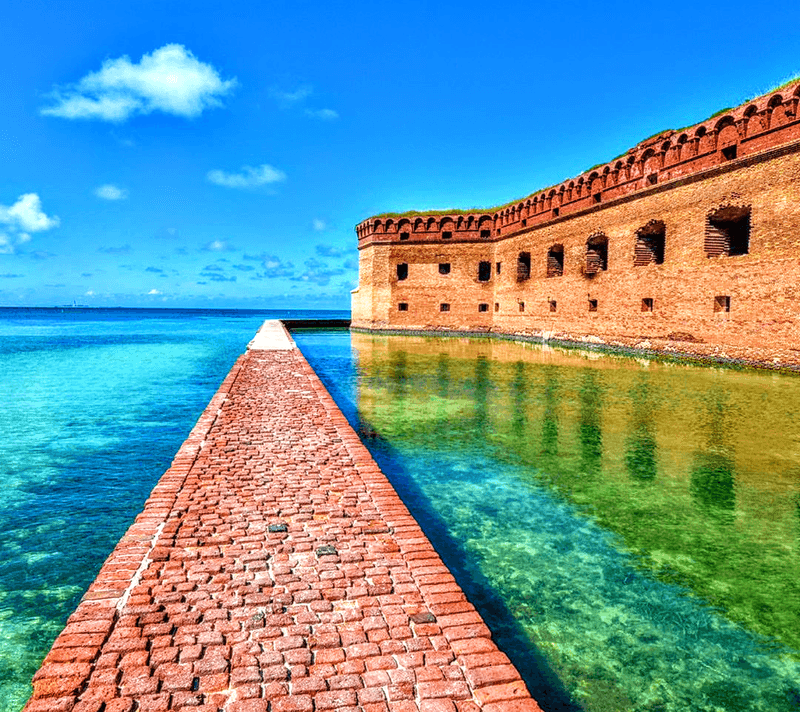
Seventy miles beyond Key West, in the remote waters near Key West, FL 33040, where the Gulf of Mexico meets the Atlantic Ocean, seven tiny islands form one of America’s most secluded national parks. Dry Tortugas feels less like a destination and more like a secret you earn, since it can only be reached by seaplane or ferry, keeping crowds small and the environment wonderfully untouched.
Fort Jefferson dominates Garden Key, an enormous hexagonal fortress built from sixteen million bricks during the Civil War era. Although it never saw battle, it served as a prison for Union deserters and once held Dr. Samuel Mudd, the physician who treated John Wilkes Booth.
The surrounding waters are just as legendary, offering some of the best snorkeling and diving in North America. Coral reefs glow with color, tropical fish weave through the currents, and sea turtles glide past with surprising calm while visibility often stretches beyond one hundred feet.
For adventurous travelers, camping on Garden Key turns a visit into an unforgettable overnight escape, while nearby Bird Island erupts with sound during migration season as thousands of seabirds fill the sky and air with wild coastal energy.
6. Cedar Lakes Woods & Gardens
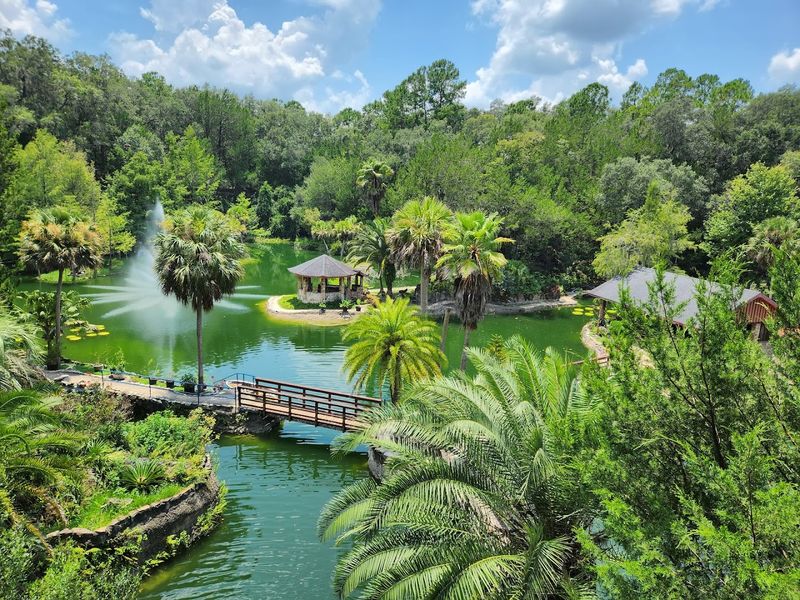
Just down the road from Devil’s Den, a second hidden wonderland waits quietly at 4990 NE 180th Ave in Williston, where Cedar Lakes Woods & Gardens blends nature and imagination into something that feels almost unreal. Spread across eighteen acres, this peaceful retreat features spring fed lakes linked by winding paths that guide visitors through thoughtfully designed garden rooms, each with its own mood, colors, and surprises.
The late Dr. Raymond Webber spent decades transforming what was once wild Florida scrubland into an enchanted landscape filled with sculptures, fountains, and carefully chosen plant life. His artistic vision shaped spaces that feel both natural and dreamlike, as if you wandered into a living storybook.
Crystal clear springs bubble up throughout the grounds and feed interconnected ponds where koi glide beneath lily pads and turtles bask in the sun. Stone walkways, wooden bridges, and tucked away benches encourage you to slow down and take everything in.
Native Florida plants grow beside exotic species from around the world, creating striking combinations that delight photographers and nature lovers who discover this little known paradise.
7. Devil’s Millhopper Geological State Park
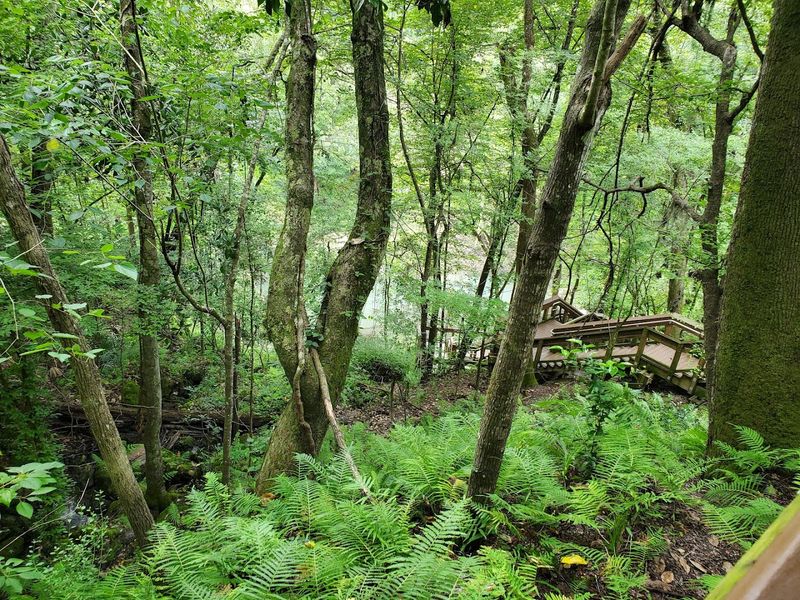
A giant sinkhole plunging 120 feet into the earth at 4732 Millhopper Rd in Gainesville creates a miniature rainforest ecosystem hidden in plain sight. Devil’s Millhopper Geological State Park protects this astonishing formation where twelve small streams trickle down steep limestone walls, feeding lush ferns, mosses, and plant life more typical of cooler northern climates.
The sinkhole formed thousands of years ago when a cavern roof collapsed, revealing layers of rock filled with fossilized sharks’ teeth, shells, and ancient marine life from the time Florida lay beneath a prehistoric ocean. A winding 232 step staircase leads visitors down into the basin, where the air turns cooler and the scenery suddenly feels worlds away from the city above.
Early settlers gave it the name Devil’s Millhopper because its funnel shape resembled a grain hopper, and they imagined something sinister grinding below. In reality, it is a natural time capsule offering a rare glimpse into Florida’s geological past.
Boardwalks and viewing platforms provide different perspectives, while the park’s small size and limited parking keep crowds light, making this remarkable place feel like a secret discovery waiting quietly for curious explorers.
8. Bok Tower Gardens
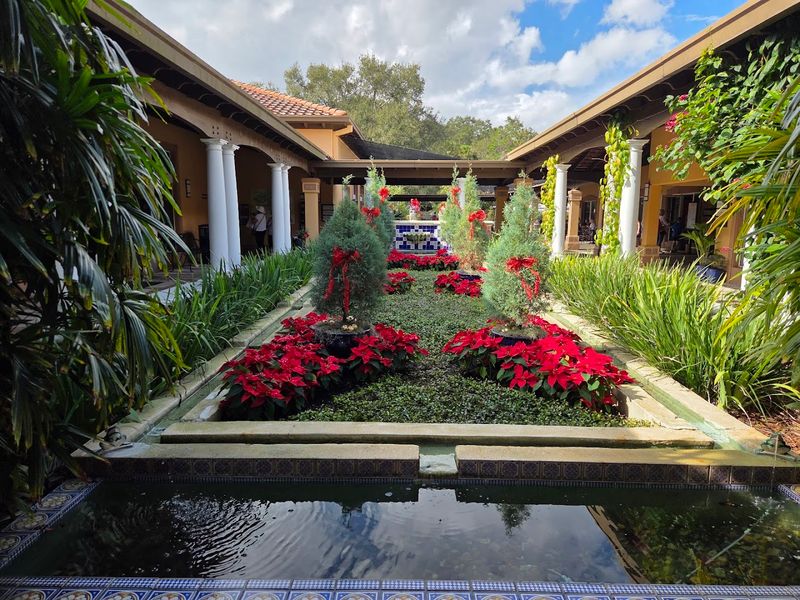
Rising 205 feet above Iron Mountain at 1151 Tower Blvd in Lake Wales, the singing tower at Bok Tower Gardens feels like a peaceful escape lifted straight from the European countryside. Built in the 1920s by publisher Edward Bok as a gift of gratitude to America, this remarkable landmark blends architecture, music, and nature into one unforgettable experience.
The neo Gothic tower houses a sixty bell carillon that fills the gardens with daily concerts, the melodies drifting gently across the landscape like a soundtrack for the scenery. Talented carillonneurs perform everything from classical compositions to modern arrangements, making the tower truly sing.
Surrounding the structure, 250 acres of gardens unfold in beautifully designed spaces perfect for wandering, reflecting, or simply slowing down. Azaleas, camellias, and magnolias bloom throughout the seasons, while a massive oak tree believed to be over 500 years old stands as a living link to Florida’s distant past.
Intricate carvings, colorful tiles, and a brass door illustrating the Creation story add artistic detail, and despite its National Historic Landmark status, this tranquil retreat remains surprisingly uncrowded compared to nearby Orlando attractions.
9. Egmont Key State Park
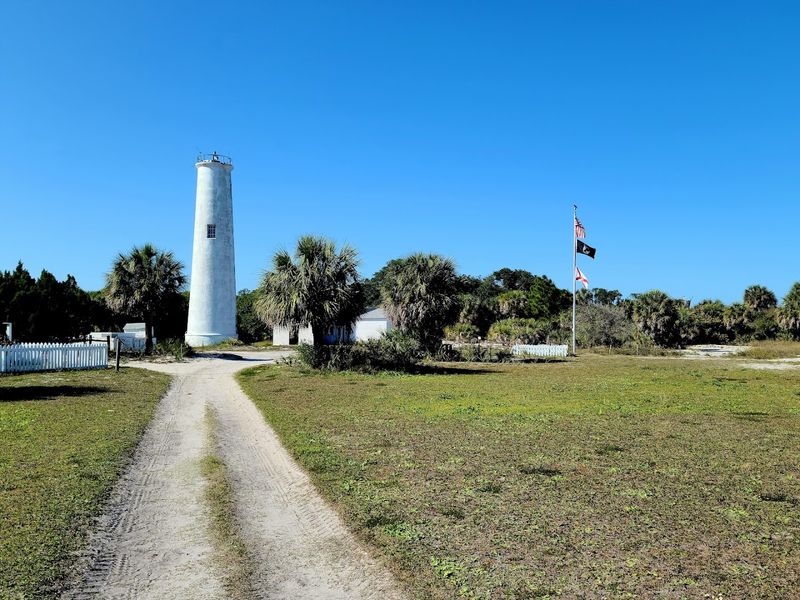
Accessible only by private boat or ferry, Egmont Key rests quietly off Tierra Verde, FL 33715 at the mouth of Tampa Bay, feeling like a preserved snapshot of Florida before modern development reshaped the coastline. This uninhabited island offers untouched beaches, historic ruins, and abundant wildlife without a single permanent resident, paved road, or commercial building in sight.
Much of the island is home to Fort Dade, a Spanish American War era military post now slowly blending back into nature. Weathered brick walls, old gun batteries, and roofless structures create an atmospheric scene where history and wilderness exist side by side.
Egmont Key also serves as a sanctuary for wildlife. Gopher tortoises wander freely across the sand and trails, dolphins glide through surrounding waters, and seabirds circle overhead while sea turtles nest along the quiet shoreline.
The 1858 lighthouse still stands watch, guiding ships safely into Tampa Bay. Visitors can spend the day swimming, shelling, and exploring, but must bring supplies like water and sun protection since facilities are limited to basic dockside amenities where ferries arrive.
10. Orman House Historic State Park
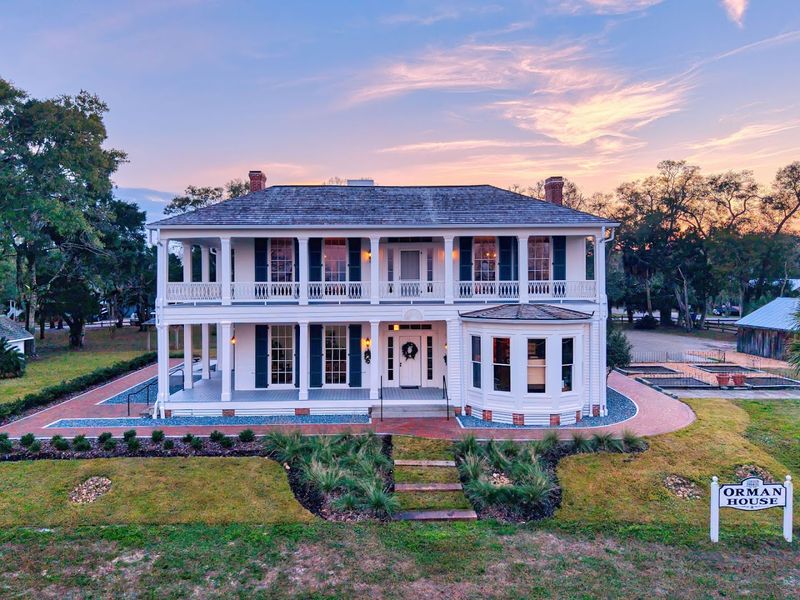
In the charming fishing town of Apalachicola, the Orman House stands gracefully at 177 5th St, offering a beautifully preserved glimpse into Florida’s antebellum past. Built in 1838 by Thomas Orman during the height of the cotton and lumber trade, this elegant Greek Revival mansion feels like stepping straight into life before the Civil War.
Inside, original furnishings, period style décor, and fine architectural details reveal the level of craftsmanship once reserved for wealthy frontier families. Wide plank pine floors, soaring windows designed to capture cooling breezes, and a sweeping wraparound porch show how classic Southern elegance was adapted to Florida’s warm climate long before air conditioning existed.
Costumed interpreters often share stories about the Orman family and everyday life in the nineteenth century, turning a simple tour into a living history experience. The grounds also include a detached kitchen building and heritage gardens planted with species common to the era.
Set within the quietly charming streets of Apalachicola, lined with oyster houses and local shops, this historic site adds a cultural dimension to Florida’s hidden gems, proving the state’s past can be just as fascinating as its landscapes.
11. Fakahatchee Strand Preserve State Park
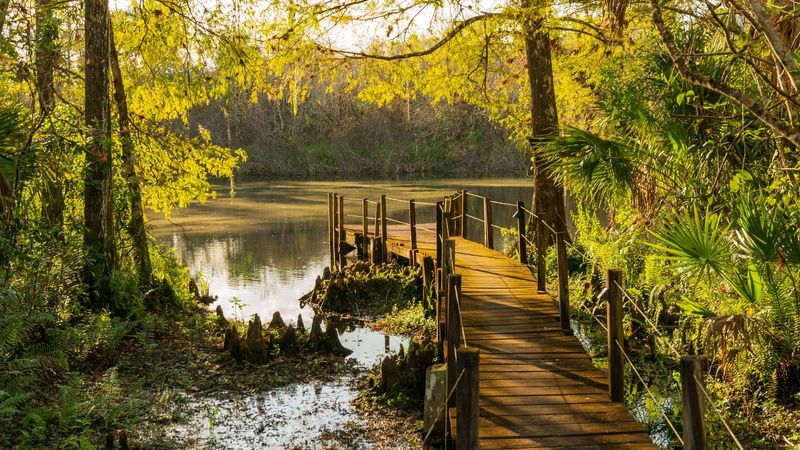
Deep in the Big Cypress Swamp region, at 137 Coastline Dr in Copeland, Fakahatchee Strand Preserve protects one of Florida’s wildest and most mysterious landscapes, a place where rare ghost orchids bloom and endangered panthers still roam. This remarkable swamp forest stretches about twenty miles long and several miles wide, forming a natural wildlife corridor and one of the most botanically diverse environments in North America.
The preserve contains more native orchid species than anywhere else on the continent, including forty four varieties and the legendary ghost orchid made famous by The Orchid Thief. Towering royal palms rise overhead like columns, creating a lush green canopy that feels almost cathedral like.
The Big Cypress Bend Boardwalk offers an accessible path into this primeval environment, winding through cypress strands where alligators glide beneath dark water and air plants cling to branches in every direction. Nature fills the air with sound, from birds and insects to rustling palm fronds.
Guided swamp walks allow adventurous visitors to wade through shallow water for a truly immersive experience, revealing Florida as it once was before development reshaped most of the state.
12. Washington Oaks Gardens State Park
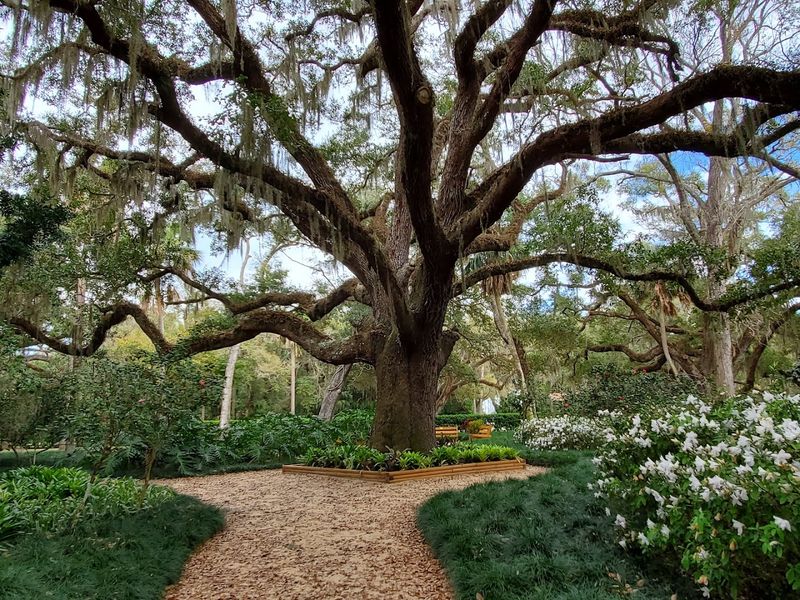
Where elegant gardens meet the untamed Atlantic shoreline, Washington Oaks Gardens State Park at 6400 N Oceanshore Blvd in Palm Coast offers two completely different Florida experiences just steps apart. On the western side, carefully manicured ornamental gardens unfold beneath ancient live oaks draped in Spanish moss, with azaleas, camellias, and seasonal blooms arranged in scenes worthy of a classic Southern estate.
Cross the road toward the ocean and the atmosphere shifts instantly. Instead of soft sand, you find one of Florida’s rarest coastal landscapes where coquina rock formations create tide pools, natural sculptures, and a shoreline that looks more like New England than the Sunshine State.
These shell based rocks formed millions of years ago and continue to be shaped by waves into ever changing patterns.
Originally developed in the 1930s as a winter retreat for industrialists Owen and Louise Young, the gardens reflect Louise’s passion for horticulture, especially in spring when color bursts across the grounds.
Photographers adore this park for its dramatic contrasts, capturing refined gardens and rugged coastlines in a single visit, especially at low tide when reflective pools and crashing waves create scenes that feel almost surreal.