
10 Florida Places Every History Lover Should Visit This Spring
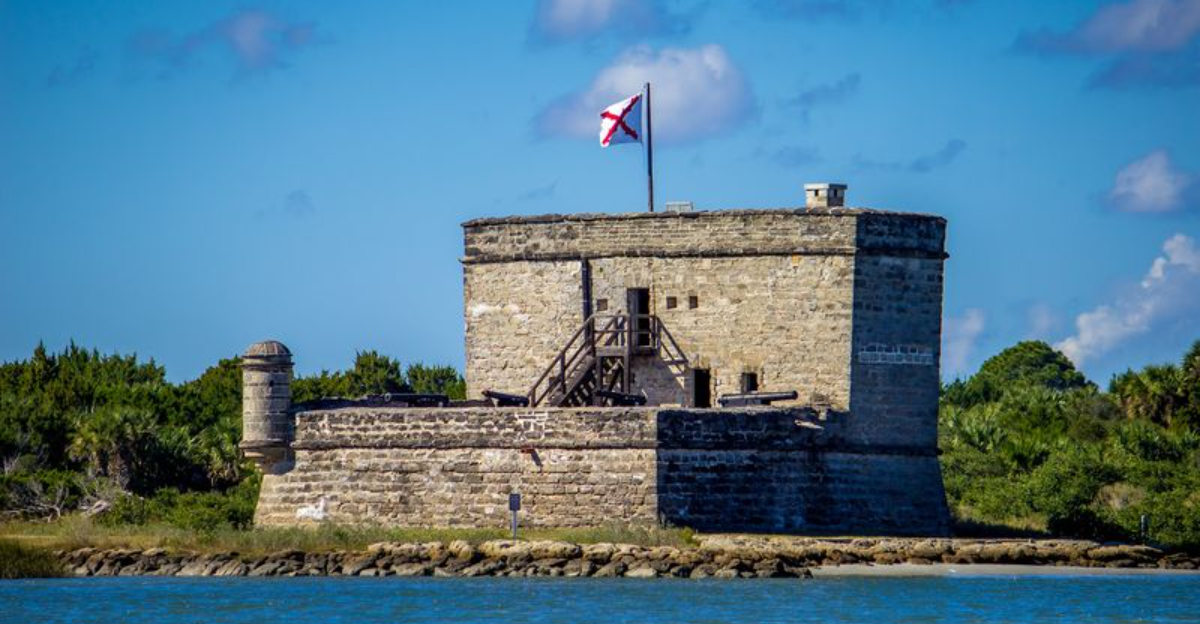
Florida is often seen through a familiar lens, beaches, sunshine, and the kind of easy escapes people return to year after year. But the more time I spent exploring it, the more I realized how much of its story exists just beneath the surface.
I found myself stepping into places that felt completely removed from that image. Spanish forts that have stood for centuries, quiet mission sites, grand estates, and remnants of a past that stretches back long before the United States took shape.
What surprised me most was not just how much history there is, but how easy it is to miss if you are not looking for it.
Florida has a way of hiding these stories in plain sight.
People say this state is all about beaches, but that barely scratches the surface.
1. St. Augustine Historic District, St. Augustine
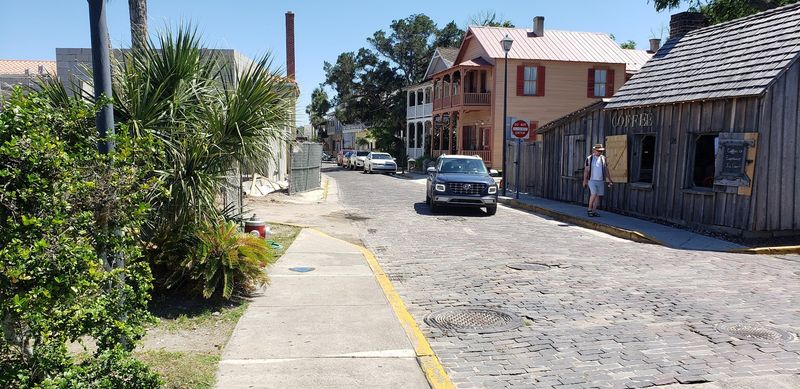
Walking through the narrow streets of St. Augustine’s Historic District feels like stepping through a time portal that nobody bothered to close.
Located at the heart of St. Augustine, FL 32084, this district holds the title of the oldest continuously occupied European settlement in the United States, founded by Spanish explorers all the way back in 1565.
The architecture alone tells a thousand stories, with thick coquina walls, wrought-iron balconies, and centuries-old churches lining every block.
Spring is honestly the best time to visit because the crowds are manageable, the temperatures are pleasant, and the blooming flowers against the old stone buildings make every photo look like a painting.
I recommend starting your walk on St. George Street, where you can browse artisan shops, stop at local bakeries, and chat with costumed historical interpreters who genuinely know their stuff.
The district is walkable, free to explore on foot, and absolutely packed with surprises around every corner.
2. Castillo De San Marcos National Monument, St. Augustine
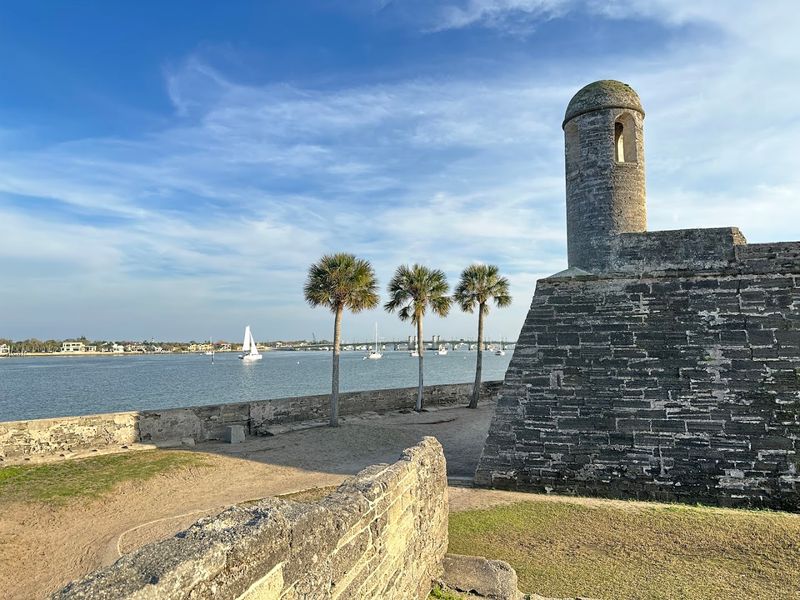
Standing in front of the Castillo de San Marcos, I always feel a little humbled by just how old and solid this place really is.
Situated at 1 S Castillo Dr, St. Augustine, FL 32084, this star-shaped fortress is the oldest masonry fort in the continental United States, completed by the Spanish in 1695 after decades of construction.
The walls are built from coquina, a locally quarried shellstone that famously absorbed cannonballs rather than shattering, giving the fort a natural defensive advantage that engineers of the era could not have planned better.
Visitors can walk the upper ramparts for sweeping views of the Matanzas Bay, peer into the dark interior rooms, and watch ranger-led cannon demonstrations that bring the history to vivid, thunderous life.
Admission is affordable through the National Park Service, and the spring season means comfortable walking temperatures without the peak summer humidity.
History rarely feels this tangible, this textured, or this genuinely awe-inspiring anywhere else in Florida.
3. Fort Matanzas National Monument, St. Augustine
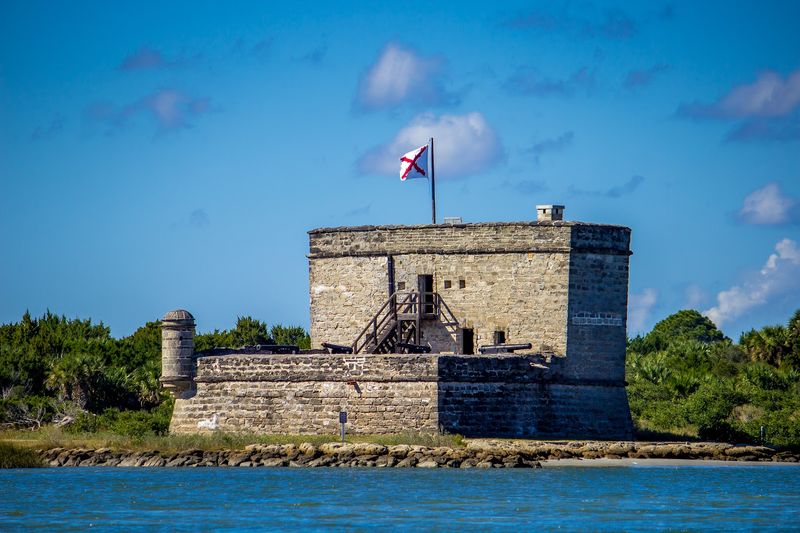
Most visitors to St. Augustine never make it to Fort Matanzas, which means this quiet little gem of a site stays refreshingly uncrowded and deeply atmospheric.
Found at 8635 A1A S, St. Augustine, FL 32080, the fort sits on a small island in the Matanzas River, accessible only by a free ferry operated by the National Park Service.
Built by the Spanish in the 1740s, the tower served as a watchtower and artillery post protecting the southern water approach to St. Augustine, and it still stands largely intact today.
The ferry ride itself is a highlight, cutting through tidal marshes alive with herons, egrets, and the occasional dolphin breaking the glassy water surface.
Rangers lead tours of the small but historically rich tower, explaining the strategic military thinking behind its unusual location.
Spring visits reward you with mild weather, active wildlife, and the kind of peaceful, reflective mood that makes history feel personal rather than like a school assignment.
4. Mission San Luis, Tallahassee
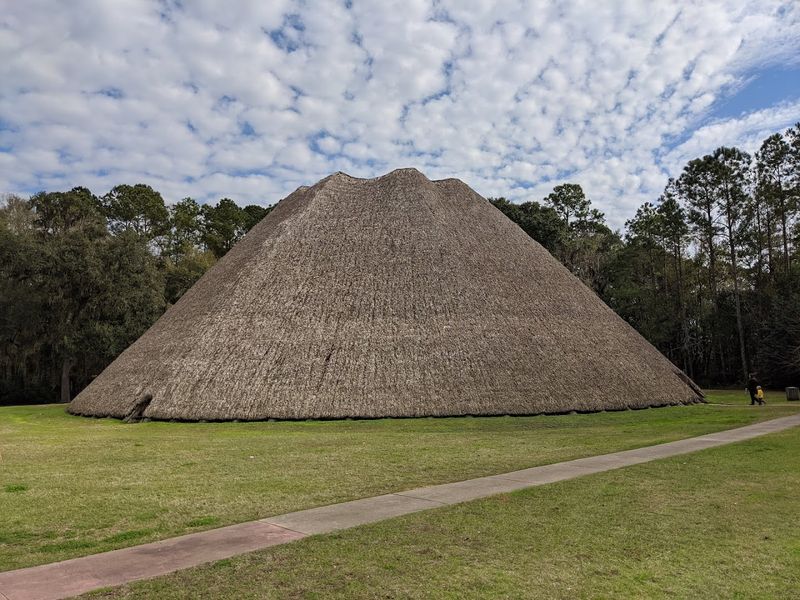
Few places in Florida manage to tell two cultures’ stories at the same time as honestly and as thoughtfully as Mission San Luis does.
Located at 2100 W Tennessee St, Tallahassee, FL 32304, this living history site preserves and reconstructs the 17th-century co-capital of Spanish Florida, where Spanish colonists and Apalachee Native Americans actually lived side by side.
The centerpiece of the site is a breathtaking reconstruction of the Apalachee council house, a massive circular structure with a towering thatched roof that once served as the social and ceremonial heart of the community.
Costumed interpreters demonstrate period crafts, cooking techniques, and daily life practices that reflect both Spanish and Apalachee traditions with impressive authenticity and respect.
Spring is an ideal time to visit because the outdoor grounds are lush, and the site hosts special programming and cultural events that bring extra energy to an already fascinating place.
Admission is reasonable, parking is easy, and the experience lingers in your memory long after you leave Tallahassee.
5. Edison And Ford Winter Estates, Fort Myers
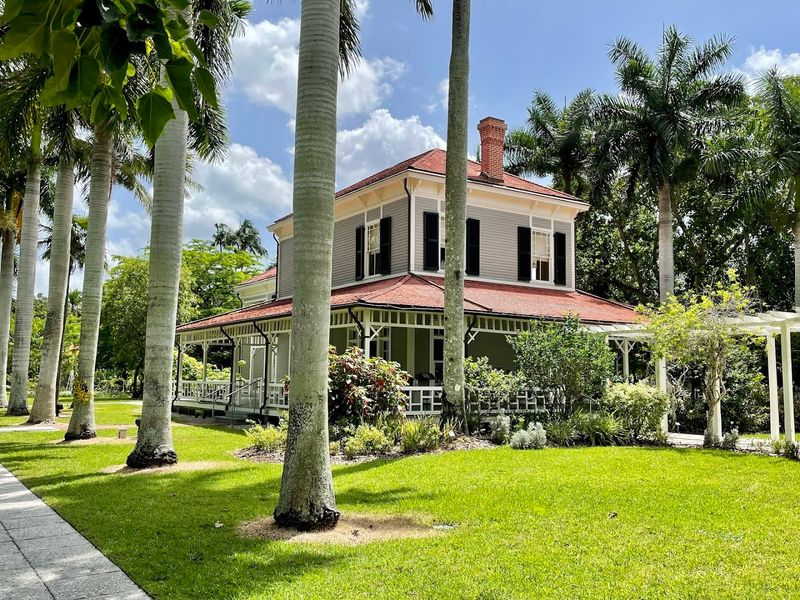
Thomas Edison and Henry Ford as next-door neighbors sounds like the setup for a history joke, but in Fort Myers, it was simply Tuesday.
The Edison and Ford Winter Estates at 2350 McGregor Blvd, Fort Myers, FL 33901 preserve the neighboring winter retreats of two of the most influential inventors and industrialists in American history, and touring both properties together is an experience that is genuinely hard to top.
Edison’s estate includes his original laboratory, where he spent winters experimenting with botanical research in his search for a domestic rubber source, surrounded by a jaw-dropping collection of tropical plants he personally cultivated.
Ford’s adjacent home is more modest in scale but rich in character, offering a fascinating contrast between the two men’s personal styles and priorities.
The on-site museum displays a stunning collection of Edison’s inventions, personal artifacts, and historic vehicles that make the innovations feel immediate and real.
Spring blooms across the botanical garden make every visit feel like a walk through a living, breathing piece of American ingenuity.
6. Vizcaya Museum And Gardens, Miami
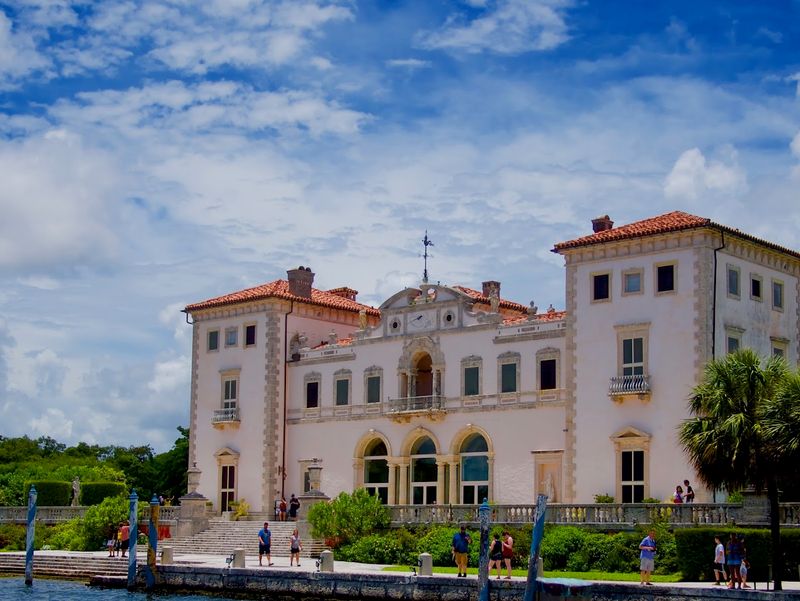
Built in 1916 as the winter retreat of agricultural industrialist James Deering, Vizcaya Museum and Gardens at 3251 S Miami Ave, Miami, FL 33129 stands as one of the most unexpected and opulent historic sites in all of Florida.
The main villa is a jaw-dropping Italian Renaissance-style palace filled with European antiques, decorative arts, and architectural details that Deering collected from across the continent, all assembled with a curatorial obsession that borders on the theatrical.
Outside, the formal gardens cascade toward Biscayne Bay in a series of terraces, fountains, and sculptural follies that feel more Rome than Miami, yet somehow fit perfectly against the subtropical backdrop.
Spring is arguably the best season to visit because the gardens are in full bloom, the bay breezes keep things comfortable, and the late-afternoon light on the stone architecture turns every photograph into something worth framing.
Guided tours of the interior are available and highly recommended for anyone who wants to understand the sheer ambition behind what Deering built here.
Vizcaya rewards slow, curious visitors who are willing to look closely at every detail.
7. The Ringling, Sarasota
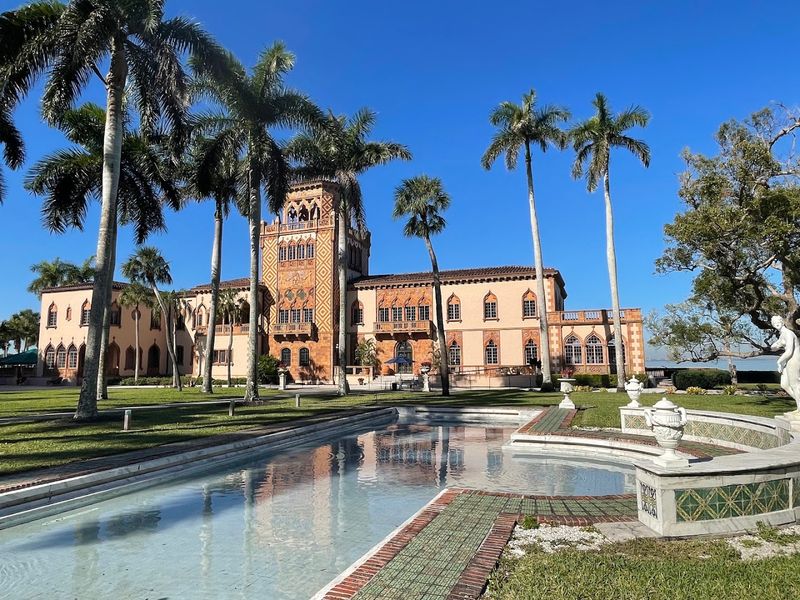
Circus magnate John Ringling did not do anything halfway, and his Sarasota estate makes that abundantly, gloriously clear from the moment you arrive.
The Ringling at 5401 Bay Shore Rd, Sarasota, FL 34243 is a sweeping complex that includes the Ca’ d’Zan mansion, the John and Mable Ringling Museum of Art, a circus museum, and beautifully maintained bayfront grounds that stretch along Sarasota Bay.
Ca’ d’Zan itself, which means House of John in Venetian dialect, is a Venetian Gothic palazzo with a terra cotta facade, a grand waterfront terrace, and interiors decorated with hand-painted ceilings, imported European furniture, and art collected from around the world.
The art museum next door holds one of the finest collections of Baroque paintings in the American South, anchored by five enormous canvases by Peter Paul Rubens that Ringling purchased in the 1920s.
Spring visits let you enjoy the grounds in comfortable weather, and the circus museum adds a wonderfully playful counterpoint to all the fine art and gilded architecture.
Few historic estates in Florida pack this much personality, spectacle, and genuine cultural weight into a single afternoon.
8. Bok Tower Gardens, Lake Wales
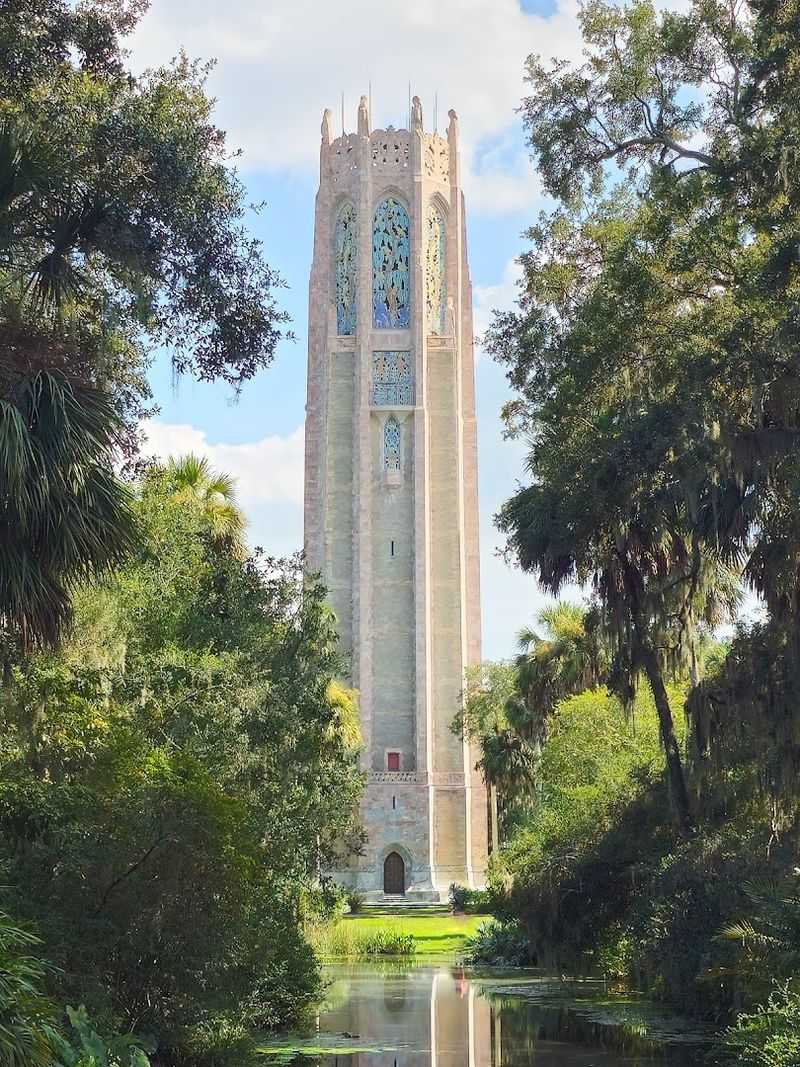
Perched atop Iron Mountain, the highest point on the Florida peninsula, Bok Tower Gardens carries a quiet grandeur that catches most first-time visitors completely off guard.
Located at 1151 Tower Blvd, Lake Wales, FL 33853, the site was created by Dutch-American publisher and philanthropist Edward Bok, who donated it to the American people in 1929 as a gift of beauty and reflection.
The centerpiece is the 205-foot Singing Tower, an extraordinary blend of Gothic and Art Deco architecture clad in pink and gray Georgia marble and decorated with intricate carvings of Florida wildlife, including herons, pelicans, and turtles woven into every surface.
The tower houses a 60-bell carillon that performs live recitals daily at 1 and 3 p.m., sending music cascading across the gardens and into the surrounding pine forests in a way that feels almost otherworldly.
Spring is prime time here because the azaleas, camellias, and woodland wildflowers are in full color, transforming the trails into something that feels intentionally magical.
Bok Tower is proof that Florida history does not always arrive with a cannon blast.
9. Fort Jefferson, Dry Tortugas National Park, Key West
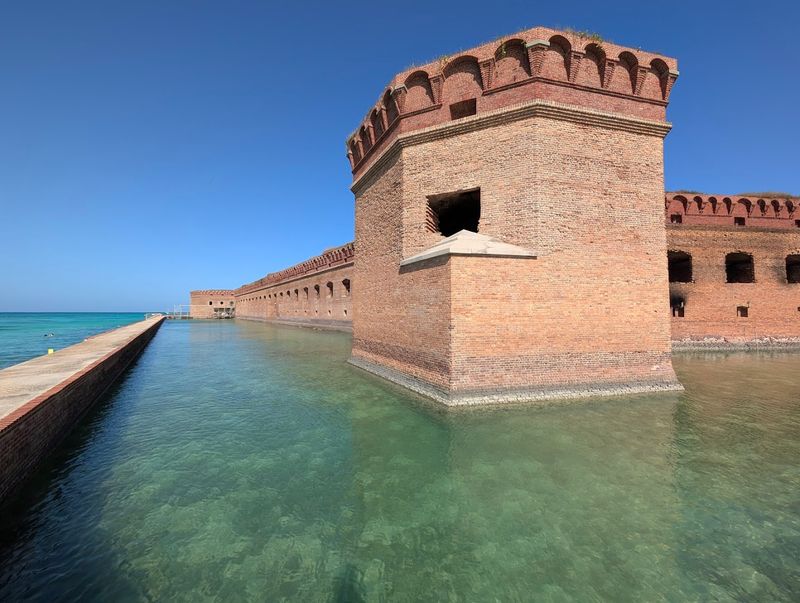
Getting to Fort Jefferson requires a seaplane or a high-speed ferry and about 70 miles of open water west of Key West, but that journey is half the adventure.
Situated within Dry Tortugas National Park, Key West, FL 33040, Fort Jefferson is one of the largest brick structures in the Western Hemisphere, a massive hexagonal Civil War-era fortification that took 30 years to build and was never fully completed.
The fort sits on Garden Key, surrounded by some of the clearest, most dazzlingly turquoise water you will ever see outside of a Caribbean postcard, and the snorkeling around the moat wall is spectacular even for beginners.
Historically, the fort served as a federal prison during and after the Civil War, most famously housing Dr. Samuel Mudd, who was convicted in connection with the assassination of President Abraham Lincoln.
Spring is the ideal season to visit because the weather is stable, the migratory birds passing through the keys make the island a birdwatcher’s paradise, and the water visibility for snorkeling reaches its annual peak.
Fort Jefferson earns every bit of the effort it takes to reach it.
10. Ponce De Leon’s Fountain Of Youth Archaeological Park, St. Augustine
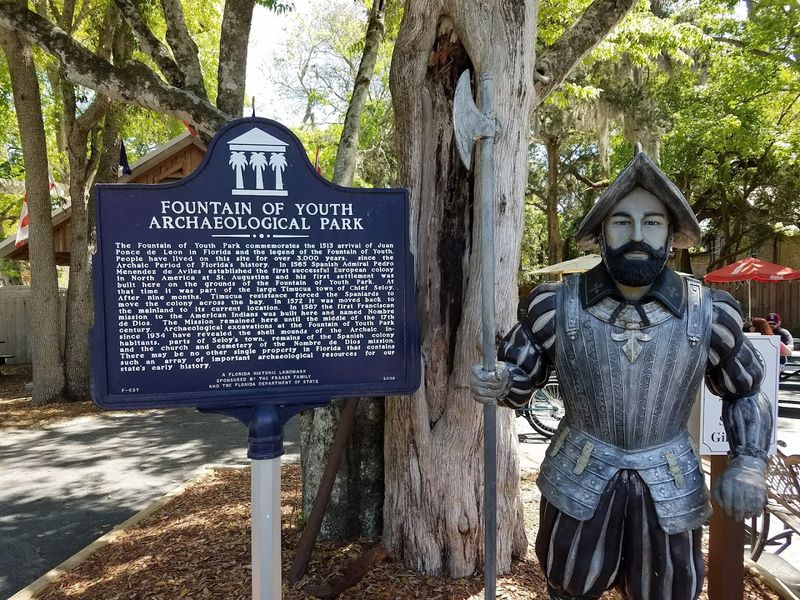
Somewhere between genuine archaeological site and charming historical legend, the Fountain of Youth Archaeological Park at 11 Magnolia Ave, St. Augustine, FL 32084 manages to be both educational and thoroughly entertaining.
The park sits on the site where Spanish explorer Juan Ponce de Leon is believed to have landed in 1513, making it one of the earliest points of European contact with North America, and ongoing archaeological excavations continue to reveal fascinating details about that encounter.
Visitors can drink from the famous spring, which flows with sulfur-rich water that tastes more like a science experiment than a miracle cure, but the experience is undeniably fun and surprisingly memorable.
The grounds are home to free-roaming peacocks, a planetarium showing navigation techniques used by Spanish explorers, and a recreated Timucua Native American village that adds important indigenous context to the site’s layered history.
Spring visits are particularly rewarding because the park’s mature live oaks and flowering plants are at their most lush, creating a beautiful backdrop for exploring the outdoor exhibits and excavation areas.
This park proves that history and a little playful myth-making can coexist beautifully.