
10 Florida Planetariums And Space-Themed Day Trips To Take In 2026
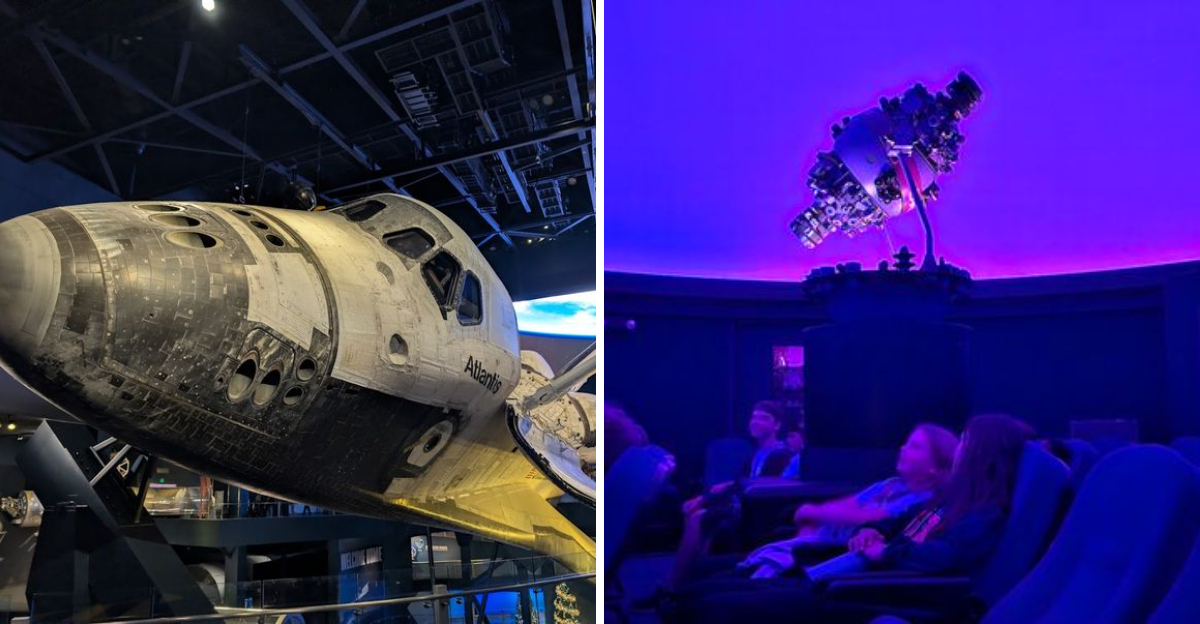
Florida is one of the few places where you can spend the morning at the beach…
…and end the day exploring the edge of the universe.
It is a contrast that never gets old. One moment you’re watching waves roll onto the shore.
The next, you’re standing beneath a dome filled with distant galaxies, learning about black holes, walking through space exhibits, or looking up as a rocket disappears into the sky. Suddenly, the Sunshine State feels much bigger than its coastline.
That is what makes Florida so remarkable.
While millions of visitors come for the beaches and theme parks, another side of the state is quietly inspiring future astronauts, scientists, and curious travelers. Planetariums, observatories, museums, and space attractions offer experiences that spark the imagination long after the lights come back on.
Some vacations help you escape the world.
These Florida destinations invite you to explore worlds far beyond it.
1. Kennedy Space Center Visitor Complex, Merritt Island
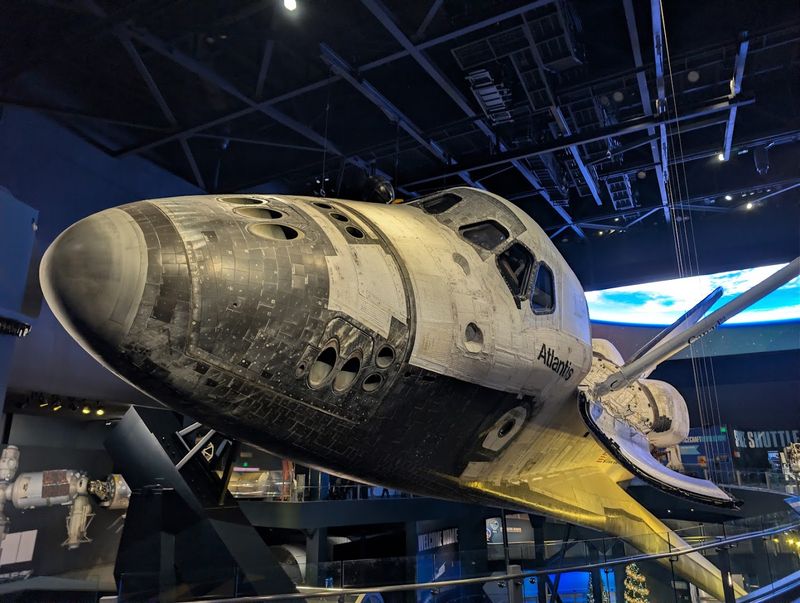
Standing in front of a real Space Shuttle, it is hard not to feel the weight of human ambition pressing right up against you.
Kennedy Space Center Visitor Complex sits on Merritt Island, Florida, and it is easily the most immersive space experience in the entire state.
Space Shuttle Atlantis is the crown jewel here, suspended at a tilt inside a massive facility that lets you walk underneath its heat shield tiles and look straight up at the cargo bay doors.
The complex also offers bus tours through the actual launch facilities, including Launch Complex 39, where Apollo and Space Shuttle missions lifted off.
Rocket Garden gives you a chance to stand beside towering historic rockets that once punched through Earth’s atmosphere.
Astronaut encounter programs and IMAX films round out a full day of programming that covers everything from Mercury missions to the future of Mars exploration.
Plan for at least five to six hours here, because rushing through Kennedy is practically a crime against curiosity.
2. Frost Planetarium At Phillip And Patricia Frost Museum Of Science, Miami
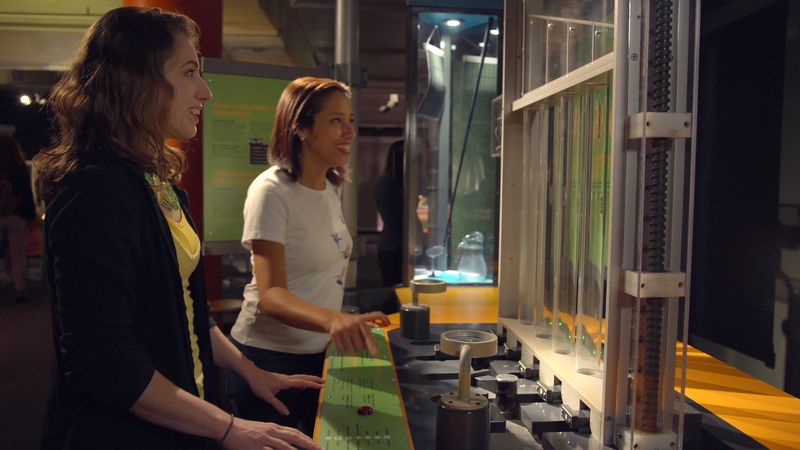
Miami is known for a lot of things, but a world-class planetarium sitting in the heart of downtown might not be the first thing that comes to mind.
The Frost Planetarium at the Phillip and Patricia Frost Museum of Science delivers a full-dome digital experience that honestly rivals anything I have seen in much larger cities.
Opened in 2017 as part of a major museum expansion, the 67-foot tilted dome seats around 250 people and uses a state-of-the-art digital projection system to recreate the night sky in stunning detail.
Programming ranges from family-friendly shows about constellations to more advanced presentations covering black holes and deep space exploration.
The museum itself is worth a full day, with a multi-story aquarium, a living coral reef exhibit, and interactive science galleries just steps away from the planetarium entrance.
Parking near Museum Park can fill up quickly on weekends, so arriving early or using the nearby Metromover station saves both time and frustration.
3. Bishop Planetarium At The Bishop Museum Of Science And Nature, Bradenton
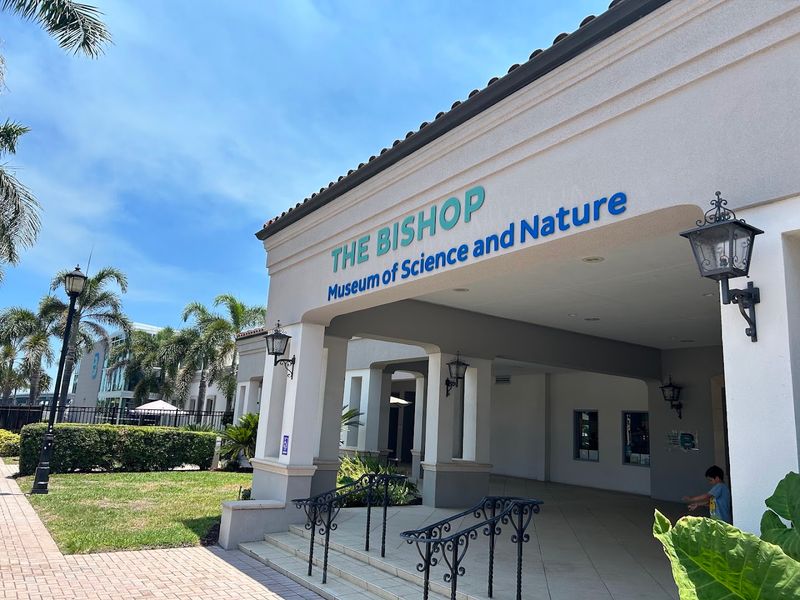
Tucked along the Manatee River in Bradenton, the Bishop Museum of Science and Nature has been one of Florida’s most underrated cultural destinations for decades.
The Bishop Planetarium sits inside the museum and features a renovated full-dome digital projection system that replaced the original analog setup, bringing the star shows into the modern era without losing any of the classic charm.
Shows rotate seasonally and cover topics ranging from seasonal night sky guides to deep dives into solar system formation.
What makes a visit here especially satisfying is how well the planetarium connects to the rest of the museum, which includes a manatee rehabilitation center, a natural history collection, and rotating science exhibits.
Watching a live manatee swim lazily through a tank before settling into a star show about the cosmos creates a surprisingly memorable afternoon.
The museum is located at 201 10th Street West, and admission is reasonably priced, making it a smart pick for families watching their travel budget without wanting to skip out on quality.
4. Challenger Learning Center Planetarium, Tallahassee
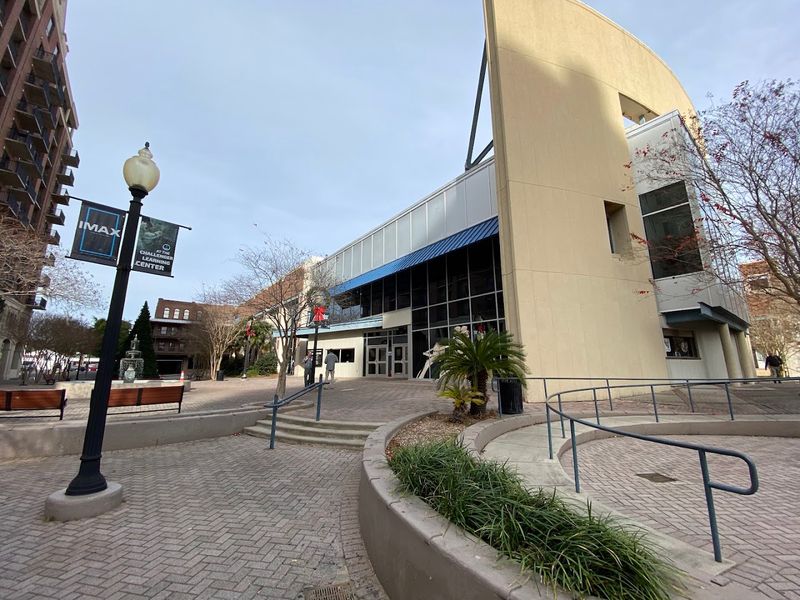
Named in honor of the crew of the Space Shuttle Challenger, this Tallahassee center carries a sense of purpose that goes well beyond a typical museum visit.
The Challenger Learning Center in Tallahassee combines a working planetarium with hands-on space mission simulations that put visitors in the role of actual crew members solving real problems aboard a simulated spacecraft.
The mission simulations are especially popular with school groups, but they are genuinely engaging for adults too, requiring teamwork, quick thinking, and a willingness to trust the person next to you.
The planetarium itself runs a rotating schedule of dome shows covering topics from the life cycle of stars to the history of space exploration.
Tallahassee is also home to Florida State University and Florida A&M University, so the city has a strong science and education culture that makes this kind of attraction feel right at home.
If you are road-tripping across northern Florida, this stop pairs well with a visit to the Florida Historic Capitol just a few minutes away in the same city.
5. Emil Buehler Planetarium At Seminole State College, Sanford
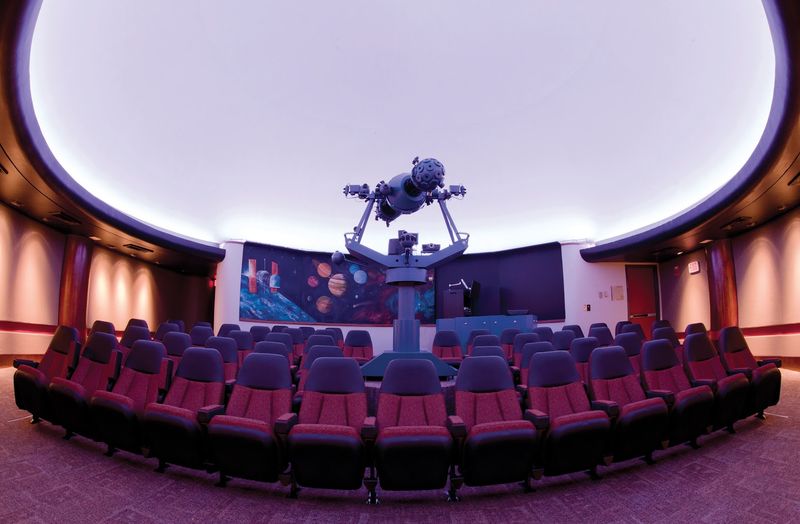
College campuses are not always the first place people think to look for a great planetarium, but Seminole State College in Sanford is quietly home to one of Central Florida’s most respected astronomy education facilities.
The Emil Buehler Planetarium has been operating on campus since 1974 and has built a loyal following among both students and community members who come for the regular public shows.
The planetarium seats around 65 people under a 30-foot dome, and the shows are produced with a level of care that reflects the facility’s long history in the field.
Public programs typically run on Friday and Saturday evenings, covering topics like seasonal star maps, planetary science, and historical astronomy.
The small size of the venue actually works in its favor, creating an intimate atmosphere that larger facilities sometimes lose when they scale up their seating capacity.
Sanford itself is a charming small city on the shores of Lake Monroe, and combining a planetarium visit with a walk along the historic downtown waterfront makes for a genuinely pleasant Central Florida day trip.
6. Hallstrom Planetarium, Fort Pierce
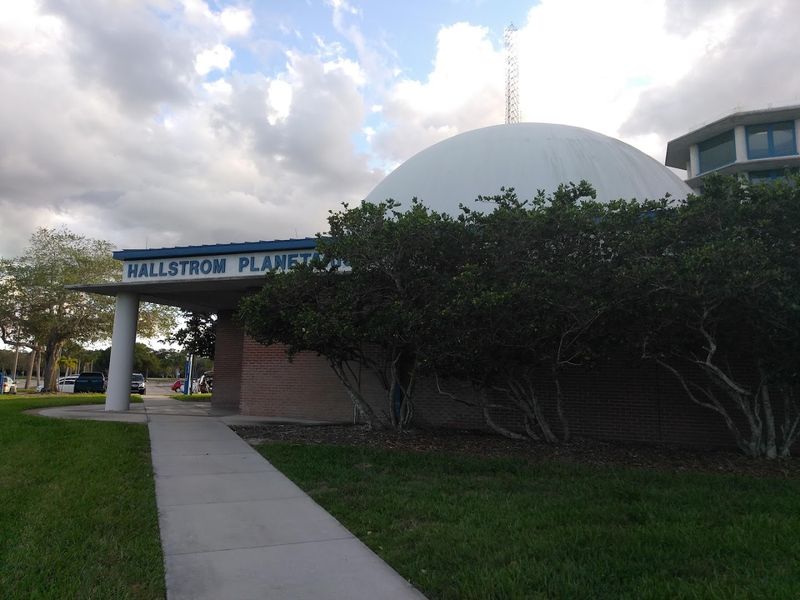
Fort Pierce sits along Florida’s Treasure Coast, and while most visitors come for the beaches, the Hallstrom Planetarium at Indian River State College offers a completely different kind of treasure.
The planetarium has been serving the Treasure Coast community for years with public shows that cover everything from basic astronomy for beginners to more detailed explorations of cosmology and space science.
The facility features a 30-foot dome and a digital projection system that creates sharp, detailed views of the night sky, which is especially meaningful in a region where light pollution can make actual stargazing tricky.
Shows are affordable and often scheduled on weekday evenings as well as weekends, making it easier to work a visit into a beach trip without sacrificing a prime afternoon on the sand.
Indian River State College also hosts an observatory on campus, which occasionally opens for public viewing nights that let visitors look through actual telescopes at the moon, planets, and star clusters.
Fort Pierce’s downtown area, just a short drive from campus, has a growing food scene worth exploring before or after the show.
7. Lohman Planetarium At the Museum Of Arts And Sciences, Daytona Beach
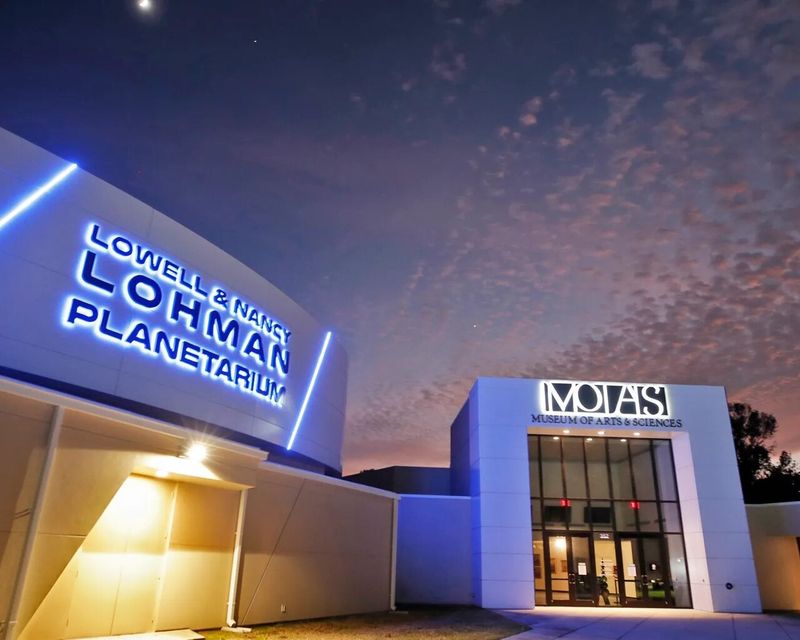
Daytona Beach gets plenty of attention for its racetrack and its wide sandy shores, but the Museum of Arts and Sciences holds a quieter kind of spectacle inside the Lohman Planetarium.
The planetarium sits within one of the largest museums in Florida, a facility that covers art, natural history, Cuban art, and science all under one sprawling roof.
Lohman Planetarium features a full-dome digital system and runs shows that blend visual storytelling with solid scientific content, making them accessible for first-time visitors without feeling dumbed down.
The museum’s natural history collection includes a giant ground sloth skeleton and a Florida fossils exhibit that connects nicely to the planetarium’s deep-time perspective on the universe.
Programming for the planetarium rotates regularly, so checking the museum’s schedule before your visit helps you catch a show that matches your interests.
The museum sits at 352 S Nova Road, surrounded by a nature trail and a garden that make for a pleasant walk before the lights go down and the stars come out overhead.
8. Saunders Planetarium At MOSI, Tampa
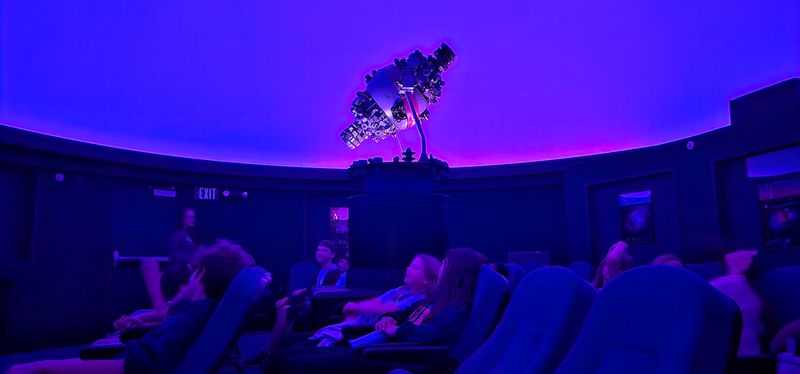
Tampa’s Museum of Science and Industry, known to locals simply as MOSI, has long been a go-to destination for families across the Tampa Bay area, and the Saunders Planetarium is a big reason why.
The planetarium features a 65-foot dome and a digital projection system capable of rendering over 10,000 stars with pinpoint accuracy, which makes the opening moments of any show genuinely breathtaking.
Programming covers a wide range, from shows designed for very young children to presentations aimed at older students and adults curious about astrophysics and space exploration.
MOSI itself is one of the largest science centers in the southeastern United States, with interactive exhibits covering everything from weather and energy to human biology and engineering challenges.
The facility also includes an outdoor ropes course and a butterfly garden, so a full day here rarely feels like enough time to see everything.
MOSI sits at 4801 E Fowler Avenue in Tampa, and the parking lot is large and free, which is a genuine luxury compared to some of the bigger urban science museums on this list.
9. Kika Silva Pla Planetarium, Gainesville
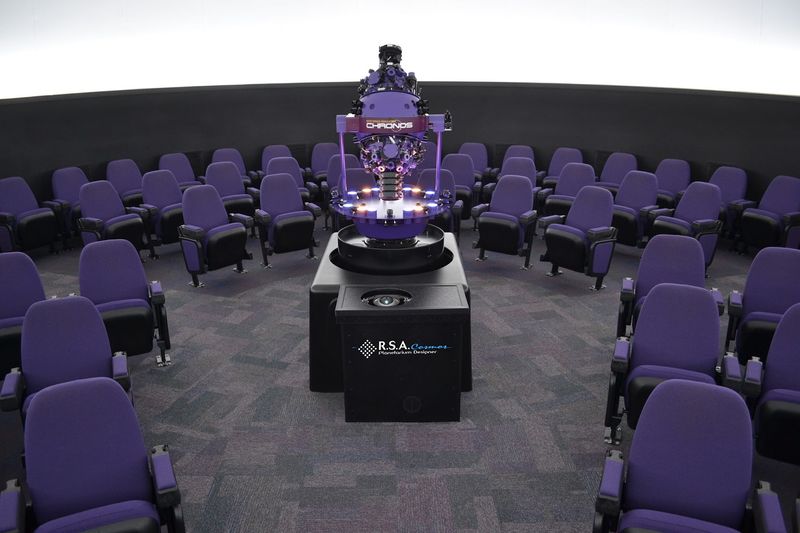
Gainesville is a college town through and through, and the Kika Silva Pla Planetarium at Santa Fe College fits that intellectual energy perfectly.
Named after a generous donor who believed deeply in science education, the planetarium has been running public shows and educational programs for the Gainesville community for many years.
The facility features a 50-seat dome theater and a modern digital projection system that produces crisp, detailed star fields and immersive space visualizations.
Public shows run on a regular schedule and often include a live telescope observing session on clear nights, giving visitors a chance to see real celestial objects rather than just projected ones.
The planetarium’s location on the Santa Fe College campus means it sits within a broader educational environment, and the surrounding grounds are pleasant for a walk before or after the show.
Gainesville is also home to the Florida Museum of Natural History on the University of Florida campus, making it easy to pair the planetarium with a second science-focused stop on the same day trip.
10. Buehler Planetarium And Observatory, Davie
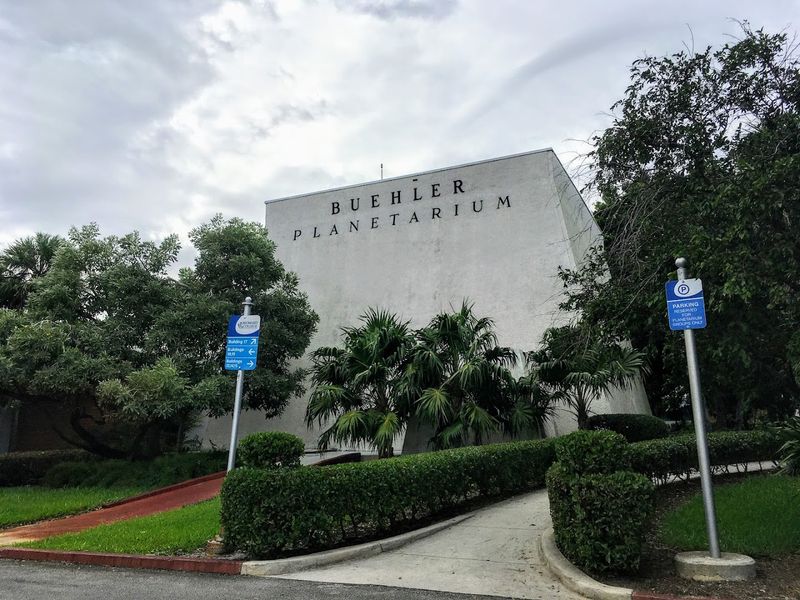
South Florida’s suburban sprawl can make it easy to overlook Davie, but Broward College is home to one of the region’s most active public astronomy programs at the Buehler Planetarium and Observatory.
The facility combines a traditional domed planetarium theater with a working observatory equipped with telescopes that the public can actually use during scheduled viewing nights, which sets it apart from many similar venues.
Planetarium shows cover a wide range of topics and are updated regularly to reflect current events in space science, including missions, discoveries, and upcoming celestial events visible from South Florida.
The observatory hosts public nights several times per month, and on a clear evening the views of Saturn’s rings or Jupiter’s cloud bands through a real telescope tend to produce the kind of reaction that no dome projection can fully replicate.
Davie itself has a surprisingly rural character for a Broward County suburb, with equestrian communities and open land that give the area a different feel from the dense urban core of nearby Fort Lauderdale.
The planetarium sits at 3501 SW Davie Road, and the college campus is easy to navigate, with clear signage pointing visitors toward the observatory complex.