
Follow Snow Dusted Trails Through Michigan’s Peaceful Cold Weather Backcountry
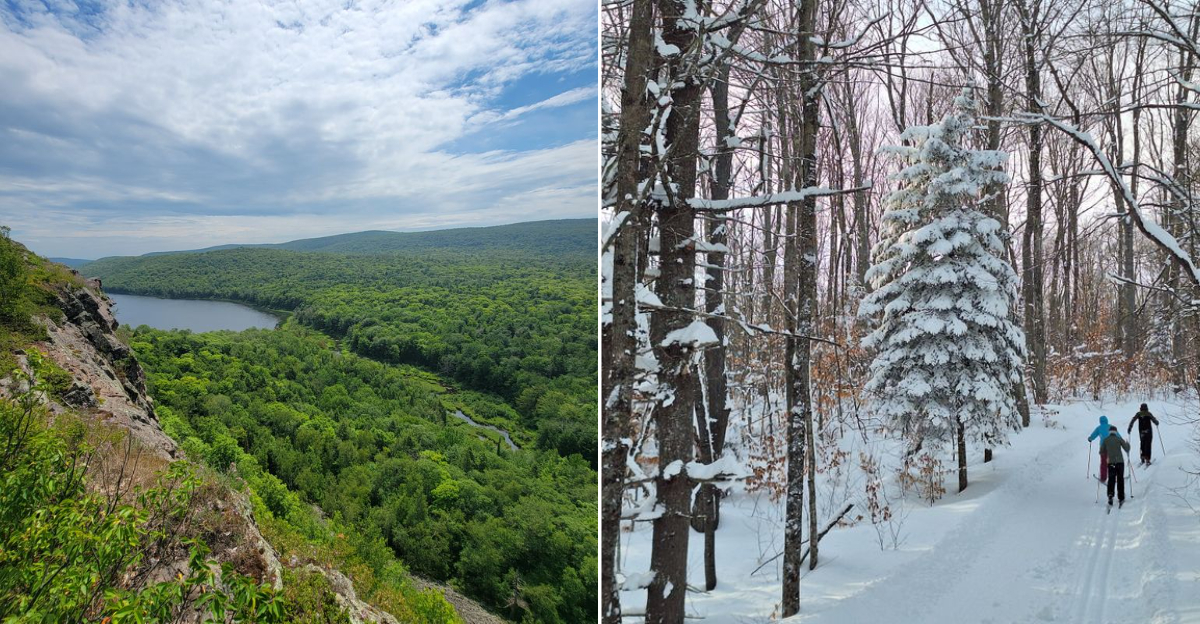
Michigan in winter taught me that quiet can be active rather than empty, that snow doesn’t erase the landscape so much as redraw it with intention, softening edges, slowing movement, and inviting you to notice what usually rushes past.
I feel it most on the first few steps of a trail, when familiar paths turn into narrow corridors of frost and light, and the soundscape narrows to breath, boots, and the occasional shift of branches overhead.
If you’re someone who loves crisp air that wakes your lungs, the resinous smell of pine carried just far enough on the cold, and the comfort of moving at your own pace, these are the days when Michigan opens itself differently.
Walking here in winter feels like witnessing careful work being done, dunes reshaped grain by grain, cliffs outlined more clearly against gray sky, hardwood forests stripped back to structure and line.
I’ve stitched together these routes from mornings spent watching lake effect flurries drift sideways, from pauses where I stopped not because I was tired but because the stillness asked for it.
The joy isn’t dramatic, it’s cumulative, built from small moments, steam lifting from a thermos lid, gloves warming back up, the perfect crunch of powder underfoot when the snow is just cold enough.
Packing layers becomes part of the ritual, as does checking the weather twice and leaving room for plans to change, because winter here rewards flexibility more than bravado.
Think of this list as a slower map, meant to guide steady steps and curious eyes toward trails where winter isn’t something to endure, but something you move through attentively, letting its quiet revisions linger long after you’ve gone back inside.
1. Valley Spur Ski Trail, Munising
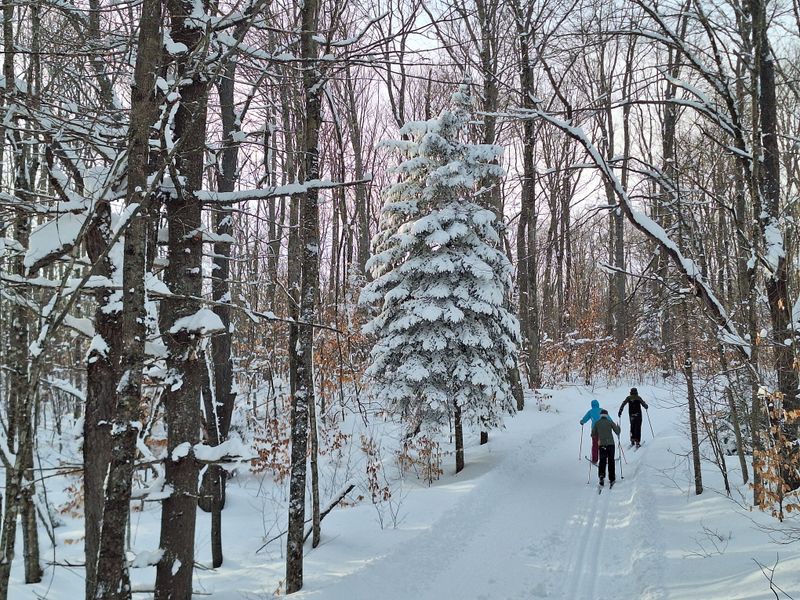
Cold threads its way through hemlock stands as groomed classic tracks curve past snow-pillowed stumps and frozen creek crossings, creating a steady rhythm that feels welcoming rather than demanding from the first glide.
Developed within the Hiawatha National Forest and sustained through the long care of the Friends of Valley Spur, this trail network balances gentle climbs and forgiving descents in a way that eases winter muscles into motion without hurry.
The glide feels honest, never flashy, offering just enough elevation change to reset your breathing before rewarding you with long, quiet downhills.
Some loops trace former logging corridors that now read like wide aisles through second-growth forest, where trunks line up evenly and snow absorbs nearly every sound.
Signage stays clear and functional, while grooming reports appear early and often, which matters when Lake Superior clouds decide to rewrite the forecast overnight.
Midday temperature swings can shift snow texture quickly, making wax choices more than a technical detail.
If daylight allows, carrying a headlamp quietly invites a second lap, because this is the kind of trail that makes resistance feel unnecessary.
2. Wolverine Nordic Trails, Ironwood
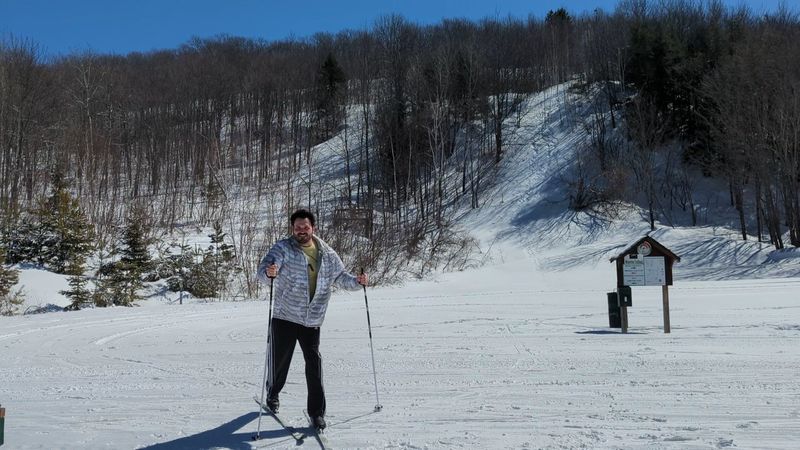
The first impression is an orderly, confident hum, the sound of a ski center that knows exactly what it is doing and has learned that competence is its own kind of welcome.
Founded in the 1970s by local volunteers, Wolverine has expanded into a well-signed web of skate and classic lanes, supported by warming shelters that offer real heat rather than symbolic comfort.
The atmosphere stays upbeat without becoming noisy, more like a community gathering that happens to revolve around wax, glide, and shared effort.
Lake Superior’s weather systems reliably replenish snow here, lending the trails a consistency that encourages longer outings without second guessing conditions.
Lower Snowshoe loops favor quiet mileage, while Powderhorn sections add climbs that test pacing and reward patience.
Trail passes are handled simply on site, and maps at junctions remove guesswork even for first-time visitors.
Saving a bit of energy for the final downhill is wise, because it delivers that specific satisfaction that sends you back to the parking lot smiling instead of spent.
3. Presque Isle Park Winter Trails, Marquette
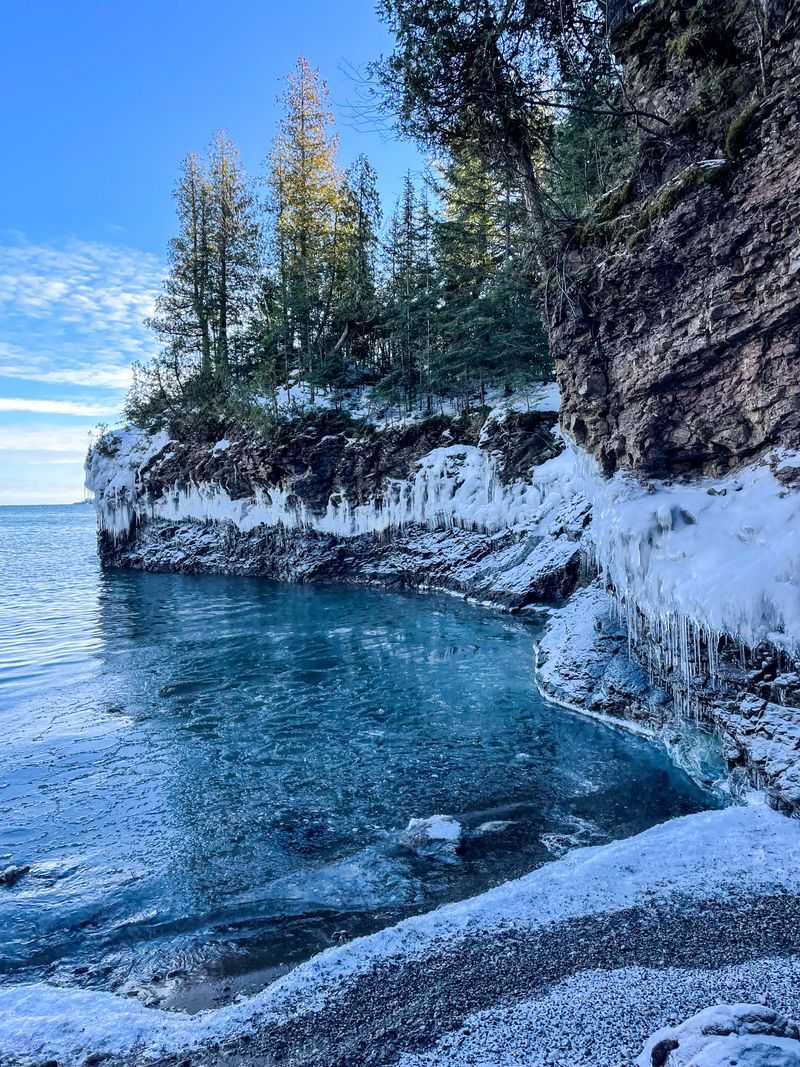
Waves strike the basalt shoreline below while snow settles quietly between cedar roots along the island loop, creating a rare combination of motion and stillness that feels both coastal and deeply inland at the same time.
Shaped by stubborn geology and deliberate restraint, Presque Isle reflects early influence from Frederick Law Olmsted, whose approach favored preserving shoreline drama while allowing people to move through it gently.
Cliff-edge views arrive without demanding technical skill, making this a place where winter walking feels contemplative rather than cautious when conditions cooperate.
Lake Superior spray often freezes where it lands, leaving thin sheets of ice that glitter briefly before becoming hazards.
Microspikes earn their place here, especially near Black Rocks and the exposed western edge where wind accelerates unexpectedly.
When the gate is closed, parking near the entrance and following the perimeter keeps the route intuitive and scenic.
On clear afternoons, the horizon turns a saturated cobalt that makes the walk feel like carrying a strip of sky alongside you.
4. Chapel Loop Trail, Pictured Rocks National Lakeshore
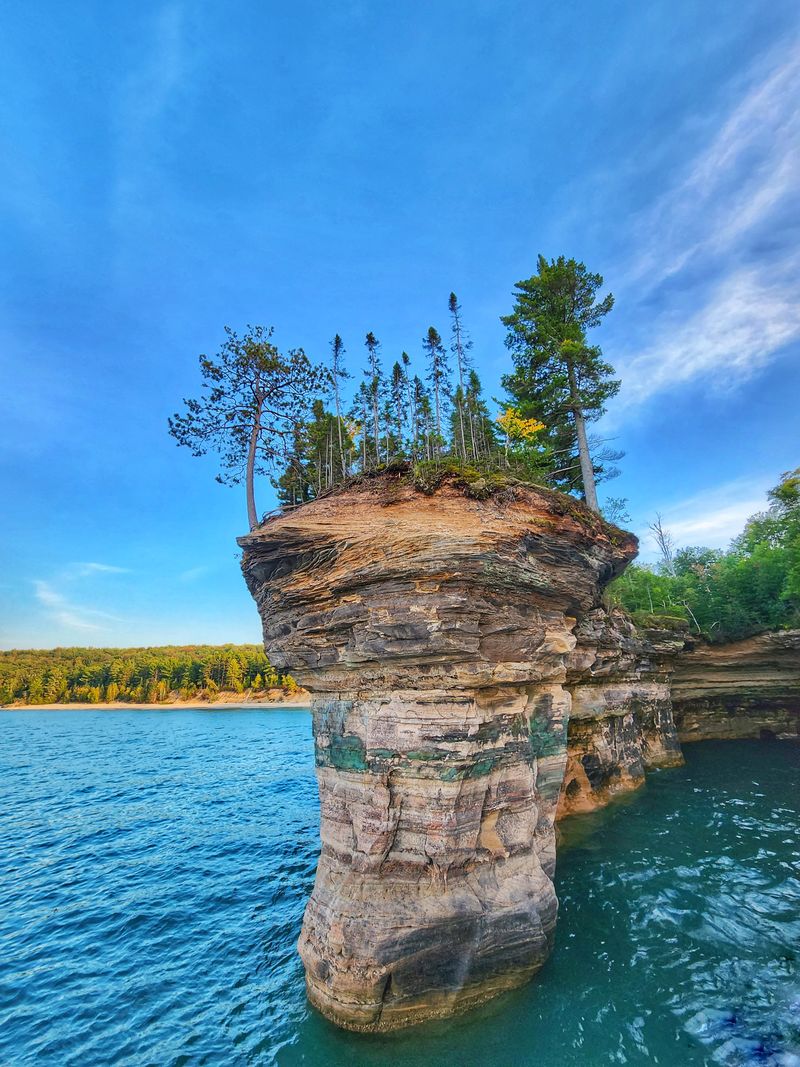
Footsteps squeak sharply on cold-packed snow while long ice beards hang from sandstone cliffs, marking the slow collaboration between gravity, water, and sustained cold.
The Chapel Loop connects Chapel Falls, Chapel Rock, and the battered edge of Lake Superior, revealing a full narrative of erosion even when winter strips the palette to white and gray.
Unlike summer, the trail remains intentionally ungroomed, allowing snow depth and wind to dictate pace and attention.
Traveling clockwise becomes a strategic choice when winds rise, postponing cliff exposure until confidence settles in.
Winter distances stretch deceptively, making traction, daylight awareness, and layered clothing non-negotiable rather than optional.
Parking areas may remain unplowed after storms, so checking alerts before arrival saves both time and morale.
The reward is cathedral-scale quiet, fox tracks crossing your path, and the unsettling pleasure of seeing turquoise water breathing beneath a ceiling of ice and cloud.
5. Porcupine Mountains Wilderness Winter Trails, Porcupine Mountains Wilderness State Park
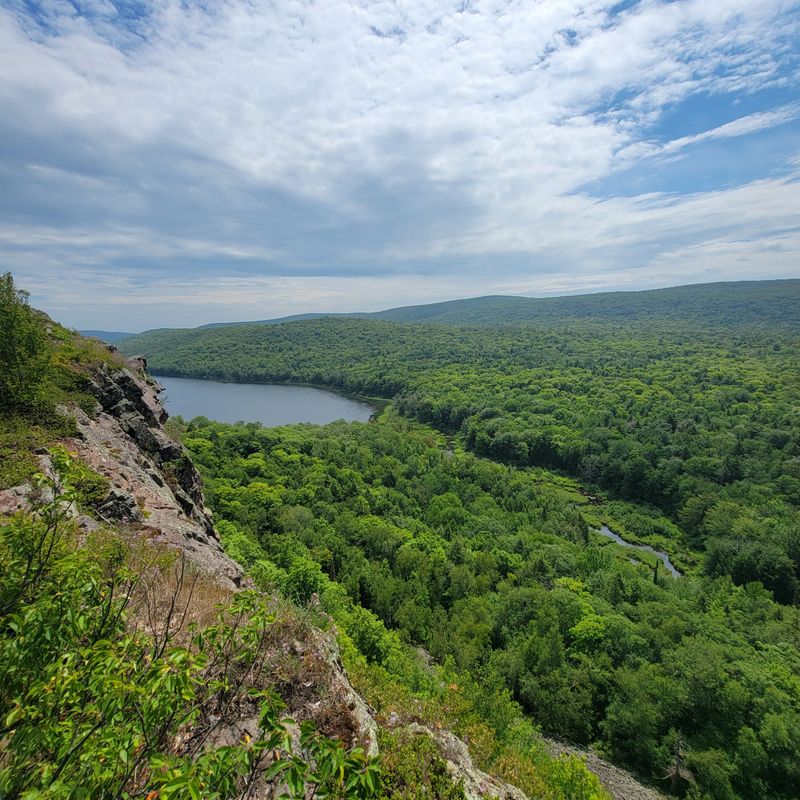
Sound dissolves quickly in the old-growth forest, where hemlock and sugar maple cradle deep snow and mute the world into something closer to thought than noise.
The trail system follows CCC-era routes blended with later backcountry planning, preserving long sightlines toward Lake of the Clouds and the Escarpment.
Walking here feels like moving through a living archive, where preservation is active rather than static.
Backcountry cabins book far in advance, especially for winter weekends, making early planning essential if a woodstove evening is part of the vision.
Storms can bury blazes entirely, so maps and compass skills shift from theory to practice without announcement.
Climbing the Escarpment rewards patience with views that unfold slowly, ridge after ridge dissolving into pale distance.
On calm days, you can hear snow settle into itself, a sound so subtle it almost convinces you silence has weight.
6. Blueberry Ridge Pathway, Near Marquette
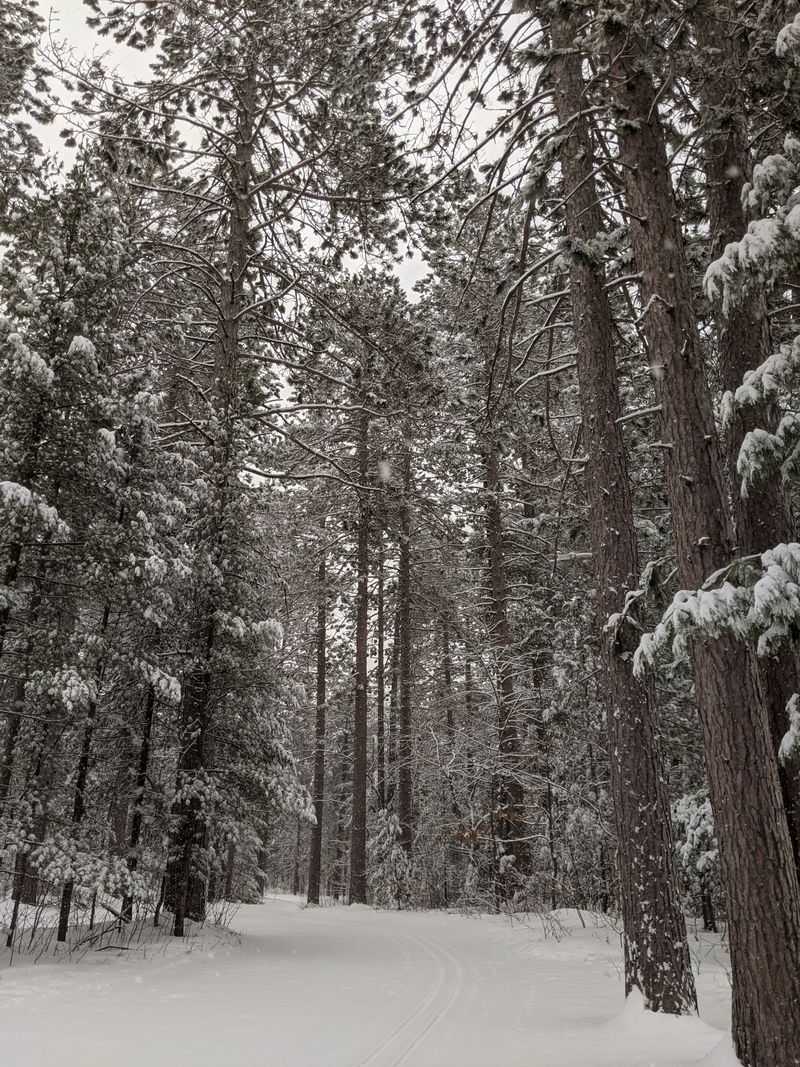
Pine resin rides the cold air as groomed skate lanes trace smooth loops across gentle ridges, offering movement that feels efficient rather than aggressive.
Managed by the DNR, Blueberry Ridge balances long flowing A, B, and C loops with the ungroomed Wolverine loop, which adds texture for those seeking quieter mileage.
Frequent grooming keeps conditions consistent, drawing both speed-focused skiers and newcomers building confidence in glide and balance.
Powder mornings fill parking quickly, making early arrival or a midday shift the difference between ease and frustration.
Shaded sections hold cold longer, creating quick transitions between firm corduroy and softened drift.
Stopping at the top of the south ridge with a thermos reveals delicate wind-sculpted patterns in the snow.
The overall feeling is organized calm, as if the repetitive motion allows the mind to quietly rearrange itself while the skis whisper forward.
7. Empire Bluff Trail, Sleeping Bear Dunes National Lakeshore
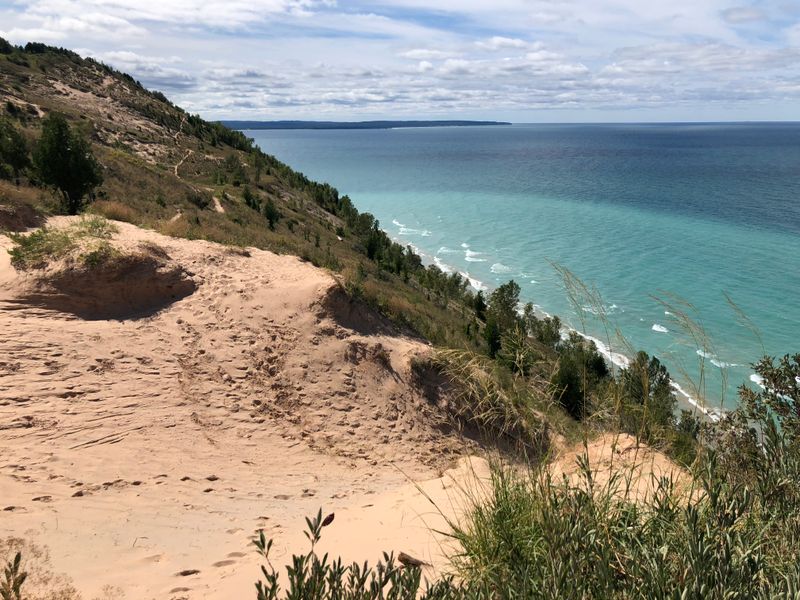
The narrow boardwalk slips out of quiet hardwoods and suddenly releases you onto an exposed bluff where snow-coated dunes fall away toward a cold, intensely blue stretch of Lake Michigan that feels vast enough to rearrange your sense of scale.
Careful preservation by the National Park Service stabilizes fragile sand while still allowing the overlook to feel raw, so you stand in a place that is both protected and visibly vulnerable to wind, ice, and time.
Even in winter, the Manitou Passage shipping lane reads clearly in the distance, a reminder that this seemingly empty scene has long been threaded with movement and commerce.
Ice forms quickly on steps and railings, making traction and deliberate footing essential rather than optional.
Sunrise turns the snow pale gold and stretches shadows across dune bowls in long, quiet lines that change minute by minute.
Parking at the small lot off Wilco Road keeps the approach short but steady, with just enough climb to warm you before the view opens.
Standing at the overlook, the lake often looks like a thought you almost remember having, something familiar but just out of reach, and that sensation alone justifies the walk.
8. Muskegon Luge Adventure Sports Park Snowshoe Trails, Muskegon State Park
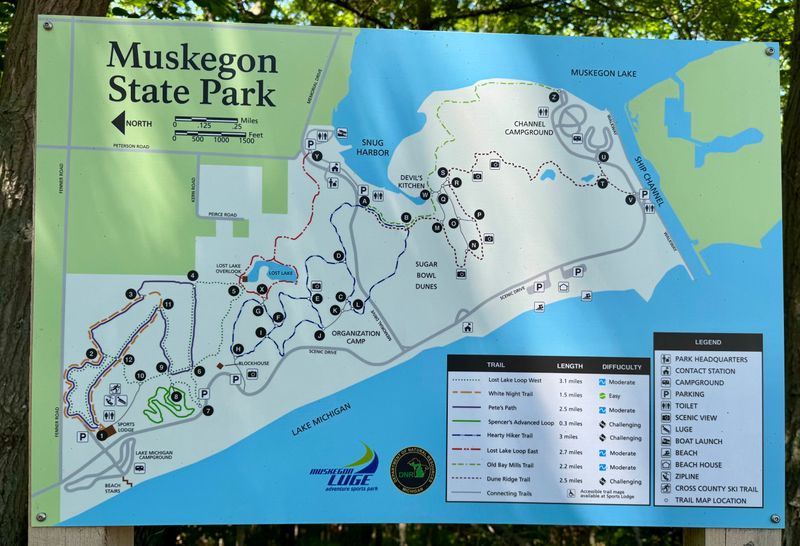
A low metallic cheer occasionally floats from the illuminated luge track while nearby forest paths remain hushed, creating an unusual pairing of exhilaration and calm within the same winter landscape.
Built and maintained by a dedicated nonprofit, the park layers winter activities thoughtfully, combining Nordic loops, snowshoe trails, and night-lit corridors without turning the place into spectacle.
Volunteers and staff keep the atmosphere welcoming and organized, offering rentals and clear guidance that lowers barriers for first-time winter visitors.
Snowshoe routes wind through wooded sections where sound drops away quickly, providing contrast to the energy of the luge area.
Passes are purchased at the lodge, and checking the schedule matters because events can quietly fill parking lots.
Twilight laps with a headlamp add a gentle sense of festivity without tipping into novelty.
Smiles come easily here, shaped by careful grooming, shared curiosity, and a borrowed sense of courage from watching others fly down the ice track.
9. Mackinac Island Winter Trail Network, Mackinac Island
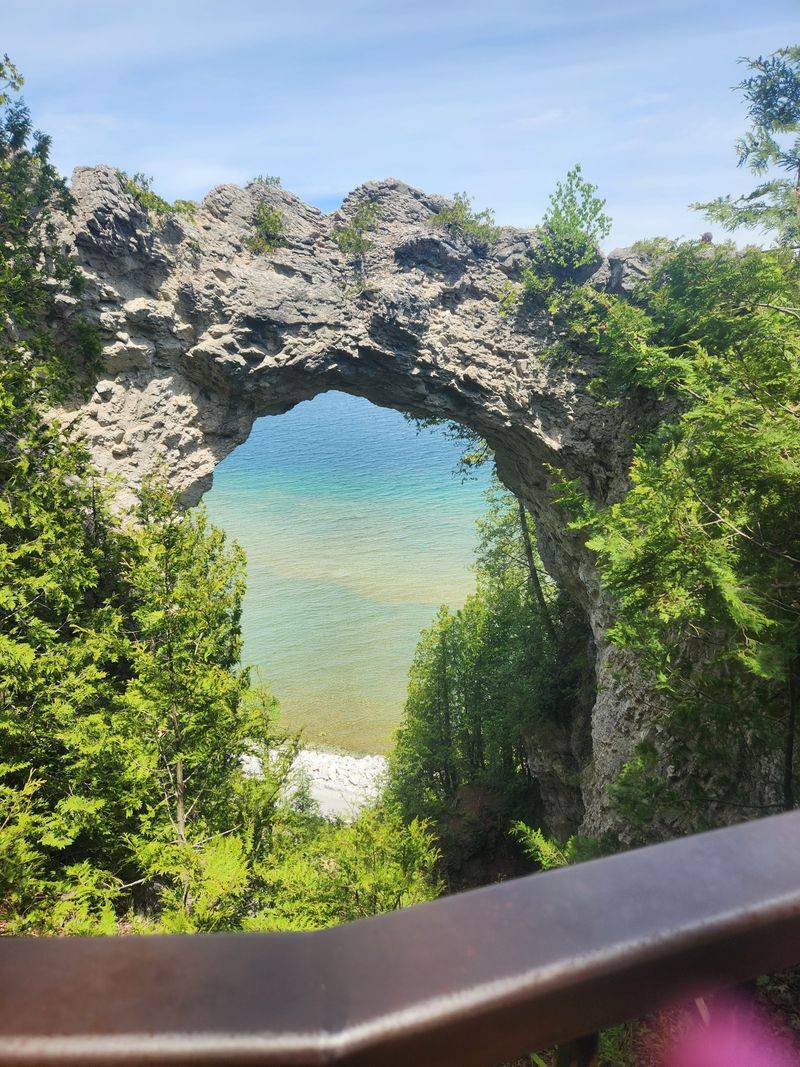
Horse hooves strike packed snow along Main Street while fat bikes hum softly along groomed corridors leading toward Arch Rock, a soundscape that feels distinctly nineteenth century and modern at the same time.
Winter pares the island back to its essentials, leaving it largely to locals as snowmobile traffic stays regulated and trails open only when conditions allow.
The fort sits quiet above town, its presence reinforcing how deeply this place has always understood cold, isolation, and preparation.
Ferry schedules thin dramatically, making crossings something to plan with flexibility and backup windows.
When rentals are available, skis or bikes can be picked up in town, but checking grooming updates beforehand saves disappointment.
Riding toward British Landing reveals broad ice vistas that feel almost inland rather than maritime.
There is a particular moment when the straits go glassy and a gull drifts past as if negotiating terms with the wind, and it makes winter travel here feel less like tourism and more like temporary belonging.
10. Sand Lakes Quiet Area Trails, Grand Traverse County
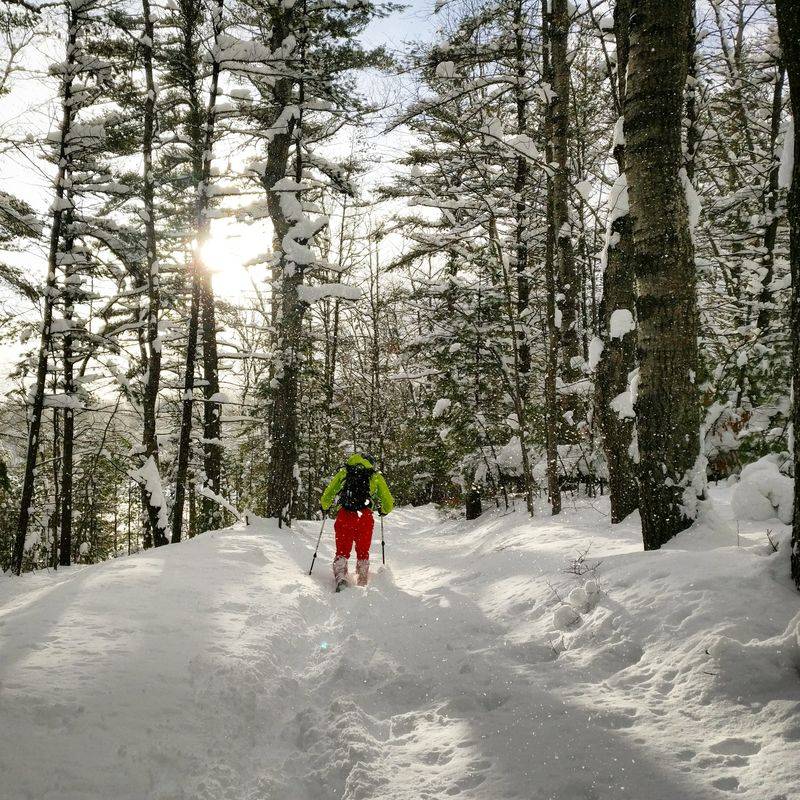
Silence takes on a textured quality here, shaped by chickadee calls, the soft brush of ski tips against crusted snow, and the way sound seems to sink into the low, wooded bowls formed by interlaced kettle lakes.
Once heavily logged, this area was intentionally reimagined as a low-impact recreation zone where motorized use is excluded, allowing winter to settle fully without interruption from engines or crowds.
The trail network winds gently through pine, oak, and open wetland edges, offering movement that feels unforced and patient rather than goal oriented.
Snowshoeing Long Lake or Bass Lake loops delivers steady elevation changes that are subtle enough to maintain rhythm without demanding constant attention.
Trailhead maps are simple but sufficient, and the spotty cell service encourages you to treat navigation as a physical awareness rather than a digital task.
Arriving near dusk brings violet light filtering sideways through bare branches, stretching shadows across the snow in long, slow bands.
By the time you leave, you may notice your voice has softened to match the landscape, as if the quiet insisted on coming with you for the drive home.
11. Avalanche Mountain Preserve Trails, Boyne City
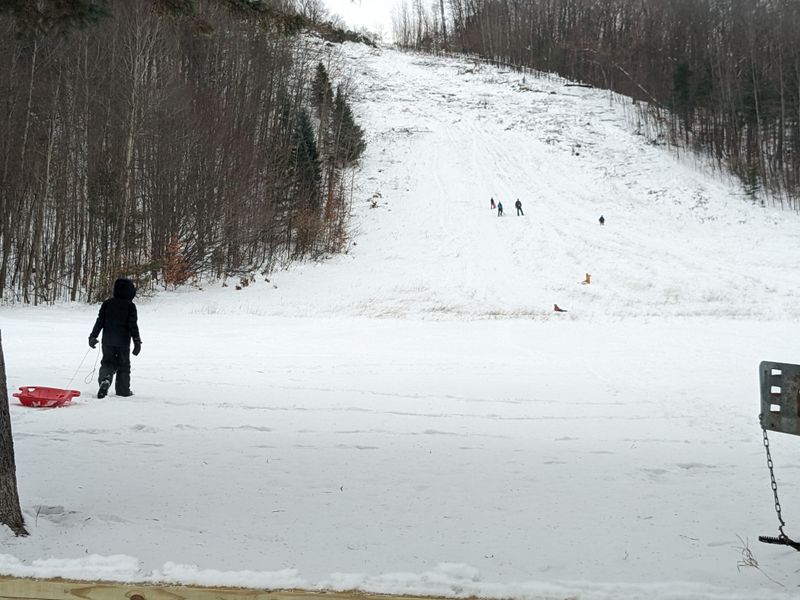
A steep staircase rises directly from town toward a lookout that frames Lake Charlevoix in winter tones so precise they feel deliberately composed rather than incidental.
Maintained through city stewardship and long volunteer effort, the preserve’s trail grid balances durability with accessibility, making winter exploration feel manageable even when conditions tighten.
Despite its proximity to shops, traffic, and restaurants, the preserve holds an unexpected hush once you leave the first few steps behind.
Lake-effect snow and freeze-thaw cycles quickly glaze stair treads, turning microspikes from optional gear into quiet insurance.
Beyond the overlook, rolling singletrack through hardwoods invites snowshoe loops that feel playful rather than strenuous.
Nearby sledding activity adds a distant hum of energy without breaking the calm.
After sunset, town lights reflect softly across the frozen lake, and standing there feels like waiting backstage while winter finishes setting the scene.
12. North Country Trail Forest Segment, Petoskey To Mackinaw City
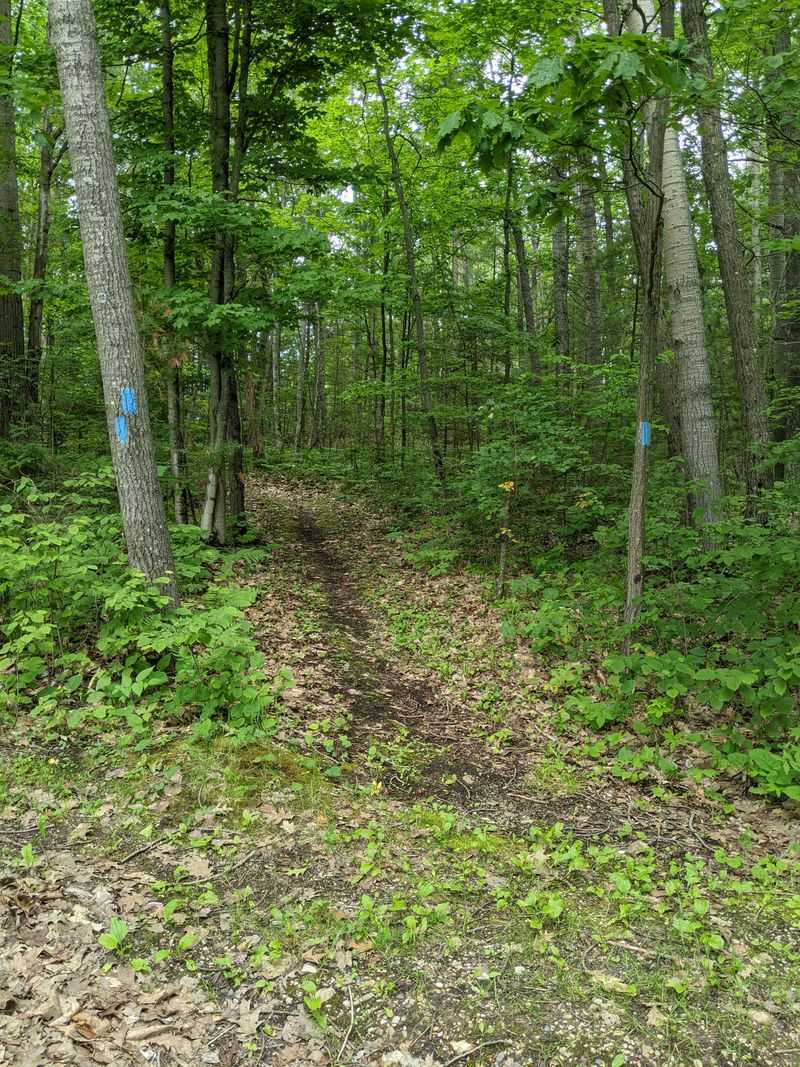
Boot tracks thread through mixed hardwood forest where snow clings stubbornly to curled beech leaves that never quite let go of autumn.
This stretch follows the blue blazes of America’s longest continuous footpath, linking ravines, old rail grades, and quiet clearings with a rhythm that rewards persistence over speed.
Volunteer crews from the North Country Trail Association maintain this segment carefully, clearing blowdowns and refreshing markings even after heavy storms reshape the corridor.
Winter travel here demands adaptability, with variable snow depth, wind-scoured openings, and shaded hollows that hold cold longer than expected.
Out-and-back walks work well when daylight is short, though shuttle setups allow longer one-way rambles for those who plan ahead.
Starting near Tannery Creek and moving north gradually opens the forest, hinting at the larger landscapes approaching Wilderness State Park.
When the Mackinac Bridge finally emerges through bare branches, the steady cadence of boot, breath, and cold air feels earned rather than finished, like a sentence that knows exactly where to stop.