
Follow This Free Florida Boardwalk Into A Marsh Where Herons And Eagles Feed At Dawn
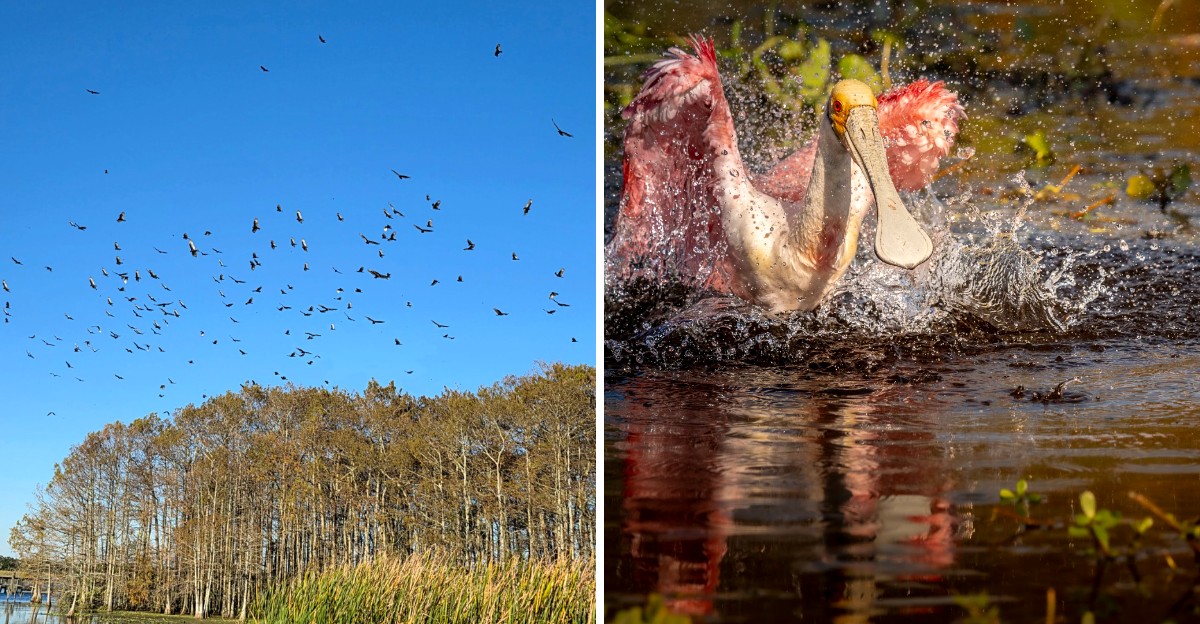
Dawn arrives quietly here. First comes the splash of a fish.
Then wings cut across the Florida sky.
A wooden boardwalk leads into the marsh, where mist hovers above the water and wildlife begins its morning routine. Herons step between reeds with patience.
Alligators drift like fallen logs. Overhead, an eagle circles while photographers hold their breath.
The scenery feels wild, yet this landscape has a practical purpose. The wetlands were designed to clean water, proving that useful places can also be breathtaking.
And the admission price?
Zero.
That makes every sunrise, bird sighting, and mile feel like an unexpected gift. Bring binoculars, comfortable shoes, water, and enough time to stop whenever the marsh puts on a show.
The details ahead explain how this Central Florida refuge works, what animals to watch for, when to arrive, and why one free walk may change the way you think about wastewater treatment.
Your Wallet Can Stay In The Car
Here is a rare thing in the Orlando area: a full day of adventure that costs exactly zero dollars. No ticket booth, no wristband, and no surprise parking fee waiting for you at the gate.
Orlando Wetlands is run by the City of Orlando, and entry to the trails, boardwalk, and visitor center is free. Parking is free too.
There is a main lot near the visitor center, plus an overflow lot across the paved road for busy mornings. On cool winter weekends and during spring nesting season, that overflow lot fills up faster than you might expect, so arriving early is a smart move.
Think about what that means for a family trip. You can spend your money on a good breakfast in nearby Christmas or a fresh pair of binoculars instead of admission.
Visitors often call it a breath of fresh air compared to the theme park crowds just to the west.
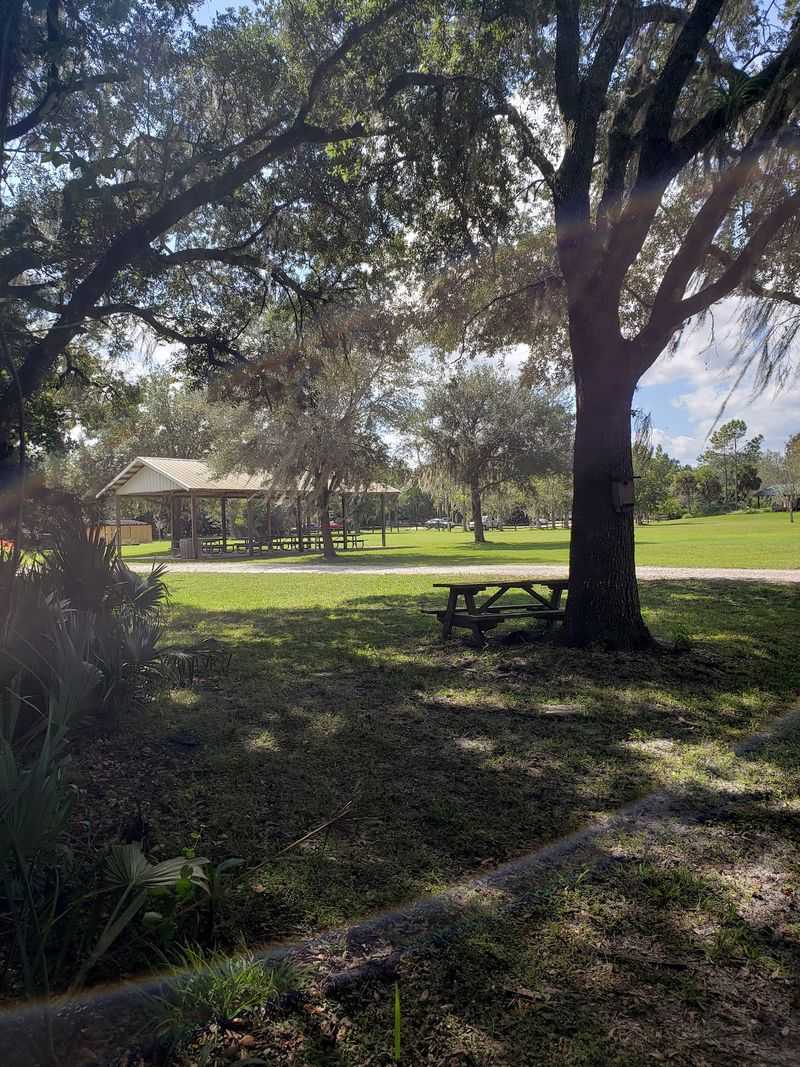
The free price tag does not mean the place feels cheap. Restrooms and a picnic pavilion sit steps from the parking area, and the grounds are known for being clean and cared for.
Volunteers greet guests, hand out trail maps, and happily point you toward the birds of the day.
A Marsh That Was Built To Clean Water
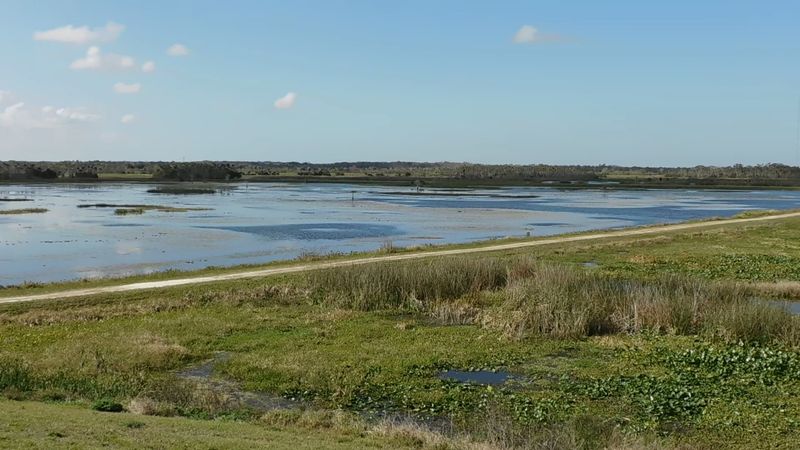
Believe it or not, the marsh in front of you is a working water treatment system. It just happens to look like a wildlife documentary.
Orlando Wetlands opened in 1987 as one of the first large man-made wetlands in the country designed to polish reclaimed water. Water that has already been treated at city facilities flows into the marsh, where plants, soil, and tiny organisms soak up leftover nutrients.
After slowly moving through the system, the cleaner water heads toward the St. Johns River. The city built this so the river would stay healthier, and the birds showed up as a bonus.
The park covers roughly 1,650 acres, which gives you a sense of how big this project really is. Walking the berms, you will notice the marsh is split into sections, sort of like rooms in a giant watery house.
Each area holds different plants, from cattails to lily pads to small islands of trees.
So when you watch a heron spear a fish, you are seeing proof that the system works. Healthy water means healthy fish, and healthy fish mean well-fed birds.
Nature and engineering are working side by side here, and honestly, they make a pretty great team.
Cattle Once Grazed Where Gators Now Nap
Long before the spoonbills moved in, this land belonged to cows. The area was once pasture, part of the ranch country that has shaped east Orange County for generations.
When the city turned the property into a wetland, crews reshaped the land into shallow marsh areas separated by raised earth berms. Those berms are the same paths you walk on today.
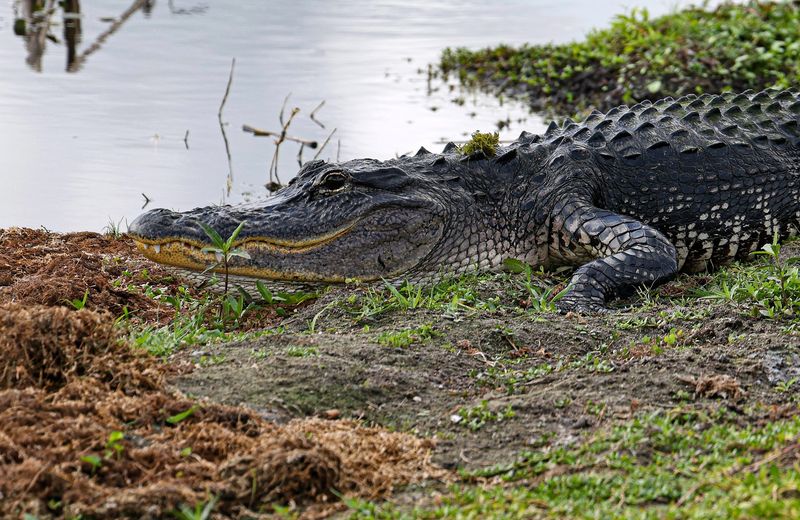
It is a little funny to imagine cattle standing where alligators now stretch out in the sun like they own the place.
This history explains why the landscape feels so open. You will not find thick jungle here.
Instead, the view stretches wide across grass, water, and sky, with cabbage palms and live oaks dotting the edges. It feels like old Florida, the kind that is getting harder to find as cities grow.
If you enjoy stories about how places change, take a moment on the trail to look around. Try to picture the dry pasture that came before.
Then listen to the frogs, the splashing fish, and the chatter of birds that fill the air now.
The shift from ranch to refuge is one of the quiet success stories of Central Florida. Few people driving past on the way to the coast ever know it happened.
Sunrise On The Boardwalk Feels Like A Secret Show
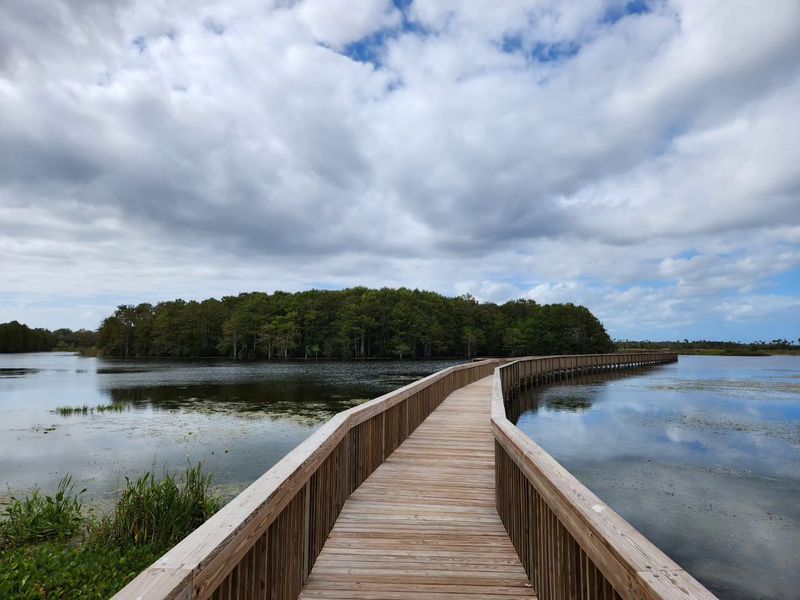
Step onto the planks at first light and the whole marsh seems to be waking up with you. Mist hangs low over the water, and the air smells green and earthy, like wet grass after rain.
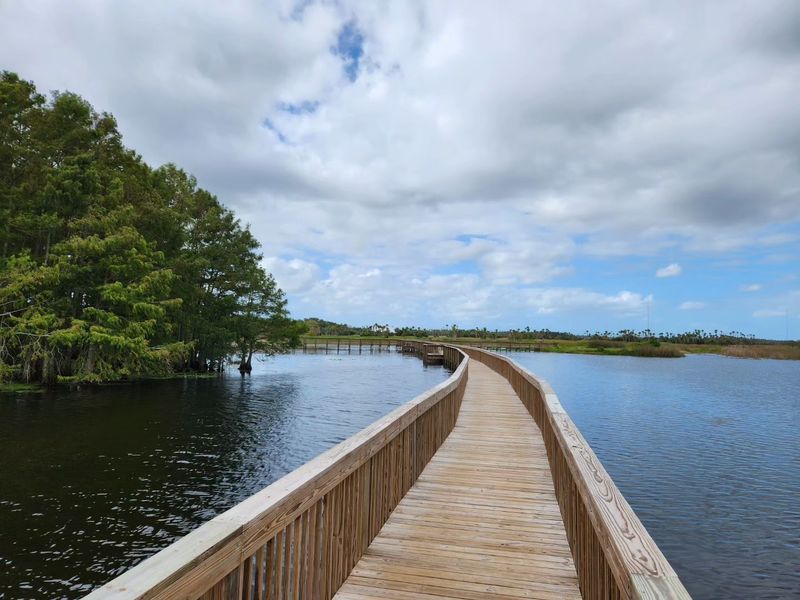
The boardwalk sits only about 1,100 feet from the visitor center, so you do not have to hike far to reach the good stuff. It winds out over the marsh and gives you close views of the water without muddy shoes.
Many visitors say it offers the best viewing spots in the whole park for birds and gators.
Dawn is the magic hour for a reason. Wading birds are busy hunting breakfast, the light turns everything gold, and the Florida heat has not kicked in yet.
Photographers with enormous camera lenses line the rails, and you might hear the soft click of shutters mixed with bird calls.
Go slowly and give yourself time to stand still. A heron that looks like a statue can suddenly strike and come up with a wriggling fish.
Turtles pop their heads up, then vanish with a plop.
If you only do one thing here, make it this walk at sunrise. It feels less like a trail and more like a front-row seat.
Pink Spoonbills And Baby Herons Steal Spring
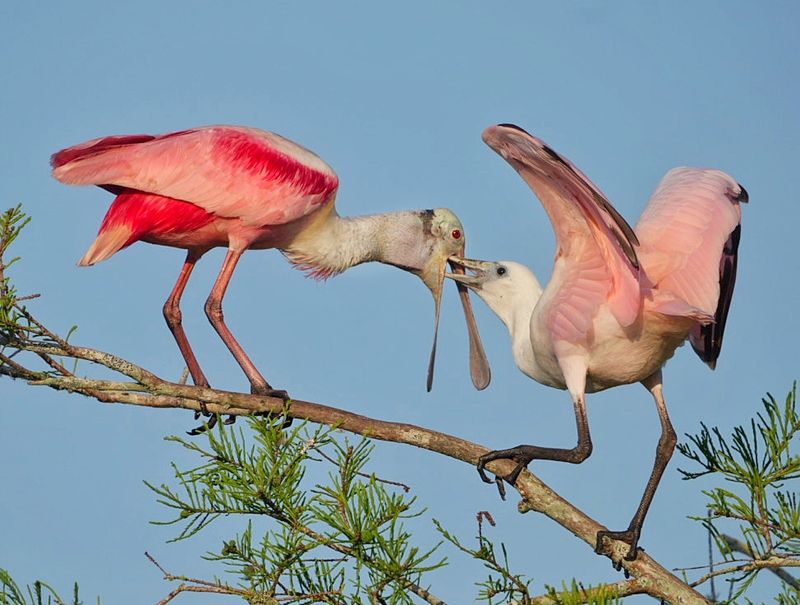
Fluffy, awkward, and loud, the baby birds of spring are the unexpected stars of Orlando Wetlands. One visitor put it simply: baby birds like they had never seen before.
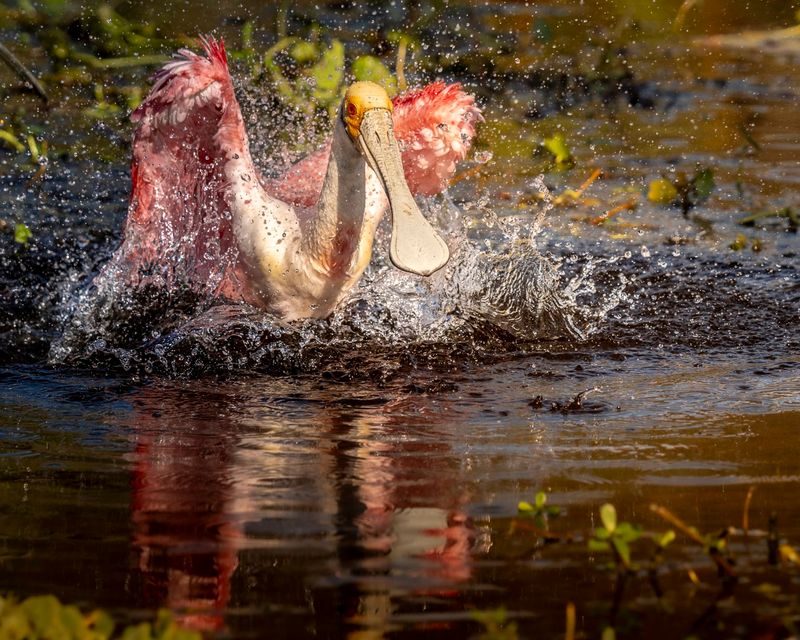
From late winter into spring, the tree islands near the boardwalk turn into busy nurseries. Roseate spoonbills, with their bubblegum pink feathers and spoon-shaped bills, raise their chicks here.
Great blue herons, wood storks, great egrets, and tricolored herons nest nearby too, filling the branches with squawks and flapping wings.
Watching a parent heron feed its hungry chicks is equal parts sweet and chaotic. The babies stretch their necks, beg, and bump into each other like siblings fighting over the last slice of pizza.
It is the kind of moment that makes grown adults grin like kids.
Bring binoculars so you can see details without crowding the nests. Keep your voice low and stay on the boardwalk so the birds stay calm.
A zoom lens or a phone with good zoom helps if you want photos to show friends later.
Many birders plan their trips around February and March for this reason. If you can only visit once, spring nesting season might be the most memorable time to come.
Look Up, Because Eagles Patrol The Sky
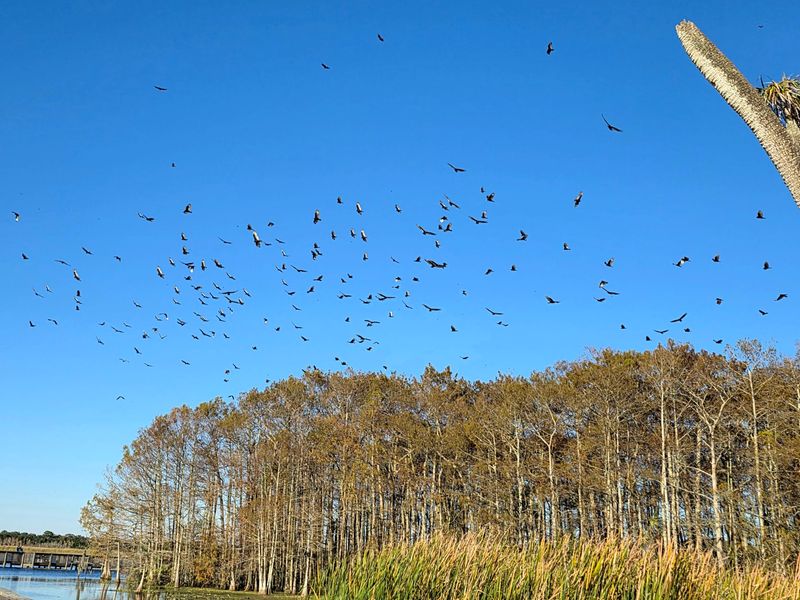
Most people come for the gators, then forget all about them the second a bald eagle sails overhead. That white head against a blue morning sky is hard to miss and even harder to forget.
Bald eagles are regular winter visitors across Central Florida, and the open marshes here make great hunting grounds. Ospreys also dive for fish, and red-shouldered hawks call from the tree lines with a sharp, repeated cry.
Vultures, both turkey and black, circle in lazy loops or gather on dead snags.
The park is a well-known stop for birders, with more than 200 bird species recorded over the years. That variety keeps even experienced bird lovers coming back.
On a good morning you might check off herons, ibis, purple gallinules, and a raptor or two before the sun gets high.
Here is a tip that works: every few minutes, stop and scan the sky and the tops of dead trees. Raptors love a high perch where they can watch for movement.
Early morning is best because birds are hungriest then.
Spotting an eagle on your own feels like winning a small prize. Point it out to strangers nearby, because sharing that moment is half the fun.
Gators Line The Trails, So Keep Your Distance
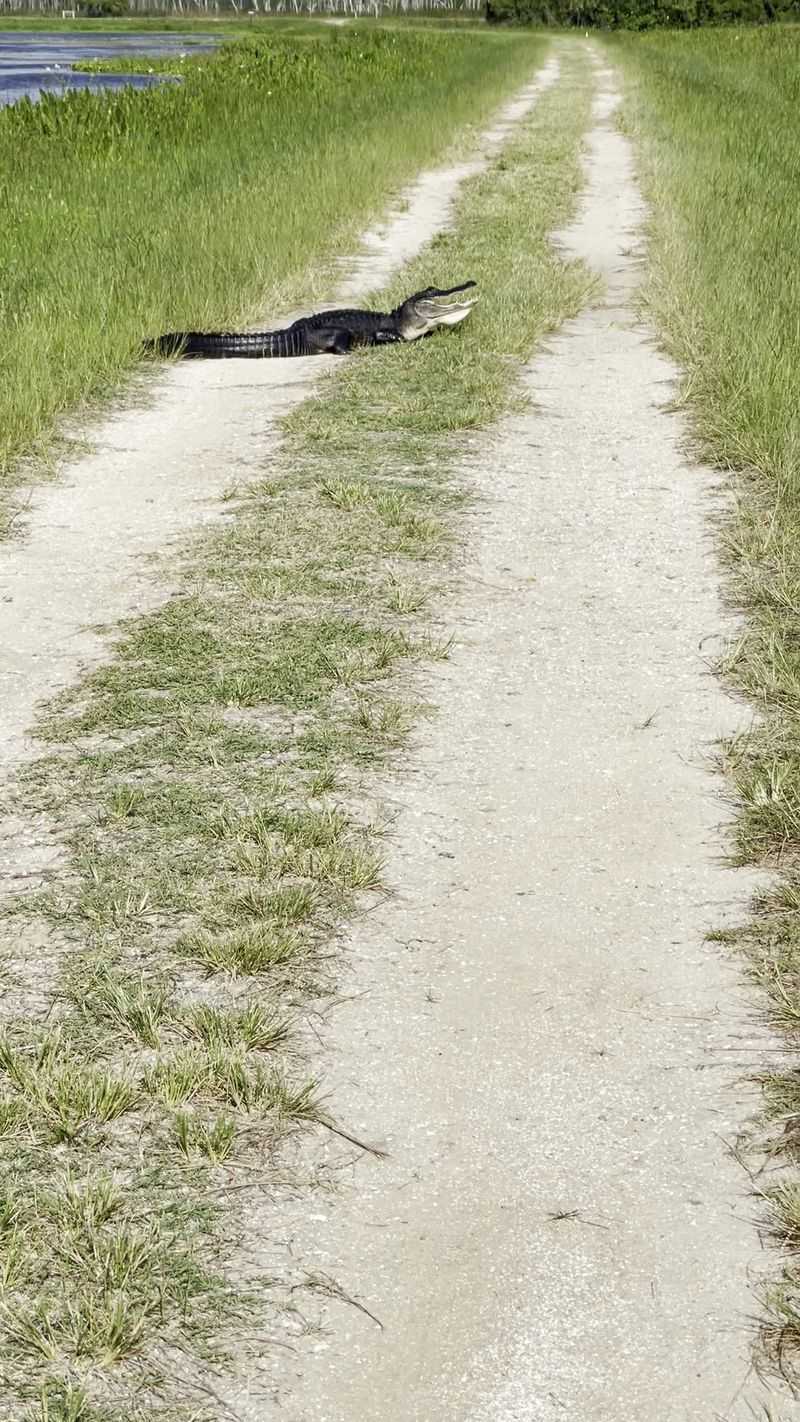
Twenty gators on one walk is not a tall tale here. Several visitors report counting that many along a single loop, especially on sunny winter days.
Alligators are the most talked-about residents of Orlando Wetlands, and they are not shy. They bask on the banks right beside the trails, soaking up warmth with their mouths sometimes hanging open.
One family even watched a gator dash across the path ahead of them, which they called cool and a little scary.
The Lake Searcy Loop and the stretch nicknamed Alligator Alley are famous gator zones. Walking past a large one just a few feet away will get your heart pounding.
It is thrilling, but it also calls for respect.
Keep a safe distance, never feed them, and never try to get closer for a selfie. Take photos from the trail and keep moving.
Gators generally ignore people who leave them alone, and that is exactly the relationship you want.
Kids especially love this part, so hold small hands near the water’s edge. Cooler months bring the best gator viewing because the animals come out to sun themselves.
Watching these ancient reptiles in the wild beats any zoo exhibit, no contest.
Friendly Volunteers And A Free Tram Ride
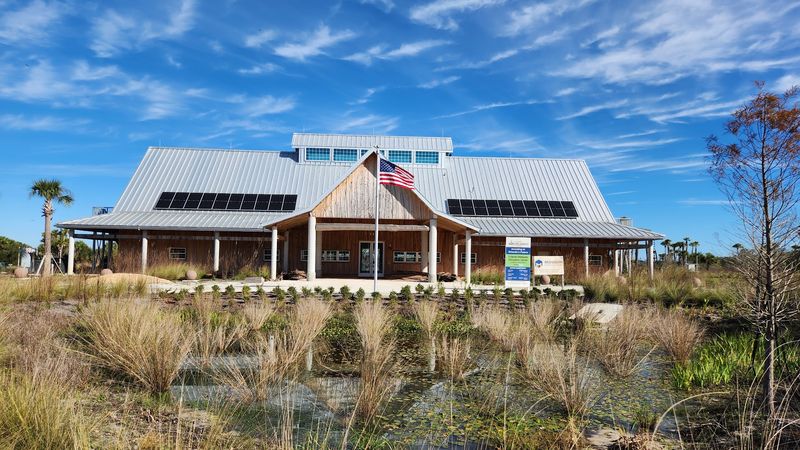
Start at the visitor center, and you will thank yourself later. The newer building has a great view of the marsh out back, plus displays and tanks that teach kids and adults about the wetland’s residents.
The real treasure, though, is the people. Volunteers and staff here love this place, and it shows.
Ask them what has been spotted that morning and they will point you to the best nest or the gator everyone is talking about.
Free guided tram tours are one of the park’s most popular perks. A volunteer drives an open cart around the berms and shares stories about the birds, plants, and how the water system works.
It is perfect if walking long distances is tough or if you simply want an expert guide.
Tram schedules can change, and rides are not offered every day. Visitors have mentioned tours on certain weekday and Saturday mornings, and some days the tram does not run at all.
Visitor center days vary too, so call 407-568-1706 or check the city website before you go.
Planning ahead avoids disappointment. A narrated ride with a local expert can turn a nice walk into an unforgettable lesson.
Sun, Miles, And Smart Packing
Shade? Barely any.
The Florida sun has a clear shot at you on most of these trails, so pack like you mean it.
The park is generally open daily from sunrise to sunset, though hours and closures can change with the seasons, weather, or maintenance. Always check the official website before driving out.
The full perimeter trail runs about six miles, while shorter loops and the boardwalk give easier options.
Bring a hat, sunscreen, sunglasses, and more water than you think you need. Bug spray is smart, even though some visitors say mosquitoes were surprisingly mild.
Charged batteries matter too, because you will likely take far more photos than planned.
Leave pets at home, since dogs and other animals are not allowed. That rule keeps both wildlife and your furry friend safe, especially with gators nearby.
For accessibility, the boardwalk is flat, and the tram helps when it runs. Trails are mostly grass and packed earth, and benches are spaced far apart, so plan rest breaks if mobility is a concern.
Restrooms sit near the parking area, not out on the trails.
Early mornings and cooler months make everything more comfortable. Summer afternoons can feel like walking inside a warm, damp towel.
Christmas Is A Real Town, And It Fits The Day
Yes, the mailing address really says Christmas, Florida. The small rural community takes its name from Fort Christmas, built during the Second Seminole War and named for the day construction began in December 1837.
Orlando Wetlands sits on Wheeler Road, roughly four miles north of State Road 50. The drive takes you away from shopping plazas and into quiet ranch land with oaks and open fields.
It is about a 40-minute trip from downtown Orlando, depending on traffic.
Fort Christmas Historical Park is just down the road, featuring a replica of the old fort and historic pioneer homes. Many visitors pair the two stops into one easy outing.
Spend your cool morning with the birds, then head over for history in the afternoon.
Here is a simple game plan. Arrive near sunrise, walk the boardwalk first, then loop past the gator zones while the light is soft.
Stop at the visitor center to cool off and ask questions, and eat a packed lunch at the picnic pavilion.
By the time you leave, you will have seen more wildlife than most people spot in a year. Not bad for a free trip to a town named after a holiday.