
9 Forgotten Ghost Towns In Arkansas That Are Eerially Scenic
Arkansas holds secrets in its hills and valleys that most travelers never discover.
Scattered across the state are ghost towns—places where life once thrived but now stands frozen in time, offering hauntingly beautiful glimpses into the past.
I stumbled upon my first Arkansas ghost town by accident during a road trip, and the eerie silence mixed with crumbling buildings left me absolutely mesmerized.
1. Rush
Tucked away in the Buffalo National River area, Rush was once a booming zinc mining community that attracted fortune-seekers from all over. The town exploded with activity in the early 1900s, housing over 2,000 residents at its peak. Today, you can wander through the skeletal remains of stores, homes, and the old smelter.
What makes Rush particularly captivating is how nature has reclaimed the structures. Vines snake through window frames, and trees grow right through building foundations. The National Park Service maintains trails that wind through the ruins, making it accessible for curious explorers like myself.
I remember touching the rough wood of an old storefront and imagining the miners who once walked these same paths. The silence feels heavy here, broken only by birdsong and rustling leaves. It’s absolutely worth the hike!
2. Monte Ne
Ever heard of a ghost town that occasionally rises back into view? Monte Ne was William Hope Harvey’s ambitious resort project built in the early 1900s. He envisioned a utopian community complete with luxurious hotels, gondola rides, and even a massive pyramid tomb.
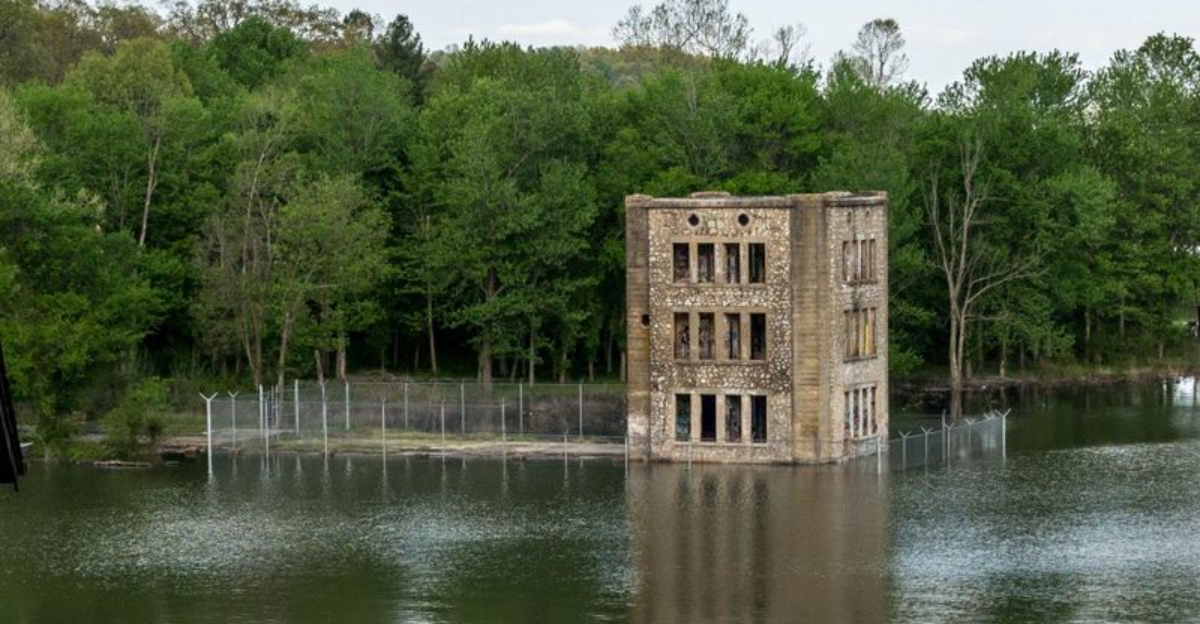
When Beaver Lake was created in the 1960s, most of Monte Ne drowned beneath the waters. During droughts, the concrete towers and amphitheater foundations emerge like something from a post-apocalyptic movie. Kayakers and boaters often explore these ruins during low water levels.
I visited during a particularly dry summer and stood on what used to be a grand hotel floor. The juxtaposition of ambitious dreams now submerged under tons of water felt surreal. Harvey’s pyramid tomb still stands partially above water—a testament to one man’s wild vision gone eerily quiet.
3. Erie
Nestled in the Ozark foothills, Erie once served as a railroad town that buzzed with commerce and community life. Families built homes, kids attended the local school, and the general store stocked everything from flour to farm equipment. Then the railroad changed its route, and Erie’s heartbeat simply stopped.
Walking through Erie today feels like stepping into a time capsule. Several structures still stand, including the old schoolhouse with its creaky floors and dusty chalkboards. The cemetery nearby tells stories through weathered headstones dating back over a century.
My favorite discovery was finding an old glass medicine bottle half-buried near a collapsed building. These small artifacts connect you to the real people who lived here. The town’s isolation adds to its haunting charm—you’ll likely have the place entirely to yourself.
4. Zinc
With a name that tells you exactly what brought people here, Zinc was another mining boomtown that flourished and faded. The town sprang up in the 1880s when prospectors discovered rich zinc deposits in the area. At its height, miners worked around the clock, and the town supported multiple businesses and hundreds of families.
Today, Zinc offers a more rugged exploration experience than some other ghost towns. Crumbling stone foundations poke through thick brush, and rusted mining equipment lies scattered like forgotten toys. The mine shafts themselves are dangerous and sealed off, but their presence adds an element of mystery.
I found myself wondering about the miners’ daily lives as I explored—how they celebrated, what they feared, whether they knew their town would vanish. The remoteness of Zinc means fewer visitors, so the atmosphere feels genuinely untouched and authentically spooky.
5. Agnos
Agnos started with high hopes as a lumber and railroad community in the early 20th century. Families settled here expecting prosperity, building homes, a school, and a post office that served as the social hub. But when the timber ran out and the trains stopped coming, Agnos couldn’t sustain itself.
What remains today is hauntingly beautiful in its decay. Several wooden structures lean at precarious angles, defying gravity and time. The old post office building, though weathered, still displays remnants of its original paint. Nature has begun its slow takeover, with saplings growing through floorboards.
During my visit, I spotted an old rusted bicycle leaning against a tree—had someone left it there decades ago? These personal touches make ghost towns feel less like abandoned places and more like paused lives. Agnos whispers its stories to anyone patient enough to listen carefully.
6. Old Davidsonville
Old Davidsonville holds the distinction of being Arkansas’s first county seat, established way back in 1815. This wasn’t just any settlement—it was a thriving river port where steamboats docked and commerce flourished. The town boasted a courthouse, multiple stores, and even a newspaper before mysterious circumstances led to its abandonment.
Unlike many ghost towns, Old Davidsonville is now a state park with maintained trails and informative markers. Archaeological excavations have uncovered building foundations, artifacts, and even the old courthouse location. The Black River still flows nearby, just as it did when the town was alive.
I found the interpretive signs fascinating—they explain how floods, earthquakes, and economic shifts all contributed to the town’s demise. Standing where Arkansas’s early government once operated gave me chills. History feels tangible here, preserved and protected for future ghost town enthusiasts like us!
7. Calico Rock Ghost Town District
Calico Rock presents a unique twist on the ghost town concept—it’s partially alive! The historic district contains beautifully preserved buildings from the late 1800s alongside structures that have been abandoned. Named for the colorful bluffs along the White River, this town once thrived as a steamboat stop.
What I love about Calico Rock is how you can literally walk between functioning businesses and empty, decaying buildings within the same block. Some storefronts display vintage signs faded by decades of sun. The Peppersauce Ghost Town attraction recreates pioneer life with authentic relocated buildings.
When I visited, I grabbed lunch at a local diner, then explored abandoned structures just down the street. This blend of past and present creates an unusual atmosphere—part living community, part frozen memory. The scenic river views add another layer of beauty to this eerily scenic location that refuses to completely fade away.
8. Bonanza
Despite its optimistic name suggesting riches and prosperity, Bonanza’s glory days were relatively brief. This mining community popped up when zinc and lead deposits were discovered in the rugged Ozark terrain. Miners and their families carved out a life in this remote location, building homes and establishing a tight-knit community.
Today, Bonanza is seriously remote—you’ll need a sturdy vehicle and patience to reach it. The reward is an authentic ghost town experience without crowds or commercialization. Collapsed cabins dot the hillsides, and rusted mining equipment lies exactly where it was abandoned decades ago.
I nearly turned back twice on the rough road leading to Bonanza, but I’m glad I persisted. The isolation intensifies the eerie atmosphere—you genuinely feel like you’ve discovered something secret. Pack out what you pack in, respect the ruins, and you’ll have an unforgettable adventure in this hidden Arkansas treasure.
9. Gilbert
Gilbert straddles the line between ghost town and living community in a fascinating way. Located along the Buffalo National River, this settlement once served river travelers and local farmers. When highways bypassed the area and river traffic declined, many residents departed, leaving behind beautiful old structures.
Several historic buildings still stand, including an old general store that looks like it could reopen tomorrow. Some structures house seasonal businesses catering to river floaters, while others sit empty and decaying. The juxtaposition creates a strange temporal confusion—is this place alive or simply resting?
I stopped here during a canoeing trip and explored the quiet streets. An elderly local told me stories about when Gilbert was bustling, pointing out buildings and explaining their former purposes. That personal connection transformed my visit from mere sightseeing into genuine time travel. Gilbert proves that ghost towns exist on a spectrum, not just in binary states.