
12 Forgotten Ghost Towns In Idaho That Are Hauntingly Beautiful
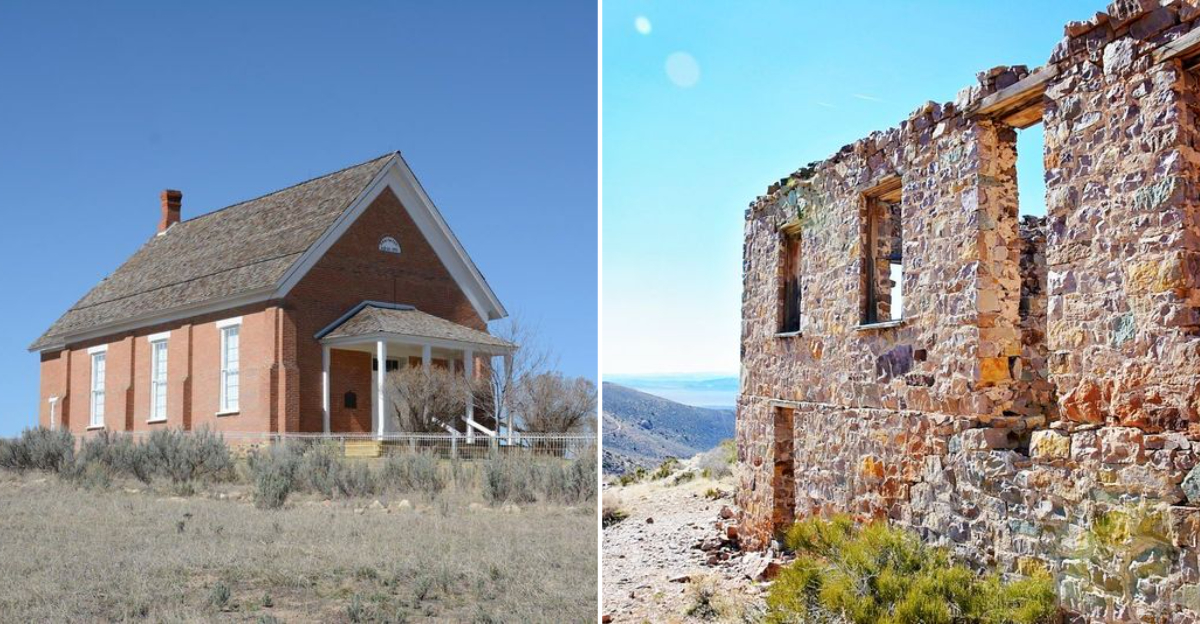
Idaho hides dozens of forgotten mining camps and frontier settlements where wooden storefronts lean against time, and silence hangs heavier than any fog.
These ghost towns scatter across sagebrush valleys and pine-clad ridges, each one a snapshot of boom-and-bust fortune that built the West. Most sit on public land or welcome curious visitors with gravel roads and interpretive signs, making them perfect for a weekend detour.
Pack your camera, lace up hiking boots, and get ready to walk streets that once echoed with wagon wheels and whispered dreams of silver strikes.
1. Bayhorse – Custer County
Silver strikes turned this canyon hollow into a bustling camp, and now you can explore a dirt main street flanked by crumbling cabins and massive stone kilns that once roasted ore.
Managed by Land of the Yankee Fork State Park, the site offers clear signage and well-maintained trails that make wandering safe and informative.
Wagon ruts still scar the hillside, leading your eye up-canyon where prospectors once hauled their fortunes. Late spring through fall delivers the best conditions – dry roads and warm sun that highlights every weathered plank.
Bring water, a hat, and curiosity; you will spend hours tracing history in the dust.
2. Custer – Yankee Fork Historic Area
Restoration work has breathed careful life into this townsite, where a self-guided summer walking tour leads you past false-front stores, a schoolhouse, and miners’ cabins that still smell faintly of pine pitch.
Interpretive panels unpack daily routines, ore prices, and the grit it took to survive winters at elevation.
Just downstream, the hulking Yankee Fork Gold Dredge squats in the river like a rusty dinosaur, its conveyor arms frozen mid-scoop.
Families budget several hours here; history buffs lose entire afternoons photographing doorways and imagining Saturday-night dances in the old hall.
Summer brings the most services, but shoulder seasons offer solitude and golden light.
3. Bonanza – Yankee Fork Valley
Bonanza sits just up the road from Custer, quieter and rougher, with a Boot Hill cemetery perched on the slope where wooden markers tilt like crooked teeth.
Dredge tailings ripple across the valley floor, a testament to the machines that chewed through gravel hunting gold long after the hand miners moved on.
Collapsed cabins leak sunlight through missing roofs, and wildflowers poke through floorboards every June. Golden hour paints the entire scene in amber and shadow, perfect for photography or simply standing still and listening to the wind.
Wear sturdy boots; nails and old lumber hide in the grass, waiting to snag an ankle or a daydream.
4. Gilmore – Lemhi County
Wind is the only resident now, pushing through skeletal storefronts and collapsed cabins where a standard-gauge railroad once hauled silver ore down to the main line.
Located just off US-28 near Leadore, Gilmore rewards a short detour with eerie quiet and structures that lean at angles physics shouldn’t allow.
Foundations outline what used to be a hotel, a saloon, and a mercantile; if you squint, you can almost see the bustle.
Bring sturdy shoes for uneven ground and time to wander – every corner reveals another relic, from rusted stoves to hand-forged nails scattered like confetti.
Spring and fall offer the most comfortable temperatures for exploring on foot.
5. Burke – Shoshone County
Burke wedged itself into a slot of canyon so tight that trains once ran down the main street and sunlight barely kissed the ground in winter.
Mine ruins cling to both canyon walls, their rusted tramways and tipples frozen mid-operation like props on a stage no one struck.
Foundations line the road for a mile, each one marking a hotel, boarding house, or ore shed that fed the silver boom. You can drive the entire length in ten minutes, but park and walk to feel the claustrophobia and ambition that defined life here.
Wallace sits just minutes away, offering museums and context for what you see up-canyon.
6. Silver City – Owyhee Mountains
Silver City stands as one of the West’s best-preserved mining camps, with dozens of historic buildings climbing a steep hillside and the storied Idaho Hotel anchoring the summit like a crown.
Summer brings open businesses – cafe, museum, and even overnight lodging – while fall empties the streets and leaves you alone with big skies and creaking shutters.
Mountain two-lane roads wind up from Murphy; check conditions before you go, especially after rain or early-season snow.
Plan a full day to explore the cemetery, peek into old assay offices, and imagine the fortunes won and lost in card games at the hotel bar.
Bring layers; elevation means cool mornings even in July.
7. Chesterfield – Caribou County
Chesterfield began as a Mormon agricultural settlement rather than a mining camp, and that difference shows in the tidy brick store, white-frame homes, and wide streets laid out for wagon traffic and Sunday gatherings.
Designated a National Historic District, the town opens select buildings for guided tours from Memorial Day through Labor Day.
Off-season, it becomes a windswept walk among preserved architecture and interpretive signs that explain cooperative irrigation, Relief Society meetings, and frontier self-reliance.
Families appreciate the kid-friendly history and flat terrain; photographers love the clean lines and mountain backdrop.
Pack a picnic; shade is sparse, but the quiet is abundant, and the views stretch for miles.
8. Rocky Bar – Elmore County
Rocky Bar nearly became Idaho’s territorial capital, serving as a county seat and hosting enough ambition to fill a dozen saloons and courtrooms.
Today, historians note it was considered as a possible capital, and it did serve as the seat of Alturas County in the 1860s.
A handful of log cabins and stonework hide in the pines above the Featherville-Atlanta corridor, accessible via gravel roads that test your suspension and reward your patience.
History boards sketch boom-and-bust cycles, and the silence feels earned after the bumpy drive. Summer and early fall offer the surest road conditions; snow closes high-country routes by October.
Bring a full tank, snacks, and a sense of adventure – cell service is a memory, and the nearest services sit an hour away in any direction.
9. Florence – Idaho County
Florence exploded in 1861 when prospectors struck gold on a remote ridge above the Salmon River, and the camp swelled to thousands before winter and dwindling ore sent everyone packing.
Now you will find foundations, a lonely cemetery with markers weathered to illegibility, and Forest Service panels recounting brutal winters and fortunes that vanished faster than they appeared.
Access requires steep, seasonal roads – four-wheel drive and high clearance are not suggestions. Go prepared with maps, extra fuel, and layers; elevation and exposure make the weather unpredictable.
The reward is solitude, sweeping views, and the strange satisfaction of standing where history briefly burned bright then flickered out.
10. Vienna – Sawtooth Valley
Vienna once held more than two hundred buildings, a stamp mill, and the kind of optimism that builds entire towns on a hunch.
Paired with nearby Sawtooth City, the camp now exists mostly as ruins scattered across a meadow where elk graze and the Sawtooth peaks rise like a theatrical backdrop painted in granite and snow.
Access is straightforward off State Highway 75 within the Sawtooth National Recreation Area, making this one of the easier ghost towns to visit. Interpretive signs explain milling operations and daily life at elevation.
Summer wildflowers carpet the site; fall brings aspens turning gold and fewer tourists clogging the pullouts.
11. DeLamar – Owyhee County
DeLamar thrived as a silver camp in the 1890s, complete with electric lights, a newspaper, and enough saloons to keep miners entertained on Saturday nights.
Tucked in the remote Owyhee backcountry south of Silver City, the site now offers crumbling stone walls, scattered foundations, and a cemetery where wooden markers lean into the wind.
Reaching DeLamar requires high-clearance vehicles and careful navigation; roads are rough, unsigned, and subject to washouts. Bring GPS, paper maps, and plenty of water – this is true high desert, where summer heat can turn dangerous fast.
Reward yourself with solitude, stunning views, and the satisfaction of finding a place most people never see.
12. Leesburg – Lemhi County
Leesburg sits high in the Salmon River Mountains, where gold strikes in 1866 drew thousands of prospectors willing to endure brutal winters and supply shortages for a shot at fortune.
Log cabins, some still sporting hand-hewn beams and chinking, dot the hillside alongside rusted mining equipment and a cemetery where wooden crosses mark graves of those who never left.
Access is seasonal – snow often limits travel in winter into late spring – and high-clearance is recommended (conditions vary). Summer delivers wildflower meadows, cool temperatures, and the kind of quiet that makes you whisper.
Pack layers, snacks, and patience; the drive is long, but the isolation and preservation make every bumpy mile worthwhile.