
8 Forgotten Ghost Towns In Montana That Are Eerily Beautiful
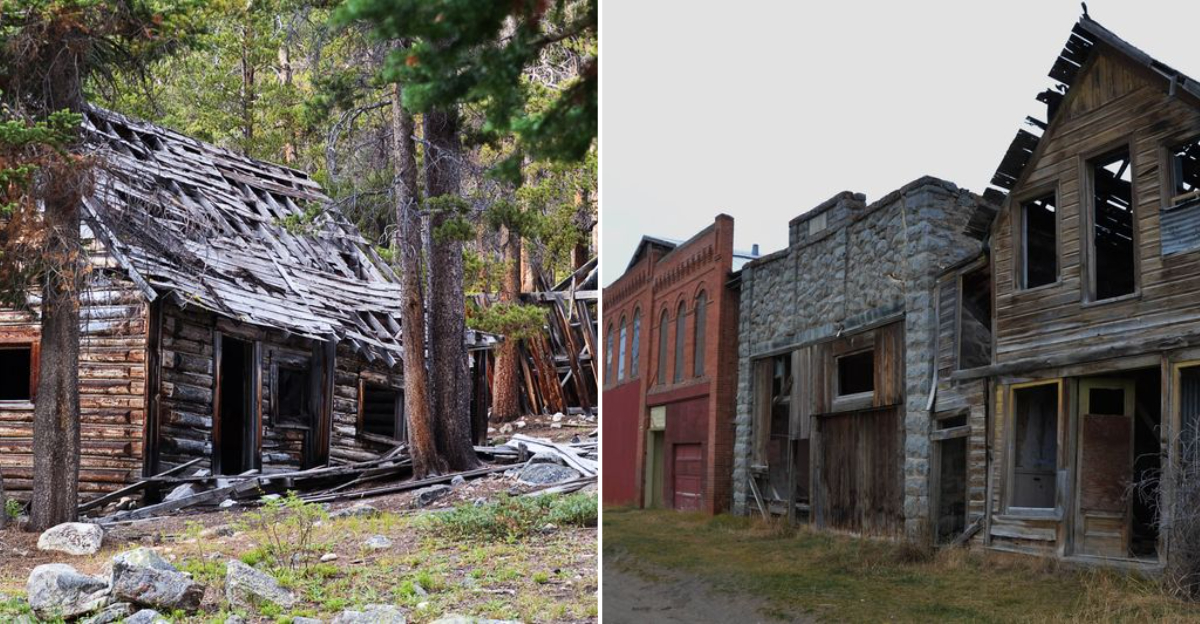
Close your eyes. Can you hear the faint clatter of a pickaxe striking rock? The distant murmur of a saloon piano? The hopeful shouts of gold-crazed prospectors?
Montana’s ghost towns are more than just abandoned buildings; they are living, breathing echoes of dreams, daring, and ultimate decline. Here, the “Big Sky” watches over skeletal structures and dusty streets that once pulsed with life, ambition, and the wild spirit of the American West.
Today, they stand as eerily beautiful monuments to the boom-and-bust cycles that shaped this rugged state. Prepare to journey into a captivating past, where every creaking floorboard and vacant windowpane has a story to tell
1. Garnet
Nestled at 6,000 feet in the Garnet Mountain Range, this remarkably preserved ghost town offers visitors a genuine step back to the 1890s. Gold discovery sparked a rush that brought 1,000 people here, creating a thriving community with hotels, saloons, and stores.
The town’s namesake gemstone wasn’t actually mined here-ironic, right? When the gold played out, residents simply walked away, leaving behind their belongings.
Today, over 30 historic structures remain standing, including the J.K. Wells Hotel and F.A. Davey’s Store. Winter transforms Garnet into a snow-covered wonderland, accessible only by snowmobile or cross-country skis.
2. Bannack
Montana’s first territorial capital stands as a testament to frontier justice. Founded after a gold strike in 1862, Bannack’s story took a dark turn when its sheriff, Henry Plummer, was revealed to be leading a notorious gang of road agents.
Vigilantes hanged Plummer and his accomplices from the same gallows he had built for official executions-talk about poetic justice! The town’s 60 structures, including the iconic Meade Hotel and the weathered gallows, create an atmosphere that’s both haunting and captivating.
Now a state park, Bannack hosts an annual “Ghost Walk” where locals reenact historical events. They shaped this once-lawless frontier settlement.
3. Virginia City
Gold fever struck Alder Gulch in 1863, birthing a boomtown that grew to 10,000 residents practically overnight. Virginia City narrowly avoided becoming a ghost town when the state purchased much of it in the 1940s, preserving its Victorian architecture and boardwalks.
The Bale of Hay Saloon, Nevada City Hotel, and Opera House transport visitors to Montana’s territorial days. Stagecoaches still roll down Wallace Street, though they carry tourists instead of gold miners.
Grab a huckleberry ice cream cone and wander among the 200+ historic structures. Virginia City strikes the perfect balance between living town and preserved historical site-where else can you shop in a 19th-century mercantile that’s still in business?
4. Elkhorn
Two magnificent structures rise from the Montana wilderness like apparitions from another era. Elkhorn’s Fraternity Hall and Gillian Hall stand as silent sentinels, their elaborate façades defying the harsh elements that have claimed most other buildings in this once-prosperous silver mining community.
Silver brought fortune hunters to these mountains in the 1880s, creating a town of 2,500 that boasted schools, hotels, and a thriving social scene. A diphtheria epidemic in 1889 claimed many children, adding to the town’s melancholy atmosphere.
The cemetery on the hillside tells stories of hardship and perseverance. Photographers flock here for the juxtaposition of ornate Victorian architecture against the raw Montana landscape, a poignant reminder of boom-and-bust cycles.
5. Granite
Perched at nearly 7,000 feet above sea level, Granite once crowned itself the “Silver Queen” of Montana. The discovery of the Granite Mountain silver lode in 1875 transformed this mountainside into a bustling community of 3,000 miners and their families.
The miners’ union hall hosted dances where ladies in fine gowns twirled across polished floors. Meanwhile, the Miners’ Union Hospital cared for those injured in the dangerous underground tunnels.
When silver prices collapsed in 1893, residents fled so quickly they left dishes on tables and clothes hanging to dry. Today, crumbling stone walls and foundations dot the mountainside, with the impressive superintendent’s house still standing guard over the abandoned silver empire.
6. Castle Town
Castle’s striking limestone formations might remind you of medieval ruins, fitting for a town named after the castle-like mountains surrounding it. Silver and lead discoveries in 1882 brought 2,000 fortune-seekers to this remote valley, including Calamity Jane, who briefly operated a restaurant here.
The Cumberland Mine fueled Castle’s prosperity, funding elegant homes, 14 saloons, and a school. When the silver market crashed in 1893, followed by the railroad bypassing the town, Castle’s fate was sealed.
Ranchers salvaged materials from abandoned buildings, leaving behind stone foundations and the imposing remains of the smelter stack. The ghostly remnants scattered across the valley floor create an otherworldly landscape that feels both ancient and strangely familiar.
7. Coloma
Unlike its more famous ghost town neighbors, Coloma hides deep in the forest, requiring determination to find its weathered remains. Gold brought miners here in the 1890s, but the settlement never achieved the prosperity of nearby Garnet.
The Mammoth Mine’s stamp mill once thundered day and night, crushing ore in a deafening industrial symphony. Now only silence and wind through pine boughs accompany visitors to this remote site.
Several log cabins remain partially intact, with collapsed roofs opening to the sky. Rusty mining equipment peeks through forest undergrowth, slowly returning to the earth. Coloma’s isolation has preserved it from vandalism and souvenir hunters, making it one of Montana’s most authentic ghost town experiences.
8. Marysville
Just 20 miles northwest of Helena lies Marysville, a ghost town with an identity crisis. Unlike most abandoned mining camps, Marysville still has a handful of residents, creating a fascinating blend of past and present.
Irish immigrant Tommy Cruse struck gold here in 1876, naming the town after a chance encounter with a woman named Mary. The Drumlummon Mine yielded an astounding $50 million in gold, funding the magnificent Marysville House hotel and the still-standing St. Francis Catholic Church.
Fire ravaged much of the business district in 1909, beginning a slow decline. Today, weathered false-front buildings line empty streets, while a few occupied homes keep Marysville from complete abandonment.