
13 Fun-Filled Museums In Arizona That Bring The Old West To Life
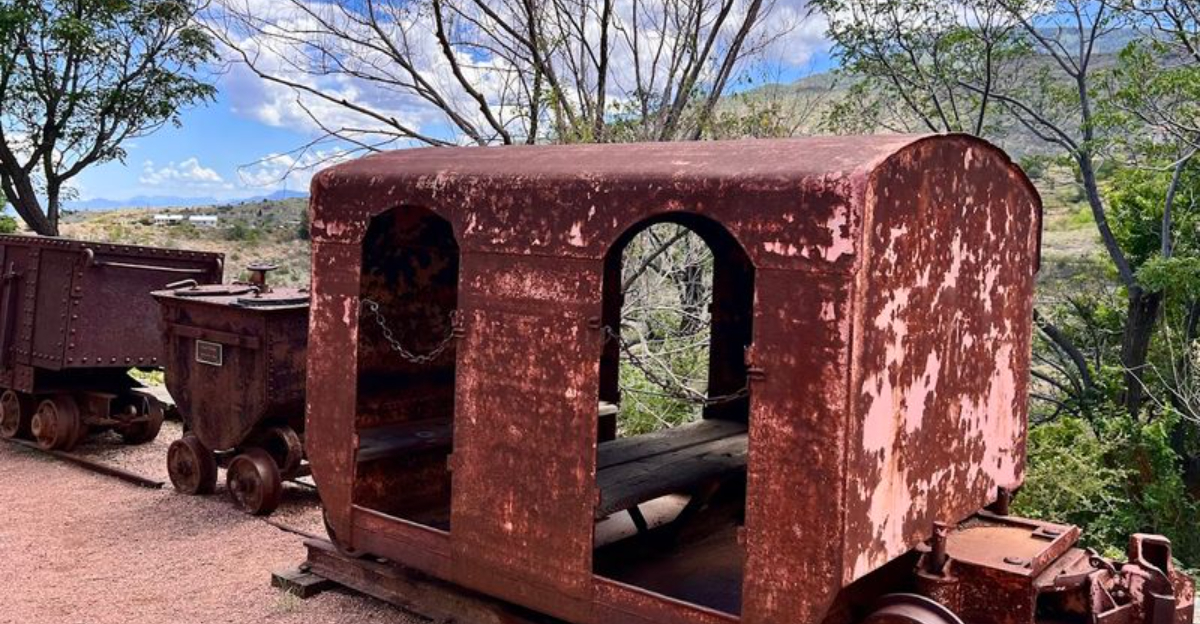
Ever wished you could hop into a time‑machine, dust off a pair of cowboy boots, and ride straight into the heart of the Old West? Arizona’s treasure trove of museums lets you do just that-without the need for a horse.
With a mix of goofy reenactments, jaw‑dropping artifacts, and plenty of photo‑ops, you’ll leave feeling like you’ve just survived a showdown-only with more laughs and far fewer tumbleweeds. Ready for a history lesson that feels more like a weekend getaway?
Let the adventure begin!
1. Western Spirit: Scottsdale’s Museum Of The West, Scottsdale
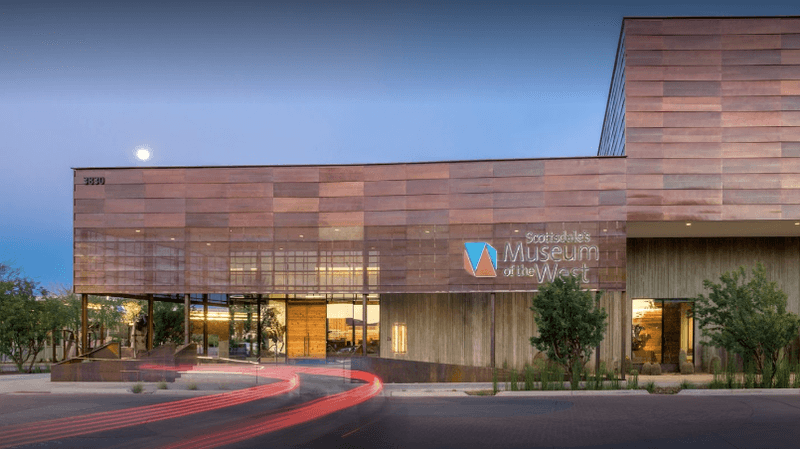
Right in the heart of Old Town Scottsdale, this museum is one of the most visually stunning places I have ever walked into. Western Spirit: Scottsdale’s Museum of the West opened in 2015 and quickly became a landmark destination for anyone who loves the art and culture of the American West.
The galleries are packed with paintings, sculptures, and artifacts created by some of the most celebrated Western artists in history.
What sets this place apart is how it blends fine art with genuine historical storytelling. You are not just looking at pretty pictures on a wall.
Each piece connects you to a broader narrative about life on the frontier, the landscapes of the West, and the people who shaped it.
The museum also rotates its special exhibitions regularly, so there is always something new to discover on a return visit. Plan to spend at least two hours here, because you will not want to rush through a single room.
2. Sigler Western Museum, Wickenburg
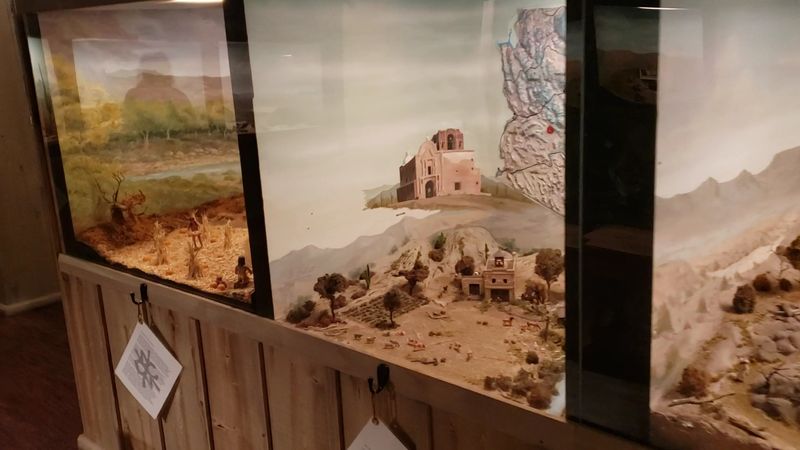
Wickenburg is one of those Arizona towns that still carries the unmistakable scent of the Old West, and the Sigler Western Museum, formerly known as the Desert Caballeros Western Museum, fits right into that atmosphere.
This museum has long been considered one of Arizona’s signature Western institutions, and a visit here makes it easy to understand why that reputation has stuck for so many decades.
Inside, you will find a rich mix of Western art, period room recreations, and artifacts that trace life in the Arizona Territory. The dioramas depicting frontier scenes are particularly memorable, offering a detailed window into daily life during the 1800s.
Kids and adults alike tend to linger in front of them longer than expected.
Wickenburg itself adds to the experience, since the surrounding town still celebrates its ranching and cowboy heritage with genuine pride. Pair your museum visit with a stroll through downtown and you have yourself a full day of Old West immersion.
3. Pioneer Living History Museum, Phoenix Area
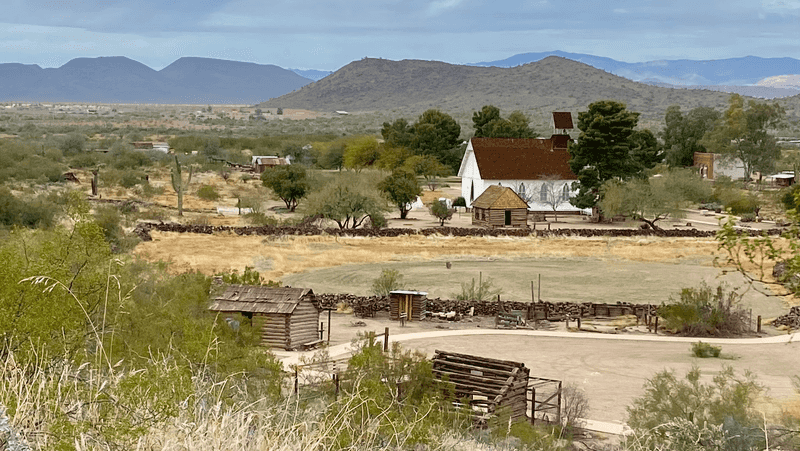
Spread across 90 acres just north of Phoenix near Anthem, the Pioneer Living History Museum is the kind of place that makes history feel wonderfully tangible.
Rather than displaying artifacts behind glass, this open-air museum invites you to walk through actual 19th-century buildings, including a schoolhouse, a print shop, a blacksmith shop, and a territorial hotel, all relocated and restored to their original character.
On weekends, costumed interpreters bring these spaces to life with demonstrations and conversations that feel genuinely engaging rather than scripted. Watching a blacksmith work a piece of iron or hearing a schoolteacher explain frontier education adds layers to the experience that a traditional museum simply cannot replicate.
The sheer size of the property means you can easily spend a half day here without feeling rushed. Comfortable walking shoes are a must, and going in the cooler months between October and April makes the outdoor exploration far more enjoyable.
This one is a true hidden treasure in the Phoenix area.
4. Tombstone Courthouse State Historic Park, Tombstone
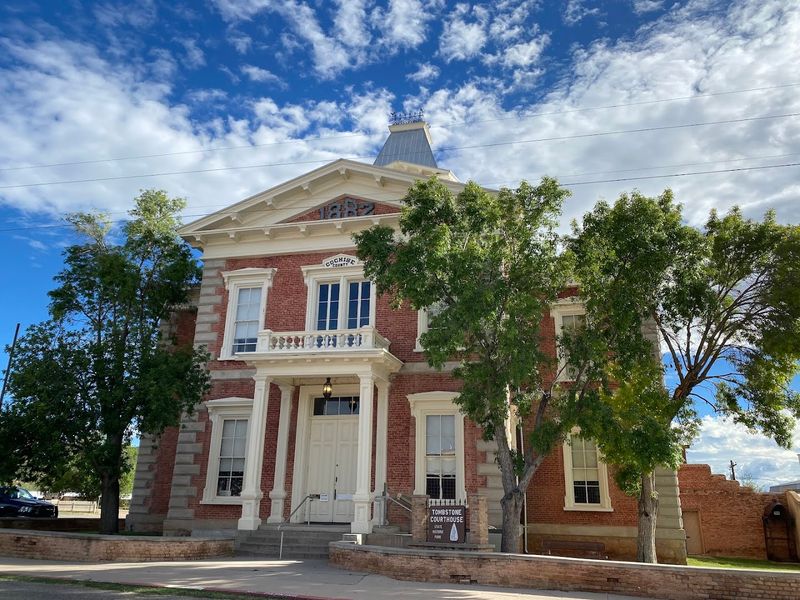
Few places in Arizona carry as much legendary weight as Tombstone, and the Tombstone Courthouse State Historic Park sits right at the center of that wild history. The courthouse was built in 1882, just one year after the famous gunfight at the O.K.
Corral, and it served as the seat of Cochise County during some of the most turbulent years of Arizona Territory history.
Today, the building operates as a museum dedicated to Tombstone’s rough and rowdy mining-town past. Exhibits cover everything from the legal cases tried within its walls to the outlaws, lawmen, and everyday citizens who shaped the community.
The gallows in the courtyard serve as a sobering reminder of frontier justice.
Tombstone itself is a lively town with plenty of additional attractions nearby, so the courthouse pairs well with a full day of exploration in the area. Arriving early on weekdays helps you avoid the largest crowds and gives you more time to read every exhibit panel at your own pace.
5. Bisbee Mining And Historical Museum, Bisbee
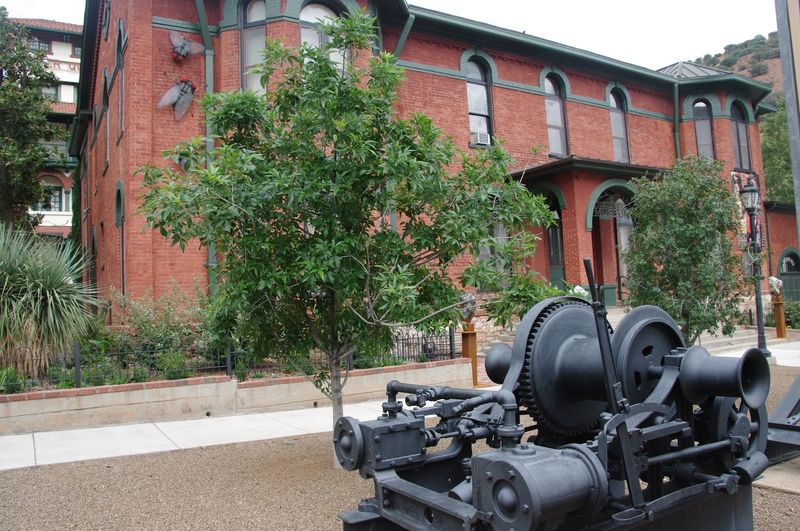
Bisbee is one of the most charming and unusual towns in all of Arizona, and the Bisbee Mining and Historical Museum captures exactly why this place mattered so much during the territorial era.
As a Smithsonian Affiliate, the museum carries a level of curatorial seriousness that elevates it above a typical local history collection. The exhibits trace the story of copper mining in the region with impressive depth and visual clarity.
You will learn about the boomtown conditions that drew thousands of workers to the Mule Mountains in the late 1800s, the multinational communities that formed here, and the social and economic forces that shaped Arizona Territory life.
The photographs alone are worth the visit, offering faces and scenes that feel remarkably personal and immediate.
Bisbee’s hilly streets and colorful Victorian architecture make the walk to and from the museum feel like part of the experience. Budget time to explore the town after your visit, because the whole place feels like a living extension of what you will see inside.
6. Jerome State Historic Park, Jerome
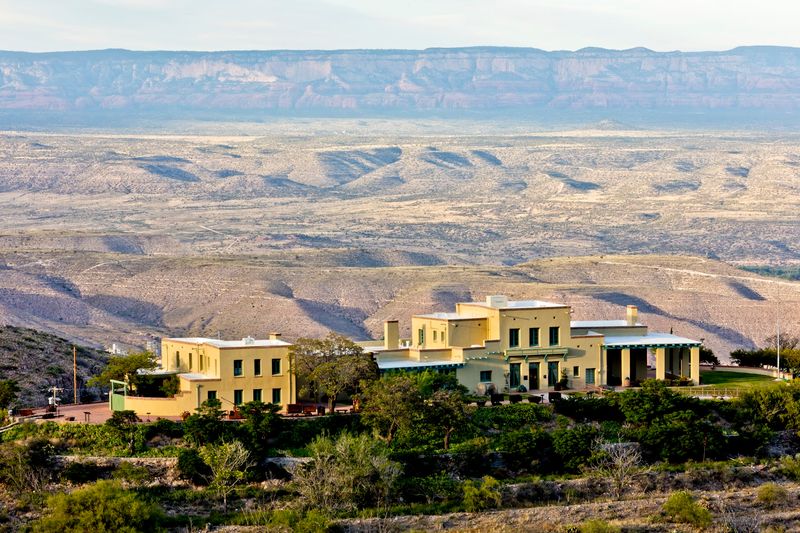
Perched on the steep slopes of Cleopatra Hill, Jerome is one of Arizona’s most dramatically situated towns, and Jerome State Historic Park takes full advantage of that setting. The museum is housed inside the Douglas Mansion, a 1916 adobe structure built by mining magnate James S.
Douglas that offers sweeping views of the Verde Valley alongside its fascinating exhibits.
Inside, visitors encounter a thoughtfully assembled collection of mining artifacts, historic photographs, mineral specimens, and a detailed scale model of the underground mine shafts that once ran beneath the town.
The model alone gives you a genuine sense of the complexity and danger involved in Jerome’s copper-mining operations.
Jerome produced nearly one billion dollars worth of copper during its peak years, a fact that puts the museum’s exhibits into impressive perspective.
The town around the park has reinvented itself as an arts community, so combining a museum visit with gallery hopping makes for an unexpectedly rich afternoon. The views from the mansion’s terrace are reason enough to make the drive up the mountain.
7. Yuma Territorial Prison State Historic Park, Yuma
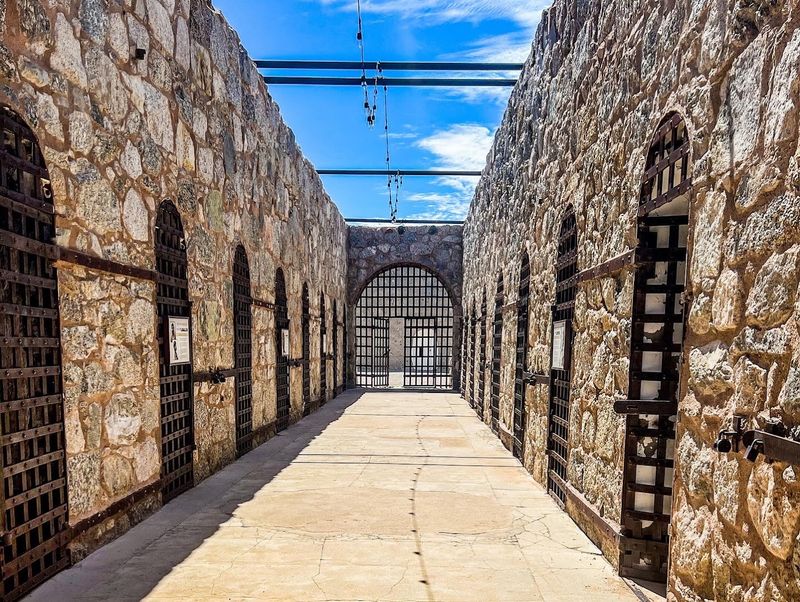
Built in 1876 using labor from its own first inmates, the Yuma Territorial Prison is one of the most viscerally compelling historic sites in the entire American Southwest.
Walking through the original cell blocks and guard tower puts you face to face with the harder realities of frontier law enforcement in a way that no textbook ever could.
The museum inside the park does an excellent job of humanizing the 3,069 men and women who were incarcerated here between 1876 and 1909.
Exhibits highlight individual stories, the conditions prisoners endured in the desert heat, and the broader context of Arizona Territory justice during a period of rapid and often chaotic growth.
Yuma itself is worth exploring for its rich history as a Colorado River crossing point, and the prison park sits right along the riverbank, adding a scenic quality to the visit. Early morning visits during the summer months are strongly recommended, since the open-air areas can get extremely hot by midday.
This is frontier history with real texture and weight.
8. Tubac Presidio State Historic Park And Museum, Tubac
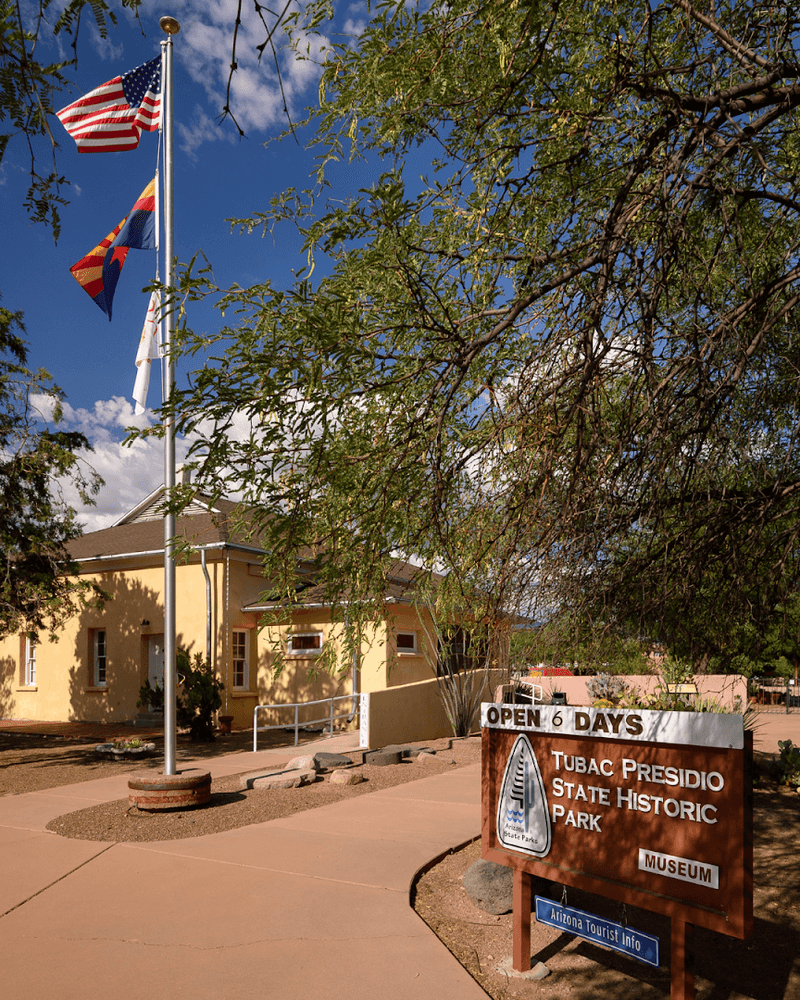
Long before the cowboys and outlaws of the 1800s arrived, the story of the American Southwest was already being written in Tubac.
Founded in 1752, the Tubac Presidio was the first European settlement in what is now Arizona, and the state historic park preserves that layered and fascinating origin story with genuine care and scholarly attention.
The underground archaeology exhibit is one of the most memorable features, allowing visitors to peer down through a glass floor at actual excavated ruins of the original Spanish fort. It is a genuinely unexpected experience that connects you directly to centuries of history in a very physical way.
The museum also covers the Mexican period and the eventual American territorial era, giving you a full arc of the region’s past.
Tubac is a lovely arts village with galleries and studios scattered throughout, making it a natural pairing with a museum visit. The surrounding Santa Cruz River valley scenery adds a peaceful, unhurried quality to the whole experience that is hard to find anywhere else in Arizona.
9. Fort Lowell Museum, Tucson
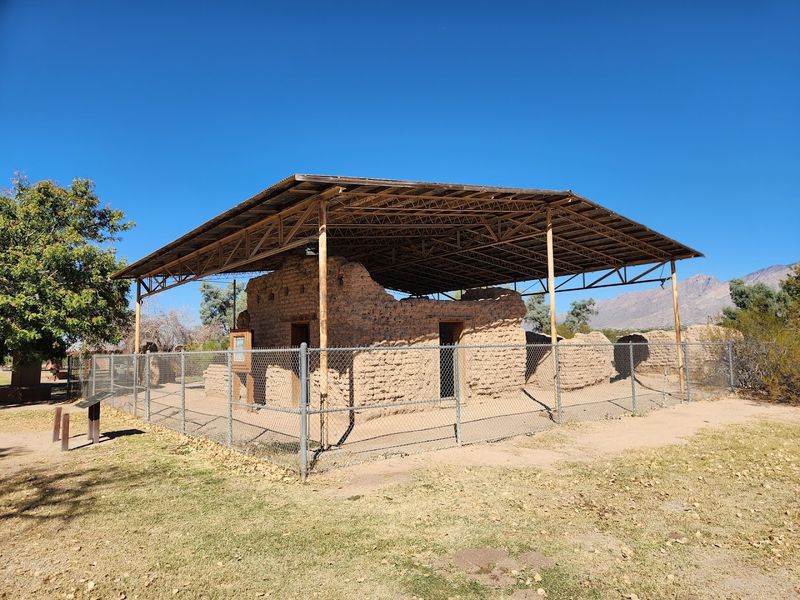
Tucked into a quiet Tucson neighborhood, Fort Lowell Museum tells a story that often gets overshadowed by flashier Old West narratives, but it deserves far more attention than it typically receives. The fort was an active U.S.
Army post from 1873 to 1891, serving as a key base of operations during the Apache Wars, one of the most consequential military conflicts in the history of the American Southwest.
The museum occupies the reconstructed commanding officer’s quarters and does a thoughtful job of exploring the daily lives of soldiers, their families, and the complex relationships between the military and the surrounding Tucson community.
Exhibits include period furniture, military equipment, photographs, and detailed historical narratives that bring the human side of this history into sharp focus.
The ruins of the original adobe structures are visible on the grounds, adding a quiet, contemplative dimension to the visit. Fort Lowell Park surrounds the site with green space and walking paths, making this an ideal stop for history lovers who also appreciate a relaxed outdoor setting.
10. Sharlot Hall Museum, Prescott
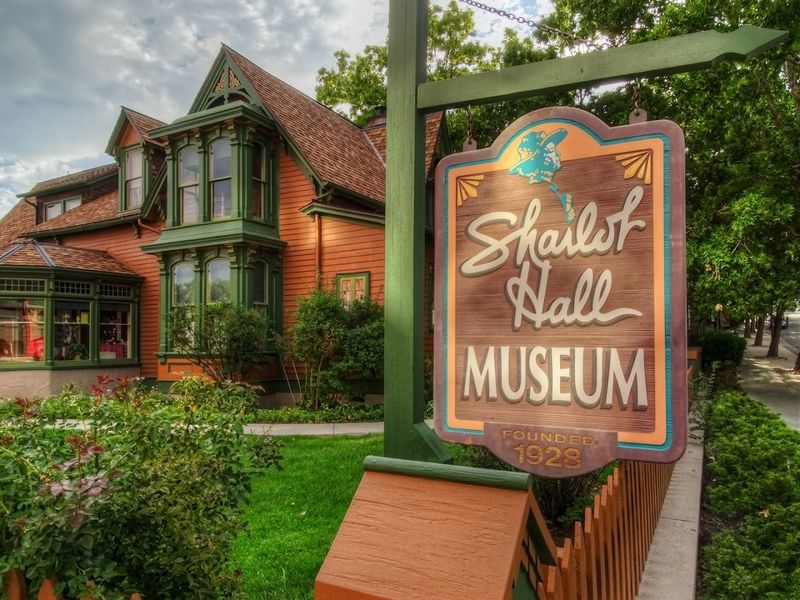
Named after the remarkable historian and poet Sharlot Hall, this open-air museum in downtown Prescott is one of the most beloved heritage institutions in all of Arizona.
The campus is built around the 1864 Governor’s Mansion, a sturdy log structure that served as home to the first territorial governor, and it sets a tone of genuine historical authenticity from the moment you arrive.
Spread across several acres, the grounds include multiple historic buildings, gardens, and galleries that together tell the story of Arizona’s territorial period with remarkable breadth. Exhibits cover Native American cultures, pioneer life, military history, and the natural environment of the central highlands, making it one of the more complete historical experiences in the state.
Prescott’s identity as a cowboy and territorial town is woven into every corner of this museum, and the surrounding courthouse plaza neighborhood adds to the atmosphere beautifully. The museum hosts seasonal events and living history programs throughout the year, so checking the calendar before your visit is always a smart move.
11. Rex Allen Museum, Willcox
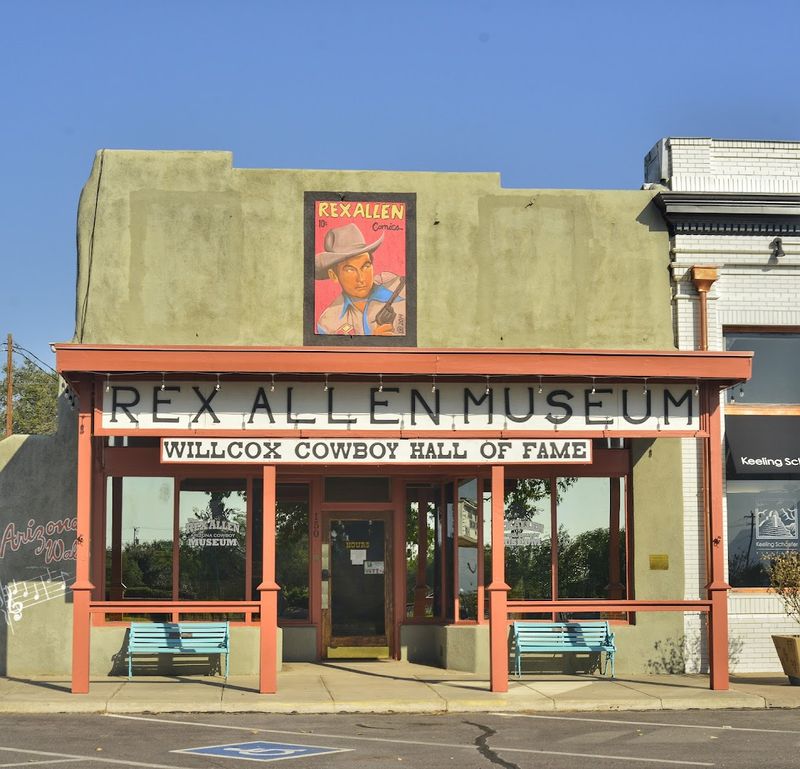
Willcox might be a small town, but it carries enormous pride as the birthplace of Rex Allen, the last of Hollywood’s great singing cowboys.
The Rex Allen Museum celebrates his life and career with a collection of memorabilia, film posters, costumes, and personal artifacts that paint a warm and detailed portrait of a man who brought the cowboy spirit to movie screens across America during the 1940s and 1950s.
Beyond the celebrity angle, the museum also explores the ranching heritage of the Sulphur Springs Valley, connecting Allen’s story to the broader agricultural and cowboy culture that defined southeastern Arizona for generations.
That dual focus makes the museum feel richer and more grounded than a typical celebrity tribute space.
Rex Allen’s beloved horse, Koko, is honored with a bronze statue just outside, and the surrounding Willcox area is worth exploring for its apple orchards, wineries, and the beautiful Dos Cabezas Mountains on the horizon.
This is a genuinely heartwarming stop that tends to surprise visitors with how much it delivers.
12. Prescott Western Heritage Center, Prescott
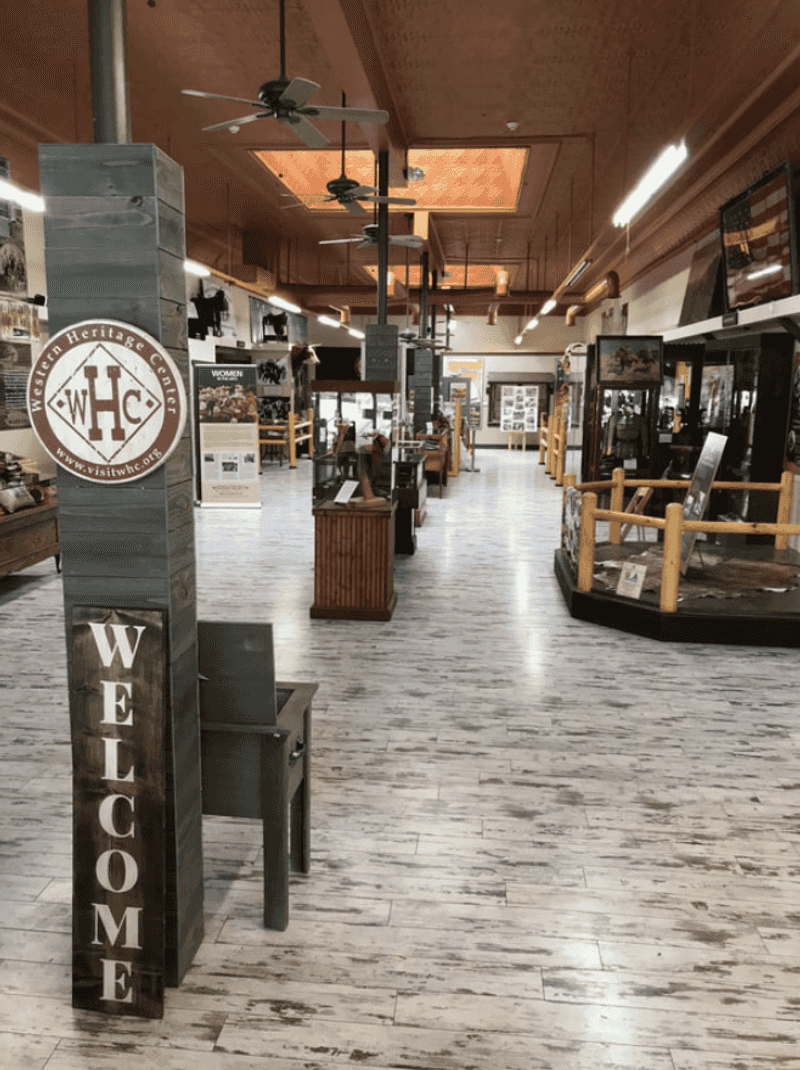
Sitting right on Whiskey Row, one of the most storied streets in Arizona history, the Prescott Western Heritage Center occupies a location that already crackles with frontier energy before you even step inside.
The center is explicitly dedicated to preserving and promoting the Western heritage of the Prescott region, which gives it a focused mission that translates into a tightly curated and highly engaging visitor experience.
Exhibits highlight the cowboy traditions, rodeo culture, ranching history, and frontier personalities that have defined Prescott’s identity since the territorial era.
The storytelling here feels personal and community-driven rather than institutional, which gives the whole place a warmth that larger museums sometimes struggle to achieve. Prescott’s Courthouse Plaza is just steps away, and the entire downtown area rewards leisurely exploration after your visit.
The center also serves as a gathering point for local events celebrating Western culture, so timing your trip around one of those occasions adds an extra layer of authenticity and fun to the whole outing.
13. Phippen Museum, Prescott
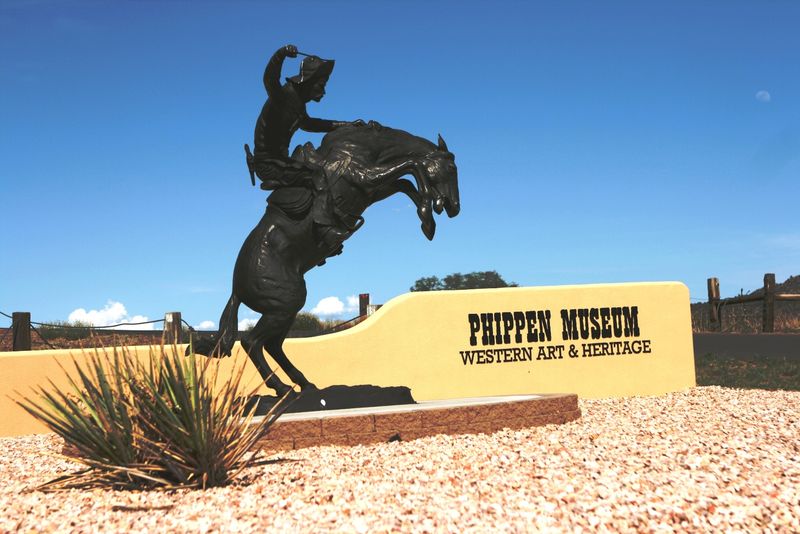
George Phippen was a founding member of the Cowboy Artists of America, and the museum that bears his name in Prescott honors that legacy with one of the finest collections of Western art in the state.
The Phippen Museum is best known for its rotating exhibitions of paintings and bronzes that capture the landscapes, people, and animals of the American West with impressive skill and emotional depth.
What makes this museum especially interesting for Old West enthusiasts is its role as home to the Arizona Rancher and Cowboy Hall of Fame.
This component adds a layer of living history to the artistic experience, recognizing the real men and women who have contributed to Arizona’s ranching and cowboy traditions across generations.
The museum sits just north of downtown Prescott with views of the surrounding granite hills, and the building itself has a quiet, unhurried character that encourages you to slow down and really look at each piece.
The annual Phippen Museum Western Art Show held every Memorial Day weekend draws artists and collectors from across the country, making it one of the premier Western art events in the Southwest.