
12 Georgia Foods Outsiders Struggle To Pronounce (But Locals Say Proudly)
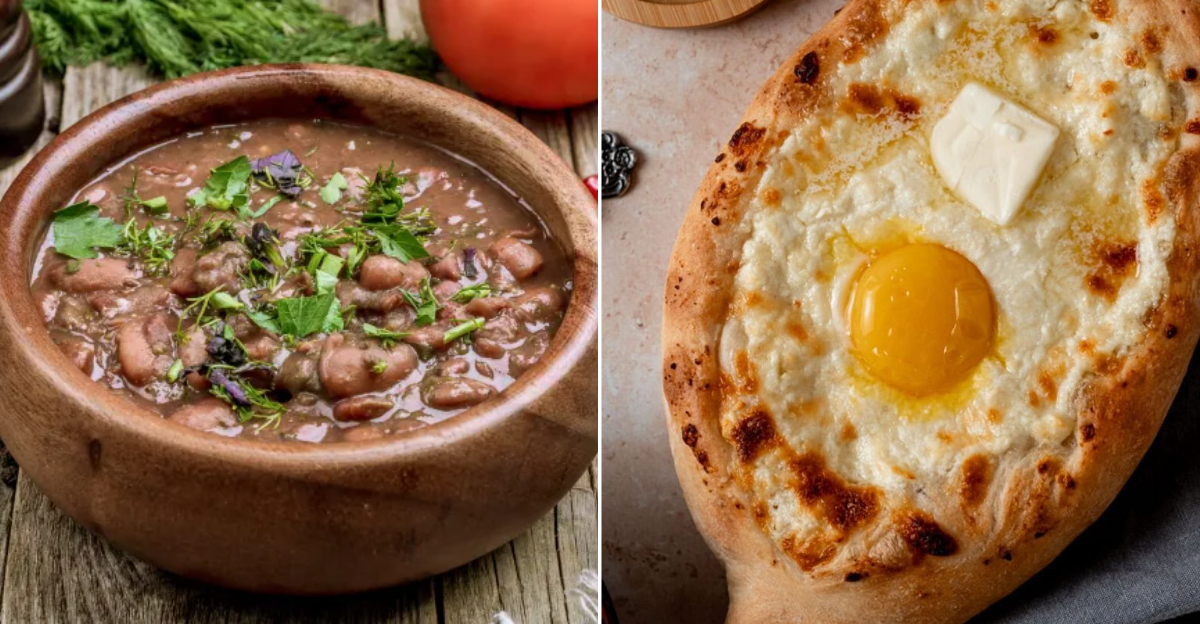
Georgia’s culinary scene is full of flavors as rich as its history, and sometimes the names are just as challenging as the dishes are delicious.
From towns’ signature specialties to traditional favorites, outsiders often stumble over the pronunciations while locals say them with pride.
Each bite comes with a story, a tradition, and a little linguistic adventure. Exploring these foods is a tasty way to dive into Georgia’s culture, one perfectly pronounced dish at a time.
1. Khinkali: Soup Dumplings with a Twist
Forget saying “kin-KAH-lee” on your first try. These pleated dumplings filled with seasoned meat and broth require special eating techniques too.
Locals grab them by their doughy topknot, bite a small hole, and slurp the soup before devouring the rest. Mountain regions claim khinkali as their invention.
The traditional filling combines ground beef and pork with spices, though mushroom and potato versions exist for vegetarians. The pleated top handle isn’t meant to be eaten, a rookie mistake many visitors make!
2. Khachapuri: The Cheese Boat Challenge
Picture this: a boat-shaped bread filled with melted cheese and topped with a runny egg.
Locals pronounce it “kah-cha-PU-ri” with a slight roll on the ‘r’. Many tourists resort to pointing or simply saying “cheese bread” instead.
The national dish of Georgia comes in various regional styles, with Adjaruli being the most famous boat-shaped version.
The ritual of mixing the egg into the hot cheese creates a fondue-like center perfect for tearing and dipping the crusty edges.
3. Mtsvadi: Grilled Meat Mastery
Try saying “mts-VAH-dee” three times fast! Even seasoned travelers stumble over this tongue-twister. The dish itself is straightforward, skewered meat (usually pork or lamb) grilled over grape vine embers.
Mtsvadi appears at every Georgian celebration, often accompanied by tkemali sauce and fresh herbs. The meat marinates in a pomegranate juice and spice mixture that creates a tangy-sweet exterior.
Georgian men take particular pride in their mtsvadi-making skills, with techniques passed down through generations.
4. Lobio: Bean Stew with a Pronunciation Puzzle
Seemingly simple as “LOH-bio,” visitors often mistakenly add extra syllables. This hearty kidney bean stew cooks in a traditional clay pot called a qvevri and comes topped with pomegranate seeds and fresh cilantro.
Every Georgian family has their secret lobio recipe. Some versions incorporate walnuts for richness, while others feature a kick of adjika (hot pepper paste).
The dish typically arrives with mchadi (cornbread) for dipping into the flavorful bean mixture.
5. Pkhali: The Veggie Spread Tongue-Twister
First-timers get tripped up by the initial ‘pk’ sound in “p-KHA-li” that doesn’t exist in English.
This colorful vegetable pâté combines ground walnuts with various vegetables like spinach, beet, or carrot, formed into small balls or flattened discs.
Vibrant pkhali platters showcase Georgia’s plant-based cuisine expertise. The walnut base gets enhanced with garlic, coriander, and blue fenugreek.
Pomegranate seeds often crown these spreads, adding both visual appeal and tart flavor bursts against the earthy vegetable base.
6. Satsivi: The Walnut Sauce Conundrum
Visitors often say “sat-SEE-vee” when it’s properly “sat-SEE-vee” with emphasis on the middle syllable.
This cold dish features poultry (usually turkey or chicken) bathed in a rich walnut sauce spiced with garlic, cinnamon, and coriander.
Satsivi appears on every Georgian holiday table, especially during New Year celebrations. The sauce thickens naturally from the ground walnuts without flour or other thickeners.
Making proper satsivi requires patience. The sauce must be stirred constantly while cooking to prevent separation.
7. Chakhokhbili: The Ultimate Pronunciation Challenge
Good luck with “chah-kohk-BEE-lee” on your first attempt! This hearty stew gets its name from the Georgian word for pheasant, though it’s now commonly made with chicken.
The magic happens when tomatoes, herbs, and spices slowly simmer with the meat. Fresh tarragon gives chakhokhbili its distinctive flavor profile.
Georgian cooks pride themselves on using only fresh ingredients, never dried herbs or powders. The dish originated as a hunter’s meal, cooked over open fires in the field after successful pheasant hunts.
8. Chakapuli: Spring Lamb Stew with a Tricky Name
Spring brings this seasonal specialty pronounced “cha-ka-PU-li” that features tender lamb, fresh tarragon, and tart tkemali plums or green sour plums.
The bright, herbaceous flavors make it instantly recognizable to Georgians. White wine adds depth to the broth while the tarragon infuses the meat with anise notes.
Traditionally prepared for Easter celebrations, chakapuli signals the arrival of spring in Georgian culture. Regional variations might include adding fresh dill or substituting veal for lamb.
9. Kharcho: The Soup That Trips Up Tourists
The guttural ‘kh’ sound in “KHAR-cho” gives away non-locals immediately.
This hearty beef soup gets its distinctive flavor from tkemali sauce, rice, and a unique spice mix called khmeli-suneli that includes fenugreek, coriander, and marigold.
Georgians consider kharcho the ultimate comfort food for cold days. The soup’s thickness varies by region. Western versions tend to be thinner while eastern preparations are almost stew-like.
Traditionally, walnuts are ground into the broth, creating a rich, silky texture that’s utterly distinctive.
10. Ajapsandali: The Vegetable Stew Name Game
Visitors tend to mumble through “a-jap-san-DA-li” rather than confidently pronouncing each syllable.
This colorful vegetable stew combines eggplant, bell peppers, tomatoes, and herbs into a hearty, oil-rich dish often served room temperature.
Summer gardens provide all ingredients for this beloved seasonal specialty. The vegetables slowly cook down until they form a rich, almost spreadable consistency.
Georgian cooks debate whether potatoes belong in authentic ajapsandali. Traditionalists say no, while pragmatists welcome the addition.
11. Churchkhela: The Candle-Shaped Sweet
Foreign tongues twist trying to say “church-KHE-la” with the proper guttural ‘kh’ sound.
These distinctive candle-shaped treats consist of nuts threaded on strings, dipped repeatedly in concentrated grape juice thickened with flour.
Georgians traditionally made churchkhela after the grape harvest using leftover juice from winemaking.
The sweet snack served as portable energy for warriors in ancient times. Modern versions come in various colors depending on the grape variety used, amber, deep purple, or ruby red.
12. Tkemali: The Sauce with an Invisible ‘T’
Newcomers often drop the initial ‘t’ when attempting “t-ke-MA-li,” not realizing it’s pronounced separately.
This sour plum sauce comes in green (unripe plums) or red (ripe plums) varieties and accompanies nearly every Georgian meat dish.
Georgian households prepare tkemali in massive batches during plum season. The sauce balances sour, savory, and slightly spicy notes with garlic, cilantro, and dried red pepper.
Its versatility makes it the Georgian equivalent of ketchup. Some locals even claim it pairs perfectly with French fries!