
11 Georgia Smokehouse Phrases That Don’t Translate
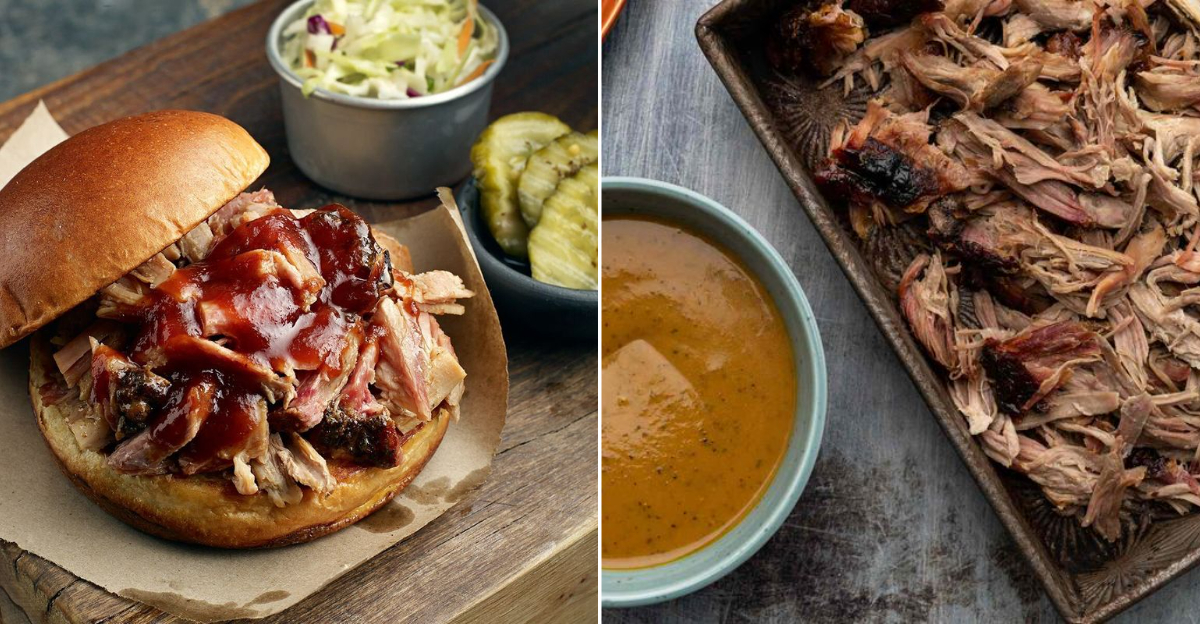
Georgia barbecue has its own vocabulary, and you learn it faster at the counter than from any guidebook. Order a “pig sandwich” and you won’t get puzzled looks, you’ll get pulled pork on a bun, smoky and straightforward.
Ask for “extra dip” and sauce arrives the way locals like it, thinned and tangy, not a side thought but part of the meal’s rhythm. The phrases sound casual, but each carries generations of habit and taste.
I’ve sat in smokehouses where the menu read like dialect, and every word made sense the moment the plate hit the table.
1. Brunswick Stew
Walk into a Georgia smokehouse and stew isn’t a side note, it’s a centerpiece. The vibe feels casual, yet every plate seems to make room for a bowl.
The stew is tomato-based, thickened with vegetables and smoky pulled meats. It comes standard, not as an upgrade, and diners expect it alongside pork or chicken.
Newcomers often hesitate, but once you spoon it up with crackers or bread, you get it. Stew in Georgia isn’t filler, it’s part of the identity of the meal.
2. Chipped Pork
On the counter, a worker leans over the block, slicing pork so thin it curls into near shavings. It looks lighter than chopped but carries more smoke than sliced.
This style has old roots in Georgia, especially in Macon and Columbus, where chipped pork sandwiches became a lunch staple. The sauce seeps into every sliver.
Tip from locals: order it with slaw on top. The crunch balances the soft texture, and the sauce soaks through the bun just enough to stay messy but manageable.
3. Light Bread
A soft slice lands beside the meat, unadorned and almost plain to the eye. It’s not toasted, not buttered, not dressed.
The bread’s role is simple: it’s there for soaking up stew or sauce. Old smokehouses never let a plate leave without it, because sauce deserves something to cling to.
It feels humble, but the ritual makes sense. By the end of the meal, no sauce remains. That slice of light bread quietly did its job.
4. Outside Bark
Sharp edges catch your eye in the chopped pile, the darkened crust that’s crunchier than the rest. The scent is smokier, the spices sharper.
Bark comes from the outer layer of the roast, where rub and smoke have done their work the longest. In Georgia, pitmasters know to save it.
Ask for it mixed into your chopped pork. The textures collide, tender meat meets smoky crust, and the contrast elevates an ordinary sandwich into something layered and memorable.
5. Half And Half
A plate arrives looking like two meals merged into one. On one side sits the pulled meat, on the other the Brunswick stew.
The phrase “half and half” has history in Georgia lunchrooms, where diners wanted both but didn’t want to order twice. Counters still honor the request today.
It’s the kind of shorthand that saves time but also tells a story. Say it with confidence, and the staff knows you’ve learned the language of the smokehouse.
6. Stew Plate
At some counters, the bowl of Brunswick stew takes center stage. The dining room hums with the sound of spoons instead of forks.
The dish is served deep, often with crackers or a slice of light bread, and locals dig in as if it were chili. It holds its own without meat.
It surprised me at first. Calling stew the “plate” felt odd, but once I tried it, the richness made sense, it doesn’t need support, it is the meal.
7. Dip
A thin red sheen glistens across the meat, lighter than thick barbecue sauce and sharper on the tongue. This is “dip.”
Made from tomato, vinegar, and pepper, it’s brushed on while the pork rests or ladled on top at the counter. The style is old, carried through generations.
Regulars know to ask for extra dip if they want more sauce. It’s not a condiment on the side, it’s part of the cooking, integral to Georgia barbecue.
8. Pig Sandwich
The name on the menu reads plain, almost blunt. Order one, and you’ll get chopped pork on a soft bun.
It’s an older term, carried forward from decades past when “barbecue” didn’t need extra description. Pork was the standard, and the name stuck.
The sandwich feels honest, no frills. A pile of smoky pork, sauce folded in, maybe slaw if you ask. It’s Georgia’s way of saying: this is barbecue.
9. Mix It
At the chopping block, a customer leans forward and says, “Mix it.” The sound of cleavers quickens, folding bark and tender meat together.
The technique makes sense historically, using every part of the roast, combining textures into one pile. The flavor deepens when crust and inside meat are balanced.
I tried it once and never went back. The mix delivers crunch, tenderness, and smoke in one bite. It’s proof that texture can be just as important as flavor.
10. Hash And Rice
In east-central Georgia, near the Savannah River, a different tradition shows up: hash and rice. It’s not stew and not gravy.
The dish is more like a meat sauce, slow-cooked until savory and spooned generously over rice. Its origins run deep in the region’s food culture.
Travelers should know this isn’t everywhere. If you find it, try it. The taste is distinct, richer than expected, and worth the detour for a true Georgia specialty.
11. Cracklin Cornbread
A slice arrives studded with golden bits, the surface uneven where pork cracklings have baked into the crumb. The smell is smoky, nutty, unmistakable.
This cornbread shows up at traditional smokehouses and church suppers, less common but treasured when available. The cracklings give bursts of flavor and crunch.
It struck me as the perfect side: cornbread with character, tied directly to the same pigs that gave the barbecue. Nothing about it feels accidental, it’s history baked in.