
Georgia’s Ancient Mound City Holds More Than 12,000 Years Of Human History
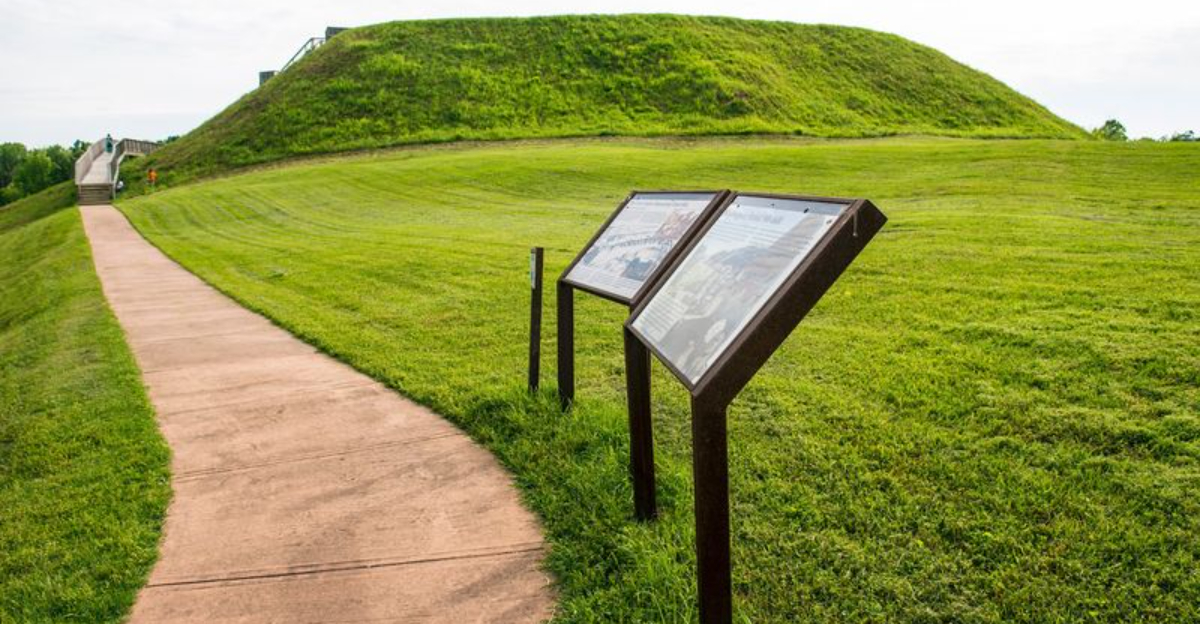
For anyone who loves history, or even for those who sing the national anthem without ever really wondering what came before it, there’s a place in Georgia that quietly rewrites the timeline of North America. Here, the ground isn’t just soil.
It’s a layered archive. Every mound, every ridge, every bend in the river carries traces of lives stretching back more than 12,000 years.
Long before modern cities, highways, or even written language in this region, people were already shaping this landscape into something meaningful.
Building, gathering, remembering. What looks like a peaceful green park today was once a thriving mound city, a ceremonial center, and a crossroads of cultures that rose, evolved, and left their mark in earth instead of stone.
You don’t just walk through it.
You move through time, step by step, without even realizing how far back you’ve gone.
12,000 Years Of Human History In One Place
Some places feel old. Ocmulgee Mounds feels ancient in a way that stops you mid-step.
The site holds evidence of over 12,000 years of continuous human habitation, making it one of the longest-occupied places in all of North America.
Long before written history, Paleo-Indians settled along the banks of the Ocmulgee River, hunting, gathering, and building communities. Archaic and Woodland cultures followed, each leaving their own mark on this remarkable stretch of Georgia land.
Then came the Mississippian culture, arriving around 800 A.D. and transforming the landscape with massive ceremonial mounds. Their engineering skill and social organization were extraordinary for their time.
The Muscogee (Creek) Nation regards this land as their ancestral homeland, a sacred place deeply tied to their cultural identity and spiritual traditions.
That connection is alive and honored at the park today.
What makes Ocmulgee so special is not just the age of the site. It is the unbroken thread of human presence woven through every layer of soil here.
Standing on these grounds, you are not just visiting history. You are standing inside it, surrounded by thousands of years of human ambition, ceremony, and survival.
Finding The Park At 1207 Emery Highway, Macon, GA
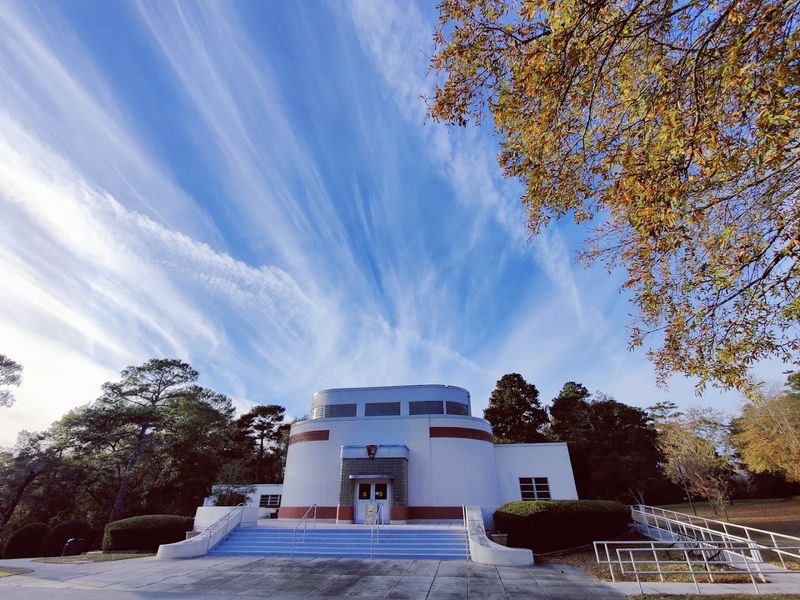
Getting to Ocmulgee Mounds is surprisingly easy, and that is part of what makes it such a fantastic stop. The park sits at 1207 Emery Hwy, Macon, GA 31217, just minutes from downtown Macon, making it accessible whether you are a local or a road tripper cutting through central Georgia.
The park is open Monday through Sunday from 8 AM to 5 PM, giving you a solid window to explore without feeling rushed. Arriving early on weekday mornings tends to offer a quieter, more reflective experience, especially on the trails.
Parking is available near the visitor center and at several points along the road that winds through the site. If walking long distances is a concern, those roadside lots put you within easy reach of most of the major mounds.
Admission is completely free, which honestly feels almost too good to be true for a site of this magnitude. You can reach the park by phone, and the National Park Service website at nps.gov/ocmu has everything you need to plan your trip.
Tucked conveniently between Atlanta and Savannah, Ocmulgee is the kind of stop that turns a road trip into something genuinely memorable. Plan for at least two hours, though a full day would not go to waste here.
The Great Temple Mound
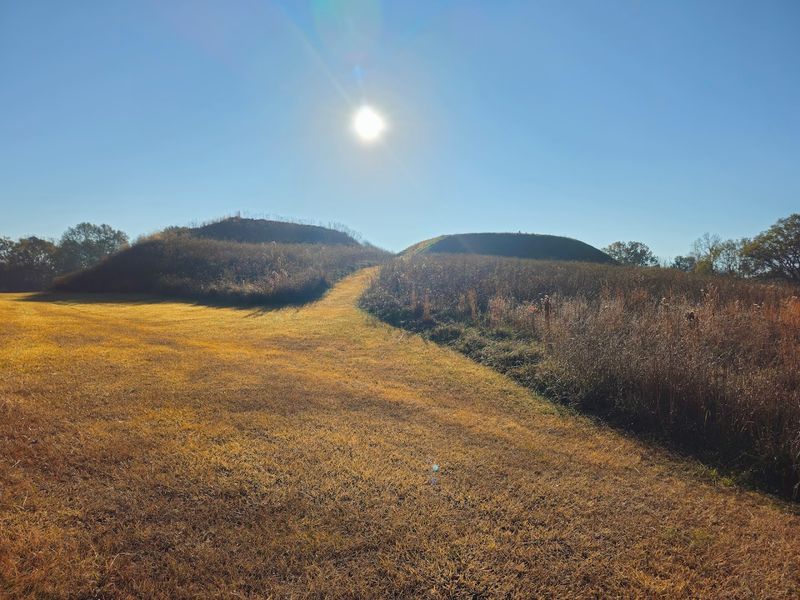
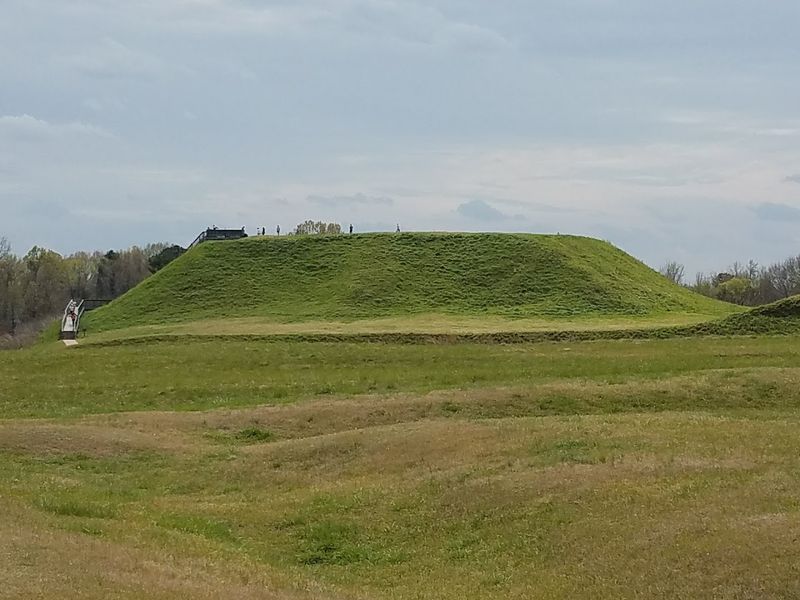
Picture climbing a structure built entirely by hand over a thousand years ago, no machinery, no cranes, just human determination and baskets of earth. That is exactly what the Great Temple Mound represents, and reaching its summit feels genuinely earned.
Standing 55 feet tall, this massive earthen structure is the crown jewel of Ocmulgee Mounds.
The Mississippian people constructed it between approximately 800 and 1100 A.D., using it as a platform for rectangular wooden buildings likely dedicated to religious ceremonies and civic gatherings.
A wooden staircase leads visitors to the top, with benches placed along the way for those who want to pause and soak in the surrounding landscape.
The panoramic views from the summit stretch across the Ocmulgee River floodplain and offer a surprising glimpse of the Macon skyline.
Standing up there, the scale of what was built below becomes clear in a way no photograph can fully capture.
The mound is not just tall. It is commanding, purposeful, and deeply human in its ambition.
Whether you are a history enthusiast or simply someone who appreciates a great view, the Great Temple Mound earns its status as the park’s most iconic feature. Bring water, wear comfortable shoes, and take your time on the way up.
The Earth Lodge
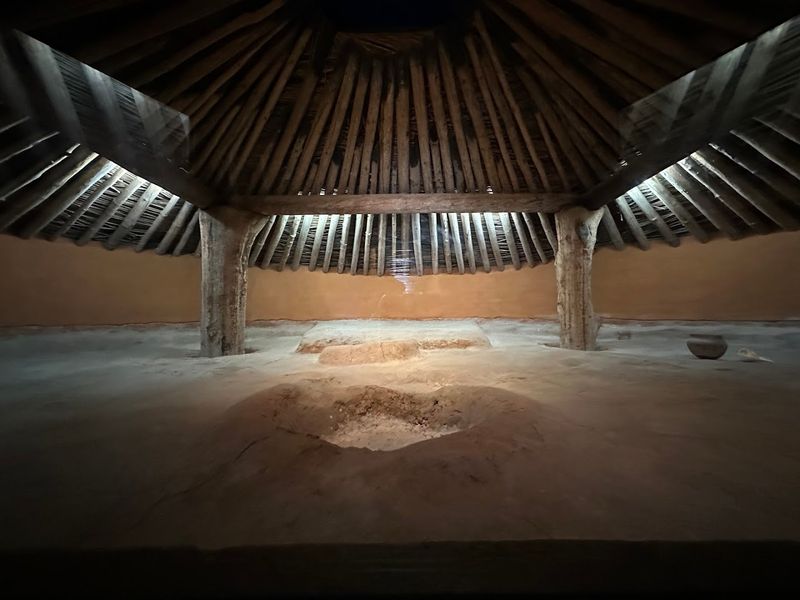
There is a moment when you duck through the low entrance corridor of the Earth Lodge and your eyes adjust to the dim interior. Then it hits you.
The clay floor beneath your feet is genuinely 1,000 years old. That realization is the kind of thing that quietly rearranges your sense of time.
The Earth Lodge at Ocmulgee is a reconstructed ceremonial building, but its original clay floor has been preserved in place since it was first uncovered by archaeologists.
The Mississippian people used this space for religious ceremonies and government meetings, gathering in a circular arrangement around a central fire pit.
A bird-shaped clay platform at the front of the lodge once served as a seat of honor, likely reserved for a chief or spiritual leader.
The seating arrangement around the walls could accommodate dozens of participants, suggesting this was a place of serious communal significance.
The lodge is air-conditioned inside, which feels both luxurious and slightly surreal given the ancient context. A detailed diorama in the museum visitor center helps visualize how ceremonies would have unfolded in this remarkable space.
Visiting the Earth Lodge is one of those rare travel moments that genuinely cannot be replicated anywhere else. You are not just observing history from behind a rope.
You are standing inside it.
The Funeral Mound And The Stories Beneath The Soil
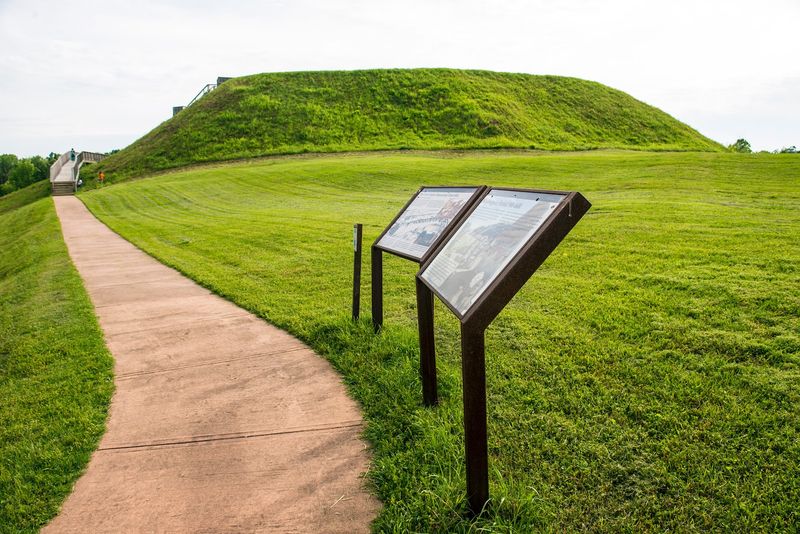
Not every mound at Ocmulgee was built for ceremony or governance. The Funeral Mound carries a quieter, more solemn purpose, and standing near it feels noticeably different from the rest of the site.
Archaeologists uncovered over 100 burials within this mound, most belonging to elite members of the Mississippian society.
The presence of elaborate grave goods alongside the burials suggests a highly structured social hierarchy, one where status followed a person even beyond their time on earth.
The sheer number of individuals interred here speaks to how long this site was actively used as a sacred burial ground.
Generations of community leaders and revered figures were laid to rest within this single earthen structure over many centuries.
What makes the Funeral Mound particularly compelling is what it reveals about Mississippian values. These were people who honored their leaders with intention, ceremony, and lasting physical monuments.
The mound itself is that monument, still standing after a thousand years.
Visiting the Funeral Mound encourages a kind of quiet reflection that the more dramatic structures do not always invite.
It is a reminder that behind every artifact and every layer of soil is a real human story, one that deserves to be acknowledged with genuine respect and curiosity.
Over 2 Million Artifacts And The Oldest Clovis Point In Georgia
Between 1933 and 1941, Ocmulgee Mounds became the site of the largest archaeological excavations ever conducted in Georgia. The numbers alone are staggering.
Researchers recovered over two million artifacts from the soil of this single site.
The park museum displays more than 2,000 of those artifacts, offering visitors a curated but genuinely impressive window into the cultures that shaped this landscape over millennia. The exhibits are thoughtfully organized and cover the full sweep of human presence at the site.
The star of the collection is a 12,000-year-old Clovis point, a finely crafted stone arrowhead that represents the oldest artifact ever found at Ocmulgee.
Clovis points are associated with Paleo-Indian hunters, and this one connects the site directly to the very earliest human inhabitants of North America.
Seeing that tiny, perfectly shaped stone under glass is genuinely humbling. Someone made that tool by hand during an era when woolly mammoths still roamed the continent.
It survived 12,000 years to end up in a display case in Macon, Georgia.
Before heading out to the mounds, spending time in the museum gives your visit real context and depth. History always lands harder when you can see the physical evidence right in front of you.
Trails, Wildlife, And Native Wildflowers Across 3,336 Acres
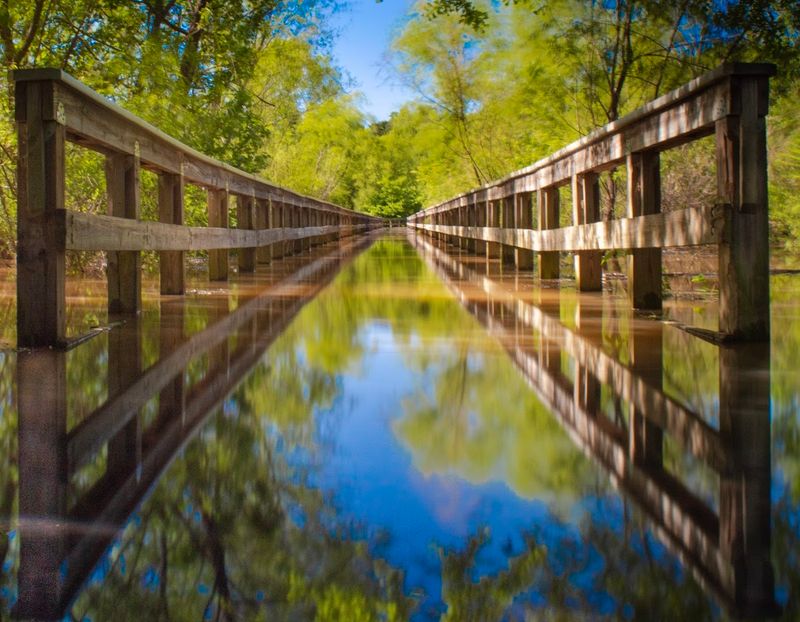
Ocmulgee Mounds is not just an archaeological site. It is also a genuinely beautiful outdoor space, and the trails here deserve far more attention than they usually get from first-time visitors.
The park spans approximately 3,336 acres, with over eight miles of walking and biking trails weaving through wetlands, forests, and open meadows along the Ocmulgee River.
The terrain is mostly flat and accessible, making it manageable for a wide range of visitors.
Wildlife sightings are common and occasionally spectacular. Alligators have been spotted near the water, deer move quietly through the tree lines, and the park supports a rich variety of bird species throughout the year.
Bring binoculars if you have them.
Native wildflowers are one of the park’s unexpected highlights. The meadows and trail edges burst with color during warmer months, attracting pollinators and delighting anyone with an eye for native plants.
It is the kind of botanical surprise that makes you slow down and actually look.
A few practical tips: bring plenty of water, apply sunscreen before you head out, and wear shoes with some grip. The areas around the mounds are largely in direct sun, and Georgia heat is not something to underestimate.
The trails reward those who come prepared with a truly peaceful and immersive natural experience.
The Muscogee Nation And The Push For Full National Park Status
Ocmulgee Mounds was redesignated as a National Historical Park in 2019, a significant upgrade from its previous status as a National Monument.
That same year, the park’s boundaries expanded by roughly 2,100 acres, reflecting growing recognition of the site’s extraordinary importance.
Now, something even bigger is in motion. Efforts are actively underway to designate Ocmulgee Mounds and its surrounding areas as the first full National Park and Preserve in the state of Georgia.
The proposal includes co-management by the Muscogee (Creek) Nation, a meaningful acknowledgment of their ancestral and spiritual connection to the land.
The Muscogee Nation considers Ocmulgee sacred ground. Their ancestors built these mounds, held ceremonies in this soil, and shaped the cultural landscape of the entire region.
A co-managed national park would represent a historic step in honoring that living heritage.
Community support for the designation has been strong, and momentum continues to build at both local and national levels. Many visitors who arrive simply expecting a history lesson leave as vocal advocates for the park’s future.
Ocmulgee Mounds is already extraordinary, but its best chapter may still be ahead. If you have not visited yet, now is the perfect time to experience this place before it transforms into something even greater.
Will you be one of the people who can say they were here before it became Georgia’s first national park?