
21 Great Depression-Era New York Supper Rules Today’s Families Might Question
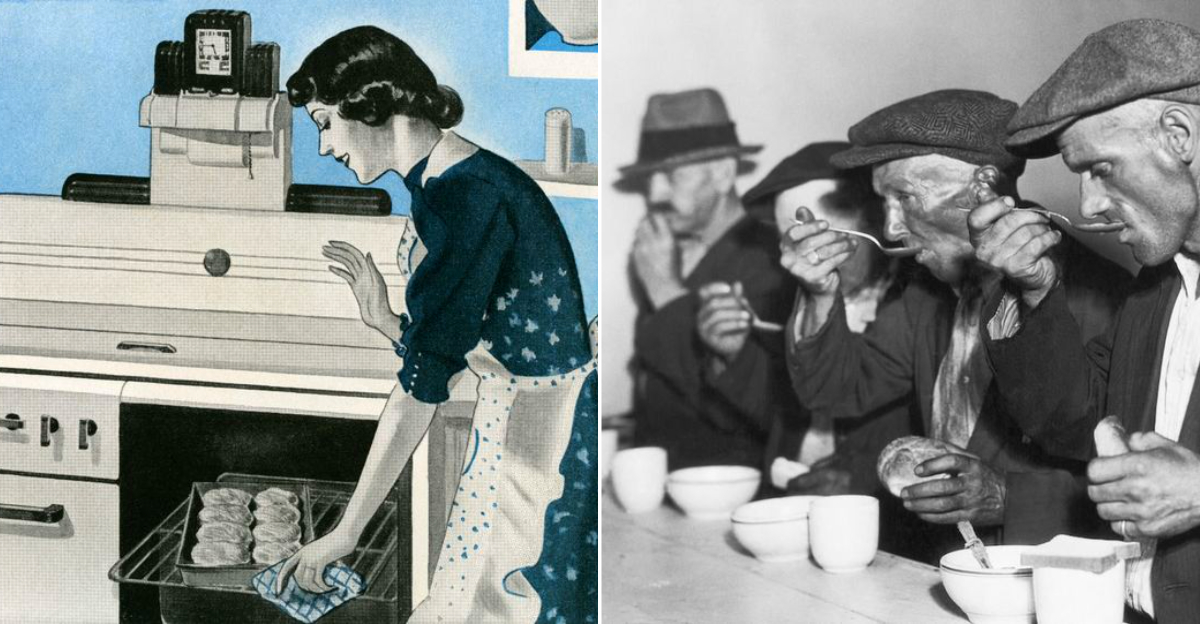
My grandmother kept bacon fat in a chipped ceramic jar by the stove. When I once asked why, she said, “Because it saves tomorrow.” That line stayed with me.
Years later, I began looking into how families like hers cooked during the Great Depression, especially in crowded New York tenements. Some habits were handed down directly, others I uncovered in cookbooks and oral histories.
Each one felt like a small lesson in survival. Food wasn’t just eaten; it was stretched, shared, and honored. These practices may feel distant now, but they carried entire families through hard times.
1. Save Bacon Fat For Frying
The kitchen smells smoky, warm, with lingering bacon whispering future promise.
In place of butter or oil, leftover bacon fat would be strained and kept in a jar. The next day’s potatoes and onions got fried in that rendered richness, adding savory depth.
Grandma swore that grease saved a dime and made the meal more satisfying. You’d learn to respect fat, to never waste flavor. It turned bland sides into highlights.
2. Serve Soup First
Steam drifts from bowls before the heavier food appears.
Soup, simple broth or vegetable, was always the opener. It gave everyone something to sip while the main course cooked.
In lean times they used that trick to stave off hunger pains. Today you might balk at always starting with soup, yet that practice evened out appetites and stretched satisfaction.
3. No Seconds Until Everyone Eats
Watchful eyes stayed fixed on the serving platter. Before anyone reached for meat or potatoes, the rule was clear: every person received a first round before seconds.
No one dared grab the best piece early. Children sometimes muttered, parents reminded them, but the ritual held. It became part of every meal, repeated until it felt natural.
Fairness mattered when food was limited. Families remembered who had what. The rule prevented quarrels and kept order, protecting dignity even when portions were scarce.
4. Stretch Meat With Grains
In a time when meat was a luxury, clever cooks found ways to make it go further. By mixing ground meat with oats, rice, or breadcrumbs, they stretched a small amount into a meal for many.
This practice added volume and texture to dishes without sacrificing taste. Families learned to appreciate these creative concoctions, understanding that each bite was a triumph over adversity.
This ingenuity not only filled plates but also fostered a spirit of resilience.
5. Meat Reserved For Sundays
Sunday dinners carried a weight of meaning in Depression-era New York. Meat, often missing during the week, was saved for this day, making the meal feel special.
Families gathered close, sharing roasts or stews, savoring every bite as though it might not come again soon. The taste lingered, but so did the comfort of being together.
These meals were more than food. They gave shape to hope, a rhythm to community, and a reminder that even hard times could hold joy.
6. Ask for Soup Bones
In the crowded streets of 1930s New York, soup bones carried hidden value. Cooks knew to ask butchers for these scraps, often given away or sold cheaply.
Dropped into pots and left to simmer, the bones transformed. They released flavor, strength, and warmth, turning water into something nourishing and lasting. Families stretched every ounce they could.
The practice showed ingenuity in hard times. What seemed like waste became the foundation of meals, proof that resourcefulness could create comfort from very little.
7. Buy Day-Old Bread
Day-old bread was a staple purchase for those living through the Great Depression.
Pushcarts lined the streets, selling these slightly stale loaves at a fraction of the cost. Families found creativity in transforming this humble ingredient into delicious meals.
Bread pudding, croutons, or a simple toast became special treats. This practice illustrated the art of making do, showcasing the blend of frugality and culinary inventiveness that defined the era.
8. Turn Wilted Greens into Soup
In Depression-era kitchens, nothing went to waste. Wilted greens and soft vegetables found new life in bubbling pots of soup or hash.
By repurposing these ingredients, families not only saved money but also ensured nutrition was not sacrificed. This practice reflected a deep respect for food, a lesson passed down to generations that still resonates today.
It was a testament to adaptability, showcasing how even the least promising ingredients could be transformed into something nourishing and delightful.
9. Bake On Oven Day
To conserve fuel, families dedicated one day to bake multiple meals. This practice, known as ‘oven day,’ was a strategic way to maximize resources.
By cooking in bulk, they could enjoy casseroles, breads, and roasts throughout the week without lighting the oven again. It was a dance of organization and efficiency, turning a small kitchen into a hub of activity and aroma.
Oven day was not just practical, it was an event, a testament to the communal spirit of the era.
10. Use Fire Escapes For Cooling
In tiny New York apartments, icebox space was a luxury. Families cleverly utilized fire escapes to cool leftovers when weather permitted.
This outdoor refrigeration method was both practical and space-saving. It allowed families to extend the life of their meals without relying on costly ice. T
his practice was a creative solution, highlighting the innovative spirit of those times. Fire escapes became more than just safety features; they were extensions of the kitchen, essential in day-to-day living.
11. Cut Milk With Water
To make milk last through tough financial times, it was often diluted with water. This practice, though seemingly simple, was a lifeline for families stretching every penny.
While it altered the taste slightly, it ensured that the essential nutrient could be spread further across meals. This adaptation was a practical response to economic constraints, teaching ingenuity and flexibility.
It was a subtle reminder of the creativity born out of necessity, a skill that continued to benefit families even beyond the Depression.
12. Dessert Only If Plates Are Clean
In Depression-era households, the promise of dessert was contingent on clean plates. This rule instilled a no-waste mindset in children and adults alike.
By ensuring nothing was left uneaten, families maximized their resources, making every meal count. Desserts, when available, became special rewards, cherished moments of sweetness in otherwise challenging days.
This practice was more than just about food; it was about instilling values of appreciation and mindfulness, lessons that have lasted beyond the era.
13. Coffee For Adults Only
Coffee was a cherished commodity, reserved primarily for adults in Depression-era homes. Children were given alternatives like Postum, milk, or hot water with lemon.
This practice conserved the limited coffee supply while ensuring everyone had a warm drink. It reflected the careful allocation of resources, teaching children about adult sacrifices and the importance of sharing.
The aroma of coffee brewing was often a comforting presence, a small luxury that adults relied on to face each day’s challenges.
14. Offal Before Steak
In the economic hardship of the 1930s, offal was a common choice over more expensive cuts like steak. Organ meats, including liver and hearts, were not only affordable but were considered nutritious and strengthening.
Families embraced these unconventional cuts, learning to prepare them in delicious ways. This practice was a reflection of adaptability, transforming what might be seen as undesirable into a beloved part of the diet.
It was a culinary adventure, showcasing the resilience and creativity of the time.
15. Prefer One-Pot Suppers
One-pot suppers were a staple in Depression-era households, minimizing both fuel usage and dishwashing. Families favored these all-in-one meals for their convenience and economy.
A single pot could accommodate a variety of ingredients, melding flavors into a comforting and nutritious blend. This method of cooking was not just a means of conservation; it was an art, requiring skill to balance ingredients and flavors perfectly.
It reflected a lifestyle that valued practicality and simplicity, embodying the spirit of the era.
16. Swap And Share
Trading extra apples for a neighbor’s onions was common in crowded halls. Barter became a kind of neighborhood currency, carried in baskets and paper bags.
When apples were plentiful and eggs ran over, they swapped hands. Small exchanges widened diets, letting families taste more than their own table could give.
We rely on shelves today, but then families filled each other’s gaps. A bag of carrots could save a week. These trades built trust, turning survival into shared resilience.
17. Eat With The Seasons
Menus once followed the rhythm of tide and harvest. In spring, the harbor brimmed with cod, flounder, and menhaden, all sold cheap. Summer meant berries turned into jam, while winter leaned on pickles and jars of fruit.
Freezers today erase that cycle. Back then, you learned to taste with the season, to bend appetite to what the land and water offered.
Nobody expected strawberries in January. They waited for June. Each meal became a quiet schooling, teaching patience through flavor and time.
18. Save Bacon Rinds For Flavoring
Bacon rinds and ham ends were never discarded in 1930s kitchens. These flavorful remnants were treasured for their ability to enhance dishes like beans and greens.
Adding just a small piece could transform a simple pot into a savory delight. This practice was emblematic of the resourcefulness that defined the era, maximizing flavor from minimal ingredients.
It was a culinary trick passed down through generations, teaching the value of creativity and thriftiness in cooking.
19. Plan Cold Suppers In Summer
In the sweltering heat of New York summers, cooking indoors was nearly unbearable. Families planned cold suppers, relying on salads, cold cuts, and bread to nourish without adding heat to their apartments.
This practice was a practical response to the climate, ensuring comfort while maintaining nourishment. It was a refreshing change from the usual, highlighting adaptability and creativity in meal planning.
Cold suppers became a seasonal tradition, a pleasant deviation from routine that celebrated simplicity and the joys of summer.
20. Keep Portions Small, Bread Plentiful
In times of scarcity, keeping portions small was a strategic approach to ensure everyone had enough. Bread, being affordable and filling, was served generously to complement meager portions of other foods.
This practice taught moderation and contentment, valuing quality over quantity. It was a lesson in appreciating what one had, fostering gratitude and mindfulness.
In these simple meals, families found nourishment both physically and emotionally, understanding that fulfillment came from more than just food.
21. Leftovers For Croquettes And Fritters
Turning leftovers into croquettes, fritters, or sandwich spreads was a common practice. This creative reuse ensured nothing was wasted, transforming yesterday’s meals into today’s delights.
It was an exercise in culinary innovation, where each dish told a story of resilience and creativity. Families learned to see potential in every scrap, a skill that extended beyond the kitchen.
This approach to cooking fostered a mindset of sustainability, teaching that with a bit of ingenuity, even the simplest ingredients could shine.