
9 Haunted Cemeteries In Ohio That Locals Swear Are Too Creepy To Visit Alone
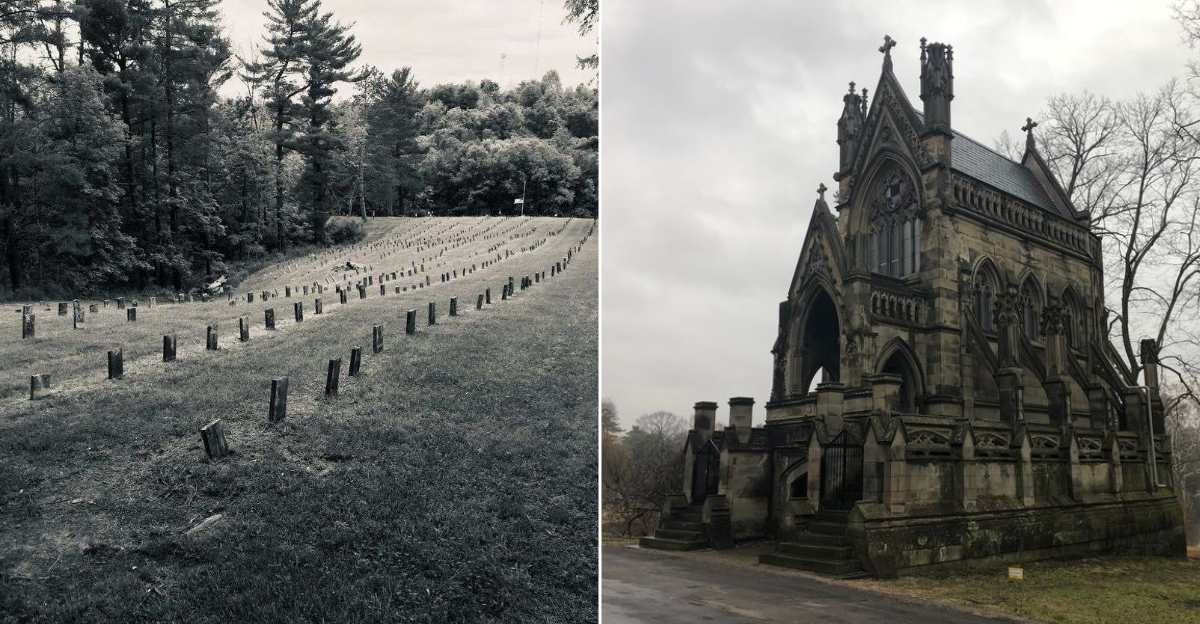
I am usually fine walking through an old cemetery during the day. Give me fading light, an empty path, and one unexplained sound behind me, though, and suddenly I remember every local legend I was trying not to think about.
These nine Ohio cemeteries carry that uneasy kind of atmosphere. Their stories have lingered for generations, and even skeptical visitors sometimes leave with a quicker step than they arrived with.
Would I explore them alone after dark? Let us just say I suddenly have several very important daytime plans.
1. Green Lawn Cemetery, Columbus
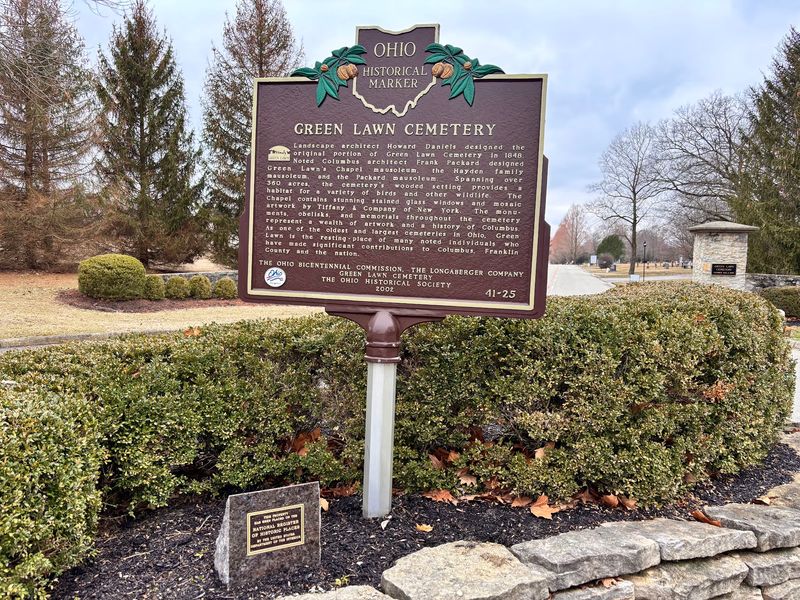
There is something about a cemetery that spans roughly 360 acres and contains more than 150,000 burials that commands a certain kind of respect, and Green Lawn Cemetery in Columbus delivers that in full.
Located at 1000 Greenlawn Avenue, Columbus, OH 43223, this sprawling Victorian-era burial ground was organized in 1848 and received its first recorded burial in 1849.
Grand mausoleums, intricate stone carvings, and towering obelisks line the winding paths, giving the whole place the feel of a forgotten city frozen in time.
Several Ohio governors and notable historical figures rest here, while historical tours and local folklore have helped the cemetery develop a more mysterious reputation.
Stories connected with Green Lawn vary considerably, and reports of unusual figures or unexplained sensations are best understood as cemetery folklore rather than verified events.
The historic Huntington Chapel, with its Tiffany-designed interior details, adds another layer of atmosphere that photographers and architecture enthusiasts find hard to resist.
Spring visits bring blooming trees and birdsong, which softens the mood considerably, but autumn afternoons here create a completely different impression.
The rustling of dry leaves across old paths and the long shadows cast by mature trees can make even the most rational visitor pick up their pace.
Green Lawn is open to the public during posted daytime hours, making it an accessible stop for history lovers and the spook-curious alike.
2. The Ridges Cemeteries, Athens
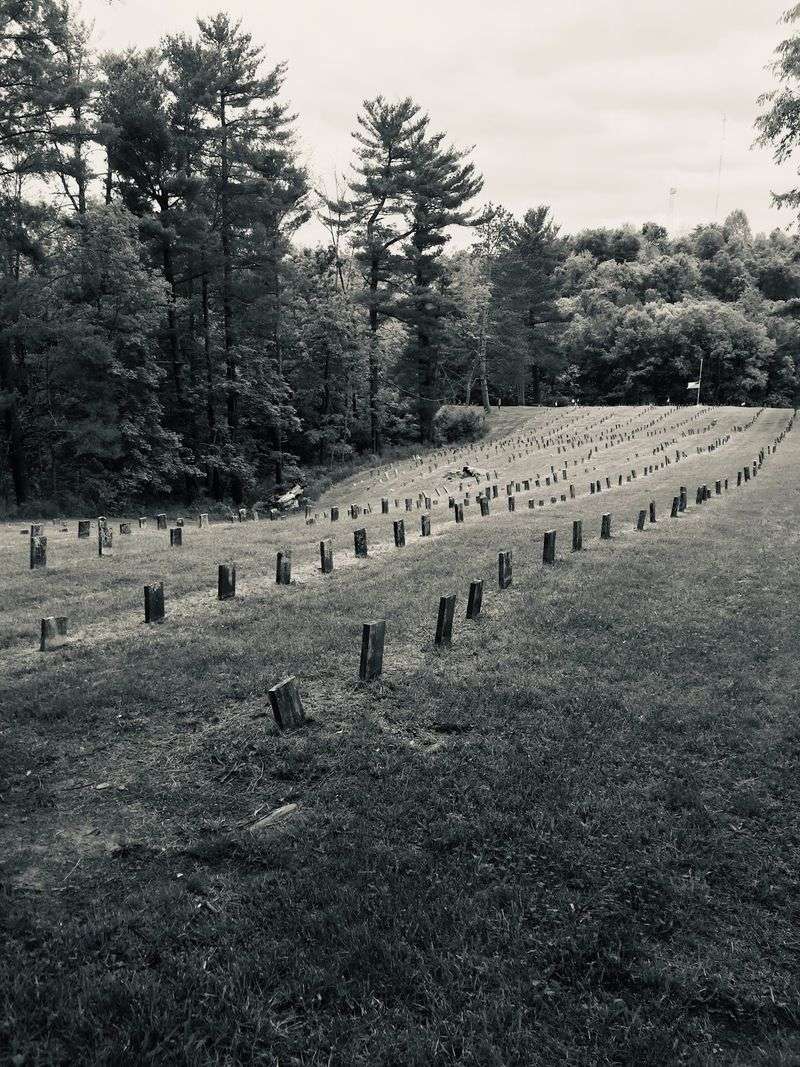
Perched on a hill above the former Athens asylum complex, these cemeteries carry a weight that you can almost feel before you reach the first marker.
The Ridges, located near Water Tower Drive in Athens, OH 45701, is part of Ohio University’s campus today, but its history reaches back to the opening of the Athens asylum in 1874.
The three cemeteries hold former patients who were buried here over many decades, and numerous earlier graves are marked only with numbers rather than names.
That detail alone is enough to give the grounds a deeply somber atmosphere, while local folklore has added another layer to their reputation.
Stories connected with The Ridges have circulated for years, although specific reports such as crying near the older cemetery sections remain anecdotal and should not be treated as verified events.
One of the most talked-about legends involves an outline-shaped stain left on the floor of an upper ward inside one of the former asylum buildings nearby.
The cemetery itself is divided into three sections across the property, and each one serves as a reminder of the people whose identities were not always preserved on their original markers.
Athens has developed a strong reputation for unusual local stories, and The Ridges remains one of the places most frequently connected with that folklore.
If you visit, go during permitted daylight hours, respect the grounds, and remember that these numbered stones represent real people whose names and histories deserve care.
3. Camp Chase Confederate Cemetery, Columbus
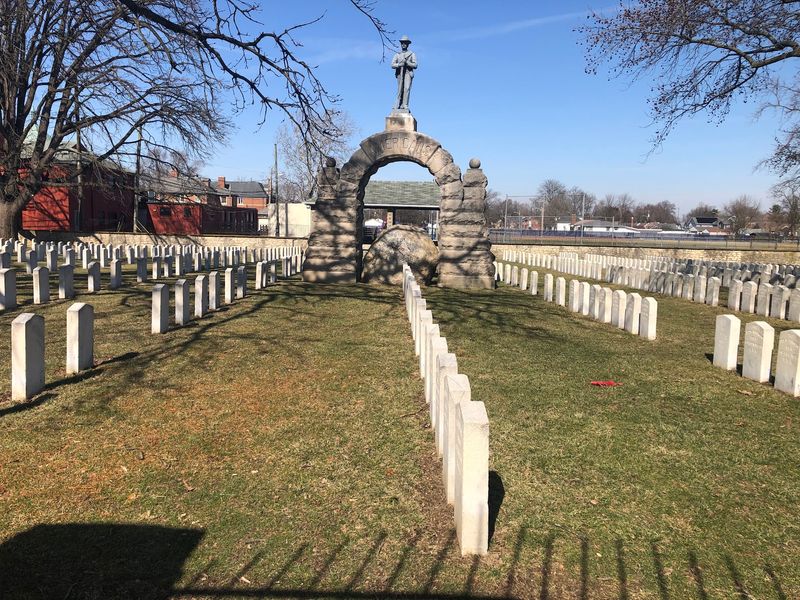
Most people drive past Sullivant Avenue without realizing that one of the most quietly haunting sites in all of Columbus sits just off the road behind a modest stone arch.
Camp Chase Confederate Cemetery, located at 2900 Sullivant Avenue, Columbus, OH 43204, is the resting place of more than 2,000 Confederate soldiers who passed away while being held as prisoners of war during the Civil War.
The cemetery is small compared to Green Lawn, but the density of history packed into this compact plot of land is staggering.
A bronze statue of a Confederate soldier stands watch near the entrance, and locals have reported seeing a figure near the statue late at night that doesn’t quite match any living visitor.
The most enduring legend involves a woman dressed in gray who has been spotted weeping over various graves, believed by many to be searching for a loved one she never found.
Whether or not you believe in the paranormal, the sheer number of identical white markers stretching across the grounds creates a visual that is genuinely moving and more than a little unsettling.
The cemetery is maintained by the United States government and is open year-round, which means brave visitors can experience its atmosphere in every season.
Winter visits, when bare branches frame the stone markers against a pale sky, tend to produce the most atmospheric photographs.
It’s a place that invites quiet reflection, though many visitors admit they don’t stay long after the sun starts to drop.
4. Woodland Cemetery and Arboretum, Dayton
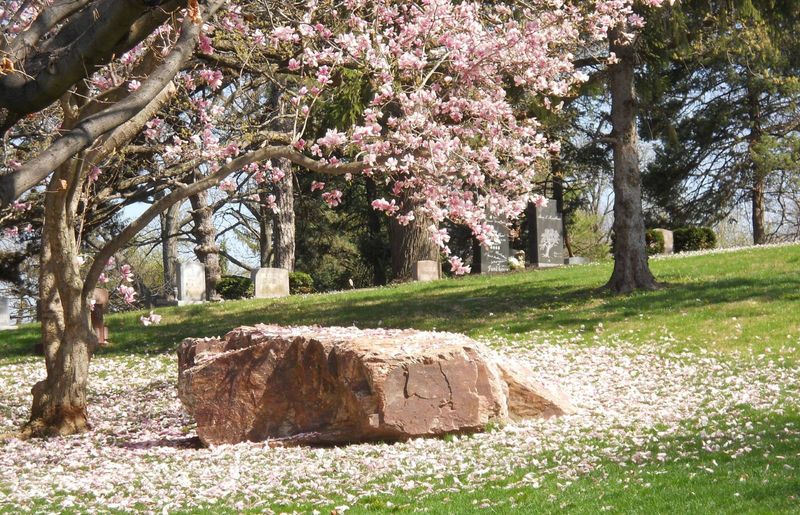
Aviation pioneers Orville and Wilbur Wright are buried here, which already makes Woodland Cemetery and Arboretum in Dayton a bucket-list destination for history fans.
Located at 118 Woodland Avenue, Dayton, OH 45409, this cemetery was established in 1841, covers more than 200 acres, and contains thousands of trees throughout its accredited arboretum.
The combination of lush natural beauty and generations of history gives the place a dual personality: peaceful and park-like during ordinary visits, yet deeply atmospheric beneath its oldest trees.
Woodland’s best-known local legend is connected with the monument to young Johnny Morehouse, which depicts him beside the dog that features prominently in the story told about his family.
Visitors have passed down tales of hearing a child and dog near that portion of the cemetery, although these accounts remain folklore rather than verified events.
The cemetery’s varied terrain, with its slopes, valleys, and dense tree cover, creates natural pockets of shadow even on bright afternoons.
Those shadowy corners can feel considerably more dramatic as the cemetery approaches its posted closing time, when the old trees take on entirely different shapes in the fading light.
The Wright brothers’ family plot is a popular stop for daytime visitors, but the cemetery holds the graves of many other notable Dayton figures as well.
Guided history and specialty tours are offered on scheduled dates, providing valuable context for the people and stories represented throughout the grounds.
Pack comfortable shoes and a camera, because the scenery here rewards both the history-minded and the aesthetically adventurous visitor in equal measure.
5. Spring Grove Cemetery and Arboretum, Cincinnati
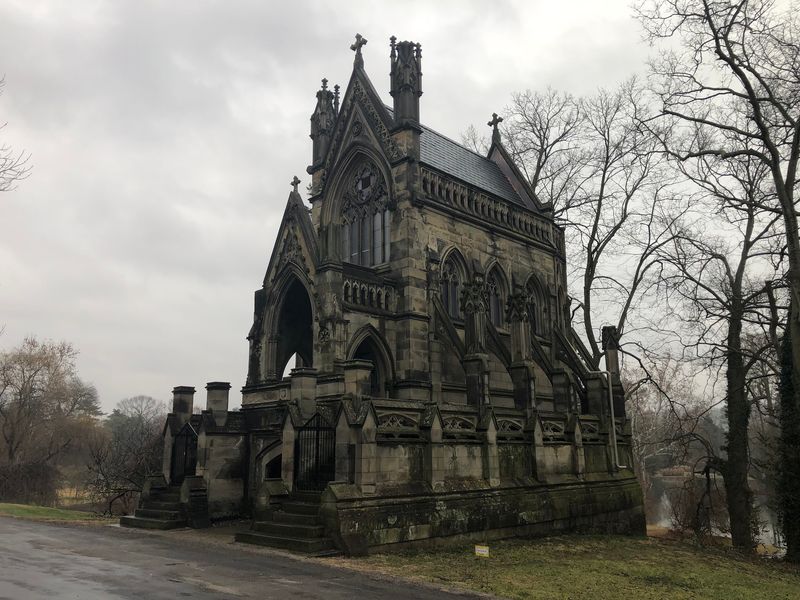
Covering roughly 750 acres on the north side of Cincinnati, Spring Grove Cemetery and Arboretum is one of the largest and most breathtaking cemeteries in the United States.
Located at 4521 Spring Grove Avenue, Cincinnati, OH 45232, the cemetery was founded in 1845 and is internationally recognized for landscape design that feels more like a botanical garden than a traditional burial ground.
Ornate Gothic mausoleums, serene lakes, and an extensive collection of trees and other plants create an environment that shifts dramatically depending on the season and the hour.
Despite its manicured beauty, Spring Grove has accumulated a collection of ghost stories over its long history.
One recurring piece of local folklore involves pale dogs reportedly seen near the Gothic Revival Dexter Mausoleum, although the stories remain unverified.
Another legend surrounds the striking memorial bust of Charles Breuer, whose lifelike eyes and expression have inspired unsettling tales among generations of visitors.
The cemetery’s sheer scale means that even on busy days, it is easy to find yourself completely alone in one of its quieter corners, which is either peaceful or unnerving depending on your perspective.
Photography enthusiasts regularly visit to capture the dramatic architecture and seasonal color, and the results are consistently stunning.
Spring Grove is open daily during posted hours, and self-guided tour information is available to help visitors navigate the vast grounds at their own pace.
6. Lake View Cemetery, Cleveland
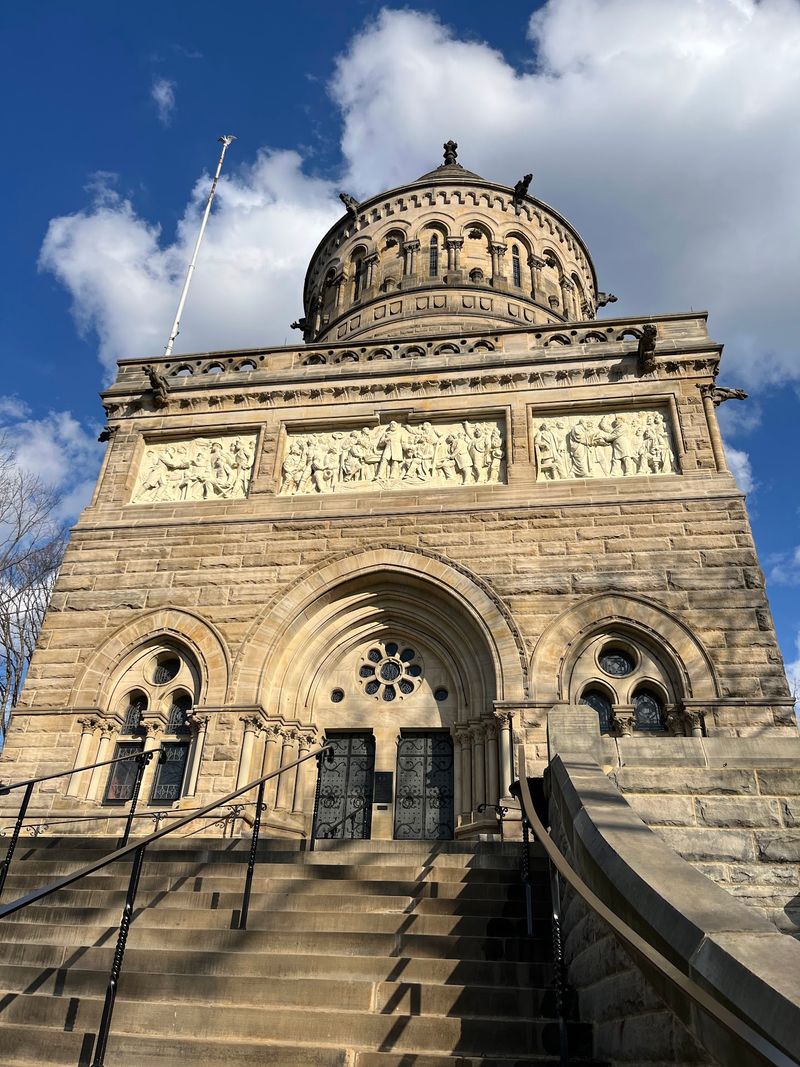
Few cemeteries in the country can claim a presidential monument, a Tiffany-designed chapel, and an enduring ghost legend at one address, but Lake View Cemetery in Cleveland manages exactly that.
Situated at 12316 Euclid Avenue, Cleveland, OH 44106, this roughly 280-acre Victorian cemetery opened in 1869 and became the final resting place for prominent figures from Ohio and American history.
President James A. Garfield is memorialized here with a stunning 180-foot Gothic tower whose upper level offers broad views when that portion of the monument is open to visitors.
John D. Rockefeller’s family monument is also located here, marked by a tall obelisk that stands out even among the cemetery’s many impressive structures.
The best-known ghost story at Lake View centers on the Haserot Angel, a bronze monument whose dark oxidation streaks resemble tears running from its eyes.
Local folklore adds reports of unusual sounds near the monument, although the statue’s famous tear-like appearance has a natural explanation.
Wade Memorial Chapel features an extraordinary Tiffany-designed interior and can be visited during scheduled openings and tours.
Autumn is one of the most popular times to explore the cemetery, when the foliage turns the hillsides into a patchwork of red, orange, and gold that frames the monuments beautifully.
Even skeptical visitors tend to leave Lake View with a lingering sense that the grounds hold more stories than any single visit could uncover.
7. Erie Street Cemetery, Cleveland
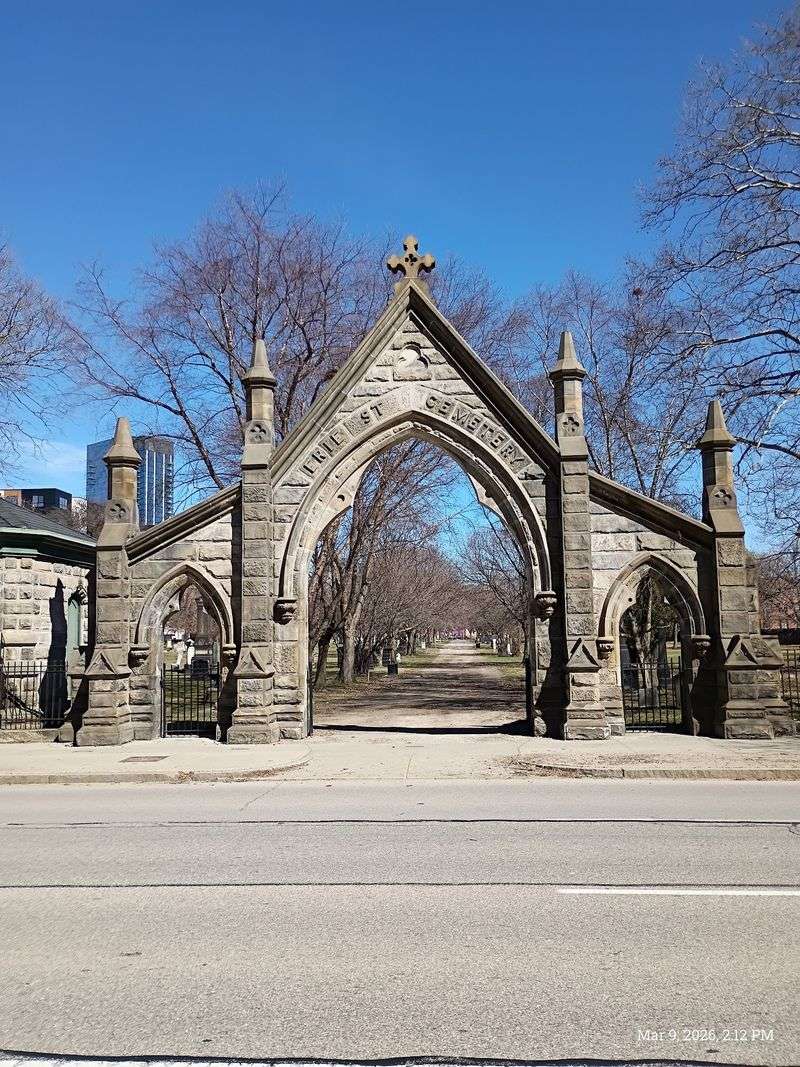
Sandwiched between downtown buildings and busy city streets, Erie Street Cemetery feels like a time capsule that the rest of Cleveland forgot to open.
Located at 2251 East 9th Street, Cleveland, OH 44115, this small but historically significant cemetery was established in 1826 and is the oldest surviving burial ground in the city.
The contrast between the weathered headstones and the modern structures surrounding them creates a visual tension that is hard to shake once you have seen it.
Many of Cleveland’s earliest settlers and founding figures are buried here, and the cemetery served the growing community before larger alternatives were developed.
One of its most recognizable legends concerns Joc-O-Sot, a Sauk man whose monument and story have become part of the cemetery’s local folklore.
Historical accounts also describe the so-called Erie Street Ghost, an unusually tall figure reportedly seen near the cemetery during the 1860s.
The cemetery is small enough to walk in its entirety in under an hour, but the density of history packed into that compact space makes the visit feel much larger than the acreage suggests.
Because of its downtown location, it is easy to combine a daytime visit here with other Cleveland attractions, making it a practical stop even for travelers with limited time.
The iron fencing and old stone markers photographed against the modern skyline produce images that are both striking and genuinely eerie.
8. Old Chestnut Grove Cemetery, Olmsted Falls
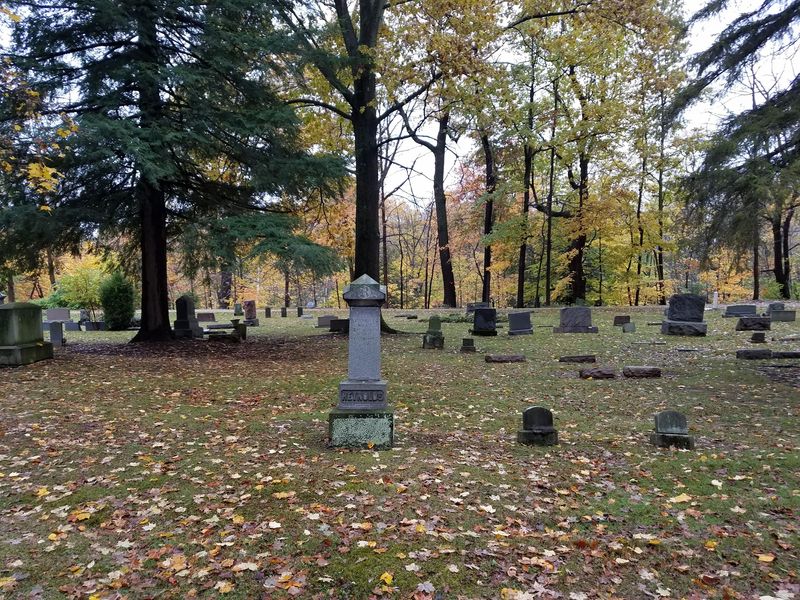
Located along Chestnut Drive in the quiet community of Olmsted Falls, OH 44138, this small cemetery carries a reputation that is wildly out of proportion to its modest size.
Old Chestnut Grove Cemetery, also known historically as Turkey Foot Cemetery, is one of those places that looks completely ordinary in photographs but feels considerably more atmospheric once you enter the grounds.
The cemetery was formally established during the mid-1800s, and many of its older headstones have become weathered with age.
Local stories about the cemetery have circulated for generations, with much of the folklore centered on a portion of the grounds commonly called Witch’s Hill.
Visitors and storytellers have attached reports of unusual lights and figures to that area, although these accounts remain local legend rather than documented events.
The surrounding trees create a natural canopy that keeps portions of the cemetery noticeably darker than the nearby street, even on bright days.
That shade, combined with the age of the stones and the quiet location, gives Old Chestnut Grove a distinctly gothic atmosphere that photographers and paranormal enthusiasts find appealing.
Olmsted Falls itself is a charming community worth exploring before or after your visit, with a picturesque waterfall and a walkable historic district that provide a lighter contrast to the cemetery’s mood.
Come prepared with good footwear because the ground can be uneven, and limit your visit to permitted daytime hours while respecting the historic property.
9. Myrtle Hill Cemetery, Valley City
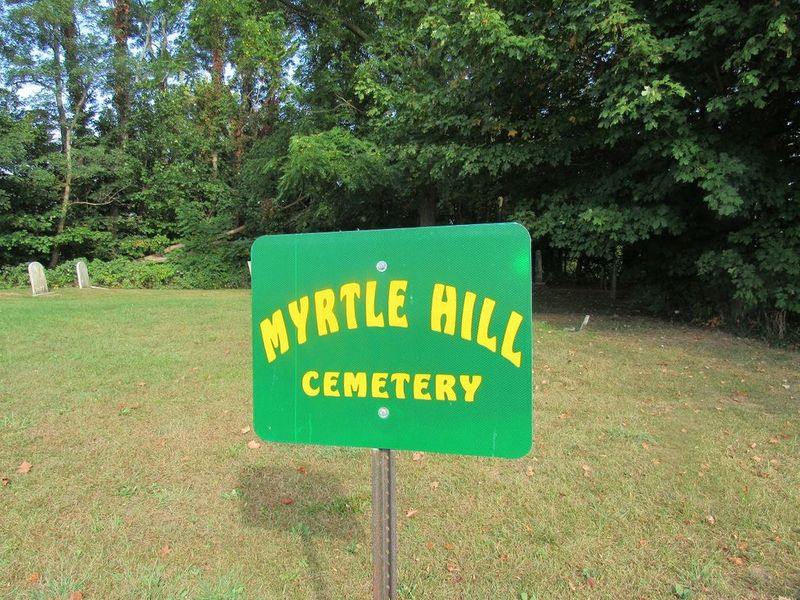
Sitting on a quiet hillside along Myrtle Hill Road in Valley City, OH 44280, this cemetery earns its reputation not through grand monuments or famous burials but through history and undiluted atmosphere.
Myrtle Hill Cemetery, also known as Hardscrabble Cemetery, has roots reaching back to 1812 and is identified in local history as Medina County’s earliest cemetery.
Valley City is a small community in Medina County, and the cemetery has been part of local storytelling for generations.
The best-known legend focuses on a polished spherical monument commonly called the Witch’s Ball, whose reflective surface has inspired numerous unsettling stories.
Different versions claim that unusual images, lights, or reflections can appear on the monument, although researchers have noted that the stories vary and should be treated as folklore.
The isolation of the location plays a significant role in its reputation. Unlike the urban cemeteries on this list, Myrtle Hill sits away from heavy city noise, creating a level of quiet that can feel unusually intense.
Visiting during the day reveals a genuinely beautiful rural landscape, with rolling terrain and mature hardwood trees framing the old stones in a way that feels almost painterly.
As the permitted visiting period approaches its end, that same beauty takes on a sharper edge, though visitors should obey posted rules and avoid entering or remaining on the grounds after hours.