
7 Hauntingly Beautiful Abandoned Railroads In Pennsylvania
My earliest memories of exploration often involve walking along old, barely discernible railway lines near my grandparents’ farm in Pennsylvania. There was something profoundly captivating about those silent, overgrown paths – a sense of grand journeys once taken, now paused indefinitely.
That fascination never left me. Today, I’m continually drawn to these abandoned arteries of industry and ambition. They are more than just relics; they’re living museums reclaimed by nature, each curve and crumbling tie whispering stories.
These hauntingly beautiful abandoned railroads in Pennsylvania that continue to inspire my sense of wonder.
1. Kinzua Viaduct And Knox & Kane Corridor
Once the tallest railroad trestle on Earth, the Kinzua Viaduct now stands as a twisted monument to nature’s power. A 2003 tornado ripped through the aging structure, leaving behind jagged towers and fallen spans that look like a scene from a dystopian movie.
The Knox & Kane tourist railroad that ran excursions here vanished with the collapse, but the state turned the wreckage into a skywalk experience. You can walk out over the gorge and peer back at rails that stop mid-air, where iron meets sky and nothing else.
Fog rolling through the valley or autumn leaves framing the ruin make this site wildly photogenic. The visitor center offers context, and the whole area remains open and safe to explore, blending preservation with raw, industrial romance.
2. Turn Hole Tunnel At Lehigh Gorge
Carved straight through a riverside cliff in the 1800s, Turn Hole Tunnel looks like the entrance to an underground kingdom. The 496-foot bore once carried Lehigh & Susquehanna trains until engineers bypassed it in 1912, and it limped along as a siding before abandonment decades later.
Today the tunnel mouth gapes open beside the Lehigh Gorge trail, framed by moss and dripping rock. Rangers closed the interior after ceiling collapses made it too dangerous, but the exterior alone is worth the hike for its gothic, postcard-perfect vibe.
Respect the closure signs because rockfall is real and rangers patrol regularly. The viewpoints along the trail near Jim Thorpe offer safe, cinematic angles of the tunnel and river below, perfect for photographers chasing that spooky-but-legal shot.
3. Ghost Town Trail Through Coal Country
Running between Ebensburg and Black Lick, this rails-to-trails conversion follows an old coal railroad through landscapes that earned the name Ghost Town for good reason. Mines closed, populations drifted away, and the stations fell silent, leaving behind hollowed company houses and rusted infrastructure along the corridor.
Unlike cheerful greenways, this trail carries a melancholy weight because the mining ruins remain visible and the sense of industrial afterlife lingers in every viaduct and creek cutting. Golden hour light turns the weathered structures into haunting silhouettes, and interpretive stops tell stories of boom-and-bust cycles.
The trail is open, maintained, and safe for biking or hiking, making it a rare chance to soak up abandoned-rail atmosphere without trespassing or danger.
4. Perkasie Landis Ridge Tunnel
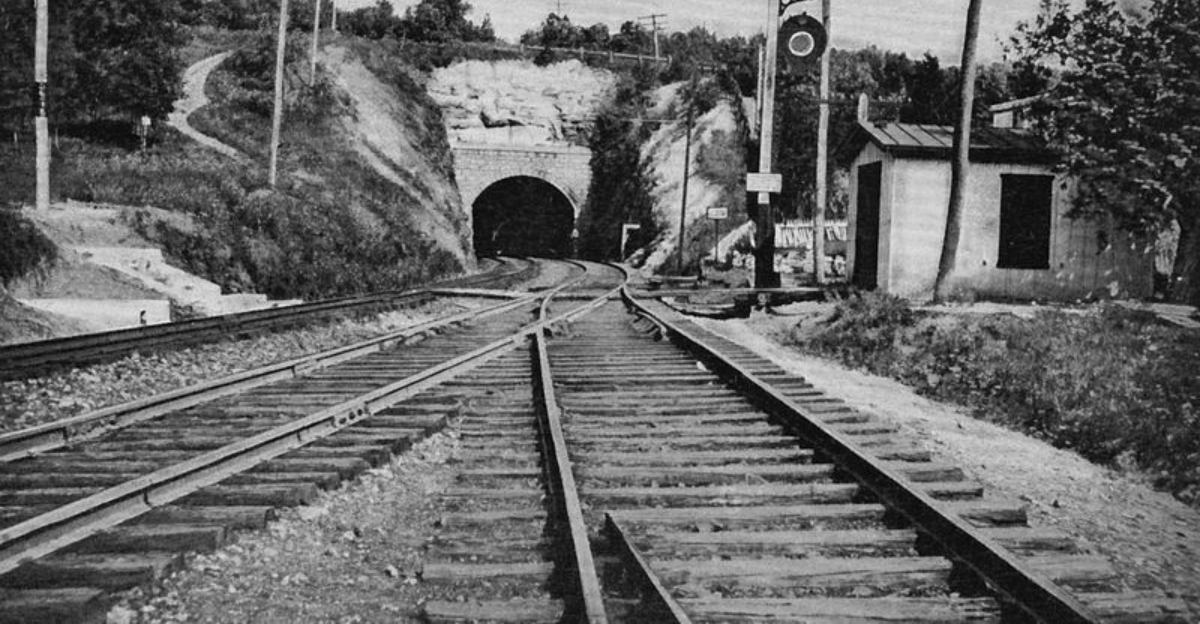
Built in the 1850s and later adapted for trolley use, the Perkasie tunnel hides beneath ridge roads like a secret from the town’s rail-powered past. Brick-lined in places and raw rock in others, the short bore radiates a forgotten-small-town-railroad mood that old postcards and historical photos have immortalized.
Service ended mid-20th century, and the tunnel sat quietly as suburbs grew around it, a relic tucked into the landscape. Its intimate scale and rich textures of brick, mortar, and creeping lichen make it especially photogenic at dusk when shadows deepen the portal.
Some sections have been stabilized or repurposed, and the portal area is publicly visible, so treat it with respect. For a haunting micro-scene inside a town rather than deep wilderness, Perkasie delivers perfectly.
5. Montour Railroad And Trail Remnants
Circling Pittsburgh like a coal-hauling ghost, the Montour Railroad was abandoned in the 1980s and transformed into a trail that still feels like a ruin even as cyclists roll through. Tunnels like Enlow, National, and Greer remain as cavernous, arched passages, some refurbished for safety and others left rough and atmospheric.
Recent repairs and reopenings balance preservation with reuse, keeping the relic vibe alive while adding public access. Walking the corridor, you encounter crumbling masonry, rusted hardware, and the strange duality of industrial ghosts serving modern recreation.
That mix of ruin and renewal makes Montour uniquely cinematic for anyone chasing abandoned-rail textures without the trespass risk. Always check the Montour Trail Council website for current closures before heading out.
6. Staple Bend Tunnel And Allegheny Portage Railroad
Finished in the 1830s, Staple Bend holds the distinction of being America’s first railroad tunnel, hand-carved through stone for the Allegheny Portage route. Unlike later steel-and-rust relics, this tunnel whispers 19th-century effort through low, weathered masonry and surviving stone sleepers that speak to human-scale workmanship.
The National Park Service maintains the site as a Historic Site unit, so you can hike in safely and explore the old grades without trespass worries. Rain or fog amplifies the drama, turning the tunnel into a moody portal back to early industrial America.
It is not a dangerous ruin but a preserved one, offering evocative atmosphere plus interpretive context that enriches the experience. For readers wanting historically significant beauty without risk, Staple Bend is a perfect capstone.
7. Carr’s Tunnel
Carr’s Tunnel was built in 1856 for the Pennsylvania Railroad and later brick‑lined in 1868–69, yet today it lies silent and largely forgotten. The tunnel’s northern portal opens into a quiet suburban edge, where modern homes and woods meet the moss‑covered arch of enters past industry.
Walking up to it, you can almost hear the rattle of a long‑gone steam engine echoing off the brick walls, as the suburban hum fades and the tunnel’s shadow takes over. Its abandoned state gives it an uncanny, almost other‑worldly stillness.
I paused at the mouth, the air cooler, the light dimmer, and it struck me how many stories must have gone through that tunnel during Pennsylvania’s railroad age, before being swept aside by realignment and modernization.